
Home Blog Page 14

AFJN Chief Urges Global Leaders to Integrate Faith into Africa’s Development Agenda at Brussels Summit

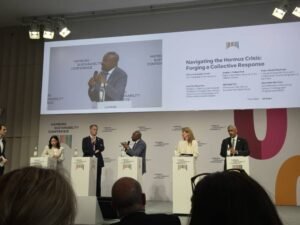
Panel discussion on stage with five speakers seated in white chairs against a red backdrop reading 2026 Forces of the Future Russia poster
Dr. Steven N. Rogers, Executive Director, Africa Faith & Justice Network, Washington DC among the panelists.

By James Tamba Lebbie

At a high-level international forum on Africa’s future held in Brussels, a United States-based Catholic leader has called on global policymakers to recognize the critical role of faith in shaping the continent’s development trajectory.

The Africa Political Outlook Conference, held from March 26–27 under the theme: “Forces of the Future,” brought together heads of state, policymakers, civil society actors and international partners to deliberate on key issues including economic sovereignty, security and governance. However, during a panel discussion titled: “Forces of Faith: Africa, God and Us,” Dr. Steven Nabieu Rogers, Executive Director of the Africa Faith and Justice Network, urged participants to look beyond conventional policy frameworks.

“Africa’s future will not be built by policy alone—it will be built by values,” he stated, emphasizing the need to integrate moral and ethical considerations into governance and development strategies.

Dr. Steven Nabieu Rogers highlighted that faith remains a central pillar across African societies, influencing how communities organize, respond to hardship and sustain hope in difficult circumstances. According to him, faith-based institutions continue to play indispensable roles in delivering essential services, particularly in underserved areas.

“These institutions are present where the state is absent. They educate where systems are weak, heal where infrastructure is lacking and advocate where voices are silenced,” he noted, referencing the contributions of religious organizations in sectors such as education, healthcare and humanitarian support. He further cited interfaith collaboration in post-conflict contexts like Sierra Leone as a key factor in promoting reconciliation and lasting peace.

While acknowledging the conference’s focus on economic growth and investment, Dr. Rogers stressed that sustainable development must be anchored in ethics, accountability and human dignity. He warned that without strong moral foundations, governance systems risk being undermined by corruption, declining public trust and weak leadership.

“A society cannot thrive if corruption is normalized, if public trust erodes, or if leadership lacks moral grounding,” he cautioned, adding that religious leaders often play vital roles in mediating conflicts and stabilizing communities during crises.

Addressing emerging global concerns, Dr. Rogers also warned against the politicization of religion, citing Nigeria as an example where complex security challenges are sometimes oversimplified through religious narratives. He argued that such interpretations risk inflaming tensions and diverting attention from underlying issues such as governance failures, criminality and competition over resources.

“Reducing such a complex crisis to a binary religious narrative does more than oversimplify—it risks inflaming tensions and obscuring the real drivers of insecurity,” he said, urging a more nuanced understanding of conflict dynamics.

In a reflective tone, Dr. Rogers challenged faith-based organizations themselves to maintain integrity and independence in their advocacy roles. He called for greater accountability, urging such institutions to amplify grassroots voices and address systemic injustices rather than merely responding to surface-level challenges.

“Are we still speaking truth to power, or have we become too closely aligned with it?” he asked, stressing the importance of credibility in advancing justice and social change.

A key takeaway from his address was the need for deeper collaboration between policymakers and faith communities. He advocated for an inclusive approach that integrates ethical leadership with policy design, positioning faith actors as strategic partners rather than symbolic participants in governance processes.

As discussions at the Brussels summit concluded, Dr. Rogers reiterated that Africa’s future transcends political and economic considerations, describing it as fundamentally a moral undertaking.

“Africa stands at a defining moment. Our greatest strength may lie in something less visible—yet deeply powerful: our moral imagination,” he concluded.

RAIC, Civil Society Validate Framework to Boost Access to Information in Sierra Leone

The Right to Access Information Commission (RAIC) has held a strategic engagement with key Civil Society Organizations (CSOs) to validate the Terms of Reference (ToRs) guiding the newly established RAIC-CSO Access to Information (ATI) Coalition. The meeting, which took place on April 15, 2026, at RAIC Headquarters, 6B Middle Hill Cut Road in Freetown, marked the second formal interaction since the coalition’s formation.

Addressing participants, the Chairman and Information Commissioner, Dr. Ibrahim Seaga Shaw, emphasized the critical role of sustained collaboration between RAIC and civil society in promoting transparency, accountability and citizens’ access to information across Sierra Leone. He also welcomed the Campaign for Good Governance (CGG) as the newest member of the coalition, noting that its inclusion would further strengthen the coalition’s advocacy reach.

Speaking on behalf of civil society, Charles Keif Kobai reflected on the coalition’s evolution, highlighting the collective commitment and coordinated efforts that led to the establishment of a unified platform aimed at enhancing the implementation of the Right to Access Information framework.

The engagement brought together representatives from prominent CSOs, including Transparency International Sierra Leone, Budget Advocacy Network, Centre for Human Rights and Development International, Network Movement for Youth and Children’s Welfare, Forward Sierra Leone and the newly admitted CGG.

Discussions during the meeting focused on reviewing and validating the coalition’s Terms of Reference, which outline key areas of collaboration between RAIC and CSOs. These include enhancing public awareness and media sensitization on the Right to Access Information law, strengthening capacity through peer learning and adoption of international best practices, coordinating joint fundraising and project implementation and improving collaboration in the execution of ATI-related activities. The framework also emphasizes reinforcing the enforcement of Proactive Disclosure of Information (PDI) and Freedom of Information in line with the provisions of the RAI Act of 2013.

As part of the agreed next steps, RAIC will develop a Memorandum of Understanding (MoU) to clearly define the roles and responsibilities of both the Commission and participating CSOs. The Commission also plans to establish a structured roster to facilitate CSO participation in its “RAIC Hour” programme, while supporting the broader dissemination of press releases and landmark decisions.

Looking ahead to the International Conference of Information Commissioners (ICIC) and the International Day for Universal Access to Information (IDUAI) 2026, Dr. Ibrahim Seaga Shaw underscored the importance of linking the RAIC-CSO ATI Coalition with international networks and partners working within the access to information space. He noted that RAIC will share relevant conference themes to encourage active participation by civil society actors.

The meeting concluded with a renewed commitment from both RAIC and its civil society partners to deepen collaboration and expand public awareness of access to information, which stakeholders described as a vital pillar of democratic governance in Sierra Leone.

As 2028 Nears, Chericoco’s Profile Rises Within APC Ranks

Chernor Ramadan Maju Bah

By Isatu Sankoh

As the All People’s Congress (APC) intensifies internal deliberations over its future direction, growing attention is being placed on the selection of a flag bearer capable of steering the party toward the 2028 general elections. Political observers and party supporters say the decision is shaping up to be one of the most consequential in the APC’s recent history, as it seeks to rebuild momentum and strengthen its national appeal.

At the centre of these discussions is Chernor Ramadan Maju Bah, widely known as Chericoco, whose name continues to feature prominently across party structures and grassroots engagements. His rising profile within the APC is being linked to his longstanding involvement in party affairs, legislative experience and perceived ability to unify different factions within the party.

Party insiders note that the current political climate requires a leader who combines institutional knowledge with grassroots connection, particularly as the APC repositions itself following recent electoral cycles. In that regard, Chericoco is often described as a figure whose political journey reflects both continuity and adaptability within Sierra Leone’s evolving democratic landscape.

A seasoned lawyer and parliamentarian, Chericoco first gained national prominence after securing the Brookfields parliamentary seat in 2007. Over the years, he built a reputation through active participation in legislative processes, including oversight responsibilities on key parliamentary committees such as Legislative Affairs and Mines and Mineral Resources. His contributions in these areas helped shape debates around governance and resource management.

His leadership credentials were further reinforced in 2012 when he was elected Deputy Speaker of Parliament, a role in which he was recognized for maintaining order, encouraging debate and promoting institutional discipline. Observers say his calm approach to parliamentary proceedings and ability to engage across party lines contributed to his reputation as a consensus builder.

In subsequent years, Chericoco’s national visibility expanded when he was selected as the APC’s vice presidential running mate in the 2018 elections. That decision, analysts suggest, strengthened his political footprint across multiple regions of the country and positioned him as a key figure within the party’s broader electoral strategy.

Supporters argue that his consistent engagement in national discourse, community outreach and party activities distinguishes him from figures who become active only during election periods. They point to his involvement in youth engagement initiatives, constitutional discussions and peacebuilding efforts as evidence of sustained political relevance.

Within APC ranks, there is an increasing emphasis on selecting a candidate who can appeal beyond traditional strongholds while maintaining internal cohesion. Some party stakeholders believe Chericoco’s experience, temperament and cross-regional recognition place him in a strong position as the party evaluates its options.

Political analysts also note a broader shift among voters toward issue-based leadership and institutional credibility. In that context, figures with legislative experience and a track record of public service are being viewed as better positioned to connect with a wider electorate.

As consultations continue within the APC, discussions around leadership are expected to intensify in the coming months. While no formal decisions have been made, Chericoco’s growing prominence in these conversations underscores his influence in shaping the party’s future trajectory.

With the road to 2028 gradually taking shape, the APC’s eventual choice of flag bearer is likely to play a defining role not only in the party’s internal unity but also in its ability to compete effectively on the national stage.

APC Confirms First Direct Talks with Government, Vice President Leads Efforts to Ease Political Tensions

Group of diverse men and women in colorful traditional and formal clothing posing for a group photo outdoors among palm trees and a building backdrop, on a sunny day.

By Amin Kef (Ranger)

The opposition All People’s Congress (APC) has confirmed its first direct engagement with the Sierra Leone People’s Party (SLPP) government since the recent political standoff, describing the discussions as “productive and constructive.”

Opposition Parliamentary Leader, Hon. Abdul Kargbo, disclosed that the talks were held with a government delegation led by Vice President Mohamed Juldeh Jalloh and facilitated by international moral guarantors. The engagement is being widely viewed as a significant step toward easing political tensions and advancing dialogue between the two sides.

According to Kargbo, the discussions were conducted in an atmosphere of openness and mutual respect, focusing on key national concerns, including the implementation of the Agreement for National Unity, electoral reforms, and recommendations of the Tripartite Committee. He emphasized that sustained dialogue, trust, and accountability remain essential to safeguarding national stability and strengthening democratic governance.

The talks followed a series of engagements led by Vice President Juldeh Jalloh aimed at restoring calm and ensuring continuity in governance, particularly within local councils. On April 15, 2026, the Vice President, in his capacity as Chairman of the Inter-Ministerial Committee on Decentralisation and Local Governance, met with key stakeholders, including Freetown Mayor Yvonne Aki-Sawyerr and Western Area Rural District Council Chairman Kasho Holland-Cole, as part of efforts to address tensions affecting APC-led councils.

During the meeting, Vice President Juldeh Jalloh called for cooperation among political actors and underscored the urgent need to resolve the stalemate to enable local councils to function effectively. He noted that all parties share a common responsibility to ensure the uninterrupted delivery of essential services to citizens.

In a related development, President Julius Maada Bio reaffirmed his government’s commitment to the Agreement for National Unity during a meeting with the Lead Moral Guarantor, Fatoumata Jallow-Tambajang, and her delegation at State House on April 17, 2026. The President reiterated his administration’s support for the mediated dialogue process initiated in October 2023 and emphasized the importance of inclusive political engagement in maintaining peace and stability.

President Bio further highlighted ongoing government efforts to improve the welfare of citizens, including measures aimed at reducing fuel prices and strengthening democratic processes through reforms designed to enhance transparency and credibility. He expressed appreciation to Vice President Juldeh Jalloh and the international moral guarantors for their continued role in supporting national cohesion.

Attorney General and Minister of Justice Alpha Sesay confirmed that the dialogue provided an opportunity for stakeholders to review progress made in implementing electoral reforms and the Tripartite Committee recommendations. He noted that the engagement enabled frank discussions on existing challenges and opportunities, while reaffirming the government’s commitment to strengthening governance systems.

In a press release, APC National Secretary General Lansana Dumbuya stated that the negotiations, led on the government side by the Vice President, are addressing critical national issues with the support of international moral guarantors. He added that although discussions are ongoing, the party is encouraged by the progress made and remains committed to continued engagement.

The renewed dialogue between the government, the opposition, and international partners is widely regarded as a crucial step toward de-escalating political tensions, strengthening democratic institutions, and promoting national unity in Sierra Leone. Stakeholders have expressed cautious optimism that sustained engagement will yield meaningful outcomes in advancing governance reforms and consolidating peace.

SLAJ, Chinese Embassy Honour Winners of “China in My Eyes” Video Competition

Six adults posing indoors, each holding a certificate; a woman in bright orange traditional dress with headwrap stands among men in formal or traditional attire.
SLAJ, Chinese Embassy Honour Winners of “China in My Eyes” Video Competition

By Alvin Lansana Kargbo

The Sierra Leone Association of Journalists, in collaboration with the Chinese Embassy in Sierra Leone, on Friday 17 April 2026 hosted an awards ceremony for the SLAJ–Chinese Embassy Video Competition under the theme: “China in My Eyes,” bringing together stakeholders from the media, diplomatic community and creative sector at the Bintumani Hotel in Aberdeen, Freetown, to recognize excellence in storytelling and highlight diverse perspectives on China–Sierra Leone relations.

Addressing the ceremony, Chinese Ambassador to Sierra Leone, Zhao Yong, described the competition as a significant initiative marking the 55th anniversary of diplomatic relations between China and Sierra Leone, as well as the China–Africa Year of People-to-People Exchanges. He commended the Sierra Leone Association of Journalists for organizing the event and acknowledged the strong participation of young Sierra Leoneans, noting that their entries reflected creativity and personal experiences of China. Te Chinese Ambassador stated that the competition served as a bridge between the peoples of both countries and a platform for deeper mutual understanding, adding that the quality and enthusiasm demonstrated by participants pointed to a promising future for bilateral relations. He encouraged the youth to continue serving as ambassadors of friendship and to contribute to strengthening ties between the two nations.

President of the Sierra Leone Association of Journalists, Alhaji Manika Kamara, said the initiative underscored the importance of storytelling in promoting understanding and enhancing diplomatic engagement. He noted that the theme provided an opportunity for Sierra Leoneans, particularly young people, to present their perspectives on China–Sierra Leone cooperation, highlighting that relations between the two countries have expanded over the years through collaboration in infrastructure, health, education and media. Alhaji Manika Kamara emphasized the role of journalists in informing, educating and connecting societies through balanced and professional reporting, while commending all participants and describing the competition as inclusive, having been opened to the general public to encourage wider participation and creativity. He further disclosed that all participants would receive certificates and transport support amounting to 500,000 leones, describing every participant as a winner, and acknowledged the independent role of the judges in assessing entries.

One of the judges, Taphai Sesay, explained that submissions were evaluated based on conceptual originality, cinematography, sound quality, editing and relevance to the theme. He stated that originality carried the highest weighting, with emphasis placed on creativity, clarity of concept and proper attribution of sources. According to him, cinematography was assessed based on camera work, composition, lighting and visual storytelling techniques, while sound quality focused on clarity and effective use of audio elements. Editing, he noted, was judged on transitions, pacing and overall coherence, cautioning against excessive visual effects that could undermine the intended message. He further explained that the judges also considered the social, cultural and emotional impact of each video and its ability to communicate effectively with audiences, describing the evaluation process as transparent and consistent, reflecting both technical competence and creative expression.

The ceremony concluded with the presentation of awards to winners and certificates to participants, with the overall winner receiving a cash prize of 10,000 new Leones, while the first and second runners-up received 4,000 and 2,000 new Leones respectively. Participants were also provided with certificates and financial support in recognition of their contributions.

The competition highlighted the growing role of media and creative storytelling in strengthening international relations and fostering people-to-people engagement between Sierra Leone and China, reinforcing the importance of cultural exchange and collaboration in deepening bilateral ties.

President Bio Commissions State-of-the-Art NatCA Headquarters, Reinforces Digital Transformation Agenda

Dignitaries at a plaque unveiling ceremony; a man in a suit speaks into a microphone as others in formal attire and a woman in green watch, with balloon decorations in the background.
President Bio Commissions State-of-the-Art NatCA Headquarters

By Ibrahim Sesay

President Dr. Julius Maada Bio has officially commissioned the new headquarters of the National Communications Authority (NatCA), describing the state-of-the-art facility as a significant milestone in advancing Sierra Leone’s digital transformation and strengthening national data security.

The commissioning ceremony, held on Friday, April 17, 2026, at Southridge, IMATT in Freetown, brought together senior government officials, regulators, telecommunications stakeholders, and members of the diplomatic community. The modern 10-storey building will serve as the headquarters of NatCA while also housing the Ministry of Communication, Technology and Innovation (MoCTI).

The facility includes critical national infrastructure such as a National Data Centre and a Network Operations and Communication Monitoring Centre, aimed at improving regulatory oversight, enhancing service delivery, and safeguarding government data.

Addressing the gathering, President Bio emphasized that the commissioning represents more than the unveiling of a physical structure, noting that it reflects a broader commitment to national development through digital innovation. He highlighted the importance of expanding access to services, particularly for citizens in remote areas who previously had to travel long distances to access basic government services.

“Today is not just about commissioning a building; it is about fulfilling a promise to the people of this country, especially the youth, by investing in their future,” the President stated.

President Bio also acknowledged that the project was initiated by a previous administration, stressing that national development efforts should transcend political lines. “Good decisions for Sierra Leone do not belong to individuals; they belong to the people. We chose to complete this project because it serves the national interest,” he affirmed.

Underscoring the importance of digital sovereignty, the President noted that the newly established data centre will play a critical role in protecting sensitive government information while enhancing efficiency in governance. He further recognized ongoing challenges such as the digital divide between rural and urban communities and the high cost of data, assuring that government is actively engaging service providers to address these concerns.

Linking digital transformation to broader national priorities, President Bio referenced ongoing agricultural initiatives under the Feed Salone programme, highlighting his personal involvement in farming activities as a demonstration of leadership by example.

Minister of Communication, Technology and Innovation, Salima Bah, described the commissioning as a landmark achievement in Sierra Leone’s digital journey. She noted that the telecommunications sector continues to play a vital role in economic growth, enabling communication, mobile money services, and digital governance systems.

“With 14 out of 16 districts now connected by fibre and over 90 percent population coverage achieved, this facility enhances our ability to regulate effectively, promote fair competition, and improve service delivery,” she stated.

She further explained that the co-location of NatCA and MoCTI within the same facility will strengthen coordination between policymakers and regulators, while the National Data Centre will ensure secure, in-country storage and management of government data. She also disclosed plans for a disaster recovery centre to be hosted at State House to further strengthen cybersecurity and system resilience.

Director General of NatCA, Amara Brewah, revealed that construction of the headquarters began in 2015 at a time of rapid growth in mobile penetration and data demand. He described the project as a testament to institutional continuity and collective national commitment.

“This building belongs to every leadership that contributed to its realization,” he said, noting that seven floors are occupied by NatCA while three floors are allocated to the Ministry. He added that the facility includes a 200-seat auditorium, conference rooms, a cafeteria, and other essential infrastructure designed to support efficient operations.

Brewah further highlighted that the Tier-One Data Centre housed within the building will, for the first time, provide Sierra Leone with a secure domestic system capable of hosting and protecting national data.

The commissioning of the NatCA headquarters marks a major step forward in Sierra Leone’s pursuit of digital resilience, improved governance, and inclusive national development, reinforcing government’s commitment to building a robust and future-ready digital economy.

President Bio cutting ribbon to officially commission the new NatCA headquarters
Minister of Communication, Technology and Innovation, Salima Bah

Director General of NatCA, Amara Brewah
President Dr. Julius Maada Bio

President Boakai Applauds Industrial Investment… Sethi Group Expands Regional Footprint with New Steel Plant in Sierra Leone and Phase II Launch in Liberia

Group of seven dignitaries posing on a red carpet at a welcome event, with a banner and the Liberian presidential seal visible.

By Amin Kef (Ranger)

President Joseph Nyuma Boakai has commended the Sethi Group of Companies for its expanding industrial footprint across West Africa, highlighting its growing investments in both Liberia and Sierra Leone as a major boost to regional economic transformation and job creation.

Speaking on Friday, April 17, 2026, at the Executive Mansion in Monrovia during the ribbon-cutting and groundbreaking ceremony of the Phase II Steel Plant, President Boakai described the company’s operations as a model of impactful private sector investment. The event, which included a tour of the company’s processing facilities, underscored Liberia’s ambition to strengthen its industrial base while fostering cross-border economic cooperation.

“This is not just about investment; it is about improving people’s lives, equipping them with skills, building their confidence, and strengthening the economy,” President Boakai stated, emphasizing that the initiative represents far more than profit-driven enterprise.

The ceremony also spotlighted the company’s regional expansion strategy, with Managing Director Jay Sethi revealing that a state-of-the-art steel plant has been installed in Sierra Leone and is expected to be officially launched in the coming months. The development is anticipated to significantly enhance Sierra Leone’s manufacturing capacity, reduce reliance on imports, and create new employment opportunities within the country’s industrial sector.

Describing Liberia as “home,” Mr. Sethi noted that his family has lived in the country for over five decades, reinforcing the company’s long-standing commitment to national development. He explained that the Sethi Group has evolved from a trading enterprise into a major manufacturing player, contributing meaningfully to Liberia’s economic diversification.

According to him, the company currently employs more than 2,500 people directly, while generating over 500 indirect jobs through the steel scrap value chain—supporting both economic activity and environmental sustainability. With the Phase II expansion underway, direct employment is projected to exceed 4,000 jobs within the next two years, alongside continued investments in corporate social responsibility initiatives.

President Boakai, visibly impressed by the scale of operations, assured the company of his administration’s support, stressing that businesses operating within the legal framework and contributing to national growth would continue to receive government backing.

“From what I see here—the cement business and other activities—this means jobs and income for our people,” he said, noting that the company’s impact extends beyond its immediate workforce to include distributors and related enterprises.

He further urged workers and citizens to take ownership of such investments, cautioning against practices that undermine economic progress. “The stronger this investment becomes, the better it will be for you, your children, and the future of this country,” he added.

Also addressing the gathering, Senate Pro Tempore Nyonblee Karnga-Lawrence called for the decentralization of industrial operations to other parts of Liberia, particularly in areas such as waste management, to improve sanitation and support sustainable urban development.

Meanwhile, Manoj Bihari Verma, India’s Ambassador to Liberia, praised the Liberian Government for creating an enabling environment for private sector growth. He highlighted the growing role of Indian businesses in Liberia’s economy and reaffirmed India’s commitment to strengthening bilateral ties through trade, investment, and capacity building.

Ambassador Verma also commended the Sethi Group for its sustained contribution to Liberia’s development, noting that such investments are instrumental in driving inclusive growth across the region.

The dual expansion in Liberia and Sierra Leone signals a new phase of industrial cooperation between the two neighbouring countries, positioning the Mano River region as an emerging hub for steel production and manufacturing. Analysts believe that with the upcoming launch of the Sierra Leone plant and the expansion in Liberia, the Sethi Group is set to play a pivotal role in reshaping the sub-region’s industrial landscape.

The event underscored the growing role of private sector investment in Liberia and Sierra Leone development agenda, with stakeholders highlighting the importance of partnerships that drive inclusive growth, job creation and sustainable economic progress.


World Bank, IMF Laud Finance Minister for the Impressive Country’s Macroeconomic Performance

Three men in suits shake hands and smile in a corporate office, standing in front of a counter with supplies and a whiteboard behind them.

World Bank Vice President for Western and Central Africa, Ousmane Diagana and International Monetary Fund Director for African Affairs, Abebe Aemro Selassie, have commended Sierra Leone’s Minister of Finance, Sheku Ahmed Fantamadi Bangura, for his transformational leadership in driving the country’s impressive macroeconomic performance during high-level engagements held in Washington DC, United States of America, on Friday 17 April 2026.

The commendations were made as Minister Sheku Ahmed Fantamadi Bangura met with global economic leaders to position Sierra Leone’s economic outlook in line with the development agenda of Dr. Julius Maada Bio. In separate meetings, the international financial leaders not only praised the Minister’s efforts but also signaled their continued commitment to support the country’s economic growth and stability.

During a meeting with Ousmane Diagana and senior sector Directors of the World Bank Group, the Vice President highlighted Sierra Leone’s strong macroeconomic performance and the wide-ranging reforms undertaken by the Government, emphasizing that sustaining economic stability remains critical to consolidating democratic gains. He assured that the World Bank would look favorably on the recommendations presented by the Minister of Finance, particularly those aimed at mitigating the impact of the ongoing Middle East crisis.

The World Bank’s Chief Economist and Senior Vice President for Development Economics, Indermit Gill, also praised Sierra Leone’s economic progress and aligned with the Minister’s assessment of the potential transmission effects of the Middle East crisis. He encouraged the Government to maintain macroeconomic stability while implementing targeted policies that protect the most vulnerable populations, cautioning against broad, untargeted subsidies.

In a separate engagement with the International Monetary Fund, Abebe Aemro Selassie described the meeting as productive and acknowledged that although the IMF does not routinely offer praise, he was impressed by the economic results achieved by the Government of Sierra Leone. He noted that while the Fund remains aware of the challenges posed by the Middle East crisis, it is working with development partners to support member countries in mitigating its impact and encouraged Minister Sheku Ahmed Fantamadi Bangura to make a strong case for additional support, particularly under the Resilience and Sustainability Facility.

Presenting Sierra Leone’s economic position, Minister Sheku Ahmed Fantamadi Bangura expressed appreciation to the World Bank Group for its continued support across key sectors. He outlined significant progress made over the past two years in implementing economic and public financial management reforms, which have contributed to improved macroeconomic stability.

He disclosed that inflation declined to 4.35 percent in December 2025, the exchange rate remained stable, interest rates on Government securities dropped to sustainable levels and the primary fiscal balance recorded a positive position by the end of 2025. He also noted that the World Bank portfolio remains stable, with strong implementation across projects in the education, health and energy sectors.

The Finance Minister, however, acknowledged that the ongoing Middle East crisis has begun to reverse some of the gains achieved, particularly through external economic pressures and called on development partners to provide targeted support to help preserve progress and limit adverse impacts on the country’s economy.

In his engagement with the IMF, Minister Sheku Ahmed Fantamadi Bangura reiterated the Government’s gratitude for the institution’s longstanding support and policy guidance, attributing Sierra Leone’s improved economic performance in part to the strong collaboration with the IMF’s African Department.


Vice President Hands Over Staff Bus to Koidu Government Hospital to Boost Healthcare Delivery

Man in white shirt speaks at a podium with two microphones; official seal visible on the lectern.
Vice President, Dr. Mohamed Juldeh Jalloh

By Amin Kef (Ranger)

Vice President of the Republic of Sierra Leone, Dr. Mohamed Juldeh Jalloh, on Friday 17 April 2026 handed over a 56-seater staff bus and a Toyota Land Cruiser to the Koidu Government Hospital in Kono District, in a move aimed at improving working conditions and enhancing service delivery for healthcare workers.

Speaking at the ceremony, Dr. Mohamed Juldeh Jalloh described the hospital as a place that holds special significance to him, explaining that the intervention followed concerns raised by staff during a previous visit in March 2026 when he joined them for Iftar during the holy month of Ramadan. He noted that the initiative was conceived after health workers identified key challenges affecting their performance, including transportation, accommodation and continued education, adding that he had committed to engaging the Ministry of Health to address those concerns.

The Vice President, whose office supervises the country’s public health sector, stated that the Government secured a 56-seater bus, which he handed over on behalf of Dr. Julius Maada Bio. He emphasized that reliable transportation is critical to improving service delivery, particularly during difficult seasons, noting that the provision of the bus would enable staff to report for duty more consistently while serving as an important component of the welfare package for nurses.

Dr. Mohamed Juldeh Jalloh also urged that the vehicle be properly maintained to ensure long-term benefit, stressing the importance of keeping it in good condition. He further linked the intervention to broader gains in the health sector, pointing out that Government efforts have contributed to reductions in maternal and infant mortality, as well as an increase in the number of healthcare workers nationwide, while emphasizing that continued investment in staff welfare remains essential.

Deputy Minister of Health I, Prof. Dr. Charles Senesie, welcomed the support and described it as consistent with the President’s vision to address challenges within the sector. He noted that transportation remains a critical issue, particularly during emergencies, stating that when crises occur, transport becomes a serious challenge and called for innovative solutions to strengthen healthcare delivery. He added that the Ministry looks forward to further interventions, including the provision of motorbikes.

District Medical Officer, Dr. Mohamed Gbeshay Sheku, also commended the intervention, recalling that staff had struggled with transportation for over 15 years. He expressed confidence that the new support would significantly improve access to services and described the gesture as a reflection of the Ministry’s commitment, noting that healthcare workers remain dedicated to working collectively to improve lives and deliver quality care.


Africell & NBA Africa Host Junior Basketball Clinic for Over 350 Young Athletes in Freetown

Six people pose for a group photo under a pink Africell promotional tent at an outdoor event, wearing lanyards and casual clothes.

By Alvin Lansana Kargbo

Africell Sierra Leone, in partnership with NBA Africa, has convened more than 350 pupils from primary and junior secondary schools for a two-day junior basketball clinic aimed at developing foundational skills and confidence among young athletes in Freetown.

The clinic, held from Thursday 16 to Friday 17 April 2026 at the National Stadium Basketball Court in Brookfields, introduced participants to basic techniques including dribbling, passing, shooting and teamwork through structured drills led by experienced coaches, with sessions carefully designed to create an engaging and supportive learning environment for beginners.

Speaking at the event, Kamanda Koroma, Marketing and Communications Manager at Africell Sierra Leone, said the initiative reflects the company’s commitment to youth development through sports, noting that Africell continues to invest in platforms that nurture talent across various disciplines, with a growing emphasis on sports as a tool for empowerment. He described basketball as one of the fastest-growing sports globally and stated that the partnership with NBA Africa is intended to support long-term development rather than short-term engagement, emphasizing that sport plays a broader role beyond physical activity by serving as a channel for mentorship and personal growth among young people.

Kamanda Koroma further disclosed that Africell has recently partnered with the Sierra Leone Basketball Federation to promote the sport locally adding that the company plans to strengthen collaboration with NBA Africa in order to expand opportunities for youth participation in basketball across the country.

A representative of NBA Africa, Madam Belicent, described the clinic as a milestone, marking the first collaboration between the organization and Africell in Sierra Leone. She noted that the partnership aligns with shared values centered on youth empowerment, entrepreneurship and community engagement, adding that NBA Africa remains committed to supporting grassroots basketball development across the continent.

Also addressing participants, Ali Hijazi, President of the Sierra Leone Basketball Federation, underscored the importance of sustained investment in youth sports, describing the clinic as a significant step in strengthening the country’s basketball development pipeline. He commended both Africell Sierra Leone and NBA Africa for their contribution and called for continued collaboration among stakeholders to ensure consistent opportunities for young athletes, while encouraging participants to apply the skills acquired during the training sessions.

The two-day programme forms part of Africell’s broader efforts to promote basketball development in Sierra Leone by equipping young players with essential skills while fostering discipline, teamwork and confidence.