
Home Blog Page 22

Vice President Chairs Inaugural MCA-SL Board Meeting on $480 Million MCC Energy Compact

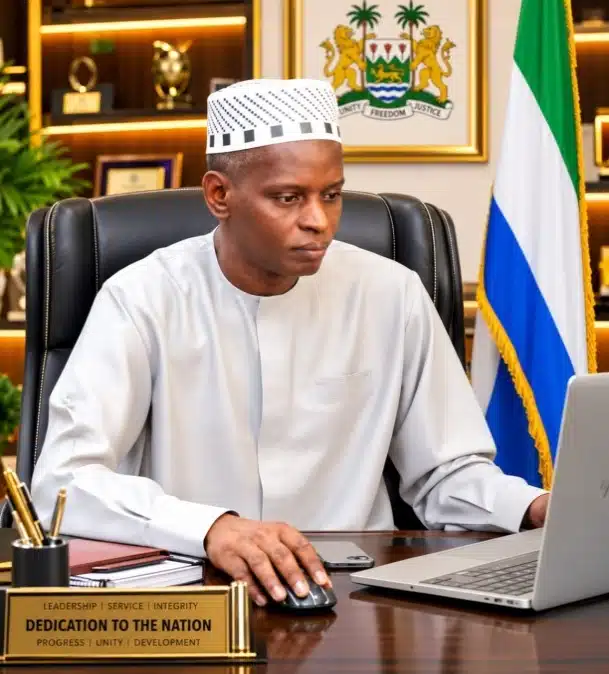
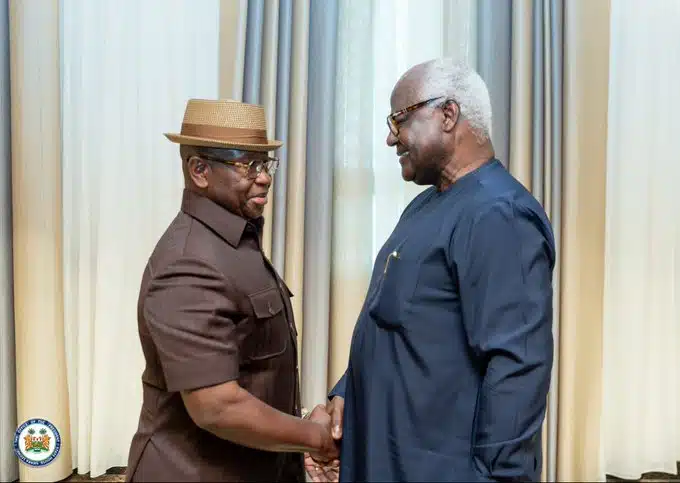
Vice President, Dr. Mohamed Juldeh Jalloh meeting Millennium Challenge Account–Sierra Leone (MCA-SL) Board of Directors

By Amin Kef (Ranger)

Vice President of the Republic of Sierra Leone, Dr. Mohamed Juldeh Jalloh, has chaired the inaugural meeting of the Millennium Challenge Account–Sierra Leone (MCA-SL) Board of Directors, marking a major step forward in the implementation of the $480 million Millennium Challenge Corporation (MCC) Energy Compact.

The historic meeting, held on Friday, January 23, 2026, signals the beginning of a new phase of strategic oversight and institutional coordination aimed at ensuring that the compact delivers lasting improvements to Sierra Leone’s power sector. The Vice President’s leadership at the first sitting of the Board underscores Government’s commitment to strengthening governance structures and ensuring that the compact’s objectives translate into real benefits for households, businesses and national development.

Speaking after chairing the session, Vice President Dr. Mohamed Juldeh Jalloh described the inaugural engagement as a major milestone for Sierra Leone, coming at a time when the country is positioning itself for a future driven by sustainable energy access, expanded infrastructure and stronger international cooperation.

“I chaired the inaugural meeting of the MCA-Sierra Leone Board of Directors overseeing the $480 million MCC Energy Compact implementation. I am excited about the future of United States–Sierra Leone relations and more importantly, the impact the Compact will have on Sierra Leone’s energy sector,” the Vice President stated.

Dr. Mohamed Juldeh Jalloh noted that the meeting was particularly significant because it followed the adoption of the national energy sector roadmap, a guiding framework expected to shape reforms and investment priorities across the power sector. He expressed confidence that the steps being taken reflect Sierra Leone’s determination to resolve longstanding electricity challenges through partnership, innovation and accountability.

“This meeting is a significant milestone following the adoption of the energy sector roadmap yesterday. The future of Sierra Leone is indeed very bright,” he added.

The United States Embassy in Freetown also hailed the inaugural Board meeting as a landmark achievement in the mobilization of the energy compact, congratulating the Government of Sierra Leone for reaching a critical stage in the programme’s rollout.

“Congratulations to the Government of Sierra Leone on a milestone achievement in MCC Compact mobilization! The MCA Board of Directors had its inaugural meeting and orientation, chaired by Vice President Dr. Mohamed Juldeh Jalloh. The MCA Board will help ensure that U.S. investments are used effectively and responsibly, advancing American interests while supporting Sierra Leone’s progress,” the Embassy stated on its official platform.

The MCA-SL Board is expected to play a central role in supervising the compact’s implementation by ensuring transparency, efficiency and responsible utilization of funds. With the Vice President at the helm, the Board is mandated to provide strategic direction and oversight so that the compact’s long-term impact can be fully realized and protected.

The $480 million MCC Energy Compact is widely considered one of the largest single investments in Sierra Leone’s electricity sector, designed to support a five-year programme focused on improving power infrastructure, expanding access and strengthening reforms across the system. For years, Sierra Leoneans have endured persistent power supply challenges, including frequent blackouts, low voltage and limited electricity coverage; factors that continue to affect businesses, public services and quality of life.

Under the compact, experts say targeted interventions will address both technical limitations and institutional weaknesses that have slowed the sector’s growth. Key priorities include strengthening transmission capacity to improve grid stability, upgrading distribution networks to reduce losses and improve service reliability and supporting reforms that enhance planning, regulation and operational performance within the energy industry.

Analysts believe that achieving reliable electricity is essential to Sierra Leone’s broader development agenda, as stable power is directly linked to economic productivity, job creation, improved health services, quality education delivery and stronger investor confidence. Improved electricity access is also expected to reduce dependence on expensive generators, lowering operating costs for enterprises and helping communities thrive.

With Vice President Dr. Mohamed Juldeh Jalloh guiding the compact through the MCA Board’s leadership structure, Government officials and development partners remain optimistic that Sierra Leone is now firmly on track toward achieving sustainable improvements in energy access, national efficiency and long-term economic growth.

Royal Fitness Unveils 2026 Drive to Fight Lifestyle Diseases Through Training and Nutrition

Royal Fitness

By Foday Moriba Conteh

Royal Fitness, one of Sierra Leone’s fast-rising wellness facilities, is steadily cementing its position as a top destination for fitness, lifestyle improvement and personal transformation, as it rolls out expanded programmes and enhanced services for 2026.

Located along the Peninsular Highway in Juba, Freetown, the modern fitness centre has continued to attract increased patronage from individuals, families and corporate clients seeking a structured and professional approach to healthy living. With lifestyle diseases, stress-related conditions and physical inactivity becoming growing public health concerns, the gym is pushing a message that fitness is no longer optional but necessary for sustainable wellbeing.

Rather than presenting exercise as a short-term trend, Royal Fitness is promoting wellness as a lifestyle culture; one that builds discipline, strength, confidence and long-term health outcomes. Management says the facility’s main focus is not only appearance-driven goals but a full wellness journey that helps members adopt consistent habits that support both body and mind.

“Fitness must not be seen as a luxury reserved for a few. It is essential for everyone. Our goal for 2026 is to keep Sierra Leoneans motivated to prioritize their health and begin a new journey of wellness,” a spokesperson stated.

Visitors to Royal Fitness often describe the experience as similar to high-end gyms found abroad, thanks to its organized layout, clean environment and well-equipped workout zones. The facility accommodates different fitness categories from beginners working on basic conditioning to experienced athletes training for high performance and endurance.

The gym features multiple workout spaces, including cardio training zones, weight and strength stations, and areas dedicated to group exercises such as aerobics, stretching and yoga. This variety, officials say, ensures members have access to flexible routines that match their goals and physical abilities.

One of the driving forces behind Royal Fitness’ growing popularity is its emphasis on professional coaching and safe workout routines. The gym offers certified trainers who work closely with members to develop personalized plans based on individual targets such as weight loss, muscle building, body sculpting, endurance development and athletic conditioning.

Management noted that the supervised training approach has helped members stay committed, remain accountable and avoid injuries caused by improper techniques or excessive strain.

In addition to its core fitness sessions, Royal Fitness has introduced broader wellness services intended to support full-body outcomes. Members have access to energetic group activities such as spinning, Zumba and aerobics, while those seeking personalized sessions can benefit from one-on-one coaching packages tailored to individual needs.

The gym has also expanded into nutrition and diet counselling, recognizing that healthy feeding remains a key foundation of successful fitness progress. Officials believe combining workouts with proper nutrition provides a stronger pathway to lasting transformation.

Royal Fitness has also increased investment in internationally trusted fitness equipment, reflecting its ambition to match global training standards within Sierra Leone. The facility features machines produced by Technogym, an Italian brand known for its digitally integrated systems that allow users to track and assess performance, while offering customized routines. Technogym is globally recognized for its association with Olympic-level training and professional sports development.

The gym also offers Panatta, another respected Italian manufacturer widely known for ergonomic strength-training equipment that supports safe movement and reduces injury risks. In addition, Royal Fitness provides Arsenal Strength, a durable American-made brand highly favoured by athletes and elite trainers for power-based conditioning and strength development.

Beyond machinery and programmes, Royal Fitness says its strongest focus remains building a supportive gym culture rooted in motivation, professionalism and self-improvement. The centre maintains a secure and comfortable environment, while offering flexible membership options for individuals, families and corporate organisations to increase accessibility.

As the year continues, Royal Fitness is positioning itself as a leading voice in Sierra Leone’s growing health-conscious movement, proving that world-class wellness standards can be built locally through investment, vision, professional service and commitment to excellence.

For membership and registration inquiries, Royal Fitness can be contacted on (090) 001000, as it continues its pledge to deliver “royal care” through fitness and lifestyle transformation.

Attorney General Calls for Public Input as Constitutional Amendment Process Begins

Attorney General and Minister of Justice, Alpha Sesay

By Amin Kef (Ranger)

The Parliament of Sierra Leone on Monday, January 26, 2026, convened a pre-legislative engagement on the proposed Constitutional Amendment Bill, which seeks to amend the 1991 Constitution of Sierra Leone and address related matters.

Leading the engagement, Sierra Leone’s Attorney General and Minister of Justice, Alpha Sesay, outlined the origins, scope and intent of the ongoing constitutional review process. Addressing Members of Parliament, stakeholders and the public, he explained that the proposed amendments trace their roots to the Lomé Peace Accord Ratification Act of 1999 and the recommendations of the Truth and Reconciliation Commission (TRC), with the overarching aim of aligning the Constitution more closely with the evolving aspirations of the Sierra Leonean people.

Providing historical context, Alpha Sesay recalled that the late President, Ahmad Tejan Kabbah, initiated the constitutional review through the Peter Tucker Constitutional Review Committee, which produced a White Paper. Subsequent reviews were undertaken under former President Ernest Bai Koroma, including the Justice Cowan Constitutional Review Committee (2013–2017) and its accompanying White Paper. Upon assuming office, President Julius Maada Bio further advanced the process by presenting an additional White Paper in 2021. The Attorney General clarified that the current Bill draws substantially from the Justice Cowan process, complemented by inputs from the Tripartite Committee.

Welcoming Members of Parliament and distinguished guests, the Clerk of Parliament, Karmoh K. Conteh, assured the nation that due process would be strictly observed throughout the legislative consideration of the Bill. He outlined the various stages and procedures required for the enactment of legislation, emphasizing Parliament’s commitment to transparency and fairness.

The Chairman of the Legislative Committee, Abdul Sulaiman Marray-Conteh, commended the Attorney General for his detailed presentation and provided Members with a clear overview of the legislative process and the merits of the proposed Bill.

Contributing to the debate, the Leader of the Opposition and Minority Leader, Abdul Kargbo, described the pre-legislative engagement as one of the most important legislative tools of the Fifth and Sixth Parliaments. He cautioned against any attempt to sidestep due process, noting that constitutional amendments require a two-thirds majority of Members of Parliament. He further claimed that several recommendations emerging from the Tripartite Committee had been excluded and called for greater accommodation of stakeholder inputs, warning that his party would withdraw from the process if procedures were disregarded. He, however, assured the Government of the opposition’s full cooperation should due process be upheld.

On his part, the Majority Leader and Leader of Government Business, Matthew Sahr Nyuma, expressed confidence in Parliament’s record of enacting progressive legislation through diligent procedures. He noted that the proposed amendments represent a Government proposal that Parliament would critically examine, assuring the public of continued consultations to accommodate divergent views.

In a PowerPoint presentation, the Attorney General reiterated that the proposed amendments are drawn from the Justice Cowan Report and the Tripartite recommendations, particularly those directly related to constitutional provisions. He emphasized the Government’s openness to public input, stating that the Bill has generated significant national interest and that reforms under President Julius Maada Bio’s leadership are aimed at empowering and protecting citizens.

During the question-and-comment session, Members of Parliament and other stakeholders raised concerns and sought clarifications on specific provisions of the proposed amendments, reflecting robust engagement.

Civil society representative, Basita Michael, later described the session as unexpectedly encouraging, noting the Attorney General’s acknowledgment that the Bill could, and should, be improved. She observed that the engagement offered “cautious but genuine hope that the Constitution can be shaped for Sierra Leone, not for any single political party.”

The pre-legislative session concluded with widespread applause for the Attorney General’s presentation, signaling a generally positive reception and setting the stage for further consultations as Parliament proceeds with consideration of the Constitutional Amendment Bill.

Africell, Oxford University Launch Research on SMS-Based AI Access in West Africa

Telecommunications Company, Africell, has entered into a research partnership with University of Oxford to examine the economic and social impact of artificial intelligence tools in West Africa, with a particular focus on Sierra Leone and The Gambia.

The collaboration will see researchers from Oxford University’s Internet Institute and Department of Economics study AfriGPT, Africell’s innovative SMS-based artificial intelligence service that allows users to interact with ChatGPT using basic mobile phones.

The research project is partly funded through Schmidt Sciences’s $3 million “AI at Work Program”, which supports global studies exploring how artificial intelligence is reshaping work, productivity and social outcomes.

AfriGPT is designed as a low-cost, flexible subscription service that operates entirely via SMS and requires only 2G mobile connectivity. Unlike most AI chatbot platforms that depend on smartphones and internet access, AfriGPT allows users with feature phones to send questions by text message and receive AI-generated responses, removing one of the biggest barriers to AI adoption in low-income and frontier markets.

According to the researchers, the service provides a rare opportunity to study how generative AI tools can be adopted by users who are typically excluded from digital innovation due to limited internet access. Potential applications of AfriGPT include job searching, small-scale entrepreneurship, education support and general information access.

Sam Williams, Africell’s Group Communications Director, said AI tools such as ChatGPT have become commonplace in Europe and North America but remain far less accessible across much of Africa for economic and technological reasons.

“AfriGPT is promising because it enables mobile users in countries such as Sierra Leone, where internet penetration remains relatively low, to use AI chatbots without the need for internet access,” Sam Williams said. “Africell is pleased to support rigorous research by world-class scholars to determine whether AfriGPT’s value and utility are supported by empirical data.”

Subscribers to AfriGPT pay a small fee to receive AI-generated responses to questions sent via SMS. Because the system is linked to ChatGPT, it delivers many of the same benefits enjoyed by global users, but without requiring smartphones, mobile data or broadband connectivity. This model extends access to AI tools to poorer, younger and more rural populations than would otherwise be possible.

A preliminary survey conducted by Oxford researchers in April 2025 already revealed notable differences in how AfriGPT is used in Sierra Leone compared to global ChatGPT usage patterns. The expanded research programme enabled by Schmidt Sciences funding is expected to provide deeper insights into regional usage trends, device types, seasonal patterns and the broader social and economic implications of AI adoption.

Johanna Barop, a DPhil researcher at Oxford’s Internet Institute, and Joseph Levine, a DPhil researcher in Oxford’s Department of Economics, said the study aims to understand the conditions that shape AI use in Sub-Saharan Africa.

“We want to understand how AI chatbots are used in Sub-Saharan Africa, how this differs from global usage and what the benefits and risks of AI are in this context,” they said. “There is very little research on AI use in low-income and rural African communities, and stronger evidence is needed to ensure that AI tools are developed and distributed with these users in mind.”

The partnership between Africell and Oxford University is expected to contribute important data to global discussions on inclusive AI development, digital access and the role of technology in supporting economic and social progress in Africa.

Hope Restored in Kambia as Ministry of Health Commits to Improving Service Delivery

Minister of Health, Dr Austin Demby

A few days ago, the attention of the leadership of the Ministry of Health (MoH) was drawn to a very disturbing news circulating on social media about the death of a 30-year old woman at the Kambia Government Hospital. The alleged circumstances leading to the demise of this young woman, Kadiatu Pompay Kamara, has sent shockwaves and outrage with many calling for accountability, transparency and reform at the Kambia Government Hospital.

The report alleges that Kadiatu underwent a critical surgical procedure in the hands of a Community Health Officer (CHO) with no supervision from a trained medical doctor. According to the report, complications later occurred that were beyond the experience of the CHO to manage, which eventually led to the death of the 30-year-old patient. It is also alleged that the hospital currently operates without a trained medical doctor, leaving CHO’s with limited experience to perform surgical procedures including Cesarean Sections (CS).

The leadership of the Ministry wishes to extend a heartfelt condolence to the bereaved family and wants the public to know that a serious investigation has been launched into the matter. The experiences detailed in the report deserve to be heard and carefully examined and if the allegations are true, then such preventable maternal deaths are totally unacceptable.

“Everytime a life is lost, it is devastating. Deepest condolences to the bereaved family. May she rest in peace,” the Minister of Health, Dr. Austin Demby, said after learning about the incident.

As much as this is an unfortunate situation that is being thoroughly investigated, it is also a teachable moment to ensure that out of this sad story, some good comes out even if not for the affected family but for the outcomes of the 350,000 – 400,000 pregnancies in Sierra Leone each year.

However, the allegations around the death of Kadiatu reflect only a snapshot of a complex, but rapidly improving service provision in Kambia. Kambia ha a Board Certified OBGYN Medical Superintendent and also one of the best District Medical Officers, Dr. Serah Conteh, who heads the District Health Medical Team (DMHT). A few years ago, Kambia went for over 65 days without a single maternal death and the district has reduced maternal death by 28% between 2024 and 2025. The District ranks sixth in terms of low maternal mortality in the whole of Sierra Leone. So, it is only fair to use that backdrop to frame the discussion.

On the issue of CHOs performing surgeries, it is a global standard for well trained CHOs to perform minor surgeries as a stop-gap measure in places with inadequate surgeons. They, however, need to be closely supervised. There are over 120 Medical resident doctors now in training across a broad spectrum of disciplines including surgery. Five years ago, there was hardly any. Last year, eight locally trained OBGYNs passed their West African College of surgeons exams to become surgeon specialists and they are now practicing surgeons in the country.

“We are not there yet, but we are well on our way,” the Minister points out.

It is critical that full comprehension of Sierra Leone’s healthcare journey is understood both in terms of its challenges and improvements, side by side. The MoH has revived hope in the health sector driven by a pledge to address longstanding gaps and to build a resilient, accessible and quality health system aligned with the country’s broader national development aspirations.

Just fifteen years ago, one in every hundred women faced a real-time risk of dying during childbirth, making Sierra Leone one of the worst places in the World for women to become mothers. Today, that figure has been slashed by over seventy percent from a troubling 1,165 deaths per 100,000 live births in 2008 to just 354 deaths per 100,000 live births currently.

Those figures represent not just data, they are women and babies alive today due to deliberate investments in skilled midwives, well-equipped facilities with all necessary medical supplies; including oxygen and electricity, among others. These are still far from ideal but they demonstrate very tangible gains that highlight a health system in transition; one determined to do even better.

The Ministry recognizes that infrastructural improvement, such as better health facilities and reliable utilities, including drugs and other medical supplies, are not enough. That is why there is deliberate investment in the training of fit-for-purpose health workers, especially midwives with a marked increase in skilled birth attendants from 60 to 87 percent in just a few years.

But, there are much bigger issues that the Kambia situation highlights. Sierra Leone currently grapples with a worrying 91% surgical need with only 15 resident surgeons nationwide. This stark shortage hampers efforts to provide safe surgical and emergency obstetric care, which are vital to achieving SDG 3’s targets on maternal and neonatal health.

Addressing these surgical needs requires sustained investment, policy reforms, and partner support. The government’s commitment to adopting the National Surgical, Obstetric, and Anesthesia Plan (NSOAP) is a step in this direction with the aim of expanding access to safe surgical care, especially to people in underserved districts like Kambia.

As the Government and health development partners work to improve infrastructure, train personnel and strengthen systems as well as improve health governance, the community’s active participation in service provision remains vital. While the recent tragedy in Kambia has cast a shadow of grief, it also serves as a catalyst for meaningful change. The Ministry of Health’s renewed commitment, coupled with active community involvement, presents an opportunity to transform not just the Kambia hospital but the country’s entire healthcare ecosystem.

India Marks 77th Republic Day in Freetown with Renewed Commitment to Democracy and Partnership

High Commissioner of India to Sierra Leone, Baisnab Charan Pradhan addressing guests during the celebration of the 77th Republic Day of India

By Foday Moriba Conteh

India has reaffirmed its commitment to democracy, multilateralism, and strengthened cooperation with Sierra Leone, as the High Commissioner of India to Sierra Leone, Baisnab Charan Pradhan, delivered key addresses during activities marking the 77th Republic Day of India in Freetown.

The main Republic Day reception was held on Monday, 26 January 2026, at the Mamba Point Lagoonda Resort in Aberdeen, Freetown, and was attended by senior Government officials, members of the diplomatic and consular corps, representatives of the media, members of the Indian diaspora and invited guests. The Deputy Minister of Foreign Affairs and International Cooperation served as the Chief Guest.

In his address, High Commissioner, Baisnab Charan Pradhan, recalled that Republic Day, celebrated annually on 26 January, commemorates the adoption of the Indian Constitution in 1950. He described the Constitution as a symbol of India’s enduring commitment to democracy, the rule of law, justice, liberty, equality and fraternity; values that continue to guide the country as a pluralistic democracy of more than 1.4 billion people.

The High Commissioner noted that India today stands among the world’s fastest-growing major economies and has emerged as a global hub for innovation, science and technology. Against a backdrop of global conflict and uncertainty, he said India seeks to act as a responsible international actor by championing multilateralism, inclusive growth, digital transformation, climate action and people-centred governance.

Highlighting bilateral relations, Baisnab Charan Pradhan said India and Sierra Leone share long-standing and friendly ties grounded in mutual respect, shared democratic values and a strong people-to-people connection, particularly through the Indian diaspora. He outlined cooperation between the two countries in education, healthcare, agriculture, infrastructure, defence training, digital solutions and development assistance, and expressed India’s readiness to expand engagement across additional sectors.

He commended Sierra Leone’s leadership in regional and international affairs, praising President Julius Maada Bio for his role as Chair of ECOWAS. He noted efforts to promote democracy, strengthen regional security and advance economic integration, including initiatives aimed at reducing intra-regional air travel costs. The High Commissioner also highlighted President Bio’s advocacy for Africa’s position on global governance reform, aligning with India’s long-standing call for comprehensive reform of the United Nations Security Council.

The Indian envoy further acknowledged Sierra Leone’s domestic governance reforms, citing youth empowerment programmes, civilian-led security reforms and the Feed Salone initiative, which he said has improved food security, reduced dependence on rice imports and boosted exports of key agricultural products such as cocoa, cashew and coffee.

Baisnab Charan Pradhan paid tribute to the Indian diaspora and business community in Sierra Leone, describing them as a vital bridge between the two nations. He highlighted their contributions to trade, healthcare, education, employment and philanthropy, with particular reference to healthcare, education, and community development initiatives undertaken by Indian-owned businesses, including the Choithram Group and other enterprises.

He also noted the expanding footprint of Indian manufacturing and investment in Sierra Leone across sectors such as food and beverages, steel, cement, plastics, packaging, healthcare, education, agriculture and renewable energy, adding that more Indian companies are actively exploring investment opportunities in the country.

On development cooperation, the High Commissioner disclosed that India has extended concessional Lines of Credit to Sierra Leone amounting to approximately US$250 million, supporting projects in irrigation, water supply, agriculture, public lighting, transmission lines and university infrastructure. He said projects worth about US$100 million have already been completed, and confirmed that the Detailed Project Report for a proposed Science and Technology University in Koidu, Kono District, has been approved.

He further highlighted capacity-building initiatives, noting that more than 80 Sierra Leonean Government officials benefited from Indian Technical and Economic Cooperation (ITEC) training programmes in the past year, while dozens of Sierra Leonean students received scholarships under the Indian Council for Cultural Relations (ICCR). Cooperation in digital governance, aquaculture, school feeding and disability support under India–UN partnership programmes was also outlined.

Earlier in the day, High Commissioner Baisnab Charan Pradhan delivered a national address on behalf of the President of India, Smt. Droupadi Murmu, during the Republic Day flag-unfurling ceremony at the High Commission of India on Wilkinson Road in Freetown.

In the President’s message, warm greetings were extended to Indians at home and abroad. Republic Day was described as a moment for reflection on India’s past, present and future as a sovereign democratic republic. The address recalled India’s independence in 1947 and the coming into force of the Constitution in 1950, which firmly anchored the nation in democratic ideals.

Tributes were paid to national icons including Sardar Vallabhbhai Patel for his role in unifying the nation, as well as Netaji Subhas Chandra Bose, whose birth anniversary is observed as Parakram Diwas. The message also highlighted commemorations marking 150 years of the national song “Vande Mataram.”

The President’s address praised the collective contributions of India’s armed forces, police, farmers, healthcare workers, teachers, scientists, entrepreneurs, artists, youth and Overseas Indians, describing them as the backbone of a vibrant republic.

The message emphasized democratic participation, women-led development, youth empowerment, economic growth, environmental stewardship under the Lifestyle for Environment (LiFE) initiative, and India’s commitment to global peace. It concluded with a call for unity, patriotism and collective effort under the spirit of “Nation First.”

The Republic Day ceremonies in Freetown underscored the strong and growing partnership between India and Sierra Leone, reaffirming shared values, mutual respect and a common vision for peace, development  and prosperity.

ILRAJ Slams 2025 Constitutional Amendment Bill, Warns of Electoral Manipulation and Executive Capture

Basita Michael

By Foday Moriba Conteh

The Institute for Legal Research and Advocacy for Justice (ILRAJ) has issued a strongly worded position paper on the Constitution of Sierra Leone (Amendment) Bill 2025, warning that several proposed changes could undermine democratic governance and entrench ruling-party dominance if left un-amended.

Presenting its position in a press statement, ILRAJ said Sierra Leone’s 1991 Constitution, reinstated after years of one-party rule and civil war,  was designed to prevent concentration of power and safeguard multi-party democracy. However, the organization cautioned that the country’s constitutional history shows how amendments can be manipulated for political expediency, citing the 1978 Constitution that ushered in one-party rule and the controversial revival of district block proportional representation during the 2023 elections.

ILRAJ recalled that the disputed 2023 multi-tier elections, which returned President Julius Maada Bio with 56.17 percent of the vote, exposed deep flaws in the electoral system. The opposition All People’s Congress rejected the results, alleging irregularities in tabulation and census data. International observers, including the European Union and the Carter Center, also raised concerns over voter registration, turnout figures and transparency. The crisis was later addressed through the October 2023 Agreement for National Unity and the Tripartite Committee, which produced 80 reform recommendations in July 2024.

According to ILRAJ, the 2025 Amendment Bill, while claiming to address electoral issues, departs significantly from both the Tripartite Committee’s recommendations and the earlier Cowan Constitutional Review Committee proposals, raising fears that it could be used to consolidate political power rather than strengthen democracy.

ILRAJ acknowledged that the Bill introduces some positive changes, including renaming the Electoral Commission as the National Electoral Commission (NEC), setting higher qualification standards for commissioners and creating a broad-based Search and Nomination Committee. However, it criticized the absence of explicit non-partisanship requirements, such as bans on party affiliation or cooling-off periods for former politicians, warning that this gap could allow partisan capture of the Commission.

The organization noted that allowing independent presidential candidates could widen political participation, but warned that vague requirements on “financial capacity and community support,” to be defined later by law, risk creating economic barriers that favour wealthy elites and ruling-party interests. ILRAJ cautioned that without clear constitutional safeguards, this provision could undermine genuine political competition.

ILRAJ expressed concern over the Bill’s formal introduction of proportional representation and the deletion of Section 38A, which previously allowed temporary electoral arrangements. It argued that these changes were made without the broad national dialogue recommended by the Tripartite Committee, risking partisan imposition of an electoral system that could skew outcomes in favour of the ruling party.

The organization also criticized the proposed reduction of the presidential election threshold, warning that lowering the bar for first-round victory could produce leaders with weak mandates and distort the principle of equal voting power across districts.

ILRAJ described provisions allowing Parliament to remove a President or Vice-President following expulsion from their political party as particularly dangerous in a highly polarised political environment. While acknowledging the need to clarify procedures following past legal controversies, the group warned that such clauses could be abused to unseat elected leaders through internal party disputes rather than democratic processes.

While welcoming efforts to speed up the resolution of election petitions, ILRAJ criticized the proposed three-day filing window for petitions as unrealistically short and inconsistent with international standards. It also raised concerns that assigning administrative notification duties to the Chief Justice could blur the separation of powers and undermine judicial independence.

ILRAJ said fixing election dates could improve predictability but questioned the choice of November, citing risks linked to holiday periods and logistical challenges. The group further stressed that amendments affecting entrenched constitutional provisions must comply strictly with Section 108 of the Constitution, including parliamentary supermajorities and approval through a national referendum.

Overall, ILRAJ acknowledged the Bill’s stated intentions to improve electoral integrity and inclusivity, including provisions for gender representation. However, it warned that without substantial revisions, the Bill could become “a blueprint for one-party dominance,” echoing the authoritarian precedents of the past.

The organization urged Parliament to halt or fundamentally revise the Bill, calling for inclusive national dialogue, strict adherence to past reform recommendations and where necessary, public referendums to ensure that constitutional changes strengthen rather than weaken Sierra Leone’s democracy.

Vice President Holds High-Level Talks with German Minister on Food Security and Health

Vice President, Dr Mohamed Juldeh Jalloh, Holds High-Level Talks with German Minister, Reem Alabali Radovan, on Food Security and Health

Vice President of the Republic of Sierra Leone, Dr Mohamed Juldeh Jalloh, on Friday, 23 January 2026, received the German Federal Minister for Economic Cooperation and Development, Reem Alabali Radovan and her delegation at the Office of the Vice President in Freetown, in a high-level engagement focused on strengthening development cooperation and advancing programmes that directly improve the lives of ordinary Sierra Leoneans.

The meeting, described as warm and forward-looking, reaffirmed the longstanding ties between Sierra Leone and Germany and explored new opportunities for enhanced collaboration across key social and economic sectors, including food security, health care delivery, youth empowerment and regional security.

Speaking on behalf of President Dr Julius Maada Bio, the Government, and the people of Sierra Leone, Vice President Juldeh Jalloh welcomed Minister Reem Alabali Radovan and expressed appreciation for her decision to visit local communities and inspect development projects firsthand. He said such a gesture reflected a partnership rooted not only in official diplomacy but also in genuine concern for real-life impact and inclusive national progress.

The Vice President used the meeting to highlight the Government’s ongoing drive to deepen reforms and deliver improved public services noting that international partnerships remained vital to accelerating progress across multiple sectors. He recalled that Sierra Leone’s relationship with Germany had grown steadily over the years, underpinned by mutual respect, shared development priorities and consistent support during the country’s post-conflict recovery phase.

He further acknowledged Germany’s long-standing contributions in areas such as rehabilitation, infrastructure development and capacity-building initiatives, which he said had strengthened bilateral relations and positioned the partnership as one of the most active and meaningful in Sierra Leone’s development journey.

Dr Mohamed Juldeh Jalloh also referenced broader engagements surrounding governance and development programming, stating that the courtesy call was preceded by discussions on how both countries could expand cooperation in priority areas aligned with national needs. He noted that those engagements are part of a wider Government strategy aimed at supporting human development outcomes, strengthening livelihoods and building resilience within communities.

In his reflections on development progress, the Vice President highlighted improvements in education, women’s empowerment and health care delivery as central pillars of the Government’s agenda. He noted that continued investments in social services had contributed to increased access to basic education, improved opportunities for women and girls and enhanced health outcomes in many parts of the country.

He pointed to progress in reducing maternal mortality, expanding access to quality health care services and extending outreach through mobile health initiatives designed to reach communities that may otherwise be underserved. According to him, those gains demonstrate a shared commitment between Sierra Leone and development partners such as Germany to place people, especially women, children and vulnerable groups, at the centre of development planning.

The Vice President also emphasized that while significant progress had been made, the Government remains determined to do more, particularly in strengthening systems that support social protection, inclusive growth, and national stability. He described the future of Sierra Leone as “very bright” and expressed optimism that partnerships like the one with Germany would continue to deliver tangible benefits for citizens.

In her remarks, German Federal Minister for Economic Cooperation and Development, Reem Alabali Radovan, expressed delight to be in Sierra Leone, describing her visit as an important opportunity to witness the nation’s development progress firsthand.

She said it was important for her to see how Sierra Leone has advanced since the end of the civil war and despite later challenges, including the COVID-19 pandemic.  Reem Alabali Radovan commended the Government’s development agenda, particularly the “Big Five Agenda” initiatives and praised achievements she said were evident in areas such as security, women’s health, education and youth empowerment.

She also applauded the continued collaboration between Sierra Leone and Germany, noting that joint efforts involving international partners and institutions such as the World Food Programme had strengthened national development delivery and supported critical humanitarian and social interventions.

The Minister emphasized that the partnership between the two countries is built on shared goals and mutual commitment to sustainable development. She said Germany remains eager to support Sierra Leone’s ongoing reforms and development projects, adding that her visit, her first as Minister since 2021, signals renewed commitment to deepening cooperation and strengthening the relationship.

She concluded by thanking the Vice President and the people of Sierra Leone for the warm welcome and expressed optimism that the two countries would continue to work together in areas essential to Sierra Leone’s long-term social and economic growth.

Two Liberian Sisters Sentenced to 35 Years Each for Tramadol Trafficking

Honourable Justice Mark Ngegba

High Court Judge, Honourable Justice Mark Ngegba, has sentenced two Liberian citizens to thirty-five (35) years’ imprisonment each for trading and transporting 2,130 tablets of tramadol in Sierra Leone.

The sentence was delivered on Friday, 23 January 2026, at the Main Law Courts Building in Freetown following the conviction of Annet Maflah and Lovetta Maflah, who are sisters and residents of Zorzor, Monrovia, Republic of Liberia.

Court records state that the two women were indicted on four counts, including unlawful possession of a prohibited drug, dealing in a prohibited drug and transporting a prohibited drug, contrary to Sections 8(a), 7(c), and 7(b) of the National Drugs Control Act, 2008 (Act No. 10 of 2008).

According to the particulars of offence, the convicts were arrested on 16 November 2025 in Koidu Town, Kono District, Eastern Province, where they were found in possession of 2,130 tablets of tramadol, weighing 20.4 kilograms, without lawful authority.

The prosecution maintained that the consignment was intended for illegal distribution, describing the operation as a serious threat to public health and national security, particularly in communities vulnerable to drug abuse and illicit trafficking.

During their allocutus, both Annet Maflah and Lovetta Maflah appealed to the court for mercy, pleading for a reduced sentence. They told the court they were remorseful and asked the judge to consider their circumstances.

However, in his sentencing remarks, Honourable Justice Mark Ngegba said he had carefully listened to their pleas and noted that they did not waste the court’s time. He stressed, however, that the offences were extremely serious and carried dangerous consequences for society, especially the devastating impact of prohibited drugs on young people.

Justice Ngegba warned that the abuse and circulation of illicit drugs continues to destroy lives, undermine productivity and threaten the future of communities, adding that the judiciary must demonstrate firmness in handling drug-related offences.

He therefore found both convicts guilty on all four counts and sentenced Annet Maflah and Lovetta Maflah to 35 years’ imprisonment each, sending a strong message to drug traffickers operating within and across Sierra Leone’s borders.

Orange Foundation Targets Media Growth With Free Coursera Training for 50 Journalists

By Ibrahim Sesay

Orange Foundation Sierra Leone through its Orange Digital Centre has launched a Free Coursera Training Programme for Journalists in Sierra Leone, in a move aimed at improving media professionalism and equipping journalists with modern digital skills to meet the demands of today’s fast-changing information landscape.

The programme was formally introduced during an orientation session held on Thursday, January 22, 2026, at the Orange Sierra Leone Digital Centre, located at 1 Alpha Wurie Drive, Hill Station, Freetown. The initiative is expected to support a new wave of learning and career development for journalists by offering them access to globally recognized online courses through Coursera at no cost.

The training forms part of Orange’s broader commitment to digital inclusion and capacity building, particularly among professionals whose work directly influences public awareness, national discourse and democratic governance. Organizers described the programme as an important step toward strengthening Sierra Leone’s media sector through technology-driven learning opportunities that promote ethical standards, innovation and credibility.

During the session, facilitators guided participating journalists through the programme structure, learning objectives and expected outcomes. They also provided practical demonstrations on how to effectively navigate the Coursera platform, access courses, follow learning schedules and adopt study habits that support consistent progress. Journalists were encouraged to embrace the flexibility of self-paced learning while maintaining discipline and balancing professional obligations in their respective media institutions.

The orientation opened with a welcome address by Danetta Younge, General Secretary of Orange Sierra Leone, who reaffirmed the company’s commitment to skills development and the continuous empowerment of professionals. She noted that journalism has become increasingly competitive and digitally driven, making it necessary for media practitioners to build strong technical and professional competencies.

She emphasized that journalists must not only focus on reporting events but also develop modern tools for storytelling, online engagement and responsible content management. According to her, such skills help strengthen public trust, improve accuracy and enhance the overall quality of reporting at a time when misinformation and digital manipulation remain major challenges.

“Orange believes in investing in people and we are committed to ensuring that journalists have access to the training they need to remain credible, ethical and innovative in this new era,” she said.

Also speaking during the orientation, Annie Wonnie Katta, Director of the Orange Foundation, highlighted the Foundation’s continued focus on education, digital skills and community empowerment. She described the Coursera training for journalists as a timely intervention that will boost career growth and help media practitioners remain relevant in an industry that is evolving rapidly due to technology.

She encouraged participants to seize the opportunity with seriousness, adding that continuous learning is no longer optional, but essential for survival and progress in the media profession.

“Training is one of the surest ways to build confidence and competence. This programme is an opportunity to expand your abilities and improve your work as journalists,” she told participants.

The engagement also attracted contributions from representatives of several media organizations and key stakeholders within the sector, including Truth Media, Liberty Online TV, The Times Newspaper, the Sierra Leone Association of Journalists (SLAJ), and the Independent Media Commission (IMC). The speakers encouraged journalists to approach the programme with discipline, consistency and a growth mindset.

They noted that enhanced digital skills can support stronger storytelling, broaden audience reach and improve newsroom productivity, while also positioning journalists for greater opportunities locally and internationally. Participants were reminded that journalism is not only about gathering information but also about how that information is packaged, verified and delivered to the public in a responsible manner.

Facilitators further stated that the Coursera platform offers a wide range of courses in areas relevant to journalism and media development, including communication, digital tools, writing and editing, data handling, project management and other professional competencies. They encouraged journalists to explore available options and select courses that align with their career goals and newsroom roles.

In his closing remarks, Steven Caulker, popularly known as “Dictionary,” a beneficiary of previous Orange Coursera online trainings, praised Orange Sierra Leone for its continued investment in youth empowerment and professional development. He said the training opportunities provided by Orange had created meaningful impact, improved livelihoods and opened up new pathways for many participants.

He urged the journalists enrolled in the new programme to remain committed, stressing that the true benefits of the training will only be realized through dedication and completion of courses.

Orange Digital Centre assured participants of continued support throughout the duration of the programme, expressing confidence that the initiative will contribute to long-term improvements within the media sector. The Orange Foundation Sierra Leone wished participants success as they gain new knowledge, broaden their professional horizons and contribute to a stronger and more responsible media environment in Sierra Leone.