Home Blog Page 28

Sierra Leone and Senegal Seal Landmark Mining and Energy Treaty to Boost Regional Cooperation

Two men in business suits hold brown folders with a tree emblem during a formal signing ceremony indoors.

Sierra Leone has taken a major step in advancing its economic diplomacy and regional integration agenda following the signing of a landmark mining and energy cooperation treaty with the Republic of Senegal. The agreement, concluded on Monday, April 20, 2026, in Dakar, underscores a deepening strategic partnership between the two West African nations in the critical extractive and energy sectors.

The treaty was signed on behalf of Sierra Leone by the Minister of Mines and Mineral Resources, Julius Daniel Mattai, alongside his Senegalese counterpart during a high-level ceremony at the Abdou Diouf International Conference Centre. The signing took place on the margins of the 10th Edition of the Dakar International Forum on Peace and Security in Africa, drawing regional and international attention to the growing cooperation between the two countries.

The agreement is widely seen as a reflection of the strategic vision of President Julius Maada Bio, whose administration has prioritized strengthening bilateral and multilateral partnerships to accelerate national development. It also signals a deliberate shift towards harnessing Africa’s vast natural resources through collaborative frameworks that enhance value creation and sustainability.

At its core, the treaty aims to foster joint exploration and development of mineral and energy resources, while creating pathways for increased investment, knowledge exchange and policy coordination. Key areas of cooperation include energy security, resource governance, technical capacity building and the harmonization of regulatory frameworks to attract investors and ensure efficient sector management.

Officials from both Sierra Leone and Senegal described the agreement as a milestone achievement that translates longstanding political goodwill into tangible economic outcomes. They emphasized that the partnership would not only strengthen institutional collaboration but also create opportunities for job creation, infrastructure development and enhanced revenue generation for both nations.

The treaty builds on a series of high-level diplomatic engagements between the two countries, including the recent state visit to Sierra Leone by President Bassirou Diomaye Faye and a subsequent visit to Freetown by Prime Minister Ousmane Sonko. Those engagements laid the groundwork for deeper cooperation across multiple sectors and reinforced mutual commitments to regional stability and economic transformation.

Further strengthening this collaboration are earlier agreements reached in June 2024 in Freetown, where both countries signed several Memoranda of Understanding spanning mining, energy, fisheries, agriculture, petroleum and gas, infrastructure and trade. The newly signed treaty is expected to operationalize many of those commitments, moving them from policy discussions to actionable initiatives.

Importantly, the agreement aligns with the broader vision of the African Continental Free Trade Area, which seeks to promote intra-African trade, industrialization and economic integration. By leveraging shared resources and expertise, Sierra Leone and Senegal are positioning themselves as key players in advancing the continent’s collective economic aspirations.

Government officials reaffirmed Sierra Leone’s commitment to utilizing strategic international partnerships as a vehicle for sustainable development. They noted that such collaborations are essential for unlocking the country’s resource potential, enhancing competitiveness and ensuring that the benefits of economic growth are widely shared among citizens.

As both nations move to implement the provisions of the treaty, expectations remain high that the partnership will deliver measurable outcomes, strengthening not only bilateral ties but also contributing to the broader goal of regional prosperity and resilience in West Africa.


APC Ends Boycott, Rejoins Governance as Talks with International Moral Guarantors Yield Key Reform Agreements

Group of diverse officials and dignitaries in formal attire posing on steps outside a building for a group photo.

By Amin Kef (Ranger)

A high-level joint assessment mission comprising the Economic Community of West African States (ECOWAS), the United Nations Office for West Africa and the Sahel (UNOWAS) and the Commonwealth Secretariat has concluded its third assessment visit to Sierra Leone on April 20, 2026, reaffirming international commitment to the country’s democratic stability while setting out a comprehensive roadmap for electoral and constitutional reforms.

The mission, conducted from April 13 to 20, 2026, focused on evaluating the implementation of the Agreement for National Unity (ANU), signed on October 18, 2023, between the Government of Sierra Leone and the opposition All People’s Congress (APC). It also reviewed progress on the recommendations of the Tripartite Committee, which was established to address electoral concerns following the 2023 general elections.

Co-led by former Gambian Vice President, Fatoumata Jallow-Tambajang, UNOWAS Deputy Special Representative, Barrie Freeman, and Commonwealth Deputy Secretary-General Tanmaya Lal, the delegation engaged a wide range of stakeholders across the political and governance spectrum.

The team held consultations with President Julius Maada Bio, senior cabinet officials, opposition leaders, Parliament, the Electoral Commission for Sierra Leone, the Political Parties Regulation Commission, security agencies, Civil Society Organizations and members of the diplomatic community. The process was facilitated by the Independent Commission for Peace and National Cohesion, with technical support from international partners.

In its concluding statement, the mission acknowledged that while notable progress has been made in implementing aspects of the ANU, significant challenges remain. It welcomed the renewed commitment demonstrated by both the Government and the APC to strengthen dialogue, rebuild trust and ensure inclusive governance processes moving forward.

A key highlight of the mission was the recognition of the tabling of the Constitution of Sierra Leone (Amendment) Bill, 2025 in Parliament. The international partners urged lawmakers and stakeholders to work collaboratively to finalize constitutional and legislative reforms, emphasizing the importance of broad consultation and national consensus.

Crucially, the mission facilitated renewed dialogue between the Government and the APC to address lingering disputes over the implementation framework of the Tripartite Committee’s recommendations. At the end of those engagements, both parties reached a series of agreements aimed at accelerating reforms and strengthening democratic institutions.

Among the most significant outcomes is the decision to engage Parliament in urgently establishing a Parliamentary Standing Committee on Electoral Matters. This body will be responsible for reviewing the electoral cycle and ensuring preparedness for the 2028 general elections, a move widely viewed as critical to restoring confidence in the electoral process.

The parties also agreed to restructure and expand the implementation framework of the ANU. That includes the creation of a High-Level Oversight Mechanism to monitor progress and the expansion of the Tripartite Steering Committee to include representatives from additional political parties and Civil Society Organizations. Observers say such expansion is expected to enhance transparency and inclusivity in the reform process.

In addition, a team of legal experts will be constituted to guide constitutional and legislative reforms. The team will draw representation from the Government, the APC and other stakeholders, ensuring a balanced and technically sound approach to reform implementation.

The mission also emphasized the need to strengthen the national Peace and Election Management Security framework. Vice President Mohamed Juldeh Jalloh is expected to play a central role in that process through continued engagement with the National Security Council.

Electoral reform remained at the heart of the discussions, with both parties committing to the restructuring of the Electoral Commission within the ANU framework by December 31, 2026. The reform process is expected to address concerns around transparency, accountability and public confidence in the electoral system.

Another critical area of agreement relates to the use of data from the 2026 Population and Housing Census. The parties committed to ensuring that the data is used as a tool for development planning and governance, with inclusive stakeholder engagement to prevent disputes and enhance public trust.

Significantly, the APC agreed to end its boycott of governance processes and resume participation in national institutions. That development is being widely interpreted as a major breakthrough in efforts to normalize the political environment and promote inclusive governance.

The international mission also issued a strong appeal to political leaders, supporters and citizens to exercise restraint, avoid inflammatory rhetoric and refrain from spreading misinformation. It stressed that peace and stability depend on responsible political conduct and sustained dialogue among all stakeholders.

In a separate but related statement, the APC outlined its position following the conclusion of the engagements. Signed by its National Secretary General, Lansana Dumbuya, the party described the talks as a critical opportunity to address longstanding concerns about electoral governance and institutional credibility.

The APC reiterated that it had used the platform to clearly articulate its concerns regarding what it views as delays in implementing key recommendations of the Tripartite Committee. It warned that certain actions, particularly those affecting the leadership of the Electoral Commission, could undermine public confidence if not handled transparently and inclusively.

The party acknowledged that the discussions facilitated by international partners had resulted in concrete commitments, including the restructuring of the Electoral Commission and the establishment of accountability mechanisms with defined timelines.

According to the APC, those commitments will be subject to a joint review process by December 2026, with continued monitoring by both national and international stakeholders. The party also welcomed the Government’s pledge to adopt an inclusive approach in utilizing census data for governance and electoral planning.

Despite expressing cautious optimism, the APC made it clear that it considers the current process a decisive opportunity for meaningful reform. It warned against delays or superficial compliance, emphasizing that it expects tangible progress within the agreed timeframe.

Addressing its supporters across the country and in the diaspora, the APC leadership urged calm, discipline and unity. It encouraged members to actively engage in monitoring the implementation process, stressing that the focus has now shifted from negotiation to accountability.

The party further underscored that it has given the process what it described as a “final chance,” noting that any failure to implement agreed reforms by the December 2026 deadline could prompt it to reassess its position and determine its next course of action within democratic and legal frameworks.

Political analysts view the outcome of the joint mission as a critical turning point in Sierra Leone’s post-election recovery process. With clearly defined commitments, timelines and oversight mechanisms now in place, attention is expected to shift toward implementation and measurable progress.

The international moral guarantors reaffirmed their commitment to supporting Sierra Leone’s democratic development, emphasizing the importance of inclusive governance, institutional reform and national cohesion.

With the country preparing for the 2028 general elections, the success of those efforts will depend largely on sustained political will, effective institutional collaboration and the ability of all stakeholders to prioritize national unity over partisan interests.

Orange Foundation, UBA and Partners Support National Drive to Tackle English Language Crisis

Group of about 18 people posing for a formal group photo indoors, seated in front row and standing behind, with a colorful abstract painting on the wall and a banner to the left; some wear traditional attire and others in suits or dresses.

Sierra Leone has taken a decisive step to confront its growing English Language performance crisis, rallying national and international support to reverse declining academic outcomes and strengthen the country’s education system.

The alarm was sounded following the release of the 2025 West African Senior School Certificate Examination (WASSCE) results, which revealed a sharp drop in English Language pass rates. For many students, English remains a critical gateway to higher education, employment opportunities and meaningful participation in national development. The results therefore underscored a deeper systemic challenge that demanded urgent attention.

In response, the Ministry of Basic and Senior Secondary Education (MBSSE) convened a landmark two-day National Consultative Conference at the New Brookfields Hotel in Freetown from March 30–31, 2026. The conference marked a significant shift from concern to coordinated national action, bringing together key stakeholders across the education sector.

Held under the theme: “The English Language Performance Crisis: Addressing the Issues Impacting National Development,” the forum produced a comprehensive and actionable roadmap aimed at reversing the downward trend. The initiative aligns with the broader Human Capital Development agenda championed by Julius Maada Bio.

Delivering the keynote, Education Minister Conrad Sackey described the situation as a “foundational wound” that must be urgently addressed.

“Our most valuable resource is not minerals, but minds,” he stated. “We are not hiding from the numbers. We are owning them, analyzing them and transforming them into a concrete plan of action.”

The conference drew an unprecedented coalition of Paramount Chiefs, education officials, teachers, students and development partners, including the West African Examinations Council (WAEC) and the Ministry of Technical and Higher Education (MTHE). Participants emphasized that meaningful reform would require collective ownership and sustained collaboration.

Data presented by WAEC highlighted significant regional disparities, with the Southern Region recording some of the lowest pass rates and Pujehun District identified as a critical intervention area. Even relatively stronger regions, including the Western Area, were cautioned against complacency.

Stakeholders traced the roots of the crisis to early-grade literacy gaps, citing a 2014 statistic indicating that 97.4 percent of Primary 2 pupils were unable to recognize a single letter sound. The findings reinforced the importance of strengthening foundational learning through initiatives such as the Government’s Free Quality School Education programme.

The roadmap developed at the conference is built on five key pillars: data-driven diagnosis, immediate remedial interventions, reforms to higher education admissions, long-term teacher development and strengthened monitoring and accountability systems.

A major focus was placed on supporting the “stranded” 2025 cohort; students who passed other subjects but failed English. Authorities disclosed that, in collaboration with MTHE, new pathways are being finalized to allow affected students to access tertiary education while undergoing intensive English language remediation.

As deliberations concluded, Minister Conrad Sackey issued a strong call to action, emphasizing the urgency and historic significance of the initiative.

“We are not here to make excuses. We are here to make history,” he declared.

Crucially, the private sector has emerged as a key partner in addressing the crisis. With the unwavering support of the Orange Foundation, HCD Plus, United Bank for Africa (UBA) and other partners, innovative interventions are already taking shape. Those include after-school learning programmes, digital education platforms and targeted teacher training initiatives designed to improve literacy outcomes nationwide.

Their involvement reflects a shared recognition that English proficiency is essential not only for academic success but also for economic growth and global competitiveness. By complementing Government efforts, those partners are helping to build sustainable solutions that can reach underserved communities and equip students with vital language skills.

With this broad-based coalition now in place, Sierra Leone is transforming a troubling examination outcome into a catalyst for reform. The roadmap emerging from the New Brookfields conference signals a renewed national commitment to rebuilding the foundations of education and ensuring that no student is left behind.


CODE Hosts Annual Student Outing at Number 2 River to Boost Networking and Mental Wellness

Crowd of people in swimsuits standing and chatting on a sunny beach near colorful umbrellas and outdoor seating.

By Alvin Lansana Kargbo

The College of Digital Excellence (CODE) on Saturday 18 April 2026 hosted its annual student outing at Number 2 River, bringing together students and staff in a relaxed setting aimed at strengthening social interaction, promoting networking and enhancing mental wellness. The event, now a regular feature of the institution’s academic calendar, provided an opportunity for students to step away from the demands of classroom learning while engaging meaningfully with peers and lecturers in an informal environment.

Speaking at the outing, Technical Head of CODE, Rajesh Kumar, said the initiative was deliberately organized to break the routine of academic work and create space for relaxation and interaction outside the classroom. He explained that the outing forms part of the college’s broader approach to delivering holistic or “360-degree” grooming, ensuring that students develop not only academically but also socially and professionally.

Rajesh Kumar noted that such gatherings offer a valuable platform for students to build networks, strengthen relationships and improve social confidence, all of which are essential for personal growth and future career success. He emphasized that mental relaxation is closely linked to academic performance, adding that students often return to their studies more focused and energized after participating in activities that allow them to unwind.

He further disclosed that the institution plans to sustain the tradition by organizing at least one major outing each year, alongside other extracurricular activities such as football matches and structured student engagement programmes. According to Rajesh Kumar, those initiatives are designed to maintain student motivation while fostering a balanced and inclusive learning environment.

Students who attended the outing described the experience as both refreshing and beneficial. Alimamy Fofanah said the event created an opportunity for students to interact freely with lecturers and colleagues outside the formal academic setting, noting that the relaxed atmosphere helped to strengthen relationships and will improve collaboration during academic work. Aminata Koroma also highlighted the importance of taking breaks from academic pressure, stating that the outing will contribute to students returning to their studies with renewed energy and improved concentration. She added that the initiative reflects the institution’s commitment to student wellbeing beyond academic achievement.

Providing further insight into the institution’s development, Bhabani Prasad Rath said the expansion of the college, including the establishment of its Eastern Campus in September 2024, was driven by growing demand for technical education and the need to ease transportation challenges faced by students. He explained that since its establishment in 2021, the college has continued to expand its programmes in line with evolving market demands, particularly within the information technology sector, while consistently updating its curriculum to reflect emerging global trends such as artificial intelligence and advanced digital skills.

Bhabani Prasad Rath emphasized that maintaining industry relevance remains a key priority, noting that the institution is committed to equipping students with practical competencies required in today’s job market. He added that the college aims to produce graduates who are not only employable but also capable of contributing to national development through innovation and digital transformation.

He further explained that the institution operates flexible staffing arrangements that allow for the sharing of resources across campuses while maintaining an inclusive teaching approach. He added that some former students have been integrated into the college’s training workforce, reinforcing its commitment to capacity building and continuity. According to Bhabani Prasad Rath, the college offers a wide range of programmes, including diploma courses lasting one to three years, three-year degree programmes and short certificate courses tailored to individuals seeking specialized skills.

Bhabani Prasad Rath also highlighted the institution’s international collaborations with National Institute of Information Technology and Manipal University, noting that thse partnerships provide students with access to globally recognized training and certification opportunities.

He concluded that the annual outing reflects the institution’s commitment to combining academic excellence with student wellbeing and practical exposure, ensuring that graduates are both technically competent and socially adaptable in an increasingly competitive world.


From Classroom to Career: ‘Excellence Skills Academy’ Transforms Youth Prospects

Group of formally dressed people standing on a pink carpet during an unveiling ceremony, with a signboard on an easel at the center and a banner in the background.

Sierra Leone has taken a bold and promising step toward transforming its technical education landscape, as the first set of Sierra Leonean students undergo intensive training at the Sierra Leone Excellence Skills Academy. The milestone highlights a growing commitment to equipping young people with practical, market-ready skills that translate directly into economic opportunity, with sustained backing from China Railway Seventh Group Co. Ltd.

The Academy, a collaborative initiative between China Railway Seventh Group Co. Ltd, Freetown Polytechnic and Zhengzhou Railway Technical College, was officially inaugurated on January 27, 2026. The high-profile ceremony brought together national and international stakeholders, including President Julius Maada Bio and the Chinese Ambassador to Sierra Leone, underscoring the strategic importance of global partnerships in strengthening the country’s human capital development.

From the outset, the Academy was designed to bridge the long-standing gap between theoretical instruction and practical application; a challenge that has historically limited employment opportunities for many young Sierra Leoneans. Its first cohort of students is now benefiting from hands-on training programmes across a diverse range of disciplines, including driving, information technology, electrical operations and maintenance, automotive repair and video editing. Those courses are carefully tailored to meet the demands of today’s job market while also encouraging entrepreneurship and self-reliance.

For many of the students, the experience has been transformative. Posseh Kamara, one of the pioneering trainees, described her journey as both challenging and rewarding. She recalled her initial hesitation when she first encountered a steering wheel, having never driven before. Through patient instruction and strict adherence to safety standards, she gradually built confidence while learning to operate a HOWO truck.

“What seemed impossible at first became achievable through consistent practice and support,” she explained, expressing gratitude to her instructors for their guidance. She particularly praised the dedication of her tutors, noting that their encouragement played a crucial role in her progress and personal growth.

Another student, Yusuf Baimba Kamara, highlighted the Academy’s multidisciplinary approach as one of its strongest advantages. Specializing in electrical studies, he found himself gaining additional exposure to fields such as IT, video editing and vehicle maintenance; skills he believes will significantly enhance his employability.

“The environment here made learning easy and engaging. It is not just about theory; we practiced everything we learned,” he said. He emphasized that the hands-on experience, particularly in vehicle wiring and diagnostics, has prepared him to tackle real-world challenges with confidence.

Foday S. Kamara echoed similar sentiments, praising the Academy’s structured and student-centered approach. According to him, the programme stands out for its emphasis on ensuring that learners fully understand concepts before advancing. That method, he noted, has helped him develop critical problem-solving skills and independence.

“The training has equipped me with the confidence to solve problems on my own,” he stated. “Now, I feel ready to face real-life situations and build a better future.”

Elizabeth J. Williams, who focused on computer hardware, also described the programme as empowering. She noted that the Academy’s curriculum closely mirrors real workplace conditions, making it easier for students to transition into employment or even start their own businesses. Beyond her core area, she gained additional competencies in driving, electrical systems and automotive maintenance.

“Within a short time, I have seen tremendous improvement in my abilities,” she said. “This programme does not just teach; it empowers you to apply knowledge independently.”

The success of this first cohort underscores the Academy’s role as a catalyst for change in Sierra Leone’s education and employment sectors. By prioritizing practical skills and aligning training with industry needs, the initiative is helping to tackle youth unemployment while contributing to national development goals.

Stakeholders remain optimistic that the Sierra Leone Excellence Skills Academy will continue to expand its reach and impact. Plans are already being discussed to broaden the range of programmes and accommodate more students, ensuring that a larger segment of the population benefits from this innovative model of technical education.

The partnership between Sierra Leonean institutions and Chinese counterparts is also expected to deepen, paving the way for further investments in skills development and infrastructure. This collaboration demonstrates how international cooperation can yield tangible benefits, particularly in sectors that directly influence economic growth and social stability.

As these pioneering students progress toward graduation and entry into the workforce, their achievements stand as a powerful testament to what can be accomplished through vision, collaboration and determination. The Academy is not just an educational institution; it is a symbol of opportunity, resilience and the promise of a brighter future for Sierra Leone’s youth.

In redefining how technical education is delivered, the Sierra Leone Excellence Skills Academy is setting a new standard; one where skills lead directly to livelihoods and learning becomes a gateway to lasting economic empowerment.

Student-led electronics workshop: a person wires a breadboard while others observe at a lab bench in a classroom setting

Instructor guides a student at a computer in a busy classroom tech lab.

Instructor explaining material to students in a computer lab as a projected slide shows highlighted text lines.

Group of people in white shirts posing together in front of a large yellow dump truck at a construction site or quarry.

SLCAA DG Advances Aviation Safety Agenda at ICAO 2026 Global Symposium in Marrakech

Five diverse speakers seated on a patterned sofa in a decorated room, engaged in a panel discussion with lanyards, flowers, and red carpet.

By Amin Kef (Ranger)

The Director General of the Sierra Leone Civil Aviation Authority (SLCAA), Madam Musayeroh Barrie, has reaffirmed Sierra Leone’s commitment to strengthening aviation safety and regulatory compliance following her participation in the ICAO Global Implementation Support Symposium 2026 held in Marrakech from April 14 to 16, 2026.

Speaking after the high-level global gathering, Madam Musayeroh Barrie disclosed that she engaged extensively with international aviation leaders on advancing implementation, enhancing collaboration and improving safety standards across the aviation industry. She described her discussions with the United Kingdom’s safety team as “productive,” noting that they form part of Sierra Leone’s ongoing efforts to exit the European Union aviation safety list.

The symposium, organized by the International Civil Aviation Organization, brought together over 1,450 participants from 101 countries, including regulators, policymakers and industry experts. The event focused on addressing key challenges in aviation safety, security, sustainability and capacity development, all aligned with ICAO’s long-term strategic vision for 2050.

Central to the discussions was the global ambition to achieve zero fatalities and net-zero carbon emissions in aviation, alongside the implementation of the “No Country Left Behind” initiative aimed at ensuring that all states meet international aviation standards.

Madam Musayeroh Barrie’s participation highlighted Sierra Leone’s renewed drive to align its aviation sector with global best practices. Her engagements at the symposium come at a critical time as the country accelerates reforms to address regulatory gaps that have contributed to its continued presence on the EU Air Safety List since 2008.

Under her leadership, the SLCAA has embarked on a comprehensive reform programme focused on strengthening oversight mechanisms, improving inspector training and ensuring compliance with ICAO Standards and Recommended Practices (SARPs). These measures are part of a structured roadmap developed in collaboration with international partners to enhance aviation safety and restore global confidence.

Industry observers note that Sierra Leone’s inclusion on the EU safety list is primarily linked to regulatory oversight challenges rather than operational deficiencies, making institutional strengthening a key priority. Recent high-level engagements between the SLCAA and international safety bodies have established clear benchmarks and timelines aimed at resolving those issues.

The Marrakech symposium also served as a platform for forging strategic partnerships to support aviation development worldwide. Several countries, including the United Kingdom, pledged voluntary contributions to support capacity-building initiatives in Africa, particularly in the areas of safety, security and environmental sustainability.

Additionally, global industry leaders reinforced their commitment to supporting aviation capacity development through technical expertise, training programmes and investment in safety systems. Discussions emphasized the importance of collaboration between Governments, regulators and industry stakeholders to ensure effective implementation of international standards.

A key outcome of the symposium was the adoption of the Marrakech Call to Action, endorsed by Ministers from 22 countries, which reaffirmed commitments to strengthening governance, mobilizing financing for aviation growth and enhancing institutional capacity across the sector.

ICAO Council President, Toshiyuki Onuma, underscored the importance of universal implementation of aviation standards, while ICAO Secretary General Juan Carlos Salazar stressed that translating commitments into measurable outcomes remains the true test of global cooperation.

For Sierra Leone, the outcomes of the symposium represent a significant opportunity to accelerate ongoing reforms and strengthen its aviation sector. While the country’s airlines continue to operate through alternative certifications, authorities view removal from the EU safety list as a critical milestone that will unlock investment, boost tourism and enhance international connectivity.

Madam Musayeroh Barrie’s growing engagement on the global stage reflects increasing recognition of her leadership in aviation governance. Her participation in the Marrakech symposium signals Sierra Leone’s commitment to transparency, collaboration and adherence to international standards.

The symposium concluded with a strong call for sustained global cooperation to ensure that all countries benefit from the growth of the aviation sector. With renewed partnerships and clear implementation strategies emerging from Marrakech, Sierra Leone’s aviation sector is poised to make steady progress toward enhanced safety, credibility, and long-term development.

Daklala M. Antar Appointed Mexico’s Honorary Consul in Sierra Leone, Vows Stronger Bilateral Engagement

Mexican Ambassador, Norma Ang Sanchez (left) together with Mexico’s Honorary Consul in Sierra Leone Daklala M. Antar (right) poses for picture with President Julius Maada Bio at State House

By Amin Kef (Ranger)

Diplomatic relations between Sierra Leone and Mexico received a notable boost following the formal appointment of Daklala M. Antar as Honorary Consul of Mexico in Sierra Leone. The appointment, confirmed on Tuesday, April 14, 2026, signals a renewed commitment to deepening cooperation between the two nations, particularly in areas of trade, diplomacy and cultural exchange.
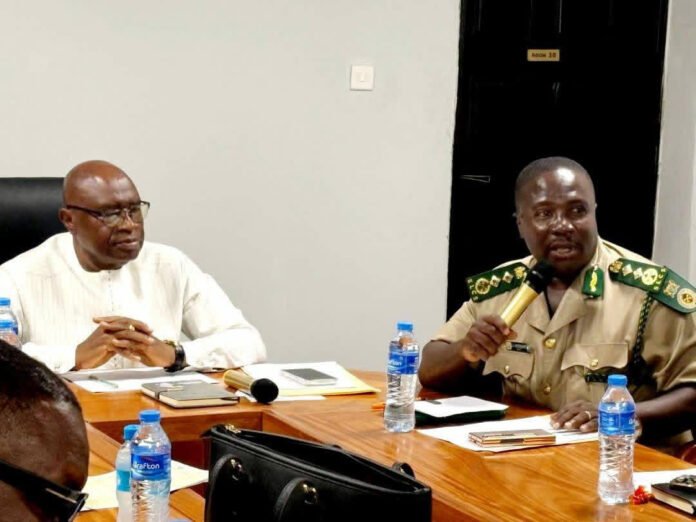
The development coincided with an official ceremony at State House in Freetown, where the Mexican Ambassador, Norma Ang Sanchez, presented her letters of credence to President Dr. Julius Maada Bio. During the ceremony, the Ambassador reaffirmed Mexico’s dedication to strengthening South-South cooperation and enhancing its bilateral engagement with Sierra Leone.

As part of the diplomatic proceedings, Ambassador Norma Ang Sanchez formally introduced Daklala M Antar to President Bio as Mexico’s Honorary Consul. The introduction underscored Daklala M Antar’s role as a key liaison in advancing diplomatic, economic and social relations between the United Mexican States and Sierra Leone.

President Dr. Julius Maada Bio, while receiving the credentials of the newly accredited envoy, reiterated Sierra Leone’s unwavering commitment to fostering strong diplomatic and economic partnerships with international allies. He emphasized that such engagements are vital to achieving national development goals and promoting shared prosperity.

In his remarks, President Bio warmly welcomed the Ambassador and acknowledged the importance of Mexico as a strategic partner. He noted that strengthening bilateral ties would open new avenues for collaboration in trade, investment, education and cultural exchange, ultimately benefiting both nations.

The ceremony also highlighted Sierra Leone’s broader foreign policy agenda, which prioritizes constructive engagement with global partners to support sustainable development. The presentation of credentials marked another milestone in the country’s ongoing efforts to expand its diplomatic footprint and reinforce its presence on the international stage.

The Ambassador of Mexico was formally presented to the President by Timothy Musa Kabba, Minister of Foreign Affairs and International Cooperation, further emphasizing the significance of the occasion within Sierra Leone’s diplomatic calendar.

Following his appointment, Daklala M Antar called on all Mexican nationals residing in Sierra Leone to register with the Honorary Consulate. He stressed that the initiative aims to establish a comprehensive database that will enhance communication, improve consular support services and ensure the welfare of Mexican citizens living in the country.

Daklala M Antar reaffirmed his commitment to strengthening bilateral relations, pledging to work closely with both Governments to promote mutual interests. He highlighted the importance of fostering people-to-people connections, encouraging trade partnerships, agriculture and facilitating cultural exchanges as part of his mandate.

Observers note that the appointment of an Honorary Consul is a strategic move that reflects Mexico’s growing interest in expanding its diplomatic and economic engagement in West Africa. For Sierra Leone, the development represents an opportunity to diversify its international partnerships and attract new investments.

The ceremony concluded on a positive note, with both sides expressing optimism about the future of Sierra Leone-Mexico relations. The appointment of Daklala M Antar is widely seen as a step forward in strengthening cooperation, enhancing diplomatic ties and promoting sustainable development between the two nations.

Orange Middle East and Africa Unveils Bold ‘Trust the Future’ Plan for 2026–2030 Expansion

Six diverse adults posing on a stage in front of a backdrop reading 'Trust the future' with a colorful fingerprint graphic, some holding small flags and smiling.

Orange Middle East and Africa has officially launched its ambitious new strategic plan, “Trust the Future,” positioning the telecommunications giant to deepen its impact across the region by accelerating digital inclusion, financial access and sustainable development.

Unveiled as a roadmap for the 2026–2030 period, the strategy reflects Orange’s commitment to building long-term trust with customers, partners and Governments, while expanding reliable, secure and inclusive digital services to millions of users across Africa and the Middle East. The announcement comes at a time when the region is experiencing rapid population growth and a surge in digital adoption, creating new opportunities for innovation and economic transformation.

Operating in more than 15 countries and serving over 150 million customers, Orange Middle East and Africa remains a critical growth engine for the Group, generating approximately €8 billion in revenue in 2025. With mobile usage continuing to expand, the company sees its new strategy as a decisive step toward consolidating its leadership in one of the world’s most dynamic digital markets.

At the heart of the “Trust the Future” plan are three strategic ambitions designed to drive sustainable growth and long-term value. The first pillar, customer intimacy, focuses on strengthening relationships with users by delivering services that are dependable, secure and tailored to evolving digital needs. Through that approach, the company aims to enhance customer loyalty and differentiate its brand in increasingly competitive markets.

The second pillar, innovative growth, targets expansion across both consumer and enterprise segments. That includes scaling connectivity through widespread 4G and 5G deployment, investing in infrastructure and developing robust digital ecosystems. Central to such an ambition is the continued growth of Orange Money, which has already reached approximately 47 million active users. The platform has become a cornerstone of financial inclusion, enabling millions of people and small businesses to access essential financial services without relying on traditional banking systems.

Complementing this is Max it, the company’s all-in-one digital application that integrates telecom services, payments and everyday tools. With over 20 million active users across 16 countries, the app is simplifying digital access and strengthening Orange’s position within the rapidly expanding digital economy.

The third pillar, excellence at scale, underscores the company’s focus on operational efficiency and sustainability. Orange continues to invest heavily in infrastructure, committing more than €1 billion annually to network expansion, data centres and international connectivity. Those investments have enabled extensive 4G coverage across all its markets, with nearly 100 million users now connected, while 5G services are already operational in seven African countries and expanding further.

Large-scale backbone projects, including cross-border fibre networks spanning thousands of kilometres, are also enhancing regional connectivity and resilience, supporting Governments, businesses and individuals with faster and more affordable digital access.

Beyond technology, the “Trust the Future” strategy places strong emphasis on human development. Since 2019, Orange has trained approximately 1.4 million young people through its network of Orange Digital Centers and partnerships with universities across the region. Those initiatives focus on equipping youth with digital skills, fostering entrepreneurship and supporting innovation, with more than 450 startups already benefiting from the programmes.

With Africa and the Middle East home to one of the youngest populations globally, Orange aims to expand its impact by supporting over three million young people by the end of the decade, ensuring they are equipped to thrive in a digital-first economy.

Sustainability also features prominently in the strategy. Through its Orange Energies initiative, the company is delivering clean, mobile-enabled energy solutions to underserved communities. Currently, over 30 percent of its network sites are powered by solar energy, a figure expected to rise steadily as Orange strengthens its environmental commitments.

In countries such as Morocco, where the company has operated for more than two decades and serves nearly 20 million customers, continued investments are reinforcing its position as a strategic digital hub. At the same time, Orange’s presence in markets like Sierra Leone is contributing to national development through expanded connectivity, financial inclusion and youth empowerment initiatives.

With the launch of “Trust the Future,” Orange Middle East and Africa is not only advancing its business objectives but also reinforcing its role as a long-term partner in the region’s socio-economic transformation. The strategy signals a forward-looking approach where trust, innovation and inclusivity are central to shaping a more connected and resilient future.

For millions of users across the region, the impact of the vision will be reflected in everyday experiences, seamless connectivity, accessible financial services and sustainable energy solutions, driving meaningful progress in the digital age.


Choithram Rolls Out 2026 Free Cataract Outreach Targeting 3,000 Beneficiaries Nationwide

Panel of three men at a conference table; center man speaks into a microphone while others listen, with water bottles on the table and a blurred banner in the background.

By Amin Kef (Ranger)

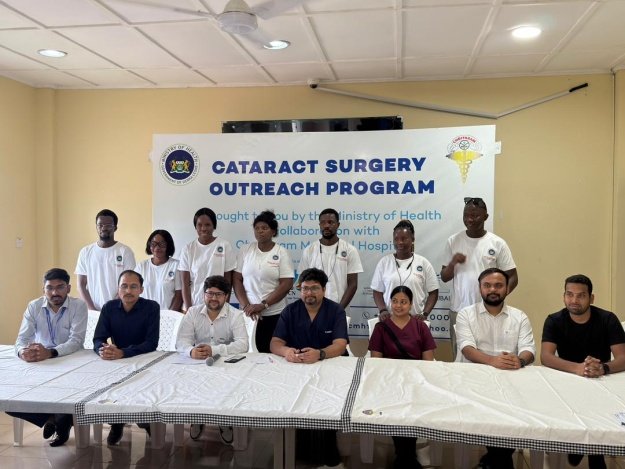
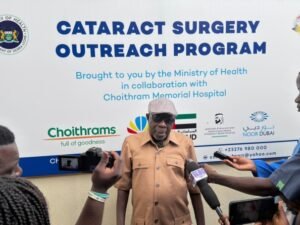
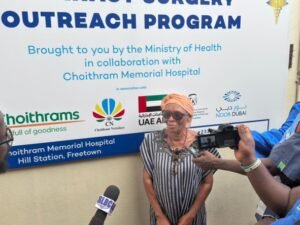
During a press conference held on Tuesday, April 21, 2026, at Choithram Memorial Hospital, the hospital unveiled its 2026 Free Cataract Surgery Outreach Programme, aimed at providing free eye screenings and cataract surgeries to eligible patients across Sierra Leone as part of national efforts to eliminate preventable blindness. The programme, which commenced on April 10, 2026, is scheduled to run until June 8, 2026, at the hospital’s Hill Station facility in Freetown.

The outreach is being implemented in collaboration with the Ministry of Health, in association with Choithram Netralaya, the Noor Dubai Foundation a member of the Mohammed bin Rashid Al Maktoum Global Initiatives and the Choithram International Foundation.

The well-attended event brought together key stakeholders in the health sector, including Head of the Choithrams Group, Harish Agnani; Medical Superintendent, Dr. George; Deputy Chief Medical Officer (Clinical) at the Ministry of Health, Dr. Mustapha Kabba; Deputy Programme Manager of the National Eye Health Programme, Sheku A. Koroma; as well as cataract surgeon Dr. Abhishek Patel and eye surgeons Dr. Meghna Shrishrimal and Dr. Akash Kathole, all from Choithram Netralaya in India, in addition to 3 Operation Theatre Staff also from India to support the camp alongside nurses from the hospital’s Eye Unit and members of the media.

Addressing the gathering, Harish Agnani officially announced the commencement of the 2026 Cataract Surgery Outreach Programme, a large-scale humanitarian initiative aimed at providing free eye care services to at least 3,000 people across the country. He disclosed that the programme, which began on April 14, will run for approximately eight weeks, with a team of specialist doctors from India expected to remain in Sierra Leone until June 8, 2026.

Emphasizing the inclusivity of the initiative, Harish Agnani reiterated that the outreach is entirely free for all beneficiaries. He revealed that within the first week, about 4,000 patients had already been screened, with nearly 200 successful surgeries completed, while the medical team continues to perform an average of 40 surgeries daily. By the end of the programme, the team is targeting between 1,500 and 1,800 cataract operations.

He described cataract surgery as life-changing, particularly for individuals who have lost their sight and independence, noting that restoring vision enables people to return to productive lives and regain their dignity. Reflecting on the success of the 2025 outreach, Harish Agnani stated that over 8,000 patients were screened nationwide, resulting in 1,542 successful surgeries with positive outcomes.

According to him, the initiative is being implemented in collaboration with the Ministry of Health, Choithram Netralaya in India, the Noor Dubai Foundation, the Mohammed bin Rashid Al Maktoum Global Initiatives and the Choithram International Foundation. Harish Agnani explained that screening is not limited to Freetown, as district hospitals across the country are actively involved in identifying patients, who are then transported to the capital for surgery. Beneficiaries are provided with transportation, accommodation and feeding, all fully funded by Choithram and its partners.

In addition to delivering critical services, the programme also focuses on capacity building. Harish Agnani disclosed that seven nurses from Choithram Memorial Hospital were sent to India in 2025 for specialized training at Choithram Netralaya, urging them to cascade the knowledge acquired to strengthen local expertise in eye care.

Speaking at the event, Dr. Mustapha Kabba, the Deputy Chief Medical Officer (Clinical) at the Ministry of Health, commended the outreach programme as a life-changing intervention that is significantly improving access to quality eye care services in Sierra Leone. He praised the visiting medical team for their dedication and described their continued engagement as a reflection of strong international collaboration.

Dr. Mustapha Kabba highlighted the importance of public-private partnerships in strengthening the healthcare system, noting that such collaborations are essential in addressing gaps in service delivery. He further revealed that the thousands of free surgeries conducted under similar initiatives represent a substantial financial investment in the country’s health sector, significantly reducing out-of-pocket expenses for patients.

He underscored the broader impact of the programme, explaining that patients are screened in district hospitals, transported to Freetown, treated and monitored, all at no cost. He also pointed to ongoing efforts by the Ministry of Health to strengthen specialist training locally, including the development of ophthalmology programmes under the national postgraduate medical framework.

Dr. Mustapha Kabba acknowledged improvements in medical infrastructure nationwide but stressed the need to build public confidence in local healthcare services, encouraging citizens to utilize available facilities rather than seeking treatment abroad. He reaffirmed the Ministry’s commitment to maintaining quality standards and supporting initiatives that expand access to healthcare.

Also speaking, Sheku A. Koroma emphasized the critical role of the National Eye Health Programme in supporting the outreach, particularly in conducting initial screenings in the provinces and ensuring follow-up care for patients after surgery. He noted that affordability and fear of surgical outcomes have long been barriers to eye care, but the success of previous outreach programmes has helped build trust and increase participation.

Sheku A. Koroma assured that all procedures carried out under the programme meet international standards, with surgeons utilizing the Manual Small Incision Cataract Surgery technique, known globally for its safety and effectiveness. He encouraged Sierra Leoneans to take advantage of the opportunity, describing the outreach as a significant step toward improving eye health outcomes nationwide.

The Press Conference concluded with a renewed commitment from all stakeholders to sustain the initiative and expand access to quality healthcare services, as the programme continues to restore sight and offer renewed hope to thousands across Sierra Leone.


Sierratel Set for Comeback as Government Adopts MVNO Model with Africell

Woman in teal blouse speaks into a handheld microphone at a panel, with a blue curtain backdrop and a Sierra Leone government ministry logo on the podium.
Minister of Communication, Technology and Innovation, Salima Monorma Bah

By Alvin Lansana Kargbo

The Government of Sierra Leone has approved a strategic partnership between Africell Sierra Leone and Sierratel aimed at reviving and modernizing the country’s national telecommunications provider through a Mobile Virtual Network Operator (MVNO) model.

The announcement was made during a weekly press briefing hosted by the Ministry of Information and Civic Education at the Mattai Conference Centre in Freetown on Tuesday, April 21, 2026. Chairing the session, the Minister of Information and Civic Education, Chernor Bah, stated that the main purpose of the briefing was to deliberate on a major development in the country’s telecommunications landscape.

He disclosed that to unveil the transition, the panel included the Minister of Communication, Technology and Innovation, Salima Monorma Bah, the Minister of Labour and Employment, Abdul Rahman Swaray and the Acting Managing Director of Sierratel, Mr. Matturi.

Providing details of the agreement, the Minister of Communication, Technology and Innovation, Salima Monorma Bah, confirmed that Cabinet had endorsed Africell as the strategic investment partner for Sierratel’s relaunch under the MVNO framework. She explained that the model would enable Sierratel to resume operations without the heavy financial burden of building and maintaining its own telecommunications infrastructure.

According to the Minister, Sierratel will leverage Africell’s existing network infrastructure to deliver voice, data and other digital services nationwide while maintaining its identity as a consumer-facing brand. Africell, on the other hand, will manage the underlying infrastructure, ensuring operational efficiency and service delivery.

“This partnership represents a practical and sustainable approach to restoring Sierratel,” she stated, emphasizing that the model allows for immediate service rollout, reduced operational costs and improved competitiveness within the sector.

According to the Minister, under the agreement, Sierratel will remain 100 percent owned by the Government of Sierra Leone, while both entities will operate under a revenue-sharing arrangement and maintain distinct brand identities. Officials stressed that the initiative does not involve direct Government funding but is structured to generate revenue from the onset while preserving national ownership.

As part of the initial phase, Africell is expected to inject approximately $2 million to address outstanding staff liabilities, including salary arrears and benefits. That intervention follows concerns raised earlier this year by Sierratel employees over unpaid salaries amounting to Le326 million, alongside unresolved entitlements. Total staff-related obligations are estimated at about $6.3 million.

Minister Salima Monorma Bah noted that the Government inherited longstanding challenges at Sierratel, including deteriorating infrastructure, unresolved staff issues and a significant loss of market share. She revealed that previous attempts to privatize the company failed due to the high capital investment required to rehabilitate infrastructure and settle liabilities in a competitive market.

Speaking at the briefing, the Minister of Labour and Employment, Abdul Rahman Swaray, highlighted that the new operational model is expected to transition Sierratel from sustained financial losses to immediate revenue generation once services commence. He indicated that rollout under the MVNO structure is expected within days.

He further explained that the arrangement allows the Government to retain ownership while leveraging private sector expertise to manage operations and resolve long-standing obligations, particularly staff welfare concerns. He also pointed out that Sierratel had been operating on outdated CDMA technology, limiting its ability to compete effectively in the modern telecommunications environment.

Officials emphasized that the agreement is anchored on key principles, including clear brand separation, affordability through regulatory pricing structures and the introduction of differentiated services to enhance market competition. The partnership is expected to facilitate faster service rollout, reduce operational costs, improve service quality and expand access to affordable telecommunications services nationwide.

Industry observers have described the move as a pragmatic solution to longstanding inefficiencies within the state-owned operator. The MVNO model, they note, significantly reduces capital expenditure while accelerating market re-entry, ultimately benefiting consumers through improved services and competitive pricing.

Authorities also believe that leveraging Sierratel’s established brand recognition alongside Africell’s modern network capabilities will stabilize operations, restore consumer confidence and reposition the company as a viable competitor in Sierra Leone’s telecommunications sector.

Government officials expressed optimism that the initiative will not only restore Sierratel’s relevance but also contribute significantly to the country’s broader digital transformation agenda. If successfully implemented, the partnership is expected to mark a turning point in the revival of one of Sierra Leone’s most historic public enterprises, reinforcing efforts to strengthen digital connectivity and support economic growth through technology.