The Ministry of Information and Civic Education has on Monday September 23, 2024 issued an official statement regarding the unauthorized landing of a fourteen-seater aircraft at the Freetown International Airport (FNA) on Friday, September 20, 2024. The aircraft, en route from Liberia to Mexico, landed without prior clearance, sparking immediate action by airport authorities who have since launched a full investigation.
According to the Ministry, the plane had four occupants, including the flight captain. Three of those on board are Mexican nationals, while the fourth individual holds a Spanish passport. The Sierra Leone Civil Aviation Authority (SLCAA), along with the Office of National Security (ONS) and other security forces, are spearheading both technical and security investigations into the incident.
Unrecognized Departure: The aircraft did not depart from any recognized airfield in Liberia.
– Lack of Authorization: It landed without a permit and failed to make contact with Freetown’s Air Traffic Control before touching down.
– Falsified Registration: The aircraft was found to be operating under a fake registration number, with some parts of the registration visibly altered.
– Technical Irregularities: Although the crew claimed their radio malfunctioned, technical inspections confirmed the radio system was fully operational.
– Non-compliance with Authorities: Crew members refused to hand over their travel documents to Sierra Leonean officials, despite multiple requests.
– Suspicious Financial Incentive: The flight captain, who initially claimed he could not speak English, later communicated in English and disclosed that he had been paid $20,000 to pilot the plane from Liberia to Mexico.
After a thorough inspection of the aircraft, authorities reported that no suspicious items were discovered. The four individuals on board have since been transferred to the Sierra Leone Police for further investigation. In addition, two air traffic controllers involved in the incident have been brought in for questioning, raising the number of people under investigation to six.
The aircraft has been secured and its keys handed over to the ONS. Both police and army personnel are now guarding the plane at FNA as the investigation continues.
The SLCAA is expected to release a comprehensive technical report on the incident soon. Meanwhile, the public has been reassured that Sierra Leone’s airspace and the Freetown International Airport remain safe for normal flight operations.
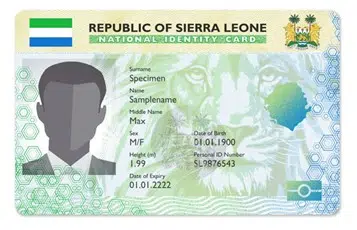
The ongoing issuance of Biometric ID Cards to both citizens and non-citizens marks a significant step towards improving national security and creating a more organized system of identification in Sierra Leone. As this process continues, it is important to highlight the critical role these cards play—not only as a formal requirement but as a crucial tool for personal security, fraud prevention, and enhanced access to essential services across the country.
The primary purpose of introducing Biometric ID Cards is to strengthen security at both individual and national levels. By incorporating biometric features such as fingerprints and facial recognition, these cards provide an additional layer of verification that makes it difficult for individuals to assume false identities or engage in identity theft. The unique features of the cards ensure that each individual is accurately identified, significantly reducing fraudulent activities and bolstering both personal and national security.
In a world where identity fraud is on the rise, especially with the increasing use of digital platforms for financial transactions, secure identification methods are more important than ever. The National Civil Registration Authority’s (NCRA) Biometric ID Cards serve as a strong defense against such fraud, protecting citizens, businesses, and government institutions from the dangers of identity theft and other deceptive practices.
Beyond security, Biometric ID Cards have become essential tools for accessing a wide range of public and private services. In Sierra Leone, many critical services require the presentation of valid identification, making the possession of the Biometric ID vital for seamless interactions with various sectors.
For instance, individuals seeking to collect remittances at Foreign Exchange Bureaus must present their Biometric ID. Without it, accessing these funds becomes more difficult, particularly as service providers tighten their identification requirements. Similarly, opening a bank account or cashing a cheque now requires the Biometric ID, ensuring the verification of an individual’s identity and reducing the potential for fraud.
The importance of the Biometric ID Card extends beyond financial services. When dealing with government agencies such as the Ministry of Lands, the card is essential for proving eligibility and legitimacy, whether applying for land acquisition or other services. Furthermore, students sitting for public exams are now required to present their Biometric ID Cards, ensuring accurate verification of identities and reducing the risk of impersonation.
Other sectors also benefit from the streamlined identification process provided by the Biometric ID Card. In healthcare, for example, the verification of patients’ identities becomes more efficient, and in social services, individuals can access benefits and support more easily.
As part of the Government’s ongoing efforts to enhance national security and prevent fraud, a statutory requirement has been imposed on all phone users in Sierra Leone. From September 1, 2024, to November 30, 2024, all phone users are required to link their National Identification Numbers (NINs) to their mobile phone SIM cards. Failure to comply with this regulation will result in users being unable to use their phones for communication and transactions after the deadline.
The reasoning behind this initiative is clear: by linking NINs to phone SIM cards, the government can more effectively monitor and prevent cybercrime, identity fraud, and other illegal activities often facilitated through the use of unregistered or anonymous mobile phones. This process ensures that every SIM card is registered to an individual whose identity has been verified through their Biometric ID, tightening controls over communication networks and enhancing overall national security.
Obtaining a Biometric ID Card is no longer a mere recommendation but an imperative for both citizens and non-citizens in Sierra Leone. From preventing identity fraud to ensuring access to vital services and maintaining communication networks, the benefits of the Biometric ID are far-reaching. The statutory requirement to link NINs with SIM cards further highlights the critical role these cards play in safeguarding the country’s digital and physical infrastructure.
As the NCRA continues to roll out Biometric ID Cards, it is essential for individuals to prioritize obtaining their cards to avoid disruptions in accessing services and to stay compliant with the new regulations. Ultimately, the Biometric ID Card represents a significant step forward in building a secure, organized, and fraud-free society in Sierra Leone.
NP (SL) Ltd, Sierra Leone’s foremost indigenous petroleum marketing company, stands as a testament to the visionary efforts of 35 Sierra Leoneans who, decades ago, pooled their end-of-service benefits to establish a venture that has since evolved into the country’s leading oil marketing entity. Through strategic innovation and astute management, NP (SL) Ltd has transformed from humble beginnings into a powerhouse, setting new standards in the petroleum industry while embracing modern technologies to meet the evolving needs of consumers.
In line with its commitment to maintaining a competitive edge through technological advancement, NP (SL) Ltd recently launched a series of innovative marketing strategies designed to improve the accessibility and efficiency of petroleum services. Currently in the pilot phase, these strategies are set to revolutionize how customers interact with the company’s products and services.
Among the most noteworthy innovations is the introduction of state-of-the-art mobile fuel tanks. With a capacity of 10,000 liters, these tanks are housed in containers and equipped with advanced technology for safe and efficient fuel dispensing. Designed for portability, these tanks can be easily relocated to different areas, offering a flexible solution for on-the-go refueling services. The tanks are fitted with explosion-proof technology, flow meters, and filtration systems, ensuring the highest safety standards. Additionally, they come with fire suppression mechanisms and a real-time Tank Gauging system, allowing customers to track fuel levels and usage with precision.
In a significant move that demonstrates its commitment to national security, NP (SL) Ltd has deployed these mobile fuel tanks to the Sierra Leone Police Force. This initiative ensures that law enforcement vehicles remain fueled and operational, ready to respond to emergencies. The deployment reflects NP (SL) Ltd’s focus on enhancing operational efficiency not only for its commercial clients but also for essential public services. Corporate entities also stand to benefit from these mobile fuel tanks, which provide convenience, safety, and real-time monitoring—ideal for businesses managing large fleets or operating in remote areas.
Furthering its reputation for innovation, NP (SL) Ltd has introduced the NP Energy Pass, a cutting-edge smart card designed to facilitate cashless transactions for petroleum products. The NP Energy Pass offers unmatched convenience, allowing customers to manage their fuel purchases seamlessly at NP stations across the country. With advanced security features, such as instant SMS notifications for each transaction and an OTP (One-Time Password) system for password recovery, the Energy Pass provides a secure and user-friendly payment option. Customers can easily recharge their Energy Pass at any designated NP station or the company’s Head Office, and the system supports transaction reversals if necessary.
The introduction of the NP Energy Pass follows the success of the NP Smart Card, which has long been a popular cashless payment option for fuel transactions. Both products exemplify NP (SL) Ltd’s dedication to offering secure, budget-friendly solutions to meet the diverse needs of its customers.
Beyond petroleum products, NP (SL) Ltd has also made substantial progress in promoting environmentally friendly energy solutions. The company’s NP Gas initiative, which provides gas cylinders in various sizes, offers consumers a cleaner and safer alternative to traditional cooking methods. Available at NP Filling Stations and through authorized dealers across Sierra Leone, NP Gas has been praised for its high performance and safety features, further solidifying NP (SL) Ltd’s reputation for customer satisfaction and environmental stewardship. By offering these green energy solutions, the company is playing a key role in creating a cleaner, safer environment for Sierra Leoneans.
NP (SL) Ltd’s commitment to Sierra Leone’s development extends far beyond its products and services. The company has consistently adhered to the country’s Local Content Policy, prioritizing the employment of Sierra Leoneans across all levels of its operations. Through robust training programs and skill development initiatives, NP (SL) Ltd is helping to reduce unemployment and poverty, while ensuring that its workforce is equipped with the expertise needed to drive the company forward.
This dedication to national progress is also reflected in NP (SL) Ltd’s Corporate Social Responsibility (CSR) initiatives. The company has supported a wide range of projects, from educational sponsorships to providing equipment to the National Fire Force, and promoting squash in secondary schools and colleges. One of NP (SL) Ltd’s most notable CSR contributions is the construction of a Burn Unit at Connaught Hospital in Freetown, a project that underscores its commitment to improving healthcare infrastructure in the country.
The company’s success in Sierra Leone has paved the way for its expansion into neighboring West African countries, including Guinea, Liberia, Ivory Coast, and The Gambia. This regional presence is a testament to NP (SL) Ltd’s commitment to growth and its mission to provide reliable petroleum products to consumers across West Africa.
NP (SL) Ltd continues to make its mark by opening new branches in remote areas of Sierra Leone, ensuring that even the most isolated communities have access to petroleum products. This expansion plays a crucial role in reducing energy poverty and contributing to the overall development of the country.
As NP (SL) Ltd continues to roll out cutting-edge solutions like the NP Energy Pass and mobile fuel tanks, the company remains at the forefront of technological advancement in the petroleum industry, delivering exceptional service to its customers while contributing significantly to Sierra Leone’s economic development.
The Deputy Minister II of the Ministry of Basic and Senior Secondary Education (MBSSE), Mamusu Patricia Massaquoi, expressed concern during a Press Conference at the Ministry’s Conference Room in New England Ville on Monday, 23rd September 2024,. The focus was the slow progress in uploading Continuous Assessment Scores (CASS) for Year One Senior Secondary School (SSS1) pupils, who are the current candidates for the 2025 West African Senior School Certificate Examination (WASSCE).
She stressed that completing the CASS upload is essential for students to be eligible for the 2025 Government WASSCE. “Principals are urged to ensure that only vetted and approved candidates are uploaded into the WAEC portal by the 30th September 2024 deadline,” she stated. “Failure to do so will result in severe consequences, including potential sanctions for schools that submit unapproved candidates.”
The Deputy Minister also reminded Principals to generate CASS reports from the WAEC portal and submit them to the Ministry for verification adding that any school that fails to comply or uploads unapproved candidates will have their records forwarded to WAEC, resulting in the removal of those students’ CASS entries.
Mamusu Patricia Massaquoi expressed frustration at the lack of compliance, stating that despite expecting 86,000 pupils to sit for the exams; only 60 out of 700 schools have so far fulfilled this critical requirement underscoring how that the lack of compliance from school Principals is unacceptable.
She reiterated that its “No BECE, No WASSCE” policy, ensuring that only pupils who have passed the Basic Education Certificate Examination (BECE) are eligible to sit for the WASSCE. “Schools that fail to submit continuous assessment scores risk preventing their pupils from taking the exams, endangering their futures,” she emphasized.
The Deputy Minister concluded by issuing a stern warning to schools, stressing that any institution found guilty of manipulating the system will face serious consequences. “We owe it to our children to ensure a fair and just system,” she asserted. “Any institution undermining this process will not go unpunished.”
For schools experiencing technical challenges with the upload process, the Ministry has encouraged Principals to report these issues promptly for assistance, she concluded.
The MBSSE continues to emphasize the importance of meeting the 30th September deadline, warning that failure to comply will have repercussions for the schools involved.
The Sierra Leonean diplomatic community and the country as a whole mourn the loss of Hashim Hashim, the esteemed Consul of Sierra Leone in Lebanon, who passed away on Sunday, 22nd September 2024. Affectionately known as “Pa Hashim,” he succumbed to a prolonged illness, leaving behind a legacy of dedication to his nation and remarkable service to both Sierra Leone and the wider Middle Eastern region.
During his tenure, Pa Hashim significantly elevated Sierra Leone’s diplomatic visibility not only in Lebanon but across the Middle East. His influence and reputation extended far beyond traditional diplomatic circles, as he became a respected figure among key political, diplomatic, and business leaders in the region. His network of relationships made him a key figure in fostering connections between Sierra Leone and the Middle East.
Known for his warm personality and generous spirit, Pa Hashim was regarded as a unifying force in the communities he served. Described as having a “tiger heart,” he possessed immense courage and resilience. He was deeply admired for his kindness, humility, and ability to treat everyone, regardless of background or status, as family. Throughout his life, he was committed to helping those in need, often extending his support to individuals who were not directly connected to him by blood but by his boundless compassion.
Pa Hashim’s passing came just five days after the death of his twin brother, Hassan Hussein Hashim, who was Sierra Leone’s Trade Envoy to the Middle East. Both brothers were laid to rest in Lebanon, leaving a void in the hearts of those who knew them. Their lives were deeply intertwined with Sierra Leone, where they spent much of their adult lives contributing to the nation’s development. Based in Kenema for much of their careers, they later partially relocated to Freetown after the country’s civil war ended in 2002.
The death of Pa Hashim and his brother Hassan has left a profound impact on the diplomatic and Lebanese communities, both in Sierra Leone and abroad. They were admired not only for their professional achievements but also for their unwavering commitment to the betterment of others. Pa Hashim, in particular, was a respected figure within Sierra Leone’s Lebanese community, frequently consulted on matters affecting the group, thanks to his deep understanding of the country’s political landscape.
Sierra Leone has lost two dedicated sons who, through their exemplary work in diplomacy and trade, gave their best to serve the nation and humanity. Their contributions will be remembered for generations to come, and their absence will be keenly felt by all who had the privilege of knowing them.
In a significant corporate move, Leonoil Company Limited has successfully acquired over 90% of Sierra Rutile Holdings Limited, cementing its control of the mining company. Following this major acquisition, Leonoil is set to proceed with the compulsory acquisition of the remaining shares, ensuring all Sierra Rutile shareholders receive compensation at the same rate as the initial off-market takeover bid. The entire acquisition process is anticipated to be completed within five to six weeks, adhering to the statutory procedure.
Once the compulsory acquisition is finalized, Sierra Rutile’s shares will be suspended from trading and subsequently delisted from the Australian Securities Exchange (ASX). This marks a pivotal moment in Sierra Rutile’s corporate history as Leonoil steps in as the controlling shareholder.
Following the announcement of Leonoil’s successful acquisition, significant changes have taken place at Sierra Rutile’s leadership level. Two key figures, Mr. Graham Davidson and Mr. Jan Joubert, have resigned from the Board, effective from September 23, 2024. These resignations paved the way for Mr. Mohamed Cole, a recently appointed representative from Leonoil, to assume the role of Chairman of the Sierra Rutile Board as of September 20, 2024. Mr. Cole replaces Mr. Greg Martin, who will continue to serve as an independent non-executive director on the Board.
The reshuffled Board now includes three Leonoil representatives—Mr. Mohamed Cole, Mr. Ibrahim Cole, and Mr. Patrick Lambert—who will be working alongside Sierra Rutile’s Managing Director and CEO, Mr. Theuns de Bruyn. Additionally, independent non-executive directors, Mr. Greg Martin and Mr. Patrick O’Connor, will continue to serve on the Board.
Leonoil’s acquisition of Sierra Rutile is expected to bolster its position in the mineral extraction industry, while shareholders of Sierra Rutile await the finalization of the takeover.
Rokel Commercial Bank (RCB) celebrated its 25th anniversary with a series of events on Sunday, September 22, 2024. The day’s activities began with a thanksgiving service at the Wesley Methodist Church on Lamina Sankoh Street in Freetown, followed by a grand march-past and a formal dinner at the Sierra Leone Bank Complex in Kingtom.
The celebration, attended by key figures from the banking sector, Government officials and business leaders, reflected on RCB’s 25-year journey and its substantial contributions to Sierra Leone’s economic growth.
In his keynote speech, Dr. Ekundayo Gilpin, Managing Director of Rokel Commercial Bank, emphasized the bank’s evolution since its founding in 1999. He described RCB’s progress as a “testament to resilience, innovation and a commitment to delivering world-class banking services to the people of Sierra Leone.”
“As we celebrate 25 years, we reflect not just on our achievements but on the challenges we’ve faced and the lessons we’ve learned. From navigating global financial crises to the recent pandemic, Rokel Commercial Bank has emerged stronger, thanks to the unwavering support of our clients and stakeholders,” Dr. Gilpin remarked.
A key highlight of the evening was Dr. Gilpin’s formal appointment as Chair of the African Leadership Council – Sierra Leone Chapter by the African Leadership Organization UK. Samuel Elaikwu, a senior representative of the organization, presented Dr. Gilpin with the official insignia and a Certificate of Listing as one of the top 40 African-Caribbean Business Leaders for 2024.
In his acceptance, Dr. Gilpin noted that this new role would enable him to promote Sierra Leone on the global business stage. He also urged his fellow countrymen to refrain from spreading negative narratives about Sierra Leone, as it could harm the country’s international reputation.
“This appointment is a victory for Sierra Leone,” Dr. Gilpin said. “It is also a testament to President Julius Maada Bio’s visionary leadership and the confidence he has placed in me to continue steering Rokel Commercial Bank towards success.”
Dr. Gilpin also assured the Bank of Sierra Leone of RCB’s readiness to integrate the national switch instant payment system, a new platform launched by the Central Bank to streamline financial transactions across the country.
Throughout the anniversary event, RCB’s contributions to the financial sector were showcased. The bank has been instrumental in promoting financial inclusion in Sierra Leone, with initiatives like mobile banking and increased credit access for Small and Medium-Sized Enterprises (SMEs).
RCB’s expansion into various regions of Sierra Leone has earned it a reputation for excellence in customer satisfaction, digital banking and corporate social responsibility. At the event, the bank also launched its “Next 25 Initiative,” a strategic plan designed to position RCB as the leading institution in digital banking innovation and inclusive financial services in the country.
Hon. Patricia Laverley, Deputy Minister of Finance, praised RCB for its role in Sierra Leone’s economic development. “RCB has not only been a financial institution but a true partner in our national growth. Their support for SMEs and the agricultural sector has helped create jobs and build wealth for many Sierra Leoneans,” she noted.
The celebration ended with a cocktail reception, live entertainment and the ceremonial cutting of an anniversary cake. RCB employees, customers and partners were recognized for their contributions to the bank’s success, while long-serving staff members were honored for their dedication and service.
As Rokel Commercial Bank enters its next phase, it remains committed to its mission of fostering economic development and financial empowerment for all Sierra Leoneans.
Sierra Leone’s Ibrahim Kallon, Chief Executive Officer of Kallon Travel Agency, has been honored with the prestigious Africa Travel 100 Global Leaders Award for 2024. The award, presented in Lagos, Nigeria, Africa’s bustling hub of business and entrepreneurship, recognizes Ibrahim Kallon’s exceptional contributions to the tourism and aviation industries, making him the first Sierra Leonean businessman in the sector to receive such recognition.
The Africa Travel Quarterly, the organizing body behind the award, highlighted Ibrahim Kallon’s achievements in line with international best practices. In a statement, they commended his commitment to service delivery marked by integrity and trust.
“We’re delighted to announce your nomination for the Africa Travel 100 Global Leaders Award,” the award body stated. “Your nomination, confirmed by the organizers and supported by distinguished African travel professionals, acknowledges your leadership and impact in the travel industry. The award is a testament to your exceptional contribution to the tourism and travel industry across Africa and the Diaspora.”
Nominees for the Africa Travel 100 Global Leaders Award are carefully selected based on stringent criteria. They must be of African descent and have demonstrated significant leadership in tourism, either by pioneering or excelling in the field. In addition, nominees must have been active in the industry for at least ten years, with a strong track record of contributions at national, regional and global levels. Only past recipients of the award are eligible to nominate new candidates.
Reflecting on his achievement, Ibrahim Kallon expressed his gratitude and reaffirmed his dedication to advancing the tourism and aviation sectors in Sierra Leone. “Since the inception of my company, we have remained committed to international best practices in tourism and aviation, delivering services with integrity and trust,” he said. “It is an honor to be recognized with this award, and I am proud to be the first Sierra Leonean businessman in the travel industry to achieve this milestone.”
Ibrahim Kallon also emphasized his company’s role in showcasing Sierra Leone’s tourism potential on a global scale, noting that this recognition will inspire further growth and innovation in the sector. “We will continue to expand our business while promoting Sierra Leone as a prime destination for global travelers,” he added.
The award ceremony took place at the luxurious Eko Hotel and Suites in Lagos, Nigeria, where Ibrahim Kallon joined other trailblazers from across the continent who have made significant strides in tourism and travel. The Africa Travel 100 Global Leaders Award celebrates individuals who have not only excelled in their field but also contributed to the growth and promotion of Africa’s tourism industry on the global stage.
In a significant step towards promoting financial inclusion and operational efficiency, Afrimoney, one of Sierra Leone’s leading mobile money operators, has formalized a partnership with Street Child Sierra Leone, a prominent Non-Governmental Organization. The two entities recently signed a Memorandum of Understanding (MoU) to streamline financial operations and improve service delivery for the NGO’s beneficiaries.
During the MoU signing ceremony, Alfred Joseph Lavalie, Corporate Sales Manager of Afrimoney, emphasized that the partnership aligns with the Bank of Sierra Leone’s mandate for broader financial inclusion. He noted, “As a mobile money operator, we are responding to this national call by providing innovative solutions that make services more accessible, especially for organizations like Street Child Sierra Leone.”
Alfred Joseph Lavalie highlighted the existing relationship between Street Child and Afrimoney’s parent company, Africell, which made the transition to mobile money services a natural evolution. “Given Street Child’s work, which involves frequent monetary transactions to support beneficiaries, incorporating their operations into Afrimoney’s platform will significantly streamline their processes and improve overall service delivery,” he added.
The Corporate Sales Manager further elaborated that Afrimoney aims to collaborate with various organizations, including NGOs, to offer tailored solutions that not only enhance operational efficiency but also contribute to the broader goal of financial inclusion across Sierra Leone. “Our goal is to ensure that institutions like Street Child can operate more efficiently, while we expand the reach of financial services to underserved communities,” Alfred Joseph Lavalie explained.
Keifala Kargbo, the Country Director of Street Child Sierra Leone, expressed his enthusiasm for the partnership, describing it as a pivotal moment in their ongoing relationship with Africell. “This is a significant milestone for us,” Keifala Kargbo stated. He explained that one of the key challenges his organization faced was the physical handling of large sums of money, which posed logistical and security risks.
“With Afrimoney’s platform, our team no longer needs to carry millions of Leones in cash for distribution to beneficiaries. This partnership ensures not only the safety and security of our staff and beneficiaries but also enhances transparency in the disbursement process,”
Keifala Kargbo noted.
The collaboration is expected to have a transformative impact on Street Child’s operations, enabling the NGO to manage its financial transactions more efficiently.
Keifala Kargbo also commended Afrimoney for its commitment to providing all necessary services to facilitate the smooth execution of Street Child’s activities across the country.
Both Afrimoney and Street Child are optimistic that the partnership will significantly enhance financial inclusion efforts in Sierra Leone, benefiting thousands of citizens who rely on the services provided by Street Child. This collaboration marks a notable advancement in the ongoing efforts to integrate mobile money solutions into the daily operations of NGOs, providing a secure and efficient alternative to cash-based transactions.
The partnership underscores Afrimoney’s broader mission to promote financial inclusion and digital financial services in Sierra Leone, aligning with the country’s long-term development goals of creating a more inclusive financial landscape.
The Independent Commission for Peace and National Cohesion (ICPNC), commonly known as the Peace Commission, marked the International Day of Peace on Monday, September 23, 2024, in a significant event held at the Bintumani Conference Hall in Aberdeen, Freetown. The gathering brought together local and international partners, dignitaries and community members to celebrate the global commitment to peace and solidarity.
Observed annually on September 21, the International Day of Peace aims to promote peace and highlight the importance of global cooperation for a sustainable world.
In his welcome address, Chairman of the event, Dr. Idriss Mahmoud Tarawallie, emphasized the vital significance of peace for Sierra Leoneans, particularly in light of the country’s historical challenges. He stated that this year’s theme, “Cultivating a Culture of Peace,” is particularly relevant given the myriad crises, geopolitical tensions and increasing societal divisions witnessed worldwide.
Rev. Shodankeh Johnson, Board Chairman of ICPNC, expressed gratitude to international and local partners, civil society organizations and supporters for their contributions to the Commission’s establishment. He remarked, “Peace is not a destination; it’s an ongoing journey. We must remain committed to this journey together, understanding that peace should become our daily lifestyle and eventually our culture.”
He reflected on Sierra Leone’s recovery from war, acknowledging the progress made while underscoring the need for continued effort.
Rev. Shodankeh Johnson emphasized the importance of correcting historical narratives, stating, “It was not diamonds that brought the war, but bad governance. We must write our own story.”
The Board Chairman called for unity against tribal conflict, emphasizing the shared goal of building a peaceful nation for future generations.
UN Resident Coordinator, Seraphine Wakana delivered a keynote address, stressing the complexities of sustaining a culture of peace amid global challenges, including technological warfare and social divisions. She noted, “This year marks the 25th anniversary of the UN General Assembly’s declaration on a culture of peace, a testament to our collective commitment. Peace is not merely the absence of conflict; it’s an active, participatory process that encourages dialogue and understanding.”
Seraphine Wakana emphasized that peace is essential for all humanity and urged attendees to recognize their role in fostering it. She asserted that cultivating a culture of peace involves promoting justice, equality and hope while addressing discrimination.
The ECOWAS Country Representative, H.E. Arouna Moussa, spoke about the persistent challenges in West Africa, particularly the resurgence of terrorism, which hampers regional development efforts. He noted that youth engagement remains a significant issue in promoting peace.
An Irish Ambassador representative, who is the Deputy Head of Mission, Carol Hannow, echoed the appropriateness of the day’s theme in light of current global crises, reinforcing Ireland’s commitment to sustainable development, governance and democracy.
The Civil Peace Service representative highlighted the importance of partnerships with the ICPNC and encouraged all Sierra Leoneans to embrace peace and unity.
Hon. Kemokoh Conteh, Chairman of Public Administration Political Affairs in Parliament, commended the Commission’s efforts, asserting that Sierra Leoneans share more commonalities than differences. He celebrated intermarriage and cultural ties as unifying factors in the nation.
Gerald Hatler, representing the EU Ambassador, emphasized the critical need for peace and national cohesion, while Joseph Ben-Kaifala of the Monument and Relics Commission called for collective remembrance of the war’s victims to prevent future conflicts.
The event featured speeches from representatives of the National Youth Commission, Women’s Forum, MARWOPNET, Children’s Forum Network and Talking Drum Studio, interspersed with traditional performances and a theme song to conclude the celebration.
Earlier on Saturday, September 21, 2024, the Independent Commission for Peace and National Cohesion commenced the commemoration of International Day of Peace with a peace march or flout parade themed: “Cultivating the Culture of Peace for National Cohesion.” The march, which was aimed at spreading the message of peace across the country, saw participants walk from Up-Gun to Bus Halt on Brookfields in Freetown.
The event marked the third consecutive year the Peace Commission has joined the global celebration of peace, which is recognized worldwide.
On that day the Deputy Executive Secretary of the Independent Commission for Peace and National Cohesion, Moses Margao, thanked the attendees for their participation and underscored the importance of cultivating peace as a daily practice.
He explained that fostering peace involves rejecting divisive elements like tribalism and corruption while promoting Sierra Leone’s positive values.
“The theme this year, ‘Cultivating the Culture of Peace for National Cohesion,’ reminds us that peace must be a habitual part of our lives,” he underscored. He also highlighted the Commission’s initiatives, including the establishment of a Peace Situation Room and a toll-free hotline (898) for citizens to report issues that may threaten national peace and security.
The Deputy Executive Secretary stated that the Peace Situation Room serves as a proactive platform where community members can raise concerns about potential threats, with the Commission working to ensure prompt responses to maintain national cohesion.
Paul Brima, Project Officer of Taking Drum Studio-SL in his address highlighted the importance of inclusivity in building a peaceful society. He emphasized that achieving peace requires considering all individuals equally, without bias or discrimination.
“To cultivate a culture of peace, we must involve marginalized groups and foster tolerance for one another,” he stated. He noted that conflicts often arise in public spaces, such as markets or transportation hubs, due to unaddressed emotional burdens and called for collective efforts to eliminate prejudices based on tribe, religion or background.
He concluded his remarks with a strong call for inclusivity, stressing that a peaceful society can only be achieved when all voices are valued in governance.
Kamanda Bongay, Chief Fire Force Officer of the National Fire Force, linked peace to broader issues such as justice, food security and education. He praised the Government’s efforts to ensure food sufficiency and equitable access to justice, noting that these achievements contribute to national peace.
He also reflected on a significant upcoming milestone for Sierra Leone, its role as chair of the United Nations Security Council in August 2024. “This is a moment of national pride,” he said, emphasizing that Sierra Leone’s leadership on the global stage is a testament to the country’s efforts to maintain peace.
He encouraged continued engagement with hard-to-reach communities, stressing the importance of national cohesion in sustaining peace.
Superintendent Samuel S. Conteh, Deputy Head of the Community Relations Department of the Sierra Leone Police, highlighted the coordinated efforts of various police teams in ensuring public order during the peace march. He extended gratitude to the Inspector General of Police, the Operations Support Division (OSD) and the broader police force for their contributions.
He underscored the significance of International Peace Day for Sierra Leone, known locally as Mama Salone and called for a shared commitment to peace. “Peace is our most valuable asset,” he said, urging the public to embrace mutual respect and acceptance, regardless of regional differences.
In his concluding remarks, he reaffirmed the Police Force’s dedication to promoting non-violence, emphasizing that peace is at the core of their mission.
Other speakers, including the representative of Marwopnet, made salient statements in which they underscored the importance of the prevalence of peace for development to thrive.