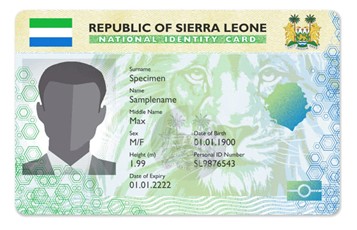
The National Civil Registration Authority (NCRA) has issued a crucial public notice concerning the ongoing collection of National, ECOWAS, and Non-National ID Cards. Since January 2023, the NCRA has been actively producing and distributing these ID cards, yet a substantial number remain uncollected across the Authority’s district offices and designated collection points throughout Sierra Leone.
On Thursday, August 15, 2024, the NCRA emphasized that applicants are notified via SMS when their ID cards are ready, using the mobile numbers provided during the application process. However, the Authority has observed that despite these notifications, many individuals have failed to collect their ID cards.
According to investigations by NCRA’s Technical Teams, several applicants provided phone numbers belonging to relatives or friends, which has complicated the notification process. Furthermore, some of the contact numbers given during registration have been found to be non-functional, contributing to the large number of uncollected cards across NCRA offices.
To address this issue, the NCRA is urging all applicants who registered on or before July 31, 2024, to visit the office or collection point where they initially applied, whether or not they have received an SMS notification. Individuals are reminded to bring their ID card application slips to facilitate easy collection.
The NCRA has also highlighted the importance of linking the National Identification Number (NIN) to mobile phone SIM cards as part of its broader mandate to enhance identity security. Between September 1 and November 30, 2024, all mobile phone users are required to link their NIN to their SIM cards to avoid service interruptions, which could result in being unable to make or receive calls, send SMS messages, or conduct mobile money transactions.
The NIN, embedded in the Biometric ID Card, plays a vital role in identity verification and access to key public and private services, from healthcare to financial transactions. A recent Cabinet directive mandates that individuals must have a Biometric ID Card to access these services, making it imperative for both citizens and non-citizens to collect their cards.
Beyond service access, the Biometric ID Card significantly boosts national security by serving as a reliable form of identification at strategic checkpoints, such as airports and border crossings. Moreover, integrating the NIN with SIM cards enhances efforts to combat cybercrime by enabling authorities to trace and identify individuals engaged in fraudulent activities.
To streamline the collection process, the NCRA has established several registration and collection centers, including:
NCRA Headquarters: 2 Walpole Street, Freetown
NCRA Office: 23B Off Kingharman Road, Freetown
NCRA Office: Kennedy Street, Freetown
NCRA Branch Office: 230 Lumley Road, Freetown (By the Roundabout)
NCRA Office: Waterloo, along the Freetown Highway (Opposite the Police Station)
Regional NCRA Offices in Bo, Kenema, Makeni, and Port Loko
For further information or assistance, the NCRA can be reached via:
The NCRA also offers corporate issuance of Biometric ID Cards to both public and private institutions.
As the deadlines approach, citizens and non-citizens alike are strongly urged to collect their Biometric ID Cards and link their NIN to their SIM cards to ensure uninterrupted service access and contribute to national security efforts.
India hosted the Third (3rd) Edition of Voice of Global South Summit which was held on 17 August 2024 virtually, with the theme, “An Empowered Global South for a Sustainable Future”. The Inaugural Leaders’ Session of the Summit was chaired by Prime Minister of India Narendra Modi. In addition, there were 10 Ministerial Sessions in the Summit.
H.E. Dr. Eldred Taylor, Deputy Minister I of Energy of the Republic of Sierra Leone participated in the Energy Minister’s Session of the Summit with the theme: “Sustainable Energy Solutions for a Sustainable Future” chaired by Pankaj Jain, Vice Minister / Secretary, Ministry of Petroleum and Natural Gas, Government of India, whereas Hon’ble Deputy Minister of the Ministry of Communications, Technology and Innovation of Sierra Leone, Ibrahim Sannoh participated in the Information and Technology Ministers’ Session of the Summit, chaired by Shri S Krishnan, Vice Minister / Secretary, Ministry of Electronics and Information Technology of India, with the theme: “DPIs for Development- A Global South Approach.”
Addressing the Ministers/Vice Ministers of various countries participating in the Energy Session, Hon. Deputy Minister of Energy I said that the Government of Sierra Leone was of the firm conviction that sustainable solutions must be at the forefront of energy transition efforts. He mentioned that President Julius Maada Bio as Minister of Energy was more than interested in the theme of the summit, adding that Sierra Leone, like many countries in the Global South, was faced with significant challenges in achieving energy security.
“As we grapple with volatile market dynamics, an infrastructure deficit and the impacts of climate change, the path to resilient and inclusive energy future requires strategic efforts and innovative solutions,” he said. Dr Taylor spoke about the challenges faced by the energy sector in Sierra Leone, noting that the inadequate and mostly outdated infrastructure limits access to reliable energy, particularly in the rural areas.
“To address these challenges, collaborative efforts are essential. Regional and international partnerships, especially South-South collaboration can play a crucial role in bridging the infrastructure gap, “Dr. Taylor stated, adding that, since 2017, they have had a $78 million 225KV Transmission Line project with the help of EXIM Bank of India.
The Deputy Minister of Energy l told the session that sustainable resource allocation was vital for creating a resilient energy system while also highlighting the various strides that have been made in Sierra Leone through investments in renewable energy sources.
He spoke about advancements in energy transition and innovative models, building resilient supply chains and capacity, mitigating climate-related risks, impact of geopolitical dynamics, adoption of circular economy principles and leveraging low-cost financing. “Addressing Sierra Leone’s energy challenges requires a multifaceted approach that includes strategic investments, innovative models and collaborative efforts,” he concluded.
Addressing the Information and Technology Ministers’ Session of the Summit with the theme, “DPIs for Development- A Global South Approach”, Hon’ble Deputy Minister of Communications, Technology and Innovation of Sierra Leone, Ibrahim Sannoh elaborated on the advancements of Sierra Leone in the field of digital infrastructure . Mentioning about the MoU between India and Sierra Leone on “Cooperation in the Field of Sharing Successful Digital Solutions Implemented at Population Scale for Digital Transformation (India Stack)”, he called for India’s cooperation in developing a robust digital infrastructure in Salone. The Hon’ble Deputy Minister appreciated India for organizing the third edition of the Summit, providing a platform to the countries of the Global South where they can talk about their successes and challenges being faced by these countries.
The Voice of Global South Summit is an initiative of the Government of India aimed at providing a common platform for the countries of Global South to share their perspectives and priorities. India hosted the 1st Edition of Voice of Global South Summit on 12-13 January 2023 with the theme: ‘Unity of Voice, Unity of Purpose’ and the Second Edition of the Summit on 17 November 2024 with the theme: “Together, for Everyone’s Growth, with Everyone’s Trust”.
In an exclusive interview with Le Point, one of France’s most prominent weekly magazines boasting a readership of over 22 million, the Vice President of Sierra Leone, Dr. Mohamed Juldeh Jalloh, discussed his nation’s priorities on the global stage.
He pointed out that with Sierra Leone’s recent election as a non-permanent member of the United Nations Security Council (UNSC) for 2024-2025, the country aims to spotlight the deteriorating security situation in the Sahel as a key international issue.
“We believe the United Nations Security Council remains the premier platform for dialogue to advance peace and security,” said Vice President Juldeh Jalloh. “This is an opportune moment, especially as the Council is under pressure to undergo reforms.”
The Vice President emphasized that Sierra Leone is determined to use its UNSC seat to push for stability initiatives across the Sahel, which has been plagued by rising terrorism and political instability. He highlighted President Julius Maada Bio’s recent visit to Burkina Faso, where discussions with junta leader, Ibrahim Traoré, centered around restoring constitutional order and addressing the growing regional crises. The President’s diplomatic efforts are set to continue with planned visits to Mali and Niger.
Addressing the strained relationship between the Sahel countries and the Economic Community of West African States (ECOWAS), Dr. Juldeh Jalloh underscored that dialogue is still possible. “Burkina Faso, Niger and Mali are founding members of ECOWAS. We believe that building effective relationships with these nations is crucial for restarting dialogue and restoring stability in the region.”
The Vice President also noted Sierra Leone’s own experience under President Bio, a former General who successfully transitioned the country from military to civilian rule in 1996. He believes this history positions Sierra Leone to offer valuable insights in guiding the Sahel nations back to stability.
On the broader international response, the Vice President pointed out the global implications of instability in the Sahel. “What’s happening in the Sahel concerns not just West Africa but the world. If left unchecked, it could threaten socio-economic gains and investments across the region.”
Regarding the recent alignment of Sahel countries with Russia, Dr. Juldeh Jalloh emphasized that Sierra Leone respects the sovereignty of nations in choosing their partners. “These countries are free to make their own decisions regarding foreign cooperation. Our focus is on maintaining dialogue and promoting stability.”
The interview also touched on Sierra Leone’s domestic progress with the Vice President highlighting strides in education, gender equality and infrastructure development since President Bio took office in 2018. He affirmed that Sierra Leone remains open to international partnerships and investment, with plans to establish an Embassy in France as part of this vision.
In conclusion, Dr. Mohamed Juldeh Jalloh reaffirmed Sierra Leone’s commitment to using its UNSC seat to amplify the Sahel crisis and push for actionable solutions that resonate within both the region and the broader international community.
In another development and in line with President Dr. Julius Maada Bio’s commitment to expanding energy access in rural communities, Vice President Dr. Mohamed Juldeh Jalloh on Friday, August 16th, 2024, inaugurated a solar mini-grid facility in Kalangba Town, Lokomasama Chiefdom in the Port Loko District.
The newly commissioned solar mini-grid facility is set to transform the lives of hundreds of residents and businesses by providing reliable and affordable electricity. This development is a significant step toward enhancing the socio-economic conditions of rural communities and fostering growth in small businesses and health centers.
The initiative is a testament to President Bio’s dedication to boosting energy access in underserved areas, a key aspect of his broader vision to drive sustainable development and improve living standards across Sierra Leone.
PAVI FORT – AL ASSOCIATES (SL) LTD, a prominent Sierra Leonean civil engineering and construction firm, is approaching the completion of a significant development project in Lumley. The project includes the construction of six transportation terminals and a modern market center, forming a key part of the broader initiative to enhance Freetown’s transportation and commercial infrastructure. This development aims to boost the city’s functionality and appeal.
With over 25 years of experience in large-scale development projects, Pavi Fort has established a strong reputation for delivering high-quality construction work within tight deadlines. The company is known for its commitment to quality, health, safety and environmental standards and it has assured the Government of its dedication to timely and high-standard execution.
Pavi Fort has consistently impressed with its ability to meet international standards in road and bridge construction. The company’s utilization of local content has not only led to high-quality outputs but has also created numerous jobs, contributed to development programs through its financial obligations and supported corporate social responsibility initiatives.
Under the astute leadership of Alimu Sanu Barrie, Chairman and Chief Executive Officer, Pavi Fort has played a pivotal role in fulfilling one of President Dr. Julius Maada Bio’s manifesto promises—improving road networks across the country. The company’s efforts have garnered commendation from funding agencies and widespread admiration from the public.
The current SLPP Government, led by President Bio, has made significant strides in development, including securing World Bank funding for the Integrated Resilient Urban Mobility Project (IRUMP). This project has enhanced public transportation, addressed climate resilience, improved road safety and strengthened institutional capacity in the transport sector.
Pavi Fort was awarded the contract for the IRUMP project in three key areas: Kissy Ferry Junction, Congo Cross and Lumley. The project involved comprehensive corridor improvements, including traffic management measures, intersection enhancements, coordinated traffic lights, improved sidewalks and better drainage.
The company successfully executed its latest activities under the World Bank-funded IRUMP, continuing its tradition of excellence in infrastructure development.
The extensive infrastructure initiative led by Pavi Fort has marked significant progress with the successful completion of Lot 1, which focused on enhancing road infrastructure and upgrading street lighting across the city. This initial phase set a solid foundation for the ongoing Lot 2, which is now under construction and includes the development of crucial transportation terminals and a new market center.
Lot 2 is divided into two phases: Phase One centers on building transportation terminals while Phase Two will focus on constructing the market center.
Ing. Mohamed Kamara, the Operations Manager for the project, provided an update on the current state of these developments. He reported that the transportation terminals are nearing completion, with 90-95% of the work finished. These terminals are designed to serve various modes of transport, including two terminals for Waka Fine buses, two for minibuses (including poda-podas), one for taxis and one for tricycles and motorcycles.
He further highlighted that the terminal area will feature several key facilities to enhance passenger and operator comfort. These include a Passenger Resting Building with canteens, restaurants and restrooms, and a Maintenance Building offering repair services, tire changes and vehicle washing. These amenities are expected to improve vehicle maintenance and ensure the overall efficiency and safety of the transportation system.
To address potential traffic congestion, particularly during major events such as the movement of presidential or ministerial convoys, Ing. Mohamed noted that the design includes alternative routes. These routes will allow convoys to bypass main thoroughfares, ensuring smooth traffic flow during peak times.
Regarding the market center, Ing. Hindolo Tibbie provided an update on its construction progress. The market center, a robust four-story structure, features a 1.5-meter-thick concrete basement designed to withstand the area’s swampy conditions. He described the market center as more than just a traditional marketplace as it aims to offer a comprehensive shopping experience similar to a modern mall.
According to him, the market center will include storage units for secure goods storage, a hospital for medical emergencies and entertainment areas for leisure activities. Special features will also include a bulk room for large-scale storage and a cool room for perishable goods. Strategic parking facilities are incorporated to facilitate smooth visitor access and efficient movement within the market compound.
Ing. Hindolo also addressed the engineering challenges encountered due to the swampy terrain. Advanced engineering techniques have been employed to ensure the structure’s durability and stability, he informed adding that despite an initial delay of one year for design and cost assessments, construction has been active for the past year and a half. The transportation terminals, he also intimated, are expected to be completed and handed over in September 2024, while the market center is progressing and will be completed in the near future.
The completion of this project is set to significantly impact the Lumley area and Freetown at large, it was noted.
Also, the new transportation terminals are anticipated to enhance public transport efficiency, reduce congestion and improve the commuting experience. Meanwhile, the market center is expected to become a bustling commercial hub, offering a range of goods and services to both residents and visitors. This development underscores Pavi Fort’s commitment to advancing Freetown’s infrastructure and meeting the needs of its growing population.
In recent developments, Minister of Works and Public Assets, Denis Sandy, along with a team of engineers from the Sierra Leone Roads Authority (SLRA) led by Ing. Patrick J. Lavalie, conducted a field inspection tour in Bonthe District on Saturday, August 17, 2024. The Minister expressed satisfaction with the progress made by Pavi Fort, particularly in the road clearing at both ends of the Tabe Bridge and the preparation of the campsite. He was impressed by the detailed explanations provided by Ing. Lavalie and the Pavi Fort team and voiced confidence that the Tikonko-Kpetema Lot 2 Project would be completed on schedule.
This sentiment was echoed by Pavi Fort Chairman Alimu Sanu Barrie.
Work is set to commence on the 38.1-kilometer Tikonko-Kpetema Mattru Jong Road Lot II in Bonthe District, Southern Sierra Leone. The contract for this project was awarded to Pavi fort Road Construction Company by the SLRA a few weeks ago. This project includes the 38.1 kilometers of the Tikonko-Kpetema Mattru Jong Road Lot II and an additional 8 kilometers from the junction to Serabu.
During the contract awarding, the CEO of Pavi Fort committed to begin the transport of equipment and machinery immediately after the contract signing. This commitment has been fulfilled, as evidenced by the commencement of bush clearing for campsite construction.
The contract stipulates a 24-month duration for the construction of the 38.1 km road.
Additionally, the CSE Company has started transporting various equipment for the upcoming construction of the Bumpeh Bridge, which will connect Bo District with Bonthe District.
Lot 1 of the Mattru Road project, spanning from Kpetema to Mattru Jong, is currently underway. This contract was awarded to the Ghanaian construction company Maripoma.
In light of recent misleading reports, it is crucial to set the record straight regarding Haj Fawaz, the respected owner of Fawaz Building Materials and Randlyn Holdings SL Limited. Our previous coverage inaccurately depicted his character and business operations. We would like to reaffirm that Haj Fawaz has achieved his success through unwavering dedication and ethical practices.
He is celebrated not only for his business acumen but also for his substantial philanthropic efforts. His work has had a transformative impact in the Southern Region of Bo, where he has improved countless lives through his charitable initiatives. Employing over 2,000 Sierra Leoneans, his investments span diverse sectors including real estate, hospitality, agriculture and fisheries.
Recent allegations against Haj Fawaz were fueled by a smear campaign orchestrated by a former associate, Sahr Ngegba who is currently entangled in legal troubles across Sierra Leone, Liberia and The Gambia, sought to damage Haj Fawaz’s reputation following business disagreements.
We acknowledge that Haj Fawaz, adhering to his principles of integrity, chose not to retaliate. His ongoing legal battles against Sahr Ngegba highlight the groundlessness of the accusations. The court proceedings reflect the baseless nature of the claims.
We regret any confusion caused and reaffirm our support for Haj Fawaz—a man of great integrity and honor. His success story is a testament to his hard work and commitment, not to any form of dishonesty or deceit.
Haj Fawaz, has long been recognized for his unwavering commitment to corporate social responsibility, significantly benefiting community welfare and development.
His company consistently meets its tax obligations, reflecting a strong dedication to ethical business practices. Recent unfounded allegations accusing Fawaz of defrauding the Government and selling substandard materials have been firmly contested.
Despite these malicious claims, Haj Fawaz maintains a reputation for integrity and transparency. His steadfast commitment to high-quality products and honest operations continues to positively impact the community, reinforcing his dedication to ethical business conduct.
Haj Fawaz’s decision to remain honorable in the face of such adversity underscores his commitment to ethical business practices. The ongoing legal actions against Sahr Ngegba serve as a reminder of the baseless nature of the accusations leveled against Haj Fawaz.
He continues to be a figure of respect and integrity, having built his successful enterprises through hard work and principled conduct.
Saidu Mansaray, the current Chief Executive Officer of NP (SL) Ltd, has already made a significant impact, steering the company towards new heights with a blend of charisma, hard work and ambition. Appointed in 2024, Saidu Mansaray brings a wealth of experience and a proven track record in the petroleum industry, having served NP (SL) Ltd with distinction since 2001.
His journey within the company is a testament to his dedication and managerial prowess. Starting his career as an Accounts Clerk, he consistently demonstrated integrity and excellence, leading to his rise through the ranks. After serving as Finance Manager, his leadership skills earned him the position of General Manager in 2022. His promotion to CEO comes as a natural progression, given his deep understanding of the industry and his professional background as a Chartered Accountant and Business Administrator.
Under his leadership, NP (SL) Ltd continues to uphold its strong commitment to customer satisfaction. Saidu Mansaray has made it clear that the company’s top priority is ensuring that their customers are always satisfied, promising that NP (SL) Ltd will go to great lengths to meet their fuel needs. Upon assuming his new role, he reaffirmed this commitment, expressing gratitude to customers for their loyalty and pledging to continue delivering top-notch service.
He has also outlined a forward-looking vision for the company, emphasizing innovation and digitization as key strategies for addressing emerging challenges. The CEO advocates for a collaborative leadership style, highlighting the importance of engaging with stakeholders, listening to their ideas and working together to achieve common goals.
One of his first major initiatives as CEO was to strengthen relationships with key regulatory bodies. On June 3, 2024, Saidu Mansaray, along with his management team, paid a courtesy visit to Dr. Brima M. Baluwa Koroma, the Executive Chairman of the Petroleum Regulatory Agency (PRA). The visit underscored NP (SL) Ltd’s commitment to maintaining high operational standards and collaborating with the PRA to ensure the smooth distribution of petroleum products across Sierra Leone.
During the meeting, Saidu Mansaray expressed gratitude for the PRA’s role in regulating the industry and emphasized NP’s dedication to upholding these standards. Dr. Baluwa Koroma, in turn, congratulated the CEO on his appointment and praised NP (SL) Ltd as the largest fuel importer in the country, noting the company’s significant contributions to the sector’s growth. The meeting also led to discussions on a national workshop for Dealers/Resellers, aimed at improving industry regulation and addressing issues such as the conduct of Pump Attendants.
Further strengthening NP (SL) Ltd’s ties with regulatory bodies, Saidu Mansaray met with the senior leadership of the Environment Protection Agency (EPA) on June 14, 2024. The meeting was part of his broader strategy to engage with key stakeholders and ensure NP’s compliance with environmental regulations. Saidu Mansaray assured the EPA of the company’s commitment to environmental protection and expressed optimism about future collaboration.
Dr. Abu Bakarr S. Massaquoi, Executive Chairman of the EPA, welcomed Saidu Mansaray’s leadership and promised continued technical support and a platform for constructive dialogue.
In a move that further cements NP (SL) Ltd’s commitment to industry standards, the CEO welcomed the newly appointed Executive Director of the Sierra Leone Standards Bureau (SLSB), Dr. John Paul Kaisam, and his team on August 13, 2024. The visit marked a significant milestone in the partnership between the SLSB and NP (SL) Ltd, with both parties reaffirming their commitment to advancing quality and accountability in the petroleum sector.
Dr. Dr. John Paul Kaisam highlighted key achievements, including the construction of a state-of-the-art petroleum lab at NP’s Terminal, a symbol of the fruitful collaboration between the two entities.
As NP (SL) Ltd embarks on this new chapter under Saidu Mansaray’s leadership, the company is poised to continue its legacy of excellence, with a renewed focus on innovation, customer satisfaction and strong partnerships within the industry.
The cost of rice in Sierra Leone has skyrocketed, leaving many households struggling to afford the staple food. The situation, which has been worsening over time, has now reached a critical point where even the smallest bag sizes are becoming prohibitively expensive for the majority of citizens.
Sierra Leone has long depended on imported rice, primarily supplied by private sector businesses. Although the country does produce rice locally, the quantity is far below the demand, and ironically, much of this domestic rice never reaches the capital, Freetown. Instead, it is often smuggled to neighboring countries, exacerbating the shortage at home.
The recent implementation of the 2024 Finance Act is a significant factor behind the soaring rice prices. Despite claims to the contrary, the Act’s restoration of a 5% import duty on rice has contributed to the sharp price increases. The Ministry of Finance justified this move by arguing that it would generate revenue for the Government and protect local rice production. Additionally, funds from this tax were supposed to support the Government’s flagship “Feed Salone” program, aimed at boosting domestic rice production.
Financial Secretary, Matthew Dingie, has promised that the Government would develop a pricing formula for essential commodities like rice, cement and iron rods to protect consumers. However, this plan has yet to materialize, leading many to question the Government’s commitment to addressing the crisis.
While the Ministry of Agriculture and Food Security and its partners have made efforts to support the “Feed Salone” initiative, the impact on food security and rice production has been minimal. The lack of significant progress means that for the foreseeable future, households will continue to face exorbitant rice prices that strain their ability to secure enough food.
The delay in implementing a pricing formula and the persistent high prices has led to growing frustration among citizens. Economic principles dictate that when demand exceeds supply, prices will rise. However, the situation is compounded by the restored import duty and other costs that importers face, which are passed on to consumers. As a result, rice stocks that once sold out in a few months now linger in warehouses for nearly a year due to reduced purchasing power.
Immediate and long-term measures are urgently needed to address this dire situation. Waiving the 5% import duty on rice could provide some relief by encouraging importers to lower their prices. The Government should also continue to support farmers, as recently demonstrated by the distribution of fertilizers across the country. A shift from subsistence farming to mechanized agriculture, along with the expertise of agricultural professionals, is essential for transforming the sector.
Improving the road networks leading to farming communities is another critical step. Poor infrastructure not only hinders the transport of agricultural produce to markets but also drives up transportation costs, further inflating prices. Without viable transport options within the country, farmers may resort to smuggling their goods to neighboring nations where returns are higher.
In this troubling scenario, urgent action is required to prevent widespread hunger and ensure that rice, a staple food for Sierra Leoneans, remains accessible to all.
The Volunteers and Staff of the Planned Parenthood Association of Sierra Leone (PPASL), commends the Government and partners including Save the Children for taking the bold step to make Child Marriage illegal in Sierra Leone.
This is a significant milestone in protecting children and ensuring their well-being and future opportunities for their growth and development.
Child marriage is a harmful practice with devastating consequences for young girls, including negative impacts on their physical and mental health, and education. We believe that any legislation aimed at combating child marriage must prioritize the best interests of the child and uphold the fundamental rights of all children to be protected from all forms of abuse, exploitation, and harm as the bill ensures comprehensive protection for children, which includes measures to prevent and address the root causes of child marriage.
PPASL is implementing a six-year project on ‘Strengthening Adolescent Sexual Reproductive Health’, whose main goal is to empower adolescent girls to make informed decision and choices for their well-being and growth. The Association has been engaged in several radio and TV discussion programmes on various topics ranging from Adolescent SRHR – Teenage Pregnancy Reduction Programmes, Early Child Marriage. PPASL’s projects are youth-focused and utilize integrated approaches.
The Association contributes to the country’s DHIS2 platform and data includes adolescent SRHR, early child marriage, and teenage pregnancy reduction, which contributed to this achievement.
PPASL is a member of technical working groups (TWGs) on ‘Teenage Pregnancy Reduction Secretariat’, which encompasses Child Marriage, Vice Chair for Peoples Alliance for Reproductive Health Advocacy, a CSO with over 60 membership advocating for the passage of the Safe Motherhood and Reproductive Health Bill; National SRH TWG.
It is crucial as a nation to work together, to raise awareness, enforce the law, and provide support to those at risk of child marriage. We recognise and appreciate the Office of the First Lady of the Republic of Sierra Leone Dr. Fatima Maada Bio for her commitment to ending this harmful practice and prioritizing the rights and welfare of children and the national launch to create public awareness.
As an organization committed to promoting the rights and well-being of children, we stand ready to work with the government, civil society, partners and other stakeholders to advocate for legislation that truly protect the rights of children in Sierra Leone.
We call on all Sierra Leoneans to prioritize the protection of children and to take immediate action to address the harmful practice of child marriage in the country.
About PPASL:
PPASL was founded on 19thAugust, 1959, is a leading service provider and advocate for SRHR services including Family Planning services, and employs these strategies to implement programmes – through static / outreach / mobiles clinics and Community Based Service Providers (CBSPs) in its operational districts in the Western Area, Bo, Kenema, Portloko, Bombali, and Kailahun Districts respectively.
PPASL is a member Association of the International Planned Parenthood Federation (IPPF), and gained full membership in 1973.
In a shocking turn of events that has shaken the peaceful community of Koya in the Western Rural District, the Sierra Leone Police have declared Osman Kargbo, said to be one of the key figures behind the violent August 10, 2022 protests, as a wanted man.
He is now facing serious accusations of conspiracy and riotous conduct, the latter of which has been classified by authorities as a treasonable offence under national law.
According to Police sources and community accounts, Osman Kargbo went into hiding after the 2022 unrest that erupted in several parts of the country. The protests, marked by chaos and anti-Government slogans such as “Bio must go,” were condemned by state officials as an orchestrated attempt to destabilize the nation. While economic frustration was cited by many as the catalyst, the Government pointed fingers at the opposition All People’s Congress (APC), accusing them of inciting the riots.
Osman Kargbo, whose name had surfaced in intelligence reports from that turbulent period, reportedly fled the public eye and quietly resurfaced in a community, known as Kwama, in the Koya District, where he took up work as a storekeeper and part-time security guard at a local warehouse. The facility, a vital storage hub for seeds and food items used by farmers and market women, soon became the scene of a troubling crime.
On the night of July 28, 2024, the warehouse was reportedly broken into and emptied by thieves, while Osman was on duty. Witnesses and victims say he raised no alarm and offered no resistance during the robbery. Some community members now believe he was complicit in the act. The theft left many residents devastated, especially women who depended on the warehouse to store their seasonal harvests.
When the incident was reported, Osman Kargbo was invited by the Police for questioning. He never showed up. As word spread of his suspicious disappearance, deeper investigations unearthed his alleged connection to the August 2022 riots. Police now say the same man accused of helping orchestrated violent protests has also become a central suspect in a robbery that robbed local livelihoods.
The dual allegations have ignited public outrage. Furious residents of Koya, including victims of the warehouse theft and supporters of the ruling Sierra Leone People’s Party (SLPP), reportedly descended on a house where Osman Kargbo was believed to be hiding. Armed with knives, machetes, and broken bottles, they combed the area in search of him. But Osman Kargbo, it appears, had already escaped through a back route and has been on the run ever since.
In response, the Sierra Leone Police have formally declared Osman Kargbo wanted. Authorities are calling on the public to assist in locating him but are also urging citizens not to take matters into their own hands.
This report by our investigative reporter uncovers more than just the story of one man’s fall from public view; it highlights the growing tension between economic desperation, political mistrust, and justice in Sierra Leone. The case of Osman Kargbo stands as a stark reminder of how alleged individual wrongdoing can inflame already vulnerable communities. The Police have assured the public that investigations are ongoing and justice will take its course.
The tragic death of Sia Fatu Kamara, a young and promising Communications Executive at the Freetown City Council (FCC), has cast a harsh spotlight on the ongoing scourge of domestic violence in Sierra Leone. Her demise is not just a personal loss but a societal wound, demanding urgent attention and action.
Sia was more than just a public servant; she was a beacon of hope for Freetown’s vision of a greener and more sustainable city. However, her life was cut short under circumstances that reflect the harsh realities faced by too many women in our society. Allegations point to a brutal attack by her boyfriend, leaving her with fatal injuries, including broken ribs and a damaged spinal cord. While the accused remains in custody at the Lumley Police Station, the principle of presumed innocence remains.
Nonetheless, the Criminal Investigations Department of the Sierra Leone Police must conduct a thorough and transparent investigation. If the evidence supports the allegations, the justice system must act decisively, delivering the full weight of the law to the perpetrator if convicted. Such a response is essential not only for justice for Sia but as a clear message that domestic violence will not be tolerated.
Sia Fatu Kamara’s case is one of many that highlight the pervasiveness of domestic violence in Sierra Leone. Gender-Based Violence (GBV) remains deeply embedded in the cultural, economic and social fabric of the country. According to a World Bank report, 62% of women and girls aged 15-49 experience physical or sexual violence, with spousal violence accounting for 61%. For women and girls living with disabilities, the risk is even higher—two to three times that of their non-disabled counterparts.
These statistics reveal a grim reality, especially in regions like Port Loko, where 81% of married women in the same age group report experiencing violence. In contrast, Kenema records a lower rate of 35%. Despite the existence of laws like the Domestic Violence Act of 2007, enforcement remains weak, with systemic delays and societal stigma contributing to underreporting and secondary victimization of survivors.
The death of Sia Fatu Kamara should be a catalyst for profound cultural and systemic change. Domestic violence must no longer be seen as a private issue or justified by harmful societal norms. We need to challenge the toxic attitudes that perpetuate silence and suffering. Education and community engagement are key to this transformation. Schools, religious institutions, community leaders, and media outlets must collaborate in raising awareness and shifting public perception about domestic violence.
Addressing domestic violence requires a comprehensive strategy. Strengthening legal frameworks, increasing support for survivors and enhancing the capacity of law enforcement and judicial systems are crucial. Police Officers must receive specialized training to handle domestic violence cases with sensitivity and effectiveness. Additionally, the judiciary needs resources to expedite cases, reducing the delays that often exacerbate the trauma for survivors.
Psychosocial support services are equally critical. These services, which include counseling, mental health support and rehabilitation programs, must be made more accessible, especially in rural and underserved areas. Safe homes should be established for survivors, offering them refuge and necessary care. Health practitioners also need training to recognize and appropriately respond to signs of domestic violence.
Sia Fatu Kamara’s death must not be in vain. It should ignite a national movement to eradicate domestic violence. Her story is a stark reminder of the urgent need for collective action to protect women and girls in Sierra Leone. We must stand together—government, civil society, and communities—to declare that enough is enough.
In her memory, let us work toward a future where every woman and girl can live without fear in their own homes. We owe it to Sia, and to every citizen, to ensure a Sierra Leone free from violence.