Home Blog Page 36

Major General Kemoh Sesay Hails Troops’ Professionalism After Sierra Leone–Guinea Border Incident

Chief of Army Staff of the Republic of Sierra Leone Armed Forces (RSLAF), Major General Kemoh Sesay

By Amin Kef (Ranger)

The Chief of Army Staff of the Republic of Sierra Leone Armed Forces (RSLAF), Major General Kemoh Sesay, has commended Sierra Leonean troops for their professionalism, discipline and restraint during a recent border incident involving Guinean security forces in Falaba District.

Major General Kemoh Sesay made the remarks during the Ministry of Information and Civic Education’s Weekly Press Briefing held on Tuesday, March 3, 2026, at the Miatta Conference Centre in Freetown. The Press Conference followed the safe release of sixteen Sierra Leonean security personnel who had earlier been arrested by Guinean forces during a disagreement along the Sierra Leone–Guinea border.

Providing a detailed account of the incident, the Army Chief explained that the Sierra Leonean personnel had been preparing to erect a temporary structure on land reportedly allocated to them by a Paramount Chief on the Sierra Leonean side of the border.

However, during the process, approximately ten Guinean soldiers, accompanied by a Guinean Paramount Chief from a nearby community, reportedly approached the location and halted the construction, claiming that the land in question fell within Guinean territory.

According to Major General Kemoh Sesay, the situation escalated when the Guinean soldiers later returned with a significantly larger contingent of armed personnel, estimated at more than 300 troops. Faced with overwhelming numbers, the sixteen Sierra Leonean security personnel on the ground were subsequently arrested by the Guinean forces.

Despite the tense situation, the Army Chief praised the conduct of the Sierra Leonean commanding officer and his troops, stating that their calm and measured response helped prevent the incident from escalating into a potentially serious military confrontation between the two neighbouring countries.

“The officer made a battle appreciation,” Major General Kemoh Sesay explained. “He understood that even if shots were fired and lives were lost, the situation could easily escalate into a full-scale conflict between two sister nations.”

He said the commanding officer carefully assessed the situation on the ground and made the decision to prioritize de-escalation rather than engage in armed confrontation. According to him, the troops complied peacefully when surrounded and asked to surrender their weapons, thereby avoiding unnecessary bloodshed.

Major General Kemoh Sesay stressed that the decision should not be interpreted as weakness but rather as a demonstration of discipline, patriotism and a strong commitment to maintaining peace and stability in the region.

“It takes courage and professionalism for soldiers to choose restraint in such circumstances,” he said. “Our troops showed maturity and discipline in handling the situation.”

He further confirmed that all sixteen Sierra Leonean security personnel have since been safely released and returned to Sierra Leone. Their weapons, he added, were also returned intact by the Guinean authorities.

While addressing broader issues relating to the Sierra Leone–Guinea boundary, the Major General called for a comprehensive joint border survey involving both countries in order to resolve long-standing boundary uncertainties.

He disclosed that the proposed survey would cover the entire Sierra Leone–Guinea boundary, stretching across districts including Kambia, Koinadugu, Falaba, Kono and Kailahun.

The Army Chief suggested that neutral regional and international organisations such as the Mano River Union, the Economic Community of West African States (ECOWAS) and the African Union could be involved in the process to ensure transparency and mutual agreement.

According to him, once a comprehensive and officially recognized joint boundary survey is conducted, recurring border disputes between the two countries are expected to be conclusively addressed.

Major General Kemoh Sesay concluded by reaffirming the Republic of Sierra Leone Armed Forces’ commitment to safeguarding the country’s territorial integrity while maintaining peaceful diplomatic relations with neighbouring Guinea.

He also commended the captain and troops involved in the incident for their professionalism and composure, noting that their actions helped preserve peace between the two nations while protecting Sierra Leone’s national interests.

Foreign Minister Updates on Border Incident, Middle East Tensions and Safe Evacuation of Sierra Leoneans

Minister of Foreign Affairs and International Cooperation, Alhaji Timothy Musa Kabba

The Minister of Foreign Affairs and International Cooperation, Alhaji Timothy Musa Kabba, has reassured Sierra Leoneans that the Government remains firmly committed to diplomacy, regional peace and the protection of its citizens following the recent border disagreement between Sierra Leone and Guinea that led to the arrest of sixteen Sierra Leonean security personnel.

Speaking at the Weekly Press Conference convened by the Ministry of Information and Civic Education (MoICE) on Tuesday, 3rd March 2026, Minister Alhaji Timothy Musa Kabba provided a comprehensive briefing on the diplomatic efforts that secured the safe release of the detained officers and addressed broader regional and international issues affecting Sierra Leone. The Press Conference also featured the Chief of Army Staff, Major General Kemoh Sesay and Sierra Leone’s Deputy Ambassador to Guinea, H.E. Fatmata Sawaneh.

Alhaji Timothy Musa Kabba disclosed that the Government of Sierra Leone deployed a carefully coordinated diplomatic strategy to secure the release of the detained security personnel, who had been arrested by Guinean forces during a border disagreement in Falaba District.

According to him, the swift intervention was guided by Sierra Leone’s longstanding commitment to diplomacy and regional cooperation. He explained that historical, cultural and political ties between Sierra Leone and Guinea played a vital role in resolving the matter peacefully.

“The relationship between Sierra Leone and Guinea is deep and longstanding. Our nations share historical, cultural and economic bonds that make dialogue and cooperation the only viable path in moments of misunderstanding,” the Minister stated.

He confirmed that the sixteen officers were treated with dignity while in custody and were later released following diplomatic engagements between the two Governments.

The Foreign Minister also commended the leadership of Vice President Dr. Mohamed Juldeh Jalloh, who coordinated key aspects of the diplomatic response to ensure a peaceful resolution.

Minister Alhaji Timothy Musa Kabba further reassured the public that relations between Sierra Leone and Guinea remain cordial and strong, despite the recent border misunderstanding.

He reminded citizens that the two countries share a unique historical connection, particularly between 1967 and 1997, when Guinea provided refuge for Sierra Leonean leaders during periods of political instability.

Beyond history, he emphasized that the two nations maintain strong cultural, social and economic interactions, including cross-border trade and community ties.

“Conflict between Sierra Leone and Guinea would not only be unnecessary but also counterproductive to the progress and stability both countries seek,” he stressed.

The Minister reiterated that both Governments remain committed to maintaining peace along their shared border while strengthening diplomatic cooperation.

Minister Alhaji Timothy Musa Kabba  also addressed concerns about the ongoing conflict in the Middle East, particularly regarding the safety of Sierra Leoneans residing in the Gulf region.

He referenced President Dr. Julius Maada Bio’s statement issued in his capacity as Chairman of the Economic Community of West African States (ECOWAS), in which the President called for restraint and de-escalation among the parties involved in the conflict.

President Bio, he noted, urged all actors to operate in accordance with the United Nations Charter and International Law, while encouraging renewed diplomatic engagement through regional and international frameworks.

Minister Alhaji Timothy Musa Kabba emphasized that ECOWAS’s position is consistent with that of the African Union, both of which are advocating for peaceful resolution and diplomatic dialogue.

Providing further updates, the Foreign Minister confirmed that the Government of Sierra Leone recently successfully evacuated twenty-four nationals and embassy personnel from the Islamic Republic of Iran following escalating tensions in the region.

The evacuees were safely relocated to the Republic of Armenia as part of emergency measures activated by the Ministry of Foreign Affairs and International Cooperation.

According to him, the group comprised fourteen students, one private citizen, three Sierra Leonean diplomats and six locally recruited staff members of the Sierra Leone Embassy in Tehran.

He assured the public that the Government continues to monitor developments across the Middle East and remains prepared to take additional measures if necessary to ensure the safety of Sierra Leoneans abroad.

“The safety and welfare of Sierra Leonean citizens anywhere in the world remains a top priority for this Government,” he emphasized.

The Minister concluded by reaffirming Sierra Leone’s unwavering commitment to diplomacy, regional cooperation and peaceful conflict resolution.

He stressed that the Government will continue working closely with neighbouring countries and international partners to maintain stability and safeguard Sierra Leone’s national interests.

The Foreign Minister also urged the public to remain calm and rely on verified information from official sources, noting that the Government remains proactive in addressing both regional developments and global events that may affect Sierra Leone and its citizens.

Vice President Hosts Fullah Progressive Union, Highlights Role of Community in National Development

Vice President Hosts Fullah Progressive Union

By Amin Kef (Ranger)

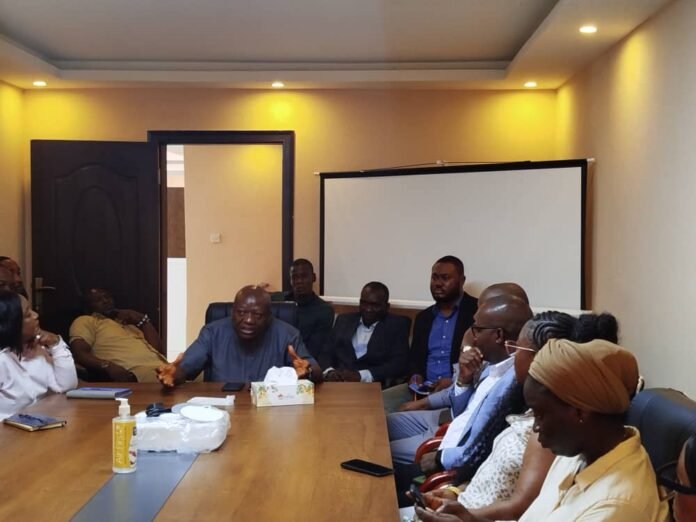
Sierra Leone’s Vice President, Dr. Mohamed Juldeh Jalloh, on Tuesday, March 3, 2026, hosted members of the Executive of the Fullah Progressive Union (FPU) for an Iftar gathering at his residence in Freetown, where discussions focused on the growth, sustainability and future direction of the union.

The delegation was led by the President of the Fullah Progressive Union, Alhaji Umaru Sanu Barrie, and included several key members of the organization’s leadership. The meeting provided a moment for reflection on the Union’s historical achievements, its commitment to community service and its continued contribution to national development.

During the engagement, the leaders of the Fullah Progressive Union commended Vice President Juldeh Jalloh for his humility in public service and his steadfast dedication to Sierra Leone and the leadership of President Dr. Julius Maada Bio.

Among those who spoke during the gathering were the Secretary General of the Union, Alhaji Osman Bah and the Financial Secretary, Alhaji Abdulrahman Abdulrazak Bah. Both officials praised the Vice President for what they described as his consistent support for the activities and vision of the Fullah Progressive Union.

They highlighted Dr. Mohamed Juldeh Jalloh’s longstanding engagement with the organization and his contributions to initiatives aimed at strengthening the Union’s development agenda. According to them, his leadership and encouragement have played an important role in helping the Union expand its outreach and maintain its focus on promoting education, social support and community empowerment.

The Union leaders also reflected on the organization’s work in supporting educational opportunities for young Sierra Leoneans. Over the years, the Fullah Progressive Union has been involved in scholarship initiatives that have assisted hundreds of students across the country. They noted that such interventions continue to play a vital role in empowering young people and contributing to the country’s human capital development.

In addition to educational support, the FPU has also extended assistance to vulnerable groups within society, including widows and disadvantaged families. The leadership of the union reaffirmed its commitment to sustaining these humanitarian efforts as part of its broader mission to strengthen community solidarity and promote social welfare.

Responding to the remarks, Vice President Dr. Mohamed Juldeh Jalloh expressed deep appreciation for the visit by the Union’s leadership and commended the Fullah Progressive Union for its dedication to community service and national progress.

He described the Union as a valuable partner in promoting social development, noting that organizations driven by community spirit and volunteerism play an important role in complementing Government efforts aimed at improving the lives of citizens.

Dr. Mohamed Juldeh Jalloh particularly praised the Union’s scholarship programme and its support to vulnerable groups, describing such initiatives as meaningful contributions to building a more inclusive and supportive society.

The Vice President encouraged the leadership of the Fullah Progressive Union to remain steadfast in their mission and continue expanding their activities to reach more communities across Sierra Leone.

He emphasized that community-based organizations have the capacity to drive positive change at the grassroots level, adding that sustained collaboration and commitment are essential for national development.

The Iftar gathering concluded with prayers offered for peace, unity and continued progress in Sierra Leone. Members of the Fullah Progressive Union reaffirmed their commitment to supporting initiatives that promote national cohesion and development while pledging their continued support for the Vice President’s vision for a prosperous Sierra Leone.

APC Restates Decision to Withdraw from Government

By Foday Moriba Conteh

The opposition All Peoples Congress (APC) has reaffirmed its decision to withdraw its elected officials from participation in governance processes, citing concerns over the Government’s handling of electoral reforms and the recent appointment of the Chief Electoral Commissioner.

In a Press Statement issued on Tuesday, March 3, 2026, the APC disclosed that its leadership and negotiating team attended a meeting convened by the Independent Commission for Peace and National Cohesion (ICPNC) at Brookfields Hotel in Freetown. The meeting brought together key stakeholders, including the Attorney General and Minister of Justice, representatives of ECOWAS and other international and development partners to assess progress on the implementation of recommendations made by the Tripartite Committee under the Agreement for National Unity.

According to the APC, the central focus of the engagement was to review the status of electoral reform commitments outlined in the Tripartite Agreement. During the deliberations, the party expressed strong dissatisfaction with what it described as persistent disregard by the Government in implementing the agreed reforms.

The APC specifically pointed to the appointment of Edmond Sylvester Alpha as Chief Electoral Commissioner and Chairman of the Electoral Commission for Sierra Leone (ECSL), arguing that the decision contradicts the spirit and sequence of reforms outlined in the Tripartite framework. The party maintained that the appointment has raised serious concerns about the credibility of the electoral management body and could undermine public confidence in future elections.

In its statement, the APC asserted that Edmond Sylvester Alpha is widely associated with the contested 2023 electoral process, a development the party believes could further erode trust in the Electoral Commission if left unaddressed. The party therefore reiterated that its withdrawal from parliamentary and local council participation remains in force until Edmond Sylvester Alpha vacates the position of Chief Electoral Commissioner.

The APC leadership emphasized that the decision to withdraw from governance structures was not motivated by partisan interests but by what it described as a principled stance aimed at safeguarding electoral integrity and democratic legitimacy in Sierra Leone. According to the party, its actions are intended to encourage adherence to constitutional principles and to ensure that reforms agreed upon under the national unity framework are implemented faithfully.

Furthermore, the party underscored its commitment to the democratic process and reiterated that it remains open to constructive engagement once credible steps are taken to restore public confidence in the electoral reform agenda.

“The party remains ready to re-engage constructively in the governance process once meaningful steps are taken to restore confidence in the electoral reform process and uphold the commitments contained in the Agreement for National Unity,” the statement noted.

The APC also reaffirmed its commitment to peaceful and lawful means of political engagement, stressing that its approach is guided by a desire to defend the sovereign will of the people while maintaining stability and democratic order in the country.

The statement was signed by the APC National Secretary-General, Lansana Dumbuya, who reiterated the party’s dedication to democratic principles and its continued pursuit of electoral reforms through legitimate and peaceful channels.

The meeting at Brookfields Hotel forms part of ongoing national and international efforts to monitor and facilitate the implementation of the Tripartite Committee’s recommendations aimed at strengthening Sierra Leone’s democratic institutions and restoring confidence in the country’s electoral processes.

Government Records Strong Performance Across Ministries in 2025 Ministerial Contract Evaluation

Chief Minister, David Sengeh

By Isatu Sankoh

The Government of Sierra Leone has recorded notable progress in public sector delivery and accountability following the release of the 2025 Ministerial Performance Contract Report by the Office of the Chief Minister. The comprehensive assessment evaluates the performance of all Government Ministries and provides insight into how effectively they delivered on national priorities during the review period.

The report assesses 29 Ministries and their affiliated Departments and Agencies, examining their performance against clearly defined targets agreed upon under the Government’s performance management framework. Introduced as part of President Dr. Julius Maada Bio’s governance reforms, the performance contract system is designed to ensure that Ministries remain accountable for delivering measurable results that improve the lives of citizens.

According to the report, the overall performance of Ministries in 2025 was rated “Good,” with an average performance score of 78 percent, reflecting steady improvements in governance, financial stewardship, service delivery and public accountability across Government institutions.

The Ministerial Performance Contract system is anchored in the Government’s Medium-Term National Development Plan (2024–2030) and the administration’s flagship development agenda known as the “Big Five Game Changers.”

These national priorities include strengthening food security and inclusive economic growth, improving human capital development, expanding youth empowerment initiatives, advancing technology and infrastructure and enhancing public sector governance.

Under the system, each Ministry signs an annual contract with the President outlining specific targets linked to national development objectives. Ministries are subsequently evaluated on their ability to meet those commitments using measurable performance indicators.

In the 2025 assessment cycle, Ministries were evaluated across 17 key performance indicators covering areas such as policy formulation, service delivery improvements, financial management, procurement compliance, citizen engagement and institutional accountability.

The evaluation process involved self-assessment reports from Ministries supported by documentary evidence. These reports were verified by the Performance Management Team within the Office of the Chief Minister with support from independent institutions including the Audit Service Sierra Leone and the National Public Procurement Authority.

The report highlights several notable achievements across Government Ministries during the year under review.

A total of 89 Cabinet Papers were approved and 145 Ministerial agreements were signed, demonstrating active policy development and inter-governmental collaboration across Ministries.

Ministries also recorded improvements in strategic planning and operational management. Compliance rates reached 70 percent for strategic planning and 74.5 percent for annual work plans, indicating stronger institutional planning processes across the public sector.

Government Ministries collectively introduced 133 service delivery innovations, reflecting efforts to modernize public services and improve efficiency in addressing citizens’ needs. Ministries responsible for lands administration, agriculture, fisheries, public administration and health were among the leading institutions driving innovation in public service delivery.

The report also underscores the growing emphasis on citizen engagement and public accountability within Government operations.

Across all Ministries, 1,355 citizen engagement activities were conducted, including public consultations, community outreach initiatives and customer satisfaction surveys.

These engagements provided opportunities for Ministries to interact directly with communities, gather feedback on Government programmes and strengthen transparency in public administration.

The Ministry of Transport and Aviation recorded the highest number of engagement activities, followed by the Ministries of Local Government and Fisheries, Water Resources, Agriculture, Lands and Tourism.

Officials say those initiatives demonstrate a growing commitment by Government institutions to build stronger relationships with citizens and ensure that policies respond to the real needs of communities.

Financial management and revenue mobilization also showed positive results across government ministries.

According to the report, Ministries collectively generated approximately NLe 21.1 billion in domestic revenue, reflecting increased efforts to improve revenue collection and financial accountability across Government institutions.

In addition to domestic revenue, Ministries attracted an estimated US$884 million in external funding and appropriation-in-aid resources, supporting development projects in sectors such as infrastructure, energy, agriculture and public service delivery.

The Ministry of Finance recorded the largest contribution to domestic revenue generation, while several other Ministries including Mines, Lands, Communication and Internal Affairs also made significant contributions.

Meanwhile, Ministries such as Energy, Works and Public Assets, Water Resources, Fisheries and Transport secured substantial donor and project funding to support national development initiatives.

The evaluation further revealed improvements in institutional accountability mechanisms across Ministries.

The average response rate to audit queries was estimated at 76.9 percent, demonstrating stronger compliance with financial oversight requirements.

Similarly, compliance with public procurement procedures reached 72.1 percent, indicating progress in strengthening transparency and adherence to procurement regulations within Government institutions.

Ministries also held numerous integrity committee meetings aimed at promoting ethical conduct and accountability within the public sector.

Officials say those measures form part of broader Government efforts to combat corruption and strengthen public trust in state institutions.

The report categorized ministerial performance into several ratings based on performance scores.

Ten Ministries were rated “Very Good,” ten received “Good” ratings, while seven Ministries were classified as “Fairly Good.” Two Ministries recorded “Satisfactory” performance levels.

Importantly, no Ministry was rated as performing poorly during the review period, a development Government officials say reflects steady progress in strengthening performance management across the public service.

The Ministry of Agriculture and Food Security emerged as the top-performing Ministry, achieving all of its performance targets during the year.

Other Ministries that recorded strong performance include Water Resources and Sanitation, Foreign Affairs and International Cooperation, Lands, Housing and Country Planning, Fisheries and Marine Resources, Transport and Aviation.

Despite the progress recorded, the report acknowledges several challenges that continue to affect ministerial performance.

Among the key concerns identified are limited financial resources, shortages of technical staff, weak data management systems and coordination challenges across Ministries.

Frequent changes in performance management focal persons in some Ministries were also cited as a factor that disrupted reporting processes and reduced institutional continuity.

In some cases, Ministries submitted late reports or incomplete documentation, affecting the accuracy and efficiency of the evaluation process.

To address those challenges, the Office of the Chief Minister has recommended several reforms aimed at strengthening the performance contract framework.

These include establishing a digital Performance Management Information System, strengthening the role of Permanent Secretaries in supervising performance processes and introducing stronger monitoring and reporting mechanisms.

The Government is also considering the development of a national performance management policy to institutionalize the system and ensure consistent accountability across all public institutions.

Officials say the results of the 2025 evaluation demonstrate that the Ministerial Performance Contract system is gradually transforming Sierra Leone’s public administration into a more accountable and results-oriented governance framework.

As the Government moves forward under the national theme of “Year of Action and Delivery,” Ministries are expected to build on those gains by improving service delivery, strengthening transparency and accelerating the implementation of development programmes across the country.

The Office of the Chief Minister has encouraged citizens, Civil Society Organisations and development partners to actively engage with the report and provide feedback on how Ministries can further improve their performance in delivering national development goals.

Government leaders believe that sustained commitment to performance management and accountability will play a critical role in achieving Sierra Leone’s long-term vision of inclusive growth, improved public services and national prosperity for all.

Mines Minister Showcases Sierra Leone’s Mineral Potential at World Mining Summit in Toronto

By Amin Kef (Ranger)

Sierra Leone has strengthened its position as an emerging destination for responsible and strategic mining investment following the country’s participation in the 2026 Prospectors and Developers Association of Canada (PDAC) Convention held in Toronto from 1–4 March 2026. The high-profile global gathering of mining investors, policymakers and industry leaders provided a platform for Sierra Leone to present its evolving vision for a more equitable and transformative minerals economy.

Leading the country’s delegation was the Minister of Mines and Mineral Resources, Julius Daniel Mattai, who delivered a compelling keynote presentation during MineAfrica’s 27th Annual African Mining Breakfast and the 24th Annual Investing in African Mining Seminar. His address, delivered under the theme: “Opportunity Africa: Sierra Leone’s Vision for Transformative Mining Partnership,” outlined the country’s ambition to reposition its mineral wealth as a catalyst for  industrial development, shared prosperity and long-term economic transformation.

Accompanying the Minister at the international forum was a senior technical delegation from the National Minerals Agency (NMA). The team included Director-General, Ing. Hadji Dabo, Director of Mines, Peter Bangura, Director of Geological Surveys, Joseph Lebbie, Director of Precious Minerals Trading, Mohamed M. Bah and Manager of Large-Scale Mining Yusuf Summa. Their presence signaled Sierra Leone’s commitment to presenting a coordinated and technically credible case to the global mining community.

Addressing an audience comprising investors, mining executives, policymakers and development partners,  Julius Daniel Mattai emphasized the strategic importance of Africa and Sierra Leone in particular in the global supply chain of critical minerals required for the energy transition.

“The choice before us is stark,” the Minister declared. “Will Africa remain the world’s raw material warehouse or will we become the twenty-first century’s manufacturing powerhouse? The answer depends on what we do together, starting now.”

He reminded participants that Africa possesses approximately 30 percent of the world’s known mineral reserves, including about 80 percent of global platinum resources and 70 percent of global cobalt deposits. The continent also hosts significant reserves of lithium, rare earth elements, copper, graphite and nickel; minerals considered essential for renewable energy technologies and advanced manufacturing.

Within that continental context, Sierra Leone, according to the Minister, represents a uniquely resource-rich and strategically positioned country. He highlighted that the nation’s 72,000 square kilometres contain vast deposits of iron ore, rutile, bauxite, gold, diamonds, lithium, rare earth elements, coltan and heavy mineral sands.

Beyond geological potential, Julius Daniel Mattai also underscored Sierra Leone’s geographic advantage and governance reforms. With direct Atlantic Ocean access through the Port of Freetown, a stable political environment and an English-language business ecosystem, the country offers what he described as a favorable environment for international investors seeking long-term partnerships.

However, the Minister did not shy away from highlighting structural challenges facing African mining industries. He noted that global critical mineral supply chains remain dangerously concentrated, creating strategic vulnerabilities for consumer nations.

“This is where Africa becomes indispensable,” he explained, adding that African producers provide opportunities for supply diversification, partnerships grounded in democratic governance and alignment with global transparency standards.

Julius Daniel Mattai further addressed persistent infrastructure and financing constraints that continue to affect the competitiveness of mining investments in many African countries. Limited electricity access, inadequate road and rail networks and high financing costs were cited as significant barriers.

He pointed out that African entrepreneurs often face borrowing costs between 18 and 25 percent, compared to approximately 3 percent in developed economies, describing the disparity as a structural disadvantage that requires genuine international partnership to overcome.

The Minister also used the opportunity to highlight Sierra Leone’s recent governance and regulatory reforms designed to strengthen investor confidence. Among the achievements cited were the country’s four consecutive peaceful democratic elections, compliance with the Extractive Industries Transparency Initiative (EITI), the enactment of the Mines and Minerals Development Act of 2023 and the strengthening of regulatory oversight through the National Minerals Agency and the Environmental Protection Agency.

Despite those reforms, he noted that global investor perceptions often lag behind reality, creating what he described as a costly double standard that deprives African economies of billions of dollars in potential investment each year.

Central to Sierra Leone’s new mining vision is the shift away from exporting raw minerals toward value addition and industrial processing within the country. The Minister outlined several initiatives aimed at achieving that objective.

Those include the establishment of heavy mineral separation plants, the development of a national gold refinery, diamond polishing and jewellery manufacturing facilities and the creation of a Critical Minerals Special Economic Zone designed to attract industrial investors with dedicated infrastructure and policy incentives.

“These are not aspirational fantasies,” the Minister told participants. “They are concrete projects seeking investment partners.”

According to him, domestic mineral processing will create skilled employment opportunities, encourage technology transfer, expand government revenues and strengthen supply chain resilience for global industries.

In a powerful closing message, the Minister also raised the ethical dimension of the global energy transition. He observed that while minerals from African countries increasingly power electric vehicles and advanced technologies, millions of Africans, including many Sierra Leoneans, still lack access to reliable electricity.

“The global energy transition cannot be built on Africa’s perpetual underdevelopment,” he stated.

Julius Daniel Mattai stressed that Sierra Leone is not seeking charity but equitable partnerships based on mutual respect, shared prosperity and sustainable development.

“We do not seek charity. We seek justice. We do not request assistance; we demand partnership,” he affirmed.

During the Toronto convention, the Sierra Leone delegation held a series of engagements with investors, mining companies and development partners aimed at translating the country’s policy vision into concrete investment opportunities.

Officials said the discussions focused on expanding exploration activities, supporting mineral processing ventures and strengthening Sierra Leone’s role in emerging global supply chains for critical minerals.

Concluding his address, Julius Daniel Mattai reiterated Sierra Leone’s readiness to work with partners who share the country’s vision for responsible mining and inclusive economic transformation.

“Opportunity Africa is not a slogan,” he concluded. “It is a commitment; to genuine partnership, shared prosperity, environmental stewardship and justice.”

With its growing reform agenda, strategic mineral resources and renewed diplomatic engagement, Sierra Leone is positioning itself to play a more influential role in shaping the future of Africa’s mining industry and the global transition to sustainable energy systems.

Lǒr Restaurant: One of the Best World-Class Oceanfront Dining Destinations in Freetown

Freetown’s hospitality industry is rapidly evolving and one establishment that is attracting significant attention among food lovers and lifestyle enthusiasts is Lǒr Restaurant, a sophisticated oceanfront dining destination located along the scenic Peninsular Highway in the Juba–Goderich corridor.

As the demand for premium lifestyle experiences continues to grow in Sierra Leone’s capital, Lǒr Restaurant is positioning itself as more than just a place to eat. The restaurant has quickly emerged as a vibrant hub where fine cuisine, elegant ambiance and quality service come together to create a memorable dining and social experience for residents and visitors alike.

With its breathtaking coastal setting and stylish architectural design, Lǒr Restaurant offers a refreshing blend of modern luxury and relaxed comfort. From the moment guests arrive, the venue provides a welcoming atmosphere that appeals to a diverse clientele including professionals, entrepreneurs, diplomats, tourists, creatives and families seeking an exceptional place to dine and unwind.

At the heart of Lǒr’s growing reputation is its impressive international menu. The restaurant proudly presents a diverse selection of culinary offerings inspired by global flavors, featuring Italian, Japanese, Lebanese, Indian and authentic Sierra Leonean cuisine. Each dish is thoughtfully prepared to meet high culinary standards, ensuring that every visit becomes a delightful gastronomic journey.

One of the highlights of the menu is the restaurant’s premium grilled selections and seafood specialties. Signature dishes such as the golden tomahawk steak, T-bone steak, volcano shrimp and the popular Ebi tempura shrimp have become guest favorites, praised for their rich flavor, expert preparation and beautiful presentation. For diners who prefer lighter options, fresh salmon salads and seafood platters offer a balanced yet equally satisfying dining choice.

Beyond the cuisine, the restaurant’s elegant environment plays a major role in defining the Lǒr experience. The interior décor reflects contemporary sophistication, complemented by warm lighting and modern finishes that create a refined yet comfortable setting.

Perhaps the most captivating feature of the restaurant is its rooftop dining and lounge area. Overlooking the stunning Atlantic Ocean, the rooftop has quickly become one of Freetown’s most sought-after social spots. Guests gather there to enjoy sunset dinners, celebrate birthdays, host corporate gatherings or simply relax with friends while enjoying the cool sea breeze and breathtaking views.

Management emphasizes that delivering excellent customer service is central to the restaurant’s philosophy. The team at Lǒr is committed to providing attentive, professional and friendly service, ensuring that every guest feels valued and leaves with a memorable experience.

To accommodate Freetown’s dynamic lifestyle, the restaurant operates extended service hours, welcoming guests daily from 9:00 a.m. to 11:00 p.m. on weekdays, with operations extending until 12:15 a.m. on weekends. This flexibility allows diners to enjoy breakfast meetings, business lunches, evening dinners and late-night social gatherings all in one premium location.

Convenience is also a key priority. Guests can enjoy free parking, valet services and private event spaces, while flexible payment options including cash, Visa, Mastercard and digital transfers ensure a smooth and comfortable dining experience.

Location: Peninsular Highway, Juba–Goderich, Freetown
Reservations: +232 90 002000
Cuisine: International – Sierra Leonean, Italian, Japanese, Lebanese and Indian specialties.

Due to its growing popularity, especially during weekends and special occasions, guests are encouraged to make reservations early to secure their preferred seating.

Freetown continues to emerge as a vibrant destination for tourism, business and leisure, and within this evolving landscape, Lǒr Restaurant stands out as a symbol of modern hospitality. With its unique combination of international cuisine, oceanfront elegance and exceptional service, the restaurant is steadily establishing itself as one of the city’s most exciting lifestyle destinations.

Choithram Memorial Hospital to Host UK Specialists for Two-Day Colon Cancer Screening in Freetown

By Amin Kef (Ranger)

Choithram Memorial Hospital has announced a special two-day colon cancer screening programme scheduled for 12th and 13th March 2026, bringing a team of United Kingdom–accredited colonoscopy specialists to Freetown as part of ongoing efforts to promote early detection and prevention of colorectal cancer.

According to hospital authorities, the screening exercise will be conducted by the Clinical Director and a specialist medical team from a UK bowel screening centre, comprising experienced doctors and nurses trained in advanced gastrointestinal diagnostic procedures. Their visit is expected to provide residents with access to internationally recognized expertise in colonoscopy, a key diagnostic procedure used worldwide to detect colon cancer at its early stages.

The visiting specialists will perform colonoscopy examinations designed to assess the inner lining of the large intestine. During the procedure, doctors will also be able to identify and remove polyps or adenomas, abnormal growths that may develop into cancer if left untreated. Medical experts emphasize that the removal of those growths significantly lowers the risk of colon cancer and contributes to improved long-term health outcomes.

Hospital Management indicated that the initiative forms part of Choithram Memorial Hospital’s broader commitment to expanding preventive healthcare services in Sierra Leone. Through international partnerships and specialist outreach programmes, the hospital continues to enhance access to advanced medical screening and diagnostic services within the country.

Colon cancer remains among the most common cancer-related diseases globally. Health professionals therefore continue to encourage routine screening, particularly for individuals aged 40 years and above, as well as those with a family history of colorectal diseases. Early detection is widely regarded as one of the most effective ways to prevent complications and improve survival rates.

Officials also noted that because of the specialized nature of colonoscopy procedures and the limited time available for the visiting team, only a restricted number of screening slots will be available during the two-day programme. Members of the public are therefore encouraged to register early in order to secure an appointment.

For registration and further inquiries, interested individuals can contact +232 76541331.

The upcoming screening programme presents a valuable opportunity for residents of Freetown and surrounding communities to benefit from expert diagnostic services without travelling abroad. Medical authorities say the initiative underscores the importance of proactive health checks and timely medical intervention in addressing colon cancer and other gastrointestinal conditions.

Africell Sierra Leone Sponsors SLAJ Media Iftar 2026, Reaffirms Support for Media Sector

By Alvin Lansana Kargbo

Africell Sierra Leone has reaffirmed its commitment to supporting the country’s media sector by sponsoring the 2026 Sierra Leone Association of Journalists (SLAJ) Media Iftar, held at the Sierra Leone Broadcasting Corporation (SLBC) compound in Freetown.

The event, which brought together journalists, editors, bloggers and other media practitioners, formed part of the annual Ramadan activities organized by SLAJ to strengthen unity and solidarity within the media fraternity during the holy month.

According to the Chief Executive Officer of Africell Sierra Leone, Shadi Gerjawi, the company’s support for the Media Iftar reflects Africell’s long-standing culture of promoting and strengthening the media landscape in Sierra Leone.

He noted that the media remains a critical pillar in society, playing an essential role in informing the public, promoting transparency, and shaping national conversations on governance, development and social issues.

The SLAJ Media Iftar has become a significant annual event that provides an opportunity for members of the media community to come together in a relaxed and reflective environment during Ramadan. The gathering allows journalists to break their fast collectively, share a meal and offer prayers while reinforcing professional camaraderie among colleagues from various media institutions.

Media practitioners who attended the event described the initiative as a meaningful gesture that promotes togetherness within the profession while also encouraging collaboration between media institutions and private sector partners.

Africell Sierra Leone’s involvement in the event also highlights the growing partnership between the telecommunications company and the country’s media sector. Over the years, Africell has supported various initiatives aimed at strengthening journalism, promoting responsible reporting and enhancing communication within the media industry.

Observers say such partnerships between corporate institutions and the media community are important in fostering mutual understanding and cooperation, particularly in a rapidly evolving digital information environment where journalists continue to play a vital role in ensuring that citizens remain informed.

By sponsoring the SLAJ Media Iftar 2026, Africell Sierra Leone once again demonstrated its commitment to maintaining strong relationships with journalists and media organizations across the country.

The initiative further reflects the company’s broader corporate philosophy of supporting community-centered activities and contributing to the growth of institutions that play a key role in national development.

As Ramadan continues, the gathering at the SLBC compound served not only as a moment of spiritual reflection but also as a reminder of the shared values of unity, dialogue and cooperation between the media and the private sector in Sierra Leone.

Vice President Juldeh Jalloh Engages Women Leaders on Implementation of GEWE Act

Vice President Juldeh Jalloh Engages Women Leaders on Implementation of GEWE Act

By Amin Kef (Ranger)

Vice President of the Republic of Sierra Leone, Dr. Mohamed Juldeh Jalloh, has reaffirmed the Government’s commitment to strengthening women’s participation in national development following a high-level Women’s Dialogue focused on the implementation of the landmark Gender Equality and Women’s Empowerment (GEWE) Act.

Speaking after the engagement held on Friday, March 6, 2026, the Vice President said he had the privilege of spending the day with an extraordinary group of Sierra Leonean women who participated in meaningful discussions on both the challenges and opportunities surrounding the implementation of the GEWE Act.

The dialogue brought together women leaders, civil society representatives, and policy advocates who reflected on progress made in advancing women’s rights while also identifying gaps that must be addressed to ensure that the objectives of the GEWE Act translate into tangible outcomes for women across the country.

According to Dr. Juldeh Jalloh, the discussions will play an important role in shaping the upcoming National Women’s Conference, which is expected to serve as a platform for transforming ideas and policy recommendations into coordinated national action.

“Today I had the privilege of spending the day with an extraordinary group of Sierra Leonean women at our Women’s Dialogue, where they discussed the challenges and opportunities as we implement the landmark Gender Equality and Women’s Empowerment Act,” the Vice President stated.

He explained that he deliberately chose to remain present for the entire dialogue session because it was important for him to listen directly to the perspectives and experiences of women who are actively engaged in advocating for gender equality.

“I stayed for the entire dialogue because it was important to listen. The women in the room spoke candidly about the progress we have made, the challenges that remain in translating policy into real change, and the practical steps needed to ensure that the promise of the GEWE Act is fully realized,” he said.

Dr. Juldeh Jalloh further noted that the government’s commitment to advancing women’s empowerment is firmly aligned with the vision of President Julius Maada Bio, whom he described as a strong advocate for inclusive and equitable development.

According to the Vice President, President Bio has consistently embraced the strategic role women play in driving national progress, particularly in areas such as governance, economic empowerment, education, and community leadership.

“In line with this vision, I thank every participant who contributed their voice, their experience, and their solutions today,” he added.

He emphasized that both the dialogue and the forthcoming National Women’s Conference will provide important opportunities for women to actively participate in shaping policies and development strategies that affect their lives and communities.

“The national conference will ensure the active participation of women in shaping the Sierra Leone they want. That is a future that the nation, men and women alike, should get behind,” the Vice President said.

Meanwhile, the Executive Director of the Campaign for Good Governance (CGG), Marcella Samba-Sesay, also participated in the high-level engagement and commended the Vice President for dedicating time to engage directly with women stakeholders.

Marcella Samba-Sesay noted that she was one of seven speakers invited to highlight policy priorities that could help improve the status of women in Sierra Leone.

She explained that the dialogue provided an important platform for civil society organizations and women leaders to share practical recommendations with government aimed at strengthening gender equality and improving opportunities for women in the country.

“We commend the Vice President for spending the day with women, engaging with us and identifying with women’s realities,” she said.

Observers say the dialogue represents another step in the government’s broader efforts to promote gender inclusion and ensure that the provisions of the Gender Equality and Women’s Empowerment Act are effectively implemented across Sierra Leone.

The forthcoming National Women’s Conference is expected to bring together a wider cross-section of stakeholders to consolidate the recommendations emerging from the dialogue and develop concrete strategies for advancing women’s empowerment nationwide.