Home Blog Page 67

ACC Strengthens Protection for Whistleblowers and Witnesses as New Regulations Take Effect

ACC Commissioner, Francis Ben Kaifala

By Ibrahim Sesay

The Anti-Corruption Commission (ACC) has on January 5, 2026 announced the full operationalization of the Whistleblower and Witness Protection Regulations, 2025, marking a major step in strengthening safeguards for individuals who disclose corruption or provide evidence in matters of public interest.

In a press statement issued on Monday, the Commission said the Regulations introduce clear, enforceable and time-bound mechanisms to protect whistleblowers and witnesses who face threats, intimidation or retaliation as a result of their cooperation with anti-corruption investigations. Under the framework, eligible persons may formally apply to the ACC for protection, with the Commission required to take decisions within defined timelines. Where life or property is at immediate risk, the ACC is empowered to grant urgent interim protection.

Once protection is approved, beneficiaries enter into binding protection agreements with the Commission. These agreements provide access to a range of safeguards, including physical security, relocation, concealment or change of identity. The Regulations also make special provision for the protection of children, subject to High Court oversight and guided strictly by the best interests of the child.

A key innovation under the new framework is the introduction of a reward and compensation regime. Whistleblowers whose information leads to the successful exposure of corruption may receive monetary or non-monetary rewards. In addition, whistleblowers and witnesses who suffer retaliation, such as unlawful dismissal, demotion or discrimination, are entitled to compensation. Individuals found culpable of retaliatory actions face stiff sanctions, including mandatory removal from office upon conviction.

To reinforce integrity and public trust, the Regulations criminalize attempts to obstruct protection measures, intimidate protected persons or suppress protected disclosures. All information relating to whistleblowers and witnesses is subject to strict confidentiality safeguards, with disclosure permitted only under narrowly defined legal circumstances.

The ACC said the Regulations align Sierra Leone’s anti-corruption framework with international best practices, including obligations under the United Nations Convention against Corruption (UNCAC) and the African Union Convention on Preventing and Combating Corruption (AUCPCC). These instruments call on state parties to provide effective protection for reporting persons and witnesses and to criminalize acts that obstruct justice.

According to the Commission, the coming into force of the Regulations sends a strong national message: Sierra Leone will protect those who speak up, reward integrity and punish retaliation. The ACC said this approach will further strengthen the country’s anti-corruption architecture and reinforce public confidence in accountability institutions across Sierra Leone.

The Commission expressed appreciation to the Government of Julius Maada Bio, Parliament and the Office of the Attorney General and Minister of Justice for their support in ensuring the Regulations were finalized and brought into effect.

Reaffirming its mandate, the ACC assured the public of its unwavering commitment to intensifying the fight against corruption and encouraging citizens to report wrongdoing without fear, confident that the law now provides robust protection for those who choose integrity over silence.

President Bio, First Lady Join Lebanese Community to Honour Late Talal Saleh Fawaz

President Bio, First Lady Join Lebanese Community to Honour Late Talal Saleh Fawaz

By Amin Kef (Ranger)

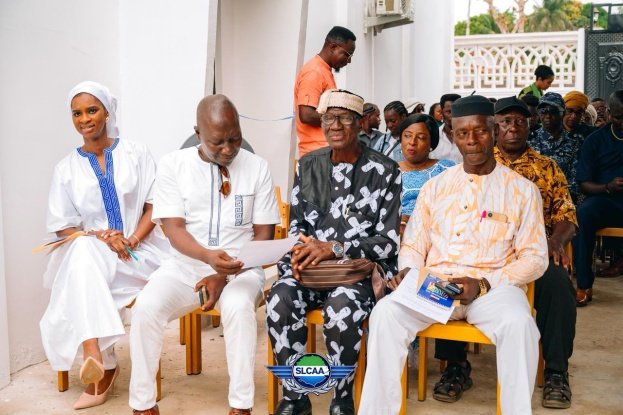
President Julius Maada Bio and the First Lady, Fatima Maada Bio, on Monday January 5, 2026 joined members of the Lebanese community, family, friends and political supporters at funeral prayers for the late Talal Saleh Fawaz, popularly known as Junior Bio, who passed away at the age of 61.

The Janazah prayers were held at the Lebanese Islamic Cultural Association headquarters on Kingharman Road in Freetown and attracted a distinguished gathering of senior Government officials, party stakeholders and prominent members of the Lebanese community. Among those present were Nour Hashim, Ahmed Hashim, widely known as VIP, Rodney Michael and other Lebanese community leaders, underscoring the respect and affection the late Talal Saleh Fawaz commanded across social and political divides.

During the solemn ceremony, President Bio paid tribute to the late Talal Saleh Fawaz for his steadfast loyalty and visible contributions during the 2023 presidential campaign. The President recalled Talal Saleh Fawaz as a committed supporter of the Paopa movement who actively participated in campaign activities across several districts and chiefdoms, offering both moral and practical support throughout the period.

“Wherever I went during the campaign, he was there,” President Bio said while consoling the bereaved family. “To many, he may have appeared to be an ordinary man, but to me, he was a true and loyal supporter who believed deeply in my leadership.” The President described the late Talal Saleh Fawaz as a humble individual whose dedication was driven by conviction rather than recognition.

President Bio further offered prayers for Allah’s mercy, asking that the late Talal Saleh Fawaz’s shortcomings be forgiven and that his soul be granted eternal rest in Al-Jannah. The First Lady also extended heartfelt condolences to the family, encouraging them to draw strength from faith and the collective support shown by mourners from all walks of life.

Speaking on behalf of the bereaved family and the Lebanese community in Sierra Leone, Ahmed Hashim (VIP) expressed profound appreciation to the President, the First Lady, Government officials and party representatives for honouring the late Talal Saleh Fawaz with their presence. He said the gesture reaffirmed the sense of inclusion and national belonging enjoyed by the Lebanese community.

“Your Excellences, Mr. President and First Lady, we are deeply honoured by your attendance,” Ahmed Hashim said. “Your presence brings comfort to the family at this difficult time and reflects the strong bond between our community and the people of Sierra Leone.” He added that the show of solidarity had provided reassurance and strength to the family as they mourned their loss.

Ahmed  Hashim noted that while the family grieves, they are encouraged by the unity displayed during the ceremony. He prayed for eternal peace for the departed and invited the Chief Imam of the Lebanese community to lead recitations from the Holy Qur’an.

The funeral programme featured Qur’anic recitations by the Chief Imam, followed by the Janazah prayer for the late Talal Saleh Fawaz. The gathering concluded in a calm and reflective atmosphere, with mourners offering prayers and condolences.

The ceremony not only marked a dignified farewell to Talal Saleh Fawaz but also highlighted the spirit of inter-community harmony, shared faith and national unity that continues to define Sierra Leone’s diverse social fabric.

Orange Sierra Leone Welcomes Aicha Toure as New Chief Executive Officer

Orange Sierra Leone Welcomes Aicha Toure as New Chief Executive Officer

By Foday Moriba Conteh

Orange Sierra Leone on Monday, 5 January 2026, officially welcomed its new Chief Executive Officer, Aicha Toure, during a well-attended ceremony at the company’s headquarters on Hill Station in Freetown.

Madam Aicha Toure arrived in the company of the outgoing Chief Executive Officer, Sekou Amadou Bah, and was warmly received by members of senior management and staff. The event marked a significant leadership transition for the telecommunications provider as it consolidates its market position and accelerates the expansion of digital and financial services nationwide.

Following the welcome ceremony, the outgoing CEO, together with the Human Resources Manager, Agnes Songa, led Madam Aicha Toure on a comprehensive familiarization tour of key Orange Sierra Leone facilities. The tour covered departments at the Hill Station Head Office, the Orange Digital Centre; which also houses the Orange Foundation Sierra Leone, the Orange Money Office, and the Orange Data Centre on Spur Road in Freetown.

During her interactions with staff across the various units, employees expressed optimism and enthusiasm about the new leadership, pledging their full support and collaboration in advancing the company’s strategic priorities. Management officials said the engagement reflected a strong internal commitment to continuity, innovation and customer-focused service delivery.

Madam Aicha Toure brings to Orange Sierra Leone more than 12 years of international experience spanning telecommunications, technology and financial services. She joined the Orange Group in 2017 as Chief Strategy and Innovation Officer at Orange Mali, where she spearheaded major initiatives including the rollout of 4G services, expansion of fibre connectivity and improved access to energy solutions.

In 2019, she was appointed Chief Executive Officer of Orange Money Mali, a role in which she transformed the platform into the country’s leading mobile financial services provider. Under her leadership, Orange Money Mali emerged as the largest mobile money operation within the Orange Group, significantly advancing financial inclusion and digital payments.

Academically, Madam Toure holds a Master’s degree in Engineering from CentraleSupélec and an Executive MBA from the Massachusetts Institute of Technology, where she was a Sloan Fellow. She is widely regarded for her strong advocacy for digital transformation and inclusive growth across Africa.

Her appointment is expected to further strengthen Orange Sierra Leone’s vision of delivering innovative, inclusive and customer-centric digital solutions, while contributing meaningfully to Sierra Leone’s broader socio-economic development agenda through connectivity, financial inclusion and digital skills development.

TVS Motorcycles Dominate Sierra Leone’s Roads as Shalimar Trading Expands Access to Affordable Transport

By Foday Moriba Conteh

Shalimar Trading Company Limited, one of Sierra Leone’s most trusted automobile distributors, is reinforcing its leadership in the country’s transportation sector through its exclusive dealership with TVS Motor Company, India’s third-largest motorcycle manufacturer renowned globally for innovation, engineering excellence and performance.

As the sole authorized distributor of TVS motorcycles, scooters, mopeds and three-wheelers in Sierra Leone, Shalimar Trading Company has expanded access to reliable, affordable and versatile mobility solutions for both personal and commercial users. The partnership continues to play a critical role in addressing the country’s growing demand for durable transport across urban centres and rural communities.

Among the most popular offerings is the TVS Star HLX series, available in 100ES, 100KS, 125cc and 150cc models. Widely recognized for strength, fuel efficiency and low maintenance costs, the Star HLX dominates Sierra Leone’s commercial riding sector and is particularly valued by transport operators navigating challenging road conditions nationwide.

The versatile TVS XL 100 moped has also earned strong patronage from families, traders and small businesses. Its sturdy build, spacious footrest and excellent fuel economy make it a practical option for everyday transport and light commercial activities. For professionals and daily commuters, the TVS Victor remains a favourite, combining elegant design with dependable performance.

Urban commuters in Freetown and other major towns continue to gravitate towards the TVS Jupiter scooter, praised for its comfort, smooth handling and ergonomic design; features that ease movement through congested city streets. Younger riders are equally drawn to the stylish TVS NEO XR and TVS ZT 125, which offer modern aesthetics, versatility and reliability.

For speed and control enthusiasts, the TVS Apache RTR 200 and other Apache variants provide high performance, precision handling and advanced engineering, appealing to riders who prioritize power and responsiveness. In the multi-passenger segment, the TVS King Deluxe three-wheeler has become a dependable option for families and commercial operators, comfortably transporting up to four passengers.

Beyond product availability, Shalimar Trading’s extensive after-sales support remains a major pillar of the brand’s success. Customers benefit from access to genuine spare parts and professional servicing at multiple locations in Freetown, including Lumley, Bai Bureh Road and Siaka Stevens Street. This robust support system continues to build confidence and long-term loyalty among TVS users nationwide.

In addition to its exclusive TVS partnership, Shalimar Trading distributes other globally recognized automotive brands, including Suzuki, Sonalika International, Isuzu, CFMOTO and Leyland, further strengthening its footprint in the regional automotive industry. With operations now extending into Liberia, the company is contributing to improved mobility, job creation and economic growth across West Africa.

Through quality products, reliable service and a commitment to affordability, Shalimar Trading and TVS Motor Company continue to deliver world-class mobility solutions tailored to Sierra Leone’s evolving transport needs.

President Bio Begins 2026 With Prayers and a Call for National Solidarity at Tihun New Year’s Mass

President Dr. Julius Maada Bio

By Amin Kef (Ranger)

President Dr. Julius Maada Bio marked the first day of 2026 with a powerful call for unity, empathy and national solidarity as he joined Catholic worshippers for New Year’s Day Mass at St Joseph Catholic Church in Tihun, Sogbini Chiefdom, Bonthe District.

The President attended the solemn service on Thursday, 1 January 2026, accompanied by First Lady Dr. Fatima Maada Bio and members of his family, joining residents of his hometown to pray for a peaceful and prosperous year ahead.

The Mass coincided with the global Catholic celebration of the Solemnity of Mary, Mother of God; a feast observed on the first day of every year in honour of Mary’s motherhood and her role in salvation history.

This year’s commemoration was celebrated under the theme: “The Motherhood of Mary”, with prayers offered specifically for President Bio, his administration, the First Lady and for national unity and progress.

Parish leaders invited the congregation to reflect on the blessings and challenges of the past year, encouraging worshippers to enter 2026 with faith-filled expectation and a renewed spirit of gratitude. The scriptural readings, from the Book of Numbers, Galatians and the Gospel of Luke, focused on God’s promise of blessing, humanity’s adoption as God’s children and the naming of Jesus eight days after His birth.

Delivering the homily, Acting Parish Priest Rev. Fr. Patrick Vagahun reminded the congregation that God continues to speak to His people; not through prophets, but through His Son, Jesus Christ.

He encouraged worshippers to deepen their spiritual reflection throughout the year, emulating the example of the Virgin Mary, who “pondered God’s Word in her heart.”

Rev. Fr. Vagahun urged Sierra Leoneans to cultivate patience, humility and obedience to God’s message while praying for the nation’s leadership, families, communities and institutions.

Special prayers were offered for the President and his household, his Government and for peace, justice and prosperity in Sierra Leone.

In his message to the congregation, President Bio extended appreciation to God for the gift of life and for guiding Sierra Leone into another year.
He noted that despite global economic turbulence and ongoing recovery efforts, the country continues to stand strong because of the resilience, faith and optimism of its citizens.

The President said the dual significance of the day, as the start of a New Year and a religious feast celebrating Mary; offered Sierra Leoneans a reminder to nurture mutual respect and compassion.

He called on citizens to show empathy toward one another, strengthen the bonds of national unity and consolidate the peace gained over recent years.

“Let us begin 2026 with gratitude and with love for each other,” he said, urging Sierra Leoneans to remain hopeful and committed to building a more prosperous future.

The Mass concluded with blessings on the country, its leaders and its people, symbolizing renewed national purpose and shared aspirations for peace, growth and stability as Sierra Leone steps boldly into 2026.

NPPA Introduces Mandatory e-GP Registration for All Government Suppliers

By Amin Kef (Ranger)

The National Public Procurement Authority (NPPA) has announced the introduction of an Online Electronic Government Procurement (e-GP) Portal to facilitate the continuation of the national registration of suppliers, contractors and consultants seeking to do business with the Government of Sierra Leone.

The announcement was made through Public Notice Circular 02–2025, issued from the NPPA headquarters at Tower Hill, Freetown, and is addressed to all suppliers, contractors, consultants, procuring entities and the general public.

According to the notice, the e-GP Portal is being introduced in line with Regulation 10(2) of the Public Procurement Regulations, 2020, as part of government’s broader commitment to modernising the public procurement system. The initiative is aimed at strengthening transparency, efficiency, accountability and ease of access to procurement-related services across the country.

The NPPA stated that with immediate effect, all registration, renewal and updating of records for suppliers, contractors and consultants wishing to participate in government procurement activities will be conducted exclusively through the NPPA e-GP Portal. The portal will be officially accessible to the public from Monday, 5th January 2026, and can be accessed via the Authority’s website at www.egp.nppa.gov.sl.

The Authority further reminded the public that the Registration Certificate is valid for one year, running from 1st January to 31st December of each year. Consequently, all registered suppliers, contractors and consultants are required to renew their registration annually in order to remain eligible to participate in public procurement processes.

Providing key details on the online registration process, the NPPA disclosed that online registration will officially commence on 5th January 2026. Applicants will be required to upload scanned copies of relevant documents in PDF format, including a valid Corporate Affairs Registration Certificate, NRA Tax Clearance Certificate, NASSIT Clearance Certificate, and a Local Council Licence, where applicable.

The registration fee for national businesses has been set at Le 1,000, while foreign businesses will pay a registration fee of US$200. The NPPA confirmed that all registration certificates issued through the portal will be valid for one year and renewable annually.

In a directive to all government institutions, the Authority emphasized that only suppliers, contractors and consultants who are duly registered and validly listed on the e-GP Portal will be allowed to participate in public procurement processes, in strict compliance with the applicable legal and regulatory framework.

For further inquiries or assistance, businesses have been advised to visit the NPPA Head Office at Tower Hill, Freetown, or any of its regional offices in Bo, Kenema and Makeni, or to contact the Authority via email.

The public notice was signed by Fodie J. Konneh, MCIPS, Chief Executive Officer of the National Public Procurement Authority, marking a significant step towards the digital transformation of Sierra Leone’s public procurement system.

This announcement serves as a call to action for all suppliers, contractors and consultants to take note of the new requirements and ensure timely compliance ahead of the 2026 procurement cycle.

Sheik Apologizes Over Controversial Christmas Statement as Government Declares the matter to close

By Alvin Lansana Kargbo

Sheik Abu Bakarr Kamara has publicly apologized for a sermon in which he stated that Muslims who celebrate Christmas would go to hell, a remark that sparked public concern and threatened Sierra Leone’s long standing tradition of religious tolerance.

The apology was made on Wednesday 31st December, 2025, during a high level reconciliation meeting held by the Ministry of Social Welfare in Freetown. The meeting brought together senior Government officials and leading Christian and Muslim figures following widespread reactions to the sermon, which many feared could inflame interreligious tensions in the country.

Addressing the gathering, Sheik Kamara acknowledged that his statement caused tension and misunderstanding and asked for forgiveness from the public. He admitted that his words were inappropriate and inconsistent with the values of peace and unity that have defined Sierra Leone’s interfaith relations for decades.

Minister of Social Welfare, Melrose Kaminty, who presided over the meeting, urged citizens to accept the apology and move forward in the interest of national cohesion. She emphasized that religious leaders wield significant influence and must be cautious about the content, context and tone of their public statements.

She warned that irresponsible religious messaging could undermine national stability and disclosed that government is working on policies aimed at regulating religious leadership and curbing hate speech. The Minister stressed that the matter must be put to an end, stating that government would not allow the issue to escalate further or disrupt the country’s peace.

Religious leaders from both faiths used the platform to reaffirm Sierra Leone’s shared history of peaceful coexistence. Reverend Henry Samuels recalled the country’s tradition of interfaith harmony, noting that Muslims and Christians have historically lived, worshipped and celebrated together as families and communities.

Representing the Muslim community, Sheik Ibrahim Barrie issued a formal apology for the initial statement, describing it as a misrepresentation of Islamic teachings. He cited Islamic principles and historical accounts that promote mutual respect and protection between Muslims and Christians.

Calls for stronger measures to prevent similar incidents were also raised. Musa Mewa Esq, Amir of the Ahmadiyya Mission, argued that policy guidelines alone may be insufficient and called for enforceable legal frameworks to promote peace and harmony among all citizens. He stressed that matters of faith should never involve coercion.

Reverend Baba Tam Bayoh of the Inter Religious Council described national unity as fragile and in constant need of protection, urging religious leaders to consistently promote messages of love and tolerance. Bishop Emeritus Reverend Arnold C Temple emphasized the importance of dialogue, stating that while individuals may hold firm beliefs, such convictions must be expressed in ways that preserve peace.

The meeting ended with a collective agreement to use the incident as a turning point for reinforcing interreligious harmony. Government officials reiterated that the issue has been resolved and that national focus must return to safeguarding peace, tolerance and unity across Sierra Leone.

Minister of Social Welfare, Melrose Kaminty

Cowbell Brings Pupils Together for Learning, Games and Nutrition Awareness at Family Fun Day

By Foday Moriba Conteh

Cowbell, one of Sierra Leone’s most popular nutritious beverage brands, delighted children and families during its exciting Family Fun Day held on Wednesday, December 24, 2025, at BENGOD-JF Kennedy School in Cline Town, East End of Freetown. The event, organized by Premium Divine Trading Company Limited, attracted pupils from several schools who participated in fun activities, talent displays and educational games all centred around promoting good nutrition and wellness.

Designed as part of Cowbell’s continuing community outreach efforts, the Family Fun Day created a safe and vibrant platform for pupils to interact, showcase their talents and learn through play. Activities ranged from interactive games and music competitions to a highly engaging quiz contest, where winning pupils walked away with attractive prizes, including Cowbell evaporated milk, books and Drink O Pop refreshments.

Guests also enjoyed a taste of Cowbell’s wet range and other well-loved products distributed by Premium Divine Trading, introducing children to delicious nutritional options in an entertaining setting. The musical chair and quiz competitions became the day’s highlight as excited pupils competed for top positions, with cheering crowds applauding their efforts.

Speaking during the event, Philip Kanu, Marketing Lead at Premium Divine Trading, said the Fun Day was part of the company’s broader mission to support child development and encourage healthy living among Sierra Leonean families.

“We organized this event to help pupils stay active and to educate families about the importance of nutritious food choices,” he explained. “Cowbell and our other brands provide essential nutrients for children and adults and we want communities to make informed decisions when choosing what they consume.”

He further noted that Cowbell remains committed to affordability and accessibility, providing families with nutritious products that support growth, brain development and overall wellbeing.

Philip Kanu highlighted Cowbell’s diverse flavours including Coffee, Strawberry, Coconut and Choco-Malt while emphasizing the popularity of its newest addition, Cowbell evaporated milk, produced in Ghana by Promasidor and widely distributed across West Africa.

He added that Premium Divine Trading supplies other household staples such as Onga seasoning, Twisco, Miksi Chocolate and Coffee, and Yumvita infant cereals products he described as beneficial to children’s physical development and balanced diets.

Appealing directly to families, he encouraged parents to prioritize high-quality food products. “Milk plays a key role in proper growth and Cowbell remains one of the most nutritious and reliable options available,” he stressed.

Yusuf Kamara, a Teacher, commended the organisers, calling the programme an important contribution to pupils’ educational and physical wellbeing.

“This was more than fun it was developmental,” he said. “The mix of recreation and knowledge-sharing helped students learn new things and build confidence. I hope other institutions take inspiration from Cowbell.”

Fatu Sesay, who accompanied her child, said she was amazed at the free activities and giveaways.

“In many places events like this come with fees, but Cowbell made everything free and even rewarded the children,” she said joyfully. “The quiz prizes, the taste samples and the fun atmosphere made this day unforgettable.”

Fatu Sesay urged other corporate bodies to emulate Cowbell’s commitment to community upliftment, adding that the experience had strengthened her trust in the brand.

The half-day celebration closed with a thrilling quiz competition, testing pupils on general knowledge and rewarding creativity, intelligence and teamwork. Laughter, applause and cheers echoed across the school grounds as winners proudly collected their prizes.

Cowbell officials pledged to continue rolling out similar activities across Sierra Leone, reaffirming Cowbell’s reputation not just as a nutritional brand but a partner in learning, family welfare and community empowerment.

Dr. Sylvia Blyden Signals Bid for APC Leadership, Eyes 2028 Flagbearer Race

Dr. Sylvia Olayinka Blyden

By Ibrahim Sesay

Prominent political figure, journalist and long-standing party member Dr. Sylvia Olayinka Blyden has formally announced her political intentions within the All People’s Congress (APC), placing herself at the centre of potential leadership restructuring ahead of the party’s 2026 National Delegates Conference.

In a reflective and strongly worded New Year message released on January 1, 2026, Dr. Sylvia Blyden chronicled her 25-year journey in the APC, issued a sobering assessment of the party’s recent electoral disappointments and confirmed that she is actively considering three major options: contesting for the 2028 Presidential Flagbearer position, seeking election as National Deputy Chairman or stepping aside from frontline leadership.

In her statement, Dr. Sylvia Blyden recalled a pivotal moment 13 years ago when she met privately with then-President Ernest Bai Koroma and National Secretary General, Victor Foh, in Kabala, Koinadugu District, marking her re-entry into senior APC circles after previously withdrawing from national partisan activities.

She described the 2013 discussion, including a phone call by President Koroma to her family, as a high point in her service to the party, which would soon see her appointed as Special Executive Assistant to the President with Cabinet rank.

Both Ernest Bai Koroma and Victor Foh acknowledged her prior contributions between 1999 and 2001 when she used her platform, resources and advocacy to reposition the APC as a competitive political force following its years in opposition. She noted her work in authoring the final draft of Ernest Bai Koroma’s official biography in 2006 as further testament to her strategic involvement.

“The mood in that meeting had been buoyant and the future of the APC had seemed bright,” she said.

Contrasting her optimistic memory of Kabala with current realities, Sylvia Blyden said the APC is now “uncomfortably located in a condition” marked by two successive presidential defeats and what she described as internal dysfunction.

She highlighted the unprecedented scale of the 2018 loss, when all top-tier party executives, including former President Koroma, Deputy Chairman Minkailu Mansaray, National Chairman Osman Yansaneh and Western Area Chairman Pat-Sowe, lost their home constituencies to the rival Sierra Leone People’s Party (SLPP).

“2018 was an unimaginable abomination indeed,” she wrote.

However, she characterized the 2023 polls as even more disastrous, citing operational failures and alleged internal sabotage that led to the APC not submitting a full set of district-level results for the presidency, parliamentary, mayoral and local council elections.

Sylvia Blyden questioned how a party with a legacy of strong electoral machinery could collapse into disorganization, branding the outcome “treachery and incompetence.”

“No one should shy away from confronting the truth,” she said.

Dr. Sylvia  Blyden declared that the APC now needs bold leadership, fresh direction and individuals with strategic capacity who are willing to restore integrity, internal discipline and national appeal.

“We now need a paradigm shift using strategic political thinkers who have to come forward and take leadership so as to move the APC from zero back to hero,” she stated.

Positioning herself as one such leader, she affirmed that she is fully competent and ready to serve if called upon.

As the APC prepares for its 2026 National Delegates Conference, Dr Blyden says she is weighing the following paths:

  1. Seek the 2028 APC Presidential Flagbearer nomination
  2. Contest for National Deputy Chairman (2026-2029 term)
  3. Withdraw from active leadership roles temporarily

She emphasized that the decision will be finalized after consultations with supporters, party stakeholders and senior officials.

Dr Blyden underscored her long-standing contributions to the party, financial, advisory and organizational, dating back to 1999, when she personally financed APC activities during a period of national uncertainty and party weakness.

“When the APC was an empty castle but with potential, I invested my money, energy and time,” she said, subtly challenging new entrants and recent leaders to show equal sacrifice while respecting veterans who kept the party afloat.

She highlighted her participation in key leadership structures, including:

  • National Delegates Conference (2013–2017)
  • APC National Advisory Committee (NAC)
  • Secretary of the 9-Man Transitional Committee (2018)
  • Adopted NAC Member (2019–2020)

Closing her statement on a spiritual note, Dr. Sylvia Blyden asked Sierra Leoneans and APC supporters to pray for divine guidance as she considers the next steps in her political journey.

Quoting the Quran and Holy Bible, she reminded supporters that leadership decisions ultimately align with God’s plans, adding that she aims to make a decision that is “for the overall good of Sierra Leone and Sierra Leoneans within the vehicle of the APC.”

With factional lines forming in anticipation of the APC’s next leadership transition, Dr Blyden’s declaration inserts a prominent and sometimes controversial figure into the emerging contest.

Her length of service, policy influence, public media visibility and history of internal dissent, combined with her ability to mobilize grassroots supporters, suggest that her next move could reshape the direction of the main opposition party.

For now, she says she remains committed to the APC, anchored by decades of activism.

“As we enter this season of decision-making, my heart remains with the APC and the Sierra Leonean people,” she concluded

MRCG Study Exposes Deepening Welfare Crisis Facing Journalists in Sierra Leone

By Amin Kef (Ranger)

A comprehensive national study conducted by the Media Reform Coordinating Group (MRCG) has revealed persistent and systemic welfare challenges confronting journalists across Sierra Leone, raising serious concerns about the sustainability of the media sector, press freedom and the safety of media practitioners.

The study, titled: “The Welfare of Journalists in Sierra Leone (2025)”, surveyed journalists working in radio, television, newspapers and online media and paints a troubling picture of low pay, job insecurity, weak social protection and inadequate safety mechanisms within many media institutions nationwide.

According to the report, journalism in Sierra Leone remains a high-risk profession not only because of physical dangers associated with news gathering, but also due to widespread economic vulnerability. The study found that 25.9 percent of journalists have never received a monthly salary, while many of those who are paid face chronic delays. Even more alarming, 42 percent of journalists earn below the national minimum wage, undermining their dignity and professional independence.

One of the most striking findings of the study is the widespread failure of media institutions to comply with existing labour and social security laws. Nearly half of the journalists surveyed, 47.3 percent, are not registered with the National Social Security and Insurance Trust (NASSIT), while others are unsure of their status. This exposes journalists to severe hardship during illness, retirement or emergencies.

The report further reveals that many journalists lack written employment contracts, a situation that fuels job insecurity and arbitrary dismissals. In several media houses, there are no clear policies governing staff welfare, health emergencies or workplace safety, leaving journalists largely unprotected.

“These conditions do not only undermine the wellbeing of journalists but also threaten the quality and integrity of journalism in Sierra Leone,” the report notes.

While journalism inherently carries risks, the study found that safety mechanisms in many media houses remain weak or rudimentary. Although staff identification cards are common, essential safety tools such as first aid kits, fire extinguishers and protective equipment are largely absent in many institutions.

Only 27.7 percent of respondents confirmed the existence of a formal welfare policy in their media organizations, while the rest either reported none or were unaware of any such policy. This lack of institutional preparedness becomes more critical in times of crisis, such as public unrest, elections or health emergencies.

Despite those shortcomings, a majority of journalists indicated they “cannot complain” or feel only moderately safe at work; an attitude the report suggests may reflect resignation rather than genuine satisfaction.

The study places special emphasis on the welfare of female journalists, highlighting structural inequalities and gender-specific vulnerabilities. Although women make up nearly 40 percent of respondents, many face unequal pay, limited career progression and weak maternity protection.

More than 41 percent of media houses offer neither maternity nor paternity leave, while only a quarter provide both. The absence of family-friendly policies disproportionately affects women and contributes to their underrepresentation in leadership roles.

The report also raises concerns about sexual harassment and gender-based violence in the media workplace. While most respondents reported no harassment, cases involving colleagues and supervisors were documented, underscoring the need for clear sexual harassment policies and confidential reporting mechanisms.

Commenting on the findings, the President of the Sierra Leone Association of Journalists (SLAJ) described the employment situation for journalists as “troubling,” citing poor remuneration, lack of contracts and inadequate safety gear particularly for reporters working in remote or high-risk environments.

The Sierra Leone Reporters Union (SLRU) also acknowledged that poor welfare conditions expose reporters to exploitation and compromise ethical journalism. The Union is pursuing a bargaining certificate to formally engage media owners on wages and conditions of service.

Meanwhile, Women in the Media Sierra Leone (WIMSAL) highlighted persistent gender discrimination, noting that female journalists are often denied equal pay and leadership opportunities. WIMSAL has intensified advocacy, legal support and digital safety training to protect women in the profession.

The Independent Media Commission (IMC) acknowledged compliance challenges within the industry but said it has strengthened monitoring and enforcement. Media houses are now required to submit proof of salary payments, staff lists and NASSIT registration during licence renewals.

IMC Executive Secretary, Khalil Kallon, warned against the use of forged salary documents and assured journalists that they would not be penalized for reporting wage fraud. The Commission has also deployed district media monitors to improve on-the-ground oversight and ensure compliance with labour standards.

The MRCG study warns that poor welfare conditions directly threaten press freedom. Journalists struggling to survive are more vulnerable to inducements, self-censorship and unethical practices, weakening the media’s watchdog role in democratic governance.

The report argues that improving journalists’ welfare is not a luxury but a necessity for national development, accountability and social stability.

To address those challenges, the study calls for urgent, coordinated action. It recommends that all media institutions comply fully with the national minimum wage and social security obligations. The IMC is urged to enforce welfare provisions rigorously during licensing processes, while SLAJ, SLRU and WIMSAL are encouraged to intensify advocacy and collective bargaining.

The report also proposes collaboration and resource-sharing among media houses, investment in sustainable business models and enhanced professional training especially for women journalists.

As Sierra Leone continues to strengthen its democratic institutions, the report concludes that safeguarding the welfare of journalists must be a national priority. Without decent pay, safety and social protection, journalism risks becoming unsustainable, with far-reaching consequences for governance, transparency and public trust.

The MRCG study serves as a wake-up call to media owners, regulators, policymakers and development partners to move beyond rhetoric and take concrete steps to protect those who inform the nation.

Read the full report: https://mrcgonline.org/wp-content/uploads/2026/01/A-STUDY-ON-JOURNALISTS-WELFARE-IN-SIERRA-LEONE-2025.pdf