Home Blog Page 804

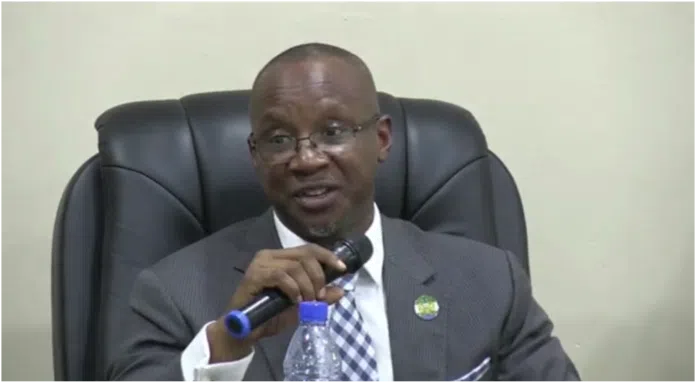
NTB’s General Manager Continues to Make Positive Impact on the Country’s Tourism Sector 

National Tourist Board (NTB).jpg

By Foday Moriba Conteh

Fatmata Carew is the General Manager of the National Tourist Board (NTB), considered to be an important appendage of the country’s tourism sector.

As an agency that is directly under the supervision of the Ministry of Tourism and Cultural Affairs, the National Tourist Board has ,over the years worked in close sync with the Ministry in order  to ensuring that Government’s programmes, agendas and strategic plans and policies are effectively rolled out.

Dr Memunatu Pratt, Minister of Tourism and Cultural Affairs informed this medium that the National Tourist Board is a key institution  that is playing a major role in rebranding the country. She disclosed that as a result of sound managerial initiatives the NTB has created job opportunities for many people, especially young people, adding that when the tourism sector thrives according to their expectations the entity will be at a vantage position to do more in that area.

She continued by revealing how the NTB collaborates with the Directorate of Tourism and that of Culture at the Ministry to have synergy in their activities.

The Minister highlighted that Madam Carew has exemplified astute leadership in repositioning the sector underscoring that the National Tourist Board is now making headway in terms of product development, with nine touristic sites under development by the EIF and the World Bank.

She stated that though staff capacity is limited and budget allocated to the institution is limited ,however, the NTB has a committed staff and a very supportive Management team that are engrossed with implementing the UNDP and Enhanced Integrated Framework (EIF) programmes and their international programmes.

On his part, the Director of Tourism, Mohamed Jalloh, expressed delight over working alongside the good leadership of the NTB which, according to him, is needed for any of the Ministry’s activity and project to succeed.

He disclosed how Domestic Tourism is now in vogue disclosing how more establishments are been disclosed, established and developed due to the support from the NTB leadership.

“Had it not been for COVID-19, the sector would be far gone, as many tourism policies have been developed. With the repositioning work being done by the Ministry and NTB, Sierra Leone is now ranked highly in the World Tourism market,” Mohamed Jalloh disclosed.

He furthered that NTB now has space both at local and international platforms to carry out their mandate that speaks to marketing Sierra Leone.

It must be noted that the NTB’s mandate is to develop and promote sustainable and responsible tourism activities in Sierra Leone that will foster viable economic growth; and to develop and promote sustainable and responsible tourism activities in Sierra Leone that will foster viable economic growth.

GM Fatmata Carew joined NTB in April 2005 and served as Marketing and Public Relations Officer and in 2009 Marketing and PR Manager. She became Deputy GM in 2015, following public recruitment process. She holds a post-graduate degree from the Institute of Public Administration & Management (USL) – Msc, Development Management – 2009 – 2011 and a BA Honors , Political Science from FBC – 2000 – 2004.

Her industry knowledge covers the fields of: Marketing, Public Relations, Management, Marketing Strategy, Social Media Marketing, Customer Service, Leadership. She also acquired a Diploma in Destination Marketing in 2008 and Diploma in Sustainable Tourism Development and Promotion in 2013.

INDIA REPUBLIC DAY SPECIAL SUPPLEMENT   BE(E)ING USEFUL

By Bindu Gopal Rao

 In his monthly radio address Mann Ki Baat, Prime Minister Narendra Modi spoke about the importance of bee farming as a part of the Aatmanirbhar Bharat initiative and its potential in achieving the national goal of doubling farmers’ income. Calling it the “sweet revolution”, he highlighted Gurdum in north (West)Bengal, Banaskantha district of Gujarat and Haryana’s Yamuna Nagar, where farmers have seen much success because of bee farming.

 Busy as a Bee

Beekeeping is the rearing, caring and management of honeybees (Apis cerana indica) in boxes that recreate a beehive. It has been observed that low-cost beekeeping can increase the yield of local crops with minimum efforts. Therefore, beekeeping is an alternative and additional source of income for farmers. With consistent efforts to build awareness and revive the agricultural ecosystem, beekeeping is gradually regaining its place in the ecosystem. Today, it has evolved as a source of additional income for many farmers.

It is being adopted by the farmers, as it plays a significant role in increasing the agricultural yields through pollination of oilseeds, pulses, vegetables and fruits. Sujana Krishnamoorthy, Executive Director, Under The Mango Tree (UTMT) Society, a Maharashtra-based organisation that promotes beekeeping with indigenous bees says, “The practice [of rearing honeybees] increases the output of fruits, vegetables, oilseeds and pulses – all of which are grown by small farmers who practice subsistence farming.

In fact, 10 beekeepers with two bee boxes each can improve crop production for entire villages, as bees pollinate in a two-km radius. Simultaneously, awareness about the importance of bees leads to reduced unsustainable honey hunting practices, which, in turn, improves biodiversity as wild flowering plants and trees also depend on bees for pollination.”

Helping Hands

Srinivasan Services Trust (SST), the social arm of TVS Motor Company, has collaborated with the Tropical Institute of Ecological Science in Javadhu Hills, Tamil Nadu, to support farmers in tribal belts by providing honeybee boxes to involve them in apiculture and support their livelihood. This project has provided 150 honeybee boxes to 27 farmers. The successful project is earning an additional income of approximately INR 10,000 per annum for the farmers. “An inspiring model of honey harvesting is the innovative technique adopted by Venkatesa Perumal Tribal Women Self-Help Group (SHG) of the Javadhu Hills in Tamil Nadu. This region is popularly known for its naturally-sourced wild honey.

The 12-member SHG has successfully earned a sustainable livelihood by processing and selling Javadhu wild honey. The honey is collected from local honey collectors, who skillfully gather the golden nectar, ensuring the bees are not disturbed,” says Swaran Singh, chairman, SST. The raw honey collected from the wild contains no added sugar, no added flavour and no preservatives. Around 62 honey collectors have benefited from this, with an average income of INR 8,000 per collector over six months.

The SHG has also been a part of the Honeybee Keeping Value Chain Project funded by NABARD and implemented by SST to expand apiculture in Javadhu Hills. The wild honey collectors were given training on scientific wild honey collection by TRIFED that has benefited over 300 tribals with an income ranging from INR 8,000 to INR 10,000 once in six months, covering two seasons. Such proactive interventions enabled a turnover of INR 3.75 lakh for the beneficiaries in the FY 2020-21.

Women of the Venkatesa Perumal Tribal Women Self Help Group of the Jayadhu Hills in Tamil Nadu with their raw wild money

 Crop Boost

The bee-farming market has been on the rise for the past few years with more and more farmers venturing into this arena. The rising demand for pure, raw honey has encouraged more farmers to establish bee farms. Although honeybee farming in India can be practised as a stand-alone commercial venture, the integration of apiculture with crop farming does wonders to increase the crop yield while enabling the farmers to generate additional income. Saanwara Khod, founder, Farm to Fellas, a company providing farm fresh and 100 per cent natural food products says, “It would not be wrong to state that we depend on bees for our survival.

More than 70 of the 100 major food crops is a result of their [bee] labour and their role as the chief insect pollinators. Small-scale and low-cost bee farming by small farmers, especially in the states of Maharashtra, Gujarat and Madhya Pradesh, has doubled the yield of local crops with no extra effort. According to the Rapid Impact Assessment Study, 2011, bee farming enhanced the yield of tomatoes by 160 per cent and the production of fruits by around 60 per cent.” Several government organisations like the National Bee Board and the Central Bee Research Training Institute provide training to farmers in apiculture.

 National Bee Board

The National Bee Board (NBB) was reconstituted in 2006. The main objective of the board is the overall development of beekeeping by promoting scientific beekeeping in India to increase the productivity of crops through pollination and increase honey production so as to improve the income of the beekeepers/ farmers. The board also works towards the overall development of scientific beekeeping in India by popularising state-of-the-art technologies through the governmental schemes of the National Horticulture Mission and Horticulture Mission for the Northeastern and Himalayan States in the country. Noted scientist Albert Einstein had once said, “If the bee disappears from the surface of the Earth, man would have no more than four years le# to live.” The Indian government, led by PM Modi, however, is leaving no stone unturned to provide aid to bee farmers and encourage apiculture. An increase in the production of honey will not only ensure higher crop yields and added income for farmers but also add to PM Modi’s mission of ‘Aatmanirbhar Bharat’, ‘Make in India’ and ‘Vocal for Local’.

[A farmer in front of his mustard field with beehive boxes in Qutubgarh village on the outskirts of New Delhi. He started honey farming with rows of 100 beehives on their mustard farm in 2018 following a government progrmme intended to boost the industry by providing subsidies of up to 80 per cent per beehive box and the goal of doubling farmers’ incomes by 2022.]

 [Written by Bindu Gopal Rao is a freelance author and photographer based in Bengaluru.]

INDIA REPUBLIC DAY SPECIAL SUPPLEMENT   THE FLOWING SUCCESS

By Bharat Lal

Water conservation is an integral part of India’s identity and cultural history. Water conservation in the form of rainwater harvesting is an ancient Indian tradition that has become more relevant in the present-day scenario. India is home to 18 per cent of the global population and 15 per cent of livestock with only 4 per cent of freshwater resources, the availability of which has been decreasing over time.

The World Economic Forum, in its Global Risk Report, 2020, has recognized water as one of the top five global risks of long-term impact and NITI Aayog’s Composite Water Management Index predicts a 6 per cent gross domestic product (GDP) loss due to decreased water availability in India.

Therefore, water conservation is essential not only to overcome shortages but also for climate change risk preparedness and socio-economic development. Indian Prime Minister Narendra Modi, through his monthly radio programme Mann ki Baat, has appealed to Indians for water conservation and under his leadership, the government is undertaking several initiatives to promote water conservation activities across the country.


Vagaries of rainfall

Hydrologically, India is not endowed with water equity, both temporally and geographically. From June to September, the South-West monsoon contributes 70 per cent of total rainfall while the North-East monsoon from October to December contributes 30 per cent. But there is an enormous regional disparity as average rainfall varies from more than 2,000 mm in the Western Ghats and Sub- Himalayan areas of the North-East to less than 500 mm in western Rajasthan and the Deccan Plateau. On an average, India has 130 rainy days and more than 50 per cent of annual precipitation takes place in less than 100 hours.

Groundwater use, considered a lifeline in most parts of the country, is also increasing. India’s groundwater extraction is over twice as much as the US and China put together. With the dwindling per capita water availability, over-exploitation of groundwater and inadequate storage availability, the Prime Minister’s appeal is timely for addressing this critical issue. Unless addressed now, the issue can become an impediment to our rapid socio-economic development.

Women in Indian villages are trained in water quality surveillance using Field Test Kit

 The Gujarat model

Water being a state subject in India, states are empowered to enact laws for its regulation. The reason for the Prime Minister’s call for a people’s movement in water conservation can be traced back to his pioneering role in integrated water management in Gujarat as the then Chief Minister, who took priority measures to provide safe drinking water in drought-affected areas of the state. After taking over as the state’s Chief Minister in October 2001, he had introduced several developmental initiatives to promote integrated water management to meet the increasing water demand of growing economic activities.

The measures included people’s participation in all water conservation and management efforts like rainwater harvesting, artificial recharge with scientific planning and monitoring, strengthening of existing canal system and building new dams like the Sardar Sarovar dam, and distribution canal network. He also focused on educating farmers in water conservation and the creation of the Water and Sanitation Management Organization, to plan and implement decentralized, demand- driven and community-managed water supply systems in the villages.

The integrated water management approach became very successful in Gujarat. As compared to 2004, by 2017, Gujarat had a 50 per cent increase in the utilizable groundwater recharge and is continuously improving. Since 2001, agriculture production in the state has increased by 255 per cent. Today, more than 83 per cent of rural households in Gujarat have an assured tap water supply and more than 76 per cent of families are regularly paying monthly water service charges.

 Breaking the silo approach

On a national level, in early 2019, PM Modi created the Ministry of Jal Shakti by bringing together all related ministries and departments under one umbrella. Demand and supply, quality and access – water, in all its manifestations, was finally taken up as a whole. This integrated approach to water management focused on improving surface and groundwater availability; reversing the depletion of groundwater; improving water-use efficiency; improving service delivery in terms of provision of potable water to every household; addressing water quality issues and sustaining the Open-Defecation Free (ODF) status achieved through Swachh Bharat Mission.

A water treatment plant and clear water reservoir at Dantiwada, Gujarat

On August 15, 2019, PM Modi launched the ambitious Jal Jeevan Mission (JJM) for providing household piped drinking water supply to every rural home by 2024. The budget allocation for the mission in 2020-21 was INR 50,011 crore. In a short span of 18 months, the percentage of households with tap connections has increased to 7.30 crore (38.15 per cent). “Just 1.5 years ago, 3.5 crore out of 19 crore rural families in the country had piped drinking water connection. A”er the launch of Jal Jeevan Mission, about 4 crore new families have piped drinking water connections in such a short time”, said PM Modi.

JJM has a holistic approach to water supply service delivery and scientifically addresses source sustainability, water supply, grey water treatment and re-use, and water works operation and maintenance. Every village prepares a one-time plan for five years called the Village Action Plan (VAP) capturing these details. Funds are dovetailed through the convergence of several rural programmes at a village level. The focus has shi”ed to the assured supply of potable water to every home rather than mere infrastructure creation.

The global pandemic has made us realise that water is key to public health and productivity. The Prime Minister’s timely call to all citizens for action on water conservation has generated enthusiasm among all key stakeholders to add their strength for the greater good of water security for all. The momentum thus generated from the success of various government initiatives needs to be maintained for ensuring water is both available and not destroyed, as mentioned in Yajurveda (an ancient Vedic Sanskrit text): “Amirtham vaaapaha; amirthasya aantharithai (let water be ever-present and not destroyed)”.

[Written by Bharat Lal is the Additional Secretary & Mission Director, National Jal Jeevan Mission. The article has been co-authored by Manoj Kumar Sahoo, Director, Dept. of Drinking Water & Sanitation, and A Muralidharan, Deputy Advisor, Dept. of Drinking Water & Sanitation, Ministry of Jal Shakti, Government of India. ]


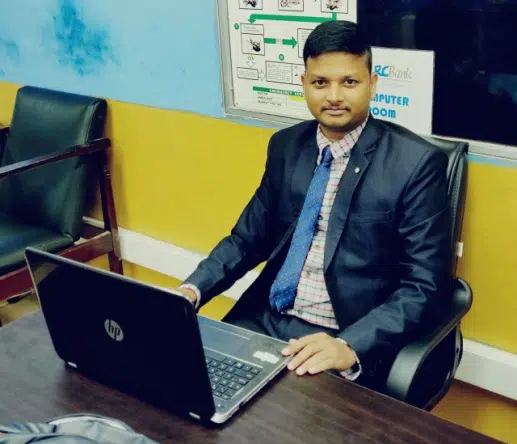
Lithin the IT Guru Behind the Digital Transformation of RCBank

Lithin Nasani

By Amin Kef Sesay

RCBank, the Bank of choice, the pride of Sierra Leone, has over the past two years undergone massive transformation in its modus operandum, moving from a computerized bank with, Dr. Walton Gilpin, the CEO as the brain child whose astute and forward-looking mind long envisaged a fast moving, digitalized organization that would make banking a very painless, enjoyable experience for the Bank’s entire customer base.

To actualize that vision, the brilliant Managing Director realized that it would require skills, knowledge and energetic enthusiasm devoid of anything but a singular focus towards successful achievement of the objective, not influenced by memories of a bank that had experienced an almost decadent past, laced with much internal struggles. After careful analysis, deliberation and prayerful consultation, the decision was made to recruit a Consultant that would fit the specification mentioned above to take the bank on its digital journey.

Lithin Kumar Nasani was contracted to do the needful.

A young brilliant humble Indian raring with a passion to make his contribution to the dynamic world of Information Technology, Lithin quickly rose to the challenge of transforming the Bank’s IT unit to a lively, robust and effective force, developing various applications (apps) to digitize various new products required by the Bank to upgrade and transform its customer service.

A qualified degree holder in Information Technology with eight years sound experience in mobile and web applications, Lithin is the brain behind the SIMKORPOR PLUS mobile app that has ‘brought banking to the bedroom’. He has also created apps that facilitated the Bank’s Corporate Banking product as well as its new Online Banking Service. As a result of further innovations, many of the Bank’s corporate clients now have direct access to their accounts with special tailor-made features to enhance their specific banking requirements.

Definitely Lithin has made significant contributions to the Bank’s progress within the two years so far spent with Rokel Commercial Bank.

This medium was made to understand that this is just the tip of the iceberg as the Bank prepares to upgrade its IT operations with a new, highly sophisticated Banking software, the X100. According to Management of the Bank they are confident that there is a lot more to come.

It could be recalled that in recognition of his esteemed contributions to the development and implementation of 17 Mobile and Web Applications and 10 Third Party APIs for Rokel Commercial Bank, the Bank in September 2021 presented a Certificate of Recognition to Lithin Nasani.

Lithin Nasani is also the Chief Executive Officer of VLN Solutions Private Limited which is a software company which provides services to Financial Institutions like Banks, Micro Finances and Community Banks etc.

As a company some of their products are providing financial services like Loan Management, Agency Banking, Account Opening, OSUSU Savings, Mobile Banking, Internet Banking with highly secured 256-bit Encryption to protect the customer information and accounts.

ERP System, HRM Payroll, Accounting Package, Hotel & Restaurant Management(POS), Hospital Management, Pharmacy Management, Schools, Colleges, Universities Management, Library Management.

Lithin Nasani through VLN Solutions Private Limited has worked for so many companies in the country which includes NRA, ITAS , RCBank, Keystone, Vista Bank, Skye Bank, Dangote Collection, Mercury International (Red Box & Black Box), SLRSA Payment, USL, EDSA, Orange Money, Orange Airtime, Sierra Leone Voters & Driver’s License (KYC) UNDP, NP-SL, E-Korpor, NaCSA etc.

For your Mobile Apps, Website Development and Software Development contact VLN Solutions Private Limited at www.vlnsolutions.com, or through their email address at lithin.nasani@vlnsolutions.com or call +23278 244-287 whatsApp +91-950-238-3331.


John Shallop, President of Hospitality Association Showcases Sierra Leone in Spain

By Amin Kef Sesay

John Shallop, President of  the Sierra Leone Association of Hospitality (SLAH), has showcased the country’s hospitality in one of the biggest tourism exhibitions in the world held from 19th – 23rd January, 2022 in Madrid, Spain.

President Shallop catalogued the touristic attractions across the country to potential tourists and exhibited his astute marketing skills when he engaged investors, hotel owners, airliners and others, assuring them of Sierra Leone’s hospitality and maximum national security.

He stated that Sierra Leone’s tourism industry enjoyed increased admiration and visibility after the New York Times Magazine wrote an article about the country being one of the best tourist destinations in 2020.

“Sierra Leone is on the map, we just need to continue marketing our tourism industry’s potentials. The private sector stands together under the association to help market the country as one of the best tourist destinations in the world,” he asserted.

He further expressed gratitude to the Ministry of Tourism and National Tourist Board (NTB) for bringing SLAH onboard to sell the country’s hospitality at the prestigious trade fair as the private sector join the rebranding and promotion process, through the World Bank Economic Diversification Project.

Tourism is classified as one of the leading growth sectors for economies around the world and Sierra Leone is not an exception; therefore, to attain these deliverables, it is essential to partner and collaborate with the private sector, to reach the source markets that will benefit both the Government and the private sector.

The Sierra Leone Hospitality Association (SLHA) headed by John Shallop ,the current President ,has served for almost two years since it was established.

He averred by stating that the Hospitality association is a great way for hoteliers to network and stay connected to industry influencers.

The Hospitality Association is set to provide educational resources, joining  the Board to  conduct trade shows ,events and advocate on behalf of  its members.

John Shallop informed that hotels will have access to exclusive business services that will reach the Association now and the future.

In a snap interview with this medium he stated: ” The Hospitality Association was founded and established in recognition of the industry need for competent, unbiased advice, professional guidance and sound judgment on the many diversified challenges encountered in the hotel and hospitality industry in Sierra Leone.”

He further said: “The Association believes that by clearly recognizing the hotel operations function as a profession and by genuinely harnessing the collective knowledge, expertise and experiences of those engaged in hotel operations, the quality of service delivery to the industry will be greatly enhanced, with sound delivery at all levels.

He emphasized that Members of the Association have demonstrated their integrity and are qualified by their experiences, training and knowledge to develop and express sound judgment on issues in the hotel industry.

Shallop concluded by thanking the Ministry of Tourism and Cultural Affairs, the National Tourism Board  and more especially the World Bank-Economic Diversification Program for extending  supports through the Government agencies.

“We are expecting more healthy collaboration in the future towards the sector,” he concluded.

NP-SL Ltd Takes the Lead Where Others Follow

National Petroleum Sierra Leone Limited (NP-SL Ltd).jpg

By Amin Kef Sesay

It has been established that the National Petroleum (NP) Sierra Leone Limited is shedding a ray of hope for Sierra Leonean businesses. It epitomizes that any ambitious group of Sierra Leoneans, with good intensions and initiatives, can make meaningful achievements when they come together and invest solidly. Today, the company is the leading petroleum marketing company in the sub-region, only because some 35 nationals were shrewd enough to plough their end of service benefits into the formation of the company. This example, if emulated by forward looking and ambitious individuals that make meaningful investment plans will change the development trajectory of this country.

Though NP-SL Ltd is an indigenously owned company, however its shareholders and Management are not afraid to take risk into venturing into various parts of the country. NP-SL Ltd believes in breaking new grounds and this has been the driving force behind its expansionist drive.

The company’s services that it rolls out are not only limited in the capital city but are replicated nationwide. Everywhere they operate, they offer the same services, effectively providing the qualitative services to its esteemed customers.

To make the purchase of fuel very simple NP-SL Ltd introduced the NP Smart Card, which enables organizations and individuals to purchase fuel at ease without using physical cash. By introducing this latest technology, it avails its customers the convenience in conducting transactions at Filling Stations as long there is credit in their NP Smart Cards.

Established by some 35 Sierra Leoneans years back, NP-SL Ltd has grown to become one of the most successful indigenously owned companies in this country. Because of effective management initiatives, the company is vibrantly operating in Guinea, Ivory Coast, Liberia, and The Gambia.
With NP-SL Ltd, Customer Care is always taken paramount as Management ensures that customer satisfaction is prioritized. The company truly deserves commendation in that direction.
With well-motivated members of staff, who know how to efficiently treat customers, NP-SL Ltd has become very endearing to many.
In all the five countries where it is operating, the company always ensures that petroleum products, in terms of fuel and other lubricants, are available in order to avoid scarcity.

It has been established that using charcoal and wood for cooking purposes poses health hazards and depletion of our forests. Against such a backdrop many have commended the company for making it possible to get access to NP gas cookers, which are indeed safe and friendly for domestic use. Gas is as well available at the company’s filling stations which individuals can purchase at affordable prices.

The company is one of the few business entities in this country that strictly adheres to the country’s Local Content Policy by strictly offering jobs to Sierra Leoneans except in situations when expert knowledge and skills are outsourced. This has helped in providing jobs and reducing poverty.

NP-SL Ltd is a major tax payer to the National Revenue Authority and is contributing to Government’s revenue which is used for the implementation of various development programmes.

The company has truly made Sierra Leone proud as it continues to fly the Green, White and Blue high in West Africa with the story of how serious minded and ambitious individuals can become successful business entrepreneurs.

As they Return from Cameroon… Orange SL Welcomes 4 Subscribers that won “Na wi de Play” Promo

Na wi de play

By Millicent Mannah

The Management of Orange SL has welcomed back home four (4) of its subscribers  who won the  “Na wi de play” promo on  the 25th of January 2022 qualifying them to travel to Cameroon to watch live matches in the ongoing AFCON competition especially those in which the national football team, Leone Stars participated. This welcoming ceremony took place at the company’s Head Office on Hill Station.

The winners are Amara Rogers, Adewale Showers Esq, Chernor Ibrahim Bah and Ibrahim P. Kamara.

Felix Z. Macaulay, Senior Marketing Manager of Orange SL stated that as a company they thought it fit to give their esteemed customers the opportunity to watch Leone Stars play in Cameroon in their appearance at AFCON after 25 years.

He disclosed that it was against that backdrop that Orange SL came up with the initiative to come up with the “Na wi de play” promotion as they were passionate about availing their customers the opportunity to watch Leone Stars play live.

“It was a fully paid trip which covered the winners’ lodging and other privileges. They received a VIP treatment in Cameroon, and we made sure their stay was a good one there,” Macaulay informed those present.

Martha Sumaila, Product Communications Manager at Orange SL, intimated how she was the only staff of Orange that accompanied the winners, stating that a rumour that the company only sent its workers instead of the customers is a lie.

She continued that, she herself and the winners had a VIP treatment in Cameroon adding how the winners were also given the opportunity to meet with the Leone Stars Coach and other Stars of the team.

Martha Sumaila said the winners were also opportune to meet the Director General of Orange SL Cameroon who organized a lunch for them.

Adewale Showers Esq said he was not the actual winner but his wife, adding that he went to represent his wife, and that he is grateful to Orange SL for giving him such an opportunity to watch Leone Stars play live.

He confirmed that they received a VIP treatment in Cameroon, furthering that any where they went, they were given a standing ovation also confirming that the trip was fully paid, including their lodging and that every other expense was covered by the company.

Ibrahim P. Kamara, another winner expressed his appreciation to the company for giving him such an opportunity to travel out of the country and to witness Leone Stars play live. He stated that he really had a good time in Cameroon and made new friends there.

Hannah Finda Tengbeh is a 16 years old girl and a pupil of St. Joseph Convent who is one of the winners of the cash prizes. She expressed appreciation and gratitude to the company for issuing a cheque of Fifty Million Leones to her.

The event was climaxed with the encouraging statements to customers to be participating in the company’s promotions as Orange SL has a lot more in store for them to win.

NMA Strains British Relationship with Sierra Leone

Director General NMA, Julius Mattai
Director General NMA, Julius Matta

By Foday Moriba Conteh

A strongly worded letter from British Investor, Alex Preston, to the Mines Minister, Timothy Kabbah, with copies sent to various sectors challenging the controversial cancellation of the mining license of Sierramin Bauxite Limited has opened a diplomatic can of worms to the extent of straining Sierra Leone British relationship.

British Investor, Alex Preston, states that it is rather surprising and disappointing over the letter of 7th December 2021 from the Ministry of Mines and Mineral Resources cancelling the Mining License (ML 1/2016) and the exploration license EL16/2014.

Preston noted that the Parliamentary Committee on Mines had objected such cancellation until further background information was done to find reasonable and justifiable basis for such cancellation.

The letter was very direct about the fact that an estimated 35USD million has been invested into the Port Loko Bauxite project via Sierra Bauxite Holding Limited predominantly by British citizens.

The opening line of the letter expressing surprise and disappointment is understandable when one considers the lame reason provided by the Mines Ministry and National Mineral Agency about purported non-compliance issue on the part of Sierramin Bauxite Limited that is not plausible as pointers provided in the referenced letter can deflect such bogus claims.

The background details provided by British investor, Alex Preston, cannot be disputed. This medium will cite some of these details to illustrate that in-spite of the double effects of Ebola and COVID 19, Sierramin Bauxite Limited has been active on the ground in works that are compliant consistent.

Alex Preston’s sequential detailing of tangibles are here highlighted: exploration work started in 2014 in all three license areas. This was subsequently delayed by the outbreak of Ebola in late 2014 to 2015.

At the recommendation of the previous Government in late 2015, SBL applied to convert EL/2014 into a large scale mining license ML 1/2016. This was granted on 7th September, 2016. The licence ML 1/2016 was subsequently ratified by the Government of the Republic of Sierra Leone on 6th December, 2017.

In mid-2018, SBL received significant investment interest primarily from China. Conditions for investment included a Mineral Resource Estimate by a specified Consultant and bulk sampling from key exploration areas. The specified MRE Company was appointed in 2018.

To execute bulk sampling and increase the universe of potential buyers for the Port Loko project, a pilot plant was procured in August 2018. This delivered, installed and commissioned in the first half of 2018.

With all preliminary work done by November 2019, a meeting in China resulted in a Memorandum of Understanding, being signed on the 8th January, 2020. The MOU was predicated on 1m metric tonne (MT) of bauxite in 2020 increasing to 4.5 from 2021. The investment was dependent upon the investor being able to visit the project. Unfortunately, scheduled visits were delayed on multiple occasions due to COVID travel restrictions in China and, subsequently, in Sierra Leone.

The letter stated further that prior to signing the deal in 2021, SBL evidenced proof of funds and since 2021 Devon has been committed to the Port Loko project in time and resources. The British investor added that the company quickly identified that the original port at Tholyem would limit to less than 2.5mt and an alternative port has since been identified that would allow the project to scale up to an annual production of 10 MT. This significantly increases the value of the project to the local communities, the Government of Sierra Leone and stakeholders of SBL.

Now, the project background information exposing the trump-up lies to justify a roguish cancellation of SBL license makes an important point to consider. Despite the 2021 COVID related travelling restrictions which have prevented visits from off-takers, Devon has proven its ability to travel to Sierra Leone and continue to progress this important project.

This medium is categorically stating that these are irrefutable facts that expose the Ministry of Mines and Mineral Resources working in cahoots with the National Minerals Agency to have made allegations about Sierramin incapacity to develop the Port Loko project.

With the lies sufficiently exposed, we can turn to the grave implication of national disservice bordering on illogical decision that the British investor brought out in his letter.

He writes: “the alternative approach of assigning SBL licence to another entity is without logic as it is going to delay the project by another three years with no guarantee of the same level or indeed any success for the new party.”

The aforementioned argument is further strengthened by the fact that any new entity to whom the SBL licence is transferred would have to undertake a fresh exploration, embark on community land base exploration and application for Environmental Impact Assessment study. And this is all before the Government’s ratification of the new licence, which would materially disadvantage all stakeholders.

So why would a genuine regulator of the sector disregard all of these implications to risk a legal and diplomatic row with the British Government whose citizens have invested a whopping 35 million dollars in this project?

The answer is simple: both NMA and Mines Ministry have been allegedly bribed by the new party. It is fact that scarcely when the SBL licence was cancelled in September last year, Vimetco that wants the Port Loko asset flew the Mines Minister, Timothy Kabba and Director of NMA, Julius Mathai, to Russia. It is safe to suspect that bribe was paid to the two Government officials to have them do the desperate and illogical that is patently self-serving and anti State.

This letter has reached the UK House of Commons and the British Embassy here in Sierra Leone. It suffices to say that Sierra Leone is embarrassed in diplomatic relations with Britain. A British citizen has been bullied by few people working in Government. There is a looming threat that the situation is even going to put Sierra Leone in difficulty with the British Government especially if timely remedy is not effected to review and reverse the license cancellation of SBL.

The people of Port Loko have spoken their minds in a letter addressed to President Bio late last year that they endorse SBL operations. Now information in the possession of this medium contains that the people of Port Loko are threatening to resist any other company because of the simple fact that such an effort means a derailing of their socio-economic livelihood.

The complications arising could have been avoided if Julius Mathai and Timothy Kabbah listened to the sagely caution of Lawmaker, Saa Emmerson Lamina who still represents the hope of clearing the mess to save the image of Sierra Leone, guarantee cash returns for the Government and people and of Sierra Leone and avert the past mistakes of litigations that other companies resorted to seek redress when bullied in similar fashion.

Common sense can save this situation from creating an unfortunate situation to affect this Government’s good reputation in dealing with investors with good intentions.




Surviving the Pandemic and Earning More income through Direct Selling

QNET
QNET

The International Monetary Fund, IMF, estimates that the global economy shrunk by 4.4% in 2020. Most world economies are struggling with rising unemployment, all with the exception of one industry, The Direct Selling industry. Globally, we are not out of the woods yet, but your personal finances could be.

The latest Direct Selling Report, published by the World Federation of Direct Selling Associations (WFDSA), shows global direct sales increased by 2.3% year on year, from US$175.3 billion in 2019 to US$179.3 billion in 2020.

The International Monetary Fund recently raised its projection for economic growth in 2021 to 6%, up from 5.5%, and projects 4.4% growth in 2022. The upgraded outlook is based on how well the pandemic continues to be controlled, the efficacy of fiscal policy in mitigating economic damage, and global financial conditions. But with all these projections, QNET experienced a record-breaking growth of up to 65% in some African markets. The increased demand for online shopping, and the transition to digital, played to the company’s strengths: high-quality personal relationships and a high-performing e-commerce platform.

QNET’s European business won a Digital Business award for its swift implementation of digital solutions to support the network of distributors. These included online business presentations to social media workshops, to training in virtual communication tools, among others.

The report shows that the 3-year Compound Annual Growth Rate (CAGR) is rising despite the devastation caused by Covid-19. From 2017 through 2020, the Direct Selling industry saw a CAGR of 3.0% (excluding China), demonstrating resilience where most commercial sectors are experiencing a downward trend due to the pandemic.

Understanding Direct Selling better

It is a sales channel used by companies to promote their products away from a physical retail location, directly to the end consumer, primarily relying on word-of-mouth promotion from existing users. In some ways, Direct Selling is an evolution of traveling salesmen from the early 1900s.

The direct selling business was the original gig economy before tech companies made this form of flexible employment opportunities popular in recent years. Many companies worldwide use the direct selling business model to promote unique products and services in categories such as wellness and nutrition, personal and beauty care, home care products, etc.

For many people, direct Selling offers them a great platform to become micro-entrepreneurs and build a sales business promoting such products when they sign up as distributors of direct selling companies. The direct selling industry’s continued growth is not surprising. Historically, this industry has always experienced growth during economic recessions.

During difficult economic times, people have a renewed awareness of the need to establish more income streams. For those looking to start a business, Direct Selling offers an attractive opportunity to create one that does not require a lot of capital or the need to deal with operational and logistics hassles.

Africa and Asia: Two markets pushing the Direct Selling growth

Africa has been projected to be the new frontier of Direct Selling. The region has one of the highest 3-year CAGR at 6%. The World Bank’s economic analysis highlights how African countries were quick to recover from the Covid-19 crisis. Locals are adopting digital technologies exponentially, boosting productivity and employment opportunities as e-commerce opens up new prospects for businesses. The road to strengthening Africa’s economy will lie in remote work and gig opportunities. How well digitization is integrated into the current economy, allowing companies to leverage their digital commerce infrastructure and local know-how to provide new gainful income opportunities, will be vital to this process.

The attractiveness of Direct Selling is in the numbers: in 2020, the WFDSA report saw a 17.3% year-on-year increase in the number of individuals involved in this industry in Africa, bringing the total to 6.3 million distributors.

Asia is the most significant contributor in global sales for 2020 at a whopping US$76.5 billion, constituting 43% of overall sales.

Direct Selling: the future of regular and gainful income?

The increasing demand in the market for flexible work opportunities is not exclusive to Africa. Globally, people are actively exploring alternate sources of income as traditional forms of employment and entrepreneurship continue to be challenged, causing a rise in unemployment rates.

The International Labour Organisation (ILO) reported the loss of 114 million jobs in 2020 caused by workplace closures in countries with Covid-19 related restrictions. This is especially true for young people and women. As the numbers indicate, Direct Selling is a viable opportunity to build economic stability due to its low entry barrier.

What is next for the industry and the need for you to join!

Companies with health and wellness products experienced a significant boost in sales thanks to increased awareness and personal health concerns brought on by the pandemic. These products took the lead in global direct sales at US$64.8 billion. This trend will likely persist in the following years.

Innovation is all around us in the way people and companies generate revenue. Micro-entrepreneurship is on the rise. E-commerce is booming. As long as Direct Selling companies have adapted to the change and accepted the paradigm shifts that will shape the future, there has never been a better time to join Direct Selling than now.


QNET DONATES TO UNDERPRIVILEGED FOR “NEW YEAR”

QNET
QNET

QNET, a leading Direct Selling Company has marked the New Year with several impactful donations to underserved and less privileged communities, families and children across many countries in West, Central and East Africa.

QNET provided food kits, cleaning supplies, assorted drinks, toiletries, groceries, school sandals, clothings, and other essentials in Ghana, Togo, Mali, Côte d’Ivoire, Cameroon, Burkina, Tanzania, Kenya and Uganda. The gesture reflects the company’s corporate social responsibility (CSR) mandate and its commitment to making a positive impact on the communities it operates in.

“Poverty puts people at greater risk of getting infected, and also makes them carry the brunt of its economic fallout. Due to the pandemic, many have lost their source of income and are living in uncertainty. We wanted to do the little we could to bring some joy and happiness to those who need it the most, during this festive period. This initiative aims to enrich the lives of many and is aligned with the company’s philosophy – Raise Yourself to Help Mankind (RYTHM).” said Mr FALL, Regional General Manager of QNET Subsaharan Africa.

In Ghana, the company donated durable school sandals, school bags and clothings to students of the School of the Blind in Cape Coast through a Non-Governmental Organization called ANOPA.

In Togo, a partnership with the Red Cross allowed to give back to sick people in three hospitals in Lomé. Over 100 people visited with food and toiletries kits.

In Côte d’Ivoire, QNET gives support to the NGO Chance Lael; medicines, foods, toiletries and gifts have been offered for burned children of “Centre des Grands Brulés” of Abidjan.

In Burkina, Mali and Cameroon, three orphanages received foods and toiletries from QNET.

Recipients of the company’s social responsibility mandate were very elated and revealed that the interventions came at an appropriate time. They expressed gratitude to the company and stated that their New Year has started on a positive and inspiring note.

About QNET

QNET is one of Asia’s leading direct selling companies offering a wide range of health, wellness and lifestyle products that enable people to lead better lives. QNET’s business model has helped empower millions of entrepreneurs in more than 100 countries worldwide.

QNET is headquartered in Hong Kong and has a presence in more than 25 countries around the world through subsidiaries, branch offices, agency partnerships, and franchisees.

QNET has pioneered the direct selling industry in many countries in the Sub Saharan Africa region. The company has offices in Rwanda and Cote d’Ivoire, and has a presence through local agents in several other countries including Ghana, Cameroon, Togo etc.

QNET has been involved in many projects in over 8 countries in Africa: Ghana, Ivory Coast, Senegal, Mali, Cameroon, Tanzania etc. especially during the month of Ramadan by providing food and groceries to the needy. QNET was also actively involved in providing donations, sanitizers and other relevant materials at the height of the Covid-19 lockdown to vulnerable communities.

For more information, please visit QNET’s website at www.qnet.net (English) or https://www.qnetafrique.com/ (French)