Home Blog Page 809

Bar Association President Appeals for Non-Partisan Debate in Reviewing the Constitution

Government's White Paper on the Constitutional Review Process.jpg

By Amin Kef Sesay

Michaela Eddinia Swallow (Ms.), President of the Sierra Leone Bar Association, has unequivocally called on Sierra Leoneans to elevate the debate on the Government’s White Paper on the Constitutional Review Process of the country above party politics. She made that national call on the 13th January 2022, during delivering a speech on the launch of the Government’s White Paper at State House in Freetown.

She described the launch as a translation of the country’s collective desire for a progressive constitution into a reality, adding that, “At the Bar, we also recognize that around  the world Governments are often reluctant to embark on reviewing the constitution under which they got power but your Excellency in Sierra Leone we are optimistic that if you can muster  the courage and bravery to repeal the 55 year old seditious libel law, abolish the death penalty and introduce the Gender Bill, this long awaited White Paper will signal the dawn of a new Constitution”.

Lawyer Swallow pointed out that the  foundation of the country’s  democracy must be built on a modern constitution which enhances democratic accountability and  promotes socio-economic justice.

She soundly pointed out that a sound constitution should guarantee human rights, foster national cohesion and reduce over centralization of powers in the Executive.

Ms. Swallow added that our new constitution should therefore be seen advancing gender equality, women’s empowerment, strengthening of good governance, protection of the environment and the country’s natural resources, which are all key issues and should therefore be the driving tool of the country’s new constitution.

To promote and support constitutional and legal reforms is one of Bar Association’s key tenets, the President further stated, adding that, as citizens of Sierra Leone, the White Paper gives an opportunity to have a common purpose which is to have “a new constitution of the people, by the people and for the people”.

The Bar President assured the Government of Sierra Leone that her Association stands ready and willing to continue to support the process of constitutional reform in Sierra Leone because,  as she put it, “it is not only good for our democracy but also it is good for promoting the rule of law”.  Accordingly, “We will examine the White Paper to ensure it represents the collective ambition of the people of Sierra Leone”, the Bar President assured the general public.

In his declaration of purpose, the Attorney General and Minister of Justice, Anthony Brewah Esq. described the occasion as a milestone, which according to him, is the start of the widening of the country’s democratic space. Hon. Brewah noted that the Constitutional Review process is and was in compliance with one of the recommendations of the Truth and Reconciliation Commission (TRC) Report, backed by Article 1 of the Lome Peace Accord.

In the course of launching the Government’s White Paper on the constitutional review process in Sierra Leone, His Excellency President Dr Julius Maada said the White Paper has accepted the  recommendation for the separation of the office of the Attorney General and Minister of Justice, with the Attorney General serving as the professional legal adviser to Government  whilst the Minister of Justice shall bear a cabinet status. His Excellency noted that the new constitution will empower the Chief Justice to divisionalise the Court of Appeal in Sierra Leone.

President Bio further stated that new chapters have been added to the country’s constitution to align it with best international practices. “The full white paper as accepted is rational and more extensive than the 2017 White Paper. We would take practical steps to implement the non-entrenched recommendations immediately”. President Bio said “The new constitution will require a fixed and predictable date for elections and inauguration,” adding that Members of Parliament shall now be elected through Proportional Representation.

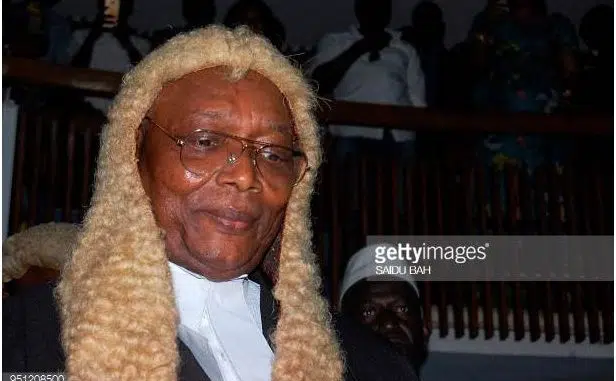
As Bio Validates CRC Recommendations… Late Justice Cowan’s Selfless Work Honored

late Justice Edmond Cowan.jpg

By Amin Kef Sesay

In December 2017, one political commentator lamented that the former Government’s rejection of important constitutional review recommendations by the late Justice Edmond Cowan Constitutional Review Committee was a missed opportunity to strengthen human rights protection. It rejected over 100 of the 134 recommendations, such as abolition of the death penalty and enshrining provisions on economic, social and cultural rights and equality for women.

Thus, many urged the Government to reconsider its position and to provide Sierra Leone with the rights based constitution it deserves.

Others reminded the Government of its ongoing obligation to uphold the rights enshrined in the international treaties it had ratified.

On the other hand, President Bio in his Statement on The Report on The Review of 2017 Government White Paper on The Sierra Leone Constitution stated that rather than shy away from the hard-hitting recommendations of the Truth and Reconciliation Commission as his predecessor did, he had actively implemented them because he believes that those governance reforms are in the best interests of this nation.

“We promised to remedy the “weaknesses, shortcomings and other lacunae that manifest themselves in the course of application of the terms of the Constitution [. . .], by way of specific amendments of its relevant parts, in order to give efficacy to the promotion and protection of good governance and respect for the Rule of Law at all times,” President Bio said at last week’s launching.

President Bio noted that his Government accepted the full White Paper as accepted is rational and more extensive than the 2017 white paper.

For instance, he said, it includes human dignity and equality among fundamental principles of State policy, new sections for gender inclusivity, agrees with change in nomenclature of groups of persons in line with international best practices, and places the burden on the State to prohibit discrimination while promoting national integration and unity.

Recommendations agreed to include repeal Part V of the Public Order Act; establishment of an Independent Commission for Peace and National Cohesion to identify and resolve potential triggers of conflict in our nation; abolished the brutal and inhumane death penalty for all crimes; deepened and speeded up the process of decentralization; decongested prisons, improved prison conditions, and significantly expanded access to justice; established a standalone Ministry of Gender and Children’s Affairs and introduced policies and laws to protect and promote the rights of children and women; a Gender empowerment and equality law laid in parliament and the child rights act under review.

The Government acting on the Justice Cowan CRC recommendations has also acted on social safety; persons with disability, mental health care, improved healthcare, and provided free quality education in investing in an inclusive and sustainable future for this nation.

This Government’s technical review of the CRC Recommendations sought to address gaps, discrepancies, and inconsistencies in our 1991 Constitution that the TRC report identified as triggers of conflict and bad governance.

This include unconstitutional intrusions on matters of the rule of law and on the protection and promotion of rights and liberties guaranteed in our constitution, misuse of Executive privilege and lack of inclusion and equality, access to fundamental rights, protections, justice, resources, and opportunities and citizenship which are fundamental foundations of a true democratic society.

In other instances, sections of the constitution will be renamed. For instance, the recommendation to rename Chapter III of the 1991 Constitution to read “The Recognition, Protection, and Promotion of Human Rights and Freedoms of the Individual” in line with its international obligations in safeguarding and promoting human rights of its citizenry, is accepted.

On elections, Government accepts the recommendation for fixed and predictable dates for elections and inaugurations. Further, a fifty percent plus one threshold is proposed in view of the circumstances, insecurity, and expenses associated with run-offs.

Loss of party membership shall no longer be sufficient and sole cause for removal of a President or Vice President from Office. A two-thirds parliamentary majority will be needed to ratify any resignation or expulsion notice from a political party. Impeachment processes will also be clearly defined.

Government accepts the recommendation to decouple the Office of Attorney General from that of the Minister of Justice. The Attorney General will now be the principal adviser to the Government and not a cabinet minister while a Minister of Justice will continue to sit in cabinet. Questions around age limits are also addressed for judicial and electoral commission appointees accordingly.

On a Trip of Tradition, a Commitment to Cooperation…   Chinese Foreign Minister on 32nd New Year Visit to Africa

Forum on China-Africa Cooperation (FOCAC).jpg

By Amin Kef Sesay

On the morning of the first working day of the New Year, Chinese State Councilor and Foreign Minister Wang Yi embarked on his first trip abroad in 2022, to Africa of course, as always. It has been an unbroken tradition for 32 years, rain or shine, Ebola or Omicron. This is his second journey to Africa in a little over a month. In late November, State Councilor Wang visited the continent for the eighth Ministerial Conference of the Forum on China-Africa Cooperation (FOCAC).

In his keynote address at the opening ceremony of the conference, Chinese President Xi Jinping reaffirmed the spirit of China-Africa friendship and cooperation (i.e. sincere friendship and equality, win-win for mutual benefit and common development, fairness and justice, and progress with the times and openness and inclusiveness), proposed nine programs (i.e. medical and health program, poverty reduction and agricultural development program, trade promotion program, investment promotion program, digital innovation program, green development program, capacity building program, cultural and people-to-people exchange program, and peace and security program), and put forth the building of a China-Africa community with a shared future in the new era. This New Year trip is to follow up and deliver.

It is a testament to time-honored, profound friendship between China and Africa, an engagement for deeper cooperation of mutual benefit, and a commitment to peace, progress and prosperity of the developing world.

A friend in need

Braving the shock of Omicron, State Councilor Wang traveled to Eritrea, Kenya and the Comoros. Health is high on the agenda, and rightly so. African countries have been hit hard by the virus. The need for vaccines is apparent. The World Health Organization put forward the goal of achieving full vaccination rates of 40% in every country by the end of December 2021, a target missed across most of Africa. Challenging times reveal true friendship.

President Xi announced at the FOCAC meeting another one billion doses of vaccines to Africa to help make vaccines more accessible and affordable and bridge the immunization gap. China will provide another 10 million doses to Kenya and as many vaccines as the Comoros requires to realize vaccination for all within this year. And not just that.

In Chinese philosophy, you give others fish and also teach them how to fish. There will be joint production of vaccines, development of cold-chain facilities and medical and health programs to build greater capacity of preparedness and response to the current pandemic and potential outbreaks. Such gestures attest to China’s strong resolve to stand firmly with Africa until the virus is ultimately defeated.

This visit to the horn of Africa happens in the context of much reported flare ups in the region. The situation in Ethiopia, Somalia and Sudan has been news headlines for quite some time, albeit for distressing reasons. A genuine friend is always ready to oblige. State Councilor Wang proposed an outlook on peace and development in the horn of Africa, tossing out the idea of a peace conference and offering to appoint a Chinese special envoy to facilitate the process.

Put it in a nutshell, China kindly suggests addressing both the symptoms concerning security and the root causes related to development and governance. It’s as important to accelerate economic growth as to resolve ethnic and religious discord. It’s as important to keep the region’s destiny in its own hands as to pursue development and achieve stability, Africa-led and Africa-owned. Non-interference in internal affairs, a principle enshrined in the Charter of the United Nations, remains as true today as ever before, if not more.

A Partner in deed

As peace and security is a prerequisite for development and progress, growth and prosperity in turn reinforces stability and harmony. At the new Kipevu Oil Terminall (KOT), the largest of its kind in Africa, built by a Chinese company, State Councilor Wang rekindled the memory of historical bonds, the three visits by the Chinese navigator Zheng He to Mombasa over 600 years ago, when he presented to the local communities nothing but goodwill and tea.

He commended the Chinese engineers as following the illustrious footsteps of Zheng and contributing to the best railway (the Standard Gauge Railway from Nairobi to Mombasa) and the best oil terminal in Kenya. Both are signature harvests in high-quality, people-centered Belt and Road cooperation between China and Africa.

Standing side by side, Kenyan President Uhuru Kenyatta said that the new offshore jetty, replacing the 50-year old onshore KOT, will reduce not only the cost of fuel but also to ensure that Kenya and the region will be able to consistently have an adequate supply of fuel for development needs of the people. “Our partnership with China is not a partnership based on China telling us what to do.

It is a partnership of friends, working together to meet Kenya’s socio-economic agenda.” “I can clearly say Kenya would not have been able to achieve many of our social economic development agendas without the support of China. And this is something that not only we as a government appreciate but also the people of Kenya appreciate,” the President said. Powerful words, noble deeds.

More than 10,000 kilometers of railways completed, nearly 100,000 kilometers of roads built, almost one thousand bridges and one hundred ports, numerous hospitals and schools, the list of China-Africa cooperation goes on. Numbers don’t lie and facts speak the loudest. To get rich, road and bridge. This Chinese saying most aptly captures how infrastructure can make a big difference.

Yet China-Africa partnership is much more than that. Trade, investment, digital innovation, green growth, cultural ties, opportunities abound. With an impressive track record and a firm dedication to solidarity and partnership, China and Africa, comrades-in-arms, will make new, big strides on the path to modernization. The prospect of greater wellbeing of the 2.7 billion of Chinese and African people is what this mutually beneficial partnership is all about.

Rewind to 1963, in his first trip to Africa, Chinese Premier Zhou Enlai described the visit as a journey for friendship and cooperation. The principles of equality, mutual benefit, and non-interference he expounded on almost 60 years ago resonate most compellingly today. Five decades since the restoration of New China’s lawful seat in the United Nations, the Chinese people never forgets the profound friendship of African brothers and sisters.

Guided by the commitment to true multilateralism and international justice, China and African countries will continue to work closely together to safeguard the common interests of the developing world, and open up a new chapter in human history where each and every nation enjoys the right to development and gets to make their dreams come true.

Yi Xin is a Beijing-based observer.

On Constitutional Review Process…   Speaker of Parliament Gives Succinct Insights on the Role of Parliament

Hon. Dr. Abass Bundu Speaker of Parliament.jpg

By Amin Kef Sesay

In a statement on the Role of Parliament in the Constitutional Review Process by the Rt. Hon. Dr. Abass Bundu Speaker of Parliament during the launch of the Government White Paper on the Constitutional Review Process on the 13th January 2022, he stated that he would like to do so from the perspective of Parliament by making six cardinal points.

First, that Sierra Leone is a constitutional democracy and has been for the most part since she recovered her independence and sovereignty from Britain in April 1961. The  Speaker maintained that the promotion and maintenance of peace, security, order and good Government in Sierra Leone is the primordial duty of every organ of State, including Parliament, the organ in which solely the power to make laws for the Republic is expressly and emphatically vested.

He furthered that secondly in the discharge of that primordial duty Parliament must take cognizance that not all the laws it makes are of equal value and quality saying that some laws are, by definition, in a higher category than others.

“This differentiation of the laws passed by Parliament is clearly enshrined in Paragraph 15 of Section 171 of the Constitution of Sierra Leone 1991 (Act No.6 of 1991),” he informed quoting the Section : “This Constitution shall be the supreme law of Sierra Leone and any other law found to be inconsistent with any provision of this Constitution shall, to the extent of the inconsistency, be void and of no effect”.

The Speaker stated that Section 171(15) gives supremacy to the Constitution of 1991 over all other laws saying it is incumbent upon all State   organs to give primacy to the Constitution at all times.

The Rt. Hon. Dr. Abass Bundu continued that thirdly in keeping with that doctrine of supremacy of the Constitution, not as much as a word can be altered in the Constitution unless it has received approbation on the second and third readings of the Bill purporting to make the alteration by the votes of not less than two-thirds of the Members of Parliament.

He continued that furthermore, such a Bill must be duly published in at least two issues of the Gazette before its first reading in Parliament and not less than nine days must elapse between the first publication of the Bill in the Gazette and the second publication.

According to him, that procedural requirement is succinctly and mandatorily stated in Section 108 of the Constitution stating that it applies to the alteration of all the provisions of the Constitution.

Dilating  on the fourth, the Speaker of Parliament stated that where it is proposed to make a new Constitution or to alter any provision in the existing 1991 Constitution which is characterized as extraordinary or entrenched, there is an additional, even more stringent, procedural requirement that must be satisfied.

He continued that the Bill in which the alteration is proposed will not become law unless, after it has been expressly so passed by Parliament, has additionally been approved at a referendum by the people of Sierra Leone.

The Speaker said for such a referendum to be valid, the votes cast must not be less than one-half of all persons qualified to vote in a Parliamentary election and not less than two-thirds of all the votes validly cast.

On the Fifth, he stated that the Bill must not be submitted for Presidential Assent unless it has been certified by the Speaker of Parliament that all the referendum requirements have been satisfied and the Speaker’s Certificate is not only final and conclusive on the matter but is also given immunity from judicial scrutiny.

Speaking on the sixth point, he said that the framers of the 1991 Constitution were in no doubt about the centrality of the role of Parliament in the constitutional review process to the extent that the Constitution condemns as Treason any alteration, suspension or repeal of the Constitution that is made by means other than under the authority of Parliament.

The Rt. Hon. Dr. Abass Bundu Speaker of Parliament stated that what he has just stated represents the law of the Constitution relating to its alteration. He pointed out that whether a proposed alteration is do-able or not, is a separate issue altogether.

He furthered that ,if  for example, an alteration is proposed to be passed by the present Fifth Parliament then its do-ability has to be judged relative to the composition of Parliament at the time.

Dwelling on that briefly he said the Fifth Parliament of the Second Republic started its life after the Parliamentary Election in March 2018 with a total composition of 146 Members comprising 68 Members representing the APC Party; 49 Members of the SLPP; 8 Members of the C4C; 4 Members of the NGC; 3 Independents and 14 Honourable Paramount Chiefs.

He continued that today, through the natural effluxion of life alone, Parliament has lost to eternity no fewer than 6 Members of Parliament including an Honourable Paramount Chief and its current membership has dwindled to 144 Members comprising 58 from the SLPP; 57 from the APC; 8 from the C4C; 4 from the NGC, 3 Independents and 14 Paramount Chiefs.

The Speaker continued that for now any amendment requires a vote of two-thirds majority in Parliament before it can be passed into law. That, he said, means at least 96 affirmative votes.

“With the composition just indicated, except for Bills for the alteration of mundane ordinary provisions of the Constitution in which all the major parties represented in Parliament have a shared interest, all other Bills face a tall order in the present Hung Fifth Parliament and it is well-nigh impossible to predict the outcome with any degree of certainty,” he elaborated.

Giving an example, he said if there is a Government Bill to amend the Constitution, even if it is able to attract all 58 votes of the SLPP, all 14 votes of the Paramount Chiefs, all 8 votes of the C4C, all 4 votes of the NGC and all 3 votes of the Independent Members, it would still require 9 votes from the APC to achieve the necessary two-thirds majority.

He continued that in those circumstances he can only express his utmost best wishes to any person desirous of passing a constitutional amendment in such a Fifth Hung Parliament of the Second Republic particularly in these most exacting times.

In trying to adumbrate one other salient observation he said the framers of the 1991 Constitution were, in his humble opinion, quite deliberate and calculated when they made extraordinarily stringent conditions for the alteration of the provisions of the Constitution, even to the extent of declaring it an act of treason if any alteration or repeal of the Constitution does not first obtain the authorization of Parliament.

“I think they must have been inspired by their own unique experience and knowledge of history to make that kind of prescription,” he stated adding how they deemed it to be inimical to the interests of the people of Sierra Leone to make it easy for anyone to tinker with the sanctity and sacred nature of the  Constitution.

He said strong reasons must be given for any alteration of the Constitution and they must not only be reasonable, sound and powerful but overwhelmingly so if not absolutely necessary.

“In other words, it was their way of admonishing future generations to make haste slowly in any attempt to introduce alterations to that sacred document,” he underscored.

He added how it is instructive to recall the history of previous attempts that have been made to amend the 1991 Constitution since its promulgation in October 1991.

The Speaker cited the first attempt which was in 1993 by a Commission set up by the NPRC under the chairmanship of the late Ahmad Tejan Kabbah and the second in 2008 by a Committee led by Dr. Peter Tucker.

He stated that neither attempt came to fruition for want of a referendum.

The Speaker revealed that the third attempt was in 2013 by the Justice Edmund Cowan Commission established by former President Ernest Bai Koroma.

He said it turned out to be the most trumpeted and the most costly and yet it came to nothing because even though the Commission’s recommendations found strong resonance with the will of the people, Koroma’s Government issued a White Paper cherry-picking what it was comfortable with while rejecting the rest.

The Speaker said nor did that draft Constitutional Amendment Bill of 2017 find favour with the Parliament that was hurriedly summoned on the eve of its dissolution on 6 December 2017.

Dr Abass Bundu stated that from the perspective of Parliament, therefore, he would say that the challenges faced by the nation today are as alive as they were in 2008 and 2017 and they behoove all to maintain for now our unflinching fidelity to the 1991 Constitution and allow it to grow and mature to full blossom, except for a few ordinary mundane provisions able to galvanise a common interest for change amongst all the parties represented in the current Fifth Parliament.

He said the rest can wait for more propitious circumstances to prevail.

Legal Link Promises Using Media Platforms to Discuss Pros & Cons of CRP Recommendations

Government White Paper.jpg

By Amin Kef Sesay

One of the seasoned and highly recognized rights based groups in the country, LEGAL LINK with Rashid Dumbuya Esq as its Executive Director, who was also former Human Rights Commissioner has on the 15th January, 2022 stated that while they commend the Bio – led Government for taking a giant step towards comprehensive constitutional reforms in the country,  their organization is presently studying the Government White Paper in line with the original Justice Cowan CRC report and will soon release for public consumption, a comprehensive analytical report entitled: “A Critical Assessment of  Government’s White Paper on the Constitutional Review Process Bringing out its Strengths and Weaknesses and Proffering Recommendations for Reforms.”

According to him, in fulfillment of their mandate, LEGAL LINK has also put together a formidable legal team with the requisite human rights skills and legal knowledge to engage all

Radio, TV, Newspaper and social media platforms in the country in a bid to ensuring that a critical, balanced and unbiased analysis of the pros and cons of the proposed recommendations in the Government’s White Paper on the Constitutional Review Process is provided to the public.

“In light of the above objective therefore, we openly call upon all media institutions (both print and electronic) to act professionally and independently by ensuring that they provide us their platforms to educate the public on some of the topical issues contained in the White Paper,” Rashid Dumbuya Esq appealed.

He expressed the view that the making of a constitution is highly socio – legal and would therefore require a whole – of – society – approach to guarantee legitimacy, inclusivity and acceptance.

Educating the public therefore on the proposed recommendations as enshrined in the Government White Paper, he underscored, is not only critical to the future acceptance of the constitution but would also serve the best interest of the society.

“We therefore appeal for full cooperation and unfettered access to media platforms by our legal team that possesses the requisite human rights knowledge and legal standing to critically espouse on issues concerning the constitution, law or policy reforms,” he reiterated his appeal on behalf of LEGAL LINK.

Highly Respected Clergyman to Head SLRSA

Rev. Smart K Senessie.jpg

By Theresa Kef Sesay

Reverend Smart K. Senessie was on the 11th January 2022  appointed by President Julius Maada Bio to serve as the new  Executive Director of the Sierra Leone Road Safety Authority (SLRSA) ,the statutory institution charged with the responsibility to regulate and coordinate development in the Road Transport sector plus any other thing connected thereto.

From what this medium gathered, Reverend Smart K Senessie is a highly respected clergyman of proven high caliber and unblemished reputation.

Prior to his appointment he was the Chairman of the Board of Directors at the Sierra Leone Road Maintenance Fund Administration (SLRMFA) a position which he held for years.

As a respected clergy man and a seasoned Public Administrator, Rev. Senessie is the Director of Missions and Development at the United Methodist Church of Sierra Leone, one of the leading Christian Missions across Globe from April 2009 till date. A mission he has served in various capacities.

Rev. Senessie started his academic sojourn at the great Albert Academy and later proceeded to the most prestigious Fourah Bay College, University of Sierra Leone where he earned himself a very sound Degree in Political Science class of 1996 and later bagged two Masters Degrees one In International Relations and another in International Financial Management from Fourah Bay College and the Institute of Public Administration And Management University of Sierra Leone respectively.

Shortly after announcement of his appointment, James Baggie Bio, the Acting Executive Director SLRSA during a staff meeting admonished members of staff to give their unwavering support to the newly appointed Executive Director.

Rev. Smart K Senessie will have to face the Parliamentary Committee on Appointments and Approval at a later date.

He’s faithfully and happily married to Hannah Smart Senessie, having 3 kids, two boys and a girl.

SLPP Govt’s Expressed Views on White Paper Recommendations Espoused by Pres. Bio

President Julius Maada Bio.jpg

By Amin Kef Sesay

 During the launch of the Constitutional Review Process by President Julius Maada Bio, which took place at the lawn inside State House on the 13 January 2022 he told members of the diplomatic community, those who served on the review process, representatives of political parties, parliamentarians, women organizations, non-governmental organizations, civil society groups and pupils from secondary schools present and by extension the country that when he promised a new direction for the nation, he did so after much thought and reflection on how the nation could get it right again.

He continued that the anger and brutality of the ten-year civil war and the copious Truth and Reconciliation Report of 2003 were inflection points for the nation as the country tasted the bitterness of war but we had not seemed to learn the lessons.

President Bio said rather than shy away from the hard-hitting recommendations of the Truth and Reconciliation Commission as his predecessor did, he has actively implemented them because he believes that those governance reforms are in the best interests of the nation.

He stated that  just in the last one year and some months, he worked with Parliament, the Judiciary, development partners, and civil society organizations to implement over half of dozen of the key governance and legislative imperatives outlined in the Truth and Reconciliation Report.

The President dilated on how his Government has repealed Part V of the Public Order Act saying there is no journalist in prison for the practice of journalism underscoring how the Sierra Leone Association of Journalists and international media and free speech organizations have been consistent that free speech and the practice of journalism are indeed unfettered.

He continued by outlining how his Government has established the Independent Commission for Peace and National Cohesion to identify and resolve potential triggers of conflict in our the country maintaining that according to the Global Peace Index, Sierra Leone is the fourth most peaceful country in Africa.

“To further cement our credentials as a tolerant nation, Sierra Leone will soon be the latest member of the International Religious Freedom or Belief Alliance,” he disclosed adding how it is a global alliance that “promotes universal respect for freedom of religion or belief.”

The Chief Executive Officer informed how his Government has permanently abolished the brutal and inhumane death penalty for all crimes saying never again; never again will  execution of people will be done.

He touched on how his Government has deepened and speeded up the process of decentralization, decongested prisons, improved prison conditions, and significantly expanded access to justice.

“We have established a standalone Ministry of Gender and Children’s Affairs and introduced policies and laws to protect and promote the rights of children and women, a Gender empowerment and equality law has been laid in Parliament and we are reviewing the Child Rights Act,” he pointed out.

Social safety, persons with disability, mental health care, improving healthcare, and free quality education for our children, the President said, have all been at the centre of his Government’s agenda to invest in an inclusive and sustainable future for the nation.

He said that adds to their sustained and much-lauded fight against corruption, institutional and governance reforms, overall commitment and success in ruling justly and investing in people.

“Today, we will address gaps, discrepancies, and inconsistencies in our 1991 Constitution that the TRC report identifies as triggers of conflict and bad governance,” President Bio highlighted.

He said especially in the decade preceding 2018, the country witnessed unconstitutional intrusions on matters of the rule of law and on the protection and promotion of rights and liberties guaranteed in the constitution.

The President emphasized that Executive privilege and powers were loosely defined and used, that inclusion and equality were not guaranteed in law not to mention in practice.

“There were significant gaps in access to the essential elements of a thriving democracy – access to fundamental rights, protections, justice, resources, and opportunities,” he noted maintaining how matters of citizenship were not clearly defined and were the basis for exclusion and discrimination.

President Bio said in the New Direction Manifesto, the SLPP party bemoaned the “countless breaches, infractions, and abuses [of the national constitution] by President Koroma and his All People’s Congress” including the sacking of an elected Vice-President of the nation.

He continued that  they promised to remedy the “weaknesses, shortcomings and other lacunae that manifest themselves in the course of application of the terms of the Constitution [. . .], by way of specific amendments of its relevant parts, in order to give efficacy to the promotion and protection of good governance and respect for the Rule of Law at all times.

“I have always signalled that only bold and audacious decisions can transform our nation,” he underscored adding how he has always argued that recognising and embracing the inevitability of progressive change is critical for consolidating and enriching the country’s democracy.

According to him his Government promised, worked diligently and today they have delivered. He said when the former APC Government shilly-shallied, they acted decisively because a review and amendment of the 1991 constitution, though long overdue, is urgently needed and is in the very best interest of the people of Sierra Leone.

“So, today, we go full circle from the setting up of a Constitutional Review Committee (CRC) by his predecessor, Dr. Ahmed Tejan Kabbah,” he disclosed furthering how with great reverence  his Government remembers the outstanding leadership of the late Justice Edmond Cowan and the 80 other citizens who worked in a CRC reconstituted by President Ernest Bai Koroma.

The President thanked the technical committee that examined the recommendations of the Constitutional Review Commission and the accompanying White Paper with a view to giving effect to them as much as practicable.

“Your work is done today but you give Sierra Leoneans a bigger task – to understand, speak to one another with honesty about why these reforms matter, and work together to make this nation even better,” he commended and projected.

He continued that as he has always said, the ties that bind the nation together has and will always be stronger than the fear-mongering and selfish interests of bad politicians that blind us.

“The bad faith attempt in 2017 to push through a restricted number of recommendations was not only not in compliance with the constitutional procedure but also violated ECOWAS protocol,” he said adding how his Government’s approach is different promising that they will take practical steps to implement the non- entrenched ones immediately.

President Bio informed that the entrenched provisions will be addressed within an exclusive and uncluttered timeline – and in all likelihood, after extensive consultations, engagements, and public education on those provisions.

He said no entrenched provisions will be rushed through a referendum ahead of the forthcoming general and presidential elections.

The President continued that the full White Paper as accepted is rational and more extensive than the 2017 white paper.  Giving an example he mentioned how it includes human dignity and equality among fundamental principles of State policy, new sections for gender inclusivity, agrees with change in nomenclature of groups of persons in line with international best practices, and places the burden on the State to prohibit discrimination while promoting national integration and unity.

President Bio continued that  it affirms the State’s commitment to providing free quality and compulsory education at primary and secondary school levels and includes civic education and entrepreneurship among the State’s educational objectives.

He said the  Government will promote national culture and especially national fashion and citizens will have a duty to respect the National Currency and National Pledge.
According to him, in other instances, sections of the constitution will be renamed.

“For instance, the recommendation to rename Chapter III of the 1991 Constitution to read “The Recognition, Protection, and Promotion of Human Rights and Freedoms of the Individual” in line with its international obligations in safeguarding and promoting human rights of its citizenry, is accepted.”

He disclosed how there are recommendations for a reduced detention period prior to being brought to court further revealing how unlawfully arrested or detained persons shall be entitled to compensation and/or public apology.

“Government also accepts recommendations to protect fundamental rights subject to national security interests”, he stated saying those rights shall not be derogated from during a State of Emergency.

He revealed how Government also accepts that a completely new chapter should be dedicated to clearly defining citizenship and addressing all questions of discrimination and exclusion once and for all.

On elections, the President said, Government accepts the recommendation for fixed and predictable dates for elections and inaugurations. He went further to say a fifty percent plus one threshold is proposed in view of the circumstances, insecurity, and expenses associated with run-offs.

He said loss of party membership shall no longer be sufficient and sole cause for removal of a President or Vice President from Office and a two-thirds parliamentary majority will be needed to ratify any resignation or expulsion notice from a political party and that  impeachment processes will also be clearly defined.

In our next publication, we will endeavour to continue to look at President Bio’s view of the other recommendations as enshrined in the Constitutional Review Process White Paper.


Constitutional Review Process White Paper, Accepted Key Recommendations Out

President Julius Maada Bio.jpg

By Foday Moriba Conteh

President Julius Maada Bio on the 13 January 2022 launched the Government white paper on the review of the 1991 Constitution of Sierra Leone, accepting major recommendations and announcing the implementation of some of them already.

The event was held at the lawn inside State House and in attendance were members the diplomatic community, those who served on the review process, representatives of political parties, parliamentarians, women organizations, non-governmental organizations, civil society groups and pupils from secondary schools.

According to President Bio:“Rather than shy away from the hard-hitting recommendations of the Truth and Reconciliation Commission as my predecessor did, I have actively implemented them because I believe that those Governance reforms are in the best interests of this nation.”

He added that recently he had worked with Parliament, the Judiciary, development partners, and civil society organizations to implement over half a dozen of the key governance and legislative imperatives outlined in the Truth and Reconciliation Report (TRC).

“My Government has repealed Part V of the Public Order Act; there is no journalist in prison for the practice of journalism; the Sierra Leone Association of Journalists and international media and free speech organizations have been consistent that free speech and the practice of journalism are indeed unfettered.

“My Government has established the Independent Commission for Peace and National Cohesion to identify and resolve potential triggers of conflict in our nation. According to the Global Peace Index, we are the fourth most peaceful country in Africa…My Government has permanently abolished the brutal and inhumane death penalty for all crimes…We have deepened and speeded up the process of decentralization. We have decongested prisons, improved prison conditions, and significantly expanded access to justice. We will continue doing more,” President Bio noted.

He recalled that his Government had also established a standalone Ministry of Gender and Children’s Affairs and introduced policies and laws to protect and promote the rights of children and women, adding that a gender empowerment and equality law is already in Parliament while they reviewed the Child Rights Act.

“Social safety, persons with disability, mental health care, improving healthcare, and free quality education for our children have all been at the centre of our agenda to invest in an inclusive and sustainable future for this nation. Add this to our sustained and much-lauded fight against corruption, our institutional and governance reforms, and our overall commitment and success in ruling justly and investing in people,” he said.

United Nations Resident Coordinator, Dr Babatunde Ahonsi, said the occasion was important for the future of Sierra Leone and its democratic consolidation, peace building and state-building processes.

He commended President Bio for the launch of the white paper, which he said represented the conclusion of the initial phase of the constitutional review process and the opening of a new stage of the process.

“Today’s launch is a fulfillment of the pledge made by Sierra Leone during the Universal Periodic Review on Human Rights in May 2021 that it will finalize the Constitutional Review Process. The UN system here in Sierra Leone, in collaboration with other development partners, stands ready to support with requisite capacities, ensuring that the process is broadly consultative and fruitful, while leaving no one behind,” he noted.

Speaker of Parliament, Dr Abass Chernor Bundu, said the country had had a constitutional democracy since she recovered her independence from Britain, adding that the promotion and maintenance of peace, security, order and good governance is the primordial duty of the organs of state, including parliament, which he said had the sole mandate to make laws in the country.

Dr Bundu further noted that many attempts by past Governments to amend the 1991 Constitution proved difficult and impossible, adding that it behooves every Sierra Leonean to maintain unflinching fidelity to the 1991 Constitution until such a time when the country would get a new one.

Africell Rolls Out Initiative for Many to Watch AFCON Matches in Communities

Africell-SL.jpg

By Amin Kef Sesay

Considered as a telecommunications company that cares for its numerous subscribers regardless of status, wherever they reside and whatsoever, Africell-SL, has been extolled for always being there for them in thick or thin.

 Mindful of the fact that a sizable number of Sierra Leoneans are football loving fans and further by extension knowing full well that not all could afford to conveniently watch the ongoing AFCON 2021 that is currently underway in Cameroon, in which the country’s darling Leone Stars is participating, at comfort zones, Africell-SL is successfully rolling out an initiative geared towards making it possible for its numerous customers and the general public to be watching the matches live, especially those in which Leone Stars is featured.

The telecommunications company is doing so by placing big screens at vantage positions in various communities in Freetown and other areas for members of the public to comfortably watch the matches. It started doing so on Tuesday 11th January 2022 and repeated same on Sunday, 16th January 2022.

In particular, the Management of the company brought joy to residents of the Wilberforce community, where the company’s Head Office is located, on the 11 January 2022 when it availed residents to watch the live match between Leone Stars and its Algerian counterpart.

Such a move, which has been commended by many made it possible for them to watch the first encounter between Leone Stars and its Algerian counterpart live from Cameroon in a relaxed atmosphere.

According to the Media Manager of the company, John Konteh, the initiative rolled out forms part of ways that Africell is giving bringing people together and a way of giving back to the people of Sierra Leone furthering how it is a bonus by the company that took the onus of being the biggest sponsor of the national team, Leone Stars for the AFCON competition.

The Media Manager also underscored that the company sponsored six winners of the Africell AFCON promo by providing them air tickets together with giving them allowances, taking care of accommodation and transportation to watch the African Cup of Nations whilst in Cameroon.

He concluded that the placing of the free screens to watch the AFCON matches will be replicated in other communities targeting the Dwarzack and Fourah Bay communities as was done yesterday the 16th January 2022.

President Bio Internationally Nominated as Champion of a Blue Economy

President Julius Maada Bio.jpg

By Amin Kef Sesay

The Executive Management Committee of the Africa Blue Economy Forum (ABEF) will be holding its maiden edition of Africa Blue Economy Champions Award 2021 during a public event to be hosted in Nairobi, Kenya on the 12th of March 2022.

The Award ceremony will be held in recognition of distinguished African professionals and political leaders who have made verifiable contributions towards the advancement of the blue economy.

President Julius Maada Bio was nominated in the Economic Development Category for providing political leadership, improved regulation by enforcing the rule of law and promoting investments in blue economy. His nomination was also done with regards promoting sustainable fishing through programs aimed at curbing unreported and unregulated fishing.

Other nominees include HE Raila Odinga, former Prime Minister of Kenya, Hon. Chibuike Rotimi Amaechi, Minister of Transportation of  Nigeria ,Nassim Oulmane, the Chief Blue and Green Economy of  UNECA and  Barka Mossae of the  African Union.

HE Raila Odinga was nominated for the Livelihood Improvement Category for promoting programs and efforts to improve livelihood and social inclusion in coastal communities in Kenya through harnessing blue economy opportunities in tourism, transport and aquaculture.

Hon. Chibuike Rotimi Amaechi was nominated for the Maritime Security Category in recognition for his role in the introduction and implementation of deep blue security project which has led to a marked reduction of the incidences of piracy at sea and overall improvement of maritime security across the gulf of Guinea , Nassim Oulmane for the Climate Change and Economic Development Category for the promotion of multi-sectoral collaboration for advancing blue economy and climate change and  Barka Mossae, African Union for the Partnership Category in recognition  for her role in promoting partnerships for the promotion of blue economy at the African Union.

As stated, the investiture will be done on the 12th of March 2022 during a public event in Nairobi, Kenya. For Contacts they are:

ABEF Secretariat, Nairobi

Email: blueandboomafrica@gmail.com

The Africa Blue Economy Forum (ABEF) is a coalition of professionals, scholars, civil society organisations and activists working for the advancement of a blue economy and sustainable development in the African continent. ABEF seeks to achieve their objectives through raising awareness, providing training, seeking investments and brokering partnerships.