Home Blog Page 896

Over Fake and Malicious News Publications… Orange (SL) Sets The Record Straight

Orange Communications

Orange Sierra Leone, the biggest mobile network in the country has strongly refuted misleading information published against the company in series of newspapers.

According to the press release from the company, the newspapers publications are totally false and malicious which are all geared towards tarnishing the reputation of the company.

See Press Release Below

14TH June, 2021.

ORANGE PRESS RELEASE

Orange Sierra Leone (“The Company”) is pleased to inform its valued customers and the General Public that articles published on the papers of “The Executive” and “Fritong Post” on Friday 11th June under the caption “CID Probes Orange CEO & Others” and “Espionage – Orange CEO arrested” respectively are totally false and malicious.

The Company refutes these fake publications published by these media houses and wishes to state categorically that the CEO of Orange was never arrested. The company wishes to inform the public that the contents of these publications are false. Orange is an internationally reputable company that operates with the highest ethical standards and cannot bear fake news conveyed by some members of the press.

We wish to assure the general public that our company operates with the highest ethical and confidentiality standards. We remain committed to keeping our valued Customers ahead through the provision of the latest technologies along with reliable and superior network quality through an enhanced world class system for an unmatched experience.

We are doing everything we can to enable individuals, communities and Sierra Leone benefit from the digital world we are helping to shape while respecting ethics, human rights and the environment.


Press contact:

Annie Wonnie Katta

Head, Public Relations

Orange (SL) Ltd

annie.wonnie-katta@orange-sonatel.com

+23276450194/+23276450189          

25 Regent Road, Hill Station, Freetown P.O Box 75


In the Light of Import Substitution… Rhombeh and Torma Bum Rice Projects Are Praiseworthy

By Amin Kef Sesay

Sierra Leone in the 1960s was a net exporter of rice produced largely from the bolilands in Kambia district in the North and Torma Bum in Bonthe district in the South.

Belatedly, since that time and having spent billions of dollars in the last five decades importing foods that can be produced here, President Bio’s New Direction Government has seen the crying need for food import substitution with launching of two massive rice value chain projects in Kambia and Bonthe districts. These two projects and others in the pipeline oriented toward import substitution and related modernization are expected to turn around the country’s economic reliance by 2025.

No doubt, unrestrained increases in food imports have had negative consequences for both the country’s agrarian sector and its economy as a whole. The key perils of satiating the market in an uncontrolled manner with imported food include declines in the profitability of domestic agricultural production, drops in economic activity, upticks in unemployment and, as a consequence, slowdown in economic growth.

Increases in imports and unresolved issues in the agrarian sector have for long caused a chain reaction of problems in other sectors of the national economy. At the national level, this has had negative repercussions in the form of slower economic growth, shrinking GDP and jeopardized food security.

Given the changes in the global food market, it is commendable that the country’s priority for agricultural development has shifted to ensuring food security while actively pursuing import substitution. However, going by the experience of J.S Momoh’s Green Revolution of the 1980s and the hundreds of millions of dollars wasted on agriculture since the war ended in 2002 by different regimes without anything to show for it, we should watch this latest experiment cautiously for its sustainability and profitability.

Import substitution is a special type of economic strategy and industrial policy undertaken by the Government to protect the domestic manufacturer and provide the nation’s population with all necessary fast-moving consumer goods, food products and agricultural resources through substituting imported goods with domestically produced ones.

As highlighted above, the quest for food import substitution is not new. Import substitution was viewed by the first post-colonial Governments as a sure economic way of breaking free from colonial dependence or overcoming catch-up development in a climate of foreign nations wielding supremacy in the global market.

Globally, across the developing world, during the 20th century, a policy of import substitution was pursued by the nations of Latin America, Asia and Africa. The greatest success was recorded in Malaysia, South Korea, Taiwan, Indonesia, China, and Thailand.

Implementing a policy of import substitution has helped these nations achieve significant economic growth and draw level on many indicators with industrially developed nations.

An aggressive policy of pursuit of agri-food import substitution can facilitate growth and development across the agricultural sector, boost the nation’s food security as a result of decreased dependence on imports and the diversification of external economic relations.

Among the more significant outcomes is a considerable decline in the share of imports in the total pool of the nation’s commodity resources, accompanied by an increase in exports.

To be successfully implemented, import substitution requires both a short-term economic strategy and a long-term one. A short-term strategy requires diversifying the nation’s system of external economic relations as fast as possible through optimizing imports and exports of domestic goods, enhancing the geographic and goods structure of its foreign economic activity, and seeking out new ways to obtain imported goods from overseas.

A long-term economic strategy of import substitution implies replacing, based on technological modernization, imports with domestic goods produced by domestic manufacturers inside the country.

Secondly, implementing a policy of import substitution should enable the pursuit of the robust export policy, both at the national and local levels, backed by support from economic diplomacy, internal institutional measures, and an integrated tariff, tax, and foreign exchange mechanism.

The primary objective for food import substitution is to ensure the nation’s food security, i.e. produce as much high-quality food as will be enough to meet the population’s need for food, while meeting the need of national industry in raw materials. This especially holds for sectors within the agro-industrial complex, which possesses considerable industrial potential, including in the way of production of grain, vegetable oil, vegetables, meat, and potatoes, etc.


 

NMA Concludes Working Visits to Regional Offices

By Amin Kef-Ranger

The Board of Directors of the National Minerals Agency (NMA), headed by the Chairman alongside Senior Management of the NMA have on the 12th June 2021 concluded  a five days working visit to Regional Offices in Kenema, Bo, Makeni and Kono commencing the aforementioned visits on the 8th June 2021.

Rationale behind the joint visits was geared towards getting first- hand information on  the operations of the regional offices; to extend the contracts of  275 Mines Compliance Officers (MCOs); to roll out the NMA Strategic Plan  2020-2025; introduce the Enterprise Geoscience Information Management Systems (eGIMS); and to interact with  the four Regions.

Ing Hadji Dabo, the Board of Directors Chairman,  thanked the members staff at the different locations for working assiduously under very difficult circumstances to regulate the mines and minerals sector.

He encouraged them to remain focused and do the right things at all times so that Sierra Leoneans will derive maximum benefits from the country’s mineral wealth.

He explained that the Board is responsible to oversee the efficient operation of the Agency and develop strategies for the effective management of the mines and minerals sector, which they have been doing; but pointed out that those policies and strategies will be of no use if they are not properly implemented.  He therefore appreciated the regional staff for being at the forefront in implementing the Mines and Minerals Act 2009, relevant regulations and policies thereby giving meaning to their work.

In his statement, the NMA Director General, Julius Mattai, informed the regional staff that the mines and minerals sector has often been described as the bread basket of the country, and that it is the responsibility of the NMA to ensure that there is sufficient bread in the basket to support the Government’s development agenda. This, he said, is a huge responsibility for the NMA, and that staff must be mindful of that.

He assured staff that the Board and Management will provide the required support and encouraged them to continue to be committed and dedicated.

The Director General pointed out that, thanks to the effort of the NMA, there has been noticeable developments in the mines and minerals sector, including an increase in the number of large-scale mining companies from six to twelve, and small-scale from seven to thirteen.

He furthered that the mines and minerals sector continues to be a major contributor to the GDP as well as providing employment for Sierra Leoneans. He also highlighted that with the new strategies outlined in the Strategic Plan 2020-2025 recently developed , the Agency will continue to take the mining sector to higher heights.

The Director General and his management team made presentations on the NMA Strategic Plan 2020-2025, and the Enterprise Geoscientific Information Management Systems, highlighting the roles of the staff in implementing the Strategic Plan also informing them that Management will set performance targets for them based on the plan and appraise their performances against those targets.

The staff welcomed the visits noting that it was very inspiring to sit with the Board of Directors and Management of the NMA to discuss matters on improving operational effectiveness and institutional efficiency. They highlighted the major challenges they face in their operations vis-à-vis limited logistics and overlapping mandates with other MDAs who are unduly interfering in the sector.

The Board and Management assured staff that they will collaborate with all stakeholders to address the challenges in the sector and ensure that Sierra Leoneans derive maximum benefits from their mineral resources.

Orange Money Increases Access to Loan

By Foday Moriba Conteh

One Sierra Leone’s leading telecom providers, Orange SL, has helped in increasing access to finance for its customers through its Orange Money Lajor service.

The service allows customers to borrow cash through Orange Money and have a grace period of 30 days to repay the loan. It’s the first of its kind in Sierra Leone.

The Orange Money Department said they have now increased how much customers can borrow by more than 100%.

“Customers can now borrow up to Le500, 000. At first, they were only allowed to borrow as much as Le200, 000. This means we have now given customers out there more access to more cash through Orange Money,” an official in the department said.

The official said customers who want to be eligible must have been frequently using their Orange Money wallet to do transactions for at least three months.

“There are customers who are indeed on Orange Money but when they want to send money, they give it to agents to send the money instead of sending it to their wallet and do the transaction themselves. By frequently using your wallet to do transactions, you increase your chance of lending anytime you decide to do so from Lajor,” he intimated

Customers who want to use the service to borrow money can press #144*7# and follow through all the instructions.

Orange Money itself is the first mobile money service in the country and now the biggest and most reliable of all others. With the Orange Money Lajor access to cash has increased and the chance of customers going broke has been lessened.

Sierra Leone is one the verge of transitioning its finance sector to the digital world, Orange Money has already taken the lead and its far ahead of its competitors and sector players.

A Friend In Need Is A Friend Indeed

By Amin Kef Sesay

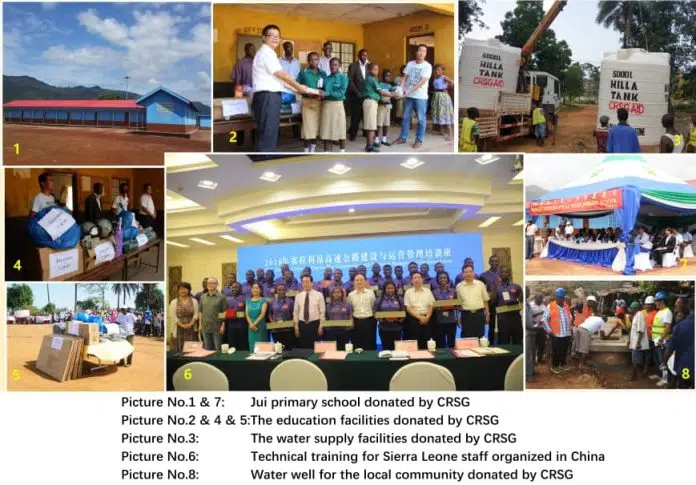
China Railway Seventh Group (CRSG) is one of Sierra Leone’s strongest infrastructural partners, a relationship which was borne out of the genuine desire to solidify the long standing bilateral and fraternal relationship between Sierra Leone and China.

CRSG has not only contributed to infrastructure development in Sierra Leone, but the company’s presence has also played an important role in emergency rescue in times of difficulty and need.

During the trying times of the Ebola outbreak in Sierra Leone in 2014, the first nation or country to rush to the country’s rescue in providing mobile laboratory, PPEs, and other related medical supplies to reach the shore of the Lungi international Airport was China. Again, CRSG was the first company in Sierra Leone to immediately arrange personnel and to dispatch several trucks to help complete the challenging task of transporting large number of supplies that needed to be transported within three days to the China- Sierra Leone Friendship Hospital situated at Hastings, commonly known as Jui Hospital, for the primary purpose of preventing and controlling the spread of Ebola was CRSG.

On August 13, 2017, Sierra Leone was struck again by a huge Mudslide in the regent hills of sugar loaf in Freetown. This sad event saw the destruction of hundreds of homes and hundreds of persons were buried under the rubble. The first to come to our rescue with a rescue plan was CRSG who immediately set up an accident rescue team after receiving a call from the Government of Sierra Leone to assist. The general manager of CRSG instantly led both experts and local staff and immediately directed a number of large excavators to carry out rescue activities that won precious time for saving many lives.

The Savage Street Bridge is a major route and a thorough pass connecting Western area and Brookfields, Syke Street, St John and other major places especially the Central Business District. The collapse of that bridge was a major setback and challenge that was faced by the Government on the 17th September 2020. CRSG undertook the project in the face of a crisis and overcome numerous difficulties including the fight against the dangerous COVID-19 ravaging the globe. The bridge construction was completed in time within three months and with high quality standards and delivered to the Government and people of Sierra Leone. Providing convenience and enhancing flow of transportation for the people plying the center of Freetown.

These monumental drives have yielded positive results which Sierra Leoneans should ponder on to make a better judgment of the good friend that is always around to improve personal and national development. CRSG has always been an institution that prides itself in the core values of discipline, hard work, quality delivery and respect for every citizen.

According to a renowned media practioners, Abu Bakarr Kargbo (Fada Bakish) most Chinese companies working in Sierra Leone, categorically stating the CRSG, they hold Sierra Leonean workers in high esteem.

He maintained that since their operational inception in Sierra Leone, the group has contributed to the development of Sierra Leone particularly in terms of infrastructural development as well as impacting the lives of many Sierra Leoneans through job creation and the implementation of programs and policies in line with the company’s Corporate Social Responsibility.

Hon. Yumkella Underscores Importance to Gain Access to Energy

By Amin Kef Sesay

A virtual program convened on the 9th June 2021 by the World Health Organization, the World Bank Group, UNDP and the UN Department of Economic & Social Affairs to facilitate universal access to Clean Cooking and Health Care Facility electrification, including the  high-level launch of the Coalition on Health and Energy Partnership for Action (HEPA) was moderated  by Hon. Yumkella.

It could be recalled that about 3 billion people are exposed to high levels of health-damaging pollutants each and every day due to the lack of access to clean fuels and technologies for cooking. Such chronic exposure to household air pollution is the cause of nearly 4 million deaths annually from non-communicable diseases (including heart disease, stroke, chronic obstructive pulmonary disease and cancer), as well as pneumonia.

It was stated during the meeting that at the same time, an estimated 1 billion people globally are served by health facilities with no access to electricity.

Worthy of note is that electricity is essential for the operation and servicing of life-saving and critically needed medical devices, such as vaccine refrigeration and surgical-emergency, laboratory and diagnostic equipment, as well as for basic amenities such as lighting and clean water. In many cases, access to electricity can make the difference between life and death, as has been starkly seen during this ongoing COVID-19 crisis.

Using his native and Kychom Constituency as a real example, Hon. Yumkella underscored the importance for people to gain access to energy around the world and for his country,  his political constituency and for socio-economic development.

The Minister of Health, Dr. Austin Demby and the Minister of Energy Alhaji Kanja Sesay, dilated on the Sierra Leone Government’s effort to give the general public access to energy and good health care.

Other participants included Dr. Tedros Ghebreyesus- DG of WHO, M Achim Steiner – UNDP Administrator,  Liu Zhenmin – UN DESA Under-Secretary-General, Commissioner Michelle Bachelet of UN -OHCHR, Mr. Francesco La Camera – DG IRENA among numerous others.

Unsafe Abortion Can be Addressed through Law Reform – Fodie Paul Oniel Kamara reveals

By Foday Moriba Conteh

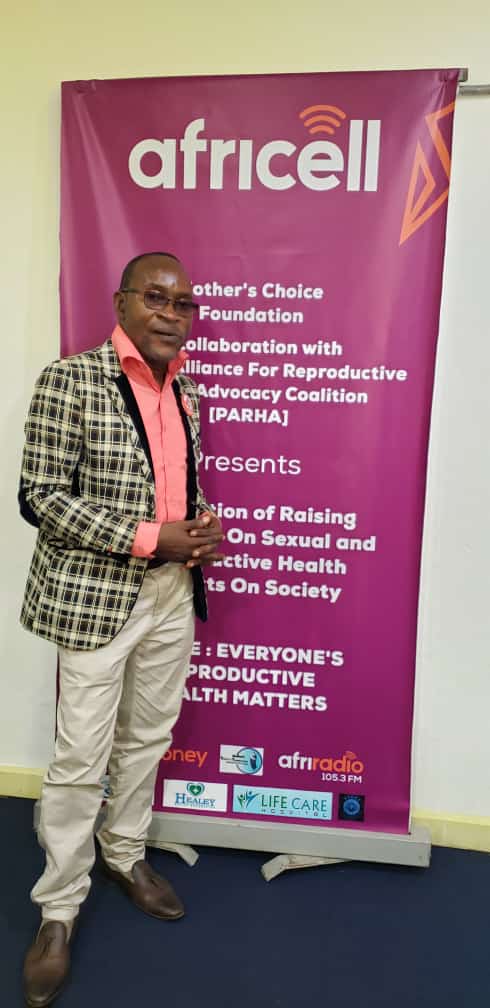
In an exclusive interview with this medium, Co-founder and Chairman of People’s Alliance for Reproductive Health Advocacy (PARHA), Fodie Paul Oniel Kamara, stated that unsafe abortion can only be addressed in Sierra Leone through law reform which he said they are seeking to come to fruition through the enactment of the Safe Motherhood and Reproductive Health Bill.

He maintained that enactment of the Safe Motherhood and Reproductive Health Bill is part of their strides in ensuring competent and adequate human resources enhancement, bringing into being an appropriate physical infrastructure and internal systems capable of delivering and promoting adequate and equitable sexual and reproductive health services in the country.

Fodie P. O. Kamara further revealed that the issue of unsafe abortion continues to plague us as a nation adding that women and girls are dying as a result of this malaise.  He further highlighted the need for collective approaches in engaging key stakeholders on issues relating to the Bill.

Fodie continued by stating that the Safe Motherhood and Reproductive Health Bill will recognize and promote sexual and reproductive health rights of women in line with international laws, noting that it will make sexual and reproductive health services safe, accessible and qualitative in order to respect, protect and fulfill the right to sexual and reproductive health of women in the country.

The Chairman stated that currently Sierra Leone has one of the highest reported maternal mortality ratios in the world with 717 mothers dying for every 100,000 live births (Sierra Leone Demographic Health Survey (SLDHS) 2018).

He continued that unsafe abortions are particularly common among teenage girls, noting that 25% of maternal deaths are due to unsafe abortion among adolescents. He also added that unsafe abortion is prevalent among young women in Sierra Leone due to many factors including but not limited to stigma and societal pressure, noting that the lack of resources and a conducive legal as well as policy environment are contributory factors to the aforementioned issue.

Fodie P. O. Kamara maintained that lack of access to family planning services, adequate medical care and delivery services are drivers of higher material mortality rates especially in teens and that recent statistics show that maternal mortality accounts for 36 percent of all deaths among women aged 15-49 in the country of which he said this makes Sierra Leone one of the countries in the world with the highest life-time risk of women dying during pregnancy or childbirth.

Fodie P. O. Kamara also highlighted PARHA’s current advocacy priorities which include Lobbying Cabinet for approval of a Cabinet Paper and the subsequent drafting of a proposed Safe Motherhood & Reproductive Health (SMRH) Bill, Repeal of Sections 58 & 59 of the Offences against the Person Act, Repeal of Section 35, Sub-Section 1 (b) & (c) of the Pharmacy & Drugs Act 2001 and Lobbying the Ministry of Finance in collaboration with the Ministry of Health and Sanitation for a 2% increase in Reproductive Health budget to meet Government’s Commitment on the Abuja Declaration of 15% for Health from the National Budget.

On the issue of the political will, Chairman Fodie P. O. Kamara highlighted several commitments made by both past and present Governments which indicate high potential for political acceptability based on:

The Family Planning 2020 Commitments: July 11, 2017 Commitments at the London Family Planning Summit, Presidential Maiden Speech at the May 12, 2018 State Opening of Parliament, the First Lady’s Flagship “Hands Off Our Girls” Programme, Establishment of a special ‘Ministry of Gender and Children’s Affairs (MoGCA), Launch of a ‘Male Engagement Strategy to Prevent Sexual & Gender Based Violence;  a Costed Implementation Plan (CIP) for Family Planning in response to the Reproductive Maternal, Newborn, Child and Adolescent Health (RMNCAH) Strategy 2017-2021 etc.

He therefore encouraged parents and elders to have open discussions with their kids and wards in order to give them the right information that will help them avoid unwanted and unintended pregnancy as well as unsafe abortions.

‘One Family People’ Engages NDMA on Disaster Preparedness and Response Strategy for Disabilities

By Foday Moriba Conteh

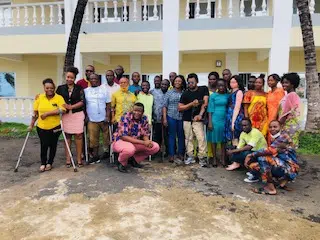
As part of their efforts in raising awareness related to the inclusion of disability issues at all stages of disaster management process and especially during planning and preparedness in the country, the One Family People, in collaboration with Organizations of Persons with Disabilities (OPDS), has on Friday 11th June, 2021 held a familiarization engagement with the National Disaster Management Agency (NDMA) on their disaster preparedness and Response Strategy for persons living with disability across the country. The one day engagement was held at the National Disaster Management Agency (NDMA) Office at Aberdeen in Freetown.

Speaking during the event, the Director-General of the National Disaster Management Agency (NDMA), Lt. General (Rtd.) Brima Bureh Sesay, expressed profound gratitude to the One Family People for the move geared towards engaging them on their disaster preparedness and Response Strategy for persons living with disability,  describing such  as a laudable venture.

He noted that the issue of disaster management started in 2002 adding that they discovered that there is a need to have an effectively coordinated mechanism to handle issues related to human and environmental security and its challenges.

The Director General of NDMA disclosed that His Excellency President Dr. Julius Maada Bio, out of his wisdom in trying to deal with disaster management issues in the country launched the National Disaster Management Agency during which he expressed hope that the Agency will use science, innovation and data to predict, anticipate, plan for and report on full disaster management cycles in the country.

He maintained that while disasters threaten the well-being of people from all walks of life in the country, the few that are  disproportionately affected when such instances occur are persons living with disabilities, adding that whenever there is heavy down pour  flooding do occur and persons living with disability suffer the most.

The NDMA Director General said that Sierra Leone has experienced flash floods whenever there is heavy down pour of which he said they have been working relentlessly to ensure that they put mechanisms in place to handle such occurrences.

He assured the One Family People that they will work with them in order to enhance disaster preparedness and Response Strategy for persons living with disability across the country.

In his statement, the Programme Manager of One Family People, Samuel P.O.V Macaulay noted that their organization is a disability focused organization that has been working assiduously to create a conducive environment for persons living with disability across the country.

Edward Emmanuel, the Director of One Family People intimated that theirs is a human rights based organization working to build resilience as well as to break barriers for persons with disabilities through capacity building, advocacy, partnership, development and leveraging resources.

He stated that several studies have shown that including the needs and voices of persons with disability at all stages of the disaster management process and especially during planning and preparedness, can significantly reduce their vulnerability and increase the effectiveness of Government’s response and recovery efforts in the country. He added that it against such a backdrop that they decided to engage the National Disaster Management Agency (NDMA) on their disaster preparedness and Response Strategy for persons living with disability across the country.

He stated that despite an increasing worldwide focus on disaster risk reduction as opposed to mere disaster response, many cities and related Government agencies fail to adequately plan for or include persons living with disability in their disaster management activities.

Edward further disclosed that Persons living with disability are especially vulnerable when disaster strikes not only due to aspects of their disabilities, but also because they are more likely, on average, to experience adverse socio-economic outcomes than persons without disability, including higher poverty rates furthering that disasters and poorly planned disaster response and recovery efforts can exacerbate those disparities, leaving persons with disability struggling to cope even more both during and after  emergencies.

He pointed out that Persons living with disability and Disabled Persons’ Organizations (DPOs) have invaluable knowledge, experience, and expertise about how to make disaster risk management activities responsive to their needs of which he said it is vital to include them in the design, implementation, and monitoring of  activities.

He ended by appealing to the National Disaster Management Agency (NDMA) to consider having a Disable Desk in their organization in order to include persons living with disability in the designing, implementation, and monitoring of activities implemented by the National Disaster Management Agency (NDMA) in order for them to be fully involved and have a robust Response Strategy.

The event was climaxed by a Question and Answer Session with the adoption of recommendations.

Youth Affairs Ministry Launches Revised New National Youth Policy

By Amin Kef Sesay

The Ministry of Youth Affairs in collaboration with its development partners, on the 10th June, 2021 met  at the  Bintumani International Conference Center, Aberdeen, launched the Revised National Youth Policy and National Youth Dialogue with the theme, “Empowered Youth ,Leading to the Development of a New Sierra Leone.”

Mohamed Orman Bangura, Minister of Youth Affairs, in his statement  described the Youth Policy Review process, as the most participatory and consultative process that has taken place in the country; and probably the Mano River Union Basin. “You are all here today because you are part of the hearts and souls of the collective efforts to transform the lives of Sierra Leone youth and to make our country a leader in the fourth industrial revolution,” Minister Orman Bangura noted.

He described the efforts of the Government of H. E. President Bio to transform the youth sector in the country as unparalleled in the country’s history.

The Hon. Minister extended thanks to the leadership of the New Direction Government; especially H. E. President, Julius Maada Bio and his Vice President, Dr Mohamed Juldeh Jalloh for their vision and steadfast commitment to promoting Human Capital Development in the country and for their unflinching support towards the positive transformation of the youth sector in the country.

Minister Bangura reminisced that the first youth policy was developed in 2003 during the era of late President Ahmed Tejan Kabbah and that it was as a result of the collective efforts of several people, including the current Vice President, Dr. Mohamed Juldeh Jalloh.

He further spoke on the importance of the review, stating that it is mandatory to review the said youth policy after every five years to catch up with improvements in other international youth policies and maintain Government’s agenda on youth empowerment and development.

The review, according to the Hon. Minister was inclusive, consultative and transparent and that it was done based on the United Nation’s model to bring the country under positive international spotlight.  He thanked donor partners including UNDP, GIZ, EU, UNFPA, IOM and YMCA for their support.

The Hon. Vice President, who launched the reviewed Youth Policy and officially declared open the two days National Youth Dialogue informed participants of H. E. President Julius Maada Bio’s New Direction Government’s commitment to supporting youth empowerment. The Hon. Vice President expressed delight in the steps taken so far in terms of addressing youth empowerment in the country. He recalled how he was part of a Government delegation in 2004 that visited Addis Ababa in Ethiopia where key recommendations were made to African leaders in relation to youth’s involvement in governance.

“And today, when you look around Sierra Leone, we have dynamic young Ministers; Ministers that are young. You talk of the Minister of Youth, to Education, to Mineral Resources. Several of our Ministers are youth,” the Hon. Vice President noted.

He noted that another aspect that was touched on during the said ADF4 conference in Addis Ababa was to look at the youth bulge as a slow motion driver of violence in the Africa Continent and adequately address their empowerment and employment. It would be difficult for African Governments to be able to address issues and causes of youth violence on the continent. Dr. Juldeh mentioned the need to give visibility to women through the creation of the needed spaces for them to occupy.

Dr. Mohamed Juldeh Jalloh reaffirmed his Government’s commitment to harnessing the potentials of youth for national development, reminding participants of President Bio’s commitment on 10th May, 2018 in the well of Parliament about the need to empower and increase the socio-economic participation of young people through their involvement in agriculture, enhance creativity and innovation, improve the entertainment and performing arts industry, review of the National Youth Service Act 2016 policy and accelerate entrepreneurships among young people.

“We all know that the population of Sierra Leone is highly youthful. Young people between 15 and 35 constitute 1/3 of the total population of seven million,” the Hon. Vice President informed. He went on to state that ,as a result,  the nation has an opportunity to invest and woo out the potentials and creativity of young people to stimulate the economic and social development of the country.

Concluding his statement, the Hon. Vice President noted further that empowering young people constitutes changing their mind-sets and creating the enabling environment to harness their potentials and creativity.

The reviewed National Youth Policy and Youth Dialogue was launched and declared opened by the Hon. Vice President, Dr. Mohamed Juldeh Jalloh.

Bo School of Midwifery Benefits from US Supported Skills Laboratory

By Amin Kef Sesay

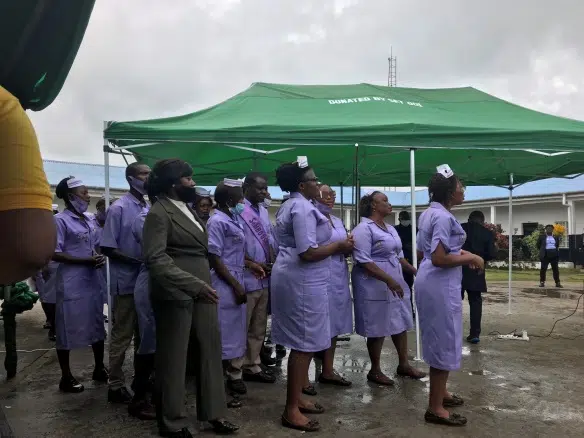
The United States Ambassador, David Reimer, along with Dr. Austin Demby, Minister of Health and Dr. Alpha T. Wurie, Minister of Education, has on the 10th June 2021 commissioned a new skills lab at the School of Midwifery (SOMBO) in Bo, Southern Sierra Leone.

This medium was intimated that the lab will provide simulation-based education and training as a complement to traditional forms of training, allowing students to gain experience managing rare yet life-threatening events such as post-partum haemorrhage, pre-eclampsia and birth asphyxia.

The US Ambassador thanked the Government for the efforts it has been making to reduce the terrible toll of maternal mortality.

“With a significant expansion in the number of trained midwives, and improvements to midwifery education, funded by the United States, Sierra Leone has seen a 40% decline in maternal mortality.  I congratulate you on this progress and urge you to continue your efforts to save mothers and babies in childbirth,” the US Ambassador acclaimed.

It was understood that the renovation, procurement and installation of equipment, training, policy development, and integration of skills-based learning into the curriculum were funded and carried out by the U.S. Health Resources & Services Administration (HRSA) with support from the U.S. President’s Emergency Plan for AIDS Relief (PEPFAR).

The project at SOMBO is part of HRSA’s Resilient and Responsive Health Systems Initiative – a 5-year, $10.5 million grant which aims to achieve improved maternal health and HIV outcomes through strengthened midwifery education.

The program has previously funded skills labs, libraries and computer labs at the National School of Midwifery in Freetown, School of Midwifery Makeni, and Faculty of Nursing at the University of Sierra Leone.  A fifth skills lab at Eastern Polytechnic in Kenema was also commissioned on Thursday.

Celebrating the substantial reduction in maternal deaths, Minister Demby stated that “717 deaths in 100,000 is still too high.” Addressing the student midwives, he said: “One of the main ingredients in solving this problem is having competent, well-trained, empowered midwives. What you are doing today is getting all those skills in place so that when you are confronted with that twin, that triplet, that single baby, you are prepared.”

The School of Midwifery Bo (SOMBO) is an institution established in 2017 by the Ministry of Health and Sanitation (MoHS).  Since its inception in 2017, the school has enrolled 164 students and graduated 99 midwives deployed by MOHS in various districts.  The school trains State Certified Midwives (SCM), which is a two (2) year program to upgrade State Enrolled Community Health Nurses (SECHN) to the SCM certification.

Midwifery training programs aim to produce competent and multi-skilled midwives who will in turn provide high quality and safe reproductive services to pregnant women, the unborn child, and neonate, throughout pregnancy, through childbirth, and the postnatal period, in any setting.  In addition to the basic theoretical instruction received in the classroom, students receive clinical instructions in the clinical lab and practice settings in maternity units.

In addition to the ribbon cutting ceremony, the Ambassador viewed a presentation on the importance of skills-based education and training from Dr. Joan Shepherd, principal of the National School of Midwifery, and a demonstration of high-fidelity training mannequins.