
Home Blog Page 906

With Water Becoming Scarcer… Govt, Guma & SALWACO Need Fresh Thinking

By Amin Kef Sesay

Notwithstanding the fact that Guma Valley Water Company no longer has the financial, infrastructural, institutional and logistical capacity to supply over 2 million residents of the Western Area with clean pipe borne water, it can make what is available for now to serve a lot more people if it puts in place zonal water use monitoring and pipe repair teams to check for illegal connections and people who cut pipes to access water illegally.

The problem of access to clean water in the Western Area has become acute in recent times having health and investments implications.

A conservative estimate would be that more than 30 percent of houses in the ever sprawling Western Area have no pipe bringing clean drinking water to them. Of course hence the proliferation of water bottling companies in the Western Area – over 200, Hon. Marah has said.

Because this amount of the population does not have access to safe water, it also implies that they do not have adequate sanitation.

Putting it another way, in the next 20 years water supply coverage will have to more than triple and sanitation coverage more than quadruple, if everyone is to be adequately served.

The solution lies in first and foremost putting in place robust measures and strategies to ensure that the huge amount of clean water that is wasted every day is drastically minimized. There are other remedies. These include:

(1) Reduce unaccounted-for water (water that is pumped into the system but never produces any revenue for the company), which is at an excessively high level.

(2) Avoid or discourage wasteful use, by imposing higher charges on excessive use, encouraging the use of water-efficient fixtures and above all adopting sanitation systems that place minimal demands on water supply.

Reduction in unaccounted-for water

Guma does not know what happens to more than half of the water that is pumped into their systems. This water disappears through physical leaks, is stolen through illegal connections, and is not recorded because meters are not functioning or are not read, or is not billed because of institutional inefficiency or corruption.

The impact is a system that is very hard to manage, where scarce water is lost, and which does not generate enough revenue to support proper operation and maintenance. The ways to solve this problem are well-known and not technically complicated. They are:

  • Reduce physical losses to the lowest level economically feasible
  • Meter at least all major consumers
  • Bill everyone for water supplied, and enforce payment.

Avoid or discourage wasteful use

Just as the tools to reduce unaccounted-for water are well known, so are many of the tools for reducing unnecessary use of water.

Tariffs should increase with increasing consumption. Low-income users need to be protected by “lifeline” rates, but the higher levels of consumption should be charged at the marginal cost of developing new supplies. This should act as a deterrent to frivolous use.

Water-saving devices should be mandatory, so that all new installations and all renovations use only such devices. Flush toilets in particular, which can account for 40% of domestic use, must be made more efficient (with a 6-liter flush as an upper limit).

  • Industrial processes should be made much more water-efficient, either by process redesign or by recycling
  • Failure to create effective institutional frameworks, including regulatory capacity, autonomous service providers, appropriate involvement of the private sector and the user communities.
  • Lack of integrated water resources management including critically protection of water catchment basins

Conclusion

Government (in collaboration with external support agencies need to determine which of the “easy solutions” are appropriate, and then implement them. However, it is abundantly clear that they would not be sustainably implemented in the absence of political will and an enabling environment. These actions include:

  • Developing an integrated approach to all water resources use, and creating institutions that will be able to resolve inter-sectoral and conflicts over use.

. Creating a structural and regulatory framework that (a) devolves responsibility for urban environmental service delivery to the lowest level able to provide it; (b) encourages private sector participation and community participation; and (c) supports community management of service delivery where the community is able and willing to assume that responsibility.

  • Exploring ventures with the private sector to reduce the need for publicly-funded capital investment programs and to increase institutional competence.

Radio Education Proves Successful in Sierra Leone during Crucial Times

By Amin Kef Sesay

Across the world, radio has been widely used as a tool for remote learning since the beginning of the COVID-19 pandemic. Such has happened in countries like Colombia, Liberia, Malaysia, and Rwanda, among others. But education radio is now being used in other engaging ways, not only to support distance learning but to enhance in-classroom teaching and the training of teachers.

Between 2014 to 2016, radio was used extensively to foster children’s education at home during the Ebola outbreak. Sierra Leone took a similar approach to respond to the impact of COVID-19 on learning.

According to UNICEF, school closures left nearly 2.6 million children out of school in the early phase of the pandemic. To avoid too much disruption and to help keep children learning, the country turned to educational technology (EdTech) tools like radio, TV, and mobile phones. The Sierra Leone Ministry of Basic and Senior Secondary Education (MBSSE) and its Teaching Service Commission (TSC) convened an Education Emergency Task Force to revive the country’s education radio program for remote learning.

As a response, the World Bank produced pragmatic guides called ‘Knowledge Packs’ to support policymakers in making quick yet informed decisions as they work with education ministries. For example, the Education Radio Knowledge Pack details timely learnings from successful radio programming across countries; evidence of the effectiveness of radio education; steps and costs for project implementation; and how to navigate the decision-making process. This initiative is part of the global program for Continuous and Accelerated Learning in response to COVID-19 supported with funding from the Global Partnership for Education (GPE), and implemented with UNESCO and UNICEF (acting as a consortium).

It was crucial to make the radio lessons accessible to learners. Sierra Leone broadcasts one-hour lessons over the radio, of which 30 minutes are dedicated to teaching, while the other half-hour is for students to call in a toll-free line to engage with the teacher. Lessons are also available on-demand on the government’s education website. In addition, print materials are distributed, and supplemental lessons are made available through mobile phones and television.

Teachers also organized themselves to leverage their knowledge and expertise. Those who have experience with education radio during the Ebola epidemic, including those from private schools, trained other educators during the COVID-19 pandemic. They met in socially distanced small groups to learn together and support each other. “We built education radio programs for literacy and numeracy for the early grade students. We also developed teaching manuals”, explained Dr. Staneala Beckley, Chair of Sierra Leone Teaching Service Commission in the Ministry of Basic and Senior Secondary Education. “Teachers decided to meet in small groups with appropriate social distancing to sit with those with radios, and follow along together and learn from group discussions of the lessons.”

To increase awareness about the radio programs, the country also ran a communications campaign leveraging social media, newspapers, advertisements, text messages, and announcements through community loudspeakers. Volunteers, civil society, religious groups, and the private sector were mobilized to spread awareness by playing sample lessons in their communities and widely sharing the broadcast schedules. “We wanted to reach as many people as possible with our education radio lessons in the marketplaces, in the carpentry shops. We produced jingles in English and in Creole, the language of mass communication in the country”, stated Dr. Staneala Beckley.

Covering the curriculum effectively has been challenging due to limited broadcast airtime availability, radio channels, and access to radio devices in households. Multi-grade lessons are engaging only to an extent, given the different pedagogical and lesson content needs of students across grades.

In addition, making the education radio program self-reliant to support multiple education radio lessons in a day has been difficult, since they need to broadcast programs that earn them revenue. It has also been challenging to measure impact, and plans are under development to partner with organizations that can support with this expertise.

Sierra Leone scaled up key resources during the pandemic: with 43 radio teacher presenters and 44 hours of lessons broadcasted per week, it doubled the number of radio studios used to develop and broadcast radio lessons to its students in 2020.

The country also leveraged and adapted key lessons from its experience with Ebola. Student performance data has been used to guide the prioritization of lessons. Programs delivering gender-based messages have been added to the broadcast in response to the high number of pregnancies among young girls during Ebola-led school closures. Lessons for younger students are scheduled earlier in the day. Multi-grade lessons combine content from multiple grades into one lesson. Lesson broadcasts are being repeated to increase access.

The coverage and inclusivity of education radio lessons can be high. Radio is mostly free, has high penetration rates in countries with limited access to cheap internet, and does not require special skills to access it. Radio programming can be scalable, cost effective, and easily delivered in local languages. It can be engaging, with adaptable content to listeners (when using IVR), and has proven to improve learning outcomes.

Sierra Leone’s experience shows that education radio is ideal for countries where household radio reach is significantly greater than access to connectivity and other devices. It can be extended beyond the short term to support out-of-school children and teachers, as well as a standard operating procedure for education during emergencies.


Pres. Bio Commissions First State of the Art Bo Rangers Football Clubhouse & Secretariat

President Dr Julius Maada Bio Executive Chairman of Bo Rangers Football Club Babadi Kamara

By Amin Kef Sesay

During a colourful and impressive ceremony that was held in Bo Town on the 21st May 2021 graced by dignitaries from Freetown, Bo and football loving fans drawn from different parts of the country, President Dr. Julius Maada Bio officially opened the State of the Art Bo Rangers Football Clubhouse and Secretariat.

Chairman Board of Directors of the Bo Rangers Football Club, Hon. PC Gassimu Mallah thanked President Bio for gracing the occasion and for injecting a new spirit into Sierra Leone football, noting that many young people had taken football as their career.

He added that spectators and football fans in the country would always remain grateful to President Bio for reviving football.

PC Mallah also thanked the Executive Director of the Club, Babadi Kamara, for his disciplined leadership and for transforming the club into an enviable one.

Executive Chairman of Bo Rangers Football Club, Babadi Kamara, said he was happy to have superintended the work.

He added that he was also happy that the official opening of the clubhouse facility, the new home of their team, was being commissioned by the first gentleman of the Republic, His Excellency, the President, Dr. Julius Maada Bio. He noted that the idea is about “bringing joy to people’s lives, particularly the football family.”

“Today’s event marks an epoch-making day in the history of Bo Rangers Football Club in particular and Sierra Leonean football in general. It symbolises our ambition and vision of football excellence as well as reinforces our Executive’s determination to achieve our objectives. Today, we thank Allah for the blessings He has showered on this club and those who’ve served it over the years. We ask for Allah’s blessings on those who will use this facility in the years ahead,” he noted.

The Chairman further said that the value of football to the nation could not be over-emphasised, adding that aside from being a major contributor to economic and social livelihoods, it also helped keep young people away from crime and drugs. He also noted that in a bid to complement His Excellency’s flagship programme of human capital development in the non-formal sector, he had personally decided to take up the challenge of empowering young people.

“I inherited a bank account with a cash balance of less than Le. 10 million. Today, I am happy to inform you all that the Club has a cash balance of more than Le.1billion generated, inter alia, from gate proceeds, donations by well-meaning supporters and members of the club, sales of jerseys and support from FIFA/CAF Corona Relief to clubs received through the Sierra Leone Football Association.

We are today the envy of all clubs in Sierra Leone because we have made accountability and transparency the hallmark of our administration,” he noted.

In his remarks President Bio thanked the Executive Chairman of Bo Rangers for what he said was a beautiful example by erecting a state-of-the-art clubhouse, the first of its kind in the country. He said that everybody gathered at the event looked happy for the ways football is being played in the country.

“This spirit you have shown provides an opportunity for the players to serve as role models and ambassadors. I, therefore, urge the players to be good examples in the pursuit of their career,” he encouraged them.

President Julius Maada Bio said that his emphasis on Human Capital Development was to make sure that everyone realised his/her dream and to add to the development of the nation. He pleaded with all Sierra Leoneans to work harder to actualise those potential, which he said were good for self-development.

“I thank the leadership of Bo Rangers Football Club for this impressive work. The once defunct Bo Rangers Football Club is now an epitome of great admiration. This infrastructure has never been seen anywhere in the country.

“On that note, I want to say a big thank you to Babadi Kamara and all stakeholders of the club for your leadership in transforming this club. I wish you all the best and thank you everyone,” he concluded.

Thumbs UP to ACC For The Compliance Manual For MDAs

Commissioner ACC, Francis Ben Kaifala

By Amin Kef Sesay

It goes without argument that in improving the effectiveness of the public sector through the quality of public administration, the State since the 1970s has not proved itself too capable – hence the gradual lapse into poverty and all its social ills. This is because the role of the State in proving the conducive atmosphere for rapid socio-economic development has not been too robust and sustained.

After the war ended in 2002, a paradigm shift and a rediscovery of the importance of the State in the development process and the need for a more capable public sector occurred.

Indeed, the relevance of the State or the public sector to socio-economic development cannot be underestimated. The 1997 World Development Report argued that an effective State is vital for the provision of the goods and services – and the rules and institutions – that allow markets to flourish and the people to lead healthier, happier lives. Without it, sustainable development, both economic and social, is impossible.

The basic function of the public sector therefore is to provide goods and services to citizens based on the realization and representation of public interests and its possession of unique public qualities compared to business management.

However, the public sector has not been able to perform its function effectively because of its accumulation of excessive power, lack of accountability and representation, indifference towards public needs and demands, official secrecy and inaccessibility and role in depoliticizing the public sphere. This ineffectiveness coupled with the war, Ebola and now Corona combine to redefine the role of the State or public sector in effective service delivery that benefits the people.

In this direction, the indefatigable Commissioner of the Anti-Corruption Commission, Francis Ben Kaifala, deserves thanks and praise from the entire nation for the invaluable work that the Commission under his watch is doing to not only prevent, detect and prosecute cases of grand corruption but also for making corruption in public life a highly risky business.

That notwithstanding, the Commission still faces an uphill task in bringing the menace under full control, going by the dismal statistics of blatant theft and misuse of public funds running into tens of billions of Leones by MDAs for financial years 2018 and 2019.

To plug the gaping loopholes through which huge sums of public funds are siphoned by the MDAs, the ACC Commissioner has move one-step further based on the philosophy of prevention is better than cure by launching the “Compliance, Sanction Management and Enforcement Procedure Handbook for MDAs”.

Working on the principle that if compliance is effective, there would be little prosecution and other actions, the ACC boss hit the nail on the head when he noted; “Make no mistake; we will not succeed in the fight against corruption if the bureaucratic establishment resists the fight against corruption”.

Significantly, at the ceremony marking the launching of the manual, Idrissa Tamba Bindi, from the Open Society Initiative for West Africa (OSIWA) that funded the manual, said that after 60 years of independence, Sierra Leone still lags behind other countries in climbing up the development ladder, noting that countries like Malaysia and Singapore who attained independence like us in the early 1960s have very strong economies even though they are not endowed with mineral resources. Our minus, he said, has been rampant corruption.

According to the representative of the Secretary to Cabinet and Head of the Civil Service, the ACC Compliance, Sanction, Management and Enforcement manual falls within the vision of having a transparent and accountable public service, inclusive of the civil service with the highest standard of professionalism that is capable of efficiently and effectively delivering services to improve people’s lives.

As Pastor Mambu Intensifies Rice Cultivation… FHAP Commissions Milling House & Machines

By Foday Moriba Conteh

It is indeed very encouraging  that in recent times  private individuals and organizations have not only manifested the commitment and determination to go into agriculture, including rice cultivation, but are now seen doing so passionately as a way of alleviating food insufficiency.

One of those organizations or institutions that have gone into agriculture is the Faith Healing Bible Church which has as one of its appendages the Faith Healing Agricultural Project (FHAP) which on the 21st May, 2021, commissioned a Rice Milling House, Rice Milling Machine & De Stoner Machine during an event held at the Church’s Project Farm Site situated at Yainkassa Village, Makari Chiefdom, in the Bombali District, Northern Sierra Leone.

In his address while commissioning the Rice Milling House and Machines, the Director of the Faith Healing Agricultural Project (FHAP), Pastor Francis A. M. Mambu, disclosed that they started the farm out of nothing further revealing how they began cultivation by using hoes and cutlasses.

He added that the commissioning of the Rice Milling House and the Machines is a clear manifestation that they are passionate about giving a new face lift to agriculture in the country, adding that the facility and equipment will not only serve the surrounding communities where the farm is located  but  the whole country.

Pastor Francis A. M. Mambu pointed out that before this time residents of the surrounding villages found it difficult to access milling machines in order to mill their rice but said with the new Milling House those challenges will now become a thing of the past furthering that the Rice Milling House contains two machines which are a Rice Milling Machine and De Stoner machine.

The Man of God stated that the 500 acres of farm rice which they cultivated last year has provided huge opportunities to invest in the production, processing and marketing of domestically produced rice in the country, adding that the various farms serve as great supports to residents with over 450 households and help, mostly women farmers, boost agriculture.

Pastor Mambu furthered that they have also created jobs for residents in the surrounding villages with women farmer-groups forming the major beneficiaries not just from the farm but also from the microcredit scheme which provides cash for six (6) villages namely Gbomsamba, Royeama, WorehYeama, Yainkassa, Royanka and Maronkoh in Northern Sierra Leone.

He maintained that the hitherto lack of machines to  enhance their agricultural activities was indeed a big challenge  expressing dissatisfaction that the Ministry of Agriculture  requested the sum of One Hundred and Forty Four Million Leones (Le144, 000,000) from them before they will avail them a tractor.

District Agriculture Officer of the Ministry of Agriculture, Bombali District, Andrew A. Mansaray, on behalf of the Ministry expressed gratitude and appreciation to the Faith Healing Agricultural Project for commissioning the Rice Milling House and Machines which he said will complement the Government’s efforts towards developing the agricultural sector in the country.

He said he is aware of the constraints faced by the Faith Healing Agricultural Project assuring that he has noted them and will ensure that those issues are addressed.

Andrew A. Mansaray pledged his support at all times to the farm project as the District Agriculture Officer of the Ministry of Agriculture within the Bombali District.

Delivering a statement, the Honourable Member of Parliament for Constituency 032 in Bombali District, Hon. Dr. Mark Mahmoud Kalokoh, extended gratitude to the Faith Healing Agricultural Project for their laudable initiative towards the development of agriculture in the country.

He said that the commissioning of the rice milling house and machines is laudable which deserves commendation adding that such a development initiative must be supported by the Government of Sierra Leone but expressed dismay that the Government did not provide any tractor for the Faith Healing Agricultural Project.

The Member of Parliament described the distribution of the tractors as sectorial and political motivated lamenting how the tractors were not distributed to the right beneficiaries reiterating how it was politically motivated.

He urged Government to support the Faith Healing Agricultural Project with machineries which will make their work easy.

Chief of Yainkassa village, Abdul Koroma, expressed appreciation to the Director of Faith Healing Agricultural Project for the commissioning of the Rice Milling House and Rice Milling Machine & De Stoner Machine which he believes will benefit the surrounding villages.

He said in the past  they had to go to nearby villages in order to access rice mills but said with this new milling house now at their door-step residents will no longer face constraints in accessing a  rice milling facility.

Abdul Koroma called on residents of Makari Chiefdom to take ownership of the rice milling house and machines pointing out that it will not only benefit the FHAP but also majority of the residents of Makari Chiefdom and its environs.

He called on the Government, Local and International Non-Governmental Organizations to support the Servant of God in order to make Sierra Leone food sufficient.

Climaxing the event was the official commissioning of the Rice Milling House and Machines by the Honourable Member of Parliament for Constituency 032 in Bombali District, Hon. Dr. Mark Mahmoud Kalokoh followed by the dedication of the facility by Pastor Francis A. M. Mambu.

De Stoner Machine
Rice Milling House
Rice Milling Machine

Chinese Ambassador Applauds Judiciary Reforms & Assures Full Support

By Amin Kef Sesay

The Chinese Ambassador to Sierra Leone, Hu Zhangliang on the 29th May 2021 paid his first courtesy visit to the Honourable Chief Justice, Justice Desmond Babatunde Edwards during which time he assured the Chief Justice of his Government’s commitment to support the Judiciary in achieving its core values.

Speaking in the Chambers of the Hon. Chief Justice, the Chinese Ambassador said his Government is committed to ensuring that they come in to support the Judiciary whenever they are called upon.

He highlighted that his visit is to keep the Chief Justice abreast with projects that the Chinese Government is undertaking and implementing in Sierra Leone and to foster goodwill between the Embassy and the Judiciary. He disclosed that his Government is currently implementing 10 projects, with 15 yet to commence.

The Ambassador commended the Hon. Chief Justice on reforms and transformation within the Judiciary which he said has aided effective justice delivery.

Receiving the Chinese Ambassador, the Hon. Chief Justice highlighted the Judiciary’s key successes under his leadership. He mentioned the creation of the specialized divisions of the High Court: Sexual Offences Model Court, The Anti-Corruption Court and the Industrial and Social Security Court.

Justice Desmond Babatunde Edwards furthered that amid the many achievements recorded so far in the area of increased access to justice, expeditious trials and taking the Judiciary closer to the people, there are still other pending challenges that require support.

The Hon. Chief Justice stated that where the required funds are available, he intends to ensure the refurbishment and electrification of Provincial Courts through the provision of solar lights or generators across the country and the establishment of e-library among a host of other proposed development.

He reemphasized the need for the use of advanced technology in the administration of justice that will ensure effective justice delivery to all citizens.

Lawyer Rashid Dumbuya Honoured as an ‘Advocate of Faith’

Rashid Dumbuya

By Amin Kef Sesay

Renowned Civil Rights Lawyer, Rashid Dumbuya, during  a spectacular and epoch making ceremony held at the Flaming Bible Church on the 9th of May 2021 was crowned as an Advocate for the Faith” held at the Flaming Bible Church. In attendance were Bishops, pastors and leaders of the Christian community in Sierra Leone among a host of others.

President for the Strategic Evangelistic Network (SEN), who also doubles as the first Pentecostal Bishop in Sierra Leone, Bishop Dr. Abu Frederick Koroma, while giving the award, congratulated Lawyer Rashid Dumbuya for the award and also for the good work he is doing for the religious community in Sierra Leone.

Bishop Mike Obot, who recently was called to the Sierra Leone Bar and happens to be the first legal Bishop in Sierra Leone symbolically and gracefully, handed over the prestigious award to Lawyer Rashid Dumbuya.

Other key personalities were also awarded for their relentless and meritorious services rendered to the religious community in Sierra Leone.

Rashid Dumbuya is a lawyer by profession, a member of the Sierra Leone Bar Association, an Associate lecturer at the Department of Law, Fourah Bay College, University of Sierra Leone as well as an International Human Rights advocate and Public Defender.

He was a former Commissioner in the Human Rights Commission of Sierra Leone and currently serves as the Executive Director of Christian Lawyers Centre otherwise known as LEGAL LINK, an organization that defends the rights of religious communities and vulnerable groups in Sierra Leone.

Rashid holds a Bachelor of Arts Degree and a Bachelor of Laws

Honours Degree from Fourah Bay College University of Sierra Leone as well as an LLM Degree in International Human Rights Law from the Centre for Human Rights, University of Pretoria, South Africa and an LLM Degree in Petroleum Law and Policy from the University of Dundee, Scotland, United Kingdom.

At his Christian Lawyers Centre (LEGAL LINK), established in 2018, Rashid, together with a dynamic team of legal luminaries, law students, human right activists and philanthropists are currently providing free legal services to the religious community and vulnerable groups in Sierra Leone.

In just two and half years of existence, Christian Lawyers Centre (LEGAL LINK) has not only become a household name but has also successfully represented and trained over 1,500 pastors on church registration and establishment, acquisition of land, estates and properties, labour and employment matters, church and court proceedings as well as other legal and compliance issues.

Today, through the legal support ensured by LEGAL LINK to the religious community, the lost dignity of religious organizations has now been restored. Religious organizations can now reach out to the Christian Lawyers Centre when in conflict with the law or when in need of clarity or advise on the law.

Over 500 religious leaders (Muslims and Christians) have directly benefitted from his legal aid support since 2018.

Remarkably also, during the closure of religious institutions in Sierra Leone as a result of the Coronavirus outbreak, it was Christian Lawyers Centre (LEGAL LINK) that vehemently advocated for its reopening and further undertook a comprehensive documentary survey on the impact of COVID- 19 on religious communities in Sierra Leone.

Many vulnerable groups such as persons with disabilities, Amputees, war wounded, orphans, older persons, abused children and women are presently benefitting from the legal support and services provided by Christian Lawyers Centre (LEGAL LINK).

NP-SL Contributes Considerably to National Revenue Mobilization

By Amin Kef Sesay

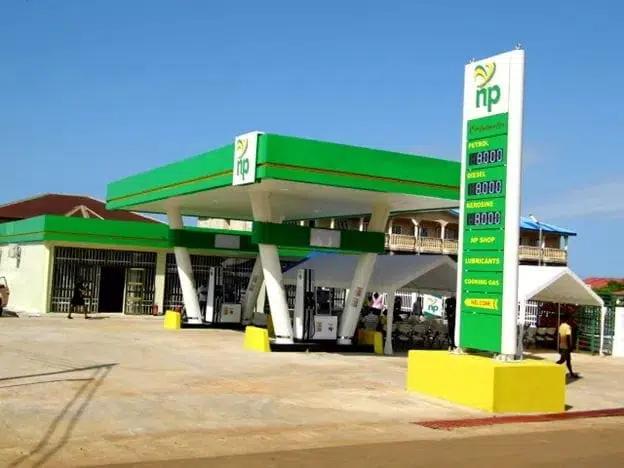
It was recently disclosed during the commissioning of a new Filling Station at Mosongo-Njala Kori Chiefdom, Moyamba District, Southern Sierra Leone  by the petroleum regulatory institution that the National Petroleum Sierra Leone Limited (NP-SL Ltd) contributed up to 60% of 753 Billion Leones that was paid to the Government of Sierra Leone in the form of taxes meant for depositing into the country’s Consolidated Revenue Fund (CRF) to be utilized by the Government of Sierra Leone for the rolling out of different development projects in the country.

It must be noted that it just one instance amidst the COVID-19 pandemic which means that there could have been instances when the company paid huge chunks of money in the form of taxes.

By all estimation such colossal financial contributions, paid periodically, to the nation’s revenue basket speaks volumes of how the company is highly transparent and totally committed to complement the efforts of Government in its endeavour to foster overall national development.

Besides, it is a manifestation of steadfastness on the part of the shareholders of the company and Management to improve the welfare of a vast majority of Sierra Leoneans side by side the determination to continue to grow exponentially by spreading its operations in different parts of the country in order to make qualitative petroleum products easily accessible.

As a developing nation that has ambitious plans of fast tracking national development  in order to provide better standards of living for the majority of the populace, the Government should not only rely on donor support but must be seen to mobilize internal revenue, one way which is through taxation. Being an indigenous business entity the NP-SL Ltd belongs to the category of large tax payers and do honour its tax obligations very timely.

It is postulated that if this country would have been blessed with companies like the way NP-SL Ltd does operate then as a nation we would have been miles ahead in terms of socio-economic development.

It is on record that one of the dominant companies that have been making steady progress, growing by leaps and bounds within the business landscape of this country is indisputably the National Petroleum-Sierra Leone Limited (NP-SL Ltd).

It is widely acknowledged that the company, through efficient business prowess, has dominated the petroleum trade in the country based on its proactive stance with regards the importation and marketing of high grade petroleum products including petrol, diesel, gas and lubricants of which one of the best is the widely used Castrol oil.

Being an indigenous company that cherish its numerous customers, NP-SL Ltd, over the years, has placed high premium on customer care, which it has effectively rolled out over the years to such an extent that it has earned the enviable reputation of 1st for Customer Care. It is within that realm that the initial shareholders of the company, thirty-five (35) of them, thought it entrepreneurially prudent to import and install modern calibrated machines at all its Filling Stations.

These are automated and high precision machines which have the capability of pumping the exact quantity of fuel that a particular buyer or customer requests for, displaying quantity (in litres) as well as the price(s). With these machines, contrary to what used to obtain in the past when less sophisticated pumping machines were used, customers have sincerely attested that they do derive utmost satisfaction whenever they do transactions expressing the belief that the process is really transparent.

Within that same domain of satisfying and providing care for its customers, the company made it a must that all its Filling Stations should have safety regulations. That is why it cautions its customers and others that they should not use naked flame, that mobile phones should be switched off, engines must also be switched off at Filling Stations when fuel is pumped among others.

In order to ensure that fuel is distributed timely to all its Filling Stations in the country, the company has maintained a fleet of tankers (vehicles that transport fuel) and they are regularly maintenance in order to ensure that they are roadworthy.

With the avowed objective of making fuel transactions easier and very convenient for its esteemed and numerous customers, the company again introduced the brilliant idea of introducing the use of NP Smart Card. This is a cashless way of transacting business or in other words purchasing fuel without using physical cash. The holder of an NP Smart Card could present the card at any Filling Station, as long as it contains money, and request for the quantity of fuel he or she requires.

The card is then slotted into the pumping machine with the subsequent discharge of the amount of fuel into a car or jerry can. This method of conducting cashless transaction is very advantageous in the sense that a customer is saved the hassle of intermittently rushing to the bank to withdraw cash for the sole purpose of purchasing fuel. This is so because already his or her NP Smart Card is loaded with money for that purpose. Indeed, it also provides security as the card is securitized only having the particulars of the holder which cannot be used by another person.

The Shareholders and Management of the company thought it fit that to make cooking quicker and safer it should manufacture an efficient gadget. It was out of this idea that the initiative of introducing an environmentally cooking device arose and NP Gas was borne. Manufactured in different cylinder sizes, NP Gas has a high precision performance and to refill it is simple as the gas could be accessed at all the company’s Filling Stations in the country. Many whom have tried them intimated this medium that it is worth having at home and one could never regret having it but would rather recommend it to others.

NP-SL Ltd has etched its name in the sands of time for embracing and effectively rolling out the country’s Local Content Policy. As one of its major priorities, the company has placed high premium on giving employment preference to Sierra Leoneans. It is only on rare circumstances that the company make use of expatriates and in most cases it is when local personnel cannot be sourced.

In a country where accessing a secured and suitable job is like finding a needle on the beach for a company like NP-SL Ltd to avail Sierra Leoneans the opportunity to access job is indeed commendable. This posture, on the part of the company, has given the beneficiaries the opportunity to live improved lifestyles and have a sense of believing that they are contributing to national development.

A company that has vibrant branches in neighbouring Guinea, Liberia, Ivory Coast and The Gambia speaks volumes of a serious company that is determined to grow. In all those countries, the company employs indigenes and is paying taxes to the Governments which in turn are used to fund various development programmes.

From what have been said so far, NP-SL Ltd is a company that is contributing hugely in accelerating the Government’s revenue mobilization drive.

Afrimoney & SLCB Revamp Bank to Wallet, Wallet to Bank

By Amin Kef Sesay

Afrimoney, an appendage of Africell Sierra Leone, in collaboration with the Sierra Leone Commercial Bank (SLCB), on the 21st May 2021 held a programme at the SLCB Head office on Siaka Stevens Street geared towards informing members of the Fourth Estate and by extension the public that the two entities have revamped the Bank to Wallet, Wallet to Bank Service on Afrimoney.

In her statement during the ceremony the Afrimoney Director, Massa Mayson Dennis, expressed how elated they are to announce the revamp of their existing innovative Bank to Wallet, Wallet to Bank service partnership in collaboration with the Sierra Leone Commercial Bank.

The Director underscored how the service will allow Afrimoney subscribers with Bank Accounts at the Sierra Leone Commercial Bank to be able to transfer money from their Bank Accounts to their Mobile Money Wallet and from their Mobile Money Wallet to their Bank Accounts.

“A National Financial Inclusion Strategy released by the Bank of Sierra Leone states that 80% of Sierra Leoneans do not have access to financial services in the country and further studies have also shown that there is a direct correlation between the rate of financial inclusion and a country’s GDP,” Massa Mayson Dennis revealed adding that the service is therefore a solution or one of many to digital financial inclusiveness, and will directly drive financial inclusion and growth of the country’s GDP.

Mentioning the benefits that the platform offers, the Afrimoney Director intimated how subscribers will be able to move money from their bank accounts directly to their Afrimoney money accounts and vice versa.

“From your Afrimoney account you can be able to check your bank account balance,” she pointed out.

Dilating on how the service works she disclosed that Afrimoney subscribers holding a SLCB Bank Account will have to visit the nearest SLCB Branch to link their Afrimoney Money Account to their SLCB Account.

She continued that after a successful linkage the subscriber will dial *161#, Select Option 9 “Bank”, Select Option 1 “SLCB” and then

Choose:  1 Bank to Wallet Transfer, Enter the Amount of money in Le he or she wants to transfer.

The other step, she said, is to enter a pin code to confirm the transfer of Le xxxx Leones

With regards Wallet to Bank, a subscriber must enter the amount of money in Le he or she wants to transfer.

The next stage is to enter the individual’s pin code to confirm the transfer of Le xxxx.

In order to check Bank Account Balance the subscriber must enter his or her Afrimoney money Pin to confirm his or her request to check the bank account balance.

She ended by thanking the Management of Sierra Leone Commercial Bank for the partnership, which according to her, will help to move Sierra Leoneans to join the electronic payment systems cashless era.

“Afrimoney is proud to always be taking the lead in introducing cutting edge voice, data and fintech services in the country; thus reducing the cost, improving the speed, comfort and security with which people talk and conduct their financial transactions,” she stated furthering how they are proving once more that they talk with their actions more than they talk with words.

On his part, the Managing Director of the Sierra Leone Commercial Bank, Abdul Fidelis Turay, in his statement said it gives him great pleasure to be a part of such a commitment by the SLCB and AfriMoney to strengthen the partnership between the two entities and to enhance efforts to address the financial inclusion problem in Serra Leone.

He continued that as some may or may not be aware they did an initial launch of the Bank2Wallet and Wallet2Bank solution some almost two years ago now.

The Managing Director furthered that the solution has been literally a life saver for some of their mutual customers adding that AfriMoney recently revamped the entire platform in order to better serve the market highlighting how they gladly joined forces with AfriMoney to enhance theirs as well.

“There is a growing hunger by the people of this country to be able to conduct financial transactions securely and efficiently,” he averred adding how the B2W/W2B platform has proven to be the vehicle that provides people with not just the convenience of being able to conduct financial transactions anywhere and at any time using their mobile phones, but also to enjoy the security that institutions provide.

He mentioned that the SLCB will continue to invest in their digital infrastructures to ensure that they meet the demands of their customers while contributing to the socio-economic growth of the nation.

“We do this through partnerships with other market leaders such as AfriMoney and in such a way that customers are left wondering how they had lived without the service before,” he disclosed maintaining that indeed it is a proud moment that they converge to open up a more
robust platform than they initially started with and one that can carry both institutions further as they continue to close the gap between the banked and the unbanked population.

“I am as excited as my team has been during the development of this new platform and I am equally eager to see an exponential growth in the use of the service and an increase in customer satisfaction as a result of all the efforts my team and the AfriMoney team have put into the project,” he intimated.

He said it is his pleasure to reach the SLC-AfriMoney Bank3Wallet and Wallet2Bank service which, according to him, will now provide a broader reach across the nation.

Earlier the Head of Retail Banking at the Sierra Leone Commercial Bank, Festus Sowa, welcomed all for gracing the occasion and expressed gratitude to the two institutions for the great efforts made so far to ensure the resuscitation of what he termed as a reasonable and affordable service that is geared towards meeting the demands of their customers.

A question and answer session climaxed the programme.

Highlights from the European Union Delegation to Sierra Leone: Information Session for Agro-Technology Development Grants

By Elizabeth M’baluOke

On the 5th of May 2021, interested applicants for the European Union Delegation to Sierra Leone’s Agro-Technology grants attended an information session to learn more about the initiative. The information session was held via Zoom and was well attended by over 200 interested applicants.

Key take aways from the information session included additional information on eligibility, allotments of funding, and important deadlines. Approximately 108 questions were asked pre-and during the session, which was recorded and answered accordingly by EU Delegation staff.

The EU Delegation has also announced a deadline extension for the Agro-Technology call for concept note proposals deadline, which is now the 15th of June 2021, at 22:00 GMT. 

A recording of the information session can be found at: https://eeas.europa.eu/delegations/sierra-leone/98320/jobs-growth-agro-tech-development-information-session-5-may-2021_en.

Both the Corrigendum No1 and Clarification No1 – Questions and Answers can also be found on the call for proposal webpage https://eeas.europa.eu/delegations/sierra-leone/96037/call-proposals-jobs-growth-agro-tech-development_en.

The present call for proposals will support actions to enhance sustainable agro-industry development, through climate smart agro-processing and agribusiness innovation and technology to complement and build synergies with ongoing and upcoming EU support in the sector.

Grant awards are between the amount of 100,000 to 2,000,000 EURO to improve agricultural transformation as a way to address the challenges of food and nutrition insecurity in Sierra Leone.

For additional information, please contact delegation-sierra-leone-cfp@eeas.europa.eu or visit the Call for Proposal webpage.

This publication was produced with the financial support of the European Union. Its contents are the sole responsibility of PivotPath and do not necessarily reflect the views of the European Union.