Home Blog Page 1007

Guma Board Chair Commends Implementation of Pilot Project

By Amin Kef Sesay

The Board of Directors, a cross section of Management and Staff of Guma Valley Water Company recently paid a working visit to the District Metering Area (DMA) and Water Kiosk Demonstration Pilot Project site at Aberdeen.

Rationale of undertaking the working visit bordered on getting a thorough update of the project construction activities with respect to the construction of the Water Kiosks, pipe works and metering of customers’ premises in the Aberdeen DMA.

The Adam Smith International (ASI) Resident Engineer, Fernando George Silva, while addressing the Guma delegation at the ASPAC/NIMO Laydown Area, said they had been tasked with construction of 5 Water Kiosks in Aberdeen and 6 in Kingtom.

Silva added that they will be undertaking pipe laying works in Aberdeen and Kingtom including construction of bulk meter chambers, removing spaghetti pipe at Crab Town (Aberdeen), connecting customers to a new manifold system and supplying leaks repair kits to Guma.

The ASI Resident Engineer, however, highlighted a few challenges they are faced with; especially custom clearance delays, availability of space for kiosks, soil condition at Crab Town and coordination with utility companies.

In her own statement, the Environmental, Health and Safety Officer (ASI) ,Madam Josephine Turay, said they are upholding all health and safety protocols including employees and visitors induction, daily tools and equipment inspection, implementation of COVID-19 mitigation plan, awareness on HIV/AIDs and sexually transmitted diseases, stakeholder engagements and grievance mechanism, etc.

She underscored that local employment and procurement are priorities and that 75% of the employees reside in the communities they are working in.

Speaking on behalf of the Board, the Chairman, Hon. Bintu Myers said they were satisfied with the construction works so far carried out.

The Guma Board Chairman added that they hope at the end of the day, the objectives of the project, which is to improve on commercial practices, operational independence, planning capacity and customer services of Guma through community, consumer and customer engagements will be met.

The Aberdeen and Kingtom District Metering Area and Pilot Kiosks Demonstration activity is one of the interventions under the MCC/MCCU Threshold program which aims to reduce non-revenue water and improve water supply services in Freetown.

In a related development, the Chief Executive Officer of the Millennium Challenge Corporation (MCC), Sean Cairncross will pay a two-day visit to Sierra Leone on the 15th and 16th of October 2020. The CEO is scheduled to visit MCC programs in the region and will use the opportunity to touch down in Sierra Leone to discuss progress on the implementation of the 5- year $ 44.4 million Threshold Program.

While in Freetown, the MCC CEO will meet with high-level Government officials.

Mr. Cairncross and the Vice President Dr. Mohamed Juldeh Jalloh will on Friday 15th October, 2020 commission the water kiosk project at Aberdeen.

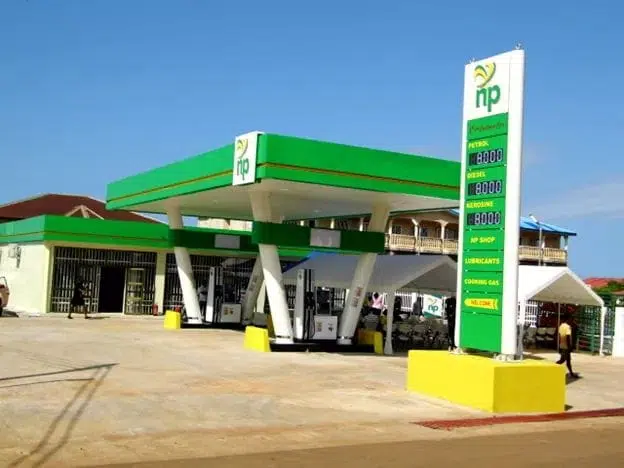
Marketing Qualitative Petroleum Products is Synonymous with NP-SL

By Amin Kef Sesay

The National Petroleum –Sierra Leone Limited (NP-SL Ltd) has been regarded as a well-positioned institution within the realm of being a very pro-active institution that is always poised to pragmatically put concrete arrangements in place to ensure that the populace in this country gain access to qualitative petroleum products ranging from petrol, diesel, gas to lubricants, including the ever highly demanded Castrol lubricant oil that has been rated to be a very good for the efficient  lubrication of various engines.

NP-SL is indeed poised to continue to avail its numerous customers with qualitative products that the company markets.

The company has in its employ, a workforce as well as distributors that market its various petroleum products. As far as it has been established, this laid down policy which the company is implementing to the letter, is complementing the efforts of the Government to deepen development.

Today, it is now non-existent for individuals to complain that when they are in the process of procuring petroleum products, pump attendants cheat them in terms of not getting their money’s worth. The simple reason is because the Shareholders and Management of the company were indeed very business savvy to procure modern calibrated pumping machines which were installed at their various selling points and are very capable of churning out the exact quantity of what is demanded and the price to be paid. In this regard the company has bagged the covetous commendation of, “1st For Customer Care”.

During a random countrywide survey conducted over a period of time targeting a large percentage of customers of the National Petroleum-Sierra Leone Limited (NP-SL Ltd), with the avowed objective of sounding their views on the operations of the company in the country, the methodology utilized bordered on asking random questions in order to get their candid views.

When quizzed on how they view the way the company treats its numerous customers across the country, most of the respondents warmly reacted by stating that the Shareholders and Management of  the company are doing extremely well in the direction of effective service delivery and giving utmost satisfaction to customers.

Abdul Aziz Koroma, a renowned Social Commentator, maintained that when it comes to customer care, NP-SL Ltd is second to none within the business landscape of this country.

“From what I so far learnt in order to conduct sales in a very transparent manner and to give customers their money’s worth, the Shareholders of the company decided to procure and install modern calibrated pumping machines at their various Filling Stations that are capable to pump the exact quantity of fuel, at the same time display the price and quantity,” he pointed out, adding that to even think that the pump attendants are cheating customers could only be a mere figment of one’s imagination, as anything like that is farfetched.

A Development Specialist of long standing intimated that for the country’s economy to grow sustainably it is but important to deepen local content further arguing that it is only when we make meaningful use of both our human and natural resources that development could transpire.

“Instead of depending on the importation of certain consumable items and foreign expatriates, it is but very significant and cost effective to make use of what we have at hand to produce goods and services,” Andrew Soluku, an Economist averred, also stating that for NP-SL Ltd to make it a laid down policy and put into practice to offer employment exclusively to Sierra Leoneans is indeed laudable and no mean feat.

He further underscored that by offering jobs to Sierra Leoneans is a way of empowering the citizenry to take care of daily responsibilities and live improved standards of living.

“I really doff my hat to the Shareholders of the company for actualizing such a high sense of patriotism,” he expressed admiration.

A vast majority of those interviewed revealed that they are using NP Gas for cooking purpose, maintaining that it is very efficient and environmentally friendly. The NP Gas that they referred to is a cooking device which is manufactured in different cylinder sizes and sold at affordable prices at the company’s Filling Stations. “I discovered that this device is very fast in terms of performance and is now going like hot cakes, as many are now going for it, especially when the gas that is used to refill it could be easily secured at various Filling Stations ,” Memunatu Forna, a business woman selling cooking utensils on Sani Abacha Street informed.

With regards the use of NP Smart Card, it is one that is now in vogue. Some personalities who are using it said they find it very useful and a convenient way of purchasing petroleum products. They added that they always ensure their NP Smart Cards are credited to be used to purchase fuel, be it petrol or diesel. “Sometimes I don’t have to go through the hassle of going to the Bank on a busy Friday afternoon to withdraw cash just for the purpose of purchasing fuel that will last throughout the weekend. I do procure petrol by using my Smart Card and it is working perfectly well,” Musa Kalokoh, an Engineer told one of our reporters.

Momodu Fofana stated that the company is really growing by leaps and bounds. “For NP-SL Ltd to successfully establish branches in neighboring Guinea, Liberia, Ivory Coast and The Gambia is indeed no mean feat, especially when cognizance is taken of the fact that these branches are operating vibrantly,” he pointed out.

From what was so far gathered throughout the conducted random survey, it can be safely concluded that NP-SL Ltd is indeed a living testimony of a successful and thriving business entity that is contributing significantly to the socio-economic development of the nation and worthy of emulation.

Njala University & Partners Kick-Start Construction of Emergency & Trauma Centre

By Foday Moriba Conteh

As part of their support to complement the efforts of Government towards human capital development in the country, Njala University in partnership with Sierra Leone’s Embassy in Seoul, South Korea and the Medical Peace Foundation on Friday 16th October, 2020 commissioned the construction of the Madam Yoko Memorial Trauma Centre and Medical Centre.

The ceremony was held at the project site, Moba Town, Moba section, Kori Chiefdom, Tiama ,Moyamba District.

Present at ceremony were the Chief Technical Higher Education Officer, Dr. Josephus Brimah representing the Minister of Technical and Higher Education, Deputy Minister of Health 1 ,Dr. Anthony Sandi ,Acting Chairman Njala University Court ,Joseph Munda Bindi, Paramount Chief Borbor Gbappie 4th of Kori Chiefdom, traditional leaders of Kori and Kamajei Chiefdoms.

Speaking during the launch, Acting Vice Chancellor and Principal Osman Sankoh alias Mallam O extended gratitude to the Ambassador to South Korea, H.E. Kathos Jibao Mattai, whom he said is an alumnus of Njala University, for his support towards the project, adding that the Korean Medical Peace Foundation is the lead founder of the project.

Giving a brief background of Njala University’s involvement in the project, he said in November 2019 the then Pro-Chancellor of Njala University, Professor Herbert Borboh Kandeh introduced Ambassador Mattai to the University in connection with the establishment of a Trauma Centre along the Bo-Taiama Highway and that subsequently an MOU was signed between Ambassador Mattai in Seoul and the Chairman of the Medical Peace Foundation in Korea in order to establish a medical centre at Mokaba Village.

The Acting Vice Chancellor and Principal added that in that MOU, the Chief of Njala University Estate Department was named as a party. Njala University eventually gave a favourable response to the initiative, and the contract was awarded to construct the facility furthering that the former Vice Chancellor and Principal, Professor Abdullah Mansaray then on the 29th November, 2019 signed the contract.

He said when in early April 2020 he became the Acting Vice Chancellor and Principal of the University, he was contacted by their dynamic Ambassador Kathos Mattai who informed him of the project and shared with him lots of documentation.

The Acting Vice Chancellor and Principal assured the people of Kori that his administration, even in his absence, as Vice Chancellor and Principal would put all the necessary resources and energy together in order to ensure that the project is brought to fruition.

The Chairman of the ceremony, the Acting Chairman of Court, Mr. Bindi recounted that Sierra Leone’s Ambassador to South Korea, H.E. Kathos Jibao Mattia had secured  funding  amounting to USD thirty –six thousand United dollar ( USD 36,000) from the Chairman of the Medical Peace Foundation in South Korea for the construction of the Madam Yoko Emergency and Trauma Care Centre at Kori Chiefdom.

He continued that medical supplies, furniture and other equipment worth thousands of dollars had already been shipped into the country from South Korea to help equip the centre when eventually completed.

Njala University, he went on, is not only keen in providing the educational needs of the host communities but also interested in providing for the health needs of residents of the host communities which according to him had propelled the University to partner with the country’s Ambassador in South Korea and the Chairman of the Medical Peace Foundation.

Chairman Bindi thanked the people of Kori Chiefdom for providing the land for the establishment of Njala University and hinted that they might have to consider providing more land to accommodate the expanding nature of the University.

Dr, Josephus Brimah, a representative of the Minister of Technical and Higher Education emphasized the justification for the construction of such a facility in the country especially taking into consideration the consequences of the eleven years rebel war and the high incidences of trauma cases in the country.

He committed the support of the Ministry of Technical and Higher Education to the project which, according to him, is in tandem with the Government’s Human Capital Development trajectory.

In his keynote address, Deputy Minister of Health and Sanitation 1, Dr. Anthony Sandi commended the Administration of Njala University for partnering with the Ambassador of South Korea to complement the Government of Sierra Leone flagship project.

He recounted that Njala University has a long history of contributing to the country’s health sector through the training of Community Health Officers and other middle and junior level health practitioners in the country.

The Deputy Health Minister announced that the Ministry of Health would fully support the Hospital with subvention and other related issues to enhance the effectiveness of the centre.

He lauded the geographical location of the centre and noted that it will help in addressing the many accident cases occurring along the highway.

The Member of Parliament for Constituency 098, Dominic Lavallie-Tshombie urged the Administration of Njala University and the contractor to make available the project document and the original designs of the project so as to put them in a proper footing to monitor the project.

Chief Executive Officer, Mogbwe Engineering and Construction Services, the contractor for the project assured the participants present that his company would execute the project in record time and will fully utilize the locals in terms of available employment.

He urged the community stakeholders to protect the property of the project so as to ensure that his company delivers as expected.

The climax of the ceremony was the pouring of libation by the elders of Kori Chiefdom to officially commence the construction process.

Member of Parliament for Constituency 098, Dominic Lavallie-Tshombie
Acting Vice Chancellor and Principal Osman Sankoh alias Mallam O
Ambassador to South Korea, H.E. Kathos Jibao Mattai


Rokel Bank Holds 47th AGM

By Amin Kef Sesay

Minority and majority shareholders from the second largest and fastest growing Bank in Sierra Leone – Rokel Commercial Bank have read and adopted the Banks’ 2018 and 2019 Financial Statements at their 47th Annual General Meeting (AGM) held on Friday 16th October at the Vanilla Complex, Aberdeen.

Perhaps, a key highlight of the event was when the Chairman of the Board of Directors, Buffy Bailor openly bestowed confidence on the Bank’s current Management headed by a UK trained Economist and Banker, Dr. Dayoh Gilpin. In spite of the negative impact of COVID -19 on the financial sector, Buffy Bailor said the Bank is on an upward trajectory with enviable prudential statistics.

“The Banks revenue increased significantly by 48% in 2019, compared to 2017 on the back of strong interest income on Government securities, which accounted for 68% of total revenue,” he revealed.

The 2019 Financial of the Rokel Commercial Bank reveals it is in a very healthy position – with positive retained earnings amounting to Le966m. A Le79, 439, 041 Billion Leones Profit Before Tax may not have been significantly higher compared to  its  2018 profit after tax of 79, 270, 123 Billion Leones. However, a significant leap from Le46Billion negative retained earnings of 2018 means the Bank now has stable profit and can be in a position to pay dividend to its shareholders. With enhanced operational capacity, the Bank was recently able to pay some 29,000 beneficiaries of a NaCSA safety net programme.

Speaking on behalf of Government, the Financial Secretary, Sahr Jusu whose prepared statement was read by a senior official of the Finance Ministry, Charles Conteh had this to say; “After several years in the negative, the Bank has been able to register positive retained earnings in 2019. The Banks’s capital has been cured, recording a capital adequacy ratio of 57% by end of 2019, a 42.2 percentage point above the minimum threshold of 15% set by the regulator. For the first time in several years, RCB is declaring dividend to its shareholders. We hope that the Central Bank will ease restrictions to allow actual payout to shareholders.”

With 65% shares, the Government of Sierra Leone remain the majority shareholder of the Bank while the remaining 35% shares are held by private individuals. The AGM also attracted the Chairman of the National Commission for Privatisation, Prince Harding.

Now in the House… 22 Housemates Battle for Le 250M & a Round Trip to Dubai  

By Amin Kef Sesay

The date was the 18th October 2020 and the time 8:00 pm when twenty two (22) eligible Housemates were ushered into the House to commence the TV Reality Show that many have been yearning for, talking about and eagerly looking forward to view, Housemates Salone Season 2, the Last Standing Couple.

Prior to that, the organizers of the Reality TV Show, AYV and Africell took into consideration and deliberated on the guiding principles and ethics of professional television programming.

Towards heightening that and provide professional mentoring to effectively broadcast the Reality TV Show, the event’s crew members were trained by Commissioner Dr. Victor Salifu Suma, Radio and TV Expert at the Independent Media Commission (IMC) on how to keep broadcast ethical and acceptable without compromising the entertainment factor.

Out of the Fifty-Two (52) applicants who participated in a Quarantine Drama that started on the 14th October 2020 at 9:00 pm and ended on the 18th October, 2020, these twenty two (22) deserving Housemates, whose positions were determined by the voting by members of the public, emerged and they now have the daunting task of battling it out to the Grand Finale.

What the 22 Housemates will be battling for is the whooping sum of Two Hundred and Fifty Million Leones (Le250M) plus undertaking a round trip to Dubai.

Apart from bagging the Star Prize of Two Hundred and Fifty Million Leones (Le250M), all other participants will be entitled to their daily allowances of Le100, 000 each whilst they still remain in the House and accumulatively given to them whenever they are evicted.

Interestingly, during a particular stage of the Show, based on the percentage of votes scored by a particular Housemate, such will determine whether he or she will be evicted from the House. Evictions will continue until the ultimate winner emerges.

Indeed, the moment is here and the stage is now set for another fun time which many, in different parts of the country and overseas, have indeed be eagerly waiting for.

The organizers of the Reality TV Show, AYV and Africell, have ensured that all the necessary preparations have been put in place to bring exciting episodes from this entertainment show.

When once they are in the House the Housemates are expected to appear sexy and display some form of nudity.

Again, if sometimes they talk harshly then it is because they are to intermittently use strong language and act funnily as the expectation is for them to of be humorous. Manifestation of these traits is what will really make the Reality TV Show very interesting to watch, providing some form of comic relief for viewers and serving as a therapy to reduce stresses.

The main rationale behind putting together Housemates Salone Season 2 is to promote youth empowerment

The Housemates will be assigned various tasks to perform that could shape their characters, they will be availed the opportunity to learn new skills, improve on existing ones. They will also be emotionally tested, afforded the space to find panacea to certain human problems and do a host of other things.

Furthermore, the Housemates will benefit from widespread exposure as the Show will be watched near and far. Talents will be spotted and vistas of opportunities could be opened as some of the Housemates would be earmarked to become Brand Ambassadors, movie artists, models etc.

The Housemates stand to benefit from motivational lectures and added to that they will be availed the opportunity to socialize, learn how to play different games, how to speak fluently etc.

With all these it will definitely transform the Housemates from what their characters were before they entered the House.

But financially empowering these Housemates is one of the most important channels of making them relevant in society. Each day spent in the House will earn a Housemate Le100, 000. The winner will bag Le250, 000,000 and he or she is expected to champion a key project that could positively impact the lives of young people in this country.

Once the show commences on the 14th October 2020  it will be streamed live online at Africa Young Voices Media Empire Facebook page, AYV entertainment TV, Africell Sierra Leone Facebook page and on website at www.ayvnews.com.

Housemates Salone Season 2, from all indications, will turn out to be a very interesting and tantalizing show as the episodes unfold until the event culminates into the Grand Finale. Don’t miss out. Make a date with Housemates Salone and don’t be late.

At Wilberforce Village… DOFA Takes Breast Cancer Awareness & Free Testing to the Aged  

By Mary Kabay

On Saturday 17th October 2020, the Dorwontony Organization For the Aged (DOFA) undertook a sensitization and awareness raising drive on breast cancer at the Wilberforce Village an activity that was complemented by free testing conducted by the Well Woman Clinic. The targeted beneficiaries were mainly the aged

Councilor for Ward 437, within the Wilberforce Village, Aminata Gibril Sesay, welcomed members of DOFA and staff of the Well Woman Clinic for taking the bold step and initiative to reach out to their community in order to educate the aged about breast cancer.

She disclosed that it is the first time for an organization to target the aged with messages relating to breast cancer saying they heartily appreciate the move. She appealed to residents in the community to make good use of what she referred to as a golden opportunity to get cogent information about breast cancer and  enjoin them to willingly offer themselves for free testing.

Dorren Barrie, Chief Executive Officer and Founder of the Dorwontony Organization for the Aged disclosed that they decided to target the aged because most times they are almost forgotten in society furthering how her burning desire is to help the aged maintaining that for far too long now other humanitarian organizations have been mainly  focusing on dealing with issues relating to children, the youth and women.

Jenifer Renner-Thomas, Chief Executive Officer of Well Woman Clinic, in her statement, said she is excited to engage the aged on breast cancer and its effects especially  women. She said it had been experimentally discovered that 1% of men are prone to breast cancer further revealing how, though not deliberate, it was not in their agenda to particularly target and engage the aged during this Breast Cancer Month but with DOFA’s intervention they ensured that such should become possible which is why they were present at the Wilberforce Village.

Tina Davies, Consultant of Reproductive Health at the Well Woman Clinic informed residents, particularly the aged, that they are ready to run the test further giving assurance that it will be confidential as results will be privately made known.

Sister Adija Salam Uviegibsie, Head of Sister Well Woman Clinic stated that breast cancer is caused by abnormal cell growth in the breast that leads to lumps. She dilated that breast cancer could emanate through  hereditary factors, stress, fat, not breast feeding, not eating the right types of food, drinking less water, smoking and drinking alcohol.

Touching on the signs and symptoms she mentioned lumps on the breast which resembles marbles, irregular sizes of the breasts and the nipples.

Sister Adija stated that the types of food we eat really matters  and also admonished  to avoid too much consumption of canned and fatty foods. She highlighted the importance of daily exercises, the need to always visit the hospital for intermittent check- ups when an individual notices any of the signs and symptoms associated with breast cancer.

She also recommended the drinking of plenty water on a daily basis.

Sister Adija sensitized residents on how to do self-examination for breast cancer.

According to her, women that are experiencing their menstrual cycle are advised to do theirs seven (7) days after their menstrual period and for those that have reached their menopause stage it should be done either on the first day or on the last day of the month.

Explaining how to conduct a check, she explained that a person could sit, stand or lie on the bed .

“The individual should place his or her right hand behind his or her head and use the other hand to check starting from the neck to the breast,” she guided and continued that the thumb and the second finger are important to check the breast area saying the individual should imagine a clock ticking and count from 1-12 advising that those with big breasts can do so two times then squeeze the nipples to see if blood or a smelly pus is oozing out.

Timber Logger Kills Bike Rider & Leaves 2 Pillions in Critical Situations

By Patrick A. Kai

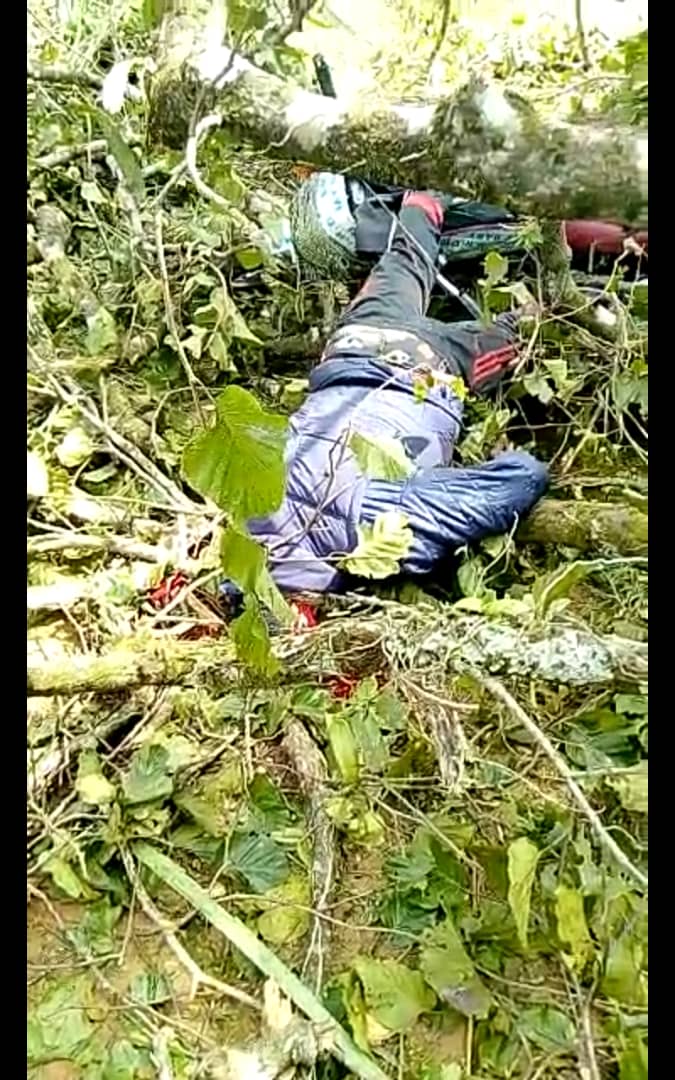
A commercial biker, identified as Morrison Lebbie alias ‘Disgun’, a resident of Foido Mawie, is reported to have died by misadventure between Maloma and Gbinka Villages in the Njahn Chiefdom in Kailahun District on the 14th October, 2020.

According to a Goldtree worker, Ensah Lamin Kamara, who was recording the GPS of a nearby farm he came to the scene upon hearing a boom sound followed by a loud cry.

He said he was informed that the bike rider was carrying two pillions from Maloma to Gbinka when a tree that was being logged fell on them, killing him on the spot, leaving the two pillions in critical situations.

He furthered that the power saw operators then ran for their lives.

Further investigation from the Daru Police Station revealed that the operator identified as Osman Sawaneh, a resident of Maloma village reported himself to them, where he is currently helping them with the investigation.

The two pillions whose identities are not yet known at the time of going to Press were rushed to the Nixon Memorial Hospital for treatment.

Further investigation revealed that they are both in a state of coma.

New UBA MD Romances with Journalists

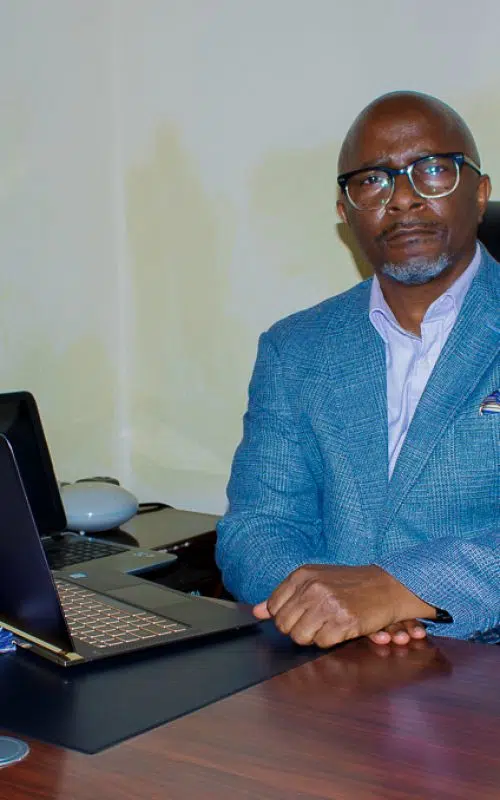
Newly appointed Managing Director of one of the leading financial institutions in Sierra Leone, United Bank for Africa (UBA), Usman Isiaka

By Amin Kef Sesay

The newly appointed Managing Director of one of the leading financial institutions in Sierra Leone, United Bank for Africa (UBA), Usman Isiaka who took over from Mr. Chinedu Obeta has on Wednesday 14th October, 2020 met with a battery of journalists at New Brookfields Hotel New England Ville in Freetown.

In his address, the Managing Director of United Bank for Africa (UBA), Usman Isiaka said he is happy to be in the midst of journalists as a way of interacting with them and understand the media business in Sierra Leone.

He added that he will also use the opportunity to share with the media how the Bank has been working with the media across their subsidiaries and how UBA Sierra Leone will continue to work with the media.

He appreciated the Sierra Leone media for all the support and publicity they have been giving to the Bank since its inception in 2008.

The MD pointed out that the United Bank for Africa Plc is a pan-African Bank with the Bank’s financial services group headquarters in Lagos and it has subsidiaries in 20 African countries and offices in London, Paris and New York.

He added that the Bank since it started it operations in Sierra Leone in July 2008 currently has seven (7) branches, 5 in Freetown and 2 in the provinces i.e. Bo and Makeni and they have plans to extend their services to other parts of the country.

Usman Isiaka noted that their Mission as a bank is to be a role model for African businesses by creating superior value for all their stakeholders, abiding by the utmost professional and ethical standards and by building an enduring institution with a Vision to be the undisputed leading and dominant financial services institution in Africa.

He maintained that their business strategy is built on being the Bank of choice for businesses across the African continent.

“Using our extensive spread across the continent we aim to facilitate inter–and-intra-African trade and also be the pivot for the inflow of investment capital,” he revealed adding that they are focusing on supporting people and businesses to succeed across Africa, Europe, and North America.

He informed newsmen that through their diverse range of financial products and services they help people fulfill their goals and enable businesses to prosper.

“United Bank for Africa is committed to being a socially responsible company and role model for all businesses in Africa. As the Corporate Social Responsibility arm of the UBA Group, UBA Foundation is committed to the socio-economic betterment of the communities in which the Bank operates, focusing on development in the areas of Education, Environment, Economic Empowerment and Special Projects. The UBA Foundation was incorporated in January 2004,” he highlighted.

Underscoring the Bank’s Support to Government he said UBA has been providing different supports to the Government of Sierra Leone and will continue to do so when necessary and that some of the Bank’s support to the Government include: Donated of $500,000 for rescue missions and victims of the mudslide.

“The Bank’s Chairman, Tony Elumelu, made a donation of USD$250,000 on behalf of the Tony Elumelu Foundation and another USD$250,000 on behalf of UBA,” he intimated.

He said the Bank has also supported  the Hands Off Our Girls Campaign of which he said the Bank provided financial support to the Office of the First Lady for the launch of the Project, a campaign that promotes education on sexual reproductive health and rights and the fight against rape in the country.

The new MD also pointed out that the Bank made a donation of One Billion, Four Hundred and Forty Million Leones an equivalent of ($150,000) as part of the UBA’s Foundation direct relief support to the Government of Sierra Leone to the fight against COVID-19. He said amidst the COVID-19 pandemic, UBA Sierra Leone, through the UBA Foundation, supported the Ministry of Basic and Senior Secondary Education Distance Teaching and Learning Program.

He revealed that this is not the first meeting the MD/CEO of the Bank has held geared towards interacting with members of the Press.

The MD revealed that in 2018, they held a Media Parley at Lagoonda Hotel. He assured journalists that he will continue such an engagement with the Press adding that for the UBA Golden Touch Award for this year, the Bank would like to partner with SLAJ and IMC to reorganize the Annual Media Awards and that the MCC Team will work closely with SLAJ and IMC once plans are put in place for the Annual Media Awards.

“Every year the Bank provides an opportunity to the media to participate in the Tony Elumelu Entrepreneurship Program in Nigeria. Some section of the media in Sierra Leone has benefitted from this program. The Bank provides annual training for journalists every year, but Sierra Leone is yet to benefit from this opportunity. My MCC Team will work with SLAJ once this opportunity is made available,” he promised.

He ended by reiterating the Bank’s commitment to work with the media in any related development project that will promote media development in Sierra Leone.

On his part, President of the Sierra Leone Association of Journalists (SLAJ), Ahmed Sahid Nasralla, congratulated the newly appointed Managing Director of the Bank ,Usman Isiaka, on his appoinment.

He said SLAJ was established in 1976 with a mission to defend the freedom of the media, freedom of expression and information, uphold the ethics of journalism and exemplary standards of professional practice.

President Nasralla said SLAJ serves as powerful force for the betterment of the nation through the dissemination of accurate and objective information, a constant quest for improved standards and techniques of journalism and work towards the attainment of media self-regulation in Sierra Leone.

He said they are very happy that they were able to work towards the Repeal of Part V of the Public Order Acts 1965 which criminalizes libel and the enactment of the IMC Act 2020, adding that the criminal Libel Law has been the major reason why the media in Sierra Leone is presently poor because business people and institutions are afraid to invest in the media but said with the repeal of this law he is sure that the media will attract more investors to invest in the media.

He said some media houses find it difficult to operate due to the lack of adverts, in that regard, he appealed to the Managing Director to work with media houses in providing adverts.

China Commemorates  20th Anniversary of Forum on China-Africa Cooperation

Wang Yi, State Councilor and Minister of Foreign Affairs

This year marks the 20th anniversary of the founding of the Forum on China-Africa Cooperation (FOCAC). On 12 October, President Xi Jinping and President Macky Sall of Senegal, the current African Co-Chair of FOCAC, issued a joint congratulatory message to mark this important occasion. Embracing the dawn of the new century and the trend of peace and development 20 years ago, China and our brothers in Africa decided to initiate FOCAC to promote win-win cooperation. Since then, the family of China and African nations has had its own platform for collective dialogue and mechanism for practical cooperation, ushering in a brand new chapter in China-Africa relations.

The past twenty years have been a journey of productive cooperation. FOCAC has bolstered high-level interactions and political trust between China and Africa, delivering a leap in China-Africa relations from “a new type of partnership” to “a new type of strategic partnership” and to “a comprehensive strategic and cooperative partnership”.

China-Africa cooperation has made impressive achievements. In 2019, direct Chinese investment stock in Africa topped US$49.1 billion, up by nearly 100 times from the year 2000; China-Africa trade reached US$208.7 billion, 20 times the size of 2000. China has been Africa’s largest trading partner for 11 years in a row, and has contributed more than 20% to Africa’s growth for a number of years. Many flagship projects — the African Union (AU) Conference Center, the Addis Ababa-Djibouti Railway, and the Mombasa-Nairobi Railway, to name a few — have been completed and put into use. Cooperation in other fields, from science, education, culture, health, to people-to-people exchange, peace and security, is also making significant headway.

Since the 18th National Congress of the Communist Party of China (CPC), President Xi Jinping has set great store by China’s relations with Africa. He personally laid down principles guiding China’s Africa policy, including sincerity, real results, amity and good faith, and pursuing the greater good and shared interests, and called for building a stronger China-Africa community with a shared future. His devotion to leadership diplomacy with Africa has given a strong boost to the relations between the two sides.

The political foundation has been cemented. In 2013, President Xi Jinping chose Africa as the destination of his first overseas visit as the Head of State of China. So far, he has visited Africa four times, covering all sub-regions of the continent. In 2015 and 2018, Chinese and African leaders convened two historic FOCAC summits: one in Johannesburg and one in Beijing. In June this year, the Extraordinary China-Africa Summit on Solidarity Against COVID-19 was held at a critical moment in tackling the coronavirus. Political interactions between the two sides are more frequent, extensive and unprecedented in scale. For example, on the sidelines of the FOCAC Beijing Summit, President Xi Jinping attended more than 70 bilateral and multilateral events in eight days. With the re-establishment of diplomatic relations between China and The Gambia, São Tomé and Príncipe, and Burkina Faso, the China-Africa family has been further expanded.

Practical cooperation has been fruitful. China-Africa economic and trade cooperation has been growing at a higher speed, demonstrating three encouraging shifts: from government-driven to market-driven, from trade in goods to industrial cooperation, and from engineering contracts to investment and operations. Together, the two sides drafted and implemented ten cooperation plans and eight major initiatives, taking practical cooperation to a new level. China-Africa Belt and Road cooperation is progressing with a strong momentum: 44 African countries and the AU Commission signed Belt and Road cooperation documents with China, and a host of projects such as railways, roads, airports, ports and power stations have come to fruition, enabling remarkable change in Africa’s economic and social development.

People-to-people exchanges have been thriving. Events across a diverse range of areas, including the China-Africa Youth Festival, Think Tank Forum, Joint Research and Exchange Program, Poverty Reduction and Development Conference, and the China-Africa Press Center, have been successful. And the China-Africa Institute has already been inaugurated. So far, China has provided about 120,000 government scholarships to African countries, set up 61 Confucius Institutes and 44 Confucius Classrooms in collaboration with 46 African countries, sent 21,000 doctors and nurses in medical teams to 48 African countries, treating around 220 million African patients, and forged 150 pairs of sister cities. All these efforts have consolidated popular support for China-Africa friendship.

Mutual support has been further strengthened. China and Africa fought side by side against both Ebola and COVID-19. The two sides have supported each other on issues of each other’s core interests and major concerns. China-Africa peace and security cooperation has been deepened. The two sides have jointly supported multilateralism, opposed unilateralism and protectionism, safeguarded the international order and international system with the United Nations at the core, and promoted the Five Principles of Peaceful Coexistence and other basic norms governing international relations. Such collaboration has effectively upheld the shared interests of developing countries as well as the overall interests of the whole international community.

The past twenty years have been a journey of overcoming challenges and enhancing partnerships. FOCAC has withstood the test of the volatile international landscape, and scored historic achievements. It is a vivid epitome of China’s pioneering efforts in foreign affairs under the guidance of Xi Jinping Thought on Diplomacy. It is also a source of aspiration for further growth of China-Africa relations.

We have always pursued solidarity, consultation and cooperation. China is the largest developing country and the African continent home to the largest number of developing countries. When China-Africa cooperation prospers, South-South cooperation will prosper. When the voice of the 2.6 billion people in China and Africa are heeded and respected, the world will have genuine fairness and justice.

From the very beginning, we have always taken China-Africa relations as part of South-South cooperation, and have advanced FOCAC in the spirit of solidarity and cooperation. FOCAC, composed of China and 53 African countries and the AU, is by no means “one vs. 54”, but “54 plus one”. We would sit down in consultation whenever there is an issue, and solve it through discussion. And that is the guiding principle for our conduct. China never interferes in African countries’ pursuit of development paths that suit their own national conditions, never imposes its will upon others, never attaches any political strings to its assistance, and never seeks selfish political gains in investment and financing cooperation.

We attach great importance to the Forum’s role in drafting overall plans and providing strategic guidance, and we give equal attention to China’s ties with each FOCAC member, so that the Forum mechanism and bilateral cooperation can complement each other in forging a strong network of partnerships between and among countries. The Forum has significantly increased the international profile of China-Africa relations, and has become a pacesetter for South-South cooperation and for cooperation by the international community with Africa.

We have always advanced win-win cooperation for development. Both China and Africa are at a crucial stage of development and rejuvenation. The Chinese and African peoples are entitled to live a better life. President Xi Jinping has made it clear that no one could hold back the Chinese people or the African people as we march toward rejuvenation. Cooperation and development have always been FOCAC’s top priority. We have fully leveraged our unique strengths, such as the great complementarity between our economies and development stages. We have developed greater synergy between our development strategies and embarked on a path of win-win cooperation with distinctive features.

Our cooperation is about action and results. Every three years, FOCAC rolled out a package action plan. The 2018 Beijing Summit alone produced more than 880 deliverables. We always deliver and we do not make empty promises. We have kept pace with the times and kept our mind open to break new ground and tide over challenging times. According to African friends, FOCAC is a cooperation mechanism that truly delivers.

We have always supported each other in trying times. China-Africa friendship was born in the formidable years of national liberation and is deeply rooted in our peoples’ heart. As President Xi said, China and Africa are friends tested by adversity, and such friends must never be forgotten.

During the 2008 international financial crisis, China and Africa rendered each other valuable support. Instead of reducing assistance, China bucked the trend and increased its support to Africa. During the 2014 Ebola epidemic in West Africa, when others chose to leave, Chinese doctors and nurses braved difficulties and rushed to the hard-hit regions to help local people fight the disease, leaving an indelible chapter in the history of humanitarian assistance of the People’s Republic of China. Faced with the onslaught of COVID-19 worldwide, China and Africa have again stood shoulder to shoulder to help each other tide over the challenges.

What we have gone through together shows that China and Africa are more than just partners. We are comrades-in-arms. The more severe the difficulties, the more determined and confident we are about China-Africa cooperation, and  the more capable FOCAC is in pooling our strengths to forge ahead, making itself the key driving force for the time-honored China-Africa friendship.

We have always embraced openness and inclusiveness. FOCAC was established to answer the call of the times for peace, development and win-win cooperation. It serves as a fine example of multilateralism. China and Africa have all along upheld the principle of openness and inclusiveness. A closed-door policy or exclusiveness is never an option. Colonial plunder and the Cold-War rivalry brought excruciating sufferings to the African people. That part of history must not be repeated. Africa must never again be an arena for major-power rivalry. This belief is widely shared by people across Africa, and should be respected by the entire international community.

Openness is vital in cooperation with Africa. It is important to share experience and learn form one another, so that Africa’s peace and development can benefit from the common effort and contribution of the international community. Africa’s cooperation with China has improved its development capacity and business environment, which in turn has created favorable conditions for other countries’ cooperation with the continent. China has taken part in more Africa-related trilateral and multilateral cooperation in recent years. We commend and encourage such cooperation and will continue to support it.

The past twenty years have been a journey of China and Africa coming together as one community with a shared future. Today, the world is being shaped by changes unseen in a century, a process accelerated by COVID-19. China and Africa are good friends, partners and brothers, and more importantly, an important force for world peace and development. In this changing world, China and Africa need to stay united and work more closely together to make FOCAC a greater success and further deepen China-Africa relations, so as to further enhance our friendship and justice in the world.

China and Africa can and should be a new shining example in building a community with a shared future for mankind. The more complex and fluid the international landscape is, the greater the imperative for China and Africa to adhere to the fundamental direction of building a China-Africa community with a shared future. We should continue to follow the principle of sincerity, real results, amity and good faith and the principle of pursuing the greater good and shared interests. We need to maintain the momentum of high-level exchange, share more governance experience with each other, build a stronger bond between the Chinese and African peoples, and continue to elevate the China-Africa comprehensive strategic and cooperative partnership. We need to promote the Five Principles of Peaceful Coexistence, step up mutual support on issues involving each other’s core interests and major concerns, and work together for greater democracy in international relations. We need to take the side of the overwhelming majority of the international community, stay committed to multilateralism, and align global governance reforms with the common interests of developing countries. With these efforts, we will make the China-Africa relationship a trailblazer and a shining example in building a community with a shared future for mankind.

China and Africa can and should set a new benchmark for international anti-epidemic cooperation. China and Africa have fought hard for what we have achieved in tackling COVID-19. As the virus continues to spread globally, both China and Africa are confronted with the formidable task of combating the virus while stabilizing the economy and protecting people’s livelihoods. We will speed up the implementation of the important measures that President Xi Jinping announced at the Extraordinary China-Africa Summit on Solidarity Against COVID-19, and make China’s contribution to making vaccines accessible and affordable for African countries as soon as possible. China will continue to provide COVID-19 containment supplies, send expert teams, and facilitate Africa’s procurement of medical supplies from China. China will strive for breaking ground for the construction of the Africa CDC headquarters by the end of this year. These are concrete actions that will show the world that China and Africa have the determination and strength to defeat COVID-19 together.

China and Africa can and should unleash greater potential in practical cooperation. COVID-19 will not hamper China-Africa cooperation. As one of the first countries to fully reopen the economy, China aims to foster a new development paradigm with domestic circulation as the mainstay and domestic and international circulations reinforcing each other. This will bring new opportunities for China and Africa to deepen, transform and upgrade their cooperation. China supports Africa’s effort to develop the African Continental Free Trade Area. We encourage Chinese companies and financial institutions to take an active part in infrastructure connectivity projects in Africa, which will facilitate cross-border logistics and customs clearance. We are ready to work with the international community in supporting Africa’s integration process and sub-regional economic community-building. China hopes to work with Africa to deepen the integration of our industrial and supply chains, and encourages Chinese businesses to step up investment and technological cooperation in Africa. We will support Africa’s agricultural modernization and industrialization drive to raise the added value and competitiveness of Africa’s exported energy, mineral and agricultural products. China will work with the international community to support Africa’s integration into the global industrial and supply chains. China and Africa need to join hands in pursuing green, low-carbon, circular and sustainable development. This will contribute to African countries’ ability to tackle climate change.

An ancient Chinese verse reads: “Having scaled a cloud-shrouded mountain peak, we rest our horses and set sail for the vast ocean.” The China-Africa relationship will never stop moving forward. The development of FOCAC will never take a break. Standing at a new historical starting point, China will continue to follow the guidance of Xi Jinping Thought on Diplomacy and, with the personal commitment and support of Chinese and African leaders, increase the cohesion and influence of FOCAC, take China-Africa ties forward against all odds, and achieve greater success in our journey of building a China-Africa community with a shared future.


Kenema, Kailahun to Benefit from Grievance Redress Mechanism Set Up by SDFS 

Assignment Manager: Pete Kaindaneh

By Amin Kef Sesay

The Skills Development Fund Secretariat (SDFS) is setting up Grievance Redress Mechanism (GRM), Committees in Kailahun and Kenema in the Eastern region of Sierra Leone.

This is as a result of proposals received for funding from Government Technical Institutions (GTIs), businesses and industry stakeholders, as part of the First Call for Concepts Notes; owning to the fact that the Secretariat has hired independent evaluators to lead on the selection process with support from the secretariat.

After the selection process, as a way to effectively monitor the use of funds and address complains, a Grievance Redress Mechanism GRM Committee needs to be set up at district level that will be charged with the responsibilities to receive complaints from aggrieved people that need to be addressed by the Committee or forwarded for further investigation and redress.

Redressing grievances of affected people is an integral part of a Project’s design, plan, and management. Setting up appropriate mechanisms to address stakeholders’ concerns, prevent adverse consequences and risks and bring about positive changes in people’s lives and relationships is becoming increasingly important in development projects. The Grievance Redress Mechanism (GRM) is required to identify and resolve grievances as early as possible in order not to obstruct the implementation process.

According to the GRM specialist in each of the districts, the Sierra Leone Skills Development Funds (SLSDP) as provided by the World Bank, view DGRMs as interventions that can perform a useful role in removing barriers and facilitate the smooth implementation of the project. They will function as good feedback mechanisms to different institutional structures and help in framing policies, decisions and practices that are more responsive to realities on the ground.

Mariama Khai Fornah disclosed that the successful implementation of the GRM calls for a properly articulated visibility strategy since people can best be mobilized to effectively participate in the initiative if they are well informed and knowledgeable about the rationale and the benefits of the project.

She said Public sensitization through the media is critical in this stage as it will raise public awareness about the SDF and its GRM amongst the beneficiaries/the public, and the project implementation stakeholders adding, that it is such reasons why the SDF Secretariat now intends to embark on a nationwide sensitization tour and the setting up the District Committees of the Skills Development Fund in all Regional and District headquarter towns, from the 5th October.

Each and every District Grievances’ Redress Mechanism Committee comprises seven people from inter-religious council, civil society and District and City councils.

The Skills Development Fund Secretariat will be organizing training on the function of the GRM Committees in each district before the disbursement of funds to those institutions and organization whose proposals were accepted.