It has been established that the Africell mobile company is a leading network service provider in the country, not only for its expansion, but importantly for the quality service and the number of subscribers and institutions using its service across the country.
The Ministry of Basic and Senior Secondary Education (MBSSE),it could be recalled, recently concluded the 2019 annual school census during which it came out vividly that nine thousand six hundred and forty (9,640) schools reported that they do enjoy mobile telephone network coverage in the country.
The data collection was indeed very comprehensive as it includes the number of schools in each level of education and number of pupils by regions, districts, chiefdoms, number of teaching and non-teaching staff, with years of experience of teachers and qualifications, photos of school infrastructure and facilities including their state of use, teacher photo verification, location of schools with the use of GPS, standards of WaSH facilities and the level of telephone connectivity in each school.
It was recorded and captured that 47% percent of the aforementioned figure use Africell network service regularly.
The underlying reason, which a conducted analysis revealed is that many, private or public, prefer the Africell network simply because the company’s subscribers want value for their money. What this census data manifests is that Africell is indeed providing quality service in terms of uninterrupted internet service in addition to the several promotions churned out for the benefit of its subscribers over the years.
The Ministry of Education census mentioned not only the availability of the mobile telephone network coverage but also the type of service provider around the school area. The census analysis by district also provided an opportunity to get knowledge of which district in the country has a high coverage of network and connectivity.
The data shows that there is generally high network coverage in the schools ranging from 38% in Falaba district to 98% in the entire Western region.
The report further shows that five out of the sixteen districts have 90% and more mobile network coverage in schools within their districts. The report states that the knowledge and introduction of information communication in schools will help improve the learning outcomes especially in this digital age where everything is done using computers.
“The census report shows that majority of schools in the country accounting for 86% reported having mobile network coverage in their schools compared to 14% that says they had no mobile network coverage,” the report states.
From the commencement of operations in the country in 2001, Africell has stood the test of time to compete in the telecommunications industry with an enhanced, qualitative and reliable network, fast internet service, low data tariff and expansion of coverage among others.
Undoubtedly, Africell mobile company deserves the numerous accolades that it has bagged as the leading mobile service provider in this country.
House to House family sensitization drives on Covid-19 prevention as well as the mass distribution campaign of treated bed nets are underway in the Western Area of Sierra Leone. It is on record that the Western area is the hardest hit by the current COVID-19 and because of that the distribution of treated bed nets was delayed according to the Program Manager of the Malaria Control Program, Alhaji S. Turay.
During an impressive ceremony, held at the Aberdeen Community Centre in Freetown on the 19th June 2020, the official launch of the Integrated LLIN Mass Distribution Campaign and House to House Family Sensitization on COVID-19 Prevention for Western Area took place.
Western Area Urban District Medical Officer (DMO), Dr.Brima Kamara commended the good work done by Sea Coach Express for residents of Aberdeen.
He disclosed that the campaign which started on Friday 19th June will end on the 28th June 2020.
Representing the United Nations Country Team, Head of the World Health Organization, Evans Liyosi spoke about the huge progress many countries have made in the malaria fight while some are still struggling but appreciate what is being done so far in Sierra Leone.
He said he was so impressed about the work done so far after he moved with the team across the country to see what they have been doing.
He continued by stating how they must work together to ensure that they have 100% distribution of the bed nets and disclosed that 38% of all out patients suffered from malaria, while they lose about 50 to 100 people every week to malaria.
“I really want us to put our resources together to make the change. The difference comes in once you use the net. The more you protect your family the more you protect others.”
He encouraged his audience to take all the necessary measures for malaria as they are doing for COVID-19.
PMI/USAID Chief of Party, Kwabena Larbi said PMI is one arm of the U.S. Government to help countries reduce malaria just like they did for HIV/HIDS.
He disclosed that they have 24 countries in Africa that are receiving special support from the U.S. Government. He pointed out that since 2017; PMI has been working with Sierra Leone Health Ministry.
He said the economic impact is the most important aspect of malaria and that as a result of that, one can’t get to work; children can’t attend school among others. “If malaria keeps affecting our children they may not go to school and remember the future lies in education. We are here with you.”
Chairman of Global Fund and also the CEO/Founder of Focus 1000, Alhaji Bailor Jalloh, disclosed that Global Fund is fighting three things in Sierra Leone-Malaria, TB and HIV/AIDS.
He said they have also joined hands to fight COVID-19 with the Government and called on all to join hands especially the men to stand by their wives to defeat malaria and COVID-19.
Deputy Mayor of the Freetown City Council Osman Tolo Koroma pointed out that treated bed net is not a new thing in the country. From the Health experts report 40% of the population suffer from malaria.
This, the deputy Mayor said is very challenging but if one sleeps under treated bed net, that person would not have malaria. Deputy Minister of Health and Sanitation 1, Anthony Augustine Sandi expressed happiness about the turnout.
He admonished the mothers to make the best use of the treated bed net because the children are the future leaders.
He pointed out that Government cannot do it alone but because they have partners that is the reason why the distribution is possible.
According to the 2019 World Malaria report, malaria is a widespread pandemic disease that caused over 400,000 deaths globally in 2018. Malaria is a burden disease in Sub-Saharan Africa and 70% of the population is vulnerable especially pregnant women and children under five.
It is slated that 4.6 million bed nets will be distributed at the end of the project. The team determines to reach not only the targeted operation but also the hard to reach areas.
With supports from the European Union (EU), the CBRN National Focal Point of Sierra Leone and the Ministry of Health and Sanitation, in collaboration with the National COVID-19 Emergency Response Centre (NACOVERC) has organized two trainings for frontline workers (burial teams) on safe and dignified medical burials.
It was stated in an European Union Press Release that the EU CBRN Centres of Excellence (EU CBRN CoE) Risk Mitigation Initiative had already supported Sierra Leone on the post-Ebola era with a three-year project (2016-2018) on the management of epidemics, with a specific module on burial management.
In addition, it was further highlighted how the EU CBRN CoE is continuing its support by promoting these two new trainings that commenced in Freetown for the Western Urban District on the 22nd June 2020 and will end on the 24th June 2020 and in Waterloo for the Western Rural District to commence on the 25th June to end on the 27th June 2020 epicentres of the Covid-19 outbreak.
The release maintained that cross contamination or nosocomial infection from managing dead bodies is a potential risk to public health also stating that the enhancement of capacities of burial teams handling COVID-19 and non COVID-19 burials is therefore of high importance.
The trainings, which are being delivered by experts of the Ministry of Health and Sanitation who are active members of the CBRN National Team of Sierra Leone, are focusing on the enhancement of burial teams’ capacities in terms of rapid detection, investigation and notification of COVID-19 cases, safe and dignified medical burials, effective and efficient surveillance and contact tracing of COVID-19 cases. 50 beneficiaries are targeted for the trainings during the two events of three-day each.
These two training activities are part of the European Union support to the COVID-19 crisis, and in particular of its EU CBRN Centres of Excellence (EU CBRN CoE) Risk Mitigation Initiative. The Republic of Sierra Leone joined the Initiative in 2016 and is member of the African Atlantic Façade Regional Secretariat based in Rabat, Morocco.
Incidents involving CBRN materials and agents have dramatic human, social and economic consequences. In some cases, their consequences may reach a point where they actually threaten to jeopardize development achievements. However, to an extent, these incidents can be prevented, and their consequences mitigated through preparedness and coordination.
It is with this objective – to strengthen CBRN governance worldwide – that the EU established the CoE Initiative. Launched in 2010, it aims to support countries in their efforts to prevent, prepare for and respond to CBRN-related incidents which can be of a criminal, accidental or natural origin. It does so by promoting and supporting political and operational cooperation at national, regional and international levels. As CBRN threats are often transnational nature, requiring a high-level of expertise, sharing best practices and pooling resources, the EU CBRN CoE takes a regional approach.
There are three levels of assistance to participating countries. At the institutional level, the Initiative supports the work of a CBRN National Team comprised of all relevant stakeholders and coordinated by a CBRN National Focal Point. At the strategic level, it assists countries in the identification of risks and needs through the development of a CBRN National Action Plan that is prepared over a series of workshops using a specifically developed methodology.
At the operational level, partner countries benefit from a range of regional capacity-building projects developed to address identified risks and needs in coordination with local experts. These projects cover a wide variety of fields including, for example, safety and security, emergency planning, crisis response, export control, illicit trafficking, storage and disposal, and redeployment of scientists.
To date, there are 61 partner countries gathered in 8 Centres of Excellences, including South East and Eastern Europe; African Atlantic Façade; North Africa and Sahel; Eastern and Central Africa; Middle East; Gulf Cooperation Council Countries; Central Asia; and South-East Asia. These centres are administered by a Regional Secretariat located in one partner country in each region. These secretariats benefit from administrative, logistical as well as technical assistance. Sierra Leone is part of the Centre of Excellence for the countries of the African Atlantic Façade since May 2016 together with Morocco (where the Regional Secretariat is based), Mauritania, Senegal, Liberia, Ivory Coast, Togo, Benin, Cameroon and Gabon.
Compared to other endeavours, the specific added value of this EU Initiative, financed with a budget of EUR 250 M for the period 2010-2020, is to promote a holistic approach to managing CBRN risks and threats which are all too often tackled separately despite sharing many common characteristics and to create a sustainable network of international experts and authorities at the disposal of participating countries.
On the 20th June 2020, Chief Minister, Professor David John Francis visited the First Tricon operational site at Dama Road, Kenema on an assessment tour to determine the rate and quality of work done as part of President Bio’s 2020 Service delivery agenda.
His visit formed part of his role as Chief Minister to ensure timely delivery by Ministries, Departments and Agencies (MDA’s) and to lead on the Government’s policy designing and implementation. From what was understood, Professor Francis considers his proactive monitoring strategy as a way to ensuring effective and efficient implementation of sustainable developmental projects across the facets and fabrics of Sierra Leone.
According to the Chief Minister, the assessment was satisfactory as the First Tricon Road construction company has gone 85% towards completion of the Dama Road which had been the most dilapidated road for decades.
This is to reassure the stakeholders and residents of Kenema, that 2020 is indeed a year of delivery as earlier proclaimed by the President at the 3rd Cabinet Retreat organised by the Office of the Chief Minister.
Professor Francis has promised to keep close eyes at every developmental project that would increase the face value of Kenema including the ongoing constructions of the modern clock tower and township roads.
Continuing his nationwide humanitarian gestures, which started weeks back, by providing financial and material supports in order to help curtail the spread of the coronavirus, unprecedented moves that have been widely acclaimed, , the charismatic, result-oriented Chief Executive Officer of Pavi Fort Road Construction Company, Alimou Barrie and team on Sunday 21st June 2020 were in Kambia and Tonkolili Districts to dole out various humane donations.
In Kambia District, the short but impressive donation ceremony took place at the DICOVERC Office situated at the Kambia District Hospital.
It brought together the Paramount Chiefs of the 10 chiefdoms, the Resident Minister, North West, Haja Isata Abdulai Kamara Fofanah, the Sierra Leone Ambassador to Guinea, Amb. Alimamy Bangura, the District Medical Officer of the district, Dr. Sylvanus Bangura the Coordinator of Kambia DICORVERC Office, Mohammed Dumbuya, DICORVERC Officials and some residents of the district.
The Pavi Fort CEO and team handed over a cheque of 20 million Leones, medical items including 2,500 face masks, 100 bags of rice and 25 gallons of hand sanitizers totalling 100 million Leones.
According to the Chief Executive Officer, Pavi Fort- Sierra Leone, Alimou Barrie, out of the total amount donated the 10 million Leones cheque, 70 bags of rice, 25 gallons of hand sanitizers and 2, 500 face masks were meant for the Kambia DICORVERC to break the chain of transmission of the virus.
He furthered that the 10 chiefdoms in the district will also benefit out of the balance 10 million Leones cheque and 30 bags of rice to fight the disease by stakeholders in the respective communities in that part of the country.
Receiving the cheque and the items on behalf of the district, the Regional Coordinator, who also doubles as the Resident Minister North West, Haja Isata Kamara Fofanah, thanked and commended Alimu Barrie for the support further stating that what he has so far provided for the district will go a long way to support the fight against the disease.
Speaker after speaker, including the Paramount Chief Member of Parliament of Magbema Chiefdom, P. C Bai Farama Tass Gbubu N’gbak 1V, expressed gratefulness for the support provided by Pavi Fort underscoring how they as local authorities were really constrained with logistics to contain the spread of COVID-19 in their respective communities.
The Chief talked about the challenges they are faced with in the fight against the disease in the district.
The Sierra Leone Ambassador to Guinea, Alimamy Bangura and the Coordinator of the Kambia DICORVERC, Mohammed Dumbuya, dilated on the impacts that the support will make to help fight COVID- 19 in the district. They said the support came at the right time as Kambia has recorded 25 positive corona cases.
The Kambia District Medical Officer, Dr. Sylvanus Bangura spoke about how the support would be utilized to combat the disease. He updated the gathering on the current state of COVID-19 in the district informing how the district is becoming a hot spot for the disease.
In his brief address, the CEO of Pavi Fort Road Construction Company, Alimu Barrie, pointed out that the aid formed part of his moves to give support to all the 16 districts in the country.
In Tonkolili District, Pavi Fort donated a 20 million Leones cheque, medical items including 25 gallons of hand sanitizer, 100 bags of rice and 2.500 face masks totalling 100 million Leones.
During the donation ceremony, which took place at the Ernest Bai Koroma University of Science and Technology in Magburuka Town, CEO Alimou Barrie disclosed how the support he had been and is still rendering is geared towards helping the Government in its fight against the spread of the corona virus within the Tonkolili district.
“In the area of enhancing social mobilization of traditional authorities within the district the company is also offering a 10 million Leones cheque and 30 bags of rice to combat the disease in the district,” Alimou Barrie stated.
Present during the event were certain Government officials including the Minister of State, North West, Abu Abu Koroma, the Provincial Secretary North, Mr. Kpetu, the Paramount Chief of Kholifa Rowala Chiefdom, P.C. Masakama Kanamanka 111, different lead pillars at the Tonkolili DICORVERC, Deputy Chairman of the Tonkolili District Council, Alimamy Samuel Kamara, Tonkolili DICORVERC Coordinator, Samuel Kamara, and residents from different walks of life.
The Resident Minister, North West, Abu Abu Koroma commended Alimou Barrie for the support and called on the Government to support Sierra Leoneans like Alimou Barrie who has the country at heart in times of crisis.
Statements were also made at the event by the Paramount Chief of Kholifa Rowala Chiefdom, P.C. Masakama Kanamanka 111, other Government officials and the Coordinator of the Tonkolili DICORVERC, Alusine Abdulai Sesay.
Coordinator Alusine Abdulai Sesay stated that the donation from the company is the biggest assistance they have so far received from a private company following the outbreak of the disease in the country.
In another development the Chief Executive Officer of Pavi Fort, Alimou Barrie on Sunday 14th June 2020 provided support to the Port Loko DICORVERC with a 20 million Leones cheque, 120 bags of rice, 40 gallons of hand sanitizers, 5, 500 face masks, 7.5 million Leones cash, all totalling 120 million Leones.
Also, as part of his goodwill gesture to the people of Kaffu Bullom Chiefdom, Lungi, CEO Barrie, handed over a 10 million Leones cheque, 2.5 million Leones cash, 50 bags of rice, 2,000 face masks worth 70 million Leones as social mobilization support to contain the spread of the disease in that part of the country.
In another development, the Chief Executive Officer of Pavi Fort, Alimou Barrie on Saturday 13th June 2020, donated bags of rice, cash and Personal Protective Equipments worth millions of Leones, as well as a cheque to the Karene District Emergency Operational Centre (DICOVERC) through the Minister of Health and Sanitation, Dr. Alpha Wurie. This venture was made in the direction of scaling up the fight against the spread of the coronavirus in Karene District and considered as a good will gesture to complement the efforts of the Government and to aid the people of Karene District.
Alimou Barrie presented a cheque of Twenty Million Leones (Le20, 000,000), 80 bags of rice, 30 gallons of sanitizers and 5000 face masks to the District COVID-19 Emergency Response Centre (DICOVERC) at Gbintie Town in Karene District. He clarified that the donation including cash, medical items and 80 bags of rice (50 kgs) worth 110 million Leones were meant to facilitate the fight against the corona virus within their respective chiefdoms in the district.
It is on record that Pavi Fort Construction Company has stood by the side of the Government of Sierra Leone during trying times, as it did on August 14th 2017 when the disastrous mudslide occurred at Regent. The company was among those that donated relief items, which included five hundred bags of rice, Le25 million Leones and provided three excavators to clear the rubble and also built fifty two (52) houses at 6 Mile to address the housing problems faced by the victims in the aftermath of the mudslide incident.
If we are identifying business entities that have made indelible imprints within the West African sub-region, then the National Petroleum-Sierra Leone Limited (NP-SL Ltd) stands tall. This could not by anyway be an overstatement or exaggeration as the facts speak out clearly of a company that originated from a humble origin, established by thirty-five (35) Sierra Leoneans, former employees of British Petroleum (BP) Company , who bought shares after BP decided to fold up its operations in this country.
As a result of selflessness, the sheer determination to succeed in their investment venture and the steady injection of sound managerial initiatives, this small entity grew over the years to become a towering petroleum business company that now has vibrant branches within the West African sub-region in Guinea, Liberia, Ivory Coast and The Gambia.
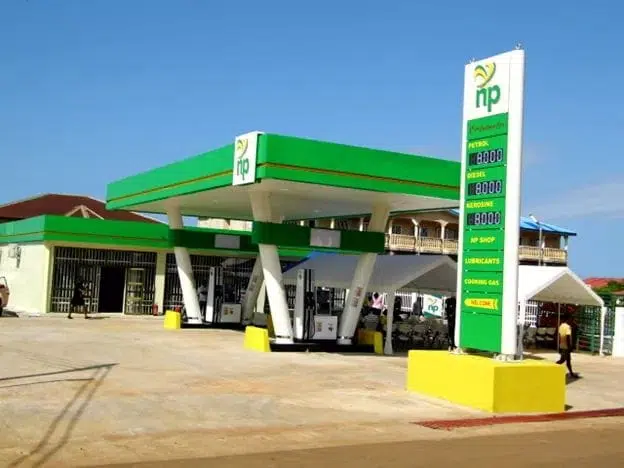
Today you can find the presence of the company in those countries, easily spotted by its green and yellow colours as well as its attractive well-constructed Filling Stations, which are very spacious to accommodate many vehicles, some having shopping marts, tire repairing/mending sections.
Because of its proactive stance with regards quality service delivery, with the avowed objective of always maximizing the interests of its numerous customers, within the petroleum business context, the company has earned the reputation of being 1st for Customer Care. This could not be dismissed as any theoretical attribution because the Shareholders and various Management team, over the years, have rolled out concreate steps and initiatives that still continue to give utmost satisfaction to all its customers everywhere the company is operating.
A realistic demonstration of doing so was borne out of the pragmatic step taken in the direction of securing and installing at its Filling Stations calibrated pumping machines, highly capable of pumping the correct amount of fuel, petrol or diesel, that a particular customer demand, displaying quantity in litre and the price. With such machines in place, obviously, customers always have the conviction that transactions are transparent which gives them the confidence to remain glued to a company that they trust. This is the situation in all the aforementioned countries where the company is steadily operating.
To enhance public safety and by extension that of its customers, the company made it paramount to clearly display precautionary measures at all its Filling Stations out of which these include but not limited to avoid smoking when within the precincts, not to light any naked flame, switch off mobile phones, engines of vehicles when fuel is being pumped. It is always ensured that there are fire extinguishers handy to be used in the event of any fire incidence.
Taking into cognizance that the company is dealing in highly inflammable products, the stance on the part of the Shareholders and Management to uphold best practice within the context of enhancing safety definitely falls within the purview of promoting customer care.
It has been established by development experts that there is a symbiotic relationship between strict implementation of a country’s Local Content Policy (LCP) and economic development. This had been justified on the basis of avoiding the over dependence on importation of what we use to produce and consume. Besides, sound implementation of this policy provides room for the utilization of local skills and materials in the production chain.
As for the National Petroleum-Sierra Leone Limited strict implementation of the country’s LCP is a top priority which must not be taken lightly.
It is against such a backdrop that the company gives preference to indigenes when it comes to employment. Except on exceptional and rare occasions when it comes to employment. For example, in The Gambia, the Management does not say because the parent company is from Sierra Leone therefore Sierra Leoneans should be given priority. No! If there are Gambians who are qualified they get the jobs.
The company has gained wide respect for this stance because it offers sources of livelihoods to those who were hitherto jobless, thereby empowering them to be gainfully employed to take care of responsibilities.
With the introduction of NP Smart Card, which has gone viral, the Card can be credited with money and the amount of money utilized to buy fuel is debited after every transaction. With the use of NP Smart Card, customers are saved the hassle of having to always move with physical cash in their possession in order to purchase fuel and indeed there are times when one may not have time to rush to the bank to make withdrawals. Customers, who are holders and users of NP Smart Card, are at the vantage position to properly budget, through the amount that is contained in the card to buy fuel, during a considerable period of time, say a week or a month. Indeed, NP Smart Card has become trending.
The company also markets NP Gas which is a cooking device that is manufactured in different cylinder sizes and sold at the company’s Filling Stations across the country. It can be easily refilled with gas, is said to be non-hazardous to the health of individuals and easy to operate. Its performance has been rated high and many are indeed going for it.
Within the realm of churning out its Corporate Social Responsibility, the company recently proved that it is always ready to stand by the side of the Government and People of this country ,especially during trying times. This was recently demonstrated when the company donated one billion Leones to the Government as its own token of contribution towards the fight against COVID-19 which the country is grappling with at the moment.
Indisputably, from the foregoing ,it can be firmly asserted that when we count companies that have made solid marks within the business landscape of the West African sub-region there is no way that the National Petroleum Sierra Leone Limited could not be mentioned as the company is greatly contributing to socio-economic growth wherever it has a presence. And the good news is that the company is doggedly poised to expand its operations.
The Two suspect on the alleged Rape in Police Custody
By Amin Kef Sesay
With tough laws to deal with rape and sexual penetration enacted by the Government, coupled with the ‘Hands Off Our Girls’ campaign mounted by the First Lady, Madam Fatima Bio and the declaration of an Emergency against Rape by President Bio, this menace has continued unabated.
It could be recalled that last year, His Excellency President Maada Bio joined other First Ladies across Africa to Launch the Hands Off Our Girls campaign, the brain child of his wife, Madam Fatima Bio, at the Bintumani Conference hall, which was followed by a nationwide campaign by the First Gentleman and Lady of this country. During their campaign tour across the country, they raised awareness over the impact of such actions by unscrupulous men and the laws that have been enacted to deal with such cases. Elders and Chiefs were all admonished not to tolerate any out of court settlement or any form of compromise on such cases.
In ensuring the speedy trial of such cases, the Judiciary constitute a separate court to deal with such offenders. Unfortunately, this menace does not seem to go away. Since then, cases of rape have rather sky rocketed than reduce. The recent report by the Sierra Leone Police on cases of rape recorded by the Family Support Unit (FSU), showed a marked increase from 2017. According to the report, there has been constant increase in cases of rape annually since 2017. In 2019, the FSU recorded 3,252 rape cases.
It could be recalled that declaration of the State of Emergency on Rape was as a result of a five year old girl who was raped and is permanently handicapped for life. President Bio’s reaction was that such men should not join the free world and should spend the rest of their lives behind bars. Today, the most recent case involves another five year old girl who was raped and autopsy report show that she was physically assaulted by her assailant and died from the incident.
According to the autopsy report, the little innocent child had a fractured Cervical Vertebrae, Spinal Cord Injury, Anal Dilation, Manual Strangulation etc. With the above discovery from the autopsy, the victim could not have survived.
This dastardly act has received wide condemnation from women’s groups, CSO Activists and campaigners for women’s rights, and most of all in the Mother of the Nation, Madam Fatima Bio, who has declared battle between the rapist and all women organisations, including her office and the Presidency. This act is being seen by many as a complete disregard for life and an affront to the stand of the government and people of Sierra Leone.
As posts on social media intimated that Choithram Hospital refused to treat the child when she was taken there, this medium conducted an in-depth investigation into the allegation. In the company of the Police from the Mountain Division, the Management of Choithram showed video footage of the actions of their Doctors when the victim was brought there.
The footage showed the Doctors doing examination on the victim, during which they discovered that she was already dead when brought to the facility. After several examinations (3 times), the Family members were told to call 117 or take the victim to Connaught Hospital, who have the facility to determine cause of death (i.e. Post Mortem Examination of the victim). A press release issued by the Choithram hospital says that the child was already dead on arrival and they could do nothing to bring her life back.
Sierra Leoneans are calling on the government to take the necessary action to see that the perpetrator faces justice and give closure to the family. Whilst his guilt will not bring back the child, but serious action, by way of punishment for this action will send the signal that all cases of rape will face the same fate.
Meanwhile, our investigation has further revealed that the alleged perpetrator and accomplice have been arrested and are helping the police in their investigations. Enough is Enough.
Local coroanvirus awareness raising in Funkia Market, Sierra Leone.
By Amin Kef Sesay
The Government of Sierra Leone called a state of emergency on March 25, seven days before the first case of COVID-19 was even confirmed. The virus has spread steadily since then, with 1,272 cases confirmed and 51 deaths as of June 19.
At the same time, the country has begun the rapid countdown to the full onset of the annual rainy season, which raises challenges of its own, especially for the flood-prone local communities in the capital, Freetown. In mid-2019, Freetown and other major Sierra Leonean cities were engulfed in major flooding. Before this, in 2017, more than 1,000 people died in major mudslides in the capital.
This year, there has been recognition that more forthright action is required. The author and his colleagues are currently working with Sierra Leone’s Department of Disaster Management and Freetown City Council to create disaster preparedness guides for district councillors, disaster managers and local volunteers. The goal is to have several guides and handbooks available by July 2020 across four major cities of Sierra Leone to improve scenario planning if multiple disasters happen at once.
In recent years, there has been a strong focus among those who plan for disasters to build more robust forms of resilience in local communities. Not least in Sierra Leone, where – like most of Africa – disaster management relies heavily on local volunteers and traditional forms of community leadership.
Across Africa, there are many poverty-stricken slums and informal settlements. These are vulnerable to natural hazards such as flooding, suffer from overcrowding, and often lack running water and electricity.
As past experiences of Ebola in West Africa demonstrated, it’s also important to focus on the local communities. Poor handling of pandemics and other natural disasters by national Governments and international institutions can lead to resistance, inertia and non-compliance among communities and influential community leaders. In the case of the 2014-16 Ebola outbreak, there were many instances where local communities did not trust or were slow to heed advice that ultimately delayed responses to the disease and ended up costing further lives.
Today, local communities in Sierra Leone could be confronted with a perfect storm when it comes to preparing for future disasters and events. Better disaster management is an imperative, particularly in the face of three inter-linked challenges.
First, there is the impact of COVID-19. Community transmission is becoming a stark reality. The situation in both Sierra Leone and elsewhere in Africa remains highly challenging given the fragile State of many African health services and the limitation of bringing external humanitarian assistance on the ground during the crisis. It’s possible that overcrowded urban communities in some parts of Africa will become sources of future COVID-19 outbreaks and even be an endemic source of reoccurring COVID-19 incidents in the future.
Current COVID-19 prevention tools, such as social distancing and the prevention of mass gatherings to reduce the spread of the disease are highly challenging to administer in such areas. In many ways, the local communities in Sierra Leone – and Africa more widely – often do the best they can with what is available. Yet, the reality is that COVID-19 is likely to have an impact on the local communities.
Second, the practical, discernible impacts of climate change mean that many local communities are already facing worsening dry seasons with increased fires and droughts, followed by more unpredictable and erratic rainy seasons. Cities in West Africa, such as Accra in Ghana or Freetown in Sierra Leone, or central African cities such as Yaounde in Cameroon, now endure almost annual experiences of flash flooding and landslides that threaten to overwhelm poverty-stricken communities.
There is a growing paradox of frequency here. Local disaster managers and volunteers must meet public expectations to handle ever more frequent disaster. But they also recognise there is very little real time to build this local knowledge and review capacity before the onset of the next deluge, flood or fire.
Third, local communities in Africa are increasingly aware that they also face multiple hazards that are very likely to overlap over the rest of 2020.
There will be major difficulties in delivering effective responses to flood and pandemics such as COVID-19 simultaneously. The standard response to flooding in Freetown is to move those affected to the safety of a large stadium or hall or school, placing them out of harm’s way in often large, robust locations. Yet this poses challenges for carrying out measures needed to contain COVID-19, such as avoiding large gatherings or social distancing.
Local communities need to think more deeply through how they plan for these combinations of possible disasters to save lives in the future. And yet, as my own research is finding, this raises a very serious challenge in that the local areas often lack even the most basic and accessible documentation, guidance and training in risk assessment and disaster management plans.
It’s often said that all disasters are local. The rest of 2020 is likely to prove this point more than ever for resource scarce, often poverty-stricken local communities in Africa. There is an urgent need here that must be addressed as quickly as possible.
The aftermath of a devastating mudslide near Freetown in 2017
Minister of Lands, Country Planning and the Environment, Dr. Dennis Sandy
By Foday Moriba Conteh
A copy of the resurveyed 223 acres of land was presented by the Minister of Lands, Country Planning and the Environment, Dr. Dennis Sandy on Thursday 18th June 2020 to the Milton Margai College of Education and Technology (MMCE&T) polytechnic, Goderich campus to the Principal and other administrative staff at a press conference held at the conference room of the Ministry of Information and Communications, 8th Floor, Youyi Building in Freetown.
The Ministry’s survey team was headed by the Director of Surveys and Lands.
The Minister recalled that the first Prime Minister of Sierra Leone, Sir Milton Margai bought the land for the college that starts from the main Peninsula Road down to the Atlantic Ocean but lamented that over the years people have encroached on the land due to among others population growth and that a similar exercise has been done for Fourah Bay College and Njala University College respectively.
Dr. Dennis Sandy enlightened that the Principal of the MMCET applied to the Ministry to resurvey the land which exercise took two weeks, that the latest technology, including drone that flew up to 300 feet, was used for the exercise, affirmed that the process is very perfect as all that was relevant were captured including the Sierra Leone Survey that clearly indicates that the land is State property and that next week the Ministry would officially handover the site plan to the college reiterating that there would be no more business as usual.
According to the Minister, the Ministry is resurveying State lands not only in Freetown but nationwide, allocating lands to deserving Sierra Leoneans, rigorously pursing those blocking access roads, increasing planning of the country and new settlements intimating that the Ministry would hold discussions with the encroachers at Goderich on the way out, that everything would be properly documented, verify the authenticity of the documents and went on to inform that valid land documents should have only one signature-that of the Director of Surveys and Lands.
The Principal of MMCET, Dr. Philip John Kanu asserted that he has received a lot of support from Government for the land, that the President is keenly interested in the issue, articulated that the day signifies a big development for the college as Government plans to expand the college which is impossible without land, that he had engaged the Minister on the issue for the past three months and that Government is now satisfied that the land has been resurveyed and that the College Council, that is representing Government, would decide the best way out of the impasse.
Dr. Kanu continued that His Excellency the President is aware and well-informed about the issue, that Government has secured funding from the Arab Bank to expand the college, that those who illegally acquired the land would be asked to vacate reiterating that the resurveyed plan would be officially handed over to the college soon, that the college has been in court for the past ten years over the issue and spent over Le500 million.
He also commended the Ministry for being very professional and using modern technology to identify the beacons, that the land was ‘gazetted’ with a payment plan and signatures underscoring that the college has retrieved all the documents relating to the land, appealed to old students of the college for support, revealed plans to fence the property after repossessing it to prevent encroachers and disclosed plans to construct hotels on the land for practical for the Hotel and Tourism Training Center and the hospitality industry.
Dr. Kanu said phone companies that have installed their masts on the land are not paying the college, one of the reasons the college appealed to the President to intervene in the matter reiterating that the college would be expanded to train the country’s middle-level manpower that would add value to technical/vocational education as well as transform the college to a polytechnic.
The question and answer session climaxed the well-attended event that was chaired by Mr. Emmanuel Turay of the Ministry of Information.
Cross Section of members of the Liberals Brotherhood presenting the cheque to the Spokesperson of NACOVERC, Solomon Jamiru Esq
By Liberals Brotherhood Communication Unit
In a patriotic demonstration, the Liberals Brotherhood on Thursday 18th June, 2020, formally presented to the National Corona Virus Response Emergency Centre (NACOVERC) a One Hundred Million Leones (Le 100,000,000) aid package, meant for the fight against the COVID -19 pandemic in the country.
The package includes the sum of Thirty-Five Million Leones (Le 35,000,000), which was deposited into the NACOVERC Account at the Guaranty Trust Bank.
The package also includes drugs and other medical items worth Eighteen Million Leones (Le 18,000,000), bags of rice, vegetable oil, provisions and other food items worth Thirty Million Leones (Le 30,000,000), sanitary and hygiene materials worth Six Million Leones (Le 6,000,000), face masks worth Three Million Leones (Le 3,000,000), and Eight Million Leones (Le8, 000,000) incurred on expenses related to the intervention.
These items were procured by the Brotherhood for distribution to the Fourah Bay College and Yams Farm treatment centres and the Burial Team.
Before presenting the items, Head of the 22nd Anniversary Media Committee, Abubakarr Turay, said this intervention shows their commitment to helping the Government of Sierra Leone’s efforts to combat the COVID-19 pandemic.
Alhaji Abu Komeh, National Coordinator of the Liberals Elders Council, said the donation is part of the activities to mark the 22nd Anniversary of the Brotherhood, under the theme: ‘Celebrating Our Fallen Heroes and Praying for All Nations.”
“At a time like this, when the world is plagued with the COVID-19 pandemic, we recognize that this is not time for pleasure, but a time for serious action to face the pressure our beloved country is dealing with,” he said.
Mr Komeh said, on the occasion of the Anniversary, they are taking the bold step to “ask not what our country can do for us, but what we can do for our country. Consequently, we are using this period to respond to the call of the President Rtd. Brg Julius Maada Bio and the people of Sierra Leone to support the fight against COVID-19.”
The Coordinator of the Liberals Elders Council stated that they believe that in the fight against the COVID-19 every little support will make a difference in the fight against the pandemic.
Spokesperson of NACOVERC, Solomon Jamiru Esq was full of praises for the Liberals Brotherhood and their gesture, adding that the donation was timely and will help significantly in the fight against the pandemic.
“We believe Liberals stand in solidarity with us and may this gesture from the Liberals Brotherhood be a shining example to all others,” Jamiru said. He further advised Sierra Leoneans to continue to abide by the health and safety regulations of the Government.
The Quarantine Pillar Lead at NACOVERC, Major Koroma, expressed thanks and appreciation to the Liberals Brotherhood for their support to the fight against the pandemic. “This donation will go a long away in addressing some of the challenges we face in quarantine homes, especially those related to food,” he said.
The Liberals Brotherhood also presented rice, other assorted food items and One million Leones (Le 1,000,000) cash to the Burial Team. Head of the Team, Sinneh Kamara, said he was very pleased because Liberals Brotherhood was the only group who had so far recognized their work as one of the key front-line workers in the COVID -19 fight.
After the brief ceremony at the NACOVERC Office at the SLFA Academy, King Tom, in Freetown, the Liberals Brotherhood then distributed the medical items, food and non-food materials to the Fourah Bay College and Yams Farm Treatment Centres.
The Liberals Brotherhood was formed on June 8, 1998 at Fourah Bay College (FBC), with the aim of maximizing the welfare of students and providing leadership training to upcoming leaders.
This potent fraternity, which constitutes a global membership, has produced intellectuals who have served in diverse positions including the public and private sectors in and outside of the country. Many believe that Liberals is one of the ‘blue ribbons’ to have emerged from FBC, and this is visible in the top role played by its members within the governance space of Sierra Leone.