
Home Blog Page 1138

Orange-SL Takes Super Coders Programme to Kolenten School in Kambia

By Foday Moriba Conteh

On Friday 28th February 2020, one of Sierra Leone’s leading GSM mobile operators, -Orange-SL in partnership with the Ministry of Basic and Senior Secondary Education and ST Foundation, Bridge the Digital Divide-Sierra Leone launched the Super Coders Programme at the Kolenten Junior Secondary School in Kambia District.

The launching was graced by Orange-SL Shop Head, Kambia & Kono, Ortise Campbell, SLP Traffic Management Kambia Division, Inspector Brima Lamin Kamara, Principal Kolenten Junior Secondary School Kambia, Fr. Jacek Pielak, representative of Sierra Leone Teachers’ Union Kambia, Mohamed S. Jalloh, representative from the Directorate of Science, Technology and Innovation, Devshi Mehrotra, Honourable Member of Parliament Constituency 060 Kambia District, and Hon. Bai Sama Kamara, who officially launched the Super Coders Scratch at the Kolenten Secondary School in Kambia.

Addressing the participants on behalf of Orange SL, Shop Head Kambia & Kono, Ortise Campbell, disclosed that Orange being a multi service provider and a responsible corporate citizen places emphasis on corporate social investment, adding that in the last three years, Orange has invested about $400,000 mainly in the areas of Women Empowerment, Health, Education and the Environment and that the company remains the first operator in Sierra Leone to contribute to the government’s Free Quality Education (FQE) Agenda by pledging the sum of $1.5m in material assistance over a period of five years.

“Orange in partnership with the Ministry of Basic and Senior Secondary Education (MBSSE), designed five projects. One of such projects is the Super Coders Scratch Program, in which Orange, in partnership with ST Foundation, intends to introduce ICT training on basic coding for children in 100 secondary schools with existing ICT labs over a period of five years,” he disclosed.

He said that the implementation will be done in two phases: First batch of 10 schools commenced on Wednesday 19 February 2020 for the next ten days in various government-assisted schools with ICT labs across the country.

The Second phase of 15 schools will be rolled out in May 2020.

He noted that the Super Coders Scratch Project is an introductory ICT training program for children between ages 9 to 16 years, pointing out that Scratch is a computer programming language. He said that in Scratch, programs are made by joining together coloured blocks using the Mouse. These groups of blocks (called script) tell characters on the Screen (called Sprites) what to do. Scratch is free, safe and fun to experiment with.

He stated that with Scratch, children can make their own interactive Stories, Animations, Games, Music, and Art further revealing how Scratch has large collections or libraries of cool graphics and fun sounds to play around with, which enable children to solve real life social issues through coding and animation.

He maintained that coding once introduced in related schools by Orange, will be included in their ICT curriculum and will be taught by the ICT tutors in each school. He reiterated how many would recall that Orange commenced the execution of its FQE project in October 2019, where the company distributed 2,000 hygiene packs to 20 schools in the Western Urban and Rural areas, conducted awareness and sensitization on menstrual hygiene and sexual reproductive health, adding that this year, Orange-SL will roll out all five projects before the end of 2020.

“As a global telecoms player operating in about 22 countries in Africa and the Middle East, Orange aims at being the leading partner in the digital transformation of all our countries of presence. In achieving this ambition, Orange has included education as one of its key pillars under its CSR policy,” he underscored.

Director, ST Foundation, Bridge the Digital Divide-Sierra Leone, Mohamed Dumbuya, disclosed that Scratch is a free programmable toolkit that enables kids to create their own games, animated stories, interactive art and share their creations with one another over the internet.

He extended gratitude to Orange Sierra Leone for partnering with ST Foundation in implementing the Super Coders Scratch Project in secondary schools across the country.

He also buttressed that the Super Coders Project is an introductory ICT training program for children between ages 9 to 16, adding that the union, marriage or partnership they are enjoying was created by UNICEF-Sierra Leone by introducing the two parties and bringing them together.

He revealed how STF/BDD-SL has been working in providing ICT education for schools and tertiary institutions in Sierra Leone for the past 10 years and within that period of operations over 145,000 Sierra Leoneans have benefited.

He said ST Foundation has 31 locations in the country, but that Kolenten Secondary School is the only beneficiary in Kambia District, adding that they have presented a list of schools that will benefit the Ministry of Education for approval and urged the pupils to make good use of the opportunity offered by Orange and ST Foundation.

Orange CSR Officer, Rebecca Sogbeh, disclosed that Orange in partnership with the Ministry of Basic and Senior Secondary Education (MBSSE), designed five projects. One of such projects is the Super Coders Scratch Program, which Orange in partnership with ST Foundation intends to introduce through ICT training on basic coding for children in 100 secondary schools with existing ICT labs over a period of five years, adding that Orange-SL remains to be the first GSM operator in the country to contribute to the government’s Free Quality Education (FQE) initiative by pledging the sum of $1.5m in material assistance over a period of five years.

Sogbeh maintained that in fulfilling their commitment, in 2019 Orange launched and rolled-out hygiene packs for girls aged 12-18 years, adding that they are going to donate 10,000 packs over five years and over 2,000 sanitary packs yearly to schools.

She further disclosed that Orange-SL will launch and roll-out during this year, solar kits for school children in the rural areas, out of which 1,000 solar kits will be distributed over five years to 200 villages without grid to be covered per year, stating how they will install them in local libraries/community centers/schools etc. and 100,000 individuals are expected to benefit from the project.

She ended by saying that Orange-SL will also roll-out Open Class Room program that will enable 300 free certifying digital courses, 10-20 Hours on-line work where 500 teaches will benefit in five years.

Honourable Member of Parliament Constituency 060 Kambia District, Hon. Bai Sama Kamara, who officially launched the Super Coder programme at Kolenten Secondary School, also expressed appreciation to Orange-SL and ST Foundation for the implementation of the project in their District.

He encouraged the targeted beneficiaries to make maximum use of the Super Coder programme, as this will enhance their development as children, adding that they will continue to support Orange-SL and ST Foundation in rolling out programs that are meaningful and beneficial to the children of this nation.

He admonished the teaches to grab the opportunity that will be given to them by Orange, which is the Open Class Room program that will enable 300 free certifying digital courses, 10-20 hours on-line work, where 500 teaches will benefit in five years.

The event was climaxed by Project Digital Demonstration, which was done by the representative from the Directorate of Science, Technology and Innovation, Devshi Mehrotra.


Gov’t Pays Over Le l4 Billion School Fees

JJ Saffa

By Amin Kef Sesay

The Ministry of Finance, in collaboration with the Ministry of Basic and Senior Secondary Education (MBSSE), has made a total payment of Le l46,927,817,600 as tuition fees for pupils in pre-primary, primary, junior and senior secondary schools in Government and Government-assisted schools for the 2018/2019 school year and first term of the 2019/2020 school year.

This is in fulfilment of the Government’s commitment to the citizens of Sierra Leone on the flagship Free Quality School Education (FQSE) programme, according to a press release issued by the ministry.

The release added that the MBSSE in consultation with the leadership of the Council of Principals of Secondary Schools and the National Council of Head Teachers agreed to delay the payment of second term school fees for the 2019/2020 academic year until Government conducted direct head count of pupils in Government and Government assisted schools.

‘The head count conducted to validate the actual enrolment figures in schools, shows anomalies in enrolment data submitted by some schools in the 2019 Annual School Census (ASC),’ the release noted. It went on to state that ‘in 29% of schools, the enrolment numbers are consistent between the two data sources while 37% of schools reported much higher numbers in the ASC than was recently counted; while 34% of schools have more students enrolled than was captured during the ASC conducted last year and that there is only 1% overall difference in enrolment numbers between the ASC and the completed headcount,’ the press release informed.

The recently completed and validated head count will be used by Government to determine the payment of school fees, supply of Teaching and Learning Materials (TLMs) and textbooks for the remainder of this academic year, while more robust systems are put in place to mitigate against discrepancies for the ASC 2020, while school leaders are encouraged to desist from cheating the system, the release stated.

The release added that the Government is assuring heads of schools and the general public that payment of school fees for the second term of the 2019/2020 academic year is now being processed, while government reiterated its commitments to the full implementation of its flagship Free Quality School Education programme, which has added close to 700,000 new students and continues to be highly successful.

Liberia Learns Financial Management Skills from Sierra Leone

By Theresa Kef Sesay

A team headed by Liberia’s Deputy Minister for Administration, Ministry of Finance & Development Planning, Hon. Rebecca Y. McGill, has concluded a one week study tour which is geared towards enhancing knowledge-sharing on experiences, best practices and lessons learnt from the Government of Sierra Leone in the implementation of its Public Financial Management (PFM) reforms.

The objectives of the study tour was to work out details with her Sierra Leonean counterparts on the formation of a complete and comprehensive donor intervention matrix; the execution of the reform agenda from the context of Sierra Leone and how it relates to Liberia; and an internationally acceptable reporting format on the execution of the reforms.

Hon. McGill said the government of Liberia has made steady progress in the implementation of its Public Financial Management (PFM) reform agenda, noting that in September of 2012, the government launched the multi-donor funded Integration Public Financial Management Reforms Project (IPFMRP).

She said the IPFMRP officially closed on June 30, 2016, as a result, an implementation Complementation Report was produced, which, among other things, recommended the implementation of the formation of a separate project management outfit to manage the affairs of the project.

She added that the delegation from the Ministry of Finance and Development Planning has an in-depth appreciation on the implementation of PFM reforms by the PFM Reforms Division within the Ministry of Finance in Sierra Leone.

“The team has also gained an understanding on the linkages of the various components within the PFM landscape and their lines of reporting and the formation of a comprehensive donor intervention matrix and its alignment, so as not to avoid duplication of funding, and an acceptable reporting format on the execution across Government,” she said.

As a result of the study tour, certain action points were made, which include effective network of PFM officers through knowledge sharing, peer learning and when possible, exchange visitations.

The team also evidenced that the Liberia Reform Coordinating Unit (RCU) is constrained with staffing, as currently the Unit is staffed with a Coordinator and assisted by a deputy and a PFM Specialist to champion the reform agenda of the Government of Liberia.

The delegation hopes to develop its PFM Reform Strategy after Public Expenditure and Financial Accountability (PEFA) which is slated for December 2020

“The Sierra Leone PFM governance structure which shows the three tier governance committees was explained and it was noted that Liberia’s structure starts with the second-tier (Technical Committee) and the Steering Committee but lacks the first level of the Thematic Technical Working Group structure where objectives, activities and outputs of the PEMRS are closely monitored and reported upon,” according to one of the action points.

The Principal Deputy Financial Secretary (PDFS) at the Ministry of Finance, Mr. Mathew Dingie, thanked the team for choosing Sierra Leone’s Ministry of Finance as a case study, noting that Sierra Leone and Liberia have been on exchange programme for a long time now.

He said he is aware of the economic challenges both countries are faced with, but progress has been made so far. “One of the good things about PFM, it does not have an end game, noting that even countries with bigger economies do go through PFM reforms. Our focus now is to ensure that PFM works without human intervention that is why we are trying to digitalize the reforms,” he said.

According to him, revenue is at the heart of everything they do as a nation, adding that revenue is key for government to deliver on it key promises.

The delegation comprised of Hon. Rebecca Y. McGill, Deputy Finance Minister Administration, Mr. Vee-Musa Fofana, Coordinator, Mr. Joseph K. Fahnbuleh, Deputy Coordinator and Mr. Abel D. Nowon, Financial Management Specialist.


With Le18 M. Cash Prizes… Adonis Abboud Trust Fund Awards Outstanding University Graduates at USL & UNIMAK

By Amin Kef Sesay

Dr. Adonis Abboud, Chairman of the Adonis Abboud Trust Fund (ATTF), on Saturday 22nd February, 2020, once more demonstrated his humanitarian and educational support to graduands at the National Stadium.

In his brief statement, he noted that without a healthy and well-educated citizenry, a nation cannot develop. Educational excellence, he said, is the path to growth and economic prosperity.

Dr. Abboud presented the awards alongside with the President of the Republic of Sierra Leone, Julius Maada Bio and the Vice Chancellor of the University of Sierra Leone to the Best Male and Best Female graduates in several faculties.

The Vice-Chancellor, in his address, appreciated and referenced Dr. Abboud for his relentless support to the University of Sierra Leone, spanning more than three decades.

Recipients of the awards included from IPAM, Abibatu Dora Kamara and Alexander Ayodele-Manley, Fourah Bay College, Despaul J.E.A Black and Leona Conteh, COMAHS, Sidney, Hindolo Samai best graduate in medicine. The task of assessing and selecting the winners was done strictly by the University Administration.

At the same time, on the other side of the country in Makeni, UNIMAK Conferment Ceremony was taking place. Senior Project Coordinator and ATTF representative, Hawah Bah, presented the awards and cash prizes to the best male and female graduates. From UNIMAK, Miss Hassanatu Sheriff and Mohamed O. Bangura were the beneficiaries for the Academic Year 2019/2020.

Dr. Adonis recognized the Vice Chancellor of the University of Makeni, Joseph Turay, who he said would be remembered for his tradition to start the recognition of best graduates as it took off for the first time 5 years ago in UNIMAK.

On behalf of the Vice Chancellor, Professor Joseph Turay, and the entire staff of UNIMAK, the Mass Communication Department thanked Dr. Adonis Abboud and his organization for the support and presentation of awards to outstanding students every year.

This is the third congregation ceremony in 3 weeks in which the ATTF is making similar donations covering 5 universities and 9 award recipients, including more recently, the Faculty of Architecture at Fourah Bay College, which received 10 Laptops. The Adonis Abboud Trust Fund will continue to provide support to schools and universities in Sierra Leone to help enhance the educational sector and contribute to the development of the nation.

It could be recalled that on Saturday 22nd February, 2020, the University of Sierra Leone congregation, faculty, students and their families gathered at the National Stadium in Freetown to celebrate the conferment of degrees.

The ceremony was presided over by His Excellency, President Julius Maada Bio. In his address to this year’s Class of 2020, President Bio encouraged graduates to become entrepreneurs with home-grown solutions. He emphasized that for entrepreneurship to thrive he had always stated that the government must create a conducive entrepreneurial ecosystem. President Bio further stated that this year’s congregation, which had as its theme: “Education toward Entrepreneurship,” especially resonated with his vision for the future of the country.

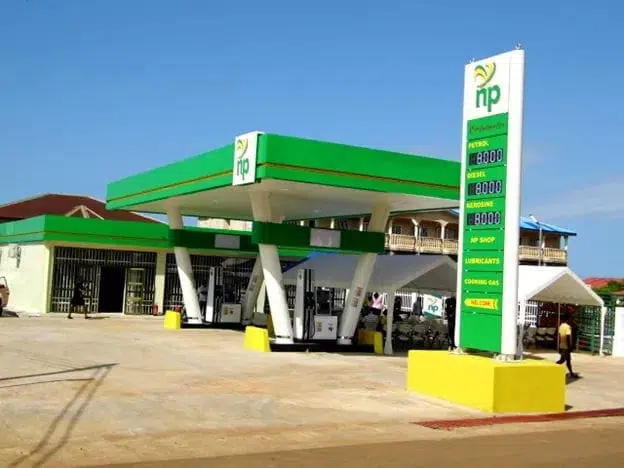
NP-SL: From Humble Beginning to Towering Petroleum Giant

By Amin Kef Sesay

From a humble beginning, the National Petroleum – Sierra Leone (NP-SL) is now a towering business entity with branches in neighbouring Guinea, Liberia, Ivory Coast and The Gambia while contributing immensely to the socio-economic development in those countries.

But going down the annals of history NP today was the former British Petroleum (BP) company which decided to sell its shares to the Government of Sierra Leone at that material period in time.

Things took a different twist when in 1996 the Government sold its 60% shares in NP to some of the company’s members of staff. Again it was made known that 55 % was paid upfront from the end of service benefits of the workers from BP and the 5% offered to all the other workers. Thus the company known as LEONEOIL was born.

The 55% sale of Government shares to the former workers came as a result of the World Bank’s advice to privatize the latter. It was also revealed that among the 4 companies that bid, which included ELF, LEONOIL won the international competitive bidding conducted by Arthur De Little, a United States based Management consultancy firm hired by the World Bank.

It could be recalled that the World Bank, which advised Government to privatize the company, monitored the bidding process for the three international companies and one local company that competed culminating in LEONEOIL, which metamorphosed to NP, after meeting all the set criteria.

Currently, it has been established that the positive development strides of the National Petroleum (NP) SL Limited, has made it the epitome of a viable indigenous national enterprise in the petroleum industry. It embodies what the ordinary Sierra Leonean can achieve when they come together with a shared vision and goal. With a capable Board of Directors and Management, the company is contributing positively to the development of the nation.

Good entrepreneurial initiatives have turned the fortunes of this company since its inception into a viable profit making and job creation entity. In its employ are Sierra Leoneans occupying various senior and junior positions.

With honouring its tax obligations to Government via the National Revenue Authority (NRA) in a timely manner, the company is contributing immensely towards the boosting of the country’s economy as well as the steady and meaningful execution of its Corporate Social Responsibility, which continues to improve the standard of living of many Sierra Leoneans.

The pro-active and sterling initiatives of NP’s Board of Directors and Management in respect of timely procurement of petroleum products and ensuring its availability on the market for public consumption, has seen a marked deviation from the days of fuel shortage to that of abundance.

It is highly commendable for a well-established and result-oriented company like NP to have climbed to such an enviable position especially when cognizance is taken of the fact that it is exclusively owned by Sierra Leonean shareholders, a typical testimony of how local entrepreneurs could raise the bar high.

Financial experts, whom The Calabash Newspaper had the privilege to talk with, noted that the aforementioned members of staff were indeed entrepreneurial enough to properly manage the company to such an extent that, unlike others, it survived most of the bottlenecks that it encountered throughout the years it has been in existence.

Shedding light on the historical background of NP,  it came out glaringly that the 40% PMMC’s stake in the company, owned by the late Jamil Sahid Mohammed and Tony Yazbeck, was given as collateral for a loan from a Bank by one of the parties.

The business mogul, Jamil Sahid Mohammed, later sold to Cape Oil PMMC’s 40% shares to offset a fidelity loan, but LEONE OIL was not satisfied with that move and took the matter to court on the grounds that it was in violation of the M and A which dictates that the other side has the first option to buy. The outcome of the matter was that the High Court gave judgement in favour of LEONE OIL that later became National Petroleum.

For mischievous reasons certain individuals have been churning out rumours that NP has a monopoly over the petroleum market in the country which is totally untrue, baseless and misleading as it has been factually proven that there are other Marketing Companies marketing petroleum products that are registered with the Petroleum Regulatory Agency (PRA).

It must be noted that Petro-Leone is a storage company developed by both Addax and Leone Oil so that petroleum products will always be available in the country and avert shortage. Experts further stated that if such a venture is disrupted, the country will relapse to the former state of shortage of fuel and long queues will once more re-surface across the country, causing a lot of inconvenience and national hiccups.

At present, NP-SL has filling stations in different parts of the country with other facilities like tyre mending, mini marts and sale of gas in some of them.

Today the company stands tall for effective service delivery bagging the accolade of 1st for Customer Care with sophisticated calibrated pumping machines that display quantity pumped and price displayed.

NP Smart Card is now in vogue and very advantageous as it prevents the movement of cash to procure petroleum products, is very convenient to use, shows remaining balance. With regards NP Gas, it is going like hot cakes, and is environmentally friendly, non-hazardous and easy to refill with gas that could also be procured at the company’s filling stations and authorized dealers.

Brewery Commissions Wellington Community Health Center Worth over Le1.2B

By Amin Kef Sesay

In a bid to accomplish its corporate social responsibilities, the Sierra Leone Brewery Limited through Heineken Africa Foundation (HAF) on Friday 28th February finally fulfilled the dream of the people of Wellington with the newly-constructed Wellington Health Centre going into operation.

The official opening of the Wellington Health Centre attracted indigenes and prominent personalities and was co-chaired by the Marketing Manager of Sierra Leone Brewery Limited, Madam Aminata Kassim Carew and Unisa Conteh.

Speaking on behalf of Sierra Leone Brewery Limited, the Corporate Affairs Manager – Albert Ojo Collier, started by highlighting the embryonic background of the Wellington Health Centre Project that was initially planned for only rehabilitation. He added that due to the felt need of the Wellington people, they thought it plausible to do a demolition of the existing single floor building to ease the construction of a two-storey building with an increased capacity and facilities to include Antenatal Clinic, Family Planning Unit, Under Five Unit, Nutrition Unit, Drug Store, Reception Unit, TB Unit, Laboratory Unit, HIV Unit, Births and Deaths Registration Office and many more.

He informed his audience that the new health center would serve an estimated 50,000 people; servicing the needs of pregnant, lactating and under five children and other categories of patients.

He added that he is confident that the new facilities at the hospital will thoroughly improve the quality of the service and infrastructure for both patients and staffs in the years to come.

He explained to his audience that they commenced their engagement with the Wellington community people for the health center in 2010 with the first ever HAF programme by donating maternity equipment, computers followed with an ambulance by 2011. He went on to state that this was supported in 2015 with another extension, with the provision of another brand new ambulance during the Ebola crisis.

He further explained that the proposal was actually submitted when CHO, Mr. Kposowa, collaborated with the Clinic Manager of Sierra Leone Limited, Mrs. Agnes Lye Fornah and other authorities.

He said he was present when the entire hospital unit was transferred into the new building in 2019 from the temporary location of the community center and they all know that the hospital has been operating for few months now.

He said the new hospital development will be of great benefit to the local Wellington community both in terms of the services that it provides and also with regards to employment opportunities that it will offer. According to him, with the improved infrastructure, there are new ways of working which will also assist the hospital in attracting the brightest and the best to come and work in what is now generally recognized as one of Freetown’s best health centers.

Mr. Collier said the hospital has now been expanded with an increased space for patients and accommodation for Midwife and Community Health Officer among others.

He said the first approved fund was EUR 100.943, which couldn’t complete the structure, after what was supposed to be a rehabilitation, turned out to become a complete reconstruction from the foundation. In addition, he said the first funding wasn’t enough as final aspects to complete the work which included roofing, tiling, plumbing, installation of doors, windows, electrical, ceiling, labor, supervision expenses and general finishing needed to be done.

In addition because of the increase in the cost price for building materials in 2014 as opposed to previous estimates, resulted in the issue of limited resources to conclude the project, he said. He maintained that an additional fund of EUR 46,183 was then approved by HAF after the Ebola virus disease in the country.

He informed his audience that the hospital has now been completed with a two storey structure with increased capacity and facilities which include:

. Antenatal Clinic

. Family Planning on Immunization

. Under Five Unit

. Nutrition Unit

. Consultation Office for CHOs

. Drug Store and Reception Unit

. TB Unit

. Laboratory Unit

. HIV Unit

. 3 admission rooms each with three admission beds

. Births and Deaths Registration Office, among others.

The Parliamentary representative of residents of Constituency 115, Hon. Alpha Amadu Bah, in a delighted mood, started by heaping profound thanks and appreciation on Heineken Africa Foundation (HAF) and Sierra Leone Brewery Limited for their unwavering contributions over the years to the people of Wellington, prior to his becoming Member of Parliament for Constituency 115, spanning from the donations of maternity equipment, computers, followed by an  ambulance for the second time during the brink of the Ebola crisis in 2015.

He however called on the Government to be giving favourable tax concession to local industries, especially Sierra Leone Brewery Limited, owing to the fact that they are partners in nation building as their handwork is quite conspicuous in almost all parts of the country.

Hon. Lawyer Bah concluded by appealing to the Ministry of Health and Sanitation for their intervention in providing the necessary equipment, especially hospital beds, as the project only covers construction.

The program was climaxed by a vote of thanks given by Councillor Luckyn Mordings Mansaray, the host councillor of Ward 406.

There Are Key Reasons Why ‘New Direction’ Service Delivery Is Scanty

Commentary

By Amin Kef Sesay

Given that the more things change, the more they seem to remain the same, even getting worse, it is understandable why President Bio summoned all 83 Heads of Commissions, parastatals, agencies and state-owned enterprises to a seminar titled “Consolidating the Foundation for Service Delivery” at Bintumani hotel this week aimed at providing participating State officials with the necessary political orientation, accelerate effective service delivery and deepen their understanding of performance management systems.

Very simple; service delivery remains weak because the MDAs work mostly in isolation, with very little coordination and limited human and financial resources not available for timely sustained interventions – hence lack of the desired development outcomes in the lives of the masses.

Noteworthy that the President said that as a Government, they must improve on the way they run our institutions by being bold and innovative and encouraged them to develop the professional habit and culture of efficient political and economic management of the State. Such work concept is a novelty to our desk bound technocrats.

The Calabash has had a keen interest in how this Government would be different from the former and previous ones before in terms of making qualitative difference in the standard of living of our long suffering masses.

The findings show that the major causes of poor service delivery are the willful and malicious failure of Parliament to take their oversight duties with the seriousness it deserves and their complete failure to follow up robustly on the Auditor General’s annual findings and recommendations to the MDAs on how to equip themselves to provide quality service delivery to the people.

Issues such as poor interpretation of policies, corruption, maladministration of resources, lack of coordination and aligned programs as well as lack of skills and monitoring by officials need to be comprehensively addressed to curb the problems of service delivery.

At the level of the State and its agencies, we found out that undue political interference and manipulation of State institutions and mechanisms for selfish gains, corruption of operational rules and regulations to facilitate outright theft, fraud and waste and lack of robust accountability and transparency structures and personnel in the MDAs contribute greatly to poor service delivery year in year out.

At the human and societal level, inadequate citizen participation, poor human resource policy, failure to manage change, lack of employee capacity, poor planning and poor monitoring and evaluation mechanisms lead to a culture of I-don’t-care and impunity of officials that fail to perform their duties responsibly and accountably.

The main strategies to improve service delivery were found to be increasing citizens’ participation in the affairs of both central and local governance, partnership by the MDAs and Local Councils with the community in planning and delivering service delivery, flexible response to service user complaints, offering value for money and ensuring that service users pay their bills on time.

At the administrative and managerial levels, much needed are strategic public service planning, sound human resource policy that includes capacity building and employee motivation, managing change, dealing with corruption and improving accountability, segregation of duties, management integrity and rectitude, partnering with other players and outsourcing services.

At the general governance level, how can poor service delivery be improved? Experts believe that it is only by setting out clearly achievable goals and objectives, mobilizing the required resources for their achievement and measuring performance constantly.


Non-State Actors Publish Report on Taxation Perception Survey

By Amin Kef Sesay

On the 24th February 2020 the 2019 Taxation Perception Survey (TPS) Report was launched at the British Council which is the product of a research undertaken by the Public Financial Management (PFM) consortium, led by Christian Aid Sierra Leone, and other partners including the Budget Advocacy Network, Restless Development and the Centre for Accountability and the Rule of Law (CARL).

These are Non-Governmental organizations and civil society groups that are working to strengthen all aspects of public accountability, transparency and participation of the citizenry in all matters dealing with Public Financial Management in Sierra Leone.

They are responsible for implementing a Project titled: “Strengthening Public Financial Management, Anti-Corruption and Accountability Institutions in Sierra Leone,” with support from UK Aid, based on the need to monitor how the government is utilizing taxes that citizens are paying, and what impacts the spending of taxes are making on the overall national development of Sierra Leone.

A good portion of taxes collected by the Government is derived from businesses; salaries of civil servants and public sector workers; private sector employees; entertainment; entrepreneurs; petty traders; investment companies and the likes.

It is therefore important to understand tax payers’ wider views of government and how this relates to their attitudes and motivation towards paying taxes.

The Government relies on the National Revenue Authority (NRA) and other revenue collecting institutions for the funds that are allocated to the Ministries, Departments and Agencies (MDAs) for the running of the business of government to ensure national development.

The NRA has been hitting various revenue collection targets – currently running into Trillions of Leones. Government’s expenditure is improving in line with its revenue generating targets.

But to what extent does the revenue generated from taxation benefits the citizens?

The findings of the TPS report state that 34% of the 2,755 tax payers interviewed in the perception survey think that the government is using tax revenues in the right and correct way.

25% said corruption in government demotivates them from paying taxes and cause them to under-declare their taxable income.

Questioned about strengthening social contract on taxation and the provision of public services, 45% of businesses said that they pay their taxes because it contributes to the provision of public services such as the Free Quality Education and roads.

79% of businesses said if they had seen more services being delivered in their area by the local council, they would be willing to pay more taxes. 

Almost all business tax payers that took part in the survey said that taxes are too high; and that authorities in charge of state resources are mismanaging the country’s revenue.

37% of businesses said they didn’t pay taxes; and 72.9% of these businesses who didn’t pay taxes, said it was because the rates were too high.

The current Government has made revenue mobilization a key priority, and is aiming to achieve a domestic revenue – to – GDP ratio target of 20 % by 2023. Current revenue to GDP ratios is well below this target, although recent reforms are starting to take effect.

Domestic revenue is the main source of Government revenue, needed to provide essential public services and reduce poverty as outlined in the Medium-Term National Development Plan (MTNDP).

Current domestic revenue falls short of the levels required to meet the Government’s development aspirations.

The survey targeted a total of 2,755 businesses across the 16 administrative districts of the country; and achieved a response rate of 98.4 %. It collected data from businesses on their perceptions, knowledge, attitudes and practice in relation to taxes; the tax system; services; accountability in the use of taxes by the government; tax administration reforms; and the conduct of the staff of the NRA and local council when carrying out tax administration processes.

The survey covered a range of business types, excluding the UN Agencies, Non-Governmental Organizations (NGOs), Community Based organizations or CBOs (except for those that are directly engaged in the production and distribution of goods and services in their localities), and MDAs.


Hon. Sidi Tunis Endorsed to Become ECOWAS Speaker

Honourable Sidi Mohamed Tunis

By Abdul Malik Bangura

The pragmatic, eloquent and result-oriented Leader of Government Business representing the ruling Sierra Leone Peoples Party (SLPP) in the Sierra Leone House of Parliament, Honourable Sidi Mohamed Tunis, would soon be sworn in as Speaker of the regional Economic Commission of West African States (ECOWAS) Parliament. The swearing –in ceremony is scheduled to take place on Monday 9th March 2020, at the Republic of Niger’s capital, Niamey.

According to a confirmed source, a high-powered delegation from the House of Parliament will depart from Sierra Leone on Saturday 7th March 2020 for the Sahel State of Niger to be led by the Honourable Speaker of the Sierra Leone House of Parliament, Hon. Abass Chernor Bundu.

The fifteen (15) man delegation from the Sierra Leone House of Parliament will comprises twelve (12) Members of Parliament (MPs) as well as three (3) supporting staff who are all due to go in full support and solidarity for the candidacy of Honourable Sidi Mohamed Tunis.

Meanwhile, it could be recalled that last year, His Excellency President Julius Maada Bio in a televised video message to Members of the ECOWAS Parliament which was played at the Extra Ordinary Session of the ECOWAS Parliament in Monrovia, Republic of Liberia endorsed and weigh in absolute support for the Leader of Government Business of Sierra Leone House of Parliament to serve as Speaker of the ECOWAS Parliament.

Honourable Sidi Mohamed Tunis also doubles as the SLPP MP for Constituency 101 in the Southern Provincial district of Pujehun.

Whilst endorsing Honourable Sidi Mohamed Tunis, President Bio said “I have known him for several years and he served in several leadership positions in this country,” adding that “I know his wealth of knowledge he will bring to the table to make ECOWAS Parliament a better institution than it is currently.”

President Bio further added that “I endorse him as my candidate and I am appealing to all of us to support him and you will not regret it.”

Meanwhile, in a similar development, the candidature of Honourable Sidi Mohamed Tunis as Speaker of ECOWAS Parliament has also received complete approval and endorsements from several major ECOWAS countries including Nigeria, Senegal, Ghana, Liberia, Còte d’ivoire, Gambia, Cape Verde and others.

Sierra Leone has never occupied the position of ECOWAS Parliament Speaker, since its establishment in 1975.

Hon. Tunis is expected to take the mantle of leadership and he will serve till 2024, when Togo will be in line to succeed Sierra Leone. The position is rotational in alphabetical manner. The current holder is from Senegal, this means that Sierra Leone is next in line to take up the position.

Meanwhile, as part of his functions as Speaker, Hon Tunis will direct the business of the Parliament and its organs. He will also preside over meetings and conduct debates in accordance with the provisions of the Rules of Procedure.

The delegation that is set to leave Sierra Leone on March 7th 2020 will comprise Members of Parliament and staff of the House.


18 Health Workers to Graduate as Infection Prevention Control (IPC) Experts

By Theresa Kef Sesay

Eighteen (18) health care workers from various districts across the country were recently trained as IPC experts through the national Advanced IPC certificate course which is geared towards enhancing IPC capacity in Human Resources for Health.

The first Cohort (Cohort 1) of the six months Advanced Certificate Course was funded and supported by the U.S Centers for Disease Prevention and Control (CDC), implemented collaboratively by ICAP at Columbia University and the Ministry of Health and Sanitation.

On Friday 21st February 2020 these 18 newly equipped staff graduated at the Bintumani Hotel in Freetown. During the ceremony, the Country Representative of ICAP Columbia University, Dr. Mame Awa Toure, pointed out in recent times that no country, no healthcare facility, even within the most advanced and sophisticated healthcare systems can claim to be free of healthcare-associated infections. Therefore, she encouraged members in the health sector to strive towards achieving 100% IPC compliance in the health system.

With the current threat of the coronavirus 2019-nCoV outbreak around the world, she described the event as timely as World Health Organization has recommended that countries put in place an IPC program with a dedicated and trained team or at least an IPC focal point at each facility. Currently, she said: “We have a robust IPC system in Sierra Leone, and today’s graduation is a testimony to it.” IPC practices remain essential in maintaining a safe environment for everyone-especially health worker’s workers.

As the U.S Embassy Chargé d’ Affaires Benjamin B. Dille maintained the United States Government remains committed to supporting Sierra Leone to strengthen its health sector as they have made tremendous contributions to the sector.

“Now, we are confident that these graduates have inquired the capacity to make the difference in their society, and they need to put in practice the knowledge and skills gained to improve the health of patients and the behaviour of health workers in administering care,” he stated.

He concluded by saying, “the U.S Government will stand behind you to support you, but you will have to lead the way for a better health system in the country.”

The CDC Sierra Leone Country Director, Dr. Tushar Singh, said what he saw was a reflection of partnership at its highest level across different sections. He applauded the graduates for their commitment and admonished them not to be selfish in providing healthcare at their various facilities. He reiterated that the IPC certificate course focuses on boosting the experience and building the expertise of Sierra Leoneans that will become IPC champions in their various facilities.

Meanwhile, the Sierra Leone Deputy Chief Medical Officer Rev. Dr. T. T. Samba, in his keynote address said, “IPC plays a crucial role in meeting the national health priorities of the country. The new evolving landscape of emerging infectious diseases has served as a strong justification for developing IPC experts as they are key in ensuring health security in the country. As the course focuses on addressing some of the most common challenges in the system, we hope to celebrate and applaud these graduates even more as they work to make Sierra Leone a better place for healthcare delivery”.

The event ended with a group presentation from the 18 newly graduated IPC experts, which showcased the knowledge gained from the training.