The United Nations Industrial Development Organization (UNIDO), through funding from the European Union on the 24 February 2020 started a 2-day training on ISO 9001:2015 for the technical staff of the Sierra Leone Standards Bureau (SLSB) and the Private Sector.
Theme for the training is “Implementing Sustainable Quality Management Systems Using the ISO 9000 Family of Standards.”
Executive Director of SLSB, Professor Thomas Yormah, in his welcome address described his organization as the country’s only Standards Body.
“The SLSB protects human health, the environment, the economy and also ensures that there is fairness in trade,” he said.
Professor Yormah emphasized that producing goods that would meet internationally acceptable standards would require the disciplined adherence to standards operating procedure along the value chain.
“Unfortunately the critical importance of quality to all aspects of life is yet to be practiced in our society. It is our business to maintain a national quality culture in Sierra Leone. We are going to roll out this training to you, the universities and possibly to schools,” he assured.
An international expert in Quality Management and Conformity Assessment, Nigel Croft, who doubles as a facilitator, said that the training would build the skills of participants in ISO 9001, thus enabling them to recognize “what is important for them in a business perspective”.
“It is a tool that organizations can use to help them to be more efficient in doing business and for employees of SLSB. It will help them know about quality management systems applications,” he said.
The training, which is phase II of the UNIDO-EU funded project, ended on Tuesday, February 25.
President Julius Maada Bio and Abibatu Dora Kamara
By Fatmata Jengbe
After successfully graduating with a First Class Bsc, Honours degree in Public Sector Management from the Institute of Public Administration and Management (IPAM) University of Sierra Leone on the 22nd February 2020, a presentation ceremony was held at the office of Head of Department, Governance and Leadership on the 25th February 2020 during which Abibatu Dora Kamara presented her award as the Best Female Graduate from that institution for the 2018/19 academic year to the Department as a way of expressing appreciation.
Abibatu has made history to be the first female student to receive such a prestigious award from the Department of Governance and Leadership.
During the ceremony, the Head of Department, Dr. Falla Lamin stated that he never knew that the best graduate to emerge from his department will be a female until Abibatu’s name was mentioned. “I am convinced that even President Julius Maada Bio was impressed to learn that the best graduate turned out to be a female,” he furthered adding that Abibatu has really proven to the whole world that indeed there are capable, intelligent women in this country who can make it to the top. “I want to enjoin you to keep up the good work and wish you well in all your future endeavors,” he stated also commending the lecturers for the tremendous contributions they made in solidly imparting knowledge to the students as it is partly because of their efforts that IPAM was able to produce excellent graduates.
One of the lecturers, Ibrahim Samai, who is lecturing Public Sector Financial Management heaped commendations on Abibatu whom he described as one of her past hardworking students who took her studies serious always submitting her assignments timely, was very articulate in class and participated actively during lectures. He added that he has no doubt that Abibatu will excel in any future course that she may want to pursue.
He continued to state that what Abibatu has acquired speak volumes of the fact that any female can make such an achievement through hardwork. “Gone are those days when people will say men can only excel academically and that a woman’s place is in the kitchen,” Samai maintained adding that as long as one makes good efforts one is bound to succeed.
Ismail Bangura, another lecturer who was Abibatu’s Supervisor for her dissertation also commended her for her excellent performance .He praised her for being hardworking and studious adding that other female students in that institution must emulate her footsteps. He said she was very responsive to questions relating to her dissertation, accepted constructive criticisms and was very respectful.
On her part, Abibatu Dora Kamara said she was gratified to receive such an award being the first female student in that department to emerge with such an award. She further said she is very happy but it was not really easy for her. She thanked her lecturers, friends and Supervisor for their immense contributions and encouragement.
She pleaded with the Head of Department to create more spaces for females to be admitted in the Department of Governance and Leadership.
Abibatu also encouraged female students in the country to continue to work hard and inspired them that they can do better than her.
Recently, the Milton Margai College of Education and Technology (MMCE&T) polytechnic, acquired state-of-the-art science equipment to advance the science laboratory in the college.
Dr. Alhaji Ibrahim Sankoh, Head of the Science Laboratory at the college disclosed that the International Atomic Energy Agency (IAEA) donated modern equipment worth over 36, 000 Euros to the college to improve the science laboratory, enlightening that the donated equipment has put the college on a sound footing to become one of the best science laboratories in the country.
He further explained that the acquisition of the modern equipment has empowered them to train students to become the most excellent laboratory technicians knowledgeable to use different types of modern equipment and recalled recently when the college launched its newly-acquired DNA machine, the only college/institution with the state-of-the-art laboratory machine and that the college is proud to soon produce the best students well-trained to operate the DNA machines.
Dr. Alhaji Ibrahim Sankoh reiterated that acquisition of these equipment is a clear indication that the college not only teaches science subjects but puts premium on practicals and guaranteed that its science products who are well grounded would excel anywhere in the world reiterating that laboratory technicians trained at the college would be on top of the situation anywhere they find themselves in areas like bacteriology and histopathology work, clinical chemistry etc noting that their students would be effectively trained to even diagnose, separate and isolate blood using the DNA machine.
Dr. Sankoh further disclosed that the newly-acquired modern equipment including auto calves, sterilized and Pivet machines would enable them to train students on modern techniques and further boasted that the college now has microchemistry kits with over 300 types of experiment making the college laboratory the best in the country.
“The DNA machine is very new. It measures protein. The DNA machine is not just an ordinary machine. It separates and isolates blood i.e. RNA & DNA. We will experiment on animals because we do not have the authority to do so on humans. For the work to be ongoing and the ability to produce well-trained and qualified students, the college is partnering with other countries like Vienna in Austria, Nigeria and Ghana,” he articulated.
He further disclosed that the college and Nigeria are partnering with one of the biggest Research Ventinery Institutes in Nigeria, that in three months times, experts would come and train them on how to use some of the machines to produce the best science students in the country and informed that he recently returned from Nigeria where they commended MMCE&T for efforts to improve the standard of teaching sciences in the college and told them that all is being done by the administration to transform the college to a Technical University.
Dr. Alhaji Ibrahim Sankoh also disclosed that recently they sent four people for advanced training and that another two are abroad while their partners have requested for two more people to be trained.
According to Dr. Sankoh, their number one priority is to transform the college to a Technical University and commended the Principal of the college, Dr. Philip John Kanu for his transparency, hard work and commitment to duty to transform the college to an enviable institution of learning affirming that staff and students hold him in high esteem for always delivering on his promises in addition to being motivational, zealous and ambitious to lift the college to higher heights.
The Sierra Leone Association of Journalists (SLAJ) on the 22nd February 2020 commended the first crop of home grown PhD graduates in Mass Communications as it heartily congratulated five of its members who were on that day awarded with Degrees of Doctor of Philosophy (PhD) in Communication and Media Studies. The five personalities became the first crop of home grown PhD holders in Mass Communications.
The five are Dr. Isaac Leonard Ellie Massaquoi, Dr. Williette Princess Ransolina Oluwakemi James, Dr. Jusufu Hindolo Tonya Musa, Dr. Francis Sowa and Dr. Abdul Rahman Swaray.
SLAJ also congratulated other members who graduated with various degrees including two female media practitioners awarded with Masters Degree and another as the Best Female Graduate for IPAM 2018/2019. “This is a very big achievement first and foremost for the grandaunts and their families; and for SLAJ and the media industry in Sierra Leone,” Ahmed Nasralla maintained.
“We are very proud of this accomplishment and on behalf of the entire membership of SLAJ I want to say congratulations to all of them and wish them well,” the SLAJ President continued.
He added: “This will raise the profile of SLAJ and serve as inspiration for upcoming journalists. That women are represented in the number also points to the fact that they now take the challenge to move up the ladder.”
SLAJ recognizes the significant roles the five PhD grandaunts have been playing as lecturers in the Mass Communication Department, University of Sierra Leone, and wished that they continue to train the next generation of media professionals and support SLAJ and the development of the media in Sierra Leone.
SLAJ also thanked Orange SL (formerly Airtel SL) for financially supporting three of the PhD grandaunts and encouraged the company to continue to support the media in the area of education.
Acting as Chancellor of the University of Sierra Leone USL, His Excellency President Dr Julius Maada Bio at the National Stadium on Saturday 22 February 2020 urged thousands of young graduands, before conferring their degrees, diplomas, and certificates, to become entrepreneurs with innovative local solutions.
“We can roast locally grown Arabica coffee to various tastes and package and label those as organic products from the rainforests of Sierra Leone. When marketed accordingly, it will create a brand Sierra Leone, contribute to GDP, create jobs, and create wealth for the entrepreneurs in Sierra Leone. Whatever efficient technologies you use, whether adaptive or disruptive, your objective is clear – create and pursue goals that others are not seeing or can see but have not taken advantage of,” he said.
He further emphasised that for entrepreneurship to thrive he had always stated that they as a Government must create a conducive entrepreneurial ecosystem that would increase participation in entrepreneurship.
“You see our economy, as it was constituted over the last decade and more, is characterised by low to no diversification, low productivity, mainly survivalist ‘han-to-mot’ petty trading or microcredit schemes, and a teeming surplus of labour in urban areas. There is also rural poverty.
“And all of this as we sit on over 1.5 million hectares of fertile, arable land traversed by more than half a dozen rivers and with over 7 months of rain, a generous coastline and natural deep harbours to boot,” he urged.
The President, however, said that he saw an opportunity in some of those concerns, adding that as they graduate he wanted to challenge them to be bold entrepreneurs and to relieve themselves of the old and stale logic of “the other party say the gron dry, so leh we vote for dem neks tem”.
“Adopt a new logic that says ‘I or we can develop a solution for adding value to agricultural products and market those locally and internationally’ or ‘We can develop solutions or products to cater for tourism, transportation, or other services’.
“I am gratified beyond all measure this morning because you are graduating at a time of great expectations from family, your community, and your nation,” he added.
President Bio further stated that this year’s congregation, which had as its theme: “Education toward Entrepreneurship,” especially resonated with his vision for the future of the country.
“The Vice-Chancellor, in his address, referenced the young entrepreneurship programme that will benefit from the NUFFIC Orange Knowledge Grant to the Faculty of Engineering and Architecture and the Maastricht School of Management in the Netherlands. I implore university administrators and faculty to develop home-grown entrepreneurship training programmes too that will foster a culture of entrepreneurship among our tertiary education students. In that way, our students and graduates will see that there is a lot more wealth in establishing and running a viable business than in looking for or complaining about the lack of public sector jobs. Government recognises the value of entrepreneurship to national development. That recognition is embedded in the medium-term national development plan.
“We have set our sights broadly on creating an inclusive, diversified, and thus resilient economy with broad policy imperatives that favour scaled-up investments in agriculture and agro-value chain development, tourism, fisheries, renewable energy within a green economy among a huge compendium of other opportunities.
“We believe that we can make it easier for young entrepreneurs to breakthrough by opening up access to credit and expanding credit guarantee schemes, supporting infrastructure and capital development schemes, and guaranteeing innovative but low-interest financing products and loans that will support growth sectors.
“Of course, we now hear the refrain, ‘Pappay, the gron dry,’from the teeming population of young persons in mainly urban areas of Sierra Leone. Graduates are not excluded. ‘All man dae ala say the gron dry.’ But what are you doing ‘for make the gron soak for you’ and for your community and nation?
“Global entrepreneur and my friend, Bill Gates, would say that ‘your most unhappy customers are your greatest source of learning.’ The phrase ‘the gron dry’ by young people has given me pause for thought especially on the great potential and limitless possibilities for young Sierra Leoneans in Sierra Leone.
“Thinking deeply about this, to me, is not about winning the next elections. To me, it is about how we permanently transform our nation for our own good,” he said.
Pro-Chancellor of USL, Professor Hector Morgan, said that in line with last year’s theme of “Restoration of Excellence,” they had been able to establish partnership with other universities abroad for sharing and upgrading their materials and human resources, a center for technology innovation and entrepreneurship and a functional business center outlet in each campus.
Vice-Chancellor and Principal of the USL, Brigadier General Professor Foday Sahr, said that the event was another congregation for the purpose of conferring academic awards to deserving graduands who had worked so hard over the years to achieve their dreams. He added that they were also celebrating with the graduands, their parents and loved ones for realising those remarkable achievements.
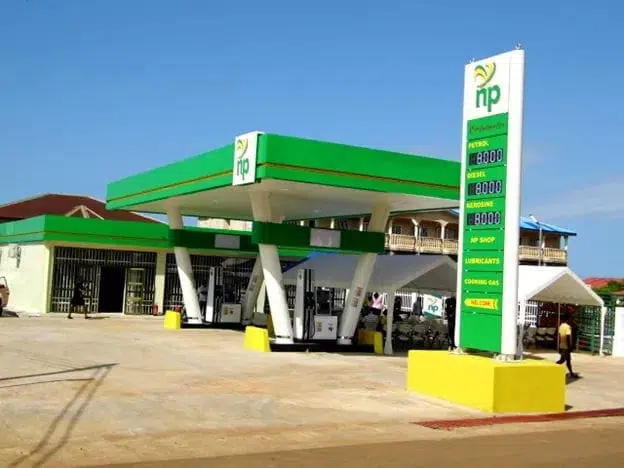
One of the most successful business entities currently operating within the country is indisputably the National Petroleum – Sierra Leone Limited (NP-SL Ltd) which has been rated as excellently doing very well in terms of importation and marketing of high grade petroleum products. Without any iota of exaggeration, the immense contributions that the company is making towards the socio-economic transformation of personal lives as well to the overall development of the country cannot in anyway be overemphasized. The company has made it possible for many who were hitherto jobless to now be gainfully employed having various sources, according to their job descriptions, of deriving income which are utilized to take care of personal responsibilities and welfare.
What is so outstanding about the company is the fact that it places premium on giving preference to Sierra Leoneans in terms of employment, a posture that is in sync with the country’s Local Content Policy. It is on record that the 100% indigenous owned company employs almost 100% Sierra Leoneans as employees.
It is important to note that under the current Local Content Act, industrial, manufacturing, mining, petroleum, services (legal, financial and insurance), agriculture and agro-business, transportation (road, maritime and aviation), hotel and tourism, public works/construction, energy and health have been identified as key areas covered by the Act to enhance sustainable socio-economic growth. Investors are supposed to be employing Sierra Leoneans in managerial and lower level positions as required by the Act thereby increasing job opportunities in the country.
NP-SL, by giving preference to employing Sierra Leoneans, is a clear indication of a company that is utilizing local talents thus making it possible for indigenes to acquire useful knowledge and skills.
The National Petroleum Company is of course one of the largest taxpayers to the Government of Sierra Leone and those taxes paid are beefing up the public revenue base from which various development programmes are funded. Through its corporate social responsibility, the company over the years has done a lot of good things nationally thereby complementing the development interventions of the Government. It was in fulfilment of such that NP-SL Ltd decided, late last year, to avail the National Fire Force (NFF), Kissy Branch, with a state of art water facility, costing millions of Leones from which water could be sourced to carry out its fire extinguishing activities within Greater Freetown. As a matter of fact it was the second time that the company has provided such a significant facility for the NFF which by all estimation is very much important for such a vital institution.
It is on record that other significant development assistances had been provided by the company and if they are to be mentioned here then there will be little space here to catalogue all of them but the bottom line is that the company is really on top of situation when it comes to rolling out its corporate social responsibility which it is doing impressively.
One notable thing for which the company has been identified is its effectiveness in maximizing customer care for which it has proudly bagged the accolade, 1st For Customer Care. The shareholders of the company as well as Management at all times deem their numerous customers as very important because without them there will be no NP-SL Ltd. In line with this realization, the company imports high grade petroleum products which can best give its numerous esteemed customers utmost satisfaction.
Equally too, all transactions are done transparently devoid of any form of underhand games very evident in the use of modern calibrated pumping machines at its Filling Stations which always give customers the satisfaction that indeed they are deriving value for money. These pumping machines display the quantity of fuel pumped as well as the prices, making transactions very much transparent.
To make transactions also simpler, the company went ahead to introduce what is now becoming vogue, the use of NP Smart Card. With this device a particular customer could purchase fuel, either petrol or diesel, without using physical cash. The use of the card is very advantageous for big companies, such as those that are involved in the manufacturing industry as it would be very difficult for drivers to cheat as it exhibits exactly what has been deducted and what is left. From what this medium learnt, more and more people are now using NP Smart Card.
NP Gas is a device that is gaining currency and a household name in the country. It is manufactured in different cylinder sizes, said to be environmental friendly and easy to refill. This cooking device is very easy to manage and could be accessed at all the company’s Filling Stations and from authorized dealers. Feedback from those who have long since be using NP Gas stated that indeed it is worth acquiring it for domestic use.
It can be safely concluded that NP-SL Ltd is indeed tremendously and very meaningfully contributing towards individual and overall national development.
On the 24th February 2020 the Public Financial Management (PFM) consortium led by Christian Aid Sierra Leone and four partners including the lead, Budget Advocacy Network, Restless Development and the Centre for Accountability and the Rule of Law (CARL) launched a tax perception survey report at the British Council.
All the organizations and civil society bodies are working towards strengthening the aspects of public accountability, transparency and participation of the citizenry in all matters dealing with Public Financial Management in Sierra Leone. With support from UK Aid the consortium is currently implementing a Project titled: “Strengthening Public Financial Management, Anti-Corruption and Accountability Institutions in Sierra Leone”.
Naturally, there is always the desire to know how the Government is making use of taxpayers’ monies and what impact(s) the taxes have made in the overall national development of Sierra Leone. A good part of the taxes is derived from businesses; salaries of civil servants; workers; entertainments; entrepreneurs; petty traders; investment companies and the likes. Against this backdrop it has been established that it is but vital to understand taxpayers’ wider views of Government and how such relates to their attitudes and motivation towards paying taxes.
It has become apparent that Government’s main domestic revenue source is the various tax levies. It is not a secret that the Government is sourcing revenue from the National Revenue Authority (NRA) and other revenue generating institutions which is allocated to Ministries, Departments and Agencies (MDAs) for the running of the business of Government to ensure national development.
The NRA has been hitting various targets –the current is in trillions. Government’s expenditure keeps improving as the bar in setting the revenue generating targets is kept high. Now to what extent is the revenue generated from taxes benefit the general masses? The TPS report state that 34% of the 2,755 tax payers interviewed in the perception survey think that the Government is using tax revenues in the right and correct way. 25% said corruption in Government circles demotivates them to paying taxes and to under-declare their tax income.
On the scope to strengthen social contract on tax and provision of services, 45% of businesses said they pay tax because it contributes to the provision of public services such as the Free Quality Education and roads. 79% said if they had seen more services being delivered in their area by the local council, they would be willing to pay more taxes.
Almost all tax payers targeted in the survey said the taxes are too high and authorities in charge of state resources are mismanaging the country’s revenue. With regards businesses which said they didn’t pay tax, 37% of businesses said they didn’t pay tax (1007 in the survey), and of the 1007, 72.9% said it was because the rates were too high and blamed the multiple tax rates applied to their businesses.
The current administration has made revenue mobilization a key Government priority and has set to achieve a domestic revenue-to-GDP ratio target of 20 % by 2023. Current revenue to GDP ratios is well below this target, although recent reforms are starting to take effect. Domestic revenue is the main source of Government resources needed to provide essential public services and reduce poverty as outlined in the Medium-Term National Development Plan (MTNDP). Current domestic resources fall short of the levels required to meet the Government’s development aspirations.
The survey targeted a total of 2,755 businesses across the 16 administrative districts of the country; and achieved a response rate of 98.4 %. It collected data from businesses on their perceptions, knowledge, attitudes and practice in relation to taxes; the tax system; services; accountability in the use of taxes by the Government; tax administration reforms; and the conduct of the staff of the NRA and local council when carrying out tax administration processes. The survey covered a range of business types excluding the UN Agencies, Non-Governmental Organizations (NGOs), Community Based organizations or CBOs (except for those that are directly engaged in the production and distribution of goods and services in their localities), and MDAs.
When the Global Fund declared US$14billion in early October 2019 to combat AIDS, Tuberculosis and Malaria the world celebrated.
With this incredible fundraising effort, there emerge the opportunity to kick-start a renewed effort to rid the world of three diseases that have killed millions of people and ravaged communities on every continent. Malaria was responsible for 228 million cases and 405,000 deaths in 2018 alone, with a child dying from the disease every two minutes. And whilst we are right to celebrate the outcome of the Global Fund Replenishment, the fight does not end there – more must be done.
In 2016, for the first time in a decade, malaria cases worldwide were on the rise. Many people in malaria-affected communities still lacked access to the means to prevent and treat malaria, and in some countries, malaria had slipped down the political agenda. In response to this situation, the African Union Commission and the RBM Partnership to End Malaria are rolling out a continent-wide Zero Malaria Starts with Me campaign, to reignite a grassroots movement and inspire everyone to play their part in the fight against malaria. Originally launched by the Ministry of Health of Senegal in 2014, with the support of Speak Up Africa and PATH, the expansion of this movement across the continent shows that malaria elimination is becoming a national, regional and continental priority.
Since its endorsement by African Union leaders in July 2018, the Zero Malaria campaign has gathered momentum, with 12 nations now having launched their national campaigns and others soon to follow. On World Malaria Day in April 2019, Sierra Leone joined the ranks and officially launched its own Zero Malaria Starts with Me campaign, known as “Malaria E Don Wan Dae Na Mi Han” in Krio. I look forward to seeing communities across our nation reap the benefits that this movement is bringing. My own city, Freetown, is home to more than 1 million people and we are certainly ready to step up the fight against this deadly disease.
Why? Because in my country, malaria is one of the most pressing public health crises, with the entire population at risk of the disease. Around 1.7 million malaria cases and almost 2000 deaths were confirmed in 2018, affecting a high percentage of the 7.5 million inhabitants. While the disease burden is higher in rural areas, cities can and must get involved in the malaria fight. Ultimately, Zero Malaria starts with each one of us – all citizens have a personal responsibility to protect their families and communities from this preventable disease.
In Sierra Leone, the campaign will look to secure political commitment, attract private sector funding and engage communities in the fight against this disease. The National Malaria Control Programme will also raise awareness at the community level through a multi-layered media engagement strategy and the involvement of key influencers within chiefdoms and local councils. This will also serve to amplify the impact and community buy-in for the upcoming mass mosquito net distribution campaign at the end of May 2020.
In Freetown, citizens and local authorities are already working under the banner of the Transform Freetown Agenda to create a healthy urban environment, including community engagement campaigns such as the Cleanest Zone Competition to improve sanitation – which also helps to reduce the burden of mosquito-borne diseases like malaria.
As Mayors, we have a key role to play in the fight against malaria. Malaria prevention and vector-control measures should be inherently linked to urban development strategies, including new housing and infrastructure projects. By investing in well-designed infrastructure and housing, improving access to sanitation and drinking water services, and promoting sustainable environmental management, we will reduce the malaria breeding sites and prevent thousands of cases.
On World Malaria Day 2019, I was inspired to see Francophone Mayors come together to sign the “Zero Malaria Starts with Me” declaration, committing to integrate malaria in urban development strategies in support of global efforts towards a malaria-free world. I urge other Mayors across Africa to tackle malaria head on through urban development strategies and encourage all individuals and communities to join the growing Zero Malaria Starts with Me movement.
Those who are at risk from malaria today are real people, with real lives, real families, in real communities across the world. We must do more to ensure that these people are at the top of Governments’ priorities, and that policies are made to strengthen health and education systems and ensure that citizens have access to the services necessary to be protected from the deadliest creature on earth – the mosquito.
Eleven (11) inmates at the Makeni Correctional Centre, on Saturday 22nd February, 2019 for the first time in the history of offender management graduated from the University of Makeni.
They graduated with a twin certificate in Community Development Studies & Entrepreneurship. The modules offered included: Information Technology, Agriculture, and Psychosocial Counselling. The course, which started in July 2019, lasted for six months.
“When the course started, sixteen inmates were enrolled, but some could not pass the final exams, as is more often than not the case in every academic journey,” according to Superintendent Salieu S. Turay- Officer- in- Charge of the Makeni Correctional Centre.
He said UniMak did it as corporate social philanthropy, adding Unimak provided both notes and text books for the inmates.
While addressing the congregation, Professor Joseph A. Turay, Vice Chancellor of the UniMak said there were 384 graduands that day.
“The Community Development Studies Department was the one which initiated the UniMak-SLCS partnership for which both institutions have been placed on the spotlight,” the Vice Chancellor said.
Head of the Community Development Studies Department, Mr. Unisa Patrick Kamara assured that the UniMak-SLCS partnership was not going to end at the said graduation ceremony. In fact, for him, that was a sign of the beginning of a lasting partnership.
“As long as the Makeni Correctional Centre keeps having inmates with at least 3 credits at the West African Senior School Certificate Examination (WASSCE), we will continue to provide the learning atmosphere. We want to help offenders become better people in society upon their reintegration, to contribute to economic development.”
The inmate ,who performed exceptionally well in the exams, expressed his delight over the opportunity that was accorded them by the UniMak. He said he would never return to his offending ways when he shall have been discharged from the Centre and he would put to good use the knowledge he had gained from the UniMak.
At the Bintumani Conference Centre on the 25 February 2020 His Excellency President Julius Maada Bio opened the first-ever Presidential Seminar for all 83 Heads of Commissions, parastatals, agencies and state-owned enterprises.
With the theme: “Consolidating the Foundation for Service Delivery”, the Seminar, among other objectives, seeks to provide the officials with political orientation and to help them accelerate effective service delivery to the last mile from 2020 and beyond, deepen the understanding of a performance management system that enhances organizational output.
Delivering his welcome address, Chief Minister, Professor David John Francis, said that the event was a historic one because it was the first time in modern Sierra Leone that a sitting President would meet with all heads of institutions at one go. He said that the seminar was important because it recognized that Commissions, parastatals, agencies and state-owned enterprises were an important component of state governance.
He also mentioned that all the agencies must clearly understand, remain committed and be inspired by the President’s New Direction Agenda to change and transform Sierra Leone, and more importantly, to accelerate effective service delivery. He noted that since his election, President Bio had made consistent efforts to engage relevant stakeholders as a way of moving the country forward.
In his keynote address, President Bio said that his presence and the seminar itself was a clear manifestation of his recognition of the important role and contribution of commissions, parastatals, agencies and state-owned enterprises to the achievements of his New Direction Agenda to change and transform the lives of ordinary Sierra Leoneans.
He said that he had directed the Chief Minister to convene the Seminar because he wanted to clearly state and outline his political and governance expectations in the New Year in terms of concrete service delivery to the people, and more importantly, to focus on strategic planning and prioritization with clear and realistic targets to achieve results.
“I have declared 2020 as the Year of Accelerated Service Delivery: I want and I expect Delivery of Results and Outcomes from you this Year and I expect to see tangible results by the 2nd and 3rd Quarters of this Year. Simply, no more excuses. We are here to get a clear understanding of my political message to motivate and inspire you to focus on getting tangible results and outcomes that will impact on the lives of the people of Sierra Leone.
“Let me commend you all for all the successes and achievements you have made in the past 22 months in Governance. But this is a New Year and this is not the time to become complacent with our achievements. The people are impatient for results to impact on their daily lives. So as a Government, we must improve on the way we run our institutions,” he said.
President Bio also challenged the various institutional heads to be bold and innovative, adding that he wanted to motivate them to be inspired and to leave a legacy in their institutions which was what the New Direction was all about. He encouraged the various institutional heads to develop the professional habit and culture of efficient political and economic management of the State.