Home Blog Page 400

AMNET Receives Prestigious Award from CRS for Long Standing Partnership

By Amin Kef (Ranger)

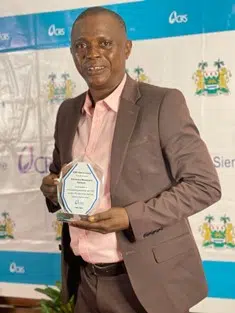
The Advocacy Movement Network (AMNET) was highly recognized and honoured during the 60th-anniversary festivities of the Catholic Relief Service (CRS). A prestigious Award was presented to the Non-Governmental Organization, AMNET, for its longstanding partnership with CRS in achieving 60 years of far-reaching impact in Sierra Leone, an acknowledgment that underscores the deep collaboration and dedication between the two organizations in making a difference in the lives of beneficiaries.

Expressing gratitude on behalf of AMNet Board of Trustees and Staff, Founder and CEO of Advocacy Movement Network (AMNet) in Sierra Leone, Ms. Hawa Sally Samai, thanked the CRS Sierra Leone Country Program for its approach to partnership and its spirit of working together to create significant impact on the lives of  beneficiaries furthering that they are particularly grateful to the Global Fund Project Team for its unwavering support and commitment.

She emphasized her NGO’s dedication to addressing critical issues affecting children and women, notably advocating for the ban on female genital mutilation. Ms. Samai also mentioned that key among the organization’s objectives are empowering young people and fostering positive change to set a commendable example for others.

Under the theme: “60 Years of Far-Reaching Impact in Sierra Leone”, Catholic Relief Service (CRS) celebrated the significant milestone, reflecting on the incredible work achieved over the decades. The anniversary festivities continued with a remarkable collaboration with the U.S. Embassy in Freetown and esteemed partners, including the Ministry of Basic and Senior Secondary Education (MBSSE) and other key figures.

In a journey to the heart of Kabala, Koinadugu District, the celebration embraces warmth, fostering hope, nurturing partnerships, and making a lasting difference.

As the festivities continue, the collective commitment remains unwavering, driven by the belief that every child deserves a chance to thrive and every community deserves the opportunity to flourish. Together, they stand as beacons of possibility, united in their mission to create a brighter future for Sierra Leone.

Budapest-Bamako 2024 2nd Leg Rally Ends in Freetown

By Foday Moriba Conteh

Amidst a triumphant finish line gathering, marking the culmination of the second leg of the Budapest-Bamako-Freetown Challenge 2024 on Monday, March 4th, 2024, at the Gigibonta Car Park on Lumley Beach in Freetown, Jihad N. Eter, the Honorary Consul of Hungary, extolled the triumph of the Challenge in Sierra Leone. Departing Budapest on February 12th, 2024, the epic journey spanning a remarkable 9,000 kilometres from Europe to Africa drew 194 adventurous participants to the shores of Sierra Leone.

After relishing memorable moments at Bureh Beach, participants embarked on a scenic route through Waterloo to Wellington, Up Gun, the East End of Freetown, Siaka Stevens Street in the Central Part of Freetown, Wilkinson Road, and finally, Lumley Roundabout to Gigibonta Car Park at Lumley Beach in the West End of Freetown, where the Finish Line Event unfolded.

Expressing profound gratitude, the Honorary Consul of Hungary to Sierra Leone, Jihad N. Eter, warmly welcomed the participants, underscoring Sierra Leone’s attraction as a premier tourist destination. He commended the country’s role as the perennial finish line for the world’s largest amateur rally, envisioning a decade-long partnership that would enhance tourism and international cooperation.

In addition to celebrating the rally’s success, he reiterated his office’s steadfast commitment to autism awareness and condemnation of discrimination against individuals living with autism. He reaffirmed Hungary’s pledge to grant scholarships to 50 Sierra Leonean students annually, fostering bilateral relations and cooperation in trade and investment.

Acknowledging the collaborative efforts that facilitated the rally’s smooth execution, the Honorary Consul extended heartfelt thanks to the organizers and stakeholders, including the Ministry of Tourism and Cultural Affairs, Ministry of Foreign Affairs and International Cooperation, the Sierra Leone Police, Immigration, Road Safety Authority, Freetown City Council and Customs Authorities.

On her part, Dr. Kadijatu Grace Kamara, Deputy Minister of Tourism and Cultural Affairs, expressed gratitude to the participants and highlighted the significance of their presence in Sierra Leone. She welcomed the second batch of participants to Freetown and praised their efforts in promoting tourism and cultural exchange.

Highlighting Sierra Leone’s tourism potential, she discussed ongoing efforts to showcase the country’s natural beauty and cultural heritage. She mentioned the “Tourism for All Campaign,” aimed at promoting domestic tourism, and international marketing initiatives to attract visitors from diverse regions.

The Deputy Minister thanked stakeholders for their support in hosting the rally’s Finish Line event and encouraged participants to share their experiences in Sierra Leone, promoting the country’s unique attractions beyond its borders.

Andrew Szabo, the Director of Budapest-Bamako Rally, praised Sierra Leone’s peacefulness, friendly people, pristine beaches and natural beauty, affirming its suitability as the ideal choice for the finish line. He commended the Government’s commitment to tourism and expressed gratitude for the hospitality and warm reception received successively.

As the echoes of the Budapest-Bamako-Freetown Challenge reverberate, Sierra Leone stands ready to embrace a future enriched by international camaraderie and cultural exchange, propelled by the spirit of adventure and goodwill.

Vice President Inaugurates 64th Annual Conference of West African College of Surgeons

By Foday Moriba Conteh

The Honourable Vice President of the Republic of Sierra Leone, Dr. Mohamed Juldeh Jalloh has on Monday 4th March, 2024 inaugurated the 64th Annual Conference and Scientific Meeting of the West African College of Surgeons on the theme: “Access to Safe and Affordable Surgical and Anaesthesia Care in West Africa”. The well-attended ceremony was held at the Bintumani Conference Centre on Aberdeen in Freetown.

The conference, which brought together surgeons and related professionals from the sub-region in order to facilitate scientific exchanges and the implementation of strategies and policies for the advancement of Surgery in West Africa commenced with a Pre-Press Conference held on Sunday March 3rd and is expected to run through Thursday, March 7th, 2024, at the Bintumani Conference Centre in Freetown,

In his address, the Vice President extended a warm welcome to all participants on behalf of His Excellency, President Julius Maada Bio, whom he informed cannot attend because of an official trip overseas . Dr. Jalloh emphasized Sierra Leone’s stability and promising future, inviting attendees to experience the country’s renowned hospitality and vibrant culture.

Reflecting on the conference’s theme, “Access to Safe and Affordable Surgical Anaesthesia Care in West Africa,” Dr. Jalloh underscored the critical role of surgery in healthcare and its contribution to alleviating suffering and improving lives. He commended the West African College of Surgeons for its dedication to advancing surgical education and practice across the region.

Highlighting the importance of surgical care in achieving universal health coverage and economic prosperity, the Vice President emphasized the need for increased investment in surgery. He cited studies indicating the economic benefits of expanding surgical services in low and middle-income countries, urging policymakers to prioritize financing for surgical care.

Dr. Jalloh also outlined Sierra Leone’s progress in expanding access to surgical services, particularly in rural and underserved areas. He noted significant increases in surgical volume rates and reductions in maternal mortality, attributing these achievements to various initiatives, including the Free Health Care Initiative for Pregnant Women and investments in training healthcare professionals.

Despite these gains, Dr. Jalloh acknowledged the challenges ahead, particularly the high unmet surgical needs in Sierra Leone, which he deemed unacceptable. He reaffirmed the Government’s commitment to further expanding surgical access and improving the quality of services across both public and private sectors.

He expressed optimism about the future of surgical care in Sierra Leone, emphasizing the importance of regulation, quality assurance, and workforce remuneration in safeguarding the delivery of high-quality surgical services nationwide.

In his address, the Minister of Health, Dr. Austin Demby, highlighted the significance of the conference as a platform for collaboration, knowledge exchange and innovation in healthcare, particularly in surgery and science within the region. He commended the African colleagues, the Local Organizing Committee, the Ministry of Health, and other partners for their dedication in organizing the event.

He said the theme for the conference, “Access to Safe and Affordable Surgical and Anaesthesia Care in West Africa,” aligns with Sierra Leone’s commitment to improving healthcare services and emphasized the country’s strides in this regard, focusing on universal health coverage that ensures every Sierra Leonean has access to quality healthcare.

Despite challenges such as limited resources and skilled healthcare professionals, Sierra Leone remains committed to improving surgical services, according to the Minister who further outlined plans to engage in the implementation of the National Surgical Obstetric Anaesthesia Initiative to enhance access to surgical care nationwide.

“Investing in education, training programs, and research initiatives is crucial to improving surgical care in West Africa,” he said stressing the importance of collaboration across disciplines and borders to strengthen the healthcare system and improve population health.

The Minister ended thanking the West African College of Surgeons for convening the conference and expressed optimism that sharing knowledge and forging partnerships would drive progress in healthcare across the region.

On his part, Professor Ezeome Emmanuel, the President of the West African College of Surgeons extended gratitude to esteemed dignitaries including the President of Sierra Leone, represented by the Honorable Vice President, as well as Government officials, Members of Parliament, and representatives from diplomatic missions. He commended the resilience and progress of Sierra Leone since the country’s last conference, despite past challenges.

Acknowledging the warm hospitality of the Sierra Leonean people, Professor Emmanuel expressed appreciation for the extensive planning efforts and Government support that facilitated the conference’s success. He emphasized the importance of collaboration and partnership in driving advancements in surgical practice and healthcare delivery across West Africa.

Professor Emmanuel highlighted the significance of initiatives such as the pre-conference Surgical Outreach Program, which provided free surgical care to underserved areas of Sierra Leone.

As the conference progresses, participants are expected to engage in discussions and exchanges that are aimed at addressing key healthcare issues and advancing surgical practice across the region. The event is serving as a platform for fostering collaboration and innovation to enhance healthcare delivery and improve patient outcomes in West Africa.

Representatives from members countries of the West African College of Surgeons including Sierra Leone, Liberia, Ghana, Nigeria etc. also gave remarks at the ceremony.

As part of the event, an Honorary Grand Patron was conferred on the President of the Republic of Sierra Leone, His Excellency Julius Maada Bio by Professor Ezeome Emmanuel, the President of the West African College of Surgeons. The conferment was handed over to the Honourable Vice President of the Republic of Sierra Leone, Dr. Mohamed Juldeh Jalloh who represented the President at the ceremony.


ShikaGold College of Cosmetology, Art & Fashion Hosts 7th Graduation Ceremony

By Foday Moriba Conteh

Sierra Leone’s pioneering cosmetology institution, ShikaGold College of Cosmetology, Art & Fashion, celebrated its 7th Graduation Ceremony on Saturday, March 2nd, 2024, under the theme : “Embrace Skills, Let’s Rise Together.” The ceremony, which conferred degrees in Masters in Cosmetology, Advanced Makeup, and Basic Makeup, took place at the Freetown City Council Auditorium on Wallace Johnson Street in Freetown.

Madam Theodora Gharbin Mensah, the Founder of ShikaGold College of Cosmetology, Art & Fashion, expressed pride in the institution’s status as Sierra Leone’s premier accredited Cosmetology College. Reflecting on the journey since its inception, she acknowledged the challenges faced but emphasized their continuous efforts to enhance their offerings and empower more women.

Theodora Mensah highlighted the College’s commitment to empowering vulnerable women, stressing the importance of acquiring skills for personal and collective advancement. From humble beginnings with just one student, the College has grown significantly, now boasting an enrollment of 980 students. This growth, she attributed to their unwavering dedication to their mission of equipping women with essential skills for self-development.

“Today, as you graduate and step into the world beyond these walls, I urge you to embrace the skills you have acquired here and let them propel you towards success. Remember that learning is a lifelong journey, and your dedication to continuous improvement will be the key to your advancement,” she urged students.

The founder added that as they rise to new heights, they should remember to uplift those around them and contribute positively to their communities. “Together, let us strive for excellence and make a difference in the world.”

She concluded by congratulating each and every one of them, wishing them a brighter future filled with endless opportunities.

Delivering her keynote address, Dr. Kadijatu Grace Kamara, Deputy Minister of Tourism and Cultural Affairs, extended heartfelt congratulations to all the graduates who have worked tirelessly to reach significant milestones in their academic and professional journey.

She said that the theme of the ceremony, “Embrace skills, Let’s Rise Together,” resonates deeply with the ethos of empowerment and growth that the esteemed institution embodies, adding that she is acutely aware of the importance of skills development in fostering individual advancement and contributing to the socio-economic development of the nation.

“I urge you all to embrace the skills you have gained at ShikaGold College, and by embracing your skills you are not only enhancing your own prospects but also contributing to the collective prosperity of our society. Whether in the field of cosmetology, art or fashion, your talents have the power to uplift and inspire others,” the Deputy Minister maintained.

She encouraged them that as they embark on the next chapter of their lives, to must remain steadfast in their  pursuit of excellence further admonishing them to let their passion drive them, their skills empower them and their determination propel them towards certain goals, remembering that success is not merely measured by individual achievements but by the positive impact they can make on the world around them.

She concluded by commending ShikaGold College for its commitment to empowering individuals through education and skills training, stating that their dedication to nurturing talent and fostering creativity is truly commendable as she applauds their efforts in shaping the future leaders of the nation.

“Finally, to the graduates, I offer my heartfelt congratulations once again. May you continue to embrace skills, rise to new heights, and make meaningful contributions to society. The journey ahead may be challenging, but I have no doubt that you possess the resilience and determination to overcome any obstacle,” he maintained.

One of the graduates, Mabinty Dumbuya, expressed her heartfelt appreciation to ShikaGold College of Cosmetology, Art & Fashion for the invaluable knowledge imparted to her throughout the course of her studies.

She emphasized that her passion for cosmetology has been a driving force for her, and enrolling at ShikaGold has truly made her dreams come true. With gratitude, she acknowledged the dedication and expertise of the College and staff who have guided her journey.

Looking ahead, Mabinty said she is determined to utilize the skills and knowledge acquired during her time at ShikaGold to empower other women in her community. She sees this graduation as not only a personal achievement but also as an opportunity to uplift and inspire others to pursue their own aspirations in the field of cosmetology.

The ceremony concluded with a sense of achievement and optimism for the future, as ShikaGold College of Cosmetology, Art & Fashion continues its mission to uplift and empower women through education and skills training.

NPSA Launches 2023 State of Education Report

By Millicent Senava Mannah

The National Partnership for Social Accountability (NPSA) Consortium, with funds from the EU Delegation, has launched the 2023 State of Education in Sierra Leone Report, on Friday 1st March, 2024. This report contains Citizens’ feedback on the state of education at the community and national levels as well as identifying key factors influencing education outcomes in primary, junior, and senior secondary schools throughout Sierra Leone. The event was held at the Ministry of Basic Education Conference Room on New England Ville in Freetown.

It must be noted that the 2023 State of Education report was produced by the National Partnership for Social Accountability (NPSA), a network of 45 local civil society organizations, as an embodiment of citizens’ feedback on the investments by the Government of Sierra Leone (GoSL), households and development partners are making to improve basic and senior secondary school education in Sierra Leone.

According to the Report, a mixed-method approach was employed by the NPSA, combining quantitative and qualitative research methods. The research included document reviews, in-depth interviews with key stakeholders, and surveys conducted among households and school staff. Random sampling identified 2,400 households and 400 schools across the country, providing robust data.

The Minister of Basic Education, Conrad Sacky, expressed delight in presenting the State of Education (SOE) 2023 Report saying it is a reflection of the work they are doing as a Ministry in the country. He assured all that they will ensure that the areas that need improvement as mentioned in the report will be addressed.

He commended the Consortium for putting time and efforts in conducting the research that helped them to put the report together.

“As a Government we believe that amplifying citizens’ voices on these issues and supporting the capacity of Government to respond effectively to their priorities will promote greater accountability and responsiveness in Education services,” the Minister stated.

Andrew Lavalie, the Executive Director of the Institute of Governance Reform (IGR), an organization that is also part of the aforementioned consortium, intimated that the 2023 Report provides an evaluation of the strides Sierra Leone is making in key areas and as well  identifies challenges and opportunities for improvement.

He maintained that it is useful to emphasize that some of the areas covered such as WASH and school infrastructure are largely donor funded activities implemented by NGOs and that this assessment therefore presents a holistic picture of the work of MBSSE and its partner NGOs.

Andrew Lavalie disclosed that through a random sampling conducted by NPSA 2,400 households and 400 schools across the country provided robust data reflecting citizens’ constructive feedback on a range of educational issues  including: financial management in schools, school infrastructure, WASH, satisfaction with teaching services, availability of school supplies, and citizens’ views on the recently introduced Radical Inclusion Policy.  He maintained that according to the findings of the report, nationally 75% of parents are aware of School Management Committees (SMC) or Board of Governors in their communities. The IGR Boss furthered that, 93% of interviewed Head Teachers and SMC members reported delay in subsidy transfers.

According to him, the findings show that there is a unanimous demand for training in school improvement planning and cash management, emphasizing its critical importance.

The European Union Ambassador Sierra Leone, Manuel Muller commended the Consortium for their efforts geared towards boosting human capital development through an Education Sector Plan and the new Radical Inclusion Policy.

He continued that education is crucial for the future of any country saying such is why the EU is supporting the efforts of partner countries including Sierra Leone in the sector.

“Investing in education and skills development, in particular for children, women and youth is amongst the five priorities of the European Union’s strategy for Africa. Education contributes to connectivity and helps build up the global Gateway,” he stated highlighting the important inputs that Civil Society Organizations can make.

Climaxing the event was the official launch of the Report by the Minister of Basic Education which was followed by a Question & Answer session.

Sierra Leone is on a Moving Train to Industrialization – Chief MinisterAsserts

The Chief Minister, Dr. David Moinina Sengeh, has asserted that the country is on a moving train to industrialization as strides are now taking place to ensure that the country transforms its raw materials into finished goods.

He pointed out during the Sierra Leone Round Table Investment Forum in China that they visited a steel factory and engaged the leadership on how to expand in Sierra Leone. According to him, for nearly hundred there has been concentration on mining in Sierra Leone but stated how today, things are finally falling in place to kick start the country’s industrialization.

The Chief Minister intimated that President Bio is really concerned as to why the country should keep shipping bulk iron ore products when with having bauxite too Sierra Leone can locally add value to those resources.

He said a transformation of that nature is linked to the President’s investment in education. “Development takes time but our investment in human capital development was fundamental for this next step. We need all our children to get the right basic education and to transition to university, get the right skills and then contribute to this industrialization,” he posited.

The Chief Minister said Sierra Leone can’t have 40% literacy and promote industrialization hence the importance of the Free Quality School Education Program.

“We can’t sustain industrialization if we continue to import our staple foods hence the need for Feed Salone Program. Governance isn’t all about politics and one thing I remain positive about is that we are on the right governance trajectory under the right leadership. This visit to China and the engagements by our leaders has opened up the space for good investments. We are engaging as equal partners,” he expressed optimism.

President Bio, in his address, expressed gratitude for the warm welcome and laid the foundation for Sierra Leone’s presence in the global economic landscape. He reiterated the purpose of his visit: to introduce Sierra Leone to the world in China, inviting investment back into the country. Acknowledging the hospitality ingrained in Sierra Leonean culture, he highlighted the nation’s status as the most peaceful in the region and the 47th most peaceful nation globally. Furthermore, the President emphasized Sierra Leone’s abundant resources, citing the mutual benefits derived from trade, especially with longstanding partners like China.

Crucially, President Bio underscored the enduring cordial business relationship between Sierra Leone and China, spanning over 50 years. He attributed this lasting partnership to Sierra Leone’s welcoming reception and investor-friendly Duty Tax free laws, setting the stage for continued collaboration and economic growth. The Round Table Investment Forum became a nexus for forging long-lasting business opportunities and fostering a stronger bond between Sierra Leone and China.

It held a strategic focus, serving as a dynamic platform to market Sierra Leone to select investors. Beyond presentations, it provided a valuable opportunity for networking, enabling potential investors and interested parties to explore business prospects in Sierra Leone. The distinguished attendees included His Excellency and the First Lady, the Minister of Trade, Finance Minister, Minister of Higher Education, Chief Minister, representatives from Sierra Leone’s private sector, general investors, and the former Ambassador of China to Sierra Leone.

ICC Prosecutor, Karim Khan, Affirms Sierra Leone’s Commitment to International Justice

By Amin Kef (Ranger)

In a notable gathering attended by Government officials and dignitaries in Sierra Leone, the International Criminal Court (ICC) Prosecutor, Karim Khan, emphasized the significance of partnership and unwavering commitment to international justice. The event served as a platform to underscore collaborative efforts between Sierra Leone, its Government, and the United Nations in upholding the principles of the Rome Statute.

Acknowledging Sierra Leone’s steadfast dedication to the rules-based system of public international law and its adherence to the Rome Statute, Khan lauded the country’s pivotal role in promoting justice and accountability on a global scale. He particularly highlighted Sierra Leone’s efforts in combating genocide, crimes against humanity, war crimes, and aggression.

During his address, Khan also commended the notable contributions of Sierra Leone’s Permanent Representative to the United Nations, Michael Kanu, emphasizing his advocacy for justice and representation of Sierra Leone’s interests internationally. He said Michael Kanu’s recent election as Vice President of the Assembly of States Parties further underscored Sierra Leone’s commitment to ending impunity and ensuring accountability for international crimes.

Emphasizing the imperative need for justice and fair trials, Khan stressed that accountability is crucial for moving away from widespread suffering and misery witnessed in various parts of the world. He expressed optimism about strengthening the partnership between the ICC and Sierra Leone, referencing a productive meeting held with the President of Sierra Leone earlier.

Karim Khan’s visit not only reaffirmed Sierra Leone’s commitment to international justice but also highlighted the importance of collaborative efforts in addressing global challenges. By stressing the necessity for partnership and accountability, his address emphasized the shared goal of creating a more just and equitable world for all.

It could be recalled that a significant gathering at the Bintumani Hotel initiated by the Residual Special Court of Sierra Leone reflected on the enduring legacy of the Special Court for Sierra Leone, emphasizing its monumental role in shaping international law and accountability. Distinguished figures from the global legal and diplomatic spheres attended, showcasing the court’s profound impact on the landscape of international justice, peace, and security.

Founded in 2002, the Special Court for Sierra Leone set a historic precedent by prosecuting those most responsible for severe violations of international humanitarian law during the nation’s civil war. Notably, it achieved global recognition as the first to convict a former President, highlighting its pioneering approach to international justice.

The conference emphasized the court’s broader impacts beyond legal realms, including its role in promoting peace and stability in Sierra Leone. Stakeholders were encouraged to maintain collaborative efforts in advocating for the rule of law and justice, drawing from the court’s experiences to address current and future challenges in international law.

The regional conference celebrated the Special Court for Sierra Leone’s historic achievements while also sparking a forward-looking dialogue on how its innovative approaches to justice can inspire and guide future efforts in the global pursuit of accountability in conflicts.

It also reaffirmed the court’s role as a beacon of hope and a model for international justice, emphasizing the importance of learning from its successes and challenges to reinforce the foundations of peace and security worldwide.

Lack of Legal Protections Heightens Women’s Risk of Online Stalking and Harassment

According to “Equality Now’, the absence of comprehensive national and international laws targeting doxing poses a significant threat to the safety and well-being of women worldwide, bases on a recent research. This lack of legal clarity allows malicious actors to freely share individuals’ private information online, making it challenging to combat and penalize such behavior effectively.

A new policy brief titled: “Doxing, Digital Abuse, and the Law,” jointly released by the Alliance for Universal Digital Rights (AUDRi) and Equality Now, sheds light on the deficiencies in legal frameworks across various jurisdictions. The research, conducted with pro-bono assistance from the international law firm Hogan Lovells International LLP, analyzed over 100 different laws across four continents, revealing glaring gaps in protections against doxing.

Despite the alarming threats posed by doxing, the study found that existing legal frameworks offer minimal protection or recourse to victims. Moreover, there are no specific laws addressing doxing in many jurisdictions, leaving victims vulnerable to ongoing abuse and intimidation.

Doxing, the malicious sharing of individuals’ private, personally identifiable information online without their consent, can have severe consequences, ranging from cyberbullying and stalking to identity fraud and physical violence. Women, particularly those in marginalized communities, are disproportionately targeted, with doxing often used as a tool to silence women in public roles such as politics, journalism, and activism.

Emma Gibson, Global Coordinator for AUDRi, emphasized the gendered nature of doxing, stating, “With little or no legal recourse, those targeted, or who, with good reason, fear being targeted by doxing and other forms of online abuse, have very little option but to moderate their behavior to avoid potential threats.” Gibson warned that this chilling effect further marginalizes women’s voices in the digital space.

Amanda Manyame, Equality Now’s Digital Law & Rights Advisor, called on governments to urgently introduce and implement laws that effectively address digital abuses like doxing. Manyame stressed that governments have a duty to protect individuals from online harm, particularly women and girls who are disproportionately affected by such abuses.

In addition to legal reforms, the policy brief calls for enhanced cooperation between governments and tech platforms to hold perpetrators accountable and provide swift remedies to victims. Cross-border challenges associated with doxing necessitate multilateral international cooperation to ensure victims can access justice regardless of their location.

The Alliance for Universal Digital Rights (AUDRi) and Equality Now urge stakeholders to prioritize the development of robust legal protections and support systems to safeguard women’s rights to privacy, safety, and participation in the digital age.

Contact Information:
For media inquiries, please contact Lisa Van Wyk, Communications Coordinator for AUDRi, at lvanwyk@equalitynow.org or via WhatsApp at +27732859016.

About the Organizations:
The Alliance for Universal Digital Rights (AUDRi) advocates for a digital future where everyone can enjoy equal rights to safety, freedom, and dignity. Co-founded by Equality Now and Women Leading in AI, AUDRi focuses on protecting women, girls, and other marginalized groups from discrimination and gender-based stereotypes in the digital world.

Equality Now is an international non-governmental organization dedicated to promoting and protecting the rights of women and girls globally. Through grassroots activism and legal advocacy, Equality Now works to end legal inequality, sex trafficking, online sexual exploitation, and other harmful practices.

For more information about AUDRi, visit www.audri.org and follow on Twitter @AUDRights and LinkedIn at AUDRi. For more information about Equality Now, visit www.equalitynow.org and follow on Twitter @equalitynow and LinkedIn at equality-now.

Uncovering the Harrowing Realities of Human Trafficking in Sierra Leone

By Farid Kefel

In the course of my investigation for The Calabash Newspaper, I uncovered a distressing case of human trafficking affecting Sierra Leonean women. The modus operandi involved a travel agency recruiting females for work in the Middle East while clandestinely engaging in trafficking. Once approved, victims like Fatu had their passports seized, cutting off communication with their families.

Fatu, a pseudonym used for her safety, reached out to me, detailing the brutal abuse she endured in the Middle East. She suffered domestic violence, torture, beatings, molestation, and sexual harassment at the hands of her employers. Attempts to contact the agency proved futile, leaving Fatu in a dire situation. This case sheds light on deep societal issues. Many trafficked women face similar horrors, including rape and murder, with their fates unknown to their families. Economic hardship and deceptive practices by false employers exploit the vulnerability of Sierra Leonean women and children, exacerbating the grave consequences of human trafficking.

Human trafficking has reached alarming levels in Sierra Leone and its neighboring countries, posing a significant threat to women and children. The deceptive practices have turned Sierra Leone into a hub for trafficking, demanding immediate action and comprehensive policies to combat this menace.

Climate change and economic hardships have exacerbated human trafficking in Sierra Leone, particularly affecting vulnerable communities. The interconnected dynamics between environmental and economic factors contribute to the worsening situation. Climate change-induced events, such as flooding and intense storms, lead to displacement and economic instability, rendering communities more susceptible to trafficking. The present Economic hardships, intensified by factors like the COVID-19 pandemic, increase susceptibility to trafficking, with traffickers exploiting individuals, especially children, who are economically vulnerable.

The combination of climate-induced poverty and economic challenges creates an environment where traffickers exploit desperation for financial stability, making individuals more susceptible to deceptive recruitment. It is crucial to address both the environmental and economic dimensions to combat human trafficking in Sierra Leone effectively.

With youth unemployment at nearly 60 percent and the majority of the population surviving on less than $3 a day, there are thousands of people for traffickers to prey on, who long for better opportunities overseas. They often target women, touting well-paid jobs in the Middle East. The agents offer jobs as nannies, hairdressers, maids, or shop assistants in Lebanon, Oman, Dubai, Kuwait, and Turkey. But when their clients arrive in the destination country, their passports are often seized and they are forced into unpaid labor in people’s houses. Many young women report being sexually abused. Citing a report by Aljazeera, Human trafficking is classed as using force, coercion, or fraud to send someone to a new destination, to profit from them. While official data is scant, experts say the problem is rife in Sierra Leone.

Those monitoring the problem say it has worsened in the last three years. “There has been an increase,” says Christos Christodoulides, head of the UN Migration Agency in Sierra Leone. “The vulnerability has increased too.”

A State.gov – 2022 Trafficking in Persons Report for Sierra Leone states that The Government of Sierra Leone does not fully meet the minimum standards for the elimination of trafficking but is making significant efforts to do so. The government demonstrated overall increasing efforts compared with the previous reporting period; therefore Sierra Leone remained in Tier 2. These efforts included signing a memorandum of understanding (MOU) with Guinea on anti-trafficking coordination, convicting more traffickers, launching a nationwide trafficking hotline, and ratifying the ECOWAS Convention on Mutual Assistance in Criminal Matters, intended to facilitate cross-border law enforcement anti-trafficking efforts.

However, the Government did not meet the minimum standards in several key areas. The government investigated fewer cases; shelter and services, especially for male victims, remained inadequate and limited to Freetown; and the government did not report providing any funding to support NGOs providing the majority of victim shelter and services. The government made mixed anti-trafficking law enforcement efforts. The 2005 anti-trafficking law criminalized sex trafficking and labor trafficking and prescribed penalties of up to 10 years imprisonment, a fine, or both. These penalties were sufficiently stringent; however, by allowing for a fine instead of imprisonment, the penalties for sex trafficking were not commensurate with the penalties for other grave crimes, such as rape. The Sexual Offences Act criminalized sex trafficking under its “forced prostitution” and “child prostitution” provisions and prescribed penalties of up to 15 years imprisonment; these penalties were sufficiently stringent and commensurate with penalties for other grave crimes, such as rape.

Implementing policies that mitigate climate change impacts, enhance economic resilience, and strengthen legal measures against trafficking can collectively contribute to alleviating this critical issue. What we need the governments to implement are:

  1. Policy Strengthening: Enhance and enforce anti-trafficking legislation, ensuring stringent penalties for offenders and facilitating expedited legal processes.
    2. Awareness Campaigns:Implement widespread awareness campaigns to educate communities about the tactics used by traffickers, empowering potential victims to recognize and resist these schemes.
    3. Collaboration with NGOs: Strengthen collaboration with non-governmental organizations (NGOs) working on counter-trafficking initiatives, leveraging their expertise and resources to address the issue effectively.
    4. Victim Support Programs: Establish comprehensive support programs for victims, including counseling, rehabilitation, and reintegration into society, to address the physical and psychological trauma inflicted by trafficking.
  2. International Cooperation: Foster collaboration with international bodies and neighboring countries to create a unified front against cross-border trafficking networks.

By implementing these measures, Sierra Leone can take significant strides in eradicating human trafficking and safeguarding the well-being of its women and children.

It is crucial to address both the environmental and economic dimensions to combat human trafficking in Sierra Leone effectively. Implementing policies that mitigate climate change impacts, enhance economic resilience, and strengthen legal measures against trafficking can collectively contribute to alleviating this critical issue.

500+ and Counting; Calabash Fishing Captain Honored with an Award for Excellence

Captain Ed Elliot from Lucky Strike Charters

In a move to recognize excellence in the fishing community, FishingBooker, the largest platform connecting anglers and fishing guides, proudly celebrates the accomplishments of captains who recently racked up over 500 positive reviews. With only 19 captains in the world earning this recognition, it’s truly an exceptional achievement.

Among these captains is Calabash’s very own Captain Ed Elliot from Lucky Strike Charters.

His dedication and diligence earned him more than 500 positive reviews, a silver plaque, and admiration from anglers looking to have unforgettable fishing adventures.

Lucky Strike Charters has over 20 years of experience chartering local waters, and gladly welcomes anglers of all skill levels, whether you’re holding a rod for the first time or are experienced and well-versed. There’s no minimum age policy for children, all sizes of life vests are provided. The crew provides catch cleaning and filleting services free of charge.

Standing Out Among 7,675 guides: 0.25% Captains Recognized for Excellence

Out of 7,675 captains partnering with FishingBooker, only 19, or a mere 0.25%, achieved the acknowledgment. Their commitment to providing unparalleled fishing experiences throughout the seasons is evident and should be celebrated. Among them are captains from Cabo San Lucas, Calabash, Destin, Englewood, Fort Lauderdale, Galveston, Hilton Head Island, Key West, Little River, North Myrtle Beach, Orange Beach, Sarasota, Clearwater, St. Pete Beach, and St. Petersburg.

Vukan Simic, CEO of FishingBooker, says:

“FishingBooker was founded 10 years ago, and for this occasion, we wanted to honor our most committed captains and make it easier for anglers to identify the very best guides on our platform. Now, we have the pleasure of recognizing a very special group of guides who have earned the award. We couldn’t be more excited to highlight their hard work and dedication”.

About FishingBooker:

With an offer of more than 42,000 fishing trips spanning over 2,000 cities across 110 countries, FishingBooker has gained the trust of countless fishing enthusiasts. Our platform has enabled hundreds of thousands of anglers to embark on fishing trips and create long-lasting memories with friends and family across the US – and beyond. By connecting anglers with skilled captains and the best fishing locations, we are committed to making fishing accessible and enjoyable for everyone.