Home Blog Page 631

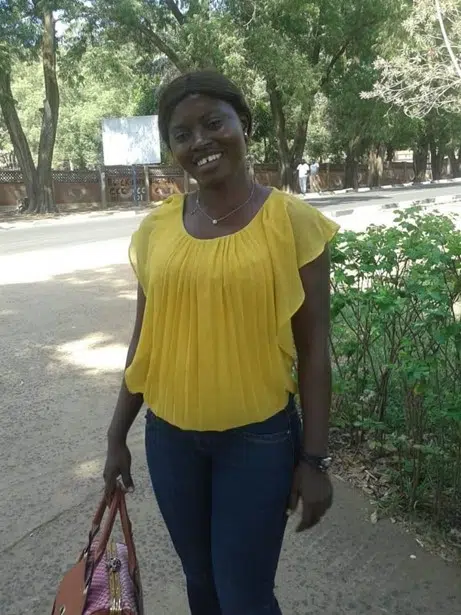
As parents battle over serious political intimidations, Margret Mani vowed never to return home

Margret Mani.jpg

By Karifa Kello Thoronka

Twenty-five years old Margret Mani a young Sierra Leonean has vowed never to return to Sierra Leone to avoid death from political intimidations, Margret revealed this during phone conversations with one of the family friend who informed her that police are searching for her.

However, according to a reliable source a group of police and military officers attacked Margret with her parents in June 2018, in order to forcefully kick them out of the house. They arrested four family members including Margret for putting up resistance and took them to the Lumley Police station for questioning, after spending fourteen (14) nights at the station they was released with the condition to report every morning at the station till further notice.  Margret’s Uncle late Brig. Gabriel S.T Mani was implicated being a member of the opposition party APC until his death, During this period she travelled to Lungi thinking that she will be safe from further intimidations.

Whiles narrating the story to the press in tears, one Aminata Mani says that in the early hour of Friday 12 August 2022 full loaded truck of police appeared in Margret father’s house in Lungi harassing the family to produce their father (Kowah Albert Mani). Noting that he was part of the August 10 unrest in the Country as one of the sponsored.

In the last six years Government officers at both the national and local levels deployed an array of tactics to intimidate and obstruct the opposition political party members noting that they are undermining the good work of the running Government.

Some relatives of Margret think that the return of Margret Mani in Sierra Leone is a big risk, she might lost her life or she stays in prison forever.

Orange Money Commissions New Ultra Modern  

Orange Mobile Company,

By Abubakarr Harding

Orange Money officially opened a new office on Hill Station during a well attended ceremony held on the 13th December, 2022  geared towards providing the space  for the operation of all Orange Money transactions in the country.

In her welcome address, Madam Abibatu Baxter, stated that the journey leading to the establishment of Orange Money started long years ago. She added that, their aim is to deepen financial inclusion in Sierra Leone. She thanked all those that have supported the establishment of Orange Money.

The Chief Executive Officer of Orange Money, David Mansaray explained that in 2019, he joined Orange Money after he resigned from the Standard Chartered Bank. He added that, when he joined Orange Mobile Company, he discovered that there was a huge gap in the financial sector in terms of limited access to financial services in the country.

He further stated that he discovered that banks were finding it extremely difficult to establish branches in remote areas because it was not cost effective. Based on this, he stated that, people were not comfortable in putting their money in the banks.

With Orange money, he said that, it is now possible for people to embark on financial transactions without going into the banks. At first he stated that, people were reluctant to do mobile money transactions but employing renewed strategies people are now comfortable in using mobile money.

“We have recruited more agents and staff and also enter into partnership with lots of banks in the country,” said the Chief Executive Officer of Orange Money, adding that, they have also established lots of systems to ensure people receive remittance from overseas at the comfort of their homes.

“Before now, only Orange Money customers can use orange money,” he said, adding that it has changed. He continued by stating that, they are proud that Orange Money is an household name in Sierra Leone, adding that, they are proud of bringing financial inclusion to remote areas of the country.
“The journey has started way back and we will continue to push and achieve our goals,” he said, adding that, they could not achieve it without the support of their staff. He further thanked their Chairman for the support. He also thanked the Central Bank for creating the conducive environment for them to thrive well, adding by underscoring that, there are countries in the world that are not enjoying such support from their Central Banks. He further said that, this has helped in financial inclusion in the country. Also, he thanked their customers for the support.

According to the Chief Executive Officer of Orange Mobile Company, Sékou Amadou Bah technology has helped in enhancing innovative ideas in the mobile money transaction and deepening financial inclusion. He went on to say that it has helped in addressing the issues of access to financial services and breaking the digital divide.

He added that, Orange Money is poised to help in financial inclusion. He said that, Orange Money has helped in the elevation of poverty, stating further that, their customer base has increased to more than one million.

Sékou Amadou Bah went on to say that, Orange has committed to meeting their customers’ needs. He said that, the Orange Money has secured their own building, adding by committing that Orange Money is law-abiding and will continue to abide to the laws governing mobile money. He also extended his appreciation to their staff, partners for contributing in the growth of their business. He also thanked the Central Bank for the support.

Making a statement, the Bank Governor of Sierra Leone, Kaifala Kallon expressed that he is delighted to be part of the auspicious program. He further underscored that Mobile Money has helped in creating financial services to the people of Sierra Leone; especially in remote areas. He said that, they have committed to deepen financial services in Sierra Leone and make mobile money more convenient in the country.

In actualizing this dream, he urged the mobile money service providers not to relent to create more inroads to support the people of Sierra Leone in reaching out to all. He also commended Orange Money for the innovative ideas and called on them to extend their operations to remote areas.
According to the Director General of NatCA, Daniel Kaitibi thanked Orange Money for the support to the telecommunications sector. He underscored that the telecommunications sector is very productive in paying taxes than mining companies. He also assured that, they will continue to deepen their partnership with the Bank of Sierra Leone. He recalled that, before to make a call abroad it was very difficult and someone would walk for a very long distance to make a call.

He added that, today, things have changed as one will sit at home and make calls at his/her own convenience. He described the relationship between the banks and mobile money as very unique and positive in supporting the people of Sierra Leone. He also thanked the mobile companies for the increase of their coverage in the country.

Daniel Kaitibi assured that, he will not sit down and allow companies that are supporting the country to grow to die. He applauded mobile companies for the progress they have made in the 4G services and other areas.

Orange Money is a mobile money system that allows customers to access financial services using their Orange mobile phone numbers. This service gives customers the convenience to withdraw money at any time.


Gento is Far above Fanning Tribal Unrest in Freetown

By Amin Kef-Ranger

It is often said that if you do not want invectives to be thrown against your mother then one should not venture into politics and if one does not want to be called all sorts of odd names or associated with the devil politics must be a no go area. This is more so true in this part of the world where the struggle to attain political power is so intense that people can do things extremely in order to maintain or get the upper hand. One is called a thief when he or she is not, a traitor when one means well for others.

It should be no surprising that there are individuals who will stab you at the back just to appear like they are saints when they are not but rather doing so as a way of weakening their political opponents.

It therefore came as no surprise when it was seen on Social Media a write-up full of deliberate fabrications and spinning against Mohamed Gento Kamara popularly known as Gento ,with the writer of the piece creating a scenario of a major blunder committed by the fine gentleman  during the Annual Thanksgiving Service held by the AU Memorial UBC Church in Kissy on Sunday 11th December, 2022 during which Mohamed Gento Kamara served as the Chief Grand Patron.

The writer is quoted to have written:

“Most of the people that are bringing unrest in this country are people that are coming from my own tribe”, Med Gento Kamara told the congregants at UBC Church in Kissy.

Let it be known that the fine gentleman never said those words or he was misquoted probably out of prejudice, pre-conceived dislikes or the writer was trying to fight another cause but with Gento standing on the way, serving as a bulwark, he thought that might hinder his desire and promote the interests of his paymasters but as stated above this is the kind of dirty politics that is being played in this country by some.

On that Sunday, Gento was so warmly welcomed by residents of Kissy, even though he was not there primarily to address them as a community but went to serve as the Grand Chief Patron during the Annual Thanksgiving Service held by the AU Memorial UBC Church, Kissy.

Because people got wind of the function he was invited to perform, soon a huge crowd has been formed ,some jostling to get a glimpse of the man who has stepped forward to contest  for the Mayoral Seat in the forthcoming Municipal Election slated to take place in 2023.

As he stepped out of his vehicle the crowd went wild, cheering “Gento…Gentoooo….Gentoooo!!!” as he waved on.  Ushered in by the clergy of the Church he took his seat.

When it was time for introduction, the Reverend intimated the congregation that as they celebrate another annual thanksgiving they are blessed to have in their midst the man who wants to become the next Mayor of the Freetown Municipality, Mohamed Gento Kamara.

The Reverend furthered that those who seek shall find underscoring that Gento is seeking the Mayoral Position and if he does so conscientiously then he stands a great chance of succeeding. He admonished him to be God fearing at all times.

In a brief statement, Mohamed Gento Kamara, told the congregation that his main intention of coming into politics is bent on the fact of bridging the gap of Tribalism and unifying Freetonians. He continued that as his first move after conceiving the idea of contesting as Mayor, under the banner of the SLPP, was to invite and bring together all the Tribal Leaders in Freetown and reasoned out with them to see the need to bury tribal sentiments when it comes to politics but rather to do things that will promote unity and development.

According to him he has repeatedly expressed those views in all the engagements he has had from Kuntolor, Kroo Bay etc.

He furthered that as a Muslim, joining one of the aged churches in the East End of Freetown has indicated a key fabric of unification which is religious tolerance adding that he is no stranger in that part of the country as he has been part of it since he was a boy.

Gento warned against tribalism stressing that it is a cankerworm that eats deep into the fabric of national cohesion and development. He said as we are approaching the electioneering year we must resist from pledging political support based on tribal sentiments.

“I am an exemplary figure of not being fanatically tribal in the sense that my father is a Temne, my mother a Limba and being married to a Mandingo-Mende woman,” he told the congregation succinctly evoking a round of applause.

Gento also told them that the unfortunate incident that occurred on August 10 was as a result of the widespread indiscipline that has permeated the city simply because some of the systems are not working or may have been short-circuited.

“Together we can re-channel the minds of our errant youths into productive enterprises instead of seeing them killing themselves with drugs and being used by bad politicians,” he challenged them adding that he is not promising heaven on earth but he will do his best in making Freetown regain its past glory and take its rightful position as a historical place in Black history.

He said some people are saying he has turned his back against the former President Ernest Bai Koroma and the APC Party who awarded him contracts during his administration and made him rich. To them he said he was a businessman who bid for contracts and won because he met all the requirements underscoring that it was not a favour that was done to him because of political loyalty.

“As a businessman you work with any Government that is in power and I did not personally lobby for contracts as some are mistakenly spreading the false claims,” he stated.

Towards the end of the service Gento pledged his financial support towards the construction of a school by the church and an additional sum of fifty million Leones towards the development of the church.

The highpoint of the programme was when the Church endorsed and blessed his aspiration with the Reverend mentioning that God is the giver of all positions. They also promised to always remember him in their prayers.

A political commentator of reputable standing maintained that political competition has always being somehow toxic with some people having the proclivity of stamping on one’s chest just to be seen. He maintained that instead of churning out good reasons why people should support one political aspirant against another they are good at assassinating the characters of well meaning individuals of high repute in society for no justifiable reason other than the Pull Him Down Syndrome.


Biden Encourages African Leaders to Hold Fair Elections 

By Amin Kef

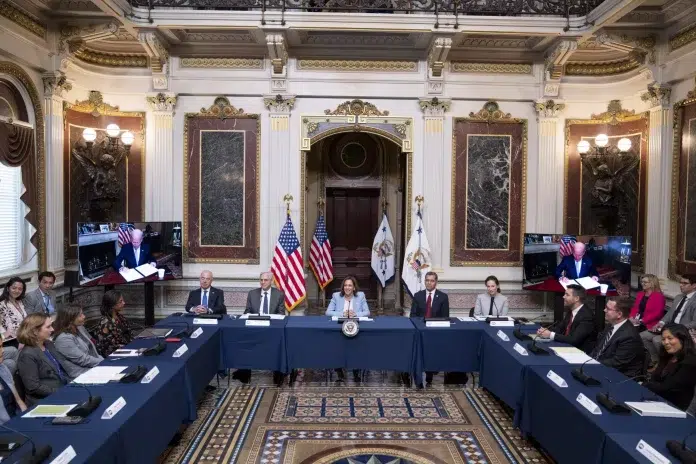
The three day U.S-Africa Leaders Summit, which commenced on the 13th December, 2022 in the United States of America ended yesterday the 15th December, 2022.

It could be recalled that prior to the commencement of the Summit it was announced by the White House, on the 19th November, 2022, that President Joseph R. Biden will be hosting the second U.S. – Africa Leaders’ Summit in 2022, as part of his administration’s commitment to revitalize global partnerships and alliances that will include Africa, based on the principles of mutual respect, shared interest and values.

Cognizance must also be taken of the fact that on the occasion of the 34th Ordinary Session of the African Union Assembly held in Addis Ababa, on February 5, 2021, the renewal of the United States engagement towards Africa was particularly manifested in President Biden’s virtual remarks.

At that material time, the U.S. President underscored the United States “readiness to be Africa’s partner, in solidarity, support, and mutual respect and to re-engage with the Africa Union”.

It is as well significant to note that the Africa Diplomatic Corps (ADC) accredited to the United States has been actively advocating for an effective action and result oriented Summit that considers Africa’s development priorities as enshrined in the AU Agenda 2063 – ‘The Africa We Want’ and other various continental policy framework and strategies which capture the aspirations of the African people for a continent that is integrated, peaceful and prosperous that takes its rightful place in the international arena.

“The summit … is rooted in the recognition that Africa is a key geopolitical player. The continent will shape the future not just of the African people, but also the world,” US National Security Adviser Jake Sullivan stated.

Forty-nine African Heads of State and leaders, including President Julius Maada Bio of Sierra Leone as well as the African Union, were invited to the summit.

The underlying objective of the summit, it must again be stated, was that President Joe Biden sought to rebuild Washington’s relationship with other countries, as well as to re-engage with global organizations like the United Nations, after four years of his predecessor Donald Trump’s “America First” approach to foreign policy.

The US role in Africa receded during that time, and Biden administration officials have stressed the need to strengthen ties with like-minded countries in the region.

Highpoint of the Summit was that working closely with Congress, the US will commit $55bn to Africa over the course of the next three years.

During the course of the summit, President Joe Biden met with leaders of six African nations that will be holding elections in 2023 and urged them to ensure that balloting is free and fair.

He held a private meeting at the White House on Wednesday with leaders from the Democratic Republic of the Congo, Gabon, Liberia, Nigeria, Madagascar, and Sierra Leone to discuss elections and democracy in Africa. The US President was joined by Secretary of State Antony Blinken, National Security Advisor Jake Sullivan, and Samantha Power, the administrator of the US Agency for International Development.

“I want to be clear that having a meeting about elections in 2023 is not about us raising the alarm bell or claiming we’ve got concerns and then solutions,” Sullivan said at a Monday press briefing. “It’s rather to say: There are important elections coming up, we would like to do everything we can to support those elections being free, fair and credible.”

During the summit, Biden said the US is signing a memorandum of understanding with the Secretariat of the African Continental Free Trade Area. The Africa-wide trade pact would be the world’s biggest free-trade zone by area when it becomes fully operational by 2030.

The President also said the US would invest in African infrastructure, citing what he called the first-ever regional transport compact from the Millennium Challenge Corporation, which would invest $500 million to build and maintain roads and implement policies to reduce transportation costs. Biden said he expected the MCC to commit an additional $2.5 billion in Africa over the next three years.

And Biden hailed projects from US companies, including a collaboration between Microsoft Corp. (MSFT) and Viasat Inc. (VSAT) to bring internet access to 5 million Africans. Microsoft aims to bring access to 100 million people across the continent by the end of 2025. Cisco is working with the Biden administration to train 3 million more technology workers in Africa over the next 10 years.

Biden is also throwing his weight behind an effort by the African Union to join the Group of 20 as a permanent member, and for the continent to hold a permanent seat on the United Nations Security Council. The White House is tapping Johnnie Carson, an experienced diplomat focused on African relations, to implement actions emanating from the summit.

Thursday was dedicated to high-level discussions among leaders, with President Biden opening the day with a session on partnering on Agenda 2063, the African Union’s strategic vision for the continent. A working lunch chaired by Vice President Harris followed.

The President closed the day with a discussion on food security and food systems resilience, a critical issue for his African partners who have been disproportionately impacted by the rise in food and fertilizer prices and disruptions to global supply chains as a result of Russia’s war against Ukraine.


FACT SHEET: U.S-Africa Partnership in Health Cooperation

United States Government.jpg

The White House

Statements and Releases

December 13, 2022

The United States Government is proud to work in partnership with governments and institutions in Africa, including the African Union (AU) and Africa Centres for Disease Control and Prevention (Africa CDC), to advance shared public health goals.  As we continue to work to end the acute phase of the COVID-19 pandemic, we remain committed to strengthening health systems and institutions; advancing global health security; combatting HIV/AIDS, malaria, and tuberculosis; advancing sexual and reproductive health and rights, and maternal, neonatal, and child health; closing gaps in nutrition and non-communicable diseases; and accelerating efforts to achieve universal health coverage and the 2030 Agenda for Sustainable Development.

Advancing health equity, including gender equity and equality, are priorities for the Biden-Harris Administration, and are integrated throughout our global health programs, including through direct provision of health services to women, girls, and LGBTQI+ populations.

Since the beginning of the Biden-Harris Administration, the United States has invested and committed to provide nearly $20 billionin health programs in the Africa region.  This includes nearly $11.5 billion to address HIV/AIDS; more than $2 billion to combat malaria; more than $2 billion in support of family planning and reproductive health as well as maternal and child health; and more than $2 billion to address the health, humanitarian, and economic impacts of COVID-19.  These bilateral programs complement significant U.S. investments in multilateral organizations that provide substantial support to improving health outcomes in Africa, such as the World Health Organization; Gavi, the Vaccine Alliance; the Global Fund to Fight HIV/AIDS, TB, and Malaria; the United Nations Population Fund, and the Joint United Nations Program on HIV/AIDS, among others.
U.S. investments and partnerships on health in Africa have saved millions of lives, strengthened health systems, and made Africa and the world better prepared for current and future health security threats.

Thanks to sustained partnership and investment, maternal and child mortality and malaria mortality across the continent have declined dramatically.  U.S. investments in Fiscal Year 2021 alone enabled the provision of family planning and reproductive health services to 15.4 million African women, averting 4.7 million unintended pregnancies and preventing 10,780 maternal deaths.  In the last twenty years, PEPFAR has saved more than 25 million lives, prevented millions of HIV infections, and helped countries build a strong foundation to prevent, detect, and respond to other health threats.

U.S. intensive health security investments and partnership across fourteen countries on the continent have yielded progress in biosafety and biosecurity capacity, zoonotic disease capacity, surveillance systems, national laboratory systems, emergency preparedness, and emergency response operations.  In 2021 alone, the United States and African nations tackled multiple outbreaks on the continent together, including COVID-19 and Ebola, effectively using the critical global health security improvements that these partnerships have advanced.
Investing in the health workforce to build more resilient health systems

In May 2022, the White House launched the Global Health Worker Initiative (GHWI), recognizing that a health workforce that is supported, equipped and protected to provide essential public health functions is integral to reclaiming lost ground from the COVID-19 pandemic and preparing for future health threats.  In order to achieve the Sustainable Development Goals by 2030, Africa will need 5.3 million additional health workers, the majority of whom will be women.  Recognizing this gap, African institutions have established health workforce goals for the continent that reflect the whole spectrum of health, including preventive services, health care services, and pandemic preparedness and response.

As part of the GHWI, the Administration plans to work with Congress to invest$1.33 billionannually from 2022 to 2024 in health workforce in the Africa region, for a total of at least $4 billion by Fiscal Year 2025, to help our African partners close the gap in health workers, including clinicians, community health and care workers, and public health professionals. U.S. federal agencies will work together with regional partners to align and maximize investments with country needs, and will report on standardized metrics that capture our whole of government investments in health workforce in Africa.

Initiatives in support of this regional health workforce commitment include:

USAID recently launched its Accelerating Primary Health Care Collaborative (APHC-C), which aims to work with partner countries in Africa to accelerate primary health care to reclaim lost ground on global health and to foster resilience and preparedness against future threats.  These efforts will focus on an initial set of five partner countries, Côte d’Ivoire, Ghana, Kenya, Malawi, and Nigeria, harnessing the USAID and PMI health footprint, supported by an average of over $415 million annually in USAID funds in 2022 and 2023.

Strengthening HIV/AIDS Health Worker Leadership in Global Health through PEPFAR. To advance Africa’s commitment to increase and retain health care workers, PEPFAR is committed to investing approximately $1.1 billion annually to support the more than 325,000 health workers in the region who enable the delivery of HIV/AIDS programs.  The support for this health workforce will not only protect and scale HIV gains, but can also be leveraged to fight outbreaks and other disease threats.

The U.S. President’s Malaria Initiative (PMI) is working across the health system in 24 countries in Africa to deepen our support for the health workforce, including by enacting a policy change in 2021 to catalyze long-term investment in community health workers with access to the hardest-to-reach areas affected by malaria.  Under this new policy, partner countries throughout Africa are paying community health workers with PMI funds.

The Centers for Disease Control and Prevention (CDC) is continuing to invest in health workforce programs throughout the region, including through:

Support for Africa CDC through the National Public Health Institute (NPHI) Program, which offers ongoing trainings and directs technical assistance that strengthen the capacity of Africa CDC staff in surveillance methodologies and disease prevention and control.  Since the beginning of the Administration, with current and planned investments of at least $9.7 million, CDC is supporting Africa CDC to build out an online platform for supporting Africa CDC’s goals of building workforce capacity within African Union Member States.

The Field Epidemiology Training Program (FETP), with $47 million in invested and planned CDC funding since Fiscal Year 2021, strengthens countries’ capacity to prevent, detect, and respond to public health threats.  FETP graduates were mobilized during recent outbreaks of Rift Valley Fever and Crimean-Congo hemorrhagic fever in Mauritania, Sudan Ebolavirus in Uganda, and the 2021 Ebola outbreak in Guinea, as well as the COVID-19 response in multiple countries.

The Global Laboratory Leadership Program (GLLP), with $5.2 million in invested and planned CDC support since Fiscal Year 2021, mentors current and emerging laboratory leaders to build, strengthen, and sustain national laboratory systems with a One Health focus.

Partnering to build stronger health systems and strengthen global health security

The United States continues to strengthen global, regional, and national capacities to prevent, detect, and respond to infectious disease threats.  As part of the U.S. commitment to expand global health security partnerships, the United States announced it has invested and committed to provide $782 million inglobal health security programs in Africa since the beginning of the Administration through USAID and CDC, alongside other federal agencies, to work with partner countries to address capacity gaps and support their National Action Plans for Health Security.  In addition to its current intensive partnership with fourteen countries across the continent, the United States welcomes the addition of Ghana, Mozambique, and Zambia as new partners in this effort.The United States further announced $215 million – new funding to address the COVID-19 pandemic in Africa, which will focus on accelerating widespread and equitable access to and delivery of safe and effective COVID-19 vaccinations; reducing morbidity and mortality from COVID-19; mitigating transmission; and strengthening health systems.  Additional actions to advance pandemic preparedness and response include:

Partnership to accelerate regional manufacturing.  PEPFAR and PMI continue to leverage their platforms in the region to accelerate regional manufacturing capacity:

PEPFAR currently spends roughly $750 million in the purchase of HIV-related commodities every year, but less than 1 percent of that total is used to procure commodities from African manufacturers.  PEPFAR is actively exploring opportunities to shift its procurement practices to spur growth in the regional manufacturing ecosystem. Building on existing capabilities and an analysis of future expansion potential: for HIV rapid diagnostics, by 2025, PEPFAR aims to procure 15 million tests produced by African manufacturers at an estimated cost of $20 million.  For ARVs, by 2030, PEPFAR aims to work alongside other partners and buyers to shift at least two million patients on first-line ARV treatments to use African-made products.  DFC also seeks to finance eligible private sector projects that build regional manufacturing capacity for therapeutics, diagnostics, and ancillary supplies in developing countries, with a focus on Africa.

PMI is committed to building a more resilient supply chain and is leveraging its procurement volume to accelerate the growth in regional manufacturing.  The inclusion of evaluation criteria in recent tenders related to manufacturing on the continent led to an estimated 30 percent of PMI’s 2023 standard mosquito net procurement being sourced from African-based manufacturers.

Senegal Institut Pasteur de Dakar (IPD) Flexible Vaccine Manufacturing Facility. The U.S. International Development Finance Corporation (DFC), along with International Finance Corporation (IFC) and other like-minded development finance institutions, is continuing to support IPD in Senegal to become a key hub in the African Union’s vaccine production network.  DFC previously provided a $3.3 million technical assistance grant for early-stage project development and is evaluating additional financing for expansion of the industrial-scale facility.

Harnessing Data Science for Health Discovery and Innovation in Africa (DS-I Africa) was established in 2021, and since the beginning of the Administration NIH has invested $49 million since the beginning of the Administration to leverage data science technologies to develop solutions to the continent’s most pressing public health problems.  NIH is expanding DS-I Africa through new educational activities that enhance workforce training to meet the biomedical, behavioral and clinical needs.

The STOP Program (STOP), which has been active in nearly every African country over the life of the program, is a collaboration between CDC, WHO, and UNICEF to strengthen national immunization surveillance programs, support supplemental immunization activities, respond to disease outbreaks, and help support polio eradication.  Since the beginning of the Administration, CDC has committed and aims to invest at least $32.1 million.

Investing in Health Infrastructure

G7 leaders launched the Partnership for Global Infrastructure and Investment (PGII) in June 2022, with a goal of mobilizing hundreds of billions of dollars and delivering quality, sustainable infrastructure, including developing and upgrading the infrastructure of health systems and contributing to global health security.  In support of PGII, and as part of DFC’s Global Health and Prosperity Initiative, DFC has committed more than $253 million to projects focused on improving pandemic preparedness and health system resilience in Africa since January 2021.  These include investments in health services and infrastructure, health commodity manufacturing and supply chain, and digital health as well as water, sanitation, and nutrition. In addition to investments in the health workforce and vaccine manufacturing, programs in support of PGII include:

DFC and USAID announced their collaboration with the Transform Health Fund, an innovative blended-finance fund focused on locally-led health supply chain, care delivery, and digital solutions in Africa. DFC and USAID will finalize $10 million in equity financing and $1 million in catalytic grant funding, respectively.  With these investments, the Fund announced approved commitments of $50 million.

The majority women-led fund is a collaborative effort bringing together government, donor, and commercial investments under the leadership of AfricInvest and the Health Finance Coalition to finance enterprises that improve health system resilience and pandemic preparedness across the continent.  The Fund will also promote women in leadership positions across its pipeline and target female consumers while ensuring that at least 30% of its portfolio is aligned with 2X criteria, DFCs flagship program to support women’s economic empowerment in emerging markets.

Power Africa announced the Healthcare Electrification and Telecommunication Alliance (HETA), with $10 million in funding, a $150 million partnership program to power up and digitally connect thousands of health facilities in sub-Saharan Africa, transforming them into hubs of clean energy development.

DFC committed a $10 million equity investment equivalent to the Water Access Acceleration Fund (W2AF).  W2AF is a €50 million blended finance fund, accompanied by a €2.5 million technical assistance facility.  The fund will invest in approximately 10 small and medium-sized enterprises in the water, sanitation, and hygiene sector to scale access to potable and affordable water in sub-Saharan Africa and other emerging markets.  W2AF also has strong support from USAID with their commitment of $1.1 million for technical assistance and first loss.

USTDA has announced a series of health system investments in Nigeria totaling $3 million, including a feasibility study for the Nigerian private healthcare network Lily Hospitals Limited to support the acquisition, refurbishment, and operation of ten healthcare facilities in Nigeria; a feasibility study for the expansion of healthcare and related-sector logistics using unmanned aerial vehicles; and a feasibility study for Cedarcrest Hospitals Limited, a Nigerian private health operator, to support the development of a comprehensive cancer treatment center in Abuja, Nigeria.

Partnering on Cancer Prevention, Detection, Treatment and Research

The United States is committed to working together with African governments to reduce the rising burden of cancer, as we collectively work towards the President’s vision of ending cancer as we know it.  With this shared responsibility, U.S. agencies drive and support impactful initiatives with African partners, including the design and implementation of pragmatic technological interventions, support for research centers, providing access to cancer prevention, early detection and treatment, clinical trial development and strengthening institutional capacity for global cancer research in Africa with a goal to diversify the global cancer research workforce.  Africa is a critical partner as we work together to develop new and innovative solutions to prevent, detect and treat cancer.  Efforts to strengthen health systems and public health infrastructure, as well as investments by the private sector, will also help end cancer as we know it.
###


 

Kenema District Council Hands Over Markets to Blama &Tongo Communities

Kenema District Council.jpg

On Tuesday 13th December 2022 in Kenema District, Eastern Province of Sierra Leone, the Kenema District Council, in the presence of the European Union Delegation to Sierra Leone, the Ministry of Local Government and Community Affairs and the Ministry of Planning and Economic Development, officially handed over new market stalls facilities to serve the critical needs of farmers, petty traders and the communities to support the socio-economic development of Blama and Tongo communities in Kenema District.

The European Union-funded newly constructed market stalls will benefit approximately two thousand people, particularly women and farmers who depend on small agri-businesses for their livelihoods. This investment also will significantly provide security for their businesses, increase the incomes of small and medium-sized enterprises (SMEs) and smallholder farmers, improve sanitation and safety with the WASH facility, and boost the revenue generation capacity of the district council.

“The construction of markets in Blama and Tongo through the funding support of the European Union underscores the relevance of decentralized service delivery and local governance. These are strategic interventions to leverage local economic development and livelihood support to women and youths across the district. We, therefore, remain grateful to the European Union Commission for promoting decentralization and local development in Sierra Leone.”, said  Mohamed Amadu Sesay, Chairman Kenema District Council.

The handing-over ceremony was graced by the esteemed presence of Sierra Leone’s Minister of Local Government and Community Affairs, Hon. Tamba Lamina, the Deputy Minister of Economic Planning and Development, Hon. Dr. Robert Chakanda, Chairman of Kenema District Council, Mohamed Amadu Sesay, Deputy Chief Administrator, Patrick Jakema, Head of Cooperation of the European Union Delegation to Sierra Leone, Gerald Hatler, Government officials, development partners, traditional and local authorities and women and youth groups, including hundreds of beneficiaries.

The development of markets is one of the EU-funded investments in Kenema District that is part of the Support to Civil Society and Local Authorities for local development in Sierra Leone programme. Other EU contributions towards the economic and social development of Kenema District include the construction of a funeral home in Small Bo Chiefdom, a multipurpose hall, drying floors and sheds for giant milling machines, and the rehabilitation of feeder roads, culverts and bridges, in line with the District Development Plan.

Before the construction of the facilities, traders in these communities used to sell their products in temporary makeshift structures along the highway, posing severe risks to the health and safety of traders and motorists. The new infrastructure will increase accessibility to market trading and promote economic opportunities for local traders, who are primarily women. This focus greatly supports the national development agenda of the Government of Sierra Leone and the EU’s goal of economic and gender equality.

The market facilities will also protect produce and other perishable goods from inclement weather. Furthermore, the facilities will generate revenue to support the Kenema District Council in support of decentralization and the provision of critical social services to the local population.

Through this programme, the EU has funded the construction of additional market facilities in Falaba, Kambia, Karene, Bombali, and Pujehun District. The market projects are just one example of the EU’s support to developing Sierra Leone’s infrastructure to enhance effective service delivery by district councils, promote local development and support decentralization efforts.

Deforestation Poses a Serious Threat to Guma Valley & Livelihoods in Salone

Report by; Farid Kefel, for The Calabash Newspaper

Sierra Leone remains prone to serious environmental hazards such as drought, flooding, coastal erosion, and landslides, each of which is exacerbated by ongoing climate change. Climate projections in Sierra Leone include increases in temperature, more extreme weather, including more intense precipitation, and rising sea levels.

The likelihood of more severe droughts, floods, and storms threatens agriculture, fisheries, as well as infrastructure, and hydroelectric power production. Urban and rural seasonal flooding, recurrent flash flooding, and coastal flooding are the most frequently observed disasters. In the recent past, disasters have mostly happened in Kroo Bay, Susan’s Bay, and Lumley in the Western Urban district. Port Loko, Kambia, Western Rural, Pujehun, Bo, Kenema, and Moyamba districts and the coastal beaches of the Western Area Peninsula are also vulnerable. There are also trans boundary risks of overflows at the Great and Little Scarcies rivers from Guinea and Mano from Liberia (World Bank 2017).  Floods overwhelm existing systems, contaminate drinking water, create sewage overflows, and damage roads.

Deforestation of the Western Area Peninsular Forest Reserve (WAP FOR) poses a serious threat to Freetown as it is the catchment area for the Guma Valley reservoir, which supplies 90 percent of Freetown’s drinking water.  In March 2022, WFP satellite images proved the loss of over 4,000 ha of trees. Despite a legal framework being in place to protect the reserve, unregulated human activity has contributed to WAPFOR’s decimation.

According to Global Forest Watch, within the last 4 weeks in Sierra Leone, 12,696 deforestation alerts were detected, which affected an area of approximately 155ha. The top 2 regions accounted for 84% of integrated deforestation alerts. In Sierra Leone, the top 2 regions were responsible for 73% of all tree cover loss between 2001 and 2021. Southern had the most tree cover loss at 688kha compared to an average of 455kha. From 2001 to 2021, Sierra Leone lost 1.82Mha of relative tree cover, equivalent to a 32% decrease since 2000 and 0.42% of the global total. According to the FAO, the rate of reforestation in Sierra Leone was 343ha per year in 2010. In Sierra Leone between 2000 and 2020, 100% of tree cover gain occurred outside of plantations. From 2002 to 2021, Sierra Leone lost 32.7kha of humid primary forest, making up 1.8% of its total tree cover loss in the same period.

Sierra Leone is endowed with 690,000 hectares of inland valley swamps (IVS) that, managed effectively, can provide agricultural yields for food self-sufficiency in the country. Through its food-assistance-for-assets program and other incentives, WFP collaborates with the Ministry of Agriculture to draw small-scale farmers away from the uplands, where deforestation is rampant and yields are low, to the IVS. With year-round water availability and fertile soils that do not require fallow periods, irrigated IVS provides a high-potential food production system that can be continuously cultivated with rice and nutritious vegetables, legumes, and tubers.

Given the increasing rainfall variations and deforestation, irrigated IVS provides a more resilient food production system to both adapt to and militate against the effects of the climate crisis.  WFP and the Ministry assist 140 groups comprised of over 7,500 farmers across seven districts to cultivate the IVS. A large percentage of the farmers are women and youth, whom the Ministry trains in integrated farming techniques for higher yields (average of 2.4 metric tons/hectare). WFP also provides good seeds and fertilizers.

A common threat to Freetown is the rapid rate of urbanization, coupled with the increased rate of deforestation. The area where the landslide occurred was within a protected forestry reserve. However, over time, the development of large houses occurred some illegally (without permits) and some with permits (legally). And because of these two factors – housing development and deforestation – soil integrity was weakened and the ability to absorb rain during high rainfall increased the risk of disaster. Access to an improved water source does not indicate whether the water supply is continuous. For example, in Freetown taps were running dry for most of the year in 2009, and still happening in 2022.

People collected water in containers wherever they can and those who can afford it installed water tanks in their houses. Even the fire brigade used its trucks to sell drinking water. There were fights between fire fighters and employees of the Guma Water Company, responsible for water supply in Freetown, sometimes resulting in deaths. Evidence is clear that climate change is changing weather patterns, and increasing the frequencies and intensities of extreme weather events. Unfortunately, those in the poorest communities are disproportionately affected.

Onga Challenges Communities to Best Cooking Practices

Onga.jpg

By Foday Moriba Conteh

Sierra Leone’s favorite seasoning brand Onga, marketed by Premium Divine Trading Company Limited, a food distribution company that operates as an agent for Promasidor Holdings, a leading distributor of quality food products in Sierra Leone, Onga, one of Sierra Leone’s Favorite food seasoning brand on Saturday 10th December, 2022 organised the Ongalicious Inter-Area Cooking Competition in partnership with Reclaud Investment at Goderich York Road, Western Rural District.

The Ongalicious Inter-Area Cooking Competition was geared towards inculcating in contestants and the general public an organised and hygienic way of cooking while ensuring that the cooked meal ends up being very tasty and delicious with the use of varied Onga seasoning. Contestants from various communities in Freetown, which included Gbendembu, Brookfields, Oba Funkia and Lumley Communities participated in the Onga Licious Inter-Area Cooking Competition.

At the end of the competition Gbendembu Community emerged as winner, while Brookfields Community emerged as 1st Runner-up, Oba Funkia Emerged as 2nd Runner-Up and Lumley Fourth Position.

All the participating communities were awarded varied cash prizes amounting to Five Thousand New Leones (5,000) with cartons of assorted Onga and cowbell products.

In his address, the Managing Director of Reclaud Investment, Claudius Robert, commended Premium Divine Trading Company Limited for using their Onga products for supporting the Inter-Area Cooking Competition.

He said that Ongalicious Inter-Area Cooking Competition is one of the activities for this year’s Goderich Sports Festival & Trade Fair 2022, adding that the competition attracted members from different communities.

Claudius Robert stated that four communities participated in the competition which included Gbendembu, Brookfields, Oba Funkia and Lumley and that after the Judges concluded their grading, Brookfields Community emerged as 1st Runner-up, Oba Funkia emerged as 2nd Runner-Up and Lumley took the Fourth Position in the competition.

He maintained that the competition was aimed at promoting creativity, enhancing cooking skills, building confidence and self-discipline, and even learnt humility in order to see that the food cooked went through physical and at times chemical changes and that the end result was edible and acceptable.

Speaking to this medium, the Marketing and Events Representative of Premium Divine Trading Limited, Audrey Cole, said they are holding such an event and doing so with the strong belief that it will help to motivate these women to continue to patronize with the Onga brand in the country.

She disclosed that the Premium Divine Trading Company Ltd is a company that markets and distributes food products and that when it comes to food women play critical roles and in that regard they are happy to see women participating in the Ongalicious Inter-Area Cooking Competition.

Audrey Cole informed all present that the Premium Divine Trading Company Ltd distributes and markets Cowbell, Miksi, Kremela and Onga which has become Sierra Leone’s favourite food seasoning, adding that Onga comes in various variants which includes: Onga Classic, Onga Shrimp Crevette, Onga Chicken Poulet, Onga 3-mix, and Onga Stew Flavour.

She intimated that all of these products are produced in Ghana by Promasidor Ghana Limited for export sales to some West African countries, including Sierra Leone. He revealed that Premium Divine Trading is the sole distributor and marketer of all the aforementioned products in the country.

The Marketing and Events Representative concluded by encouraging all women in Sierra Leone to continue to patronize with the company in all their products especially on the various Onga variants which she described as one of the best favourite food seasoning in the country.

The move by the company to support the Ongalicious Inter-Area Cooking Competition was commended by members of the different communities that participated in the event and they further pledged their continued loyalty to the brand and ensuring its growth in the years to come.

No Increase in the Cost of Passport

Net-page Sierra Leone.png

By Abubakarr Harding

It has been noted that there are certain individuals who are bent on spreading false rumours that there is going to be an increase in the price of passport.

However, according to the Management of Net-page Sierra Leone, there is no increase in the price of passport but due to the fluctuation of the dollar rate since the contract was awarded it always appears that there is an increase or decrease in the price.

They continued that even though the dollar rate was skyrocketing, Net-page as a company had been so much considerate to Sierra Leoneans.

Management furthered that it is not by their making, adding that the increase in the dollar rate has affected businesses, including the sale of fuel and other commodities.

It was also underscored that as a company they are going to make sure Sierra Leoneans continue to enjoy the good working relationship with Net-page even though there are challenges along the line.

From what was learnt, even though the dollar rate was well above the local rate, they made sure that they gave the quality service to the people by selling the passport at a rate below $100 which is equivalent to Sierra Leone’s local currency (One million, three hundred thousand old Leones).

At US-Africa Leaders Summit…   President Bio Calls for Strong Partnerships & Well Aligned Goals

U.S-Africa Leaders Summit.jpg

By Amin Kef Sesay- Washington DC

The U.S-Africa Leaders Summit commenced yesterday, 13th December, 2022, in the United States of America and will continue up to the 15th December, 2022.  Close to 50 African Heads of State are in attendance as well as representatives of various organizations.

Among Heads of States invited by the United States Government, headed by President Joseph R. Biden, to grace the occasion, was the President of Sierra Leone, His Excellency Brigadier Rtd Julius Maada Bio.

Commendably, President Bio fell among twenty African Heads of States, chosen by the Joseph R. Biden administration, to deliver statements during the three days U.S-Africa Leaders.

The President ,in his address to the African and Diaspora Young Leaders Forum, during the US-Africa Leaders Summit held in Washington DC, extended warm greetings from Sierra Leone to all, further stating that he is really excited to be together in one room with leaders, policymakers, policy drivers, and most importantly, young leaders from both sides of the Atlantic.

He also extended gratitude to President Joe Biden and his administration for what he termed as a very unique opportunity of convening with African leaders of now and African leaders of the future.

“At several points in these discussions this morning, I am sure each speaker will highlight why cooperation among the Africa of now, the Africa of the future, the African Diaspora, and the United States of America are important,” he stated.

Speaking on the question, “does Africa matter,” President Bio informed the audience that he will simply state the assertion by the United Nations that Africa contains 30% of the earth’s mineral reserves including 40% of the world’s gold and 40% of its chromium and platinum, not to mention an even higher percentage of rare earth and other metals that are indispensable for developing and processing new and emerging technologies.

The President continued by saying add that to 12% of the World’s oil reserves and 8% of the world’s natural gas reserves plus the largest and most diverse climate ecosystem one will know that the world cannot make the progress it needs to make without Africa.

President Bio continued that as a quick aside, he must hasten to add that Africa and Africans were critical to the success of the first Industrial Revolution – they involuntarily provided centuries of labour to power that industrial revolution.

“They were largely recipients of the second and third Industrial Revolutions,” he factually stated maintaining that with the Fourth Industrial Revolution holding out such immense prospects for Africa’s socio-economic transformation, are we consciously planning for Africa’s participation and making the right policies and right digital infrastructure investments at scale?

Dilating on the human capital development of Africa, President Bio said by 2050, it is projected that one in three young people in the world will live in Africa.

He added that by 2030, it is further projected, half the population of Africa will be less than 25 and he then posed the questions:So what do we do with these numbers? How do we make shared investments in this youth bulge?

President told the August gathering that Sierra Leone has prioritized investing in education, healthcare, and food security.

“We believe that providing every child, especially girls, with free quality education will equip them with the skills they require for participation in an inclusive and sustainable future global economy,” he maintained adding that girls studying STEM disciplines are guaranteed tuition-free education from nursery through university.

The President informed how Sierra Leone  has passed progressive laws that enrich  society and democracy including a Gender Equality and Women’s Empowerment bill, abolished the death penalty, repealed criminal libel laws and opened up spaces for journalism and civil society, decongested prisons, clamped down hard on sexual and gender-based violence and more.

“An educated population in a well-governed society in which the Government invests in people, we believe, is essential for building and consolidating a vibrant, free, progressive, inclusive, and just society,” he underscored.

The President said, furthermore, an educated population will also be well-primed to tackle shared global challenges that have manifested themselves lately in lethal combination – global financial crises and disruptions including food insecurity, global health and national health, migration especially of youth populations, the impact of emerging technologies on our societies, and the persistent risk of climate change.

He said that’s the opportunity and continued that with the ongoing World Cup, it is perhaps appropriate to draw attention to a quote by one of the game’s greatest legends, Pelé, who once stated that, “no individual can win a game by himself.”

The President said no one country can solve the world’s numerous interlocking challenges maintaining that our recognition that the world is helplessly interlinked and that we face interlocking challenges is a good start reiterating that he is therefore very pleased and grateful for the gathering.

He said for starters, education and innovation sector financing will help address skills deficits among Africa’s young people and have multiplier effects for economic growth.

“I am a great believer in education for personal development, community and national development, and for building more resilient economies and democracies,” he said enjoining that together they can also think about structured ways of mobilizing, harnessing, or transferring diaspora resources and the tremendous reserves of diaspora skills and knowledge.

He said together they can develop adaptable models for green investments and just energy transitions.

“Together, we can develop better food production systems to tackle food insecurity and help mitigate biodiversity loss and together, we can build more robust and resilient health systems,” he energized but said all of that starts from open dialogues like these.

According to the President, Henry Ford said it very well – that “coming together is a beginning, staying together is progress, and working together is success.”

He said there is a whole lot we can do very well together through productive partnerships as Governments, and with multilateral institutions, the private sector, civil society, and coalitions of young people such as they have in their midst expressing hope that the convention is a propitious start.

President Bio highlighted that the most transformative and nation or world-changing events begin when we make bold choices, ask “Why not?” and let those bold choices happen.

“Strong partnerships where all strategies and goals are well-aligned and transparent from the outset are therefore critical in all of this,” President Julius Maada Bio maintained.