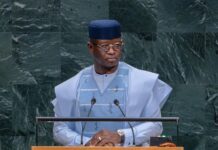


President Dr. Julius Maada Bio has formally received the Year-Two Report on the Feed Salone initiative from the Minister of Agriculture and Food Security, Dr. Henry Musa Kpaka. The presentation took place on Tuesday 7 October 2025 at State House during a meeting with members of the Presidential Council on Feed Salone, aimed at reviewing progress, achievements and challenges in the programme’s second year.
Dr. Henry Musa Kpaka, who also serves as Secretary to the Presidential Council, explained that the report would be officially launched by President Bio during the World Food Day celebrations in Kambia on 31 October 2025. He highlighted that Feed Salone has made significant strides toward its five strategic objectives since its inception.
The Minister reported that Government interventions have contributed to increased exports of cocoa, cashew and coffee, generating valuable foreign exchange for the country. In addition, the Ministry has trained and certified 175 young people as tractor drivers, leading to the establishment of five new machinery service providers across Kono, Bombali, Moyamba and Kambia Districts.
Dr. Henry Musa Kpaka also cited other achievements, including the deployment of 30 combined harvesters, the establishment of 10 Sakata rice mills and the development of 5,000 hectares of irrigation infrastructure in Tormabum and Gbondapi. He revealed that the Sierra Leone Seed Certification Agency (SLeSCA) has set up a modern seed laboratory in Mile 91, which, in collaboration with SLARI, will soon release certified seed varieties designed to increase yields and improve climate resilience.
On institutional feeding, the Minister disclosed that the World Food Programme (WFP), with Government support, procured 2,044 metric tons of rice from 12,000 farmers in seven districts. He emphasized that the $10 million agricultural credit facility, provided through the Bank of Sierra Leone, is intended to stimulate private-sector participation in agriculture and strengthen national food security.
The report further noted that within two years, Sierra Leone has experienced a steady reduction in rice importation, a decline in prices, and improved food availability. Cash crop exports continue to rise, diversifying the national food basket and generating critical foreign exchange for the country.
Responding to the report, President Bio praised the Council for their dedication and progress. “We are entering the third year of the Feed Salone programme. We have made tremendous efforts, from making agriculture a national priority, to reforming policies in the sector,” he said.
The President reiterated his Government’s commitment to supporting private-sector-led growth in agriculture. “Value chain addition in the sector must have a private-sector champion and as a Government, we will meet them halfway,” he added.
President Bio highlighted that the initiative represents a national movement for food security and economic growth. “We have laid a solid foundation. Even though we are not yet there, this is a movement. I called on this nation two years ago and I strongly believe they are now responding. There is no turning back in our journey to Feed Salone,” he assured.
Denis Jusu, Chief Executive Officer of Jam Jay Farming Company Limited, representing indigenous private-sector players, praised the Government for its support. He expressed confidence that rice importation could be reduced by up to 75 percent within two years if the current momentum is maintained, emphasizing the private sector’s essential role in driving the initiative.
The meeting concluded with commendations for Dr. Henry Musa Kpaka from Council members for his leadership and commitment to advancing Feed Salone. The initiative continues to strengthen food security, promote agricultural productivity and encourage private-sector participation in Sierra Leone’s agribusiness sector.
Feed Salone, now in its third year, demonstrates the Government’s ongoing commitment to transforming agriculture into a sustainable driver of economic growth while empowering farmers and local businesses to actively participate in national development.