
By Alvin Lansana Kargbo
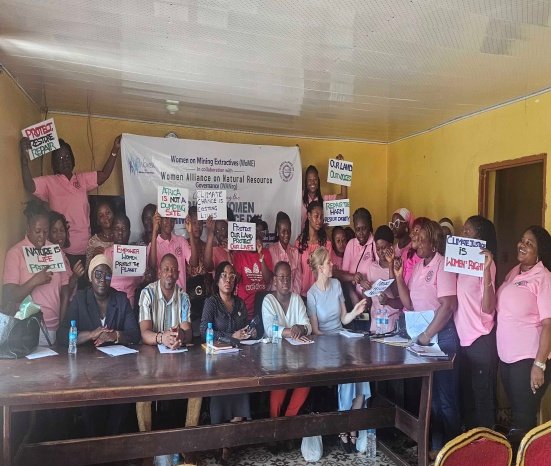
Women on Mining Extractives (WoME) and the Women Alliance for Natural Resource Governance (WANrg) on Tuesday, 15 April 2026, commemorated African Women Climate Justice Day in Freetown with a renewed and forceful call for reparations, inclusive policymaking and stronger accountability in climate governance, as activists, development partners and civil society leaders warned that African women continue to bear the heaviest burden of climate change despite playing a leading role in advancing solutions.
The event, held at the Human Rights Defenders Network headquarters in Brookfields under the theme: “Our Lands, Our Voices: African Women United for Reparations and Climate Justice,” brought together women leaders, grassroots organizers, legal experts, governance advisers and rights advocates who highlighted the disproportionate impact of climate change, environmental degradation and extractive economic models on women across Sierra Leone and the African continent.
In a Press Release issued during the commemoration, the organisations said the event comes at a critical time marked by escalating climate crises, resource-driven conflicts and widening social inequalities. They noted that African women, while among the most affected by environmental destruction, remain at the forefront of resistance, innovation and community resilience.
According to the release, the day serves not merely as an awareness platform but as a rallying point for restorative justice, including demands for the payment of climate debts by industrialized nations responsible for the bulk of global emissions, alongside concrete measures to repair environmental and social damage in communities most affected by extractive activities and climate shocks.
The organisations further explained that African Women Climate Justice Day forms part of a broader continental movement driven by the Women’s Climate Assembly, a platform that unites activists and community leaders across Central and West Africa. Since its establishment, the Assembly has created space for analyzing intersecting crises and developing collective strategies centred on climate justice, food sovereignty and resistance to extractive economic systems that continue to deepen inequality and environmental harm.
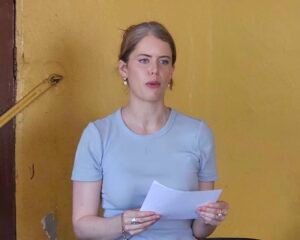
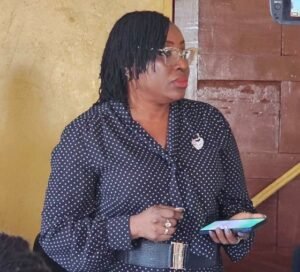
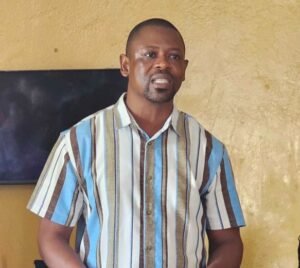
Speaking at the event, President of the Women Alliance for Natural Resource Governance, Esther Kandeh, said the initiative emerged from a regional movement established in Senegal and later strengthened through engagements in Liberia. Esther Kandeh explained that April 15 was intentionally designated as a unified day for African women to confront climate policy gaps, implementation failures and weak community-level awareness. She said the platform seeks to bring together women from all walks of life, including farmers, teachers, market women, professionals and community leaders, to ensure broad and inclusive participation in climate discourse. Esther Kandeh further disclosed that future commemorations are expected to expand significantly, with stronger coordination across districts and countries aimed at producing more policy-driven outcomes.
Also addressing the gathering, Mariama Dumbuya, Legal Adviser at the 50/50 Group, underscored the need for action beyond advocacy and symbolic engagement. Mariama Dumbuya urged women to deliberately position themselves in decision-making spaces, particularly within the mining, land governance and environmental sectors, stressing that meaningful and lasting change depends on active participation at both policy and institutional levels. She highlighted Sierra Leone’s legal framework supporting environmental governance, including the Environmental Protection Agency Act, the Meteorological Agency Act and the National Climate Change Policy, noting that a sound understanding of those instruments is critical for effective civic engagement and accountability.
Josephus Ellie, Senior Governance Adviser at Irish Aid, said support for women and girls remains central to Irish Aid’s development efforts, particularly in strengthening climate resilience and natural resource governance. Josephus Ellie noted that Irish Aid continues to work with local authorities and civil society actors to ensure women influence land use decisions, environmental oversight and community planning processes. He added that Ireland is also advocating at the global level for increased climate finance directed at women-led initiatives and more equitable access to technology, adaptation tools and resources for countries disproportionately affected by climate change.
Rachel Walter, Human Rights Officer at the Human Rights Defenders Network, described climate change as a fundamental human rights issue, stressing that women face heightened vulnerabilities, including displacement, food insecurity and increased exposure to gender-based violence. Rachel Walter called for stronger protection mechanisms and the full integration of human rights principles into national and regional climate responses, warning that climate governance without a rights-based lens risks leaving the most vulnerable further behind.
Adding her voice to the discussion, Jaiah Kaikai, Campaign Coordinator for Amnesty International Sierra Leone, said the climate crisis is already having severe consequences for women in mining communities across Sierra Leone. Jaiah Kaikai cited pollution, loss of livelihoods, unsafe water sources and growing social risks as major realities confronting women in extractive zones. She outlined urgent demands for the mandatory inclusion of women in policymaking, stronger corporate accountability in extractive industries and guaranteed land rights for women in affected communities. Jaiah Kaikai also called for the establishment of a global loss and damage financing mechanism, proposing substantial annual funding to support vulnerable communities, particularly women-led initiatives at the grassroots level.
Speakers at the event unanimously agreed that the recognition of April 15 as African Women Climate Justice Day represents a collective stand against systems that continue to prioritize profit over people and the environment. They stressed the urgent need for sustained mobilization, policy reform and international cooperation to achieve climate justice, reparative action and equitable development.
The commemoration ended with a unified call for sustained advocacy, stronger institutional accountability and increased investment in women-led climate initiatives, as stakeholders reaffirmed their commitment to advancing a just, inclusive and sustainable response to the climate crisis in Sierra Leone and across Africa.