
By Amin Kef (Ranger)
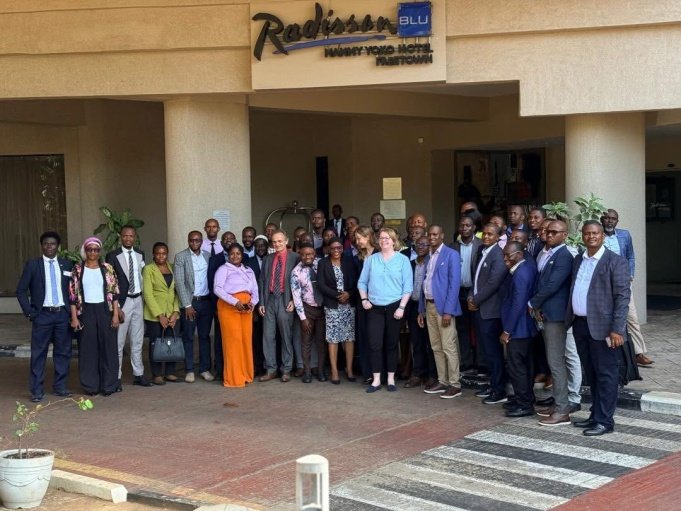
Forty-two technical staff of the Audit Service Sierra Leone (ASSL) have successfully concluded an intensive three-day capacity-building training aimed at enhancing the institution’s effectiveness in auditing public revenues and taxation, in a move seen as a significant boost to financial accountability in the country.
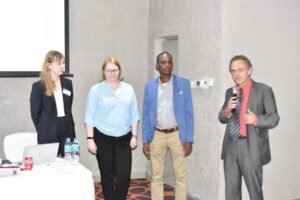
The training, organized under the Technical Assistance and Exchange Information (TAIEX) instrument funded by the European Union, was held from Tuesday 24th to Thursday 26th March 2026 at the Radisson Blu Hotel in Freetown. It brought together key technical personnel tasked with overseeing revenue and tax audit processes within the institution.
The workshop was designed to strengthen both the theoretical understanding and practical competencies of participants in the critical area of revenue auditing. Facilitated by experts from Poland’s Supreme Audit Office, the sessions provided insights into international best practices and modern auditing techniques, particularly from the perspective of a Supreme Audit Institution.
Central to the training was the adoption of globally recognized methodologies aligned with standards set by the International Organization of Supreme Audit Institutions (INTOSAI). Participants were taken through key areas including risk-based auditing approaches, tax compliance frameworks, enforcement mechanisms and the identification and mitigation of revenue-related risks and irregularities.
The training also emphasized the importance of strengthening public financial management systems through effective oversight. By equipping staff with the necessary tools and knowledge, ASSL is expected to improve its capacity to detect inefficiencies, enhance compliance and ensure that public revenues are properly accounted for and managed.
Through a blend of interactive sessions, group discussions and practical case studies, participants were able to deepen their understanding of audit processes, particularly in areas such as audit reporting, formulation of actionable recommendations and effective follow-up mechanisms. Those components are critical in ensuring that audit findings lead to meaningful reforms and improved governance outcomes.
Speaking on the significance of the training, officials noted that building institutional capacity remains a key priority for ASSL, especially at a time when the demand for transparency and accountability in public financial management continues to grow. The support provided through the European Union-funded TAIEX programme underscores the importance of international collaboration in strengthening governance institutions.
The successful completion of the training is expected to have a lasting impact on the performance of ASSL, enabling it to carry out more robust and effective audits of public revenue streams. That, in turn, will contribute to improved accountability, better resource management and enhanced public trust in Government financial systems.
Sierra Leone’s ongoing pursuit of reforms to strengthen fiscal discipline and governance underscores the importance of initiatives such as the training programme, which highlight the critical role of capacity development in achieving sustainable national development goals.