Home Blog Page 1058

President Bio Receives NEC’s 2019 Annual Report

By Foday Moriba Conteh

At State House on Monday 13 July 2020 the National Electoral Commission (NEC) presented its 2019 Annual Report to  President Julius Maada Bio in line with Section 33 (12) of the 1991 Constitution of Sierra Leone.

Acting Chief Electoral Commissioner, Edmond Sylvester Alpha, said that the report covered the profile of the Commission, elections conducted within the period under review and gender analysis on elections, noting that from all indications, there was a marked increase in the participation of women in elections conducted by the Commission in 2019.

He also thanked the Government for its financial support to the Commission, saying that as a result they were able to conduct all elections during the period under review. He also noted Government’s support for the commencement of the implementation of the construction of regional offices in Bo and Kenema and the construction of a perimeter fence in Bombali.

“The Commission reiterates its commitment in strengthening collaboration and greater engagement with Government, international partners and key stakeholders for the conduct of credible and transparent elections that meet international standards and the expectations of the people of Sierra Leone,” he said.

In his response, the President thanked the Commission for doing a good job, saying that despite it being a difficult one their job was important in the promotion of democracy in the country. He further implored them to do more about integrity and emphasized that their proper functioning would go a long way to determine the trajectory of democracy in the country.

He also welcomed the progress the Commission had made so far by paying specific attention to gender and disability issues as key pillars in their various initiatives. He added that they wanted to make the process inclusive at all times because of their commitment to inclusive development. He also assured that Government would continue to endeavor to make sure that adequate funding is given to financing the activities of the Commission and implored them to continue to do their best to provide the stability needed for development.

World Bank funded First Batch Medical Supplies Arrives

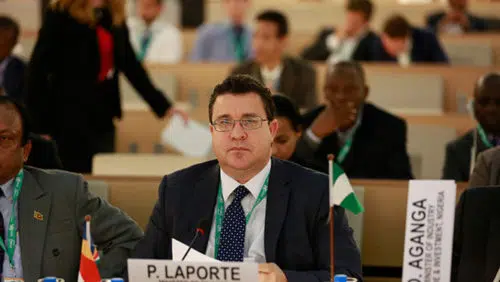
newly appointed World Bank Country Director for Sierra Leone, Liberia and Ghana – Pierre Frank Laporte

By Amin Kef Sesay

On June 29, 2020, the first shipment of Coronavirus Disease (COVID-19) medical supplies procured under the World Bank-funded Sierra Leone COVID-19 Emergency Preparedness and Response Project, arrived in Freetown. The consignment was received by the United Nations Children’s Fund, who procured these supplies on behalf of the Government of Sierra Leone for distribution to the designated medical facilities across the country.

The World Bank on April 2, 2020, the World Bank approved a US$7.5 million grant to help the Government respond to the threat posed by the outbreak and strengthen national systems for public health preparedness. The funds have helped fill critical financing gaps identified due to the new emergency preparedness and response needs created by the global pandemic.

The project supports, amongst others, the provision of medical supplies and commodities, laboratory diagnostic equipment, reagents, including test kits to support the fight against the pandemic, and build on the gains made from the Regional Disease Surveillance Systems Enhancement Project, the Ebola Emergency Response Project, and the Health Service Delivery and System Support Project.

“The arrival of this first consignment of essential medical supplies at this crucial moment will further boost the efforts of the response mechanism mounted against the COVID-19 pandemic,” said Dr. Thomas Sama, the Chief Medical Officer of the Ministry of Health and Sanitation. “We remain immensely grateful to the World Bank for swiftly providing the needed funds and to UNICEF for acting within the realm of an implicit urgency through a very efficient procurement system. These items will be promptly distributed to all service delivery facilities across the country to facilitate the outbreak response.”

Some of the supplies in this initial consignment include resuscitation equipment and other medical devices as well as soap and sanitizers, which will be distributed across specific COVID-19 treatment centers to help curb the impact of the outbreak on the country’s health system.

The Sierra Leone COVID-19 Emergency Preparedness and Response Project seeks to strengthen the country’s health systems capacities to detect, mitigate risks and control the outbreak and other immediately reportable respiratory related disease outbreaks.

Through this support from the World Bank, more supplies have been procured, including Infection Prevention and Control (IPC) supplies and appropriate Personal Protective Equipment (PPE) to protect frontline health workers as they discharge their duties during this pandemic. Essential medicines and medical equipment will also be brought in to help manage COVID-19 cases at designated isolation facilities, quarantine homes, treatment centers and intensive care units.

“The World Bank will continue working with other development partners to help the Government deal with the critical challenges posed in the fight against COVID-19,” said Gayle Martin, World Bank Country Manager for Sierra Leone. “Therefore, the availability of these supplies will help in the provision of needed medical services and ensure the health system cope with increased demand for services and develop intra-hospital infection control measures.”

Since March 31, 2020, when the first case of COVID-19 was announced in Sierra Leone, the number of cases has been rising and pressure has been exerted on the health system across the country. The limited availability of commercial flights, a measure instituted globally to curb the spread of the disease, has inflicted a heavy toll on shipments of supplies to support the needs of health facilities. Despite these logistical constraints, UNICEF has worked through its existing networks to prioritize shipment of life-saving supplies to children, their families and to frontline health workers.

“Since the start of the outbreak, UNICEF has been working closely with the Government of Sierra Leone to keep children and their families safe and to support the safety of frontline healthcare workers,” said UNICEF Representative, Dr. Suleiman Braimoh. “UNICEF regards the frontline workers as our everyday heroes and contributing to their safety is a priority for us.”

The World Bank and UNICEF in Sierra Leone are also partnering to lower the potential human and economic cost of the COVID-19 pandemic in the country through an emergency cash transfer programme and through programmes to prevent and respond to gender-based violence.

Without Raising Annual GDP Growth To Above 10%… Very Little Hope for The Masses to Escape Poverty

By Amin Kef Sesay

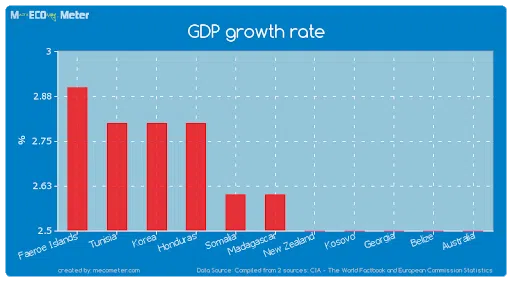
When we consider that the average per capital income in this country is still way below $1, 000 per head, it certainly means that even in comparison with countries such as Madagascar, Rwanda, Tanzania, Tunisia, Botswana and other countries that are at middle income or nearing middle income status, Sierra Leone still has a lot of catching up to do.

We still have an economy that heavily relies on small holder farming and alluvial mining of gold and diamond that does not enter into official revenue figures, whilst what the big mining companies earn is not correctly reported and verified – unlike for example Botswana where the benefits of the country’s mineral resources are seen everywhere in tangible infrastructural developments that benefit the people of Botswana.

How can Sierra Leone ensure sustainable long term economic growth at a time when global economic growth has slowed down and the public debt high while demographic changes and technological advances demand that we urgently reshape the economy for rapid growth?

This clearly means that, opportunities for a good education, employment and healthcare depend largely on the tax and spending choices Governments make as they respond to these evolving challenges.

Learning from the Chinese example that has in fifty years made them to be self-sufficient, the Government itself has to adopt an entrepreneurial mentality prodded on by agile leadership to grow the economy at, at least ten percent annually consistently over the next two decades to create pathways for shared prosperity and a sustainable future.

This is because current growth remains insufficient to make a dent on unemployment and poverty to which you add the nightmare of providing our growing population with good jobs and social protection.

What can be done to address these challenges? Three things which are: greater national, regional and international cooperation; policy injection and human capital development.

The need for greater national political and economic integration is ever urgent. In addition, by carefully calibrating growth-enhancing policies, the country’s private sector which is greatly undercapitalized can work together to change the country’s economic development narrative using the advantages of the Fourth Industrial Revolution; whilst at the political level, the political parties, civil society and the media can lay a solid foundation to promote peace and stability.

A healthy and educated working age population is the cornerstone of sustained and inclusive economic success. It lifts living standards and the dignity of people.

Putting emphasis on initiatives that foster lifelong learning and continuous upgrading of skills are also important for the continent to be a meaningful economic partner in the 4IR. For example, Singapore offers training grants to all adults throughout their working lives, and the Netherlands offers tax deductions for employee training.

The challenge going forward is three-fold: design data-dependent policies that boost productivity and long-term growth, cut debt and reduce our vulnerability to global economic downturns.

In which vein, decision by African countries to form an EU like trade block by adopting a framework for Africa’s economic integration through the African Continental Free Trade Area (AfCFTA) the African Development Bank rightly points would lay the foundation for a viable continental market to accelerate growth and allow Africa to be more competitive in global trade and value chains. It would also allow industries to develop across borders, creating economies of scale for investors as they look at wider integrated markets.

Conclusion

This is a time to act boldly and swiftly to ensure we don’t confine our youth to the margins of economic activity. Given weak global growth prospects and significant downside risks, our economic policies will need to strike a balance between supporting growth and creating the fiscal space to respond to emergent economic challenges. This means executing on fiscal consolidation now to minimize the risk of unsustainable indebtedness.

The policy package classically prescribed by economists is to balance growth, equity and sustainability concerns, including protecting society’s most vulnerable, particularly youth and women, who tend to be left behind during economic transformations.

Tackling corruption decisively would also help raise additional resources and redirect them to growth-friendly areas, while restoring the integrity of institutions. This would in turn spread economic benefits more widely within and across the country.


FBC-SU Dashes Le1.7M to Deserving Students

By Foday Moriba Conteh

In order to reward students for their writing prowess in the country, the Fourah Bay College Student Union Government has on Friday 10th July, 2020 awarded cash prizes and certificates to winners of their organized Online Writing Competition during an auspicious ceremony held on the college campus in Freetown.

The Union gave a total of Le1.7 million to the first, second and third runners-up and also presented Certificates of Merit to the fourth and fifth runners-up.

The recipients of these awards were Suliaman M. Bonnie of the Language Studies Department who bagged the first position and was awarded the sum of Le 1,000,000 , Adel Bull, of the Law Department who took the 2nd Position was awarded the sum of Le 500,000, Mahammud M. Sheriff, of the Peace and Conflict Department who came 3rd  was also awarded the sum of Le 200,000 , Abdul Rahim Jalloh, of the Electrical and electronics Department and Catherine Smith of the Social Sciences Faculty who took the 4th and 5th positions respectively were awarded Certificates of Merit.

Dean of the Faculty of Acts, Fourah Bay College, John Abdul Kargbo, expressed appreciation to the FBC Student Union Government for organizing the online writing competition which he said has contributed towards the development of students, adding that research helps students to know what is happening within their vicinities and help them improve their grammar.

He appealed to the FBC Student Union Government that in subsequent competitions they should not only focus on an online platform but also make room for normal writing as many want to participate but they don’t have the facilities. He described women as very good writers and in that regard he encouraged them to compete with their male counterparts in future competitions.

Minister of Education of the FBC Student Union Government, Madam Pleasant Kargbo, also expressed gratitude to the winners of the online writing competition. She disclosed that the competition was organized in order to rebuild and strengthen students’ research abilities in the country.

She said that with a number of entries received, a thorough screening was done by a quorum of erudite and reputable judges and they were able to present winners for the competition, adding that as a Student Union Government they will continue to rebuild as the welfare of students remains their utmost priority. She noted that it was a rigorous process for the judges but commended them for being up to the task underscoring how she believes that the integrity of the judges demonstrated the credibility of the competition.

Vice President FBC Student Union Government, Claudia Redwood Sawyer, said that due to the outbreak of the COVID-19 in the country, learning institutions were shut down in order to curtail the spread of the virus in the country.

She noted that the competition is not only meant for male students but rather for both male and female students underscoring that the competition is for every student of Fourah Bay College reiterating how she wants to see female students competing alongside their male counterparts.

She further disclosed that the Online Writing Competition is a great step taken by the Student Union Body to keep students mentally active during this period of the COVID-19 pandemic maintaining how she believes that they have a moral duty to serve the interests of students at all times further noting that the competition is also geared towards achieving their dream of rebuilding Fourah Bay College.

She extended appreciation to their partners for the tireless efforts they have been committing towards the successes of their children.

Suliaman M. Bonnie, of the Language Studies Department, who took the first position, expressed appreciation to the FBC Student Union Body for organizing the writing competition which he said was a move in the right direction towards rebuilding and strengthening students of Fourah Bay College.

He disclosed that this online writing competition has given him a moral boost in order for him to continue his writing ability that is built on his research ability, adding that he has been participating in other competitions but said he felt happy to emerge as the best essay writer.

He urged colleague students to take the writing competition serious and also see it as a window of  opportunity to explore the potentials that are in them as students.

Pikin Bizness International Representative Passes Away

Journalist and author collapsed while exercising this morning, website reports

By Amin Kef Sesay

David Applefield, who lost his bid for the Democratic nomination for Congress in the United States of America on the 7th July 2020 primary election, died on the 8th July 2020.  He was 64. Based on a report Applefield collapsed while exercising and he was pronounced dead at Riverview Medical Center in Red Bank.

David, a journalist and author, had been campaigning for the chance to take on Rep. Christopher Smith (R-Hamilton) in New Jersey’s 4th district.  He received about 6% of the vote in a race that was won by Stephanie Schmid.

According to, Dr. Adonis Abboud, the Founder and Chairman of Pikin Bizness, a charitable organization based in Sierra Leone that has been facilitating the treatment of  children with heart diseases and other ailments overseas, the late David Applefield was the International Representative for Pikin Bizness and Senior Representative of the “Financial Times” for the past 25 years in Paris.

Adonis Abboud intimated The Calabash Newspaper that David Applefield introduced him to one of the best cardiologists in France, Dr. Alain Deloche who is also co-founder of the famous MEDECINS SANS FRONTIERES (MSF) and Chief Executive Officer of LA CHAÎNE DE L’ESPOIR. He further stated that thanks to the expertise of Dr. Alain Deloche, Pekin Bizness managed to save the lives of so many Sierra Leonean children.

He added that children who had congenital heart diseases would only survive for few months unless they undergo an open-heart surgery to repair their hearts.

“Some of the Sierra Leonean kids who were flown to Paris were lodged in David’s house where his wife Marie and their three children made them feel at home and after the operations took them around Paris and treated them to good meals and Children’s Funfairs,” he said emotionally.

Adonis Abboud further disclosed that David was himself a heart patient at one time.

He explained that among the children saved were Ali Kamara who was 15 years old and today stands as a tall 25 years healthy man, Abubakar Jalloh who was 5 years old is now 20  and Ehizogie Eghobor the six year old son of Kingsley Lingston,  who is holding a top UN Media position in New York.  According to him, Ehizogie is now 21.

Adonis said another child patient pictured below in the Intensive Care Unit is 6 years old Linda Bangura, an orphan who lost her parents during the country’s rebel war pioneered by the rebel leader, Foday Sankoh. Linda is now 18 and about to enter college.

The Pekin Bizness Founder and Chairman also told The Calabash that several Sierra Leonean journalists benefitted from David ‘s lectures at FBC and went on to reveal how the late man once said in 2007 during a Pikin Bizness function at the British Council that “Sierra Leone has 33 Newspapers but very little News. ”

Adonis Abboud highlighted that he received a message from the eldest son of David Applefield, Ernesto Applefield that he wished to continue his dad’s legacy. According to the son his late father had a massive heart and always helped everyone.

“When Ali was here with us, my father made sure that Ali felt included and as an active member of the family. I would love to quarry on doing his actions and please do not hesitate to reach out to me for anything. I don’t have my father’s knowledge, skills or wisdom but I have the desire to continue to make him proud. Also if you know anyone that spent time with him and liked him, please feel free to share my contact with them,” Ernesto intimated Adonis Abboud.

Dr. Adonis Abboud stated that he in particular and others in general within Pekin Bizness deeply miss the philanthropist and international partner, David Applefield and wished that he will Rest in Perfect Peace.

It could be recalled that Pikin Bizness provided this country with the first Cardio-Sonogram Machine used in the treatment of heart diseases. According to  Dr. Adonis Abboud, the $25,000 machine was a gift to Sierra Leone from ‘a good Samaritan’ in the person of Michael Landau – a New York based businessman whose Diamond Group and 5th C Foundation plan to introduce an innovative process for increasing public revenues from gems and improve the social impact of diamonds in Sierra Leone.

Six Year Old Lynda Bangura in Intensive Care Unit


Appealing to Repeal Part V of Criminal Libel Law… SLAJ President Holds Parliamentarians Spellbound

President of the Association of Journalists (SLAJ), Ahmed Sahid Nasralla,

By Amin Kef Sesay

On Monday 13th July 2020, the President of the Sierra Leone Association of Journalists (SLAJ), Ahmed Sahid Nasralla, delivered a brief statement during the Pre-Legislative Session bordering on the Repeal of Part 5 of the 1965 Public Order Act to be replaced by the IMC Bill of 2020, which took place in the Well of Parliament.

Nasralla highlighted that as journalists our business in Parliament was to lobby Parliamentarians for two things. The first, he said, was to repeal the Criminal Libel laws and pass the new IMC Bill and secondly to amend certain sections of the IMC Bill which is before them in order to bring it into conformity with the spirit and letters of the 1991 Constitution.

The SLAJ President highlighted that on the International level the Criminal Libel laws are an embarrassment to this country, and it will continue to be so until Parliamentarians repeal them.

“For several sessions of the United Nations Human Rights Council, where it periodically Reviews our Human Rights records, our country’s representatives have been called out that we are in breach of several International treaties among which are, The International Convention on Human and People’s Rights, The African Charter on Human and People’s rights, the Universal Declaration of Human Rights, to name just a few. Today we begin the process of ending the embarrassment for our diplomatic representatives who sit quietly and sometimes bow their heads in shame as they are spoken down upon,” he reasoned out.

Nasralla made a strong point by stating that we know everybody wants the media to develop but  to say the “blackmail and corruption” that Legislators accuse the media of, can be minimized, if not end, if the media practitioners are paid well.

He justified that assertion by underscoring that such can only happen if the door is opened to businessmen to invest in the media furthering that as it stands any businessman who dares to invest in the media, stands the risk of going to jail for what his reporter might have written.

“We say remove the Criminal libel laws and allow the economic forces to regulate,” he appealed adding that in that way any businessman who invests over a hundred million Leones in the media will promptly sack any errant editor who publishes anything that would cause him the Proprietor to be taken to court and fined.

He maintained that such is self -regulation and that is the conversation which led to the setting up of the IMC in 2000.

Among so many other related issues he raised, the SLAJ President ended up by stating that in every profession there are bad eggs from Politics to Police, from Teachers to Lawyers and Engineers, from Surgeons to Statesmen. He highlighted that what media practitioners are asking Parliamentarians to do is not to throw out the “baby with the birth water”.

“The water is dirty but the baby has life and will grow. Help us make that baby grow. We are in this together,” Nasralla further appealed philosophically.

WHH Celebrates International SMEs Day

Mayor of Koidu City- Mathew Komba Sam (Left) presents certificate to SME Representative at the Faachima Hall in Koidu City.

By Tamba Borbor

Micro, Small and Medium-sized Enterprises (MSMEs) have been celebrated by an International Non-Governmental Organization- Welthungerhilfe during the International SMEs Day on 27th June 2020  at the Faachima Hall in Koidu City.

In his keynote address, the Mayor of Koidu City- Mathew Komba Sam stated that SMEs are the engine that drives national development by providing jobs and capital into the economy.

“Our economy would collapse if we don’t treat SMEs with the requisite attention,” Mayor Sam noted. He acknowledged feeling inspired by the testimonies of heads of SMEs in Bo, Kenema and Makeni as they recounted their journey towards successful management of their respective businesses.

He stated that only SMEs that are qualified and committed to waste management would be selected under the WHH Improved Waste Management Project devoid of any political consideration or influence because “we want this project to succeed.”

Mayor Komba Sam urged representatives of SMEs present to ensure that they make Koidu proud if they are fortunate to be selected to undertake the challenge of managing waste in the municipality. Recounting how she became successful in her businesses, Lucinda Katta explained that she started from humble beginnings but persevered through the numerous challenges to ensure her dream becomes reality.

She urged prospective SMEs to be stubborn and patient to succeed in life.

Alhaji Yusuf Kallon, one of the Heads of SMEs brought in by WHH to help inspire those in Koidu also explained how he got into the business of waste management. He noted that there were huge challenges but surmounted them with dedication and perseverance.

Alhaji Kallon called on aspiring SMEs in Koidu City to be focused and committed to waste as a business if they want to be successful.

Pa Alimamy Samura, owner of a successful waste management and recycling business in Makeni observed that there is huge potential in waste management in Koidu and urged prospective SMEs to take fully advantage of the opportunity being provided by WHH to build their capacities to effectively and efficiently operate a waste management and recycling business.

The Administrative and Finance Officer of the Environment Protection Agency (EPA)- Alusine Bangura underscored the importance of SMEs globally.

He says that job creation in every country is predominantly the business of SMEs around the world. “The waste management project of WHH complements Government’s holistic approach to national environmental management. When we have people managing waste as a business, it would be an effective way to controlling indiscriminate disposal of waste,” Bangura stated.

He admonished aspiring SMEs in Koidu to be devoted and committed to the sector they are venturing into in order to be successful at the end. Several wares made entirely of recycled plastic were displayed during the occasion produced by Madam Lucinda Katta’s waste Recycling SME in Bo.

The Mayor of Koidu City also presented certificates to SMEs who had earlier been trained in plastic waste recycling and production of bio-charcoal.


Welthungerhilfe Trains Youth in Waste Collection

Representatives of the two youth groups meticulously selected to undertake Waste Collection in Koidu City during the official opening of the 4-dy training exercise

By Tamba Borbor, Public Relations Officer

Welthungerhilfe, a German international Non-Governmental Organization has on Tuesday 7th July 2020 commenced a four-day training of youth groups on waste collection in Koidu City.

The Human Resource Officer of the Koidu New Sembehun City Council, Josiah Kondewa in his opening statement as Chairman of the occasion stated that the dream of residents of Koidu is to see the city become one to be very proud of in terms of environmental sanitation and hygiene. He expressed hope that the trainees would make good use of the opportunity offered by WHH to allow them acquire life skills for self-reliance.

Ansu Bangura, the Monitoring, Evaluation and Learning (MEAL) Officer of WHH gave a brief background about the project and the set objectives in ensuring effective and integrated waste collection and management in the municipality as it would reform the sector.

He maintained that the project in Koidu would not fail because the Mayor of Koidu is a developmentally-oriented person in addition to the fact that all the experiences gained in Bo, Makeni and Kenema in waste management would be implemented in Koidu.

Ansu urged the trainees to take advantage of the opportunity offered in the training sessions to acquire life skills for self-reliance.

Deputy Head of Project of WHH SLE 1048, Thomas Foray stressed that a clean environment ensures a healthy populace; adding that WHH is determined to build the capacity of the Koidu City Council and youth in the waste sector for the benefit of the people.

Samuel Hinga Navo, the Manager of Bo Waste Management Department gave a synopsis of the entire concept of waste management which he says is geared towards achieving zero waste in communities.

He inspired the trainees by explaining about his journey in the waste sector which he noted has benefited him a lot. He motivated them to be serious with the training which would benefit them soon.

Newly transferred Environment and Social Officer- Nanah Jalloh-Conteh stressed that the people of Koidu should be consistently sensitized on the need to pay for their waste which she noted they are not used to.

She admonished the youth waste collectors to be diligent in their duty and respect their prospective customers. “For a start, you should not raise the collection fee so high so that you would get more customers,” adding that the trucks must be properly taken care of and maintained. The project, Mrs. Conteh , maintained is an opportunity that should be well utilized by all fortunate to be involved.

The Mayor of Koidu City, Mathew Komba Sam in his keynote statement encouraged the youth groups meticulously selected to grab the opportunity with both hands while urging that they have the responsibility to ensure the project succeeds.

He recalled how he was able to convince and lobby with WHH to intervene in waste management in Koidu city which posed a huge challenge then.

“Ever since the history of the Council, there has never been a time wherein we have an organization involved in waste management that provides rice for the people in exchange for plastic waste geared towards involving the people in cleaning the city,” Mayor Sam noted; urging the youth groups to put proper systems in place to succeed in their waste collection drive.

He disclosed that research done by GIZ and WHH informs that 63% of residents of Koidu are willing to pay for their waste which he says provides the environment for waste collection businesses to thrive.

Mayor Komba Sam appealed to the trainees to be serious during the sessions and acquire invaluable knowledge and skills for the task ahead.

He thanked WHH for the tremendous assistance provided to his Council and the people of Koidu City. The two youth groups were trained in business management and waste collection.

WHH Observes International Plastic Bag Free Day

The Chief Administrator of the KNSCC- Francis Tiffa doing symbolic collection of plastic waste in exchange for rice in Koidu City

By Tamba Borbor, Public Relations Officer

International Non-Governmental Organisation, Welthungerhilfe (WHH) has on Friday 3rd July 2020 observed International Plastic Bag Free Day in Koidu City. The Day has been set aside to create awareness about the effects of single use plastic bags on the environment.

In observing the Day, WHH was engaged in a three-day exercise which started on 3rd and ended on 5th July 2020 to give out rice to residents of Koidu City in exchange for plastic waste.

In his opening statement at the official launch of the second phase of Plastic For Rice campaign in observation of International Plastic Bag Free Day, WHH Monitoring, Evaluation and Learning (MEAL) Officer- Ansu Bangura explained about the urgent need for people to know that “waste is wealth” as opposed to the traditional thinking.

He noted that clogged up gutters and waterways are because of indiscriminate littering of plastic waste; adding that with the manifest commitment of the Mayor of Koidu and the youth, the WHH waste management project would be successful.

“Plastic has a lot of impact on the environment as it also affects food security and marine resources. We have to be highly environmentally friendly and help ensure Koidu becomes the leanest city in Sierra Leone,” the WHH MEAL Officer said.

In her statement at the launch of the second phase of WHH Plastic For Rice activity coinciding with International Plastic Bag Free Day, the new Environment and Social Officer of the KNSCC- Nanah Jalloh-Conteh acknowledged the good work of WHH while urging the people to take advantage of the opportunity by bringing out more plastic waste to get more rice in return.

“Plastic waste makes Koidu City filthy and we must do our best to get rid of it entirely,” Nanah stated; adding that parents must not send their kids to gather plastic on their behalf as they are the future of the country.

Officially launching the programme, the New Chief Administrator of KNSCC, Francis M. Tiffa re-echoed the fact that “waste is wealth” while also informing that having worked in several cities around the country, he can certainly confirm that “Koidu is the cleanest City in Sierra Leone.”

He stressed the environmental hazard posed by plastic as it does not decompose for over 500 years.

“A filthy environment causes illnesses which is why the Government is spending lots of money on waste collection. Let us show patriotism by joining WHH and the Council to clean the municipality,” Tiffa maintained.

The three-day plastic for rice activity undertaken by WHH in collaboration with the KNSCC had four plastic collection points including Kania Junction, Small Market at Hill Station, KNSCC Compound and Lebanon Junction. During the entire exercise, tons of plastic waste was collected around the municipality which would be recycled to produce plastic paving stones. Plastic For Rice campaign is part of numerous activities under the Improved Waste Management Project implemented by WHH and funded by the British people through the Department For International Development (DFID).

WHH/KNSCC Plastic Waste Collectors at the KNSCC Compound Collection Point

“Moral & Social Education Pivotal in Ending Gender Based Violence…” -Justice Alhadi Averred

Justice Appeal Court Judge, Fatmata Bintu Alhadi

By Foday Moriba Conteh

Justice Appeal Court Judge, Fatmata Bintu Alhadi, who was recently appointed as one of the Justices of the Court of Appeal, on 11th July 2020, during a virtual zoom high level panel discussion marking World Population Day on the theme: “Putting the Brakes on the Shadow Pandemic of Gender-Based Violence: Let’s Act Now!” has provided solutions to end gender based violence in Sierra Leone.

According to her, moral and social education are pivotal in ending gender based violence. She added that moral standards of any society have strong influences on its ability to survive and nurture its values for the next generation. She added that a good moral behaviour teaches a person how to behave well to other people, noting further that it is important for the individual and for the society.

She therefore recommended that despite the ongoing sensitization and awareness raising campaign, there is urgent need to support the Sierra Leone Judiciary for the establishment of specialized courts across the country.

One of the difficulties, she spoke about, to indict an alleged suspect is the availability of witnesses. She explained that some witnesses may have particular difficulties attending court and giving evidence due to their age, personal circumstances and fear of intimidation or because of their particular peculiar needs. In such circumstances where witnesses are considered to be vulnerable or intimidated, she recommended that special measures are deemed to improve the quality of their experience by assisting them to give their “best evidence.” She affirmed that such stress can affect the volume and quality of the evidence by witnesses/victims.

Another challenge she pointed out was the lack of a specialized court to effectively and expeditiously deal with these cases thus posing a serious challenge and a significant barrier to obtain justice.

During her presentation, Justice Alhadi said Gender-Based Violence (GBV) has become ‘the shadow pandemic’ in the world with Sierra Leone not being an exception. She went on to state that 7 out of 10 women between the ages of 19 to 35 have experienced sexual violence and girls as young as 3 months old have been victims of sexual violence in Sierra Leone.

Disclosing the number of cases since 2015, the learned Judge said, “In 2015, Sierra Leone Police documented 10,544 reported cases of gender-based violent crimes. The number of cases increased to 11,362 in 2016; 12,029 in 2017. The police reported that in 2017 sexual and gender-based violence was the 4th highest reported crime. 93% of 30,000 female survivors are under 17 years old. It is estimated that between 2018 and 2019 alone, more than 8,500 cases were recorded at various police stations across the country and 75% of these cases were charged to court.”

She said to demonstrate willingness for a zero GBV, the Chief Justice, Hon. Justice Desmond Babatunde Edwards has already assigned 5 judges to the Sexual Offences Division of the High Court. She said the plan is to replicate this throughout the country.

On her part, UNFPA’s Country Director-Dr. Kim Eva Dickson thanked all the panellists for their brilliant contributions and stated further that every year, her organization commemorates the World Population Day on July 11, to raise awareness on sexual reproduction and the vulnerability of women and girls. She said UNFPA’s Executive Director, Natalia Kanem believes no country can do it alone, hence the need for strong collaboration to end GBV. She said the day was also set aside to talk about the health problems faced by child bearing women and the importance of family planning, gender equality, poverty, maternal health and human rights.

The virtual zoom discussion which brought together gender expert, clinician, journalist, lawyer, government representative and activist was organized by UNFPA, Sierra Leone Country Office.