
Home Blog Page 1124

KKY Shares Research Outcomes on COVID-19 Preparedness

Alhaji Dr. Kandeh Kolleh Yumkella at the 34 Military Hospital

By Alhaji Dr. Kandeh Kolleh Yumkella

The devastating effects of the coronavirus disease (COVID-19) continue around the world. As China begins its recovery process, the disease has deeply penetrated Europe and North America. By all indications, Europe is now the epicentre with Italy being the hardest hit country and others like Germany, Spain among others reporting a steep rise in infections.

As of Sunday, 22 March 2020, Italy had more deaths from COVID-19, than the number of deaths from Ebola in Sierra Leone over three years. CNN reported about 26,000 cases in the US and globally exceeded 300, 000. Africa has not been spared either.

I sympathize and express solidarity with Sierra Leoneans in the diaspora who live in countries and cities with high incidence of COVID-19 infections; we pray for their families and all citizens of those countries and remained hopeful that the Almighty God will wipe away this calamity for all humanity.

In his column in the New York Times titled “Our New Historical Divide: B.C. and A.C. – the World before Corona and the World After,” Thomas L. Friedman, explained the exponential rate of growth of COVID-19. He quoted Bill Joy (co-founder of Sun Microsystems) who noted that “The virus is like a loan shark who charges 25 percent a day interest. We borrowed $1 (the first coronavirus to appear here). We then fiddled for 40 days. Now we owe $7,500. If we wait three more weeks to pay, we’ll owe almost $1 million.”

If there is such a rate of spread in the more advanced countries, imagine what could happen in countries such as ours. It is prudent, therefore, that we do all we can to prevent the very first infection here at home.  As deaths ballooned in Europe, we all know now the risks and dangers are very real. Hence the reason we have held two days of a special session of our Parliament to determine how we can support the measures taken so far by Governments.

I thank the Ministers and Government officers who spent valuable time with us and listened to our queries and suggestions. The discussions, indeed, were nonpartisan and focused on the safety, health and well-being of our people. I provide below my take on our deliberations, starting with my visit to the main testing and treatment center for epidemics, including coronavirus, in Sierra Leone i.e. the 34-Military Hospital.

I decided to stop by the 34 -Military Hospital (34-MH) to ask for a coronavirus test.  I also wanted to experience first-hand what a citizen will go through if he/she required a test. Will the system work?  I was pleasantly surprised by the vigilance and preparedness of the military personnel.

From the gate, I was asked to wash my hands; I was properly directed to the new infectious disease cum biosecurity center which was established through the generous donation of the Peoples Republic of China.  I was quickly ushered in to meet Colonel Sevalie, one of the senior ISAT commanders.

Colonel Sevalie and his team followed international triage protocols to interview me. They asked me why did I want to be tested? What were my symptoms? They also asked whether I was in a country or city with a significant incidence of COVID-19. Given my responses, they decided that I did not need the test because there were no symptoms and I was not from a high-risk country.

They also explained that with the limited amount of test kits and cost of reagents, they will reserve the tests for real COVID-19 cases and cannot afford to test every flu case. When I mentioned that I was on my way to Parliament for a debate on the COVID-19, they offered to show me their infrastructure and answered my many inquisitive questions. A summary of what I saw and heard is given below:

  • There are 370 test kits available in the whole country and 150 are at 34-MH.  Of the 150 test kits available at this RSLAF center, 100 are for nucleic acid tests that will take 6-hours and are more definitive, and the remaining 50 are rapid test kits that can be done within 30-minutes. Whether there are test kits available in every district is not known.
  • Our Rapidly Deployable Isolation Treatment Facility (RDTIF) consists of 36 beds, 4 ambulances and other equipment (a leftover from the Ebola epidemic).  This is the set of equipment the military will quickly deploy along with their well- trained men and women should we have a sudden surge of infections in a region. Unfortunately, they have only one RDTIF, and ideally, they need two to three.
  • Reports indicate that there are at least 40 additional ambulances ready.
  • The officers also expressed the urgent need for expanding the rapid deployment capacity for ISAT; strengthening the intensive care facility which currently has only two cardiac monitoring equipments which are critical for all serious cases; and scaling up the supply of consumables such as gloves, masks, PPEs.
  • The officers lamented that the country does not have enough lab technicians with ability to do sophisticated lab analysis and would like opportunities for advanced training.
  • An oxygen making plant will be established in the coming week to ensure continuous availability of supply (a must for COVID-19 patients who require assisted breathing equipment).

Despite the enlightening briefings and debates in Parliament on our readiness as a nation for COVID-19, the truth is there are many unknowns about the viral disease, given its speed of transmission which seems to confound even the best experts around the globe.

  • We learnt that there is a critical and urgent need for more test kits.  For ease of comparison during the Ebola outbreak, there were 14 testing labs established (only 3 exist ), and 109 thousand tests were done between 2013-2014.

It begs the question, are there mobile test kits available especially at the district level?  The Deputy Minister indicated that WHO has committed to fly in additional test kits within 24 hours if the need arises, and they expect additional test Kits from the African Union under the initiative with the founder of Alibaba.

  • We have an army of trained contact tracing personnel, and over one hundred staff in the Ministry of Health with basic training in epidemiology and solid experience gained from the Ebola era.

However, if we have a major breakout, we need to quickly mobilize many more. One wonders whether we need to have a regularly trained epidemic reserve team of say 300 volunteers that are regularly trained to be a standby force in this epidemic prone neighbourhood of ours.

  • There is only one well-equipped biosecurity facility at 34-MH, built with the support of aid from the People’s Republic of China; which begs the question what happened to the famous Kerry Town? In addition to 34-MH there are two more dedicated testing labs in Kenema hospital and Lakka.
  • The Deputy Minister of Health informed us that based on their initial modelling, it would cost Le 63 billion ($6.3 million) to quarantine suspected cases, Le167 billion ($16.7 million) to engage in massive prevention and awareness creation, and Le597 billion ($59.7 million) for treatment. In a cash strapped economy like ours, our best defence are mass awareness raising and prevention.
  • The Government has already provided Le2 billion to the Ministry of Health in the past two weeks to support their initial interventions. An integrated plan is being worked on in co-operation with donors, which will require hundreds of billions of Leones. There is goodwill to be shown by the World Bank (potentially $12 million) and potential to source more funds. Parliamentarians stressed that oversight would be needed to avoid the Ebola malfeasance. A separate piece will be done on the potential economic impacts of COVID-19 and the briefing by the Ministry of Finance and the Governor of the Central Bank.
  • We were informed that the Governments of the MRU are engaged in regular consultations. However, several Members of Parliaments, especially those from Falaba, Kambia, Koinadugu, Kono, Kenema and Kailahun were very concerned about porous borders with Liberia and Guinea. The Deputy Minister of Interior briefed us about additional measures taken to mitigate such a risk. As evidence of their vigilance, the Deputy Minister of Health mentioned the interception of a person who tried to enter Sierra Leone from Dubai through Liberia and Jendema border. Therefore, it is imperative that any future budget allocation must give priority to funding reinforcement of border crossings, availability of all necessary materials and equipment for health workers at border towns.
  • There was also concern that others might travel overseas through Conakry or Abidjan. The Deputy Minister of Interior raised the specter of the blue-boundary i.e. sea travel between Guinea and Sierra Leone and the common rivers which are also major transit points for intra-MRU trade. In short, there is a dire need for a more coordinated sub-regional response to Corona to avoid a weak link in these countries who share common boarders.

 Three key lessons stood out from the briefings.

  • Early action by the authorities to mobilize the relevant actors and resources. On this score, the Government has indeed moved fast to pull together the relevant MDAs and partners to put together an integrated platform which will be available in a week.
  • The critical importance of community involvement in the design and implementation of containment measures. In the words of the Deputy Minister of Health “We need the paramount chiefs, community leaders, local councils and the Members of Parliament.”
  • Behavioral change in individuals including the simple hand washing measure, no handshakes and social distancing mitigation measures.
  • The success of the Ebola response was built on what individuals did for themselves, their families, their neighbourhood, and communities. Therefore, what need to be given high priority is individual contributions by the average “Joe at Tengbeh Town.” The knowledge that people did not feel powerless but empowered to set up veronica buckets at home, washing their hands at every opportunity, avoiding handshakes and public gatherings is as powerful a contribution as the biomedical response. Let everybody feel and know that they could contribute to protecting Sierra Leone which is vital in any prevention or mitigation plan.

I commend the President, Minister of Health, development partners, and others for the initial steps taken so far to prevent Covid-19 from entering Sierra Leone and to activate our emergency preparedness. I also applaud the various social distancing mitigation measures, especially the suspension of flights into the country (though, rather than 90 days, an initial period of 30 days with possibility of extension would have been more reasonable.) I also welcome the judicious decision of the Government to delay the commencement of the NCRA civil registration and verification exercise.

All in all, we seem ready to handle a small-scale initial outbreak if it occurs, but the jury is still out on our readiness to handle a major outbreak of COVID-19. We were not affected by H1N1 or SARS, so with our Ebola experience let’s put Salon Fos. The most difficult question is whether President Bio should declare a public health emergency. What are the triggers for such an action? What will be the cost (social and economic costs) if movement is restricted?

There is also the fear that Government could use the vast powers of the emergency declaration beyond its intended purpose of stopping the spread of an epidemic. The consensus in Parliament is that we could grant such authority to the President for 90 days. In conclusion, our best defence is a proactive bipartisan drive to sensitize our people to prevent any COVID-19 outbreak. We in the National Grand Coalition are ready and willing to play our part.

BSL Gears Up to Maintain Macro-Economic Stability

By Amin Kef Sesay

The Bank of Sierra Leone (BSL) is a statutory corporation, whose sole shareholder is the Government of Sierra Leone. It derives its powers and responsibilities from the Bank of Sierra Leone Act, 2019. The promotion and maintenance of macroeconomic stability and supporting “the general economic policy of the Government [Section 5(1)(d)]” are its key mandates.

There is no gainsaying the fact that the Corona Virus Disease (COVID-19) pandemic portends a major global recession. Although one cannot quantify the size of the shock with any precision, it will most likely be very large.

This is bound to have huge negative impacts on small open economies like Sierra Leone. In view of the above, the leadership of the Bank has concluded that putting measures in place to maintain macroeconomic stability in the face of these expected challenges falls within its core mandate.

Accordingly, under the chairmanship of the Governor, Professor Kelfala M. Kallon, the Monetary Policy Committee (MPC) of the Bank held an emergency meeting on 18th March 2020 to discuss and agree on policy measures that are necessary to soften the potentially adverse impact of the COVID-19 pandemic on the nation’s economy. The MPC Decision Against this background, the MPC unanimously agreed to implement the following measures in order to soften the potential impact of the COVID-19 pandemic on the nation’s economy:

  1. Lower the Monetary Policy Rate by 150 basis points from 16.5 percent to 15 percent.

Effective Thursday 19th March 2020, the following rates were published for the information of the public:  Monetary Policy Rate is 15.0 percent, Standing Deposits Facility Rate is 12.0 percent and Standing Lending Facility is 19.0 percent

  1. Create a Le500 Billion Special Credit Facility to Finance the Production, Procurement and Distribution of Essential Goods and Services. The MPC agreed for the BSL to create a Special Credit Facility to the tune of Le500 billion to support the production, procurement and distribution of essential goods and services.

That will be a concessionary interest-rate Facility that will be channeled through the commercial banks. The Management of the BSL will meet with the Sierra Leone Association of Commercial Bankers (SLACB) on Friday, 20th March 2020 to discuss modalities for accessing this Facility.

  1. Support to the Private Sector for the Importation of Essential Commodities. The BSL will provide foreign exchange resources to ensure the importation of essential commodities. The list of commodities that qualify for this support will be published in due course.
  2. Liquidity Support to the Banking Sector. To ease any tightness in liquidity in the financial market, the MPC decided to extend the reserve requirement maintenance period for commercial banks from 14 days to 28 days. This will be complemented by an active participation in the secondary market by the BSL. Finally, BSL will continue to closely monitor domestic and external developments and stand ready to take all necessary monetary policy measures to promote economic growth and maintain price and financial system stability.

Deputy Information Minister Cautions Against Spreading Fake News

Deputy Minister of Information and Communications, Mamadi Ngobeh Kamara

By Foday Moriba Conteh

The Ministry of Information and Communications on the 23 March 2020 convened a Press Briefing at its Conference Hall in order to update journalists on preparedness, awareness or sensitization of Government on the prevention of Coronavirus in Sierra Leone.

Present were both the Minister and Deputy Minister of Information and Communications,  Mohamed Rahman Swaray, Mamadi Ngobeh Kamara, Mr Harold from the Ministry of Health, Kalilu Totangi of the Civic Education Commission and the Deputy Minister of Political Affairs including the Fourth Estate.

Giving an update, the Deputy Minister of Information and Communications dilated on how far the Government has done with regards sensitization or awareness and preparedness on the Coronavirus across the country. She highlighted that the Coronavirus is a pandemic that is currently a serious challenge in the world and has negatively affected the World Economy.

She disclosed how Sierra Leone has no case as for now further debunking the fake news on social media that a Sierra Leonean by the name of Mohamed Sheriff came from Italy and was vomiting blood at Bailey Street in Brookfields.

“The man in question came from Liberia and he is presently healthy and safe even though a team is monitoring him on his self-quarantine,” she told newsmen.

She added how another fake news on social media states that a Chinese national allegedly died in a Hotel at Rokel. At that juncture the Deputy Minister admonished Sierra Leoneans to use social media responsibly and objectively to communicate correct information and not spread fake news underscoring how 50% of news is passed through the social media.

She informed journalists that Sierra Leone has three official crossing points and over three hundred unofficial crossing points revealing how efforts have been made to monitor movements at the three points.

The Deputy Minister encouraged Sierra Leoneans to use the Ministry’s Facebook page to get updates, correct and confirmed news.

The Information and Communications Minister ,Mohamed Rahman Swaray, assured journalist that Government will be issuing information through the Ministry of Information and Communications stating that it is confusing that some Ministries are coming out with different Press Releases on the same issue of Coronavirus sensitization and awareness.

Mr Harold from the Ministry of Health also confirmed that Sierra Leone has not yet registered any case also informing that we have nine (09) quarantine locations across the country, saying four hundred and twenty one (421) people in quarantine homes are properly monitored on a daily basis. He said over three hundred people are on self-quarantine.


Bishops Raise Issue of Conflicting Press Releases with Pres. Bio

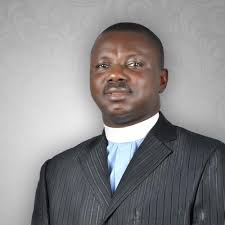
Bishop Julius Laggah

By Foday Moriba Conteh

On the 21st March 2020, a team of Bishops met with His Excellency with regards a statement issued by the Ministry of Social Welfare on the ban of religious gatherings including Church services. Present in the meeting with the President were Bishop J. Archibald Cole, Bishop Arnold Temple, Bishop John K. Yambasu, Bishop Thomas Wilson, Bishop Akintayo Sam Jolly and Bishop Julius Laggah.

During the meeting, all the Bishops unanimously expressed their doubts about the authenticity of the Social Welfare Press Release not too long after the President has made a statement on restrictions of gatherings to not more than 100.

According to Bishop Julius Laggah, who was among the team of Bishops, the President registered his endorsement of the ban on the basis of the quick succession of news both nationally and internationally and passionately appealed to them to accept the ban as it is until the situation is reviewed.

“We had a frank but amicable discussion on the said subject as we the Bishops expressed our concerns and dissatisfaction on behalf of the Christian Church Community as to the way and manner the information was disseminated without any prior consultation with the Church Leadership,” Bishop Laggah intimated.

He noted that the President in his response tendered his sincere apologies on behalf of his Government for the lack of a prior engagement with religious leaders before the decision was made. He intimated that due to the urgency of the situation at hand regarding the Corona Virus and the proactive measures needed at the time necessitated such an action. He said the President reassured them of his partnership with the church and that he is always looking forward to more collaboration in the future.

The team recommended to His Excellency to call for a National Day of Prayer with the collaboration of the church in Sierra Leone for God’s divine intervention to protect the country from the Corona Virus pandemic.

The meeting ended with a brief time of Prayer with His Excellency and a benediction.

Water Crisis, Climate Change & Deforestation Closely Linked

By Amin Kef Sesay

The Minister of Water Resources, PK Lansana after assessment of the information on water availability in the country remarked that it is critical, even though he said his Ministry has adopted short, medium and long term plans to address the problem which in many parts of the country, including the capital city, reaches high stress levels during the dry season.

The 2020 World Water Development Reports reveal that water use has increased six-fold over the past century and is rising by about one per cent a year.

Furthermore, the report highlights the fact that poor water management tends to exacerbate the impacts of climate change, not only on water resources but on society as a whole.

It is estimated that climate change, along with the increasing frequency and intensity of extreme events – storms, floods and droughts, will aggravate the situation in countries already currently experiencing ‘water stress’ and generate similar problems in areas that have not been severely affected.

This year’s World Water Day focuses on water and climate change that from all available evidence are linked to deforestation. To raise awareness, on the Day (Monday March 23rd), the United Nations launched a flagship report which says that reducing both the impacts and drivers of climate change will require major shifts in the way we use and reuse the Earth’s limited water resources.

It is noted that various water and climate change initiatives can bring co-benefits such as job creation, improved public health, poverty reduction, promotion of gender equality and improved livelihoods, further enhancing their attractiveness to donors.

Such a deterioration of the situation would hinder achievement of Sustainable Development Goal 6 (SDG6), which is part of the 2030 Agenda for Sustainable Development, according to which access to safe drinking water and sanitation must be guaranteed for all within 10 years.

This will be a considerable challenge: ­2.2 billion people currently do not have access to safely managed drinking water, and 4.2 billion, or 55 per cent of the world’s population, are without safely managed sanitation.

Thus, the new global report calls for, among others, concrete efforts to address rising water stress and improve the efficiency of water use in agriculture and industry, and it outlines actions in three areas: first, enabling people to adapt to the impacts of climate change; second, improving the resilience of livelihoods; and, third, reducing the drivers of climate change.

Tackling water (in)security and climate change, two of the most critical crises the world will continue facing over the next several decades, ­the 2020 UN World Water Development Report, compiled by the UN Educational, Scientific and Cultural Organization (UNESCO), in collaboration with UN-Water, provides decision-makers with knowledge and tools to craft sustainable water policies, and calls for scaling up investment to put them into practice.

In her message on the Day, UNESCO Chief Azoulay said that with four billion people worldwide are forced to contend with water scarcity. “Without sustainable access to water, we will be unable to achieve goals such as quality education or the development of more prosperous, fairer societies…Given the urgency of the situation, the coming decade needs to be one of action,” she declared.

The 2020 Report, she said, sets out concrete solutions for ensuring access to water for all: improved water resources management, the mitigation of water-related hazards, easier and more sustainable access to sanitation. “Given the urgency of the situation, the coming decade needs to be one of action,” she declared.

“We must urgently scale up investments in healthy watersheds and water infrastructure, with dramatic improvements in the efficiency of water use,” said UN Secretary General Mr. Guterres, adding that the world must anticipate and respond to climate risks at every level of water management.

Everyone, he said, has a role to play. By limiting global heating to 1.5 degrees Celsius, he said, “the world will be in a much better position to manage and solve the water crisis that we all face, which certainly means reforestation.

Action to save the planet and its water will only be useful if future generations were fully involved, including incorporating issues related to environmental education in school curricula on the understanding that climate change will affect the availability, quality and quantity of water needed for basic human needs, thus undermining enjoyment of the basic rights to safe drinking water and sanitation for billions of people.


Arbitrary Arrest in the Spotlight of US Embassy 2019 Human Rights Report 

By Amin Kef Sesay

In this edition of the 2019 US Embassy Human Rights Report featuring Sierra Leone, our focus is on Arbitrary Arrest or Detention, Arrest Procedures and Treatment of Detainees, Denial of Fair Trial and Trial Procedures. Here is what the Report says:

‘’The constitution and law prohibit arbitrary arrest and detention, but human rights groups such as Amnesty International and the HRCSL indicated that Police occasionally arrested and detained persons arbitrarily, including members of an opposition party. The Government allows both the SLP and Chiefdom Police to hold suspects in Police detention cells without charge or explanation for up to three days for suspected misdemeanors and up to 10 days for suspected felonies. The NGO Campaign for Human Rights and Development International (CHRDI) reported cases of illegal detentions at several Police Stations and a correctional center. Chiefs sometimes subjected both adults and children to arbitrary detention and imprisoned them unlawfully in their homes or “chiefdom jails.”

The law requires warrants for searches and arrests of persons taken into custody on criminal grounds, but arrests without warrants were common. The CHRDI and Citizens’ Advocacy Network reported most arrests were made without warrants and that the SLP rarely followed proper arrest procedures.

The law requires authorities to inform detainees of the reason for their arrest within 24 hours and charge them in court within 72 hours for suspected misdemeanors or within 10 days for suspected felonies. Detainees, however, were not always informed promptly of charges brought against them. According to NGOs and inmates, authorities routinely brought remanded inmates to court on a weekly basis to be remanded again to circumvent the legal restrictions.

Despite having been trained on how to apply bail regulations codified in 2018, the Judiciary applied the system inconsistently and sometimes demanded excessive bond fees.

Detainees have the right to access family members and to consult with an Attorney in a timely manner. Lawyers generally were allowed unrestricted access to detainees, but according to the Director of Public Prosecution and the Office of the Legal Aid Board, an estimated 60 percent of inmates received legal representation, although the Center for Accountability and Rule of Law reported 25 percent of accused persons receive legal representation. Only defendants in the military justice system had automatic access to Attorneys, whose fees the Ministry of Defence paid. Although there were 15 State Counsels (Attorneys), the majority worked in the capital and were often overburdened, poorly paid, and available only for more serious criminal cases.

With the exception of the Regional Police Division in Kenema, Police cells generally lack holding areas for juveniles, and as a result, authorities often handcuffed them to windows in police stations.

Arbitrary Arrest: There were reports of individuals held for questioning for longer than permissible under law.

In August Police arrested several prominent opposition APC members on allegations of rioting during an election campaign. They were held longer than the maximum 72 hours without charge but were eventually released on bail.

On August 24, the SLP arrested one voter and one credentialed party agent inside a polling center during an election, later releasing them without charge. In September the SLP reportedly arrested three APC members during a parliamentary by-election in Falaba.

Pre-trial Detention: Lengthy pre-trial detention remained a problem. As of September, 46 percent of the 4,652 persons held in prisons and detention centers had been convicted, 26 percent were on remand, and 28 percent were on trial. The SLCS attributed the high percentage of pre-trial detainees to a severe shortage of legal professionals. Pre-trial and remand detainees spent an average of three to five years in pre-trial detention before courts examined their cases or filed formal charges. In extreme cases the wait could be as long as 12 years.

The constitution and law provide for an Independent Judiciary, but independent observers alleged the Judiciary was not always independent and often acted under the influence of the Government and a network of traditional secret societies, particularly in corruption-related cases.

In addition to the formal court system, local chieftaincy courts administer customary law with lay judges, primarily in rural areas. Appeals from these lower courts are heard by the superior courts. Paramount chiefs in villages maintained their own Police and courts to enforce customary local law. Chieftaincy Police and courts exercised authority to arrest, try, and incarcerate individuals. Traditional trials were generally fair, but there was credible evidence that corruption influenced many cases. Paramount Chiefs acting as judges routinely accepted bribes and favored wealthier defendants. In response the Government sent 36 paralegals to rural areas to provide access to justice and training for chiefdom officials.

The limited number of judicial magistrates and lawyers, along with high court fees, restricted access to justice for most citizens.

The military justice system has a different appeals process. For summary hearings the defendant may appeal for the redress of a complaint, which proceeds to the next senior ranking officer, while the civilian Supreme Court hears appeals in a court-martial. According to Civil Society members and Government interlocutors, corruption is prevalent in the redress system.

Authorities at all levels of Government generally respected court orders.

The law provides for the right to a fair trial for all defendants, but this right was not always enforced.

Defendants enjoy the right to a timely trial, but the lack of judicial officers and facilities regularly resulted in long trial delays. Some cases reportedly were adjourned 40 to 60 times. Trials are public, but NGOs reported that due to corruption they were not always fair. Defendants generally enjoyed a presumption of innocence. While defendants have the right to be present and to consult with an Attorney in a timely manner, many were not afforded access to Counsel. Although the law provides for Attorneys at public expense if defendants are not able to afford their own Attorneys, these Attorneys were overburdened with cases, and often defendants who could not afford to pay for an Attorney had no access to legal aid prior to trial.

Defendants were not always informed promptly and in detail of the charges against them and did not always have access to free assistance from an interpreter as necessary from the moment charged through all appeals. Defendants generally had adequate time to prepare their defenses, although they generally did not have adequate facilities to do so. Defendants may confront or question witnesses against them, and present witnesses and evidence on their own behalf. Police officers, many of whom had little or no formal legal training, prosecuted a majority of cases on the Magistrate level. Defendants have the right not to be compelled to testify or confess guilt. Although the law provides defendants with the right to appeal, delays in the appeals process were excessive, sometimes lasting more than two years. The law extends these rights to all defendants.

In October Parliament passed into law the Anti-Corruption Amendment Act, which strengthened protection for witnesses and whistle-blowers in cases of corruption.

Traditional justice systems continued to supplement the central Government judiciary, especially in rural areas, in cases involving family law, inheritance, and land tenure. The customary law guiding these courts was not codified, however, and decisions in similar cases were inconsistent. Paramount Chiefs have authority over civil matters, such as land disputes, and referred criminal cases to Police for investigation and prosecution. Local chieftains at times exceeded their mandates and administered harsh punishments.

Laws on gender equality were inconsistently enforced, and many traditional courts continued to ignore the rights of women regarding family law and inheritance. Juveniles were afforded few rights in the traditional justice system.”

NP-SL Translates Institutional Mission into Reality

By Amin Kef Sesay

The National Petroleum- Sierra Leone Limited (NP-SL Ltd) is a 100% indigenous company that mainly focuses on the importation and supply of petroleum products and it has been doing so efficiently over the years to such an extent that it has won the minds of many as evident in the daily widening of its customer base.

The company’s Mission is to maintain their dominant leadership position in the country’s local market and strive to operate at sub-regional level by assuring the supply of petroleum products in an environmentally friendly manner while offering superior value for their customers, employees and other stakeholders based on a proud corporate culture with emphasis on safety consciousness, profit optimization, corporate expansion thereby contributing to development.

Since it started operations, the company, through competent managerial steering and selflessness on the part of its shareholders, has been successfully able to crystallize what it originally planned to offer and achieve. Nobody can challenge the indisputable fact that indeed the company is the dominant oil marketing company in the country although it has no monopoly over the sale of petroleum products as there are other companies doing likewise.

However, because the company places priority on optimizing customer care with time it became so endearing to many who are now its most cherished customers. As far as the shareholders and managers of the result-oriented company are concerned their customers come first and everything must be done to ensure that their petroleum needs are met and satisfied. In that regard, the company always strives towards timely securing or procuring of petroleum products which it markets, thereby, minimizing the very occurrence of any form of shortage.

Added to that, the company prudently secured state of the art calibrated pumping machines which were installed at its attractive Filling Stations capable of pumping the exact quantity of petrol or diesel bought by customers. Most that this medium contacted intimated that they always feel satisfied when they purchase fuel at NP Filling Stations because they are confident that they are deriving value for money.

To again prove that they do care for their customers, the shareholders and managers ensured that mini marts should be functional at their Filling Stations from where customers could purchase basic household commodities. These mini marts, some which are still functional, saves customers the precious time of having to go all the way to the central business district, for example in Freetown, to procure basic items as they could easily get them close to their communities.

Still with the objective of making their customers very comfortable, NP-SL introduced two new innovations that have now become useful to many. There is NP Gas and NP Smart Card. NP Gas is a form of cooker that uses gas to power it. Manufactured in different sizes they can be easily refilled and are being sold at reasonable prices. They have been proven to be environmentally friendly and easy to handle.

With regards the NP Smart Card it can be used to purchase fuel without using physical cash. Its biggest advantage is that it prevents individuals to rush to the bank in order to be financially solvent to purchase petroleum products. Sometimes the banks may have closed down to members of the public and if an individual wants to purchase fuel but has no money in his possession such will be a big embarrassment especially on a Friday. It is against such a backdrop that the NP Smart Card comes in very handy and besides it can help promote transparency because whenever fuel is purchased and pumped it is debited from the Smart Card and when the card is loaded it is credited.

Living up to its dream as encapsulated in its mission, NP-SL Ltd has really proven that it is indeed very credible. Commendably, the parent company in Sierra Leone, opened branches in Guinea, Liberia, Ivory Coast and The Gambia and all of them are doing extremely well. They have provided job opportunities; continue to beef up the revenue bases of Governments in those countries and above all complement development interventions through the effective rolling out of its Corporate Social Responsibility.

Indeed, it has been established that the petroleum products imported by NP-SL are of high quality and very good for engines. It must be noted that there are certain individuals who are in the habit of purchasing high grade fuel from NP and clandestinely mix it with another substance, sell it on the black market. The idea is to increase the quantity in order to maximize more profits. NP only sells high grade fuel and therefore it is important for people to realize the difference.

Frankly enough, NP Sierra Leone Limited has truly proven that it is a dedicated and competent company that is contributing immensely towards overall national development.

President Bio Declares State of Emergency for 12 Months

Julius Maada Bio

By Amin Kef Sesay

At precisely 2:00 pm on the 24th March 2020 the President of the Republic of Sierra Leone, Julius Maada Bio, declared, via television and radio broadcast, a State of Emergency which should be in force for twelve (12) months.

According to the President, as a result of the authority vested in him under Subsection 1 of Section 29 of the 1991 Constitution of Sierra Leone, Act No. 6 of 199, regarding the declaration of a state of public emergency, it is his opinion that a situation exists which, if allowed to continue, will lead to a State of Emergency in Sierra Leone.

He furthered that the Corona Virus disease is a highly infectious disease that constitutes a public emergency of international concern that has been declared a global pandemic by the World Health Organization (WHO).

The President said the rapid global spread of the corona virus poses great risk to human life and can cause enormous socio-economic disruption in Sierra Leone. “This situation therefore requires effective measures to prevent, protect and curtail the spread of the corona virus diseases in Sierra Leone,” he told the nation.

He stated that as President of the Republic of Sierra Leone, Supreme Head of State, Grand Commander of the Order of the Republic and Commander-in-Chief of the Armed Forces of Sierra Leone and having regard the threat that the corona virus disease poses to the lives of the people and the economy of Sierra Leone, and the need to take effective measures to prevent, protect, and curtail the spread of the disease throughout Sierra Leone, he thereby, by his Proclamation, declared that a State of Public Emergency should exist in the whole of the Republic of Sierra Leone with effect from the 24th Day of March 2020 for a period of twelve months.

The President said as he stated before he reaffirms the determination of his Government to do everything necessary to protect the life of every Sierra Leonean.

He made it abundantly clear that the declared State of Public Health Emergency is not a lockdown and nobody must use such as an excuse to hoard goods, hike prices or engage in acts of lawlessness. The President underscored that the public emergency is not meant to make the lives of Sierra Leoneans difficult or unbearable.
“We will continue to deploy the armed forces and Police, as necessary, to enforce compliance with all public health directives.

We believe that the actions that we take as a Government will have an impact for the well-being of our beloved nation,” he concluded in his address.


Africell Donates Personal Protection Equipment Kits to MOHS

Chief Corporate Affairs Officer of Africell-Sierra Leone, Joe Abass Bangura doing the symbolic handing over ceremony of the items to the Deputy Minister 11 of the Ministry of Health and Sanitation, Dr. Amara Jambai

By Foday Moriba Conteh

As a way of supporting and enhancing the preparedness against the entry of the Coronavirus in the country, Sierra Leone’s leading telecommunications GSM moblie operator, Afrricell, has on Tuesday 24th March, 2020 donated a consignment of Personal Protection Equipment Kits to the Ministry of Health and Sanitation. The occasion took place at the Ministry of Health and Sanitation Conference Room at Youyi Building in Freetown.

Presenting the items, the Chief Corporate Affairs Officer of Africell-Sierra Leone, Joe Abass Bangura, disclosed that during President Bio’s nationwide broadcast on Thursday 18h March 2020 and a subsequent Press Conference on Friday 19 March 2020, the 1st Gentleman announced enhanced public health and safety measures to prevent the corona virus (COVID-19) from entering the country furthering that these measures are already being implemented. He added that Africell would like to commend the Ministry of Health and Sanitation (MOHS), which even before the President’s announcements had begun rolling out a number of COVID-19 preventive measures more than a month ago.

He noted that just like they did the right things during the Ebola response period, Africell is now pledging its support to the MOHS as it ramps up its efforts to prevent the entry and spread of the CORONA Virus in our nation, through four tangible actions:

  1. Presentation of 40 Medical Boots, 40 Protective Clothing, 40 Protective Goggles, 40 Surgical Masks and Gloves.
  2. Africell also announces the temporary relinquishment of occupancy of one of their Customer Service Outposts to host the Lungi Airport Corona Response Center.

The center, we are told, will be used to coordinate all response efforts at the Airport, for the albeit now limited air traffic into the country following the closure of the Airport to all commercial fights”.

He furthered that the use of electronic money to conduct financial transactions has been cited as an enabler for social distancing, a key virus transmission prevention measure.

In order to encourage their vast number of subscribers to use mobile money to conduct their financial transactions and further reduce face to face interactions, Africell announced the removal of all charges on all Person to Person (P2P) and Wallet to Bank (W2B) transactions for the next 90 Days.

He therefore urged Africell subscribers to activate their Afrimoney accounts and start conducting their financial transactions electronically, benefiting from the free charges and limiting their person to person interaction, keeping themselves and their families safe during this critical period.

“Finally, we also wish to announce that alongside our Media Partner, AfriRadio, we will today launch a Radio Public Information Campaign program on the CORONA Virus response. The program will be aired from 7pm-8pm on Mondays, Wednesday and Fridays and scaled up to a full weekday program as necessary. Similar to our “Join Han for Dreb Ebola” radio program in 2014, this program will be Simulcast on all AfriRadio frequencies in key cities and towns in the country, providing the latest updates on the response from the MOHS and its partners and driving the needed behavioral change from the populace. This program will go on until the current threat posed by the CORONA Virus is neutralized,” he disclosed.

He noted that Africell has a representation in the joint MOHS-MIC COVID-19 Communications Committee and they look forward to working with the Ministry and its partners on other relevant areas, critical to management of the COVID-19 Pandemic response.

“We would like to use this opportunity to appeal to all Sierra Leoneans to comply with all directives and measures announced by the Ministry and WHO. Like we defeated Ebola, together, we can work to defeat the CORONA Virus,” he inspired.

On his part, the Deputy Minister 11 of the Ministry of Health and Sanitation, Dr. Amara Jambai, on behalf of the Government applauded Africell for the donation noting that in a time like this having internal support like this gesture is laudable.

He said that the fight is not limited to certain individuals but it a collective fight which he believes Sierra Leone as a nation will definitely win, stating that the President has instituted some measures which implies that no life should be lost in this fight and not to create any discomfort to citizens.

He called on other institutions and goodwill personalities to follow the footstep of Africell saying he believes that Sierra Leoneans can do it again if they were able to do it again.

He admonished citizens to observe all preventive measures issued by the Government in order to prevent the coronavirus from coming into the country.

Receiving the donated items, the Permanent Secretary in the Ministry of Health and Sanitation, Abdurrahman Fofanah, expressed appreciation to Africell for what he described as a kind and timely gesture at a moment like this, adding that Sierra Leoneans should ensure that they adhere to all directives given by the Government and the Ministry of Health in order to prevent the disease from entering into the country.

Cross Section of members of the High Table

SLCB  Presents Over Le5.1 Billion as Dividend to Pres. Bio

By Amin Kef Sesay

The leadership of the Sierra Leone Commercial Bank (SLCB) met with President Julius Maada Bio on 24 March 2020 at State House to present their 2018 dividend of Five Billion, One Hundred and Thirty Million, Forty-Six Thousand, Six Hundred and Thirty-Six Leones and Thirty-Six Cents (Le 5,130,046,636.36).

Sahr Lahai Jusu, the Financial Secretary at the Ministry of Finance, said that for the first time in the last twelve years the Bank is now able to pay a dividend to the Government of Sierra Leone, one of the shareholders of the Bank.

He noted that over the last two years, they had increased oversight of the operations of the Bank, both in respect to its governance and structure and in respect of the increased management and operational roles they had conducted.

Chairman of the SLCB Board, Dr James David Rogers, said that although they were expected to pay a dividend to Government, the Bank had not been able to do so for quite some time now, adding that it was important that they were meeting Government to pay some dividends. He said they were pleased to be in an upward trajectory and assured that with the policies in place, they were not likely to have any reversal.

On his part, President Bio said that he was pleased to have presided over an important occasion indicative of his Government’s effective and efficient management of the State. He said that the achievement was meant to give confidence to the nation that they could do it with the right political leadership, adding that he was pleased that the Bank had been able to take up the challenge.

“We hope this is the beginning of this trend and next year we will be able to make more money. I want to encourage you all to show the example and I am happy that we have inspired this sort of spirit. We want every other institution to emulate this example. We want to make this country a better place and we have to let our institutions work,” he said.