
Home Blog Page 1169

Stats SL & John Hopkins University to Conduct Ebola Survivors Study

By Fatmata Jengbe

On Tuesday 7 January 2020, a visit by two Associate Professors from the John Hopkins Bloomberg School of Public health was paid to the offices of Stats SL where discussions were held between the Deputy Statistician General, Andrew Bob Johnny, on behalf of the Statistician General, Prof. Osman Sankoh and the visiting team on how the institution can collaborate in a study to be carried out by the Professors on Ebola Survivors in the country.

Speaking at the meeting, Associate Professor Philip Anglewicz, updated officials about the activities of his institution. He disclosed that the John Hopkins University is a private research university in Baltimore, Maryland in the United States, and is desirous of conducting an Ebola survivors study in the country. He said that the visit is aimed at finding a common ground of collaboration with Stats SL on the planned study. The research, he furthered, is important for the establishment of the social features of Ebola, especially as it is now about five years since the end of the epidemic. These social features, he said, have had little or no research done on them since the eradication of the virus in the country.

The research will focus on the long term impact of Ebola on people’s health and the demographic outcomes. He mentioned that his institution believes that Ebola can have more than just physical health impact and can further impact mental health, influence migration patterns and even impact marriage and child bearing.

The main goal of the study is to look at the long term impact of Ebola and the social and demographic outcomes. He disclosed that the study will cover three groups of people. Group one will consist of people who were infected with Ebola and survived, group two will involve the people who lived in the households of people who were infected with Ebola and group three will consist of people who themselves and no one in their household was infected with Ebola. Professor Philip Anglewicz went on to say that they want to identify enumeration areas in three districts, namely: Kono, Kailahun and Kenema. Group one survivors sample size list will consist of 350 people, group two consist of 400 people and group three will also be 400, making it a total of 1100 sample sizes and all these samples will be drawn from the Eastern Province.

In conclusion, he stated that the study will be done in early May and data collection is to start in July and end in October 2020. He disclosed that they got funding from the National Institute of Health in the US with a small grant to conduct this survey, but stated that they are hoping to get a larger grant that will trigger an Ebola study that will be nationally representative.

Giving her own take, Clinical Assistant Professor, Lina Moses, from the Tulane University School of Public Health and Tropical Medicine said that it has to be understood how Ebola survivors and communities that were affected by Ebola are doing now. She continued that their initial concept was to look at Ebola survivors and compare them to family members, household members and dependants of people who died from Ebola. In this respect, they will do a census of Ebola survivors in the eastern province and then the third group will be a population-based sample from the communities that were affected by Ebola. To successfully conduct this study, Associate Professor Moses said that the population size and enumeration areas have to be provided by Stats SL

In his response, Deputy Statistician General, Andrew Bob Johnny, assured both Associate Professors that Stats SL has a sample frame from the 2015 population and housing census, which has enumeration areas. He made it known to them that Stats SL has the required expertise in-house to collaborate and do the study. He asked that an MOU be done that will clearly demarcate lines of collaboration and partnership, spelling out who does what, when, how and where. After which, the concept of the study can be discussed before moving to field data collection, he said.

Being a GIS scientist himself, the Deputy Statistician General stressed the need for a spatial component to be included in the analysis of the research, so that beautiful maps indicating where the survivors are placed, together with other details will be provided. He reemphasized Stats SL’s commitment to collaborate on the study, especially when it hinges on a disease that affected most Sierra Leoneans in more than one way. He concluded by registering his appreciation to the team from John Hopkins for coming, whilst promising to pass on the key agreements and discussions from the meeting to his boss, the Statistician General, Prof Osman Sankoh, who was unavoidably absent.

Present at the meeting were the Director of Demographic, Health and Social Statistics, Sonia Jabbi, Director Of Censuses and Geographic Information System, Abdulai Brima, Director Of National Statistical Systems, Francis Tommy and the Director Of Communications and Public Relations, Samuel Ansumana. All made meaningful contributions to the discussion.

Economist Prince Macauley Score Card Mirror’s Lapses in the Basic Education Ministry

Economist Prince Macauley

By Foday Moriba Conteh

According to Economist Prince Macauley the score he gave the Ministry of Basic Education is a justifiable reason why the then Minister, Alpha Timbo, who was there by then  has now been relieved from his position. It could be recalled that few months ago, the Economist came up with a score card concerning various Government Ministries. He took months, looking at certain parameters, to arrive at the conclusion he made about each Ministry.

Noted among the mediocre Ministries was the Ministry of Basic Education where Alpha Timbo was the then Minister and Economist Macauley then gave it a paltry 55%.
During that period of assessment, various analysts wondered why giving it such a pass mark considering the fact that the Free Quality Education simply because they believe much has not been accomplished in terms of implementing the initiative.
As some questioned the integrity of the score card itself ,however, Mr Macauley stood his ground making it categorically plain, during several interviews he granted the Press, that he did his research well.

A school of thought has established that recent events and developments have clearly vindicated Mr Macauley.
Among the areas researched by Mr Macauley was the disbursement of free text books and free school meals meant for school going kids in certain parts of the country. Mr Macauley found out that there were certain things wrong with regards doing so.
Now the Anti -Corruption Commission boss, Ben Kaifala Esq, has called into question the way the distribution of the said items were done by some officials of the Ministry of Basic Education and the New Direction Government headed by HE President Bio. Government has now relieved the then Minister and his deputy as well as the Permanent Secretary and other Ministry staff of their duties as they are being investigated by the ACC.

Speaking to this Press, Mr Macauley said that he will soon be coming out with an Integrity Scorecard on the Ministry of Lands where he has done a thorough research on the activities of certain rogue surveyors. He said he envisages looking into the activities of the whole Lands Ministry itself especially at this point in time when many citizens are feeling disadvantaged by the actions of the Minister, Dr Sandy.
Mr Macauley will be delving deeply into the Energy Ministry and will be asking questions as to why the city is still in pitch darkness despite efforts said to be made by Government to address the problems related to the electricity sector and try to examine why tariffs are high.


Tacugama Chimpanzee Sanctuary & NPAA Co-Managing Loma Mountains National Park (LMNP)

The National Protected Area Authority (NPPA)

By Foday Moriba Conteh

Loma Mountains National Park (LMNP) holds the Highest Concentration of Chimpanzees anywhere in West and Central Africa. It is one of the four national parks in Sierra Leone, and is regarded as one of the most biologically-diverse forests in the country of both flora and fauna species and home to 20% of Sierra Leone’s chimpanzee population. The spread of logging to the periphery and in some cases the buffer of LMNP has led to several changes in the social structure and function of the communities close to the Park. As a result, this has increased the threat level on the biophysical status of LMNP as well as the Critically Endangered Western Chimpanzees.

In March 2019, The Tacugama Chimpanzee Sanctuary (TCS) research team conducted a chimpanzee nest count survey done in LMNP, as part of a one-year project funded by the U.S. Fish & Wildlife Service (USFWS). The survey confirmed that the estimated chimpanzee density for the LMNP is 4.81 chimpanzee/km2 and harbours a population of 1,390 chimpanzees [range: 819-2361] a 79% higher as compared to 2010’s Sierra Leone National Chimpanzee Census Project conducted by TCS. The recorded density represents the highest concentration of chimpanzees anywhere in West and Central Africa.

LMNP is without a doubt a stronghold for a significant chimpanzee population. There is the need to protect Sierra Leone’s national animal and safeguard one of the highest densities of chimpanzee population anywhere in Africa. This can be achieved by:

* Raising awareness and educating the communities concerning the dangers of deforestation, and poaching wildlife (especially endangered and critically endangered species).·

* Strengthening community conservation through alternative livelihood initiatives and job creation opportunities such as bio-monitoring technicians and eco-guides;

* Undertaking strict monitoring and patrols around the National Park to stop illegal activities.

In addition to the chimpanzee census, here are some of the key activities delivered by Tacugama in LMNP during 2019:

* Hired and training community members as eco-guides to patrol around the National Park;

* distributed groundnut seeds, rice and goats to communities around LMNP;

* 27 farmer groups were registered under the Ministry of Agriculture and Forestry (MAF)

* Held community meetings in 16 villages and two towns on the importance of LMNP, the wildlife and the national park status, ecotourism;

* Planted over 20,000 trees in LMNP’s buffer zones;

* Conducted a 12-day ranger refreshing training.

Overview of Ranger Training

Tacugama welcomed the State Rangers from 3 different National Park for a 12-day refresher training in collaboration with NPAA, ISAT, RSLAF, SLP and Loma Community eco-guards. The training, sponsored by USFWS, was geared towards benefitting the safeguarding of endangered western chimpanzees and other wildlife of the Loma Mountains National Park, Western Area Peninsula National Park and Gola Rainforest National Park, respectively in the NE, SW and SE of the Republic of Sierra Leone. The training which concluded on 12th December 2019- marked the extension of Tacugama’s activities towards a holistic approach to conservation in Sierra Leone through livelihood, education, research, wildlife law enforcement and park management.

Ecotourism in LMNP

Tacugama intends to establish an ecotourism venture in LMNP to ensure the project’s sustainability and promote the area’s rich biodiversity (both locally and internationally). LMNP covers 288.5 km2 and the mountains are a granite massif, the tallest of which is Mt. Bintumani, at 1945 m, the tallest peak in West Africa west of Mt. Cameroon. There are 9 species that are endemic to LMNP and 13 additional species have been recently discovered that were previously not recorded before.

Due to LMNP’S altitude, there is a rich bird fauna (332 species) including many species not found elsewhere in the country. While on the ground, the presence of forest elephants, golden cats, bay duikers, black duikers, bongos, forest buffalos, leopards and water chevrotain confirms LMNP’s diverse wildlife inventory. Although not part of the chimpanzee survey, observations of the elusive Pygmy Hippos as well as White-necked Picathartes nests were also recorded due to their uniqueness. Picathartes nests were recorded in three different locations inside the LMNP.

Call for Support

Tacugama strongly urges the Government of Sierra Leone and the National Protected Area Authority (NPAA) in charge of supervising all protected areas in the country and its biodiversity to secure efficient and effective measures to protect the LMNP in conjunction with Tacugama.

Health Ministry & Partners Review Interactive Radio Programme  

Programme Manager, Health Education Division and Communications Lead at the Directorate of Health Security and Emergency, Harold Thomas

By Ibrahim Sorie Koroma

In a recent move in order to make its work a little bit easier and efficient, the Ministry of Health and Sanitation together with its partners have reviewed phase six of its UNICEF supported Nationwide Interactive Radio Discussion Programme in Kono and Moyamba Districts on Tuesday 7th and Thursday 9th January, respectively.

The Interactive Radio Discussion Programme comprise over 42 radio stations across the country, broadcasting health and other issues of public health concerns/importance to reach different communities and targeted audiences to change behaviours and create demand for the essential health services provided by the Ministry of Health and Sanitation and partners. For transparency and accountability, the radio programme was monitored by Civil Society Organization, Health for All Coalition (HfAC), which presented Independent Monitoring Report of each phase of the interactive radio programme in every regional review meeting.

In his opening statement, Programme Manager, Health Education Division and Communications Lead at the Directorate of Health Security and Emergency,  Harold Thomas said that the radio programme  started some time in 2018 with the first phase, and since then, they have progressed onto phase six, which they were reviewing in Kono and Moyamba. “The programme is done in phases and each phase covers a period of three months and each phase is followed with a regional review meeting”, added Mr. Thomas While giving out the key objectives of the review meeting, he said that they were reviewing the phase six radio programme to improve the implementation of subsequent phases of the nationwide interactive radio programme and to develop phase seven district media plans for better  implementation  of  the programme  in the period under review (March –May, 2020).

He also urged radio station Managers to allocate additional slots to the programme, apart from the programme designed, paid for air time, and that they should continue doing their usual radio health discussion programmes, as it will be good for sustainability. Following the completion of phase five media programme in 2019, Civil Society Organization, Health For All Coalition embarked on an Impact Assessment on the Nationwide Interactive Radio Programme, which was to investigate the level of awareness of communities and beneficiaries with regards to certain positive health seeking behaviours that could have been influenced as a result of the nationwide interactive Radio discussions health program and to know the percentage of beneficiaries who can cite some positive change to certain health seeking behaviours, by listening to the radio interactive health discussion program and to determine the percentage of beneficiaries who stated that the interactive radio discussion health programs motivated them to demand for health services.

With that, Health for All Coalition Programme Manager, Alhassan Bakarr Kamara, presented key highlights of the Independent Impact Assessment Findings and stated that Individual awareness of the interactive health radio discussion program stands at 65%, which means a good percentage of individuals (35%) are not aware of the interactive radio discussions conducted.

He continued that an identifiable barrier, especially in rural communities, is access to a radio set, which poses a major barrier to radio listening at community level, which accounts for 47% of participants who claimed that they don’t have access to a radio set and 53% participants claimed that they listen to radio regularly and 47% claimed they don’t listen to radio at all.

Mr. Kamara added that among those who listened to radio regularly, 88% claimed that they have listened to the weekly interactive radio discussion programmes, while 12% claimed that they have never listened to  any of the interactive radio discussion programs.

He continued that majority of those who listened to the radio discussion programmes are male, which accounts for 69%, while 31% are female.

According to Mr. Kamara, women participation and listening to the interactive health radio discussions is a challenge, because of certain cultural barriers, as women in rural communities can’t discuss certain sensitive issues publicly without the consent of their husbands/partners, while low educational level or illiteracy among rural women also plays a part.

“The most listened to health topics are; Immunization/Marklate (75%), Free Health Care (70%), Teenage pregnancy(68%), malaria(65%), maternal death(60%), Diarrhoea and Flooding (57%), Anti Natal Care/Post Natal Care (56%), Sexually Transmitted Infections/HIV (51%) and the least is Caustic Soda egestion, which stands at (33%)”, Mr. Kamara Concluded.

Over Rice Scam… President Bio Throws Alpha Timbo Out

Labour Minister, Alpha Timbo

By Sam Pratt

According to a Press Release issued from State House on Friday 10th January 2020, the Labour Minister, Alpha Timbo and three other senior government officials have been relieved of their respective duties until further notice. This action by State House is in connection with investigations on-going in an alleged corruption case involving a rice donation from China.

President Julius Maada Bio’s office said in a terse statement that Labour Minister Alpha Timbo was suspected of “improper activities” relating to “a huge quantity of rice” donated by Beijing.

The four officials include the Minister of Labour and Social Security Alpha Timbo, formerly of the Ministry of Basic and Senior Secondary Education, Mrs. Emily Kadiatu Gogra, Deputy Minister of Basic and Senior Secondary Education, Charles Kamanda, Permanent Secretary, Ministry of Basic and Senior Secondary Education, and Ms. Mamusu Massaquoi, Director of Nutrition, Ministry of Basic and Senior Secondary Education.

Yusuf  Keketoma Sandi, a spokesman for President Bio, said that the Anti-Corruption Commission was investigating the matter.

“We have to ensure that we once again restore probity in governance in Sierra Leone,” he said. Timbo was not immediately available for comment.

However the removal of the Minister of Labour and Social Security who until recently was Minister of Basic and Senior Secondary Education has given credence to President Julius Maada Bio’s New Direction government’s sincere commitment to the fight against corruption in the country. Many citizens see this action by State House that nobody is above the law in the government of the ‘Tok and Do’ President, whose strides have earned Sierra Leone the highest scores in the fight against corruption ever in the Millennium Challenge Corporation (MCC) indicators in the sub region.

This event involving Minister Timbo, a high ranking SLPP/PAOPA strategist, presents Sierra Leoneans with assurance and indeed optimism that the Government’s determination transcends partisan politics.

Sierra Leone is one of the world’s poorest countries and is still recovering nearly two decades after the end of a civil war which claimed some 120,000 lives.

The diamond-rich former British colony is ranked 129 out of 180 in Transparency International’s latest Corruption Perception Index.


Govt. to Decide Over Using the Leone or Eco

By Amin Kef Sesay

Government of Sierra Leone has made it categorically clear that the pending decision by member countries of the West African Monetary Zone would determine its position on the West Africa single currency, Eco.

The Bank of Sierra Leone on January 9 made an announcement that the country would continue with the Leone as the legal tender until the meeting of the committee of board of Governors of West African Monetary Zone slated for January 16 is held.

This announcement comes in the wake of reports of the adoption of the Eco as a single currency by member countries of the French speaking West African Bloc, the West African Monetary Union, better known by its French acronym UEMOA. That decision by UEMOA has sparked debate about the fate of the West Africa wide single currency by the same name of Eco, which has been the subject of discussion for the past two decades.

“The public is hereby informed that Sierra Leone’s position on the issue will be announced after the meeting. Meanwhile, until Parliament legislates otherwise, the Leone continues to be the legal tender of Sierra Leone,” the statement, signed by Governor, Kelfala Kallon issued by Bank of Sierra Leone revealed.

The statement also revealed that next week’s meeting being organized by the West African Monetary Institute would discuss the implications of the development and take a central position for the five member English speaking West African Monetary Zone (WAMZ) countries.

The Eco is the proposed name for the common currency that the West African Monetary Zone (WAMZ) plans to introduce in the framework of the Economic Community of West African States (ECOWAS) will be using. After its introduction, the goal is to replace the West African CFA franc (used by most French-speaking members of ECOWAS since 1945) with the new currency. This will create a common currency for much of West Africa.

Govt. Shows Willingness to Pay Fees for Limkokwing Students – Gilbert Cooper

Permanent Secretary of the Ministry of Higher and Technical Education, Gilbert Cooper,

By Brima Sannoh

The Government of Sierra Leone has expressed its willingness to pay the fees for certain embittered students of Limkokwing University who out of deep frustration on the 9th January 2020, staged a peaceful protest in front of the Ministry of Higher and Technical Education at New England Ville in Freetown.

The protest was precipitated by the marathon negligence of the Government to pay fees for students at the above-mentioned university.

The peaceful gathering, which constituted mainly students of the university, was disrupted by the Sierra Leone Police, who fired tear gas and arrested seventeen students.

The Government of Sierra Leone, under the President Koroma’s led administration, awarded scholarships to over one thousand (1000) students to study various courses at the Malaysia private university in 2014.

Those students intended to register their displeasure through a peaceful protest over the snail pace of the New Direction administration to address their fee constraints.

One of the aggrieved students, Musa Kamara, expressed frustration that they should have resumed classes for semester four (4) and semester eight (8) but because of the snub of the Government to pay their fees, the resumption of their classes have been deferred three consecutive times since September.

He claimed that for the past two years, their fees have been paid by the President and Proprietor of the University, Dr. Paduka LimKokwing, and that a single dime has not been paid by the new Government.

“This New Direction administration should not say because the University was not established under their regime and will not pay our fees. As far as it was the Government of Sierra Leone that awarded us the scholarship, I believe it should be continuity by this current Government, because we are Sierra Leoneans and the flagship programme of this new Government is free quality education,” she said.

However, Permanent Secretary of the Ministry of Higher and Technical Education, Gilbert Cooper, said it was unfortunate on the part of the university administration to have sent the students out of college in the first place, because his Ministry inherited the problem students were now experiencing.

He said that when they assumed office, the university made a presentation to the Ministry that the previous Government owed them twenty-five billion Leones as backlog, but that they negotiated with the university to pay twenty-three billion Leones.

He claimed that the current Government has paid twenty-two billion Leones, remaining one billion Leones.

He said they consented as a Government to continue paying for students that were awarded scholarship, but that the university should cater for the new set of students applying for the same grant-in aid.

“We have other public universities such as Fourah Bay College, IPAM, COMAHS, Njala University, Ernest Bai Koroma University, and the Milton Margai College of Education. All of these universities and colleges still have outstanding subvention which has not been paid to them. All these backlogs since 2015-2019 have not actually been paid by Government and it has accumulated so much,” he said.

He said plans were underway to engage the Ministry of Finance to pay all the backlog subventions to all tertiary institutions and not just Limkokwing.

He said that as a Government, they will engage the Limkokwing Universiy administration to allow students to resume classes.

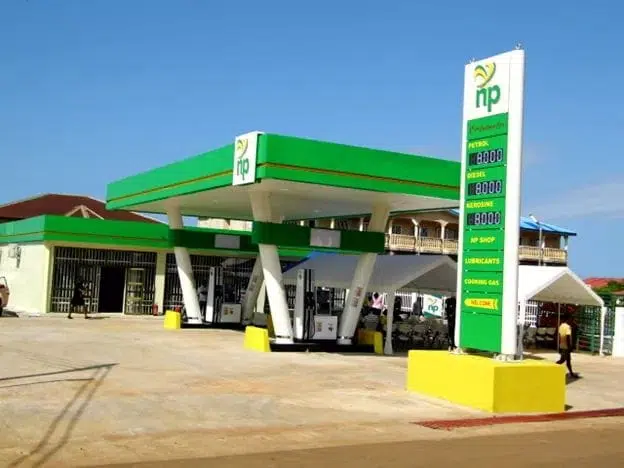
Pro-Activeness Makes NP-SL the People’s Choice

By Amin Kef Sesay

The National Petroleum- Sierra Leone Limited, NP (SL-Ltd) is tirelessly working round the clock, engaging oil producing companies in business discussions, to always ensure that supply is continually flowing or maintained. This pro-activeness, on the part of the company, has made it quite possible for stocks to last over periods of time in order to avert the occurrence of shortages.

Interestingly, NP-SL is not a Government entity or appendage; no politician has a share in it, as its shareholders are mere ordinary Sierra Leoneans, starting with 35 of them, who some time ago, bought shares from the Government out of their end of service benefits to establish what today has become a towering entity (NP-SL) to reckon with in the business landscape.

As had been fallaciously propagated by certain ill-motivated persons, who do not mean well for this country, that there are certain politicians that have vested interests in the company, our investigations have proven otherwise.

NP-SL is a 100% indigenous company to the letter and it has weathered various storms that could have dwarfed it or left it to extinct, save for therapeutic intermittent Managerial injections that has kept it upright and on the right course.

Demonstrating its true Sierra Leonean identity, the company has maintained a policy of strictly adhering to the Local Content Policy; ensuring that it has a maximum indigenous staff in its employ. What this actually means is empowering our brothers and sisters to access employment opportunities and reduce poverty.

As a matter of fact, some of its members continue to benefit from various trainings that have afforded them the conduit to imbibe useful skills to efficiently carry out certain tasks. If we are counting the number of companies that have upheld the Local Content Policy, without any iota of doubt, NP-SL could be seen at the top.

This intrinsic nationalistic posture of the company runs through and it is a sine qua non to overall national development. If such a compliance rate should have been followed by other local companies, willingly, without any pressure from the relevant authorities, then indisputably this country should have been miles away in its development trajectory.

Business Management experts have made it abundantly clear that the way and manner, in which customers are cared for in terms of talking to them, making them feel at ease, go a long way in attracting them. Such should be done sincerely in order to make them more important. NP-SL for a very long period now has mastered that art and executing it so well, which definitely is paying dividends.

1st for Customer Care was earned by the company because it has been widely acclaimed by many for solidly executing such.

In its drive to optimize customer satisfaction the company went the extra mile to install calibrated pumping machines, which are not only modern but trustworthy, as opposed to old pumping machines which certain unscrupulous individuals used to cheat unassuming customers.

This is helping to repose confidence in customers that they are dealing with a very transparent entity. The friendliness of their pump attendants is very impressive and they are always there to timely respond to various concerns.

Still within the purview of 1st for Customer Care, the company is always in position to enter into payment plans with its reliable and dependable customers including Ministries, Departments and Agencies for supplied fuel and lubricants, as long as all the necessary modalities have been put in place.

When cognizance is taken of the fact that some of these institutions receive intermittent budgetary allocations, then such an arrangement is very significant. Its significance in real terms borders on functional continuity of those institutions, as they will be assured of supplies of petroleum products in as much as they keep honoring their obligations.

For those who have not tried NP Gas for the first time, it is now time to give it a try. Designed in sizable varying cylinders and sold at various NP Filling Stations, this cooking device has been rated as one of the best that is on offer for sale. NP Gas is safe, user friendly and portable. Trying it will spur you to recommend it to others.

NP Smart Card is now in vogue and is one of the latest technological devices used to purchase petroleum products. Using it has attendant advantages, as evident in procuring fuel at any time of the day even during times when monies could not be accessed from banks. It is secured, easy to use and very quick. It is now trending.

To crystallize proposed projects into tangible realities on the ground, Government needs the required financial resources to effectively do so and one sure way is from collection of taxes, which is the mandate of the National Revenue Authority (NRA).  NP is one big tax payer to Government and it has been doing so timely.

NP-SL still yearns for the day to come when all public and private indebted debts will be settled, because it will give the company the requisite financial muscle to continue its pro-active stance in ensuring that quality service delivery is sustained. Again it will be in a very more advantageous position to step up its positive contributions to the socio-economic development of the nation.

Kanja Sesay Discusses Energy Transformation at 10th IRENA Assembly

150 Countries gather for discussions on energy transformation at 10th IRENA

By Theresa Kef Sesay

In Abu Dhabi, United Arab Emirates on 11 January 2020 the 10th Assembly of the International Renewable Energy Agency (IRENA)  brought together decision makers from 150 countries, in total, more than 1,500 delegates that participated in a  meeting held annually by the world’s lead intergovernmental organisation for energy transformation.

The 10th Assembly represents a curtain-raiser to a decade in which the world must achieve the Sustainable Development Goals (SDGs) established by the United Nations and adopt a climate safe energy path. Renewable energy is recognised as playing a central role in the achievement of several goals including energy access (SDG 7), climate safety (SDG 13), sustainable economic growth (SDG 8) and sustainable cities (SDG 11). A report published yesterday by IRENA found that jobs in renewables could reach 40 million by 2050 under a climate-safe energy scenario.

In opening remarks addressing his first Assembly, IRENA Director-General Francesco La Camera, said: “We have ten years left to fulfil the commitment set out in the 2030 Agenda for Sustainable Development. This period will also be decisive for the ability to hold the line on rising global temperatures. Transitioning to clean energy systems is at the heart of these global agendas. And renewable energy increasingly plays a major role in national development and climate strategies.”

He continued: “We have renewable energy at our disposal today to make the future more predictable, more prosperous, more inclusive, and more secure. But it is now that we need to make the right decisions, so that the benefits of accelerated deployment can unfold worldwide.  We enter the next decade with confidence because of your support and active engagement.”

He concluded: “United behind IRENA’s mission, we are setting the stage for success.”

Sierra Leone Energy Minister; Alhaji Kanja Sesay will return home with a deep sense of optimism and hopes for a greater future as he restlessly continues to search for a lasting solution to the country’s seriously challenged electricity.


Internal Affairs Minister Launches Police Strategic Development Plan

Minister of Internal Affairs, Edward Soloku

By Foday Moriba Conteh

In a bid to properly and judiciously carryout its mandate the Sierra Leone Police on Friday 10 January 2020, launched its strategic development plan for 2020-2024 at its Headquarters on George Street in Freetown.

In his statement while launching the Strategic Development Plan (2020-2024) Minister of Internal Affairs, Edward Soloku, disclosed that his Ministry oversees the Sierra Leone Police, the institution responsible for maintaining the internal security of the State, adding how the Strategic Plan will be a guide and help citizens to know which direction the SLP is moving in discharging their duties

He applauded the Inspector General of Police, Dr. Richard Moigbe and the entire membership of the Force for holding the fort adding that there have been some improvements on the operations of the Police but urged them to double their efforts.

The Minister called on all Sierra Leoneans to support the SLP saying it is the responsibility of everybody to ensure that the State is secured.

He noted that the Plan set out five strategic priority areas for the next five years which he underscored are the core businesses of the Force to carry out their mandate.

Minister Soluku further noted that the accountability framework of the SLP is another strategic area highlighted in the plan which he said is very important for the development of the SLP.

The Internal Affairs Minister assured the SLP that tremendous efforts will be made to ensure that the SLP is adequately resourced in order to roll out the Strategic Development Plan 2020-2014 stressing that it will help the Police to build public confidence and become formidable.

Deputy Head of ISAT, Mark Katta, also expressed appreciation to the Sierra Leone Police for the tremendous work they have been doing over the past years. He said ISAT is proud to have been working alongside the SLP, adding that the Strategic Development Plan represents the views of Sierra Leoneans as before the launch of the plan for 2020-2024 there was a perception survey to seek the views of Sierra Leoneans on the activities and operations of the Police.

He disclosed how ISAT has helped the Police with the printing of three thousand (3.000) copies of the strategic development plan.

Inspector General of Police, Dr. Richard Moigbe, in his statement informed that the strategic development plan 2020-2024 is not only important but timely for the Sierra Leone Police, adding that the document cuts across all sectors of the Police.

He noted that strategic development plan is an embodiment of various views as they were captured widely on how they want to see the Force.

The IG added that the Police assured Sierra Leoneans that at the end of the implementation of the strategic development plan (2020-2024) activities the SLP would have contributed to the achievement of the internal security strategy of the State.

In her presentation, Director of Corporate Affairs, AIG Memunatu Borah Konteh Jalloh, disclosed that the objective of putting together such a Strategic Development Plan (SDP) is to keep the people of Sierra Leone safe by working with partners to prevent crime and to protect the people, underscoring how achieving that could help enhance a very cohesive and fruitful relationship with the communities they serve, and eventually reducing crime and harm across those communities.

She noted that the SDP represents the contributions, views, feedbacks and perceptions of the general public, partners, officers and staff, disclosing that a perception survey was conducted to seek the opinions of Sierra Leoneans across the country about what they think about the Sierra Leone Police and what it should do in the future.

AIG Memunatu Borah Konteh Jalloh extended appreciation to the International Security Advisory for their continuous support to the Sierra Leone Police, and called on other Ministries, Departments and Agencies to support them in achieving what are encapsulated in the strategic development plan.