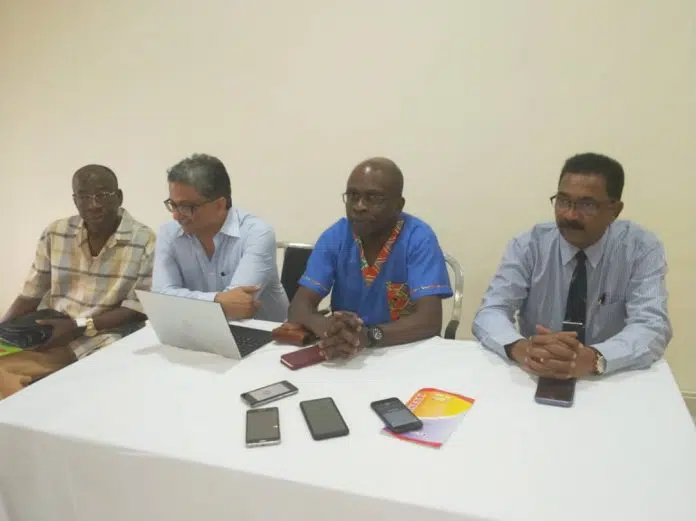
In a new development, the Executive members of the Sierra Leone Red Cross Society led by its Secretary-General, Kpawuru Sandy, updated His Excellency President Dr Julius Maada Bio on the 19th November,2019 on their operations and activities in the country.
He said that they deeply admire the disciplined and courageous leadership of President Bio, adding that they were truly inspired by that. He said the Red Cross Society had been a reliable partner to Sierra Leone, noting that since 1962 their volunteers across the country had supported the government and vulnerable people as well as helped to alleviate human suffering and promoted respect for human dignity.
“During the outbreak of the Ebola Virus Disease, the Red Cross Society stood with the Government of Sierra Leone. Our volunteers, across the country, led safe and dignified burial activities and psychosocial support. Also after the mudslide, we were around to provide search, rescue and relief support. That has been our mandate since our establishment. We have 18,000 volunteers across the country who are community-based, trained and capacitated to support our people whenever the need arises,” he said.
Mr. Sandy commended the President for introducing the Free Quality Education Programme, saying that that had led to the influx of pupils into schools and provided an opportunity for the Red Cross to strengthen their activities around fostering, sensitising and empowering students to be lifesavers. He added that across the country they had been able to improve on their activities with school clubs and assured that they would continue to empower children with lifesaving skills that would help the nation.
In his brief response, President Bio said: “I thank you for coming to present the situation of the society to us and to thank you for all you have done for this nation. The Red Cross Society has been part of our development process and the challenges we have had. We appreciate your efforts and we would continue to work with you”.
The winner of the first Sierra Leone Correctional Service Beauty Pageant, 15th November 2019- Sia Kemba (from the Bo Correctional Centre) said her highest aspiration in life “is to make other people’s lives better” than hers.
Sia explained that she had always had the feeling that she would come out top of all the other nine contestants, because right from the training, she excelled.
Asked whether she had had any previous experience in pageantry, her reply was “no”, adding she had always admired those who she had been seeing on TV in such roles.
The Corrections Beauty Queen was born in the year 1999, in Kangamagowahun, Kono District (East). She used to live with both her parents, until she lost her mother in 2011. That situation forced her to move down to Bo District (South) to settle with one of her paternal aunts, who saw to it that she got admitted into one of the Junior Secondary Schools in Bo, where she obtained Junior School level 3 education.
Miss Kemba, like every other normal child did routine house chores for her aunt and helped her (aunt) in petty trading as well, to bring some income into the home.
Everything seemed to be moving in the right direction, until she came in contact with one young man in Bo, a commercial bike rider. He wooed her, ended up succeeding, and impregnated her in 2016.
By then, she was seventeen (17) going on eighteen (18) years, and had just sat to the Basic Education Certificate Examinations (BECE).
The circumstance forced her aunt and some other family members to summon to their home, the man who had impregnated her, so he could own up to the pregnancy. When that was out of the way, Sia was asked to go and cohabit with the man. She stayed with him until she put to bed, onwards.
When the child was ten (10) months old, she and the father of the child, had a fight: “One evening, I was home, sitting outside with some friends and neighbours.
We were having fun discussing different things. Around 9pm, my child’s dad came home with another woman, and passed with her in front of me. I wondered what was happening, because he and I hadn’t any misunderstanding that day. I approached him in a wrong manner, so he got angry and started beating me like some Judas dummy.”
Asked if she had been seeing him with other ladies before the incident, she said “yes”, adding she had been ignoring him, so that peace could reign between them.
The twenty (20) years old Corrections Beauty Queen recalled that the day he brought another woman into their home was the highest height of his womanizing. Her anger reached fever pitch, especially when he hit her indiscriminately, until she almost became unconscious.
“People tried to put an end to the fighting, but I had already picked up a knife- like metal which I slotted into his left side rib. His body started oozing blood. He was rushed to the hospital, but he couldn’t survive beyond the following morning. It then dawned on me that I had taken the issue to far. I was immediately repentant, and wished that I could turn back the hands of time.”
She was arrested by the police; sent to court, where she pleaded guilty to the crime of manslaughter, and was sentenced to five years in jail, in late 2017. She was incarcerated at the Bo Female Correctional Centre, without her child though. According to her, the child was snatched from her care by the child’s paternal relatives.
They told Sia that she will never lay a finger on the child anymore, calling her a “witch”. The child is now two years, plus.
“I miss my child, and I am deeply worried that I might never feel the warm embrace of my child again; my relatives informed me that they have been going there to see the child but they have not been getting the kind of reception they would have wanted, so they stopped,” she lamented, as tears rolled down her cheeks.
Miss Kemba has been in Bo all the while, until she was spotted for the 2019 Miss Correctional Beauty Pageant. The escort unit in Bo brought her down to Freetown, three weeks before the contest, so she and her co- inmates could be properly schooled in pageantry.
On the D- Day, the program started around 1pm, by then guests had already arrived with high anticipation of a fun filled day, so they didn’t mind waiting. Famous artistes like Arkman, Steady Bongo, Wahid, and others performed live, on voluntary basis. On top of it all, the Africa Young voices Media Empire livestreamed the program on both their TV channels and on their Facebook page as well. People from all over the world watched the entire program. The program was blessed, to say the least. It will go down in history as first of its kind in West Africa, and second in Africa, after Kenya. The program has made the SLCS become the cynosure of all eyes.
Ten (10) female inmates from different parts of the country, including Freetown contested competitively for the crown. One philanthropist, who insisted that her name should not be mentioned donated the sum of six million Leones ($600) to be shared among the winner, first runner- up, second runner- up, and third runner- up. Four out of the ten.
The winner received the sum of three million Leones, the first runner- up received the sum of two million Leones, the second runner- up received the sum of 1 million Leones, and the third runner- up received the sum of five hundred thousand Leones.
Bank accounts have been opened for the four of them at the Rokel Commercial Bank. Their cheque books will be in possession of the Female Correctional Centre’s Welfare Officer. Should the inmate(s) need to make use of the money to buy something or to give to a relative or a friend, the inmate(s) will sign the cheque book indicating the amount they want to be withdrawn, for the Welfare Officer to go and cash it.
While she was being crowned winner, tears flooded down Miss Kemba’s cheeks. She said it was tears of joy and sadness, because she remembered what brought her into the centre. Remorseful, Sia revealed that one should never think of doing what she did.
“It’s not something I am proud of. It’s stigmatizing, and it has stained my conscience. I just hope that people will use my experience to stay away from bad behaviour. When I get out of here, I’ll spend most of my time motivating people to achieve what they will.”
Sia Kemba said she does not have any plans for the money yet, “but I have intentions of helping my child buy some schooling materials, if my late spouse’s relatives demand it so; I also intend to go back to school and finish. After which, I will go on and become a military officer”.
In her usual passionate manner, Her Excellency the First Lady of Sierra Leone, Madam Fatima Maada Bio, has Monday, 18th November, 2019 put forward a strong statement on the position Sierra Leonean women and girls – their struggles and vulnerability during a two-day roundtable luncheon gathering of prominent business women, CEO’s from across Africa and the United Arab Emirates (UAE) in UAE’s capital Dubai. The aim of the luncheon was to exchange experiences about the opportunities and challenges for women in business, while exploring potential synergies.
HE Fatima Maada Bio said that women have long provided the engine that powers Sierra Leone economic even though they face obstacles in trying to fulfill their potentials as entrepreneurs and breadwinners as far back as the 19th century Krio women from Sierra Leone traded in goods all along the West African coast. Later other pioneering women made a name for themselves in business and championing the rights of fellow women.
Fatima Maada said that in 1923 one such pioneer Adelaide Casely-Haywood fought against skepticism and chauvinism to found the Girls Industrial and Technical Training School in Freetown, the first such institution for girls anywhere in West African with the aim of achieving economic self-sufficiency.
Fatima said that women struggling against the odds to make their own ways in life that have been the hidden history of Sierra Leone. That is still the true story of Sierra Leone’s economy today as an estimated 40% of Sierra Leone GDP is produced through the unpaid work of women. According to her, this lack of economic power has a direct impact on ordinary Sierra Leoneans’ ability to work themselves out of poverty.
Fatima Bio said across the world women on average reinvest 90 of their income back into their families -compared to between 30-40% of men.
“For the most part they spend their money on their children – providing them with shelter, putting food on the table and clothes on their backs and critically putting them through school in the hope of giving them better lives and finally end the back breaking cycle of poverty,” she pointed out.
Despite forming the backbone of Sierra Leone’s workforce, women face many obstacles to their success in business and indeed in their wider day-to-day lives.
“Too many in Sierra Leone still have not learned the lesson of Adelaide Casely-Harwood and the generation of other women entrepreneurs before and since. They still seem to believe that education is just for boys.
They see girls and women as second-class citizens who should take back steps. Too often they are married off as teenagers, overlooked for education, excluded from the decision making and denied ownership and access to land and other economic opportunities,” she intimated the audience.
Her Excellency Madam Raja Easa Ai Gurg, congratulated her colleague first ladies for their tremendous jobs in the promotion of women equality in their different nations. She said the gathering is occurring at a time when Governments around the world are recognizing the crucial role women empowerment is playing in driving economic growth adding that inclusive societies are more prosperous societies.
“Countries with more employment opportunities for women increase the possibility for their economic growth,” she said citing Sweden as an example whose GDP is over $600, 000,000 per annum.
“Women play and will continue to play core roles in the development of our societies and through the establishment of gender-balance initiatives much could be achieved,” she maintained.
She furthered that due to this development the UAE is rated among the top twenty five countries for its gender equality-based policies.
“These feats are achievable and women can as well play key roles in a nation’s development beyond government,” she noted.
She clearly stated that women are representatives of high profile companies and as well owners of high profile companies all across the world. She said the UAE has a very diverse population of more than two hundred foreign nationals living and doing business in it. “The United Arab Emirates has always attracted tourists and different sets of investors in the world,” she highlighted.
Her Excellency Raja concluded by saying that she is proud to have been part of a struggle which has within time change the scope and modesty of women around the world.
Sierra Leone Brewery Limited (SLBL) has been nominated for Best Corporate Social Responsibility (CSR) among several other institutions and companies nominated for the upcoming National Entertainment Awards (NEA) 2019.
It is not surprising that the SLBL was nominated because during the year, the Brewery has contributed in no mean way to the improvement of the entertainment industry in Sierra Leone. Among several ways in which the SLBL has contributed to the growth of the entertainment industry includes direct sponsorship and indirect assistance. The nomination comes as the Brewery is gearing itself to provide abundant beverages Star, Guinness, Mutziq etc. for the benefit of its customers during the coming festive season.
Meanwhile, the Sierra Leone Brewery Limited (SLBL) has dispelled rumors that there is going to be shortage of its favorite beverages saying such comes from the figment of the imagination of individuals who have no business with the company. As far as Management of the company is concerned there will be enough manufactured drinks on the market to last over time further assuring the public that there is cause for any mad rush to buy and hoard.
To translate its preparedness, the Sierra Leone Brewery Limited (SLBL) on the 8th November 2019 cleared four massive storage bright beer tanks from the Queen Elizabeth 11 Quay meant to be installed at its Wellington Industrial Estate production site in the East end of Freetown. The four massive storage beer tanks are meant to further expand the company’s capacity as well as to help improve the quality of its beer products.
The company has always endeavored to go the extra-mile to ensure that customer satisfaction is prioritized and guaranteed. It could be recalled that in July 2017, the SLBL successfully installed seven new fermentation tanks to enable it satisfy current and future consumer demand.
At that material point in time it was calculated that SLBL’s total investment in Sierra Leone during 2014-2017 rose to more than Le. 180 Billion. With the installation of seven massive Fermentation Storage Tanks (“FSTs”) the production capacity of the Brewery doubled.
A very remarkable thing that has enhanced the company’s profile is that it has been progressively and significantly increasing its production output since September 2016 after the implementation of the Finance Act 2016 which supports the growth of local production and manufacturing.
By increasing the number of its equipment, the SLBL has gained full confidence that it can meet future demands for its high quality products and therefore people should not be thinking of finding it difficult to access their favorite drinks.
The continuous investment in production equipment is indeed part of a large scale investment program in Sierra Leone. The Sierra Leone Brewery Limited has now invested a total of more than Le. 180 billion and this investment program are ongoing. These investments to date have upgraded and transformed the brewery, which was founded in 1962 and has been operational ever since.
“The investment in the tanks and the full investment program is a clear commitment of Sierra Leone Brewery Limited in Sierra Leone. This will also create more jobs in Sierra Leone and with our business partners, including the sorghum farmers,” Managing Director of the company, Daaf van Tilburg, said.
The company is well known for weathering many storms but out of sheer determination to succeed, it has survived and is still going strong. This singular accomplishment within the business landscape could only be interpreted within the confines of good managerial skills amidst stiff competition from importers of foreign beverages.
The operations of the Brewery have made it possible for an exponential increase in the number of sorghum farmers in the country. It is important to note that any expansion in its production line means that there must be a corresponding increase in the quantity of sorghum, an ingredient used in the production of beverages.
In this direction, the SLBL has created awareness on the need and significance of cultivating sorghum and indeed the number of sorghum farmers is increasing and statistics place the figure at over 25,000 farm families.
In a country with arable land suitable for various agricultural purposes the presence and operations of SLBL gives opportunity where farmers could realize their full potential and derive financial reward from their efforts.
Expansion in its production chain definitely will result to the creation of more jobs especially for those skilled persons. Since its inception, the SLBL has been a source for various employment opportunities and such has been growing over time.
As an ambitious business entity that is always thinking of positively forging ahead, the Brewery creates employment along the way. It is highly likely that with the installation of the four massive beer storage tanks, additional tasks will have to be accomplished which will warrant more people to be employed.
Factually, in offering employment opportunities the company is playing an instrumental role in reducing poverty.
When cognizance is taken of the rolling-out of its Corporate Social Responsibility, the Sierra Leone Brewery Limited is an exemplary entity especially doing so for residents living within its area of operations, the Wellington Industrial Estate. It is on record how the company has contributed greatly in enhancing water and sanitation within the Wellington Industrial Estate and in other places.
The company has so far facilitated the construction and commissioning of standard water facilities which have changed the narratives in communities where people hitherto found it extremely difficult to access those facilities. Indeed standards of living in those impoverished communities are changing for the better.
The Sierra Leone Brewery Limited is a major contributor to the Government’s revenue coffers as it timely honors its tax obligations. Besides, at any given time that it is clearing imported equipment at the sea port to beef up its production line, various Customs duties are paid. Prior to the clearing of the aforementioned four massive storage beer tanks, the SLBL paid all the requisite Customs duties to the National Revenue Authority.
Through such means, the country’s premier brewer of variety of beverages is contributing in capacitating government to undertake the implementation of different development projects countrywide.
What is really certain for now is that old and new customers are well assured that with the installation of four massive bright beer tanks they will always have enough and to spare for all entertainment purposes and other social gatherings as the festive season draws near. Bartenders are guaranteed of this and there is no need to panic and hoard the favorite drinks that so many are finding refreshing and good for purpose.
It has been an indisputable fact that the National Petroleum (NP) Sierra Leone limited, through its operations of importing and marketing of high grade petroleum products not only in the country but in some countries within the West African sub-region is indeed making it a possibility for our vehicles, homes and offices to be vibrantly running and in good order. With quality diesel, petrol in our vehicles and parts well lubricated by using Castrol oi and others, we are able to travel to places, near and far.
Our generators in our homes and offices will beat fine and work well when NP petroleum products are used so are the country’s thermal plants that complement the generation and supply of electricity from hydro plants will continue to meet consumers’ demands as long as the requisite institutions mandated to provide such are utilizing the right products imported by the renowned oil marketing company. We will continue to have sumptuous breakfasts, lunches and dinner in a timely manner when the dependable NP Gas is always used optimally to prepare our lovely dishes. The bottom line is that society will become worthy and conducive of living when the availability of the right sets of petroleum products, like those brought in by NP are well made use of.
It is irrefutable to maintain that NP-SL is flying this nation’s flag in Guinea, Liberia, The Gambia and Ivory Coast where it is doing remarkably well. The company is operating effectively well in these countries, providing jobs for many, as well as revenue to the government through timely payment of taxes.
Established by certain Sierra Leoneans years back, NP has grown to become one of the most successfully indigenous companies in this country. Because of its strength through effective management, the company was able to open branches in the aforementioned West African states.
An outstanding reason why this indigenous company is making exceptional inroads is simply because customer care is always paramount; with management ensuring that customer satisfaction is prioritized.
The company truly deserves commendation in that direction. With well-motivated members of staff who know how to efficiently treat customers, NP has become endearing to many.
In all the five West African countries where NP is operating, the company always ensures that petroleum products in terms of fuel and other lubricants are available in order to avoid shortage.
Enabling their customers to purchase fuel using NP smart cards is making use of latest technology to avail their customers to conveniently do transactions. This has increased easy accessibility contrary to unnecessary spending of time to purchase these petroleum products at different filling stations.
It has been established that using charcoal and wood for cooking purposes poses health hazards and depletion of our forests. Against such a backdrop many have commended the company for making it possible to get access to NP gas cookers, which are indeed safe and friendly for domestic use. Gas is as well available at the company\s filling stations which residents in these five West African countries can purchase at affordable prices.
At most of their filling stations there are mini marts, where various goods are sold making it possible for customers to easily procure them after purchasing fuel.
Even if an individual does not go to these places to purchase fuel, he/she can conveniently purchase what he/she requires from the mini-mart.
NP Limited has truly made Sierra Leoneans proud as it continues to fly the Green, White and Blue in West Africa; thus proving the fact that we indeed have capable entrepreneurs.
What cannot be challenged is that NP-SL is injecting life in our vehicles, homes and offices.
One of the notable social organizations that has made considerable impact in the course of serving humanity, the All Works of Life (AWOL), with Ambassador Anthony Navo Jr. as the current President, recently launched its 2019 National Achievement Awards (NAAS) during which it was made known that its members are inviting nominations from the general public. However, this year’s AWOL Awards ceremony will break barriers according to several people interviewed by this press.
Indisputably, AWOL’s National Achievement Awards have now become an important feature in the calendar of annual events in Sierra Leone. Come as it does towards the close of the year, most Sierra Leoneans see it as part of their Christmas and End of Year entertainment recipe. During the course of the year, AWOL keenly watched Sierra Leoneans in their various works of life as well as institutions with the avowed objective of recognizing them for their good works.
As a family, AWOL considers that approach as a trend as “it adds worth and meaning to our efforts, and brings fulfilment to our dreams; for over and above recognizing and awarding merit, effort, achievement, ability, devotion, commitment and scholarship, to deserving Sierra Leoneans.’
AWOL is also working in underprivileged communities through its various social, educational and humanitarian interventions.
Contrary to what some may want to believe, it should however be noted that AWOL is a non-political and non-profitable organization which focuses on national development. AWOL’s philosophy is to be selfless, to serve, to give back to society and expect nothing in return as reward or profit.
AWOL is hinged on determination to complement government’s effort in nation building; regardless of which democratic government is in power.
AWOL, for the last eighteen (18) years, has contributed its own quota to the development agenda of Mama Salone and continues to pledge its love and loyalty to Mama Salone and to serve her interest above all else.
It is on record that AWOL has stayed together as a group, worked together as a family, and pursued its goals and aspirations as patriotic Sierra Leoneans who care and love their country. As may be the case in other organizations, AWOL may have its own internal problems, for no group or organization exists without conflict; but AWOL has been able to resolve its differences amicably without any threat to the developmental aspirations of the organization as a whole.
One thing that makes AWOL very outstanding and as part of its constitution, no individual member is bigger than AWOL. AWOL is bigger than each one and their leaders are charged with the responsibility to always bring members together as a family, maintain and promote the traditions that have held AWOL together since the founding and current members became one family 18 years ago.
President of AWOL, Ambassador Anthony Navo Jr., maintains that over these eighteen years AWOL’s contributions to national development have been immense.
He says AWOL supports Sierra Leone’s development and transformative drives to build a new Sierra Leone which is the dream of every Sierra Leonean. AWOL shares in that dream of every Sierra Leonean to see our small but naturally blessed country develop into a paradise on earth:
AWOL has since its inception been involved in imbibing into the nation a whole new attitude of progress, patriotism, unity, freedom and justice. The organization seeks to see non-violence, peaceful co-existence and tolerance among politicians, religions and young people. It further wants to see quality and relevant education for children and young people and it wants to see an improved, accessible and affordable health care delivery system across the country.
AWOL further seeks to see a nation with improved social amenities for the enjoyment of young people and also to see a nation able to grow its own food and able not only to feed itself but its neighbours as well. The organization also wants to see a nation that is less dependent on donor funds for its survival and become a nation that idolises her past, present and future leaders and heroes; and also to see functioning, responsible, pro-active and delivering state institutions.
Research shows that the good thing about recognizing hardworking individuals in society is that it motivates, inspires and encourages hard work. The research adds that more often than not the average Sierra Leonean is easy to point at people he/she deems corrupt or not worthy of emulation.
According to the research, it is so easy for one person to cry down successful people knowing very little, or nothing about those successful individuals. The research adds that the AWOL annual National Achievement Awards since it was established sought to seek that attitude and based on statistics, at least 70% of Sierra Leoneans think well of successful people and aspire to emulate them.
All Sierra Leoneans who have diligently, honestly, dedicatedly and selflessly played and are playing, their part in nation building stand to gain from AWOL and young people who are especially encouraged, inspired, motivated; will aspire to emulate the good examples.
All Works of Life (AWOL) has launched its annual National Achievement Awards (NAAS) by inviting nominations from the general public.
A release from AWOL states: “In a view to improve on public participation and engagement in the process, AWOL incorporates public participation in the nomination and, ultimately, the selection of Award winners.” Nominations are invited for the following categories of awards:
NAAS 2019 Categories Education
1. Tertiary Institution of the Year 2019
2. Secondary School of The Year 2019 (Institutional; No Public Nomination).
3. Primary School of the Year 2019 (Institutional; No Public Nomination).
4. Young Achiever of the Year 2018- NPSE (Institutional; No Public Nomination).
5. Young Achiever of the Year 2018 –BECE (Institutional; No Public Nomination).
6. Young Achiever of the Year 2018 –WASCE (Institutional; No Public Nomination).
7. Young Achiever of the Year 2019 –NPSE (Institutional; No Public Nomination).
8. Young Achiever of the Year 2019 –BECE (Institutional; No Public Nomination).
9. Young Achiever of the Year 2019 –WASCE Sports
10. Sports Personality of the Year 2019 Governance
11. Ministry of the Year 2019
12. Parastatal of the Year 2019
13. Parliamentarian of the Year Media
14. Print Media House of the Year 2019
15. Radio Media House of the Year 2019
16. Television Media House of the Year 2019
17. Media Practitioner of the Year 2019 (Female)
18. Media Practitioner of the Year 2019 (Male) Arts & Entertainment
19. Performing Artist of the Year 2019 (Music)
20. Performing Artist of the Year 2019 (Movie)
Performing Artist of the Year 2019 (Comedy)
22. Artist of the Year 2019 (Fine Art) Finance & Business
23. Banking Institution of the Year 2019
24. Indigenous Business of the Year 2019
25. Medical Practitioner of the Year 2019 (Institutional; No Public Nomination). Medicine
26. Humanitarian of the Year 2019 (Humanitarian)
27. Legal Practitioner of the Year 2019 (Institutional; No Public Nomination). (Law)
The Forces 28. Military Officer of the Year 2019 (Institutional; No Public Nomination).
Police Officer of the Year 2019 (Institutional; No Public Nomination).
30. Fire Force Officer of the Year 2019 (Institutional; No Public Nomination).
31. Correctional Officer of the Year 2019 (Institutional; No Public Nomination).
Agriculture 32. Farmer of the Year 2019 (Institutional; No Public Nomination).
Civil Society 33. CSO/CBO of the Year 2019
Hospitality Industry 34. Hospitality House of the Year 2019
Fashion 35. Fashion Designer 2019
Petty Trading 36. Petty Trader of the Year 2019
National Service 37. Public Servant of the Year 2019
Communications 38. Tele-Communications Company of the Year
To optimize the nomination process, AWOL has developed a set of criteria to guide the public in submitting candidates for awards.
Closing date for receipt of all nominations is 17:00 hours on the 20th November, 2019.
The organization is currently making all necessary arrangements to ensure that this year’s award ceremony becomes a huge success as in the past.
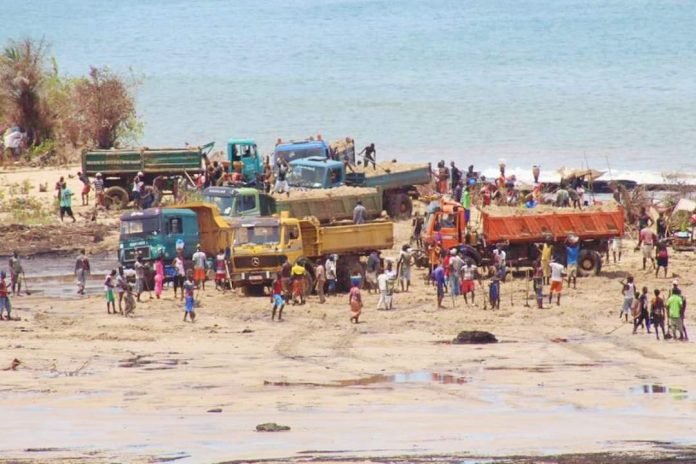
Yugoslavian Consul to Sierra Leone and Chairman/CEO of DStv, Adonis Aboud, on 16th November 2019, delivered a very powerful and didactic speech during the 13th Climate and Prong official launch at the Youth Commission conference room, National Stadium in Freetown. His speech was based on the topic “Illegal Sand Mining”.
Adonis informed his audience that this beautiful country, Serra Lyoa (“Lion Mountains”), commands one of the world’s largest natural harbours and beautiful mountainous peaks furthering how as a matter of fact, the waterways stretching along the Freetown Peninsula, among others, are nature’s gifts to the capital in particular and Sierra Leone in general.
“I mean there is nothing more beautiful than the way the ocean refuses to stop kissing the shoreline no matter how many times it is sent away. These coastlines which many people and nations would die for, house beautiful beaches, along with its mountains, at the height of the glory of Sierra Leone,” he elucidated.
The unwavering diplomat and thick-skin businessman lamented that today those beaches have not only been violated but even the mountains and valleys which used to echo the cry of our beautiful nation, virtually lie in ruins as people trade the ashes of a stunning past, for an uncoordinated and selfish present at the expense of the future.
“Just as the climate issue has become everybody’s issue and yet is divisive of opinions, it is also doubtful whether there is an appreciation of the importance and enormity of our environmental problems and how they might affect our determined effort at restoring the glory and beauty of Sierra Leone,” he drew attention to the importance of dealing with climate issues.
He added that without an understanding of the magnitude of the problem, especially land degradation and the imperative of an urgent roadmap for the achievement of a successful and sustainable tourism and environmental development, the new direction of Sierra Leone becoming a tourist hotbed could just amount to nibble attempts that scratch the surface.
“I am aware that some topics are so consuming that you often wonder whether you can truly do justice to them. Today’s topic happens to be one of such, especially if you are as passionate about the issue and indeed the degradation of our natural resources, as I am. It’s so encompassing,” the CEO highlighted.
Adonis pointed out that when you see the level of devastation that has taken place on the environment and how the future is trapped in the recklessness of our behaviors one wonders how and why most people pretend or simply ignore the problem.
He implored all to think about the issue at stake and collectively ensure that we do our level best to either stop it where we can, or bang the drums until those who are empowered to do so, take action.
Adonis said from the increased flooding activities around the country to mudslides; from the loss of breeding habitats for rare species of animals and plants to chemical soil contaminations by dilapidated tippers, the indiscriminate excavation of sand as a result of stomach infrastructure, continues to damage the land that we love – our Sierra Leone.
‘It is sad that only the deep can call out to the deep. In the light of this and in a world that is being confronted with serious environmental threats, I would like to commend the organizers for this very timely reminder of the importance of all stakeholders coming together, to ensure that the danger of our environmental degradation is tackled headlong. It is better to guide and guard what we have now, jealously, for the benefits of our future generations, than to lose them and begin to search for solutions,’ he added.
“Land is a vital resource to humankind, like air and water. Land degradation—the deterioration or loss of the productive capacity of the soils for present and future—is a global challenge that affects everyone, through food insecurity, higher food prices, climate change, environmental hazards, and the loss of biodiversity and ecosystem services. Land degradation is happening at an alarming pace, contributing to a dramatic decline in the productivity of croplands and rangelands worldwide,” the Consul reiterated the enormity of the issue.
He noted that just like climate change, land degradation is one of the world’s most pressing environmental problems and it will worsen without rapid remedial action. Globally, he informed, about 25 percent of the total land area has been degraded.
“When land is degraded, soil carbon and nitrous oxide is released into the atmosphere, making land degradation one of the most important contributors to climate change. Scientists recently warned that 24 billion tons of fertile soil was being lost per year, largely due to unsustainable agriculture practices. If this trend continues, 95 percent of the Earth’s land areas could become degraded by 2050,” he maintained.
Adonis revealed how globally, 3.2 billion people are affected by land degradation, especially rural communities, smallholder farmers, and the very poor. He said the world population is projected to increase by about 35 percent to 9.7 billion in 2050, with rising demands for agricultural products including food, feed, fibre and fuel.
“In Sierra Leone, human activities as well as massive infrastructure development and boom in property business across the country over the past one and a half decade, as well as unsustainable agricultural land-use, poor soil and water management practices, deforestation, removal of natural vegetation, fuel-wood consumption and to a lesser extent, overgrazing and urbanization, have been responsible for land degradation,” he disclosed saying however it is just one aspect of land degradation that will be focused on.
“There is hardly any road or housing project that does not require a huge volume of sand from foundation to finishing. Even some roofing materials contain sand in various forms. To assuage the hunger, local and professional sand dredgers as well as multinational firms have devised various means of extracting this essential material from the ocean, streams, rivers and even ponds, mostly without recourse to best practices.
Some go the extra mile, bringing down mountains and burrowing deeper into the foot of the earth or any other place where sand can be found,” he stated pointing out that gone are the days when sand excavation was done by locals who dive to the bottom of the ocean or stream, to scoop up bucketful and offload same into canoes or riverbank. The huge appetite for sand,he posited, means that the conventional method of sourcing it is no longer adequate.
He said these days, dredgers use heavy equipment, which are able to suck sand and other materials from the riverbed in large quantity.
“For so many years, these illegal and unregulated mining activities have gone on, to the disadvantage of the country; and now, it is beginning to look like Mother Nature is whispering its disagreement for our indiscretion. It is a very sad development and we cannot fold our arms and watch our environment degraded in the manner it is being done,” Adonis admonished.
He noted that the rate of dredging and mining sand is a pointer to a disaster waiting to happen and is a call to action by various agencies and tiers of government. He called not to forget that apart from flooding and ecological degradation, intra and inter-communal crises could erupt in the future, due to land shortage owing to sand dredging.
The CEO stated that already sea beds in the Freetown area and rivers across the country are under intense pressure due to the indiscriminate extraction of construction grade sand by mining operators.
He said perhaps more importantly, illegal sand mining and dredging, which over the years has been a source of ‘cool’ revenue for those in it, poses a great threat to tourism enterprise, as beaches and other sites people would have visited for relaxation and other social activities are being devastated.
“On the economic side, illegal miners and dredgers are thieves who disallow Government from maximizing the natural resources for the good of all. Not only are they not licensed to engage in what they are doing, they are equally denying those that are lawfully permitted by law,” he stated.
He said because our land is very soft and the land is easily washed away by running water, the environmental impacts of the upsurge in land excavation and illegal sand mining, are not only proving to be disastrous, they are leading to soil erosions, formation of sinkholes, mudslides, loss of bio-diversity, deforestation, coastal erosion and loss of aquatic lives.
According to him another impact of this scourge, is the effect on wildlife, as sea animals that depend on sandy beaches for their nesting, are sent into near extinction.
He pointed out that those who rely on fishing for their livelihoods are gradually finding it difficult to make a living, thereby causing economic problems, worsening poverty and encouraging criminal activities, as illegal miners become desperate for survival stressing how the ecosystem is also destroyed and it is not good for the environment.
“We can talk on and on but until government comes up with stiff penalties, guidelines and principles to guide operations of dredging, we will keep on degrading the environment. In (looking at) the pros and cons, the negative aspect is far more debilitating. As I stated earlier, sand miners are now found in every nook and cranny as sand dredging is now a money spinning industry that spews millions of Leones for operators, even at the long term risk of communities and villages. The lack of regulations has resulted in the ease with which every Dick, Tom and Harry is getting involved in the extraction of sand,” he further bemoaned.
He said sharp sands are usually dredged from the sea bed and the lagoon, while soft ones used for plastering and smoothing of wall surfaces, are usually mined from farmlands and forests.
“But you cannot carry out the magnitude of dredging that is going on without proper investigation of the land structure and texture, because when you continue to dredge the sand, you are opening up gaps in the underbelly of the earth, while excessive in-stream sand-and-gravel mining, causes the degradation of rivers,” he stated.
Adonis said there is excessive salt presence in sea sand and if used in reinforced concrete production it severely reduces the structure’s durability because of steel corrosion occurring at much higher rates than normal.
He said in the light of the indiscriminate and increasingly worrying trend of illegal mining, there is an urgent need to step up monitoring strategies and enact policies and a comprehensive law to protect the environment. He said we need to open only certified burrow pits which will ensure that only designated areas are mined for sand. This, he stated, will restore sanity in the business and drive out the unscrupulous eggs.
He also recommended that there should be continuous training and re-training for dredging personnel, a career growth structure and grading systems established as incentives for better performance, with increased coastal surveillance to avoid illegal sand mining and other dangerous activities, such as dumping of toxic wastes.
“While dredging is also used in the development of new mega cities and other port-related towns and islands around the world, to reclaim more valuable land mass for further economic development, what comes to my mind at this point is the new Lungi Bridge project,” he said expressing hope that the Government would ensure the inclusion of maintenance dredging as part of public sector contract for capital dredging as well as Environmental Impact Assessment to determine whether it will not degrade the site or cause any harm to those living around there if sand mining is done on the site. Public sector agencies ,according to him, should insist on the inclusion of sand search report in reclamation works to avoid conflicts and losses associated with such issues.
“I also believe that a more intensive sensitisation campaign has become imperative to educate people on the adverse effects of sand excavation and other mining activities on the environment and I call on the relevant government agencies responsible for stemming this increasing tide of sand mining and dredging, to put a halt to it before it becomes a monster that will eventually consume us,” he emphasized.
Adonis said it brought to him a very salient point of the devil and the deep blue sea of this issue or what he sometimes prefer to call it, – the beauty and the beast; better known as tourism.
“It needs to be admitted that successive Governments have made efforts to develop the tourism sector but with little success. While tourism has been widely used as a tool for economic development in peripheral regions for many decades, it has been suggested that the actual practice of tourism development, is not usually informed by the planning approaches proposed by academics. Maybe this, along with the degradation of our beaches and natural reserves can be attributed to the failure, alongside the half-hearted commitment of those in power. I therefore believe that the drive by the current administration to develop this sector, while a welcome development is fraught with danger, if there is no comprehensive road map for the achievement of a successful and sustainable tourism and environmental development as well as a committed and determined step to stop the rape of our beaches and the destruction of tourist attractions,” he further anchored.
He raised the point that while donors have a long history of financing tourism projects, they rarely have a defined tourism strategy.
The CEO said supported tourism projects are under support to local development (value chains strengthening, structuring of activities, infrastructures), the preservation of cultural heritage, urban development, support to small and medium enterprises, preservation of biodiversity, and the fight against the effects of climate change. As a result, he added, most donors support sustainable tourism saying such an action has not been the result of a comprehensive and coherent vision.
The businessman said developing tourism requires a whole host of factors besides building a lovely lodge or having a wealth of beauty and wildlife on your doorstep. He maintained that a successful tourism sector relies on good safety and security, health and hygiene, infrastructure, education and training.
“Tourism booms at picnic spots with beautiful sceneries. For example, sunrise and sunset points, long sea beaches, fresh water lakes, waterfalls, etc., often attract large numbers of tourists. Growth of tourism at a particular place is also influenced by crucial factors like; how well the site is maintained,” he told the attentive audience also stating that studies, however, show that long-term anthropological fieldwork, which have critically analyzed how well, generally accepted community-based tourism resonate with the reality on the ground, reveal multiple complex issues of power and resistance that illustrate conflicts such as the resultant Government control which does not go well with those involved in illegal activities such as sand mining.
He emphasized that illegal sand mining is an issue that does not need politicization as it affects us all further recommending that we should all work as a team to find a lasting and permanent solution to it.
Adonis said the problem with us in Sierra Leone, is the law enforcement agencies cannot maintain discipline.
“Additionally, some people —way too many people—are above the law and the judicial systems are lackadaisical as are the police and other civil servants,” he highlighted expressing doubt as to who will deal with the ‘headman’.
“If our future is all that matters to us, and if we remember that as the land and environment around us degrade, the cycle of poverty worsens. meaning that those of us who feel so comfortable now, will realize that if the rope is not secure the bird perching on it will not sit comfortably also, then it will behoove us all to be like the ostrich with our head in the sand.
Let’s remember that the ears that do not listen, follow the head when it is chopped and that knowledge without wisdom is like water in the sand,” he ended with wise sayings stressing how illegal sand mining and the degradation of our land, will consume us all, if we do not do our level best to put a stop to it.
Opposition APC Leader in Parliament, Hon. Chernor Bah aka Chericoco
By Amin Kef Sesay
Opposition APC Leader in Parliament, Hon. Chernor Bah aka Chericoco has persuasively called on the Speaker of Parliament to authorize for a stakeholders engagement to be held by the Chairman of the Parliamentary Oversight Committee on Tertiary Education.
He was speaking in Parliament under SO 23 and called on the Speaker of Parliament to intercede on behalf of University students who have been asked to pay their full tuition fees for the 2019/2020 academic year before they are allowed to register in the University.
Hon. Chernor Bah pleaded with the University authorities to revisit their stance on the full payment of tuition fees before students are allowed to register. He noted that majority of the students rely on either their friends or relatives to pay their tuition fees for them because their parents cannot afford the one-off payment in full.
Speaker of the House, Hon. Dr. Abass Bundu was quick to respond to the request, by asking the Chairman of the Committee, SLPP Member of Parliament from Bo district, Hon. A.O. Kamara to step up and summon a relevant stakeholders meeting in order to address the concern raised by Hon. Chernor Bah.
Some ruling and opposition party MPs have joined Hon. Chernor Bah to plead with the University authorities to allow students to pay their tuition fees in tranches or by instalments. Hon. Chernor Bah said he spoke not as a politician but as a family man himself.
Meanwhile, a spokesman for the University of Sierra Leone told journalists that the Government had given directives that tuition fees should not be increased and the University Management strictly abides by that directive.
Choithram Memorial Hospital, one of Sierra Leone’s leading hospitals, situated at Hill Station in partnership with the British Society of Gastroenterology which is headed by Dr. David Nylender were able to save the life of a colon cancer patient, thanks to the availability of an endoscopy equipment at the facility.
Endoscopy is a non-surgical procedure used to examine a person’s digestive tract. Using an endoscope, having a flexible tube with a light and camera attached to it, a doctor can view pictures of someone’s digestive tract on a colour TV monitor.
During an upper endoscopy, an endoscope is easily passed through the mouth and throat and into the oesophagus, allowing the doctor to view the oesophagus, stomach and upper part of the small intestine.
Similarly, endoscopes can be passed into the large intestine (colon) through the rectum to examine this area of the intestine. This procedure is called sigmoidoscopy or colonoscopy depending on how far up the colon is examined.
Speaking on their work, Dr. Nylender revealed that as an organisation their focus is to teach any aspect of gastroenterology in a resource poor country, adding that they were able to obtain a grant which was not to buy equipment, but to pay for travel and teaching aids. His job was to diagnose ulcers and prevent cancers. He realised that Sierra Leone lacks the resources to deal with any endoscopy cases. As a result he decided to concentrate in that area. He further disclosed that Dr. Gordon Harris in Sierra Leone told him, while he was on holiday in the country, that Choithram has an old endoscopy machine.
After visiting the Management of Choithram, he had the opportunity to fix the old one and decided to teach doctors on Endoscopy. In 2015, whilst on holiday, he was able to mobilise 4 doctors from the National Faculty of Trainers in the UK to come to Sierra Leone and impart knowledge on endoscopy. After proper scrutiny of interested doctors by Dr. Gordon Harris and team, 3 doctors were chosen to do the training.
They held teaching courses for the three doctors in Sierra Leone on Endoscopy and he is proud that today the life of a colon cancer patient has been saved through their efforts. He also disclosed that during the training they had 15 patients who had agreed to be part of the training and went through the process. He explained that at the initial stage, the doctors worked on dummies and after much practice they were able to translate their knowledge on humans. The set up was like this: one doctor did the endoscopy; another did a WhatsApp video recording, whilst the third guided the first doctor through the procedure.
Dr. Nylender further stressed that what was agreed on was that no one doctor is allowed to practice alone and the video taken throughout the whole process was reviewed by way of feedback. On their return to the UK, the three Sierra Leonean doctors continued the work and have done over 400 cases. Each case has been recorded and sent back to them in the UK for review and a report sent back. This peer to peer review has further boost the confidence of the doctors. He further maintained that during the training though 80 procedures were done each doctor experienced 240 procedures.
He further stated that Harrish Agnani of Choithram consented to send one of the doctors to the UK, where she displayed exemplary knowledge of the practice and this has fuelled the medical system there to design an implementation of similar training in other parts of the UK.
Dr. Nylender said that the saying that colon cancer is rare or non-existent in sub Saharan Africa; is now false as there are now cases of people with the disease. He disclosed that out of 12 patients screened in Sierra Leone last year, 3 had colon cancers, three others had conditions leading to cancer. Out of the 3 diagnosed with colon cancer, two have died and only one Mr. Thomas Nicolson is the survivor. He however disclosed that Choithram has now procured new Endoscopy equipment known now as ‘life-saving’ equipment.
He related an incident where doctors in Sierra Leone called them about a patient who had hepatitis B and sclerosis of the liver and was bleeding profusely. They were called and the details made known to them through WhatsApp video. They were able to guide the doctors on what to do to handle the situation. The bleeding stopped. He hastened to say that during the training they taught them about handling bleeding but not one of this nature. He was pleased to inform the media that another similar case was handled perfectly by the Sierra Leonean doctors without recourse to them.
Mr. Harrish Agnani and Dr. Gowrinath M. George, Medical Superintendent of Choithram said that the hospital now has modern equipment that can do endoscopy with ease and there are experts at the hospital who are able to handle the equipment. He encouraged Sierra Leoneans to come and visit the hospital and have their status known and proper screening done, including treatment at a much lower cost than the cost of going to India, USA and the UK.
Concluding, Dr. Nylender said that it is not every pain that one experiences in the stomach is ulcer; some may be associated with colon cancer and those symptoms, when diagnosed early through endoscopy will save lives, but if left too late the patient will eventually die. He called on the Government of Sierra Leone to invest the endoscope equipment which is in the possession of Choithram in order to save lives. He maintained that they are always ready to provide their medical expertise in terms of giving out free trainings to doctors on how to operate the equipment and make effectively use of it.
Alfred Maada Fobay is the Waste Technician at Welthungerhilfe, an organization which aims to improve waste management in cities through institutional, infrastructure development and capacity building measures.
In this article Mr. Fobay presents how teachers, students, and parents in the city of Bo in Sierra Leone have been manufacturing eco-bricks using collected single use plastics.
Bo is Sierra Leone’s second city and just like many other cities in the developing world, it is grappling with ineffective and inefficient waste management activities. Waste collection and transportation coverage does not reach the entire city because of many factors, including poor road networks and inadequate waste management infrastructures. In addition to this, low personal income of the city’s inhabitants undermines the willingness and ability to pay for waste collection service fees. Consequently, there is a low level of waste education and awareness, the correlation between health and waste, is not known to many people.
The emergence of single use plastic as a significant fraction of the municipal waste in Bo is, particularly, a cause for concern. Roadsides, drainage systems, communities, swamps and streams are full of plastic. Children growing up in areas without waste collection suffer from respiratory illnesses, diarrhoea and increased incidences of both water and mosquito borne diseases.
Bo City welcomes, and is ready to collaborate with, partners for plastic solutions. There are many differing opinions regarding the solution to this problem, from a range of technological developments (including transformation into useful products) to an outright ban.
We are at a crucial moment in our development regarding the decision-making process. It is important to weigh up all the factors in planning for a sustainable future and grasp the opportunities in emerging innovative plastic solutions for Bo City. In 2019 One World Link (OWL), a community friendship organization between Bo District (Sierra Leone) and Warwick District (UK) in their Global School Partnership Programmes, chose a “Zero Waste” theme as a joint project for all 15 Schools. The key activity is the making of Eco-bricks out of single use plastic. The project aims to contribute to “saving the environment and development of low-cost and low health risk plastic treatment technology”. The impact is to create a safer environment for both flora and fauna, as well as human beings.
Eco-brick manufacture is a simple technology, whereby single use plastics are collected, washed, dried and packed into 250 millilitre PET bottle until a weight of 167g is achieved. The product can then be used as a material to build simple structures such as huts, flag posts, planters etc. School pupils are excited and highly motivated to keep their school environment free from this plastic menace and to be able to provide a practical solution to the waste. The enterprise has become an inclusive activity, with teachers and pupils working alongside each other in the spirit of cooperation. Many schools are achieving their goal of 100 Eco-bricks.
The manufacturing didn’t end in schools, with pupils and teachers sharing the work at home and involving family members. For example, Madam Alice Alpha, Head Teacher at R.C Madonna Primary School, Sewa Road, encouraged her own family to make Eco-bricks at her own house. Preparing Eco-bricks is becoming a favourite family pastime in Bo.
Many of the school children in Bo raised a couple of obvious questions. Namely, ‘What are we going to do with these bricks when they are completed? and ‘Are we just cleaning our school environment, or can they be put to a specific use?’ Fortunately, an innovative idea came up as to how to turn the Eco-brick into useful resource. In our joint OWL joint committee meeting (parent body and teachers group), we have agreed to build the first eco-hut at the OWL Centre in recognition of the effort of the children and symbol of their contribution to making a better environment. This is our dream.
About Alfred Maada Fobay
Mr. Alfred Maada Fobay is a highly qualified solid waste technician with numerous certifications ranging from municipal solid waste management to planning and design of sanitation systems and technologies. He specializes in helping developing countries create innovative solutions in handling their solid wastes.