
Home Blog Page 1193

King Boss LAJ Unveils “Tok En Drink Concert”   

By Foday Moriba Conteh

One of Sierra Leone’s outstanding and popular Hip Pop artists, Alhaji Amadou Bah, popularly known as King Boss LAJ has on Thursday 14th November, 2019 officially unveiled his upcoming “Tok En Drink Concert” slated to take place on January 10 2020.

This disclosure was made during a press conference held at Silver Star Bar & Restaurant on Lumley Beach Road in Freetown.

In his address to those who graced the media engagement, Alhaji Amadou Bah, popularly known as King Boss LAJ disclosed that the upcoming “Tok En Drink Concert”  is geared towards giving back to society, adding that after the show 30% of the proceeds will be donated to the less privileged especially those who were affected directly by the 11 year civil war in Sierra Leone.

He assured Sierra Leoneans of the very best in entertainment assuring that come the day for the “Tok En Drink Concert” it is going to be performances exclusively by Sierra Leonean artists from all record labels.

He recalled that on January 6, 1999, the Revolutionary United Front (RUF) entered the capital city of Sierra Leone, Freetown, as part of efforts to overthrow the government by then, adding that they randomly massacred  fleeing civilians, burnt down homes, committed rape, amputated limbs and gouged out eyes noting that they brought down an almost arbitrary wave of ruthless terror on Freetown that claimed more than 7000 lives.

He said against such a ghastly backdrop,  the event will look at supporting the less privileged and victims of the civil war in Sierra Leone, noting that during the past years he had been hosting the event on the 6th January but this year the show will be hosted on the 10th January 2020 at the Siaka Steven Stadium in Freetown.

He called on his colleagues to support him in the upcoming event, adding that he is going to ensure that all artists who will perform during that show will be paid, which he said will change the mentality of artist in the entertainment industry.

He called on all Sierra Leoneans to see January 10 as their own show and assured of a tight security presence.

All Star President, Milton Koker, popularly known as Colabo commended King Boss LAJ for the initiative in order to promote the entertainment industry in the country.

He said that the entertainment industry has come a long way and is now trending, adding that with support the industry will create considerable impact in the country.

He said the January 10 ‘Tok En Drink Concert’ is a clear manifestation of the development initiatives from the entertainment industry reiterating how 30% of the proceeds will go to the less privileged as the event is geared towards giving back to society. Towards that end he called on the entertainment industry to support the initiative in order for it to become a success and a record breaking event in the country.

On behalf on the All Star team he further assured King Boss LAJ for their full support towards the success of the said event. He called on the promoters, DJs, Artists etc. to support the upcoming ‘Tok En Drink Concert’.

Head of Entertainment of Afriradio, Abdul Lawal, known as Master Jaye also applauded King Boss LAJ for the initiative and for his support towards the entertainment industry in the country.

He called on members of the entertainment industry to make it a success story and personally committed himself to support the concert.
 

Sellas Tetteh Responds to Kei Kamara Comments

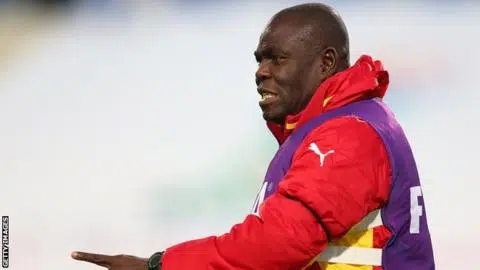
Ghanaian coach Sellas Tetteh is in his second spell as coach of Sierra Leone

By Mohamed Fajah Barrie

In a starling development, Sierra Leone Coach, Sellas Tetteh, has responded to Kei Kamara’s comments that partly blamed the Ghanaian tactician for his retirement from international football.

Colorado Rapids striker, Kamara, quit international football two days ago and he cited Tetteh as one of the reasons for his decision.

The 35-year-old player said among other things that Tetteh was not able to move Sierra Leone forward and that he was learning nothing new from him.

Tetteh, in his second spell as Sierra Leone coach, was somewhat philosophical about Kamara’s explanation. “Well let him blame me, I think he’s disappointed,” the 62-year-old Ghanaian coach told journalists.

“If you love Sierra Leone, and the progression and development of Sierra Leone football and you feel that because of the coach you’re pulling out, then where is your patriotism? “I’m doing my best, he’s saying things against me but other people are not saying such things.”

Tetteh insisted that he is only thinking about the progression of Sierra Leone football and does not want to get draw into a a war of words with a player.

“I won’t be in the situation of arguing with on him in the media, radio and all those things,” Tetteh insisted. “I’m thinking of the progression of football in Sierra Leone so I’ll not waste time arguing with a player that isn’t happy with situation. The national team and the nation are much bigger.

“I’m in Sierra Leone to work for the country, I’m in Sierra Leone to help, so if he feels that he’s not ready to play I don’t have anything to talk about it. We’re talking about national team we’re not talking about personalities.”

The former Norwich and Middlesbrough forward Kei Kamara retired on the eve of Sierra Leone’s opening 2021 Africa Cup of Nations qualifier against Lesotho which ended 1-1 in an empty stadium in Freetown.

Tetteh says despite his team failure to win they did not miss the all-time fifth highest goal scorer in North America’s MLS

“His absence didn’t affect the team, his replacement did very well despite we didn’t win, football is not built around one person, If Kei was on the pitch it was ok but he was not, it was opportunity for other person to play.” he said.

Tetteh’s next match will be Sierra Leone’s 2021 Africa Cup of Nations Group L qualifier away to Benin on Saturday.


NGOs to Discuss Emerging Trends & Challenges

By Theresa Vamboi

The Sierra Leone NGO Summit 2019 which meets on November 21st, at the Country Lodge Hotel on Hill Station, will bring together heads of national and international NGOs, senior government officials and policymakers, and key stakeholders to converge on the challenges and emerging pressing issues affecting NGOs across Sierra Leone.

During the past two decades, non-governmental organizations (NGOs) working in development and humanitarian assistance have increased their profiles both at local and national levels. NGOs have come to be recognized as important actors on the landscape of development, from the reconstruction efforts after the civil war to the Ebola emergency response in 2014 and mudslide disaster in 2017, to recent national campaigns on education, “stop rape” and gender-based violence.

NGOs tend to be best known for undertaking one or other of these two main forms of activity: the delivery of basic services to people in need, and organizing policy advocacy and public campaigns for change. At the same time, NGOs have also become active in a wide range of other more specialized roles such as emergency response, democracy building, conflict resolution, human rights work, cultural preservation, environmental activism, policy analysis, research and information provision.

Despite the advances in realising socioeconomic growth and human development, the civil society ecosystem in Sierra Leone is fragile, fragmented and works in isolation. Because of these limitations, many other policy issues are ignored because NGOs are divided along several lines. Though NGOs, both local and international contribute to society enormously, yet there has been no forum that brings together NGOs, policymakers and key stakeholders to discussion, in a frank manner, the problems they face in their operations and daily activities.

National and international development and humanitarian, democracy and human rights NGOs have over the years, become more involved in national development issues at both national and local levels. NGOs participation in Sierra Leone’s national development systems and democracy processes served as a valuable lesson for Sierra Leonean civil society organisations (CSOs) on the need to be better organized in terms of pushing the national agenda forward. Community groups, and national and international NGOs, from the outset, have been called upon to take on enormous tasks.

In the face of the enormous demands of these challenges, there is little opportunity to harvest and support the operational and financial stability and policy environment of NGOs across the country. Therefore, theme of this year’s Summit “Enhancing NGO Sustainability for Greater Impact”, will attract local, national and international development and humanitarian professionals, senior government officials, donor agencies and other key stakeholders to converge, network, and share ideas on crucial developmental issues affecting the country, and the most pressing challenges facing local, national and international NGOs operating across Sierra Leone.

The Summit will convene leaders and representatives from a variety of sectors, including competent speakers and resource persons, research fellows and academia in the third sector and chief executives of leading NGOs will deliver papers on the above and many other topical issues related to NGOs operating in Sierra Leone.

“This is the inaugural NGO Summit and it will create opportunities for growth and impact in the NGO community across the Sierra Leone and strengthen interaction with key stakeholders, especially government officials and other policymakers,” says Peter SaSellu, the Convenor of the Summit and President & Group CEO of the African Consulting Group.

Furthermore, the conversations at the Summit will focus on the key theme: Enhancing NGO Sustainability for Greater Impact. The event will also feature diverse high-level plenary sessions. The NGO Summit will create a stimulating environment for participants to engage with colleagues and partners from a variety of sectors to forge common solutions to pressing national development challenges. In pursuit of this, however, the Summit will focus on issues affecting the third sector in Sierra Leone, provide information on NGO networking and connectivity, address health and environmental hazards, examine areas of growth and development for donor-NGO relationships as well as provide the resources for NGO management.

“NGOs across Sierra Leone have long been looking for an opportunity to engage policymakers on emerging issues, challenges and trends that militate against the advancement and progress of their organisations,” says Christiana George, the Summit Coordinator. “Summit will also give way to the activation of the Sierra Leone NGO Council that was incorporated in 2016 to unite both local and international NGOs and look into their affairs, especially at the policy levels.”

In addition to networking, the one-day Summit will offer a series of workshop tracks specifically designed for attendees at different stages in their careers—including a CEO/Country Director track, and topical tracks for professional staff. The Summit will also feature an exhibit hall where attendees can see NGO and partner products and services, and new technologies and solutions that are changing the way we all work.


President Bio Holds Fruitful Meeting with Chair of Big Win Philanthropy

By Foday Moriba Conteh

In order to seek means and ways of furthering the smooth workability and implementation of the Free Quality Education, His Excellency President Dr. Julius Maada Bio met with Jamie Cooper, founder and Board Chair of Big Win Philanthropy, with more than 20 years’ experience in bringing private-sector, Government and non-profit leaders together to pursue an innovative policy on economic and social issues.

Talking about the charity on the margins of the Paris Peace Conference in Paris, France, Monday 11 November 2019, the global philanthropist said they focus on three strategic objectives – namely brain development, which includes early childhood learning; education and job creation. She also shared with the President their experience in implementing projects in other countries and their focus on multi-sectoral collaboration for successful project implementation.

“We have followed that education is your passion and we are interested in supporting those who are passionate about young people and children,” Ms Cooper said.

In his response, President Bio said that as a Government they have passion for education and have therefore identified human capital as a catalyst to accelerating national development, adding that it was not about the type of education being offered, it was about education that would be necessary for the 21st century.

“To our minds, we believe that education lays the most solid foundation for sustainable development,” President Bio said and further informed the founder of Big Win Foundation that the Government was planning a national dialogue on education for the future.

Sierra Leone’s Minister-designate for Basic and Secondary Education, Dr David Moinina Sengeh, spoke on the area of inter-ministerial collaboration and stated that the Ministries of Basic and Secondary Education, Agriculture, Gender and Children’s Affairs, Youth Affairs, Health and Sanitation and Higher and Technical Education would collaborate on a singular government proposal for the creation of a comprehensive early childhood education and learning centre for nutrition, health, survival and more.

Big Win partners with visionary leaders in countries undergoing demographic transitions to transform the life opportunities of their burgeoning child and youth populations and, at the same time, bolster future economic growth and national stability. Big Win supports an array of initiatives to build enhanced leadership capacity.  This includes the Harvard Ministerial Leadership Program, which Ms. Cooper co-conceived, and the Amujae program of the Ellen Johnson Sirleaf Centre.

2019 Electronic Transactions Bill Reaches Legislative Stage

By Fatmata Jengbe

On Thursday 14 November 2019 Sierra Leone’s Parliament debated and committed a Bill entitled: “The Electronic Transactions Bill 2019” to the Legislative Committee for consideration and further scrutiny.

The Bill is seeking to provide for the recognition of the legal effect of electronic transactions including electronic signatures; provision for the admissibility of electronic massages in evidence; the validity or enforceability of contracts executed in electronic forms and to provide for other related matters.

Presenting the Bill prior to committal, the Deputy Minister of Information and Communication, Mamadi Gobeh-Kamara highlighted the importance of the Bill relative to courts and business transactions in the country. The Deputy Minister also said that the court would rely on the Bill when enacted into law for the purposes of electronic evidence. She said that the Bill would be divided into six parts, including the legal effect of electronic information and electronic transactions, validity of electronic transactions, consumer protection, and the validity of service providers among others.

In his contribution, Hon. Sheku M. Turay, Deputy Chairman of the Committee on Information and Communication in Parliament welcomed the initiative of the Government aimed at reforming businesses and the court system in respect of electronic transactions; adding that “it is non-controversial”, as  other countries like Nepal, Tanzania and Uganda had passed it into law.

Hon. Hindolo M. Gevao of SLPP commended the Bill and said that it would permit lawyers for the first time to use electronic evidence in court. He went on to underscore that, the Act would make room for lawyers to print evidence from social media in electronic form and use it as evidence in the court of law. “It is a new dawn for Sierra Leone,” he stated.  He acknowledged that the Bill would add value to the justice system.

Hon. Joseph Williams-Lamin of SLPP said that the Bill would further strengthen the country’s status in the global village in light of creating a positive difference in every electronic transaction in Sierra Leone.

Hon. Abdul Karim Kamara of APC reiterated that, the Bill “is non-controversial”, whilst calling on NATCOM and the Ministry of Information and Communication to further institute strict regulations on how sim-cards are sold relative to effective registration and other uses. He also informed the House that the telecommunication system is not accurate and advised that the telecommunication operators are to ensure that sim-cards are sold at specific points; instead of selling them at random places.

Hon. Abdul Latiff Sesay of APC called on compatriots to brace up for such novelty in the communication system, whilst suggesting that the system must have the requisite professional security to access signatures and to detect the authenticity of such signatures. He also advised the Ministry to empower SALCAB in order to conform to the new trend.


Hon. Sahr Charles of C4C spoke about people who had been victims of electronic fraud and urged the authorities concern to put modalities in place to punish law breakers. He also admonished the authorities not to use the law wrongly against the masses.

Reacting to the Bill, the Rt. Hon. Speaker, Dr. Abass Chernor Bundu raised concerns that the Bill has not made provisions for penalties for scammers who might want to take advantage of the situation. “Before now there were no scammers but now they are now in control of the cyber space”, adding that the Ministry of Information and Communication should swiftly ponder on what penalty should be levied on scammers. He also underscored the point that the Bill “is good” and that it would address certain lacunae in the current court system relative to electronic transactions once approved.

The Opposition Whip, Hon. Hassan Sesay speaking as the Acting Leader of the Opposition said that the Bill was overdue for enactment, and described it as “non-controversial”, whilst assuring the Deputy Minister of their support. He also supported the position of other MPs for another Bill to be brought to Parliament to address issues relating to cyber security, before calling for a committal of the Bill for further scrutiny.

In concluding the debate, the Leader of Government Business, Hon. Sidie M. Tunis commended the MPs for their brilliant contributions and reiterated the point that the Bill “is non-controversial” and that it would protect consumers who are involved in electronic transactions. He pleaded for the Bill not to be sent to the Legislative Committee because it has been deemed “non-controversial”, and urged the Ministry of Information and Communication to later furnish the House with a Cyber Security Bill in the next three months.

Responding to the debate, the Minister promised that a Cyber Security Bill would be brought to Parliament for enactment, adding that concerns raised by MPs would be addressed by the relevant MDAs of Government.

IMF 2019 Review Mission Proffers Solid Recommendations for Economic Recovery

By Brima Sannoh

Commendably, the Sierra Leone authorities and International Monetary Fund (IMF) mission have concluded discussions, reaching staff-level agreement on economic policies to pave the way for the IMF Executive Board to consider the second review under the ECF‑supported program. While the economy is continuing to recover, the outlook remains challenging and improving the well-being of Sierra Leoneans is an ambitious endeavour. The 2020 budget strikes a balance between meeting the country’s large development needs and navigating the tight financing situation.

An International Monetary Fund (IMF) mission, led by Karen Ongley, visited Freetown during October 30-November 13, 2019 to conduct the 2019 Article IV consultation and the second review of the IMF arrangement under the Extended Credit Facility (ECF), approved by the Executive Board on November 30, 2018.

At the end of the visit, Ms. Ongley issued the following statement:

“The economy is continuing to recover, with economic growth set to pick up in 2019 to 5.1 percent, up from 3.5 percent in 2018, buoyed by improved activity in agriculture, mining, and construction. While external accounts have improved, the current account deficit is expected to narrow to 14.1 percent of GDP from 18.7 percent, and exchange rate pressures remain, in particular during the lean season in the third quarter of the year; thus overcoming the legacy of prolonged economic instability and numerous shocks, and improving the wellbeing of Sierra Leoneans remains challenging.

“In this regard, the Government’s National Development Plan (NDP) promises to put the country on a sustainable development path. It aspires to develop human and physical capital, while strengthening governance and accountability to build an economy that is macro-economically sound, inclusive and resilient to shocks. However, the authorities are pursuing this plan against a tight financing situation. Pursuing these important goals—boosting education, health, agriculture, and infrastructure—will require carefully calibrated policies.

“Progress under the ECF-supported program has helped stabilize the macro-economy—vital as a launch-pad for the NDP’s goals. The Government met all of the end-June 2019 quantitative performance criteria and indicative targets—net credit to the government and net domestic assets of BSL by large margins. They also met the indicative targets on domestic government revenue, poverty-related spending, and the domestic primary balance. The authorities made headway on structural reforms, such as by submitting draft amendments to the National Revenue Authority Act for IMF staff review, finalizing the stocktaking of domestic arrears in September, and publishing the forensic audit report in June. Steps toward developing a remedial action plan to address the findings of the forensic audit are advancing well.

“We appreciate the open dialogue on the 2020 budget, which strikes a balance between meeting priority spending needs and navigating the tight financing situation. To this end, the Government’s efforts to mobilize domestic revenue are advancing well, thanks to significant tax administration measures, such as operationalizing the Integrated Tax Administration System (ITAS). Looking ahead, continuing to generate strong revenues to finance Sierra Leone’s large priority spending needs requires a mix of both tax policy and administration reforms. The IMF team welcomes the Government’s committed efforts to promote more efficient spending and improve public finance management. Planning arrears clearance—most of which originated in 2016/17—in a manner that is transparent, equitable, fiscally sustainable, and limits the risks to financial stability is an important step in this direction.

“Ongoing efforts to bolster the independence and effectiveness of monetary policy will support the Bank of Sierra Leone’s (BSL) objective to bring inflation down to single-digits in the medium term. Limiting recourse to domestic bank financing of the budget will reinforce efforts to achieving this goal. Maintaining a flexible exchange rate system and continuing to build foreign exchange reserves will boost resilience to economic shocks, while the impact of recent foreign exchange directives should be closely monitored.

“The Government and the IMF team reached preliminary agreement on macroeconomic and financial policies that could pave the way for the IMF’s Executive Board to consider the second ECF review, scheduled for January 2020. Completion of the review would make available SDR 15.56 million (US$20.0 million), bringing total disbursements under the program to about SDR 46.56 million (US$62.2 million).

“The IMF team met with a range of government representatives—including President Bio, Minister of Finance Saffa, Minister of Planning and Economic Development Kai-kai, Bank of Sierra Leone Governor Kallon, Auditor General Taylor‑Pearce, Minister of Youth Affairs Bangura—as well as representatives from private and financial sectors, civil society organizations, and development partners. We thank all our partners for their warm hospitality, constructive and rich discussions.”

Fatima Bio Heightens the Call for Women Empowerment in Africa

By Foday Moriba Conteh

In pursuance of her role as the First Lady of Sierra Leone in terms of fostering socio-economic development, Her Excellency Madam Fatima Bio has called on African leaders and the private sector to provide more opportunities for African women to gain their fullest potentials and praised her husband, His Excellency President Dr. Julius Maada Bio for supporting women and girls in Sierra Leone.

She made the call whilst delivering a keynote address in Tangier, Morocco, on Friday 15 November 2019  on the theme: “African Women: No Parity, No Development?” at a session of the 12th Edition of the Medays Forum in Morocco.

The First lady also told the audience that African women and girls face a series of challenges, ranging from lack of economic opportunities, access to justice, legal protection to the lack of access to quality healthcare and education.

“We cannot achieve sustainable development in Africa if women and girls are left behind. We have to close the gender gap. If you keep all the women in the kitchen, we will only have smoke. Women must have equal access to finance, technology and other opportunities. We have a duty to ensure that women and girls in Africa are protected from rape, sexual violence and early marriage,” the First Lady said.

Madam Fatima Bio also used the platform to showcase efforts of her husband to empower women and girls in Sierra Leone by protecting their rights. She highlighted the “Hands Off Our Girls” project, which she said was initiated by her husband to protect women and girls.

The First Lady cited “the amendment of the declaration of the State of Emergency on Rape and Sexual Violence, the Amendment of the Sexual Offences Act, the Special Court for Rape and Sexual Violence Offences, the access to financial inclusion through NCRA, the increase in women political appointments, the free quality education programme and increase in access to university for female students”.

Later His Excellency President Julius Maada Bio and the First Lady were taken to Tanger Med, the largest port on the Mediterranean and in Africa by capacity, located on the Strait of Gibraltar about 40 km east of Tangier, Morocco. The Tanger Med project is a strategic priority of the Moroccan government for the economic and social development of the North Morocco region.

Beyond Elections…Govt. Must Shoulder Responsibility

By Amin Kef Sesay

Let us start this commentary by asking: Why do governments exist? Governments originated with the need to protect people from conflicts and to provide law and order. Whatever the reasons, government came into being as people discovered that protection was easier if they stayed together in groups and if they all agreed that one (or some) in the group should have more power than others. Thus, the oldest justification for government is as protector: protecting citizens from violence.

The idea of government as protector requires taxes to fund, train and equip an army and a police force; to build courts and jails; and to elect or appoint the officials to pass and implement the laws citizens must not break.

In more recent years, government responsibilities have extended to the economy and public service. Whilst, the principle of capitalism dictates that markets should be free from government control, when Western European economies spun out of control during the 1930s, and countries sank into great depressions, governments acted. In the United States, Congress created the Federal Reserve System in the early twentieth century to ward off inflation and monitor the value of the dollar. Franklin Roosevelt and his “Brain Trust” devised New Deal programs to shock the country into prosperity.

In modern times, the most fundamental responsibility, besides providing citizens with security is that of providing social programs.

In the United States the tradition began with the New Deal programs, many of which provided people with relief through jobs, payments, and food.

During the 1960s President Lyndon Johnson unveiled his “Great Society” programs aimed at eliminating poverty in the entire country. Though the rules and responsibilities vary greatly through time and place, governments fundamentally exist to protect its citizens from outside interference, invest in its people and provide for their well-being and happiness.

In the latter sense, government is supposed to be a provider of goods and services that individuals cannot provide individually for themselves.

The basic economic infrastructure of human connectivity falls into this category: the means of physical travel, such as roads, bridges and ports of all kinds, and increasingly the means of virtual travel, such as broadband.

A more expansive concept of government as provider is the Social Welfare State: government can cushion the inability of citizens to provide for themselves, particularly in the vulnerable conditions of youth, old age, sickness, disability and unemployment due to economic forces beyond their control. As the welfare State has evolved, it is seen more as a protector from the harsh results of capitalism.

At its best, it provides an infrastructure of care to enable citizens to flourish socially and economically in the same way that an infrastructure of competition does. It provides a social security that enables citizens to create their own economic security. The future of government builds on these foundations of protecting and providing. Government will continue to protect citizens from violence and from the worst vicissitudes of life.

Government will continue to provide public goods, at a level necessary to ensure a globally competitive economy and a well-functioning society. But wherever possible, government should invest in citizen capabilities to enable them to provide for themselves in rapidly and continually changing circumstances.

Government as investor in the well-being of its citizens means more than simply funding schools and opening borders. If Government is to assume that citizens can solve their own problems, it has to invest not only in the cultivation of citizen capabilities, but also in the provision of the resources and infrastructure to allow citizens to succeed. Thus, government has to invest in an entire infrastructure of child development.

Moreover, meaningful opportunities for continuing education must be available to citizens over the course of their lives, as jobs change rapidly and the acquisition of knowledge accelerates.


ReNIP Breaks Silence on Sierra Leone Economy

with Beresford Victor Williams, the Chairman Republic National Independent Party( ReNIP),

By Leslie Showers

During a snap engagement with Beresford Victor Williams, the Chairman of one of Sierra Leone’s latest political parties, the Republic National Independent Party( ReNIP), he disclosed that the party is prepared to create change and a growing economy across Sierra Leone if given the opportunity to govern.

According to the Chairman of the Party, “Now is the time to build on a Nation, a nation for the people, by the people and with the people. A nation that is proud to be called Sierra Leone”.

He noted with disdain how the country is undergoing an economic emergency and the Government of President Julius Maada Bio should take workable steps to transform the economy.

Beresford pointed out how since the conclusion of the elections ReNIP has been pursuing its unique style of constructive opposition adding that they have been patiently watching the strides at which the Government is going  to transform the ailing economy.

He revealed that they will continue to do so as it is in line with their guiding principles of putting “Country First” in whatever they say or do.

He also stated that as an opposition party they are committed to defending the interests of the voiceless who continue to suffer in poverty on a daily basis.

Beresford Victor Williams noted that according to the Sierra Leone Constitution, political parties are established “to participate in shaping the political will of the people, to disseminate information on political ideas, social and economic programmes of a national character.”

He added that in keeping with that, ReNIP will therefore engage the Press on critical issues and problems affecting the daily lives of the common man.

“Three out of every five Sierra Leonean today are living below the poverty line and this is the result of many years of decline, mainly due to mismanagement, corruption and bad governance.

“What we the political leaders need to understand is that the great call for change that we heard from the people in the 2018 election was not merely for a change of Government but for a change from the hardship they have endured for so long,” he underscored.

“Things are getting worse and at a rate that is becoming frightening,” he expressed lamentation adding that there is a school of thought that holds the view that all that is happening today is not new and that with time things will work out as they have always done in the past.

He highlighted that people are exposed to external forces to such a point where they could be influenced by these global trends through the impact of the internet and social media.

“It is difficult to tell but we believe that it is better to fix the problem than waiting to find out,” he stated.

“We at ReNIP consider that at this moment our country is facing a state of economic emergency and that no other priority is more urgent now than reducing the burden of hardship on the common man,” he posited.

ReNIP , he continued, wants to restore the pride of the nation back to her former glory when Sierra Leone was the pinnacle of Africa; which most of the Sierra Leoneans could not remember.

“We will turn things around and allow the citizens to enjoy the riches of the land; we will create jobs for the youth, the unemployed and everyone making the nation as one of the fastest growing economies in the world,” he assured.

“We will get back our national finances back under control; become a producer rather than a country depending on aid; we will have our deficit as a share of our economy, the jobs we will create will put more people into work more than ever before in our history,” he assured.

Sierra Leone, he said, will be back on its feet, strong and growing stronger than ever before and become the giant of Africa.

“This will not happen by accident, it will be the result of difficult decisions and of patiently working through our long-term economic plan. Above all, it will be the product of a supreme national effort, in which everyone will have to make sacrifices and everyone will play their part in creating a brand new nation.

“It is a profound ReNIP belief that Sierra Leone will be made great again not through the action of Government alone, but through the flair, the ingenuity, hard work and sacrifice of the Sierra Leonean people as our forefathers did.

“Our friends and competitors overseas look at Sierra Leone, and they see a country that is not capable of putting its own house in order, a country on the sliding scale; a nation of poverty. They see a country that does not believe in itself. But our national recovery will work in a progressive way that we have never witnessed or seen before,” he instilled confidence.

He called on Sierra Leoneans to be part of the ReNIP transformation drive come 2023 for a better Sierra Leone.

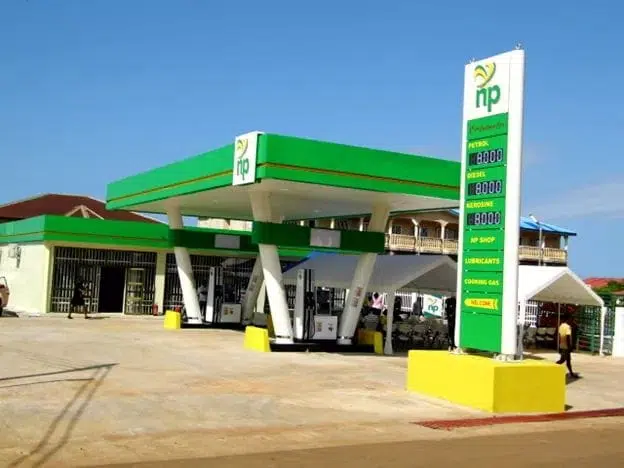
NP-SL: Just too Steadfast in Rolling Out Optimal Customer Satisfaction

By Amin Kef Sesay

The selfless commitment of the original 37 shareholders of the National Petroleum Sierra Leone (NP-SL) to ensure that their efforts should not go in vain but rather turn out to be very successful has been   identified as a cardinal contributory factor that drove the initiatives and policies of an indigenously-owned petroleum company to become a towering business entity not only in Sierra Leone but within the West African sub-region.

Talking about strict adherence and effective implementation of the  Local Content Policy, NP-SL stands tall as it is truly the only truly 100% indigenous owned company that employs almost 100% Sierra Leoneans as employees. It has been established that with the proper implementation of the Local Content Policy economic empowerment is assured of individuals and the State.

It is important to note that under the current Local Content Act, industrial, manufacturing, mining, petroleum, services (legal, financial and insurance), agriculture and agro-business, transportation (road, maritime and aviation), hotel and tourism, public work/construction, energy and health have been identified as key areas covered by the Act to enhance sustainable socio-economic growth. Investors are supposed to be employing Sierra Leoneans in managerial and lower level positions as required by the Act thereby increasing job opportunities in the country.

NP-SL, by giving preference to employing Sierra Leoneans, is a clear indication of a company that is utilizing local talents thus making it possible for indigenes to acquire useful knowledge and skills through training courses that could be applicable in other places.

Furthermore, it has been discovered that the synergy that runs through management, staff and board members of the National Petroleum Sierra Leone (NP-SL) company is another major reason why the company is contributing greatly to improving the lives of its workers and their dependents and also contributing to the company’s growth and the socio-economic development of the country at large.

The National Petroleum- Sierra Leone (NP-SL) is on record for having capable and competent managerial teams of Sierra Leoneans at the helm of affairs, who from time to time come up with smart initiatives, always ensuring that those initiatives are effectively and efficiently implemented to derive value for money.

It is also anchored that the National Petroleum (NP) Sierra Leone Limited, apart from it being lauded for being one of Sierra Leone’s biggest tax payers, is also being commended for its invaluable contributions towards building the country’s economy.

Besides having filling stations in various parts of the country, NP-SL is also vibrantly operating in Guinea, Liberia, Ivory Coast and The Gambia. In all the aforementioned countries the company is indeed doing tremendously well to the utmost satisfaction of many who continue to benefit from NP-SL products and services.

This company has so far offered various jobs to workers in the afore-mentioned countries, thereby reducing the levels of poverty to a considerable level in those countries.

Since its establishment, the company has grown from leaps and bounds; weathering storms that would have run it down. However, the dogged resolve of its shareholders and successive management teams having the zeal to succeed at all cost under any strain has been the driving force propelling NP to higher levels thus making it very competitive in the sub-region.

Asking those who really know NP, the feedback you get indicate that one of its prime commitment is that which has to do with customer care which NP strongly believes must be prioritized to give optimal satisfaction.

It has maintained a good business relationship with its numerous customers right across the sub-region where it exists and operates with most consumers honestly confessing that they are always delighted in dealing with NP.

The company deals with individuals and various sectors of society, always ensuring that its various petroleum products are available and are sold at affordable prices. This keen mutual relationship with its customers has been paying huge dividends, always resulting in a win-win situation, making NP very endearing to all and sundry and envy to its competitors.

The regulatory institution of the different petroleum companies in the country, the Petroleum Directorate, has also lauded NP in recent times for its efficient service delivery in its areas of operation and for its committed adherence to the country’s business laws.

The company is also known for offering Sierra Leoneans affordable NP Gas Cookers of various sizes, which are safe and very friendly to use. NP Gas could be purchased at all their filling stations across the country and the very gas used to refill them is also sold to replenish depleted stocks.

The company’s result-oriented management team is definitely and sustainably continuing to put NP at the top and conspicuously on the map of the West Africa sub-region..

It  is doing exceptionally well in all the countries it is functioning and indeed there are prospects for further expansion.

It can therefore be justifiably stated that the National Petroleum Limited is the country’s reliable fuel provider as it always ensures that its stockpile of petroleum products is always at an appreciable level to last over time.

NP has received numerous awards; the latest being: “Best Company of the Year” that was received on 6th July 2019 during the National Business Award 2018/2019 held at the prestigious Bintumani Hotel.

Various tests to determine quality and standard indicate that consumers of National Petroleum-SL products say they have never had cause to grumble about the company’s products.

It should be reiterated that customer care is one key element for the success of the National Petroleum Sierra Leone (NP-SL).
Another most important feature of NP-SL is its smart cards which customers can use to make transactions very easily and conveniently.

It has been widely acknowledged that NP SL has been very business savvy over the years amidst foreseeable and unforeseeable challenges, doing so diligently and professionally to continue to be a very progressive company that will stand the test of time as it continues to serve humanity.  .