

Home Blog Page 12

MCC Commends Sierra Leone’s Reform Progress as Finance Minister Reaffirms Commitment to Compact

Group of ten professionals in business attire posing for a photo in a conference room with flags behind them (U.S. flag and another flag).

The Government of Sierra Leone has received strong commendation from the Millennium Challenge Corporation (MCC) Authority in Washington, D.C., following high-level engagements that underscored the country’s continued progress toward meeting key Compact requirements.

During a strategic meeting with senior Government officials, Acting Managing Director of the Department of Compact Operations, Madam Carrie Monahan, expressed satisfaction with Sierra Leone’s advancement under the MCC framework. She highlighted notable milestones, including the establishment of the Millennium Challenge Authority–Sierra Leone and ongoing discussions surrounding a critical minerals agreement, both of which signal the country’s readiness to deepen its partnership with the MCC.

Madam Carrie Monahan, however, emphasized the importance of the Government fulfilling its financial obligations to enable the formal signing of the Entry into Force agreement, a crucial step toward unlocking the full benefits of the Compact.

Reaffirming the Government’s position, Minister of Finance, Sheku Ahmed Fantamadi Bangura, conveyed appreciation for the MCC’s sustained engagement and reiterated President Julius Maada Bio’s unwavering commitment to the Compact programme. He assured stakeholders that Sierra Leone remains focused on meeting all requirements necessary for successful implementation.

The Finance Minister outlined ongoing reforms within the energy sector, describing them as central to improving efficiency and sustainability. Among those measures are the establishment of a Collection Account and strategic efforts to enhance private sector participation in electricity distribution; initiatives aimed at strengthening financial discipline and boosting operational performance across the sector.

In a further demonstration of Sierra Leone’s commitment to creating an enabling investment climate, Sheku Ahmed Fantamadi Bangura disclosed that Cabinet has approved the country’s proposed membership in the Africa Trade and Investment Development Insurance (ATIDI). He noted that the move is expected to stimulate investor confidence by providing insurance coverage against trade and investment risks, thereby encouraging greater capital inflows.

Also speaking at the meeting, Director of the Department of Policy and Evaluation, Madam Naureen Haque, commended Sierra Leone’s performance on the MCC scorecard. She urged the Government to sustain reform momentum, particularly in areas such as economic freedom, electoral processes and the promotion of national unity.

Responding to those recommendations, the Minister reaffirmed the Government’s inclusive approach, stressing its commitment to engaging all relevant stakeholders in the ongoing electoral reform process as well as in implementing the national unity agreement.

In her concluding remarks, Madam Naureen Haque described Sierra Leone as a “real success story” within the MCC framework, praising the depth of engagement between the Corporation and the Government.

The Finance Minister was accompanied by a high-powered delegation, including Minister of Energy, Cyril Grant; Sierra Leone’s Ambassador to the United States, Amara Sowa; Financial Secretary, Matthew Dingie; Governor of the Bank of Sierra Leone, Dr. Ibrahim Stevens; Chief Economist at the Ministry of Finance, Alimamy Bangura; and Technical Adviser to the Minister of Finance, Dr. Franklin Sisabu Bendu.

The meeting signals renewed momentum in Sierra Leone’s pursuit of the MCC Compact, reinforcing international confidence in the country’s reform trajectory and governance framework.

SLPP Endorses Electoral Reforms While Insisting on ECSL Independence

Portrait of a man wearing a green polo shirt and a green cap with the word PARAN, facing the camera.
SLPP National Secretary General, Paran Tarawally

The Sierra Leone People’s Party (SLPP) has reaffirmed its strong commitment to electoral integrity, constitutional governance and inclusive political dialogue, following the outcomes of the recent Joint Assessment Mission conducted by International Moral Guarantors in Sierra Leone.

In a detailed Press Statement issued on April 21, 2026 and signed by its National Secretary General, Paran Umar Tarawally, the ruling party expressed appreciation to key international partners, including ECOWAS, UNOWAS and the Commonwealth, for their continued support towards peace, stability and democratic consolidation in the country.

The party paid special tribute to former Gambian Vice President, Fatoumata Jallow-Tambajang, for her leadership role in guiding the process from its inception, noting that her efforts have been instrumental in sustaining dialogue and fostering cooperation among stakeholders.

Reaffirming its position as the governing party, the SLPP underscored President Julius Maada Bio’s commitment to implementing both the Agreement for National Unity and the recommendations outlined in the Tripartite Committee Report. The party noted that such commitment was further demonstrated during the recent engagement between the President and the International Moral Guarantors.

Central to the SLPP’s position is a strong defense of the independence of the Electoral Commission for Sierra Leone (ECSL). Referencing Section 32(11) of the Constitution, the party stressed that the Commission must operate free from external direction or control, warning against any attempt by Parliament to exercise oversight over constitutionally independent institutions.

“The Electoral Commission shall not be subject to the direction or control of any person or authority,” the statement emphasized, adding that such independence is critical to maintaining public confidence in the electoral process.

The SLPP further argued that just as Parliament does not oversee institutions such as the Judiciary, the Anti-Corruption Commission and the Audit Service Sierra Leone, it should equally refrain from exercising administrative oversight over the ECSL.

On electoral reforms, the party welcomed the expansion of the Tripartite Steering Committee to include other political parties and Civil Society Organizations, describing the move as a step towards ensuring broader representation and inclusivity in the reform process.

The party also reiterated its support for proportional representation, aligning with its longstanding policy stance, while commending international partners for upholding parliamentary procedures in relation to the Constitution of Sierra Leone (Amendment) Bill 2025.

Addressing national cohesion issues, the SLPP reaffirmed its commitment to working collaboratively with all political actors, including the opposition All People’s Congress (APC), particularly in areas such as the ongoing Population and Housing Census and broader governance processes.

While welcoming the APC’s decision to end its boycott, the ruling party urged the opposition to adopt more constructive and mature approaches to national issues. It cautioned that persistent boycotts and threats could undermine constitutional provisions, particularly Section 35(1), which outlines the responsibilities of political parties in shaping the political will of the people.

The SLPP also took a firm stance against hate speech and incitement, reiterating its zero-tolerance policy on inflammatory rhetoric, which it said poses a threat to national unity and democratic stability.

Commending both Government and opposition delegations, as well as development partners and the Independent Commission for Peace and National Cohesion, the party acknowledged their collective efforts in resolving operational challenges within the Tripartite process.

However, the SLPP expressed dissatisfaction with aspects of a recent Press Statement issued by the APC National Secretariat, describing portions of it as unhelpful and unnecessary. The party warned that such rhetoric could erode trust and weaken the spirit of cooperation among political actors.

Despite those concerns, the SLPP maintained that it remains fully committed to engaging all stakeholders in advancing electoral reforms, strengthening democratic institutions and promoting sustainable peace in Sierra Leone.

The statement comes at a critical time in the country’s political landscape, as efforts continue to consolidate democratic gains and build consensus around key governance reforms.

Transport Minister Champions AFCAC Amendment as Catalyst for Aviation Growth

Minister of Transport and Aviation, Alhaji Fanday Turay

Sierra Leone’s Parliament has ratified an amendment to Article 10(4) of the Constitution of the African Civil Aviation Commission (AFCAC), in a move aimed at reinforcing the country’s aviation and transport sector.

The decision was taken during a parliamentary sitting held on April 21, 2026 in Freetown on Tuesday, signaling the Government’s continued commitment to aligning with continental frameworks designed to enhance air transport governance and efficiency across Africa.

The amendment, which was originally adopted during the 28th Ordinary Session of the African Union Assembly in Addis Ababa on January 31, 2017, seeks to improve coordination, institutional effectiveness and operational efficiency within Africa’s civil aviation landscape.

Presenting the agreement before lawmakers, Minister of Transport and Aviation, Alhaji Fanday Turay, described the ratification as a critical step toward advancing Sierra Leone’s transport infrastructure. He emphasized that the amendment would facilitate the establishment of stronger mechanisms to boost efficiency, while also promoting the sustainable growth of the aviation sector at both national and international levels.

“This ratification reflects our determination to modernize and strengthen the aviation sector in line with global standards,” the Minister noted, adding that enhanced cooperation under AFCAC would open new opportunities for investment, connectivity and regulatory improvement.

Concluding the debate, Majority Leader and Leader of Government Business, Mathew Sahr Nyuma, underscored the importance of the amendment in positioning Sierra Leone within the broader framework of international aviation best practices. He further highlighted the significance of quorum in parliamentary proceedings, noting that due process was observed before the resolution was formally adopted.

The ratification is expected to contribute to ongoing efforts to strengthen aviation safety, regulatory oversight and sector competitiveness, as Sierra Leone continues to pursue strategic reforms within its transport ecosystem.

In his closing remarks, Alhaji Fanday Turay expressed gratitude to Parliament for its support and disclosed that additional agreements and legislative instruments would be presented in due course to further consolidate gains within the sector.

Government Orders Undocumented Foreign Nationals to Regularize Status or Face Sanctions

Illustration of a resident permit card with photo, personal details, and holographic security features.

By Amin Kef-Ranger

Authorities in Sierra Leone have launched a nationwide enforcement drive requiring all foreign nationals living and working in the country to regularize their legal status or face possible sanctions.

The directive, announced by the Ministry of Information and Civic Education, mandates strict compliance with key immigration and identification requirements, including the possession of valid Non-National Identity Cards, Residence Permits and Work Permits.

Officials say the initiative is part of a broader government strategy to tighten national security and improve oversight of non-citizens through the establishment of a centralized and reliable database. The move is expected to enhance the state’s ability to monitor residency and employment activities involving foreign nationals across the country.

Under the new enforcement measures, all affected individuals are required to obtain the relevant documentation and keep it readily available at all times. Authorities have cautioned that non-compliance will attract enforcement actions, although details of specific penalties were not disclosed.

To ease the process, the government has provided an online platform for applications and renewals of residence and work permits, aimed at improving accessibility and efficiency.

Several key institutions, including the Office of National Security, the Ministry of Employment, Labour and Social Security, the Sierra Leone Immigration Department and the National Civil Registration Authority (NCRA), are collaborating to ensure the smooth implementation of the exercise.

The Government has urged full compliance from foreign nationals and stakeholders, describing the enforcement as a critical step toward strengthening regulatory systems, safeguarding national interests and promoting orderly migration management in Sierra Leone.

SLCAA DG Reaffirms Safety Priority as Sierra Leone Launches Nationwide NavAIDs Calibration

A woman in a blue blazer speaks into a handheld microphone at a panel, seated at a wooden table with water bottles and a logo on the left.
Sierra Leone Civil Aviation Authority (SLCAA) Director General, Musayeroh Barrie

By Amin Kef (Ranger)

Sierra Leone has embarked on a nationwide calibration of Navigational Aids (NavAIDs), a critical step aimed at strengthening aviation safety, operational efficiency and compliance with international standards.

The exercise, which is being undertaken at key aviation facilities including Freetown International Airport, is designed to ensure that all ground-based navigation systems function with optimal accuracy and reliability. Those systems are essential for safe aircraft landing, takeoff and en-route navigation, particularly under adverse weather conditions.

Speaking on the significance of the initiative, Sierra Leone Civil Aviation Authority (SLCAA) Director General, Musayeroh Barrie, emphasized that safety remains the Authority’s foremost priority. She noted that the calibration of navigational aids is a fundamental requirement in global aviation, ensuring that pilots operating in and out of Sierra Leone can depend on precise and reliable navigation systems at all times.

The Director General further highlighted that the exercise reflects SLCAA’s ongoing commitment to strengthening aviation infrastructure, enhancing regulatory oversight and positioning Sierra Leone as a safe, secure and reliable destination within the global aviation network.

The calibration process is being executed by the Nigeria Airspace Management Agency (NAMA), under the operational responsibility of the Sierra Leone Airports Authority, which serves as the country’s Air Navigation Service Provider. As the national aviation regulator, SLCAA is providing oversight and coordination, ensuring that the exercise adheres strictly to both national regulations and international aviation safety requirements.

SLCAA also played a key facilitative role in the signing of the Memorandum of Understanding between SLAA and NAMA, paving the way for the successful implementation of the calibration programme.

At Freetown International Airport, the Sierra Leone Airports Authority commenced a dedicated $80,000 calibration project running from April 20 to April 26, 2026. The initiative forms part of broader efforts to enhance safety and operational readiness ahead of the forthcoming ECOWAS Summit scheduled for June 2026.

General Manager of SLAA, Jack D.K Massaquoi, underscored that the project represents significant progress in advancing the aviation sector under the leadership of the Minister of Transport and Aviation, Alhaji Fanday Turay. He noted that the calibration exercise serves not only as a technical undertaking but also as a strategic assurance of Sierra Leone’s preparedness to host regional leaders under the highest safety standards.

The mission is being led by Flight Inspector and Head of Team, Selzing Dorkur Miri, who explained that the calibration will enhance the precision and reliability of navigational aids while promoting interoperability across West African airspace. He added that the exercise also strengthens regional collaboration through knowledge sharing and capacity building.

Senior officials from SLAA, NAMA and SLCAA were present at the launch, reaffirming their collective commitment to International Civil Aviation Organization (ICAO) standards and collaborative growth within the aviation sector.

The Sierra Leone Civil Aviation Authority commended all stakeholders for their professionalism and dedication in executing the exercise, describing the initiative as a vital milestone in the country’s pursuit of aviation safety excellence and modernization.

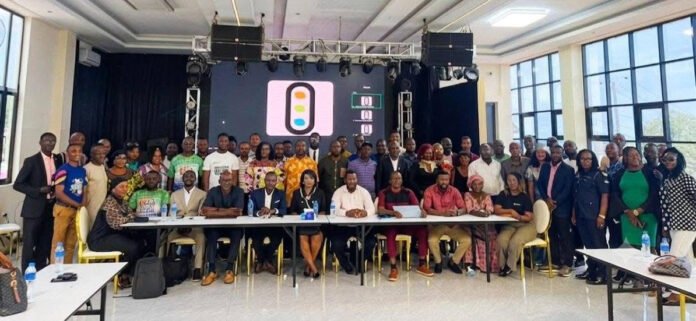
NMA, IGF Launch Four-Day Environmental Management Training for Newly Recruited Geologists, Engineers & Stakeholders

Conference room workshop: presenter at the front addressing a large audience seated around tables with a projector screen overhead.

By Ibrahim Sesay

The National Minerals Agency, in collaboration with the Intergovernmental Forum on Mining, has commenced a four-day training workshop aimed at strengthening environmental management capacity among newly recruited geologists, engineers and key stakeholders within Sierra Leone’s environmental sector.

The workshop, which is being held from April 20 to 23, 2026, at the Country Lodge Hotel, seeks to enhance technical expertise and promote responsible environmental governance across the country’s mining industry. The initiative comes at a time when Sierra Leone continues to place increased emphasis on sustainable resource management and environmental protection.

Delivering his remarks at the opening ceremony, Director General of the National Minerals Agency, Ing Hadji Dabo, described the training as a significant step in ensuring that Sierra Leone’s mineral resources are developed in a responsible and sustainable manner for the long-term benefit of its citizens. He noted that the country’s mining sector is currently at a critical juncture following the enactment of the Mines and Minerals Development Act 2023, emphasizing that while robust legal frameworks are essential, their effectiveness depends largely on the competence and commitment of professionals tasked with implementation.

Ing Hadji Dabo explained that the training programme has been carefully structured to provide participants with practical knowledge in key areas such as water management, waste management, biodiversity conservation, mine closure and rehabilitation. He further commended the Intergovernmental Forum on Mining for its continued partnership, highlighting its global role in supporting Governments to advance sound mining governance and sustainable development practices.

Addressing the newly recruited engineers and geologists, Ing Hadji Dabo urged them to approach the workshop with seriousness and dedication, stressing that the knowledge gained would form an integral part of their professional responsibilities. He underscored the critical role environmental officers play in safeguarding communities, protecting water resources and preserving ecosystems impacted by mining activities, adding that active participation throughout the training was essential to achieving its objectives.

Also speaking at the event, Director of Mines, Peter Kapr Bangura, encouraged participants to fully utilize the opportunity to enhance their skills and knowledge. He noted that the mining sector remains a cornerstone of Sierra Leone’s economy, contributing significantly to national revenue generation, employment and overall development, while reiterating the importance of maintaining high environmental standards.

The training programme is structured to provide both theoretical and practical exposure, with the first day focusing on water management, including legal frameworks, water rights, quality control, quantity assessment and international best practices. Subsequent sessions will address waste management and biodiversity conservation, while participants are also expected to undertake a field visit to an iron ore mining operation site to gain hands-on experience. The final phase of the workshop will concentrate on mine closure principles, site rehabilitation and post-mining land use planning.

The initiative is expected to contribute meaningfully to the National Minerals Agency’s broader objective of strengthening environmental monitoring, improving regulatory enforcement and fostering closer collaboration with institutions such as the Environmental Protection Agency and other key actors within Sierra Leone’s mining sector.

From Poultry to Fish Farming: President Bio Champions Local Production and Private Sector Investment

Four people in a discussion in front of a bus with red lettering; a presidential seal sits on the ground between them.
From Poultry to Fish Farming: President Bio Champions Local Production and Private Sector Investment

President Dr. Julius Maada Bio has reaffirmed his administration’s commitment to agricultural transformation under the flagship Feed Salone Initiative, following a strategic visit to Newton Poultry and the symbolic commencement of a 22-metric ton fish harvest at his private farm in Mafintha, along the Masiaka Highway.

The President’s visit to Newton Poultry on Thursday, 16 April 2026, highlighted what is being described as a significant milestone in Sierra Leone’s drive toward food security. The facility, regarded as the country’s first fully automated poultry farm, is a private sector response to the Government’s call for increased investment in agriculture. He was received by the Founder, Manav Shahani, who briefed him on the operations and long-term vision of the enterprise.

Established in 2024, Newton Poultry has rapidly positioned itself as a key player in domestic food production, with a daily output capacity of approximately 22,000 eggs. The initiative is expected to reduce dependence on imported eggs, improve access to fresh and affordable poultry products, stabilize market prices and create employment opportunities for Sierra Leoneans. President Bio commended the facility as a model of innovation and a testament to the role of private sector partnerships in achieving national agricultural goals.

In a demonstration of hands-on leadership, President Bio also toured his private agricultural project in Mafintha, where he symbolically commenced the harvest of 22 metric tons of tilapia fish. The exercise forms part of his broader effort to inspire citizens to take an active role in farming and food production.

The guided tour of the farm showcased an integrated agricultural system, including fishponds, poultry units and livestock facilities. The farm hosts a variety of animals, including high-breed goats, sheep, cattle, ostriches, guinea fowl and other poultry species. The event attracted a cross-section of stakeholders, including Government officials, private sector representatives, farmers, and members of the media, all of whom witnessed firsthand the progress being made in local food production.

Addressing attendees, President Bio disclosed that his engagements began earlier in the day with a visit to an onion farm at Lokomasama. He emphasized that unity and collective commitment in agriculture remain critical to transforming the sector and ensuring sustainable national development.

“This is what we mean by transforming the agricultural sector, producing what we eat ourselves,” the President stated. “I am doing so by example. These projects are being driven not by external experts, but by young, energetic Sierra Leoneans who are committed to building our nation.”

He further urged citizens across the country to embrace agriculture as both a viable economic opportunity and a patriotic duty. According to him, increasing domestic food production is essential for reducing import dependency, strengthening economic resilience and achieving long-term food self-sufficiency.

The President’s engagements underscore a dual-track strategy aimed at accelerating agricultural transformation in Sierra Leone, mobilizing private sector investment while demonstrating practical, example-driven leadership. Observers note that such an approach is critical in galvanizing national participation and sustaining momentum toward the Feed Salone Initiative’s objectives.

Notably, Sierra Leone continues to confront global economic pressures and food supply challenges, with initiatives like Newton Poultry and the President’s own farming efforts increasingly positioned as practical pathways toward a more self-reliant and food-secure future.

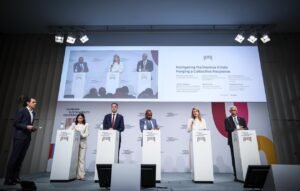
President Bio Unveils “Prevention Before Intervention” Doctrine at Dakar International Forum on Peace and Security in Africa

Man in a dark suit and red tie speaks at a conference panel, gesturing with his hand with a logo backdrop behind him.
President Dr. Julius Maada Bio

President Dr. Julius Maada Bio has delivered a compelling and forward-looking address at the 10th Edition of the Dakar International Forum on Peace and Security in Africa, advocating for a strategic shift toward prevention as the cornerstone of sustainable peace and security across the African continent.

Speaking on Monday, April 20, 2026, at the Abdou Diouf International Conference Centre in Diamniadio, Senegal, President Bio presented what he described as the “Dakar Doctrine”; a framework centered on “prevention before intervention.” Addressing fellow Heads of State, international partners and leading security experts, the Sierra Leonean leader emphasized the urgent need for Africa to transition from reactive crisis management to proactive, preventive strategies.

According to President Bio, the devastating human and economic toll of conflicts across the continent underscores the necessity of early intervention through systems that detect risks before they escalate. He highlighted the importance of strengthening early warning mechanisms, promoting inclusive governance and investing in preventive diplomacy as essential tools for long-term stability.

The President stressed that Africa’s peace and security challenges must be addressed through African-led solutions, anchored in strong institutions and reinforced regional cooperation. He pointed to frameworks such as the Economic Community of West African States and the African Union as critical pillars in advancing peace, constitutional order and democratic governance across the region.

“Peace cannot be imposed,” President Bio noted, emphasizing that it must be built on trust, dialogue and governance systems that are transparent, accountable and responsive to citizens’ needs. He reiterated that durable peace requires sustained commitment to democratic values and institutional integrity.

Drawing from Sierra Leone’s own experience, President Bio reflected on the country’s transition from a brutal civil conflict to a stable democracy. He highlighted the roles of reconciliation, resilience and continuous investment in democratic institutions as key lessons that can inform peacebuilding efforts in other fragile and conflict-affected states.

In his address, the President also underscored the importance of tackling the root causes of instability, including youth unemployment, inequality and weak state structures. He called for stronger collaboration among Governments, Civil Society and international partners to address those underlying challenges, noting that investing in people, particularly young people, is essential for preventing future conflicts.

President Bio further commended the role of regional organizations, particularly ECOWAS, in maintaining peace and stability in West Africa. He urged continued support for regional mechanisms that facilitate dialogue, mediation and conflict prevention, describing them as indispensable to safeguarding democratic gains in the sub-region.

As part of his participation, President Bio joined a high-level presidential panel where African leaders exchanged practical insights on strengthening the continent’s security architecture and enhancing coordinated responses to emerging threats.

The Dakar International Forum, widely regarded as a premier platform for dialogue on Africa’s peace and security landscape, continues to shape policy direction and foster collaboration among global and regional stakeholders.

President Bio’s intervention not only reinforced Sierra Leone’s commitment to peacebuilding but also elevated the country’s voice in global security discourse. His advocacy for prevention-driven strategies positions Sierra Leone as a key proponent of African-led solutions aimed at achieving a more stable, secure and prosperous continent.

Sierra Leone and Senegal Seal Landmark Mining and Energy Treaty to Boost Regional Cooperation

Two men in business suits hold brown folders with a tree emblem during a formal signing ceremony indoors.

Sierra Leone has taken a major step in advancing its economic diplomacy and regional integration agenda following the signing of a landmark mining and energy cooperation treaty with the Republic of Senegal. The agreement, concluded on Monday, April 20, 2026, in Dakar, underscores a deepening strategic partnership between the two West African nations in the critical extractive and energy sectors.

The treaty was signed on behalf of Sierra Leone by the Minister of Mines and Mineral Resources, Julius Daniel Mattai, alongside his Senegalese counterpart during a high-level ceremony at the Abdou Diouf International Conference Centre. The signing took place on the margins of the 10th Edition of the Dakar International Forum on Peace and Security in Africa, drawing regional and international attention to the growing cooperation between the two countries.

The agreement is widely seen as a reflection of the strategic vision of President Julius Maada Bio, whose administration has prioritized strengthening bilateral and multilateral partnerships to accelerate national development. It also signals a deliberate shift towards harnessing Africa’s vast natural resources through collaborative frameworks that enhance value creation and sustainability.

At its core, the treaty aims to foster joint exploration and development of mineral and energy resources, while creating pathways for increased investment, knowledge exchange and policy coordination. Key areas of cooperation include energy security, resource governance, technical capacity building and the harmonization of regulatory frameworks to attract investors and ensure efficient sector management.

Officials from both Sierra Leone and Senegal described the agreement as a milestone achievement that translates longstanding political goodwill into tangible economic outcomes. They emphasized that the partnership would not only strengthen institutional collaboration but also create opportunities for job creation, infrastructure development and enhanced revenue generation for both nations.

The treaty builds on a series of high-level diplomatic engagements between the two countries, including the recent state visit to Sierra Leone by President Bassirou Diomaye Faye and a subsequent visit to Freetown by Prime Minister Ousmane Sonko. Those engagements laid the groundwork for deeper cooperation across multiple sectors and reinforced mutual commitments to regional stability and economic transformation.

Further strengthening this collaboration are earlier agreements reached in June 2024 in Freetown, where both countries signed several Memoranda of Understanding spanning mining, energy, fisheries, agriculture, petroleum and gas, infrastructure and trade. The newly signed treaty is expected to operationalize many of those commitments, moving them from policy discussions to actionable initiatives.

Importantly, the agreement aligns with the broader vision of the African Continental Free Trade Area, which seeks to promote intra-African trade, industrialization and economic integration. By leveraging shared resources and expertise, Sierra Leone and Senegal are positioning themselves as key players in advancing the continent’s collective economic aspirations.

Government officials reaffirmed Sierra Leone’s commitment to utilizing strategic international partnerships as a vehicle for sustainable development. They noted that such collaborations are essential for unlocking the country’s resource potential, enhancing competitiveness and ensuring that the benefits of economic growth are widely shared among citizens.

As both nations move to implement the provisions of the treaty, expectations remain high that the partnership will deliver measurable outcomes, strengthening not only bilateral ties but also contributing to the broader goal of regional prosperity and resilience in West Africa.


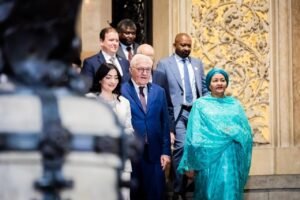
APC Ends Boycott, Rejoins Governance as Talks with International Moral Guarantors Yield Key Reform Agreements

Group of diverse officials and dignitaries in formal attire posing on steps outside a building for a group photo.

By Amin Kef (Ranger)

A high-level joint assessment mission comprising the Economic Community of West African States (ECOWAS), the United Nations Office for West Africa and the Sahel (UNOWAS) and the Commonwealth Secretariat has concluded its third assessment visit to Sierra Leone on April 20, 2026, reaffirming international commitment to the country’s democratic stability while setting out a comprehensive roadmap for electoral and constitutional reforms.

The mission, conducted from April 13 to 20, 2026, focused on evaluating the implementation of the Agreement for National Unity (ANU), signed on October 18, 2023, between the Government of Sierra Leone and the opposition All People’s Congress (APC). It also reviewed progress on the recommendations of the Tripartite Committee, which was established to address electoral concerns following the 2023 general elections.

Co-led by former Gambian Vice President, Fatoumata Jallow-Tambajang, UNOWAS Deputy Special Representative, Barrie Freeman, and Commonwealth Deputy Secretary-General Tanmaya Lal, the delegation engaged a wide range of stakeholders across the political and governance spectrum.

The team held consultations with President Julius Maada Bio, senior cabinet officials, opposition leaders, Parliament, the Electoral Commission for Sierra Leone, the Political Parties Regulation Commission, security agencies, Civil Society Organizations and members of the diplomatic community. The process was facilitated by the Independent Commission for Peace and National Cohesion, with technical support from international partners.

In its concluding statement, the mission acknowledged that while notable progress has been made in implementing aspects of the ANU, significant challenges remain. It welcomed the renewed commitment demonstrated by both the Government and the APC to strengthen dialogue, rebuild trust and ensure inclusive governance processes moving forward.

A key highlight of the mission was the recognition of the tabling of the Constitution of Sierra Leone (Amendment) Bill, 2025 in Parliament. The international partners urged lawmakers and stakeholders to work collaboratively to finalize constitutional and legislative reforms, emphasizing the importance of broad consultation and national consensus.

Crucially, the mission facilitated renewed dialogue between the Government and the APC to address lingering disputes over the implementation framework of the Tripartite Committee’s recommendations. At the end of those engagements, both parties reached a series of agreements aimed at accelerating reforms and strengthening democratic institutions.

Among the most significant outcomes is the decision to engage Parliament in urgently establishing a Parliamentary Standing Committee on Electoral Matters. This body will be responsible for reviewing the electoral cycle and ensuring preparedness for the 2028 general elections, a move widely viewed as critical to restoring confidence in the electoral process.

The parties also agreed to restructure and expand the implementation framework of the ANU. That includes the creation of a High-Level Oversight Mechanism to monitor progress and the expansion of the Tripartite Steering Committee to include representatives from additional political parties and Civil Society Organizations. Observers say such expansion is expected to enhance transparency and inclusivity in the reform process.

In addition, a team of legal experts will be constituted to guide constitutional and legislative reforms. The team will draw representation from the Government, the APC and other stakeholders, ensuring a balanced and technically sound approach to reform implementation.

The mission also emphasized the need to strengthen the national Peace and Election Management Security framework. Vice President Mohamed Juldeh Jalloh is expected to play a central role in that process through continued engagement with the National Security Council.

Electoral reform remained at the heart of the discussions, with both parties committing to the restructuring of the Electoral Commission within the ANU framework by December 31, 2026. The reform process is expected to address concerns around transparency, accountability and public confidence in the electoral system.

Another critical area of agreement relates to the use of data from the 2026 Population and Housing Census. The parties committed to ensuring that the data is used as a tool for development planning and governance, with inclusive stakeholder engagement to prevent disputes and enhance public trust.

Significantly, the APC agreed to end its boycott of governance processes and resume participation in national institutions. That development is being widely interpreted as a major breakthrough in efforts to normalize the political environment and promote inclusive governance.

The international mission also issued a strong appeal to political leaders, supporters and citizens to exercise restraint, avoid inflammatory rhetoric and refrain from spreading misinformation. It stressed that peace and stability depend on responsible political conduct and sustained dialogue among all stakeholders.

In a separate but related statement, the APC outlined its position following the conclusion of the engagements. Signed by its National Secretary General, Lansana Dumbuya, the party described the talks as a critical opportunity to address longstanding concerns about electoral governance and institutional credibility.

The APC reiterated that it had used the platform to clearly articulate its concerns regarding what it views as delays in implementing key recommendations of the Tripartite Committee. It warned that certain actions, particularly those affecting the leadership of the Electoral Commission, could undermine public confidence if not handled transparently and inclusively.

The party acknowledged that the discussions facilitated by international partners had resulted in concrete commitments, including the restructuring of the Electoral Commission and the establishment of accountability mechanisms with defined timelines.

According to the APC, those commitments will be subject to a joint review process by December 2026, with continued monitoring by both national and international stakeholders. The party also welcomed the Government’s pledge to adopt an inclusive approach in utilizing census data for governance and electoral planning.

Despite expressing cautious optimism, the APC made it clear that it considers the current process a decisive opportunity for meaningful reform. It warned against delays or superficial compliance, emphasizing that it expects tangible progress within the agreed timeframe.

Addressing its supporters across the country and in the diaspora, the APC leadership urged calm, discipline and unity. It encouraged members to actively engage in monitoring the implementation process, stressing that the focus has now shifted from negotiation to accountability.

The party further underscored that it has given the process what it described as a “final chance,” noting that any failure to implement agreed reforms by the December 2026 deadline could prompt it to reassess its position and determine its next course of action within democratic and legal frameworks.

Political analysts view the outcome of the joint mission as a critical turning point in Sierra Leone’s post-election recovery process. With clearly defined commitments, timelines and oversight mechanisms now in place, attention is expected to shift toward implementation and measurable progress.

The international moral guarantors reaffirmed their commitment to supporting Sierra Leone’s democratic development, emphasizing the importance of inclusive governance, institutional reform and national cohesion.

With the country preparing for the 2028 general elections, the success of those efforts will depend largely on sustained political will, effective institutional collaboration and the ability of all stakeholders to prioritize national unity over partisan interests.