
Home Blog Page 1233

Sierra Leone News: DHS Helping to Improve Sierra Leone’s Health Indicators

The Chief Health Education Officer and Programme Manager Health Education Division, in the Ministry of Health and Sanitation, Lansana Alex Conteh has said that the ongoing Demographic and Health Survey (DHS) gathers data on key health indicators of the country which he noted will be useful for effective planning by government and  implementation of health interventions across the country,

He was speaking on behalf of the Ministry of Health and Sanitation at a regional advocacy meeting held for paramount chiefs in the North East and North West Regions in Makeni City and Port Loko City on the ongoing Demographic and Health Survey over the weekend.

Pointing out the health benefits of the DHS to the Health Sector, Mr Conteh noted that they need credible and accurate date to improve the health indicators of the country for effective planning and implementation of health interventions across the country.

He reiterated that they are in dire need of high quality date on the following health conditions: fertility levels and preferences, the utilization of contraceptives, Infant, Child and Neonatal Mortality levels, nutritional status, and the level of awareness on HIV/AIDS.

Mr Conteh continued that they also need data to measure maternal and neonatal mortality and morbidity and associated causes, information on Family Planning, the prevalence of HIV in men and women in the country and behavioural risk factors related to HIV and also to provide information on the access and use of mosquito treated bed nets.

Mr. Conteh ended by urging paramount chiefs to enlighten their people, as a little prick of blood is demanded by the enumerators in the field to ascertain data on people’s health and that the test is done on the presence of both the enumerators and the individual.

Statistician General, Prof. Osman Sankoh at Statistics Sierra Leone said that though we are trying as a nation, the country is being rated as one of the least developed countries in the world because we cannot provide accurate date on certain development indicators which have to do with the development and health of our people. He further noted that the Demographic and Health Survey will look into these indicators which will help government, Non-Governmental and International Organisations.

Mr.  Sankoh further said that Sierra Leone is competing with countries in the Manor River Union, ECOWAS, Africa and the World for which we need accuracy and quality to achieve the Millennium Development Goals and now Sustainable Development Goals as per international standards.

Acting Director Demography, Health and Social Statistics, Sonnia-Magba Bu-Buakei Jabbi stated that they were craving for high quality data as they were using Information Communication Technologies (ICTs) like smart phones and electronic tablets to gather credible and accurate data for which the enumerators were trained and tools pretested.

Ms Bu-Buakei Jabbi reiterated that they were now doing the 3rd Demographic and Health Survey and the 2019 DHS will populate, update or improve the Sierra Leone Demographic and Health Surveys of 2008 & 2013. He continued that the Statistics Sierra Leone which is the body mandated to provide credible data in Sierra Leone, is poised to provide data to monitor the demography (people) and health situation of people in Sierra Leone.


Sierra Leone News: Fuel Pump Price Rises

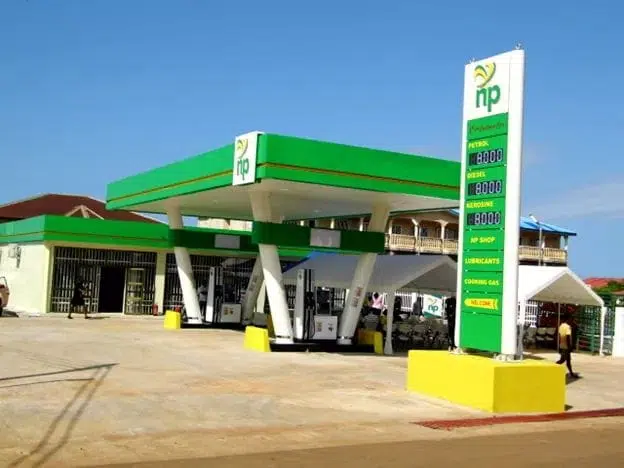
After weeks of speculation, prices of fuel have gone up in Sierra Leone. Petrol is now sold at Le8, 500 per liter, up from Le7, 000 per liter, representing a 15% increment, according to a statement from the government.

Diesel is also sold at Le8, 500, up from Le7, 500, while Kerosene is Le8, 500, up from Le7, 600, the statement adds. Fuel oil is now Le7,500 from Le6,500, it went on.

Officials of the Petroleum Regulatory Authority, which made the announcement, said it’s in response to factors prevalent in the international market.

The statement, which was jointly issued by relevant ministries and the oil marketing companies, said the reviewed prices were decided to reflect recent movement in the “PLATTS and foreign exchange rates.”

The announcement followed weeks of speculation fuelled by intermittent shortages of petrol. Since last Friday queues began lengthening after one of the leading petroleum exporting companies expressed concerns over the rising cost of exporting the commodities.

The increment in prices of pump is expected to force an increase in transportation fees, which is in turn likely to impact cost of living and make an already difficult situation more complicated for most Sierra Leoneans.

A major concern among many Sierra Leoneans is the reaction of commercial vehicle owners who have already threatened to raise their charges.

But Mr. Maywhether Thompson, Chief Director and Professional Head in the Ministry of Trade and Industry, said the government was planning to invite the Drivers’ Union for a meeting to discuss the way forward.

Though hike in fuel pump prices, commercial transportations’ fares are not to be affected, sector stakeholders agree

Prior to the modification of the fuel pump prices, the Ministry of Transport and Aviation in consonance with the ministry of Trade and Industry and Commercial transport heads had held a meeting to deliberate on matters revolving on the expected increase in prices and its resulting impact on point to point fares for motorbikes, tricycles (Keke), cars (taxis) and vans (Poda-Poda). The meeting was held on Thursday 25th June at the conference hall with all district heads represented.

Addressing the gathering, the Minister of Trade and industry Edward Hinga Sandy explained that due to extenuating circumstances of uncertainty of adequate supply caused by political unrest in Iran and other trade determining factors, there has been significant pressure on the demand from the oil market in other countries. This pressure has now manifested itself globally by a slight but significant increase in oil prices by the dollar and Sierra Leone is also susceptible to its effect.

However, the Minister assured that the increase will not exceed a thousand five hundred Leones (Le 1,500) on any of the oil commodities. Minster Sandy then called for the review of the fuel prices using the existing matrix as price determinant for new cost of oil commodities.

The Minister of Transport and Aviation Kabineh Kallon cautioned against exorbitant price hike in drivers’ possible nefarious efforts to extort travellers. He also warned against Oil marketers collaborating with certain individuals to create false scarcity of fuel in the country as this has the propensity to disrupt the flow of trading and normal daily routines of everyone.

The President of the Motor drivers’ Union, Alpha Bah, President Indigenous Transport owners association, Alhaji Abu B. Fofanah, President Bike riders union, Umaru Talie Bah and President Sierra Leone Commercial Tricycle Union, Bornoh Samba Kamara, all concurred that prices of point to point, will not be altered much as they have not been affected by much upon use of the usual matrix which all of them worked on.
It should be noted that even with this hike in Fuel pump prices, the cost of Fuel in Sierra Leone remains the lowest, compared to other subregional countries of Guinea and Liberia.

Sierra Leone News: Needed: Stable FOREX for OMCs in Sierra Leone

It has been learnt that it is very challenging for Oil Marketing Companies (OMCs) in Sierra Leone unlike other African countries like Liberia, Gambia etc. that are selling their petroleum products above 9,000 Leones, but for Sierra Leone the price is Le8, 500 for petrol and for diesel. This is why foreign exchange dealers are really challenged and for that reason foreign currency is not freely available to OMCs for them to continue the process of purchasing and selling.

Oil marketing companies in Sierra Leone that have been doing extremely well in terms of timely service delivery of petroleum products and customer care, are reportedly going through trying times, having recorded a massive loss from January to May 2019 to the tune of over Le 96 billion (ninety six billion Leones).

Kobi Walker, General Manager NP-Sierra Leone, speaking recently on Radio Democracy in an interview disclosed that one of the major factors that has been responsible for the present status quo antebellum is the fact that there has been a huge difference between the actual price of PLATTS and the average purchase price of USD $ to the Leone when matched against that of the Petroleum Regulatory Agency Pricing Formula.

According to him this is a big challenge that NP and the Government cannot handle. He said that it is very challenging for OMCs as other African countries like Liberia, Gambia etc. are selling their petroleum products above 9,000 Leones but he said for Sierra Leone the price is Le8, 500 for patrol and diesel.

He also said foreign exchange owners are really challenged and for that reason foreign currency is not freely available for them to continue the process of purchasing and selling.

He also said that looking at the current prices of petroleum products within the context that NP is subsidizing, has further compounded the situation, which he said is a contributory reason why they are encumbered with such huge losses, highlighting how that is not their sole responsibility as a company.

He said that it is not their business to give subsidies and sell below what they are buying, pinpointing how they will continue to supply their products regardless of the fact that they are making so many losses.

The GM disclosed that Sierra Leone is consuming over 400 million litres of fuel every year.

He added that if the price for fuel remains like this it will pose serious difficulties for the survival of OMCs, but expressed optimism that they are sure to address the issues with the relevant stakeholders.

He went further to say the company cannot determine the increase in price of fuel as there is the Petroleum Regulatory Agency which is the regulator of OMCs.

“They have the onus to determine increase of prices having looked at the PLATTS, foreign exchange rates and other variables,” Kobi Walker posited, adding that they as a company cannot continue in the present manner but that the relevant stakeholders are seriously looking into the situation.

Against this background, it should be noted that for any government anywhere in the world to successfully govern and manage its economy well, it can only do so by actively engaging oil producing companies and giving them the necessary attention, because, as the saying goes: without energy, no development.

Needless to say, in Sierra Leone, the state of oil companies is such that oil companies operating in Sierra Leone will remain challenged if nothing is quickly done by the relevant authorities to address the quagmire in which these companies currently find themselves.

It is understandable that the whole country relies on petroleum products for progress and development to transpire. But what the oil companies are saying is that they are exposed to a lot of bottlenecks that greatly hamper their profitability and running costs in what is considered to be a highly volatile market that is subject to the vicissitudes of international economic forces.

Without any doubt, we all see how quickly the whole economy grinds to a halt whenever there is no fuel in petrol stations. People can no longer travel easily and cheaply from one place to another. The cost of transportation goes up and food prices shoot up as well, affecting the smooth operations of industries, sometimes causing job losses.

As such, whilst we understand the financial stress that the government is going through, but at the same time, the government must keep in mind that it is a fact that survival of society depends on the availability of petroleum products in the market at all times.

The depreciation in the value of the Leone should not be a factor in the Central Bank prioritizing foreign exchange to oil companies at official exchange rate because fuel has a very huge multiplying effect on the rest of the economy, as well as vital for investor confidence.

Realistically, if the government cannot subsidize, then it should allow market forces to prevail so that the industry does not collapse.

As things now stand, oil marketing companies are suffering at the detriment of its own survival.

“If the current fiscal regime is not reviewed many companies including Sierra Leone’s fully indigenous National Petroleum Company will go down a painful and dreadful route,” stated Steven Williams, a Development Consultant. He added that sound policies must be urgently rolled out to ensure stability.

Williams maintained that it is regrettable that the company finds it extremely difficult to purchase US Dollars in the marketplace currently.

It is recommended therefore that the Central Bank develop a mechanism wherein foreign currency is provided for the oil marketing companies to enable them pay for badly-needed petroleum products.

Of course to promote transparency of goods that are brought into the country and required taxes that must be paid to Government, the ASYCUDA digital software was introduced at the Port.

However, what was gathered from the conducted research was that the method of implementation of the ASYCUDA system has been negatively impacting Oil Marketing Companies for which it was recommended that the relevant authorities put in place measures to ensure seamless flow of products free of interruption and long delay at the Quay.

The current pricing formula dictates that the pump price of petroleum products be adjusted upwards or downwards periodically as and when the combined effect of the changes in world market prices (quoted in PLATTS) and the exchange rate (measured by the average selling rates quoted by the Oil Marketing Companies, commercial banks and Bank of Sierra Leone) causing a +/- 5% change in the Leone-based landed cost of the product (s).

It was noted that prices should be changed upwards or downwards in small increments that will not create panic in the market place. The way it is currently, allows for a big jump at any time which makes it difficult for Government to effect change at the right time.

It may interest readers to note that while a litre of fuel is sold at Le8,500.00 here, in Guinea it is sold at Le9, 120.00, in Liberia it is Le9, 321.00, Ivory Coast sells at Le9, 244.20 and Ghana at Le 9,136.44.

Oil marketing companies are further encumbered with other charges that are not provided for in the price build up formula, and these include: Toll Gate fees, ASYCUDA processing fees, Environmental Protection Agency fees, storage fees and other fees imposed by the Petroleum Regulatory Agency.

Thus, to help the oil companies, government must review some of its policies, especially those affecting vibrant companies in the country, as well as ensuring that economic measures are rolled out in order for the value of the Leone to appreciate.

Failure to take drastic steps to protect locally owned companies will definitely lead to closure or restructuring with dire consequences that could take the form of labour downsizing, no-payment of taxes to government among other salient issues.


Sierra Leone News: IFC Signs $60m Funding Agreement with Leading Rutile Miner

The International Finance Corporation (IFC), a member of the World Bank Group, has signed a US$60 million funding agreement with the Sierra Leone based rutile miner, Sierra Rutile Limited.The partnership deal signed on Monday with representatives from Sierra Rutile’s Australia-based owner Iluka Resources Ltd, is meant to fund expansion drive of the company’s operations in the West African country.

A statement from the World Bank country office sent to journalists described the agreement as equity investment and said it will help the company double its rutile production from the current 150,000 tons per year and extend the life of its mine to at least 2035. It also promises creation of local jobs and economic benefits for the country.

“IFC will also work with Sierra Rutile Limited to increase its positive impact on local communities. A three-year advisory services agreement between IFC and Sierra Rutile will help the mining company
implement a new community investment and engagement strategy, improve the transparency and use of community-managed mining revenues, and develop a women and youth social and economic empowerment program,”  the statement reads.

Rutile, a titanium mineral, is one of the top two mineral foreign currency earner  for Sierra Leone, alongside diamond and iron ore. And Sierra Rutile has been the leader in the production of titanium mineral.

“Partnering with IFC will provide benefits to Iluka, IFC, and the people of Sierra Leone by promoting the continued, sustainable development of the Sierra Rutile operation,” Tom O’Leary, Managing Director of Iluka, said at the signing ceremony held at the Radisson Blu Mamy Yoko Hotel in Freetown.

Sierra Rutile Limited prides itself as the largest tax payer, private employer, and foreign exchange earner for Sierra Leone. But the company has also come under criticism over the impact of its activities on the local communities where it operates.


Sierra Leone News: MRIE COMPANY TO EMPOWER 80 NIGHT WORKERS

Chief Executive Officer of Manor River International Entertainment Company, Henrietta Mbawah

On 1ST July 2019, in an interview with the Chief Executive Officer of Manor River International Entertainment Company, Henrietta Mbawah, it was disclosed that in April 2019 the MRIE Company organised Miss Manor River Union International Beauty Pageant show in Freetown. She said the show was geared towards empowering 80 night workers (20 from each country) with farm lands and tools to enable them engage in Agriculture. She further explained that Guinea, Liberia, Ivory Coast and Sierra Leone participated in the show and the winner of that competition was from Liberia and her platform was agriculture.

Henrietta Mbawah further said that ‘Sierra Leone lives Matter’ and the Manor River International Entertainment Company show is unique and different from the other shows, as it is geared towards advocating for women who suffer from gender based violence in their schools, universities, and communities, adding that the theme for this year is ‘gender based violence as part of goal 5 of the sustainable development goal’.

She further disclosed that each of the contestants was asked to choose a platform that they will use in order to achieve the goal of the beauty pageant, which is to stop gender based violence and the empowerment of women and girls in the manor river union countries when they win.

However, she said the current winner is from Liberia and a student of the University of Liberia. Agriculture is the platform she chose to empower women and girls, as she believes that if women are capacitated in Agriculture, they will increase agricultural productivity and reduce gender based violence in the sub region.

Henrietta Mbawah further added that the winner from Liberia’s platform, ‘agriculture’, will be launched in July in Liberia where 20 night workers have been identified to be empowered with farm lands and farming tools to produce food items like pepper, cabbage, carrot, garden eggs etc. This will in turn empower them financially and take them from the streets.

After the launch, the winner will also take a tour to Manor River union countries to engage young girls in twenty secondary schools and 10 communities in order to encourage them to take part in agriculture and say no to Gender Based Violence.

She ended by emphasizing that they decided to work with Night workers because they are considered less privileged and marginalised by society and in their trade, they are the most direct victims of gender based violence. Having done research on the activities of some of these night workers in the four West African countries in the Mano River basin, during their bid to select the 20 beneficiaries of the project, they discovered that most of these nights workers are in the street because they don’t have alternative employment and are willing to leave the street if they have an alternate source of income generation.

In conclusion, Henrietta Mbawah expressed appreciation to the following institutions for their sponsorship: Africell, Africa Young Voices Media Empire, Sierra Leone Brewery Limited, Sierra Leone Bottling Company, Leone Oil, Rokel Commercial Bank, Ministry of Youth Affairs, Ministry of Tourism and the National Youth Commission; and called on them for their subsequent support, especially the Ministry of Youth Affairs to help them with farm land for the 20 night workers that will be selected in Sierra Leone to engage in agriculture for the next one year.


Sierra Leone News: BOLLORE Raises Concern Over NSBT Weigh Bridge

On Tuesday 2nd July, 2019 Bollore Transport and Logistics in a press conference held at their conference room at cline town in Freetown, informed pressmen about their concerns over the construction of the weigh bridge by Nectar Sierra Leone Bulk Terminal (NSBT) at the Freetown Terminal Entrance which has led to accidents and traffic congestion in the Freetown terminal entrance.

Speaking at the press conference, Patrick M. Jarbee, Health Safety and Environment Coordinator of Bollore disclosed that since the construction of the weigh bridge, they have raised their concerns to NSBT and relevant stakeholders regarding the said construction that has posed security threats to not only the Freetown terminal but the community as a whole and up till now no actions has been taken.

He further said that due to the construction of the bridge at the entrance, there has been a lot of accidents, the most recent being on Sunday 31st June 2019, where a vehicle loaded with timber waiting to be weighed hit and destroyed the fence, vehicles, etc. This has cost Bollore millions of Leones to reconstruct the fence and repair the damaged vehicles.

He furthered that these concerns were raised with the past administration, but no actions was taken and they are still calling on concerned stakeholders to address the current issue.

Emerson M. Kamara, Public Relations Officer, Indigenous Transport Owners Association, said that there are lots of challenges faced by transport owners and they have written letters to the stakeholders responsible, but it has been fruitless and he recommend that there be a weigh bridge at Hastings   instead of at the Freetown terminal entrance. This, he maintained, will surely ease the traffic congestion and accidents that do occur at the Freetown terminal and Fourah Bay Road axis as it will reduce the vehicles queuing at the entrance of the quay waiting to be weighed, effectively blocking the road.

He concluded by saying that within 72 hours, if actions are not taken for the removal of the weigh bridge at the entrance, they will withhold their services as transport owners, as it makes their vehicles and drivers open to accidents and confrontation with residents in the community over parking space.

Lamin Koroma, Chairman Sea Side Community, also disclosed that the community has raised concerns concerning the construction of the weigh bridge in their community, especially as it poses threats to the lives of their children in the community.

He disclosed that he has written a lot of letters to stakeholders like ONS, SLP, SLPA, State House etc. in order to get the company to relocate the weigh bridge elsewhere, but all these moves were fruitless.

He also maintained that due to over parking by the drivers, electricity poles have been hit by the drivers, adding that he is working on relocating the electricity poles into the Bishop Johnson school so as to mitigate the destruction of the facility.

Gassimu S. Fofana Head of Communications/Public Relations, Bollore Transport and Logistics, said that there has been a lot of consultations regarding the position of the weigh bridge and the security threat it poses to their working environment and the community as a whole.

He recommended that the weigh bridge be relocated to a convenient place where it will not affect anyone.

This writer and other journalists went to the offices of NSBT to get their own side of the story, but were denied entry into the premises by the security. Efforts were also made to contact officials of the institution by phone, but all proved futile. However NSBT’s side will be published when access is gained and an interview granted.


Sierra Leone News: Journalist are not Criminals… Press Freedom and Liberty of Journalists to Report

Sallieu Tejan Jalloh aka Sall Tee, The Publisher of the Times SL Newspaper, David Johnson, Editor Times SL Newspaper, Mustapha Sesay, Editor Standard Times Newspaper and Abu Bakarr Kargbo aka Father Bakish, Senior Staff Writer, Standard Times Newspaper

Practicing journalists and media houses in Sierra Leone have had to over the years greatly restrain themselves in investigating and reporting on the ills of society. Four journalists have been remanded at the Pademba Road Male Correctional Center on Friday 28th June 2019 by Magistrate Mark Ngegba of Court No.2 in Freetown.

Four journalists who are all editors, Sallieu Tejan Jalloh aka Sall Tee, The Publisher of the Times SL Newspaper, David Johnson, Editor Times SL Newspaper, Mustapha Sesay, Editor Standard Times Newspaper and Abu Bakarr Kargbo aka Father Bakish, Senior Staff Writer, Standard Times Newspaper were before Magistrate Ngegba on charges brought against them by Lawyer Mohamed Pa Momoh Fofanah through a private prosecution.

Over the years, whilst the government has introduced legislations to unshackle journalists, such as the Freedom of Information Act, a thorn in the flesh of the profession is that of the Criminal and Seditious Libel law contained in the 1965 Public Order Act that was passed into law when Sir Albert Margai as Prime Minister wanted to muzzle journalists when he sought to have a One-Party Bill passed into law by a then SLPP-dominated parliament.

In the long struggle to have the legislation expunged, the former President of the Sierra Leone Association of Journalists, veteran BBC journalist Umaru Fofanah during his tenure in office with his executive fought tooth and nail to have the former government of Dr. Ernest Bai Koroma expunge this odious piece of legislation that ties the hands of journalists from freely expressing their thoughts and opinions to no avail.

His successor, Kelvin Lewis, too has been fighting valiantly to have the law exorcised from the books and was able to win assurance from now President Bio when he was campaigning in 2018 that if he won the presidential election his government will expunge criminal and seditious libel from the books.

With the government’s Minister of Information and Communication having several times assured the media that the government will make good on its promise but having so far not filed the motion in parliament for ratification, journalists in Sierra Leone continue to be treated as criminals by the courts for exercising their right to freedom of expression.

It is under this draconian law that 4 journalist make an appearance on Friday 28th June, 2019 before the magistrate court sitting in Freetown on a criminal summon of libel against a Lawyer (Pa Momoh Fofanah) filed by lawyers representing him, when at the same time, the Government of Sierra Leone had established an Independent Media Commission to serve as first port of call in all matters having to do with dispute between the media and the public.

Many people see this first test of the liberty of journalists to report on a matter of public interest without fear of recrimination  as a dangerous first step towards repression of press freedom and muzzling of journalists.

The press is appealing to the Government of Sierra Leone and the Judiciary to intervene in this matter and order the immediate release of our colleagues. May common sense prevail!


Sierra Leone News: Canadian Tour Operator to Use Sierra Leone as Melting Pot

In changing the story line of a tourism destination like Sierra Leone, from hoax and negative hypes, the right moves to attract the tourist generating region is through constant destination marketing using B2B strategy and approach as introduced by the Minister of Tourism and Cultural Affairs, Dr. Memunatu Pratt using a tool kit known as “Tourism Governance” (TG) with smart tourism push-out engagement as it is now done.

The Managing Director who also served as VP Mr. Yves Marceau received the team, and thoroughly briefed them on their operations over the years.

Yves through these engagements was able to state that adventure travel is more than a vacation. It’s a chance to get to know your world better by putting yourself on a first-name basis with the people, places, and things that make it worth exploring. The group is small with adventure travel experts, and has been in existence for over 20 years.

They have got the way to design customer base by listening to travellers and giving them what they want: top-notch tours in top-notch places with top-notch staff at great prices, and Sierra Leone is no mistake for future exchanges in travel and tours business.

G Adventures agreed on partnering with Sierra Leone in establishing tourism based development projects that aid the profile of the destination.

Capacity building was part of the conclusions met; training the community based tourism workers is part of their portfolio for the past twenty years. This approach has yielded a phantom reward in other destinations in Africa, and these Yves believes can be transferred to Sierra Leone.

Transfer of expert to whatever projects is their mastery, especially Eco-tourism site development and management. Therefore, this ideal meeting if deliberations could be furthered as suggested by the G Adventures will make dividend.

The meeting closed with tight and firm deals, of stronger exchanges and coherently set future preparation and plans to visualise these mind-sets.


Sierra Leone News: Is Sierra Leone Serious about Free Education?

The dream of every parent the world over is to provide quality education for their children, so that by the time these children grow into adulthood, they will be able to live a decent life.  This dream is almost achievable in Europe, America and other developed countries, but in developing countries such as Sierra Leone, this seemed to be far-fetched.

This is all the more reason why quality education stands fourth among the seventeen Sustainable Development Goals set by the United Nations General Assembly in 2015 for the year 2030. This goal calls for ensuring inclusive and equitable quality education and promoting lifelong learning opportunities for all. In Sierra Leone, a good number of children do not go to school. Not because they are sick or they do not want to go to school. In fact they do. Research shows that some of the issues that raise their ugly heads in preventing the children from going to school include but not limited to poverty, sanitation, child labour, early marriage, health issues and in some cases there are no schools to attend, and where there are, there are few teachers.

Little wonder that when the Sierra Leonean President Julius Maada Bio was elected into office, he made free quality education his flagship program. In launching the free quality pre-primary, primary and secondary school education for government and government assisted schools, President Bio pointed out that education was an investment for personal and national development and without education a nation cannot get the much-needed manpower for socio-economic advancement.  While pledging his government’s commitment, he used the opportunity to call on parents and teachers to support the free education program. “My government will take legal action against parents who fail to send their children to school,” President Bio warned.

At this initial stage, the venture of the president and his government is being rocked by a myriad of challenges, paramount among which is the willingness or rather unwillingness of parents to send their children to school. In a country such as Sierra Leone where poverty is rife, most parents depend on their children to assist them in fending for the rest of the family. Farmlands have to be attended to, monies have to be earned to buy basics and in some cases, the girl child has to help the mother look after younger siblings and/or help with domestic duties from time to time.  Mostly in large cities children are seen leading poor blind or crippled parents along the streets assisting them in their begging trade. Another factor that is creating a stumbling block for the children is that disabled children are not being properly cared for. In a country where disability is mostly viewed as a result of witchcraft or a curse, disabled children find it hard to access education. James Fallah-Williams is the Program Director for Practical Tools initiative. He says the free quality education program initially never even incorporate disabled children as part of the general group that needed additional practical support in mobility and access. “It didn’t even consider making sure that school structures are made appropriate and reachable for the disabled,” he noted. He added that the success of the free quality education program will be judged by the unequivocal inclusion of destitute and abused children.

In addressing some of these challenges, President Bio encouraged both local and international partners to step forward and partner with government in ensuring the success of the free quality education.

One international organisation that immediately answered the call of the president is the United Nation Education Scientific and Cultural Organization (UNESCO). They have consented to work with the government of Sierra Leone. The delegation from UNESCO met with the president at State House where they told him that they had been following the programs of government free and quality education since it was launched and that their visit was to engage government in discussing the way forward in supporting the free and quality education. Yao Ydo the multi-Sectoral regional director United Nations Education Scientific and Cultural Education (UNESCO) also expressed his willingness in helping the government and the free quality education which is the flagship program of the government. He said that they were ready to support government to the fullest and called on the government to make science subjects.

Parents as well as the pupils themselves for which the free quality education is being provided have expressed optimism about the positive impact the free education will have on the socio-economic advancement of the country. The principal for the Government Secondary Technical School, Henry Kamara was very upbeat when asked whether he cared about the free education. He started off by commending the government and called the venture a good idea. He however asked for an upgrade of the physical facilities; school structures, furniture, libraries etc. “Government should also look into the affairs of teachers who are the driving force behind the free education,” he said.

On his part, Davidson Momoh, a JSS3 pupil of the Prince of Wales School, said the only issue they had with the free education was that they had to return the textbooks provided or pay a loss fine if they do not do so. “We are now afraid to even use the books, so we keep them without using them in order to return them when the time comes,” he said. He however said that the exercise was a good one as they would no longer be sent out of school because their fees had not been paid by their parents.

Joseph Sannoh the Chief Executive Officer for Heal Salone, a civil society activist and the publisher and proprietor of Education Microscope Newspaper on his part called on government to monitor the activities of the free education books and ensure the books are fairly distributed.

For the fourth pillar of the SDGs to be achievable in Sierra Leone, everyone must come on board; the government, the local authorities, parents, teachers, students, international community and the like. Free education for all must be everyone’s responsibility. Who cares about Bio’s free quality education? I care. You care. We all care.

This work is an SLRU mentorship project with support from Media Reform Coordinating Group (MRCG) and funded by the UNDP. It was researched and written by Mentee Adama Barrie and Donald Theo-Harding provided the mentorship.


Sierra Leone News: Barefoot Women: No Stipend for 16 Months!

Barefoot Women Solar Engineers Association Sierra Leone Konta Line- Koya Chiefdom, Port Loko District while commending the Sierra Leone People’s Party-led Government and Hon. Alex Mattia Rogers of Constituency 102 Pujehun District for their support and constant touch with them, said they have gone for 16 months without stipend.

This was made known when journalists facilitated by Hon. Alex Mattia Rogers visited the institute to get first-hand information about the institute and their challenges on Monday 24th June 2019.

Barefoot Women Solar Engineers Association Chief Solar Engineer and Founder Haja Nancy Kanu thanked President Bio and Hon. Rogers for their commitments.

As part of their constraints, Haja Kanu disclosed that for the past 16 months they have gone without stipend. This she added, they want to government to look into as they are ready to give quality training. She also spoke about lack of vehicle among others. She thanked the Education and Energy ministries for their supports.

She spoke about their huge manpower that is ready to give light in the country if the resources are provided.

According to Haja Kanu people want to discourage them but she said they are not going to relent because they want to empower rural communities.

“If I am uneducated and I am doing such a good thing, what if I were educated. We want the President to give us the support; the MPs are seeing the reality of what we are capable of doing.”

Barefoot Women Solar Engineers Association Secretary General Edward Musa Anaque said among other things that the organisation is a grassroots one that belongs to rural illiterate’s women.

He said Haja Nancy Kanu was among the first batch of women to train in in India in 2007 and from 2007 to 2009 they have trained 260 women and now they have a batch of 50 which is funded by the central government of Sierra Leone that are drawn from South, East, North and North West regions of the country.

He said their training mainly focuses on practical which is called the ‘barefoot’ approached.

He continued to say they need a competent base educational curriculum for rural electrification as the government has picked up the mandate indicating that they are ready.

“All we are doing here is for the rural people and solar is part of the renewable energy”

He commended the selection process of training across the regions and said they have brought members of parliament and the chiefs on-board.

Barefoot Women Solar Engineers Association started full operation in 2009 but was commission in 2012, now the team wants to decentralize as they need to train more people to take care of other areas.

The current structure the institute coast the past government about three billion Leones and it has a capacity of 50 students that will be train for four months.

Hon. Alex Mattia Rogers of Constituency 102 Pujehun District said Sierra Leone is moving towards rural electrification and he deems it feet to visit Barefoot Women Solar Engineers Association to know the level of progress they have made.

He said he is very impressed with them because he is not a stranger in that institute as he has seen what they are capable of doing and their move to empower women.

Hon. Rogers disclosed that he has sent third set of women in that institute from his constituency.

He said one among the first batch he sent went to India and now she is doing extremely well in her village in Pujehun District.

Hon. Rogers’ prayer is for the new intakes, which is funded by the government, do their best. He promised to engage other MPs and continue to talk with the government for their support as the new direction cardinal policy is to bring energy which he said is now extended to the rural communities.

One of the beneficiaries, Pakanda from Moyamba District said when they came to the institute they knew nothing but said they have learnt a lot such as colour post, tools, hydro meters among others.

She said she never knew women can learn engineering. She thanked the government and the founder of the project for taking up the bold step to empower herself and now others.