
Home Blog Page 374

Governance Crisis Looms as Bio’s Administration Struggles to Juggle Multiple Roles

By Foday Moriba Conteh

In a concerning turn of events, the Bio administration is facing mounting criticism and fears of a governance crisis as reports emerge of a lack of accountability, transparency, and effective leadership within the Government. The growing unease among citizens and stakeholders highlights the urgent need for corrective action to address the apparent decline in governance standards and restore public trust in the administration.

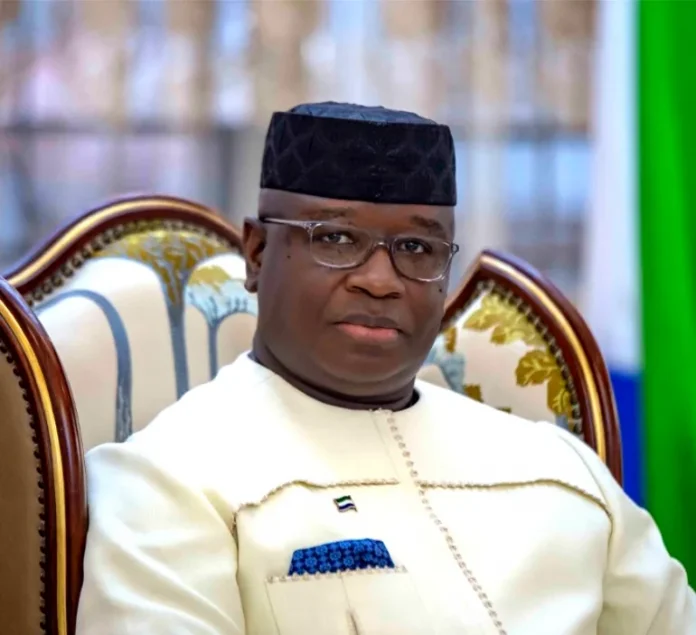
At the heart of the governance challenges facing the Bio administration lies the issue of multiple responsibilities shouldered by President Bio himself. Serving as both the Minister of Defence and the supervising Minister of Energy, in addition to his constitutional duties as the Head of State, President Bio’s extensive portfolio has raised concerns about the capacity of the administration to effectively manage governance, service delivery, and accountability.

The weight of overseeing critical Ministries, such as Defence and Energy, while simultaneously fulfilling the constitutional responsibilities that come with the Presidency has strained the administration’s ability to provide focused leadership, strategic direction and effective oversight across key Government functions. The inherent complexities of managing diverse portfolios, each with its unique demands and challenges, have created a scenario where the President’s attention and resources are spread thin, potentially compromising the quality and efficiency of service delivery and governance.

The implications of President Bio’s multiple roles on effective service delivery and governance are far-reaching and multifaceted. The lack of dedicated leadership and focused attention on specific Ministries, such as Defence and Energy, may hinder the implementation of strategic policies, the enforcement of regulatory frameworks, and the timely resolution of sector-specific challenges. This fragmentation of leadership and oversight could lead to operational inefficiencies, coordination gaps, and a lack of coherence in government decision-making processes, ultimately impacting the quality and effectiveness of public service delivery.

Moreover, the constitutional responsibilities that accompany the presidency, including upholding the rule of law, safeguarding national security, and promoting good governance, require undivided attention and steadfast commitment to ensure the effective functioning of Government institutions and the protection of citizens’ rights and interests. The strain of balancing these constitutional duties with Ministerial responsibilities risks diluting the administration’s focus on critical governance priorities, eroding public trust and diminishing the overall impact of governance reforms and service delivery initiatives.

As the challenges of juggling multiple roles and responsibilities persist within the Bio administration, stakeholders are calling for a reevaluation of governance structures, leadership practices and accountability mechanisms to address the root causes of the governance crisis and enhance the administration’s capacity to govern effectively and responsibly. The imperative for decisive action, transparent governance and ethical leadership has never been more pressing as the Bio administration navigates the complexities of governance, service delivery and public accountability in the face of mounting challenges and heightened expectations from citizens and stakeholders alike.

In light of the governance crisis looming over the administration, the imperative for President Bio to streamline his responsibilities, prioritize governance reforms, and strengthen accountability mechanisms is paramount to restoring public trust, enhancing service delivery, and upholding the principles of good governance and democratic accountability. The road ahead is fraught with challenges, but with decisive action and a renewed commitment to transparency, accountability and effective governance, the Bio administration can overcome the governance crisis and chart a path towards a more resilient, responsive and accountable Governance that serves the best interests of the people and the nation.

Bockarie Kalokoh Nominated in Washington as Steering Committee Member by Coalition of Finance Ministers

Deputy Minister of Finance, Bockarie Kalokoh.jpg

By Brima Sannoh

The Deputy Minister of Finance, Bockarie Kalokoh, emerged as a key figure at the First Forum on Macroeconomics of Green Transitions held from April 22 to 23, 2024, in Washington, D.C. The event, co-hosted by the United States Department of the Treasury, the Danish Finance Ministry, the Coalition of Finance Ministers for Climate Change, and the Bezos Earth Fund, convened global policymakers, economic experts, and analysts to address pressing climate issues.

At the heart of the discussions was the imperative for Finance Ministries worldwide to enhance their capacity in tackling climate-related challenges and to develop effective analytical tools for informed decision-making. Bockarie Kalokoh, overseeing Climate Finance and Innovative Financing at Sierra Leone’s Ministry of Finance, was a prominent voice representing African perspectives in this critical dialogue.

In his contributions, the Deputy Minister shed light on Sierra Leone’s approaches to climate analysis and impact forecasting, underscoring the importance of robust frameworks for climate expenditure integration within public financial management. He emphasized ongoing collaborations with international partners, such as the World Bank and the FCDO of the UK Government, to strengthen Sierra Leone’s climate resilience.

Of particular note was his advocacy for the establishment of a climate budget tagging framework and a carbon market framework, for which Sierra Leone seeks technical assistance from development partners like the World Bank and the IMF. These initiatives align with the country’s broader efforts to mobilize climate finance and foster sustainable development.

Bockarie Kalokoh’s insights extended to high-level panel discussions, where he articulated Sierra Leone’s analytical needs and highlighted the significance of political and technical leadership in addressing climate risks and driving investments in adaptation and resilience across Africa.

Recognizing his visionary contributions, the U.S. Department of Treasury, Danish Ministry of Finance, and the Coalition of Finance Ministers nominated him to serve as a Steering Committee member, underscoring his pivotal role in advancing Africa’s climate agenda in alignment with the Helsinki Principles for Climate Action.

In addition to his engagements at the forum, Hon. Bockarie Kalokoh also made a courtesy call to the Embassy of Sierra Leone in Washington, D.C., where he exchanged insights with Embassy officials, further reinforcing Sierra Leone’s commitment to global climate action.

The active participation of leaders like Bockarie Kalokoh underscores the urgency and collaborative spirit required to navigate the complex challenges of climate change on a global scale. As nations strive to build more resilient and sustainable futures, forums like these serve as vital platforms for knowledge exchange and collective action.

Taxation Woes Overshadow Government’s Commitment to Essential Needs

National Revenue Authority (NRA).jpg

By Foday Moriba Conteh

The Sierra Leonean populace finds itself grappling with a mounting cost of living, attributed directly to the tax policies implemented by the Government, in collaboration with the Ministry of Finance and the National Revenue Authority (NRA). Businesses, ranging from large enterprises to Small and Medium-Sized Enterprises (SMEs), along with importers and retailers, are feeling the weight of increased taxation, as consumer prices soar.

In what was promised as an era of accessibility to basic necessities during political campaigns, the reality contrasts sharply. The recent Finance Act has not seen a relaxation of taxes but rather witnessed increases, adversely affecting businesses and exacerbating the standard of living for many citizens.

A prime example lies in the realm of consumables like butter and rice, household staples for many Sierra Leoneans. The imposition of higher taxes on imported butter has led to a significant price hike, with importers facing elevated costs due to a 30% rise in import duty, a 10% increase in excise tax, and a 15% hike in GST.

Similarly, the restoration of a 5% import duty tax on rice has contributed to inflated prices, further burdening households.

The Government’s desperate need for revenue, amidst a limited scope of productive activities and a bloated wage bill, underscores the pressing situation. Despite electoral promises and initiatives such as the “5 Game Changers,” which aimed at transformative development, the reality paints a grim picture of economic strain.

Critics call for a reevaluation of mining policies, highlighting the untapped potential of the country’s mineral resources. With current taxation primarily burdening businesses without substantial benefits to the populace, calls for policy revisions grow louder.

In response, there are mounting demands for the Government, particularly the Ministry of Finance, to revisit tax policies and prioritize measures to alleviate the economic plight of citizens. The emphasis lies on reducing the prices of essential commodities and exploring alternative avenues for revenue generation to mitigate widespread hardship and prevent political repercussions.

As the struggle for economic relief persists, the Government faces the challenge of balancing revenue mobilization with the imperative of improving the livelihoods of its citizens, recognizing that continued hardship risks eroding its political support.

ICAO Applauds Sierra Leone’s Efforts in Exploring Sustainable Aviation Solutions

Sierra Leone Civil Aviation Authority.jpg

By Amin Kef (Ranger)

The Minister of Transport and Aviation, Alhaji Fandy Turay, represented Sierra Leone’s stance on air transport growth and carbon emission reduction at a significant event held on April 30, 2024, in Punta Cana, Dominican Republic. The focus of the gathering was collaboration on Sustainable Aviation Fuels (SAF) between ENAC, ENI, and the Sierra Leone Civil Aviation Authority.

In his keynote address, the Transport Minister, Alhaji Fandy Turay, underscored Sierra Leone’s recognition of aviation’s pivotal role in facilitating movement, economic stimulation and cultural exchange globally. He noted how Sierra Leone is committed to the ambitious goal of achieving net-zero emissions by 2050.

Highlighting the country’s progress, the Minister disclosed that annual traffic at the Freetown International Airport (FNA) surged from 140,000 in 2017 to 220,000 presently, following significant infrastructure investment. He pointed out that notably, the new airport facility prioritizes green energy, powered by solar energy, aligning with Sierra Leone’s commitment to reducing carbon emissions.

The Minister emphasized the importance of collective action, stating that achieving net-zero emissions requires collaboration among States, ensuring regulatory certainty, a level playing field and consistent policies in the aviation industry.

He emphasized the critical need for improved technologies and skilled human resources to address industry challenges effectively.

Recognizing aviation’s indispensable role in economic growth and cultural exchange, the Transport Minister, Fanday Turay, stressed the importance of safety, security and environmental protection. He called for enhanced training and capacity-building efforts, particularly in Africa, to address the upcoming generational shift in aviation professionals.

On her part, the Director General of the Sierra Leone Civil Aviation Authority, Madam Musayeroh Barrie, disclosed plans for collaboration with the Italian Civil Aviation Authority to explore studies into the development of Sustainable Aviation Fuel.

Madam Musayeroh Barrie proudly informed the Secretary General of the International Civil Aviation Organization (ICAO), Juan Carlos Salazar, that Sierra Leone is poised to embark on studies for the development of Sustainable Aviation Fuel (SAF), following fruitful engagements with the Italian Civil Aviation Authority.

According to her, preliminary assessments, conducted in collaboration with ENAC and the primary Italian fuel producer, Ente Nazionale Idrocarburi (ENI), indicate that Sierra Leone holds significant potential as a producer of agricultural feedstocks and intermediate products, particularly vegetable oil, aimed at the production of biological SAF.

She emphasized the pivotal role of aviation in sustainable agricultural development, a cornerstone of President Julius Maada Bio’s initiatives underscoring the importance of a multi-sectoral approach in expediting progress towards that goal.

The occasion coincided with the ICAO Global Implementation Support Symposium, themed: “Building Capacity to Achieve an Effective and Sustainable Air Transportation System for Our Future.”

Sierra Leone’s proactive approach extends to airport infrastructure development, exemplified by the ambitious project with SUMMA, a Turkish company, to construct a new airport with state-of-the-art facilities.

Looking ahead, Sierra Leone aims to foster collaboration within the aviation industry to meet future human resource challenges, enhance on-the-job experience and ensure program standardization aligned with competency-based frameworks. By pursuing sustainable solutions and international cooperation, Sierra Leone demonstrates its commitment to a greener more efficient aviation sector.

PWD Youth Organization Addresses Drug Abuse & Reveals Injustice Over Land

PWD Area Youth Development Organization.jpg

By Alvin Lansana Kargbo

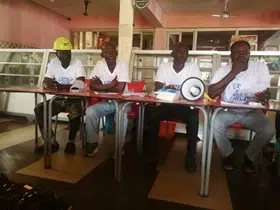
In a recent engagement with the Press, on the 26th April, 2024, the PWD Area Youth Development Organization in Kissy, Freetown, revealed its confrontation with the dual challenges of drug abuse and land right violation.

Mohamed Badamasi Cole, the Secretary General of the organization dilated on the pressing issue of narcotics abuse particularly focusing on the synthetic drug known as ‘Kush,’ which, according to him, has been inflicting substantial harm on the youthful population of that community.

The PWD Area Youth Development Organization, a registered community-based service group, reiterated its dedication to combating drug abuse through a multifaceted approach. This includes providing intelligence to local authorities, conducting youth sensitization activities and offering vocational training opportunities.

He informed that, however, their efforts have encountered a significant setback due to a land dispute that has left them without a crucial training space.

The Secretary General of the organization, Mohamed Badamasi Cole, further revealed that for over three decades the organization was utilizing a parcel of land at Ferry Junction, operating a youth training workshop that imparted skills such as welding and carpentry.

He continued that in 2015 they solidified their right to the property by obtaining ownership through a conveyance.

The organization’s Secretary General lamented that, however, on January 6th, 2024, their workshop was forcibly demolished allegedly by an Indian businessman with the assistance of officials of the Ministry of Lands.

Mohamed Badamasi Cole also highlighted that despite pursuing legal avenues, including obtaining an ex-parte injunction against the defendant, the organization is now finding itself without a training space that has resulted in numerous youths being left unemployed and disengaged. He condemned the actions of Government officials involved in the demolition exercise asserting that they had acted in clear violation of the law and due process.

Demanding accountability from the authorities responsible for the breach of their rights, he called on the Government to promptly restore their land right and to rectify the damage already done.

He said despite this setback, the organization remains resolute in its commitment to defending the rights of the community’s youth and ensuring that justice prevails.

The press conference not only brought attention to the critical issue of drug abuse but also highlighted the broader systemic challenges facing youth organizations in securing their land rights.

As the community awaits a resolution, the PWD Area Youth Development Organization remains steadfast in its pursuit of justice and the betterment of the youth in their community.

President of SLEF, Kobi Walker, Advocates for Labour Standards and SME Support

Ambassador Kobi Walker.jpg
By Amin Kef (Ranger)
Today marks the annual observance of International Labour Day, commonly known as May Day, celebrated worldwide to honor the contributions and struggles of the labor force. In Sierra Leone, the President of the Sierra Leone Employers Federation (SLEF), Ambassador Kobi Walker, seized the occasion to highlight the significance of social justice and decent work for all.
In a statement delivered during the May Day commemoration event on Wednesday May 1, 2024, Ambassador Walker addressed a diverse audience, including His Excellency the President of the Republic of Sierra Leone, RTD Brigadier Julius Maada Bio, who is unavailable absent, Hon. Vice President, Dr. Mohamed Juldeh Jalloh, Cabinet Ministers, Members of the Diplomatic and Consular Corps, Members of the fourth and fifth estates, Director-General of NASSIT, President of Sierra Leone Labour Congress, esteemed employers, and employees.
Ambassador Walker underscored the dual themes of this year’s celebration: the International Labour Organization’s call for “Social justice and decent work for all” and Sierra Leone’s national imperative of “Upholding labour standards to accelerate socio-economic development.” These themes, he noted, reflect a shared commitment to fostering a fair, prosperous, and progressive Sierra Leone.
As the head of SLEF, Ambassador Walker reiterated the federation’s unwavering dedication to elevating labour standards, advocating for conducive business policies, and ensuring that social justice becomes a tangible reality for all workers. He lauded the accomplishments of the past year, particularly the enactment of significant legislative frameworks aimed at strengthening the foundation of the labor force and advancing the interests of both employers and employees.
Key legislative achievements highlighted by Ambassador Walker include:
● The enactment of the Employment Act 2023, guaranteeing fair working conditions and promoting stability in the labour market.
● Implementation of the Overseas Employment and Migration Worker Act 2023, ensuring protection for Sierra Leoneans seeking employment abroad.
● Introduction of the Work Permit Act 2023, regulating the entry of foreign workers while safeguarding local employment opportunities.
Ambassador Walker emphasized the importance of fostering harmonious industrial relations, acknowledging the pivotal role they play in Sierra Leone’s socio-economic development. He pledged continued efforts to uphold labour standards, recognizing them not only as statutory requirements but as essential drivers of national progress.
However, Ambassador Walker also addressed the challenges faced by Small and Medium-sized Enterprises (SMEs), particularly regarding compliance with recent legislative changes. He called for thoughtful reform to alleviate the burden on SMEs, suggesting tailored collective bargaining agreements or exemptions to support their growth and sustainability.
In closing, Ambassador Walker reaffirmed SLEF’s commitment to collaboration with the government, workers, and the international community to ensure social justice in workplaces and access to dignified work for all Sierra Leoneans. He urged collective action towards building a brighter future guided by social justice and decent work principles.
As Sierra Leone joins the global community in celebrating International Labour Day, Ambassador Walker extended warm wishes for a prosperous future, echoing a sentiment shared by all: “May God bless us all and may God abundantly bless this land that we all so love… Our very own Sierra Leone.”

Vice President Calls for Expanded g7+ Role Amidst Sahel Geopolitical Challenges

By Amin Kef (Ranger)
The g7+ group of countries commenced their Senior Officials Meeting in Sierra Leone’s capital, Freetown, from April 30th to May 1st, 2024, signifying a strong commitment to promoting peace, stability, and sustainable growth in regions grappling with conflict and instability.
The Vice President of Sierra Leone, Dr. Mohamed Juldeh Jalloh, addressed the gathering with a stirring call to action during his keynote speech, emphasizing the need for expanded engagement to tackle the fragility challenges within the subregion. The g7+, currently under Sierra Leone’s chairmanship, brings together 20 countries that hold observer status at the United Nations. This platform is pivotal for discussing the issues faced by nations affected by conflict and fragility, especially given the current global geopolitical tensions, notably in the Sahel region.
Under the theme “Strengthening State Capacity for Good Governance and Development,” Sierra Leone welcomed the international community to Freetown, marking a decade of its leadership within the g7+. The nation took this opportunity to showcase the progress achieved during its tenure and to seek enhanced cooperation with international bodies, including the IMF, World Bank, and the G10.
The conference agenda is focused on tackling the underlying causes of fragility, formulating strategies for recovery, fostering regional integration, and stabilizing geopolitical landscapes. A significant point of advocacy is the promotion of visa-free travel for g7+ nations, deemed crucial for supporting these countries’ agendas at the UN General Assembly and various other global forums.
The event’s opening segment was enriched with insights from Madam Kenyeh Barlay, Minister of Planning and Economic Development and the g7+’s Chair, along with Dr. Helder da Costa, General Secretary of the g7+ Secretariat. Dr. Mohamed Juldeh Jalloh, the Honorable Vice President of the Republic of Sierra Leone, captivated the attendees with his keynote address, setting a proactive tone for the consequential discussions to follow.

NP (SL) Stresses Daily Safety Vigilance in World Day for Safety & Health Commemoration

By Amin Kef (Ranger)
NP Sierra Leone Limited took to the streets in a show of commitment to workplace safety and health, aligning with the global observation of World Safety and Health at Work Day. This year’s theme, “Impacts of Climate Change on Occupational Safety and Health,” spotlighted the pressing issue of how environmental changes affect work environments, a topic of particular relevance to the oil industry.
The event drew a crowd that included NP’s management and staff, bulk road vehicle (BRV) drivers, local media, and members of the Kissy Shell community. Demonstrating their dedication to the cause, participants organized a symbolic march from the Lower Shell Kissy main junction to the NP terminal, underscoring the unity in their mission for safer workplaces.
Post-march, the assembly was addressed by a series of speakers who delved into the day’s theme, sharing insights on the nexus between climate change and occupational safety. The day was also marked by practical demonstrations on the use of fire extinguishers and gunpoint hoses, highlighting the importance of readiness in emergency situations.
In an exclusive interview with NP’s General Manager, Mr. Saidu Mansaray, emphasized the significance of the observance in fostering a culture of safety that transcends the workplace, reducing injuries and preventing particularly high-risk incidents such as fire outbreaks. Mansaray urged all present to adopt and maintain safe practices consistently, not just at work but also in their homes.
Echoing the day’s purpose, NP’s Senior Operations Engineer, Alhaji Williams, reiterated that the ethos of safety should be an everyday practice, not limited to annual commemorations. Williams specifically called on BRV drivers to engage in responsible driving and heed road signs, championing the mantra, “your safety is my safety.”
Alhaji Williams, stressed the need for heightened awareness and implementation of safety regulations, particularly in light of recent accidents. Williams expressed appreciation for the efforts of law enforcement agencies in ensuring safety.
Alfred Koroma, a driver with NP, articulated a personal commitment to safety with practical advice for his peers, “Petrol is dangerous and fire is its biggest risk,” he cautioned, advising regular vehicle maintenance and the use of safety gear as non-negotiable standards.
NP Sierra Leone’s commemoration of World Day for Safety and Health at Work stands as a testament to the organization’s dedication to the well-being of its employees and the communities it serves, while also highlighting the broader implications of climate change on occupational safety.

Amin Kef (Ranger) Highly Honoured at Inaugural Sierra Leone Corporate Excellence Awards

Amin Kef (Ranger).jpg

By Foday Moriba Conteh

During a glittering event held at the prestigious Radisson Blu Hotel in Freetown on April 26th, 2024, Amin Kef (Ranger), the esteemed investigative journalist, Managing Editor of The Calabash Newspaper and media consultant, emerged as the proud recipient of the Sierra Leone Corporate Excellence Award that was   presented to him by the African CEO Media Corporation.

The well attended ceremony marked the debut of the Sierra Leone Corporate Excellence Awards which was geared towards commending individuals who epitomize excellence in their professions and for significantly contributing to their respective fields. Amin Kef’s recognition underscored his outstanding professionalism, ethical conduct, integrity and leadership within the realm of journalism and media consultancy.

Addressing the audience in his acceptance speech, the recipient of the prestigious award expressed heartfelt gratitude for the honor bestowed upon him. He attributed his success to the dedication and hard work of the team at The Calabash Newspaper, acknowledging their relentless pursuit of unbiased and professional reporting.

Lydia Thomas, Organizing Coordinator of the Editorial Team of the African CEO Magazine, spoke excellently of Amin Kef’s professionalism and commitment to corporate excellence as well as contributions to society over the years.

The awards ceremony generally served as a national platform to celebrate excellence in Sierra Leone and underscored the importance of exemplary leadership and best practices in both the public and private sectors.

The event, attended by distinguished guests and industry leaders was a national platform to honor excellence in Sierra Leone. It must be noted that Amin Kef’s recognition stands as a testament to his unwavering commitment to upholding the highest standards of journalism and making substantial contributions to society through his exemplary career trajectory.

50/50 Group Holds National Dialogue to Share Post-Election Gender Audit Findings

50/50 Group Sierra Leone.jpg

By Foday Moriba Conteh

50/50 Group Sierra Leone, with support from International IDEA on 22nd April 2024 held a National Level Dialogue to share findings from a post-election Gender Audit conducted on the 2023 Elections.

The event brought together a diverse array of stakeholders, including women political leaders, Civil Society Organizations (CSOs), Election Management Bodies (EMBs), International partners, and political parties leadership, to reflect on the findings and recommendations and to map out next steps in advancing women’s political representation.

In her statement, Professor Fredline M’Cormack-Hale, President of the 50/50 Group of Sierra Leone, expressed gratitude to International IDEA for their support and to the EU for funding the initiative. She stated, “Thanks to International IDEA for their support and the EU for funding this initiative. We appreciate International IDEA’s partnership and hope it will continue.”

Regarding women’s political representation, Professor Hale noted, “We have seen a doubling since the 2023 elections. The passage of key Acts such as the Political Parties Act, Public Elections Act, and the GEWE Act has contributed to this increase. We have now seen an increase of women in political representation in Parliament, Local Councils, Cabinet positions and other key areas.”

She emphasized the need for ongoing advocacy, saying, “While there is much to celebrate, we cannot rest on our laurels. We must continue our advocacy efforts.” Professor Hale stressed the importance of immediate action, stating, “We shouldn’t wait until the next election to act. We need to start working now.”

Reflecting on the purpose of the gathering, she remarked, “Today, we present the research findings to inform our efforts towards greater women’s representation in the next election. So, as the 50/50 Group, let us reflect on what has happened. Let us consider where women stand in relation to the laws that were passed and also discuss any challenges. Let us focus on what actions can be taken so that in the next election, we can achieve gender parity.”

Benigna Ejimba, Project Officer for Political Participation and Representation at International IDEA Sierra Leone Country Programme, highlighted the significance of the 50/50 Group as one of IDEA’s major strategic partners under the EU funded Sierra Leone Democracy Strengthening Project. She emphasized that their partnership is centered on inclusive governance, women’s political participation, and peacebuilding.

The Project Officer expressed pride in Sierra Leone’s recognition as one of the few African countries truly understanding the pivotal role of women in society. She noted that Sierra Leone has surpassed many African nations by not only enacting but also implementing gender laws aimed at promoting and advancing women’s participation in politics. However, she stressed the importance of not resting on these achievements.

In collaboration with partners like the 50/50 Group, she emphasized that International IDEA wants to explore avenues for how Sierra Leone can further improve its efforts. One effective approach is to work with the 50/50 Group in evaluating the impact of gender laws like the GEWE and others enacted in past elections. This evaluation, she explained, would serve as a foundation for identifying areas where the nation can enhance its efforts in advancing women’s political participation. She underscored the significant benefits of increased female representation in politics, envisioning a world where every woman who is interested in politics and governance processes, can participate effectively and freely without any obstacles.