Sierra Leone citizens are granted an extended opportunity to secure their Biometric National ID Cards, following an announcement by the Government through the National Civil Registration Authority (NCRA). The new deadline, set for June 28th, 2024, allows citizens and non-nationals ample time to obtain their identification documents. This decision, conveyed via a Public Notice on March 28th, 2024, aims to ensure widespread access to crucial services and compliance with a Cabinet Directive ratified by Parliament in 2022.
The integration of National Identification Numbers (NIN) in the ID Cards facilitates access to a range of services, including financial transactions, vehicle registration, educational institution enrollment, and more. Individuals are encouraged to acquire their ID Cards from any NCRA office or designated center nationwide, operating from 8:30 am to 5:30 pm, Monday to Friday. While National and Non-National ID Cards are mandatory, obtaining an ECOWAS identity card remains optional.
Effective July 1st, 2024, the NCRA will collaborate with the security sector to ensure compliance with the Cabinet Directive and Parliamentary Ratification, ensuring accurate identification of all residents. The NIN embedded in the ID Cards serves as the primary means of personal identification in Sierra Leone, underscoring the importance for all residents to obtain and carry their ID Cards.
For further guidance, individuals can contact the NCRA or visit their nearest registration center. This extension follows a previous Public Notice issued in February 2024, aiming to provide ample opportunity for the public to acquire their ID Cards.
The NINs embedded in the ID Cards will become prerequisites for various transactions and services, highlighting their significance in accessing essential services and rights. The NCRA has established multiple centers across Sierra Leone to streamline the acquisition process for individuals aged 12 and above, including non-citizens applying for Non-National ID Cards.
The introduction of ECOWAS compliant Identity Cards has not only instilled a sense of pride among cardholders but has also unlocked seamless opportunities for accessing social services and government provisions.
Designated Centers for Acquiring Biometric ID Cards:
1. NCRA Headquarters: 2 Walpole Street, Freetown.
2. NCRA Office: 23B Off Kingharman Road, Freetown.
3. NCRA Office: Kennedy Street, Freetown.
4. NCRA Branch Office: 230 Lumley Road, Freetown (By the Roundabout).
5. NCRA Office: Waterloo along the Freetown Highway (Opposite the Police Station).
6. NCRA Offices: Regional Headquarter Towns of Bo, Kenema, Makeni, and Port Loko.
For detailed inquiries regarding these services, interested parties can contact the NCRA via the following phone numbers: +232-33-433-333, +232-30-500-000, +232-60-000, +232-78-221-812, or through email at idverification@ncra.gov.
President Dr. Julius Maada Bio presided over the signing of Performance Contracts between himself and cabinet ministers on Friday, April 12, 2024 in a significant move aimed at ensuring accountability and efficiency in governance. The ceremony, held at State House, Freetown, marks a commitment by Ministers to deliver on manifesto promises and advance the Government’s agenda.
The Performance Contracts serve as a binding agreement between the President and his cabinet, outlining specific objectives and strategies for achieving them. President Bio emphasized the importance of transparency, accountability, and excellence in governance, stating that as public servants, they must uphold the highest standards of performance and integrity.
In his address, President Bio reiterated his dedication to delivering the dividends of democracy and good governance to the people of Sierra Leone. He underscored the need for leaders to be held accountable for their actions and the judicious utilization of public resources for national development.
The Vice President, Dr. Mohamed Juldeh Jalloh, emphasized the significance of the Performance Contracts, describing them as a micro-level performance indicator aimed at tracking and monitoring the government’s progress in delivering on its manifesto commitments, particularly in the area of human capital development.
Civil Society Organizations were represented at the ceremony by Rosaline McCarthy, who commended the Government for its commitment to accountability and engagement with civil society. She stressed the importance of holding duty-bearers accountable for their actions and expressed hope for the success of women and young women signing the contracts.
Chief Minister, Dr. David Moinina Sengeh, expressed optimism for the future, highlighting the ambitious yet achievable targets outlined in the Performance Contracts. He emphasized the alignment of the contracts with the Government’s Big Five Game-changers and the Medium-Term National Development Plan, stressing the importance of collective action towards achieving national goals.
The signing of the Ministerial Performance Contracts reflects President Bio’s commitment to delivering on his mandate and ensuring the effective management of state affairs. It serves as a mechanism for fostering accountability, transparency, and excellence in governance, as the government works towards fulfilling its promises to the people of Sierra Leone.
In another development His Excellency President Dr. Julius Maada Bio on the 11th April, 2024 – chaired a crucial meeting of the Development Partnership Committee (DePAC), focusing on the ongoing Constitutional Review Process (CRC). The session, held at the State House, emphasized the Government’s commitment to democratic reform and highlighted recent legislative achievements.
Attorney General, Mohamed Lamin Tarawalley, provided updates during the meeting, noting President Bio’s directive for the conclusion of the CRC following his re-election in June 2023. He underscored the President’s dedication to strengthening democracy and fostering inclusivity in the constitutional review, urging broad participation to ensure the process’s legitimacy and alignment with national interests.
Mohamed Lamin Tarawalley praised the comprehensive nature of the CRC’s report, emphasizing extensive consultations that incorporated diverse perspectives from Sierra Leonean society. The Committee’s operations from 2013 to 2017 involved rigorous engagement to capture the nation’s collective vision for constitutional reform.
Expressing satisfaction with the Government’s response to the CRC’s recommendations, the Attorney General highlighted the alignment between public input and the Government’s White Paper, signaling a significant step towards constitutional revision.
President Julius Maada Bio reiterated the importance of dialogue, debate, and consensus-building within the Committee. He emphasized the principles of inclusivity, transparency, and accountability, urging members to ensure every citizen’s voice I s heard and valued throughout the process.
“With a deep sense of patriotism, we must approach this task with diligence and integrity,” President Bio affirmed, stressing the long-term impact of current decisions on Sierra Leone’s democratic future. He called upon stakeholders to seize the opportunity to build a more robust nation reflective of its people’s aspirations.
The President concluded by expressing gratitude for continued partnership in the endeavor, signaling a unified commitment to advancing democratic principles and fostering national unity.
The meeting underscored President Bio’s leadership in driving transformative reforms, positioning Sierra Leone for a future anchored in democratic values and inclusive governance.
The Minister of Information and Civic Education, Chernor Bah, during a recent Press Conference held on Tuesday, April 9, 2024, vehemently condemned all forms of attacks and threats towards journalists in Sierra Leone. He went on to hail President Bio’s progressive reforms, which he said, aim at promoting press freedom and encouraged journalists to maintain professionalism in their work.
He underscored the Government’s unwavering commitment to press freedom, security, education, and civil society involvement.
Making specific reference to Amadu Lamrana Bah of AYV, whom he said faced attacks while carrying out his duties, the Minister strongly denounced attacks on the Fourth Estate reiterating President Bio’s dedication to Press Freedom and the protection of journalists as well as stressing on the importance of factual reporting and professionalism among journalists.
He extended an open invitation to media practitioners for the verification of information at any time saying that the National Security Coordinator of the Office of National Security (ONS), Abdulai Caulker, declared that the national security situation remains stable as well as calling on the public to support law enforcement efforts.
According to him, the National Security Coordinator of the Office of National Security (ONS), has outlined key initiatives, including a firm commitment to supporting the fight against drug trafficking with specific focus on tackling the importation, manufacturing and distribution of drugs.
The Minister further pointed out that a toll-free number, 119, had been unveiled across all networks to report criminal activities, including drug-related offenses as well as the establishment of a dedicated national security situation room operating 24/7 to respond promptly to any report.
He said the country’s constitution guarantees freedom of expression and the Press with the Government taking steps to support media pluralism and independence.
The Information and Civic Education Minister, however, maintained that challenges persist, particularly regarding media sustainability saying many outlets struggle financially, leading to potential compromises in journalistic integrity and self-censorship.
He highlighted that journalists in Sierra Leone often face intimidation, harassment, and violence, especially when covering sensitive issues like corruption or human rights abuses underscoring that the lack of sufficient legal protection exacerbates those risks.
According to the Minister, while the Government has made efforts to improve media laws and regulations, challenges in implementation and enforcement remain. He said Civil Society Organizations and international partners play a crucial role in advocating for Press Freedom, supporting journalists and promoting media literacy.
Chernoh Bah argued that despite positive developments such as the decriminalization of defamation and efforts to enhance access to information, more work is needed to strengthen press freedom in Sierra Leone.
He intimated that ensuring the safety of journalists, promoting media professionalism and addressing the economic sustainability of media outlets are essential steps towards fostering a vibrant and independent media landscape that will serve the public interest.
In a significant effort to educate and empower the youth on laws and policies safeguarding women’s rights and services, the “Youth in Politics and Peacebuilding” Project, backed by the UN Peacebuilding Fund (UNPBF), conducted a two-day Awareness Raising Session. The project, spanning 24 months, is a collaborative endeavor between the Catholic Relief Service (CRS), Caritas Freetown and the UNPBF.
Taking place on April 11th and 12th, 2024, at the District Council Hall in Waterloo, within the Western Area Rural District, the sessions targeted eight communities in the Western Rural area. Spearheaded by Eliza Sillah, the Project’s Coordinator, its core objective was geared toward engaging Sierra Leonean youths, aged 18 to 24, in dialogue, awareness, and education.
The initiative was also aimed at fostering cohesion, providing civic education and conflict management skills, supporting economic empowerment and enhancing women’s participation in decision-making processes. It sought to reach 16 communities in both the Western Area Urban and Rural regions, each equipped with a youth group and a young women’s group.
Eliza Sillah emphasized the importance of the training, particularly focusing on laws such as the Gender Equality and Women’s Empowerment Act, Employment Act, Devolution of Estate Act, and Customary Land Rights Act. Participants were encouraged to become peer-educators, disseminating the knowledge gained within their communities.
Facilitators like Soniade Barlatt-Foh from Legal Access for Women Yearning for Equality Rights and Social Justice (L.A.W.Y.E.R.S) provided insights into the provisions of the aforementioned Acts, emphasizing the access they provide for women in managerial positions, owning land and financial resources.
Representatives from the Ministry of Gender and Children’s Affairs stressed the importance of being aware of those legal provisions and knowing the appropriate channels to address grievances.
Participants like Fatmata Sesay and Abubakarr Mansaray lauded the training for its practicality and expressed optimism about its impact on raising awareness and fostering youth involvement in advocating for women’s rights.
Sierra Leone Brewery Limited (SLBL) has initiated the 2024 Sorghum Cultivation and Awareness Campaign as a strategic move to bolster the local content policy and ramp up domestic sorghum production. The primary objective of the campaign is to equip farmers with superior sorghum varieties characterized by high yields and shorter growth cycles, ultimately uplifting their economic prospects.
The campaign, currently in full swing across Freetown and several districts including Bo, Kenema, Mile 91 and Moyamba, targets the active engagement of youths and women in sorghum cultivation. With over 25,000 sorghum farmers and their families reliant on this practice for sustenance, SLBL aims to expand this demographic, ensuring a consistent supply of locally sourced sorghum to fuel its daily production operations.
To incentivize participation, SLBL is offering complimentary seeds, training sessions, and access to loans for prospective farmers. Additionally, a pre-payment scheme has been established to streamline the plantation and supply chain process. Despite these incentives, SLBL has identified a shortfall in local sorghum procurement, necessitating the launch of this campaign.
Foday Daboh, Corporate Affairs Manager at SLBL, elaborated on the rationale behind the Pre-Harvest Sorghum Cultivation Campaign, highlighting its pivotal role in supporting farmers nationwide to cultivate sorghum varieties tailored to SLBL’s specifications. Through this initiative, farmers are empowered to bolster their income streams while catering to SLBL’s demand for high-yield sorghum.
Moreover, farmers are being trained in the optimal utilization of preferred sorghum strains, with demonstration plots established to underscore effective agronomic practices conducive to enhancing both the quality and quantity of produce at the farm level.
Aligned with, its parent company, Heineken International’s commitment to enhancing local sourcing efforts as part of its 2025 BABW agenda, SLBL’s Sorghum Cultivation and Awareness Campaign stands as a testament to its dedication to strengthening local supply chains.
With the rollout of this campaign, SLBL aims to attract a broader base of farmers and augment the availability of locally sourced sorghum for its production processes. By championing sorghum cultivation and extending support to farmers, SLBL endeavors not only to meet its internal demands but also to uplift the livelihoods of farmers throughout Sierra Leone.
The Ministry of Communication, Technology and Innovation (MoCTI) of Sierra Leone, in a groundbreaking partnership with global technology giant, Huawei, and leading telecommunications company Orange Sierra Leone, has announced the launch of the inaugural Sierra Leone ICT Talent Development Program.
The program is designed to harness and nurture the digital skills of exceptional university graduates, equipping them with cutting-edge Information Communication Technology (ICT) competencies. As part of the national strategy to foster digital literacy, these skilled individuals will be charged with the mission of imparting their knowledge to secondary school students and traders within the country, thereby expanding the digital footprint of Sierra Leone.
A select group of 50 young talents will have the unique opportunity to undergo a comprehensive, fully funded one-week intensive training session at the Orange Digital Center located in the capital city, Freetown. Huawei specialists will lead the training, focusing on critical and timely topics such as Cyber Security and Digital Marketing.
Following the completion of the initial training phase, participants who demonstrate exceptional aptitude will be chosen to lead training sessions for secondary school students and traders across eight districts in Sierra Leone. This deployment aims to drive the digital transformation of the nation’s education sector and commercial activities through enhanced ICT literacy.
The Ministry has indicated that successful candidates will receive incentives, the details of which will be provided upon their final selection.
To qualify for this transformative program, applicants are required to:
– Hold a Bachelor’s degree in Computer Science, Information Technology, or a related ICT field from a recognized university, with certification obtained within the last three years.
– Exhibit excellent presentation and public speaking abilities.
– Show readiness to commit to the intensive training regimen and to actively engage in subsequent training activities within the community.
– Submit a comprehensive resume and complete the application process via the official portal at https://bit.ly/ICTtalentdev-sl.
The deadline for application submission is the 26th of April, 2024, at 5:00 pm GMT.
This strategic collaboration among MoCTI, Huawei, and Orange Sierra Leone signifies a robust commitment to fostering a digitally skilled workforce, which is essential for the socio-economic development of Sierra Leone in the 21st century. The ICT Talent Development Program is poised to set a precedent for future education and skills development initiatives within the region.
In a significant stride against Sexual Gender-Based Violence (SGBV), Minister of Finance, Sheku Ahmed Fantamadi Bangura, sealed a €15 million financing pact with the European Union on Thursday, April 11, 2024. This agreement, part of the EU-United Nations joint Spotlight Initiative, aims to bolster efforts to curb violence against women and girls.
During a succinct ceremony preceding the signing, Manuel Muller, the European Union’s Ambassador to Sierra Leone, emphasized that this agreement underscores the EU’s solidarity with Sierra Leone’s initiatives to combat gender-based violence. He highlighted the collaborative endeavor with the United Nations to address SGBV comprehensively expressing pleasure and honor.
The EU’s commitment, amounting to over 15 million EUR, underscores a global partnership between the EU and the United Nations aimed at addressing and mitigating GBV, offering relief to women across Sierra Leone.
Manuel Müller emphasized that achieving gender equality hinges upon eradicating violence against women, reframing it as a collective societal concern.
Highlighting the pivotal role of data, he stressed the importance of informed policies and decisions, recognizing that behind every statistic lies a human story of pain, fear, and injustice. The Spotlight Initiative aims to provide comprehensive support while raising awareness of women’s rights.
The EU Ambassador outlined the collaborative effort involving various Ministries in Sierra Leone, including Finance, Gender and Children’s Affairs, Social Welfare, Health and Sanitation, Basic and Senior Secondary Education, Justice, and Internal Affairs. This multi-stakeholder approach aims to reinforce existing services, such as One-Stop Centers, which offer holistic support to survivors.
Aligned with Sierra Leone’s Medium-Term National Development Plan 2019-2023, the Spotlight Initiative seeks to achieve a drastic reduction in GBV cases, contributing significantly to Sustainable Development Goal 5 (SDG5).
The overarching objective of the Spotlight Initiative is to ensure that all women and girls in Sierra Leone, especially the most vulnerable, live free from violence and harmful practices. Manuel Müller expressed confidence in parliamentary approval, underscoring the collective commitment to making the Spotlight Initiative a reality.
He also elaborated on the multifaceted approach of the Spotlight Initiative, which integrates various stakeholders including the Ministry of Finance to prioritize budgetary allocations, the Ministry of Gender and Children Affairs to spearhead efforts against violence, and other key Ministries such as Social Welfare, Health, Education, and Justice to provide holistic support to survivors.
The EU Ambassador extended gratitude to the Government of Sierra Leone and the United Nations for their continuous collaboration, emphasizing the importance of ongoing partnerships in addressing GBV effectively.
Nadia Rasheed, Acting UN Resident Coordinator and UNFPA Country Representative, hailed the Spotlight Initiative as a paramount global endeavor to eradicate SGBV. She underscored its recognition of Sierra Leone’s strides in combating SGBV and emphasized the collaboration between four UN agencies and the Government alongside civil society organizations.
Dr. Isata Mahoi, Minister of Gender and Children Affairs, expressed gratitude for the EU and UN’s commitment under the Spotlight Initiative. She pledged unwavering dedication to overseeing the program’s implementation, monitoring and impact, emphasizing the pivotal role of addressing SGBV in advancing women and girls’ development as outlined in the national agenda.
Minister Sheku Ahmed Fantamadi Bangura hailed the €15 million grant as a significant boost to the fight against violence targeting women and girls. He affirmed the Government’s readiness to deepen reforms and strengthen existing policies and legal frameworks to combat SGBV effectively.
Deputy Minister of Local Government & Community Affairs- Alfred Moi Jamiru delivering the keynote address at the project launch in Makeni City
By Tamba Borbor(Communication & Advocacy Officer WHH Sierra Leone)
The “System Strengthening for Waste Management in Sierra Leone” Project has been launched on Friday 15th March 2024 in Makeni City.
This new project funded by BMZ and implemented by Welthungerhilfe (WHH) Sierra Leone in collaboration with the Ministry of Local Government and Community Affairs focuses on supporting local City Councils improve waste management through an integrated approach.
As the Keynote Speaker during the official launch of the project, Alfred Moi Jamiru thanked WHH for the ongoing support towards the waste sector in Sierra Leone. He singled out staff of the WHH Waste Management Project for praise in organizing the event.
“You have created jealousies with the implementation of the project only with local City Council and not District Councils and they have asked me to appeal that you also consider extending your support to them,” the Minister stated.
He thanked the University of Sierra Leone for establishing for the first time, undergraduate courses in municipal solid waste management which he noted will improve the human resource capacity of Sierra Leoneans. He appealed that waste management be also taken to Junior Secondary Schools for early exposure to the sector before they can choose a career path.
“There has been a disconnect which has largely been the political will between how the politicians and those who are dealing with our waste have really connected,” he noted.
The Deputy Local Government Minister further stated that the President of Sierra Leone- Julius Maada Bio had called for a National Waste Management Strategy to signal the Government’s commitment and determination to impact the waste sector.
“…Although there are efforts by other organizations in managing waste in Sierra Leone, Welthungerhilfe’s intervention and support signals the urgency and importance of waste management,” Minister Jamiru maintained.
In a rather forthright tone, he urged the City Councils, where WHH operates to double their efforts in managing their dump sites effectively.
WHH Head of Programmes- Gospell Matondi making a statement at the project launch in Makeni City.
Gospell Matondi, WHH Head of Programmes, in his statement said that “we need to facilitate a clean environment and handle it responsibly.”
He noted that if we cannot take care of our environment, we will not be able to feed ourselves; adding that the Universities should develop home-gown solutions to enhance effective waste management.
Gospell reassured of WHH’s commitment to complementing the efforts of the Government of Sierra Leone in various sectors of intervention.
Anteneh Abebe, the WHH Sector Head for Waste Management in presenting the overview of the new project, he stated that sound and sustainable solid management is vital to environmental protection and human rights.
He noted that with increase in population and human activities, the volume of waste is bound to increase, hence the need to put premium waste collection, reduction, disposal, and recycling and implemented effectively.
The WHH Waste Sector Head emphasized that the new project would target activities that strengthen waste management systems at the national and local levels.
The Mayor of Makeni City, Abubakarr Kamara popularly known as ‘Lamtales’, expressed thanks and appreciation to WHH for supporting the Council of Makeni City throughout the years with waste infrastructural development noting that the new project is his baby which is centered around his development priority areas.
The Mayor appealed for support to acquire a bulldozer to help push back the rubbish at the Makeni City Dump Site in addition to other equipment to enhance management of the municipality’s waste.
Mayor of Bo City- Kobba Musa, also on behalf of the people of Bo City, expressed his appreciation and gratitude to WHH for the tremendous support since 2013. “When you talk about waste management in Sierra Leone, WHH is the first name to mention and the first project was implemented in Bo,” Mayor Kobba Musa stated.
He appealed to the University to come up with innovative technologies and strategies to enhance the management of waste in the country in addition to the political will from the Government.
The Mayor emphasized the critical issue of sustainability; without which nothing tangible can be achieved in the long term further appealing for additional support in the forms of vehicles and other equipment for waste management.
“Managing waste is a continuous process which requires a sustained commitment and resources,” the Bo City Mayor maintained.
Mathew Komba Sam, the Mayor of Koidu City in his statement noted that waste management is a key component of the operations of City Councils in Sierra Leone.
He acknowledged that before the intervention of WHH in his City, managing waste was challenging as there were no dump sites, compactor, cesspool emptier, Waste Management Department (WMD), youth groups engaged in waste collection, continued public awareness and sensitization etc.
“WHH has done so much in terms of waste management in Sierra and that is an undisputable fact,” Mayor Komba Sam stated, assuring that with support from WHH, “the sky will be our limit.”
Professor Kelleh Gbawuru Mansaray, the Deputy Vice Chancellor of Fourah Bay College (FBC) lauded WHH for supporting the establishment of undergraduate courses in urban and municipal solid waste management which has commenced this academic year with fifteen (15) students enrolling.
He disclosed that the collaboration with Welthungerhilfe Sierra Leone also involves research into developing a Biodigester and other innovative technologies for managing waste.
The Deputy Mayor of Kenema City- Esther Kaisamba stressed that with support from WHH, their city is very clean as “cleanliness is next to Godliness.”
She appealed for continued support from WHH to be able to do more in waste management.
The Paramount Chief of Kakua Chiefdom which covers Bo City- Lappia Boima gave a background about the commencement of the first waste management project in Bo City and the establishment of the first landfill thereafter.
He challenged the University of Sierra Leone to come up with well-thought-out innovations to generate energy from waste as well as to reduce waste pollution and create jobs for the youth.
Paramount Chief, Tamba Tocheh Foyoh who is also the Chairman of the Koidu City Waste Steering Committee stated that there is need to further strengthen the existing waste management systems and structures in Koidu City.
He assured of their full support in ensuring the success of the new project.
Eric Masally, the NGO Focal Person at the Ministry of Development and Economic Planning (MoPED) highlighted the various phases of waste management projects implemented by WHH; from providing infrastructure, promoting sustainable waste management and now the new project which focuses on strengthening the established system to enhance sustainability of the entire intervention in the sector.
“This phase we are launching today is very key and it is the responsibility of community stakeholders and project participants to make sure the waste structures are functional,” Masally stated.
He noted that the newly launched National Medium Term Development Plan under Pillar Two speaks to waste management and conforms with what WHH is doing in the sector.
Eric Masally urged the Mayors of the City Councils to do their best to ensure sustainability and put measures in place to generate revenue from waste management and create the enabling environment for organizations such as WHH to implement projects that will benefit the people.
The “System Strengthening for Sustainable Waste Management in Sierra Leone” Project is focused on securing the significant gains recorded under the previous waste management projects using collaborative strategies for sustainability.
Welthungerhilfe is a German International Non-Governmental Organization that visions a “World without Hunger” by 2030 in line with the Sustainable Development Goals.
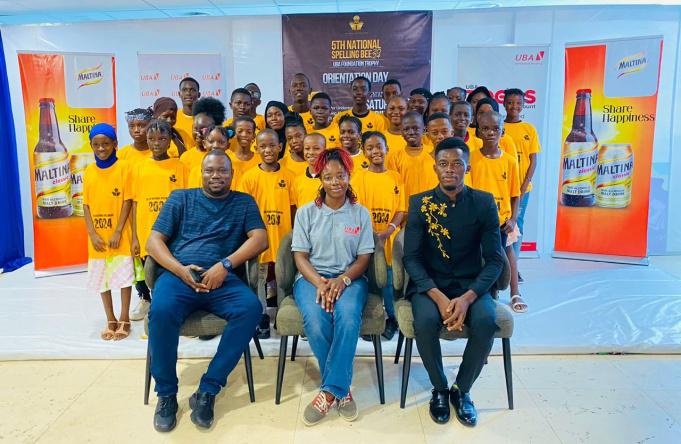
In a bold stance against underage drinking, Sierra Leone Brewery Ltd. made a resounding declaration at the Orientation Ceremony of the 5th National Spelling Bee 2024, in partnership with the Spelling Bee Foundation. Foday Daboh, the Corporate Affairs Manager, delivered a compelling Keynote Address under the theme “Zero Tolerance for Underage Drinking: Let’s Keep Alcohol out of the Hands of Minors.”
Addressing both students and parents, Daboh emphasized the critical importance of abstaining from alcohol until reaching the legal age of 18 and above. He highlighted the significance of making responsible choices and introduced Maltina, SL Brewery’s non-alcoholic beverage, as an excellent alternative. Maltina, fortified with essential vitamins, will be integrated into the prize pool across all categories of the spelling bee.
The competition, which kicked off last weekend, will progress through its initial stages, leading up to a grand finale slated for June. Participants received thorough guidelines and regulations during the orientation to ensure the smooth running of this 5th edition of the National Spelling Bee.
SL Brewery Ltd. calls on everyone to rally behind this impactful initiative. Through collaborative efforts, SLBL aims to foster a secure, healthy, and accountable environment for young individuals.
Stay tuned for more updates on the National Spelling Bee 2024. Together, SL Brewery Ltd. believes that positive change is within reach!
In a recent press release, the International Women’s Peace Group (IWPG) disclosed its active participation in the 68th session of the United Nations Commission on the Status of Women (CSW), held at the UN Headquarters in New York. Led by Sujin Park, Regional Director of Global Region 5, IWPG delegates engaged in significant dialogues with international women leaders, including the Minister of Gender and Children’s Affairs of Sierra Leone, highlighting cooperation strategies for peace, gender equality, and global women’s solidarity.
The UN CSW serves as a vital platform where governments, alongside international and non-governmental organizations, convene annually to discuss policies aimed at empowering women and advancing their rights. This year’s session, themed ‘Accelerating the empowerment of all women and girls through gender-responsive approaches to ending poverty, strengthening institutions, and financing,’ attracted delegates from across the globe to exchange insights and practices.
During the CSW, Sujin Park had a constructive meeting with H.E Isata Mahoi, the Minister of Gender and Children’s Affairs of Sierra Leone. Discussions centered around IWPG’s initiatives, particularly its ‘Women’s Peace Education’ program and the ‘Declaration of Peace and Cessation of War (DPCW).’ Minister Mahoi pledged to advocate for the significance of the DPCW among Sierra Leone’s leadership, affirming her commitment to collaborate with IWPG’s peace efforts.
Moreover, IWPG representatives held discussions with Aruna Naik, CEO of the India Development Foundation (IDF), who expressed interest in participating in IWPG’s peace initiatives. Naik, a keynote speaker at the NGO Forum hosted by IWPG, emphasized the importance of global women’s solidarity in achieving peace and gender equality.
Reflecting on the CSW experience, Sujin Park expressed her pride in IWPG’s international recognition, and underscored the organization’s commitment to peace-building efforts worldwide. As an accredited NGO with the United Nations, IWPG operates globally, collaborating with over 660 partner organizations across 121 countries.
The engagement at the UN CSW signifies IWPG’s dedication to fostering a culture of peace and advancing women’s empowerment on a global scale. Through continued collaboration and advocacy, IWPG aims to contribute significantly to the realization of sustainable peace and gender equality worldwide.