Home Blog Page 1044

MPs Deliberate Proposed Cyber Security Bill at Pre-Legislative Stage

By Bampia James Bundu

Members of Parliament and other stakeholders on the  4th August 2020, made relevant contributions to the proposed Cyber Security Bill during deliberations at the Pre-Legislative stage. The session was held in the new Administrative Building at Parliament.

In his opening statement, the Minister of Information and Communications, Mohamed Rahman Swaray, thanked the leadership of Parliament for giving them the opportunity to present the proposed Cyber Security Bill for onward enactment into law.

The Minister said as a Government their responsibility is not only to protect citizens in real life but also to ensure that citizens’ cyber space is protected.

He described the Bill as a specialized Legislation that required the expertise of professional to put together.

He stated that the Ministry had held series of consultations with Civil Society, MNO (Mobile Network Operators) Service Providers, Members of Parliament and a host of other stakeholders including the Attorney General’s Office.

Minister Swaray urged Members of Parliament present to patiently listen to the presentation and see how best they could make their inputs and also ask the necessary questions for clarification.

The Leader of Government Business, Hon. Sahr Mathew Nyuma, recalled that they attended the consultative meeting held at the Radisson Blu Hotel by the Ministry of Information where they extensively discussed issues relating to the proposed Cyber Bill including the Malabo and Budapest Conventions which set standards for the Cyber space.

Having been a victim of Cyber crime on a number of occasions, Hon. Nyuma warned that everyone will be vulnerable if the country does not enact tough laws to deal with the situation.

The Minister of Basic and Senior Secondary School Education,  Dr. David Moinina Sengeh, appreciated the Ministry of Information for putting such a Bill together, describing it as significant especially in this modern age.

He appealed to Members of Parliament to take into cognizance the fact that hacking can be used for negative and positive reasons and that should be considered when deliberating on the Bill.

Dr. Sengeh assured of his Ministry’s commitment towards the process and asked that the drafters be flexible as technology changes on a daily basis.

Hon. Chernor M. Bah, the Leader of the Opposition in Parliament, commended the Minister of Information and Communications for his hard work at the Ministry and encouraged him to continue in that direction.

He described the Bill as sensitive and the most important to be deliberated on by the present Parliament because it affects each and every one.

The Director of DSTI (Directorate of Science and Technology), Michaela Mackay, emphasized that the Bill be very clear on Offences and Punishments.

She encouraged the Minister of Information to work on the Data Protection Bill as well so that it can go alongside the Cyber Security Bill, maintaining that both Bills go together.

The Chairman of the Legislative Committee in Parliament,  Hon. Hindolo Moiwo Ngevao, said the proposed Bill was professionally drafted, and that when passed into law it will help address many issues in the Cyber space.

He assured that they will work tirelessly to ensure that they have a good piece of legislation that will stand the test of time.

Also to make statements were the Deputy Minister of Information and Communications, Madam Mamadi Gobeh-Kamara, and the Acting Chairperson of NATCOM, Madam Madiana Samba.

A Power Point presentation of the proposed Bill was done by the Director of Communications in the Ministry of Information and Communications, Mohamed M. Jalloh, alongside the Minister of Information and Communications.

PRESS FREEDOM…   Critics Express Reservations Over New Media Law

But critics say Sierra Leone’s new media law gives the government the powers to shut down media houses and ban individual journalists from practicing their professions. Credit: Jeffrey Moyo/IPS

By Mohamed Fofanah

Parliament recently voted to repeal the country’s 55-year-old libel law, which criminalizes the publication of information that was deemed defamatory or seditious, and which had been used by successive Governments to target and imprison media practitioners and silence dissenting views. But not everyone is convinced it was in the best interest of media freedom.

Part V of the 1965 Public Order Act (POA), which criminalized libel was replaced with the Independent Media Commission (IMC) Act 2020, which was also approved unanimously.

But critics say the IMC Act 2020 gives the Sierra Leone Government the power to shut down media houses and ban journalists from practicing their professions.

Sylvia Blyden, who served as a Minister of the main opposition All People’s Congress, said that she was against the repeal of all of the provisions in the POA.

Blyden, a prominent journalist and activist, is presently facing charges brought by the Government for defamatory libel, publishing false news and seditious libel charges that existed under the repealed Part V of the POA.
But Blyden said that there are many protective caveats of that Act, which made it not as bad as some people believed it to be. She added that the importance of the criminal libel laws went far beyond the practice of journalism and politics.

“It is sad for poor citizens who cannot afford the money to pay lawyers to institute civil libel litigation to protect their names and good reputations as there is no more punitive deterrent in place.
“I am not speaking of journalists; I am speaking of citizens assaulting other citizen’s reputation. We still have our laws to protect against physical assault on us but we have removed the laws that protect us against assault on our good names. Not much thinking went into this process of repeal,” she argued.

Others have noted that the IMC Act 2020 will serve only to “undermine media pluralism and completely eliminate the registration of newspapers as a ‘Sole Proprietorship’ business, and only provides for registration under the Partnership Act 1890 and the Company Act .Lawrence Williams, Proprietor of Fritong Post said, “It’s important to note that many newspapers in Sierra Leone are registered under ‘Sole Proprietorship’ as one among several options provided for under the current IMC Act”.

He said the elimination of newspapers registered under sole proprietorship could lead to the closure of many independent publications, and could therefore “end media scrutiny of Government institutions and public officials; and inevitably result to ending governance accountability and transparency in Sierra Leone”.

Amin Kef Sesay, writing in the Calabash Newspaper, said that the IMC Act 2020 would allow the government to “tie the hands of citizens from freely investing in the media and heading those institutions as editors, publishers, etc”.

But Sierra Leone’s Information and Communications Minister, Mohamed Rahman Swaray, said the POA had been in violation of 12 international human rights instruments, including the Universal Declaration of Human Rights, and that Government had to comply with international standards.

He said that the IMC Act would enable the mitigation against sedition and libel against private citizens. He added that the Independent Media Commission, the regulatory body of the media, had been given quasi-judicial functions under the IMC Act 2020, and had powers of the high court to hear civil matters of sedition and libel.

  • When the Act is signed into law, the Commission will be able to monitor and regulate the media, its content, ensure that a minimum wage $60 is paid to media practitioners, and to ensure that only qualified and trained media personnel are employed as editors/station managers etc.

Swaray also argued that the IMC Act 2020 was not Government exercising further rights over the media. “We discussed the draft bill with the Sierra Leone Association of Journalists (SLAJ) and they all agreed to the contents of the draft which was then sent to Parliament so there was endorsement of the contents of the bill by SLAJ,” he said.

Swaray stated that Government is very concerned about improving the media landscape in this West African nation as the old law meant the country’s brightest and best brains shied away from the profession because they could face criminal charges. “Women also were refusing to practice,” he added.

He is confident that the recent decriminalisation of the libel law will now see more women taking up the profession.
“Now the best minds and women will come on board and we will make the media and journalism a professional, lucrative and serious institution in the country,” Swaray revealed.

Speaker of Parliament, Dr. Abass Bundu, said Parliament had restored the dignity of the media expressing  hope that going forward, responsible and professional journalism would hold sway.

Hassan Samba Yarjah, a Commissioner of the Human Rights Commission in Sierra Leone, said the Commission had called for Part V of the POA to be repealed every year for the last 10 years in its annual ‘State of Human Rights Report in Sierra Leone’.

He said that as a Commission they could not emphasise the importance of the passing of the IMC Act 2020. Yarjah furthered that the press and citizens would now have greater freedom to express their views, speak out, challenge Government on issues affecting them, constructively criticise and speak truth to power without being arrested and branded a criminal.

He said that this return of power to the people was a big development for democracy here, adding that this would change the landscape of journalism and develop the media. “The Commission will, however, continue to monitor these freedoms and also ensure that the Media and everyone enjoy this freedom with greater responsibility,” Yarjah informed.

Both the repeal of the POA and the passing of the IMC Act 2020 have been sent to President Julius Maada Bio for his signature.


UK Govt. Applauds Pres. Bio & Information Minister for Repealing Libel Law

By Amin Kef Sesay

James Duddridge (MP), the Minister for Africa, has registered the United Kingdom Government’s appreciation to President Julius Maada Bio and the Minister of Information and Communications, Mohamed Rahman Swaray, for their commitment towards repealing Part V of the 1965 Public Order Act and also passing into law the new Independent Media Commission Act.

This was communicated to the Government of Sierra Leone through the Minister of Foreign Affairs in a letter dated 30th July 2020.

Duddridge described the effort of the Government as an excellent achievement for the people of Sierra Leone and an important step forward for media freedom and human rights in the country, saying they know it to be the lifeblood of a flourishing democracy, and also crucial in the era of COVID-19.

“I am delighted that British officials were able to assist this process by providing technical assistance and sharing expertise with a broad range of stakeholders, to support the Government of Sierra Leone to deliver this key pledge,” Duddridge noted.

He particularly commended Minister Swaray’s show of true leadership and determination in navigating the intricacies of the long but worthwhile process, for which he should be warmly congratulated.

He pledged his Government’s commitment to continue to work closely with the Minister of Information and the Government of Sierra Leone on media freedom. “I understand that we have a range of technical support planned for the coming month aimed at increasing crucial access to trusted, inclusive and independent media in Sierra Leone,” he said.

James Duddridges disclosed that as the UK Government moves forward with the creation of the Foreign, Commonwealth and Development Office (bringing together expertise from two departments to deliver their diplomatic and development priorities), they will continue to work closely with the Government of Sierra Leone to support their shared aims of strengthening democracy, building human capital to underpin development, and working towards shared prosperity.

He concluded by reassuring the Government of Sierra Leone that the UK Government will maintain its commitment to spending 0.7% of Gross National Income as Official Development Assistance.

UBA Boosts Petroleum Industry with $200 Million

UBA Group Chairman, Tony O. Elumelu

By Amin Kef Sesay

It was stated on the 4 August 2020 that the United Bank for Africa Plc (UBA), the leading pan-African financial services group, has acted as Facility Agent Bank for the Nigerian Commercial Banks in a consortium with other international banks in a $1.5 Billion Pre-Export Finance Facility for the Nigerian National Petroleum Corporation (NNPC) and its upstream subsidiary, the Nigerian Petroleum Development Company (NPDC).

UBA is providing $200 million (Naira equivalent) to support investment growth and liquidity requirements.  The facility will provide much needed capital for investment in NNPC’s production capacity, which is of strategic importance to the Nigerian economy and the country’s leading source of foreign exchange earnings. UBA’s position as Facility Agent Bank recognises the Group’s strength in structuring and deploying financing to the oil and gas sector, and the depth and liquidity of the Group’s balance sheet.

The $1.5 billion facility is structured in two tranches.  The first tranche of $1 billion, to be repaid over a period of five years, will be provided in dollars.  The second tranche of $500 million, will be provided in local currency, over seven years, with UBA acting as Facility Agent Bank, providing $200 million in Naira equivalent.  Both facilities will be repaid from an allocation of 30,000 barrels per day of NPDC’s crude oil.

UBA has a strong track record in the resources sector across Africa, having facilitated oil prepayment deals with the NNPC, including its 2013 $100 million participation in the PXF Funding Limited transaction, and a further $60 million in the 2015 Phoenix Export Funding Limited transaction.  In Senegal, UBA was responsible for the EUR 240m Revolving Crude Oil Financing Facility for the Société Africaine de Raffinage and in Congo Brazzaville co-funded the $250m crude oil prepayment facility for Orion Oil Limited.

Other participants in the NNPC deal include Standard Chartered Bank, Afrexim Bank, Union Bank and two oil trading companies, Vitol and Matrix.

Speaking on this most recent support for the Nigeria’s petroleum industry, UBA Group Chairman, Tony O. Elumelu stated ‘This has been one of the most economically challenging years that Nigeria has witnessed.  With the sharp drop in the price of oil and the ensuing hardship that followed the onset of the Covid-19 pandemic, the private sector must come together and contribute meaningfully to the economy.  This facility is clear evidence of this – UBA is providing investment that will significantly improve Nigeria’s production capacity and in doing so also demonstrating the strength, depth, and sophistication of our commercial banking capability.  I believe that together, working with governments, we can create more jobs and more wealth for people, not only in Nigeria, but across Africa’.

The United Bank for Africa is one of the largest employers in the financial sector on the African continent, with over 20,000 employees and serving over 20 million customers.  UBA operates in 20 African countries and globally in the United Kingdom, the United States of America and France, providing retail, commercial and institutional banking services, leading financial inclusion and implementing cutting edge technology.

Over Unavailability of Test Kits at Lungi Airport… Moses Tiffa Baio Debunks Misinformation

Moses Tiffa Baio, Director-General of the Sierra Leone Civil Aviation Authority (SLCAA)

By Amin Kef Sesay

Moses Tiffa Baio, Director-General of the Sierra Leone Civil Aviation Authority (SLCAA) on the 4th August 2020  has clarified the notion or information doing the rounds relating to the unavailability of COVID-19 test kits at the Freetown International Airport (FNA).

In a snap chat with this news medium, Moses Tiffa Baio stated that there has been complete misinformation on the unavailability of test kits for arriving passengers at the airport as all 328 inbound passengers were tested and given their COVID-19 test result within 24 hours.

“Following the proclamation made by H.E President Julius Maada Bio on the 22nd July 2020 regarding the reopening of the Freetown International Airport, 328 passengers have arrived to date. All of these incoming passengers have been tested for COVID-19 and only two so far have been confirmed positive. The sole essence of the Rapid Diagnostic Test (RDT) is to eliminate the issue of quarantine at the airport,” he said.

Reacting to concerns so far raised bordering on the lack of test kits  for incoming passengers at the airport, the SLCAA Director General affirmed that indeed there were challenges simply because the process was new, highlighting that based on the travel advisory issued by the Ministry of Transport and Aviation, incoming passengers to Sierra Leone would be subjected to two tests; the Polymerase Chain Reaction (PCR) test and the Rapid Diagnostic Test (RDT). He agreed, though, that the RDT, which was meant for secondary screening, was not available at the time of the reopening.

“The PCR is considered the gold standard test for COVID-19. When swabs are collected for PCR, test results they will only be out in 48 hours. Given that RDT is currently unavailable, the turnaround time for test results is within 24 hours. The RTD is considered the secondary test which is basically conducted for the purpose of screening to avoid keeping passengers at the airport whilst awaiting their PCR test results,” DG Baio told this medium.

Director Baio dilated on the issue of paying $80 for testing, revealing that the sum is a cost-recovery mechanism that would guarantee the sustainability of the entire travelling process during COVID-19. “Many other nations,” he disclosed “keep arriving passengers at hotels for some time at the passengers’ own cost, whereas that is not the case in Sierra Leone. Testing has been widely regarded as one of the new-normal approaches in global travelling for passengers.”

He disclosed how passengers are paying the least for the COVID-19 test in Sierra Leone. “Payment for COVID-19 test is not only done in Sierra Leone as most countries require a positive PCR test result before travellers could be allowed to enter and that requires payment for the test kits. Countries which cannot provide for their travelling populace are paid for by the travelling public to conduct their tests,” he intimated.

The Director-General continued by maintaining that mandatory tests were being carried out at the airport to avoid a situation wherein the airport would be used as a means through which more cases would be transmitted into the country as was seen in the first case of COVID-19 in the country. “There is nothing more expensive than public health safety,” he affirmed.

He gave assurance that the procurement process of  getting RDT kits had been completed saying the RDT kits will be in the country by the end of the week. He ended up by stating that the reopening of the airport is a calculated risk geared towards minimizing the spate of infection of COVID-19.

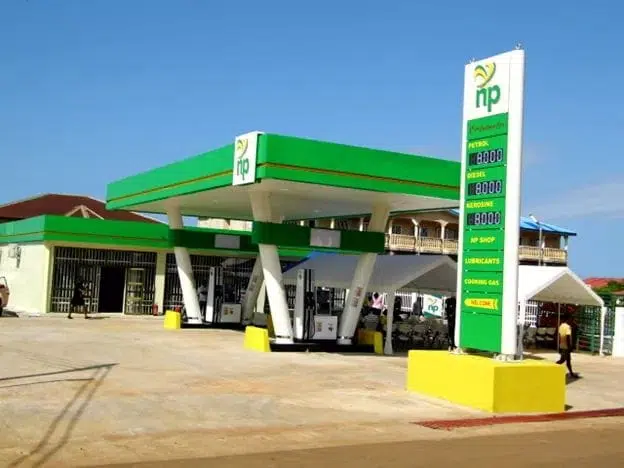
NP (SL) Ltd: Rated the Most Admired Indigenous Company

National Petroleum Sierra Leone Limited, NP (SL-Ltd).

By Amin Kef Sesay

It is incontestable that the National Petroleum Sierra Leone Limited (NP-SL Ltd) is fit and over qualified  to be rated as one of the most admired indigenous companies that have been in the petroleum trade for years now challenging the various odds, that surface on the way, to eventually become one of the successful locally owned and driven business entities to contend with in this country. NP-SL Ltd continues to attract attention simply because it is seen to be progressively growing in terms of its improved outlook, dependability, expansion of its activities country-wide as well as beyond.

NP-SL Ltd is now a household name as there are just a handful of Sierra Leoneans who have not come into contact in one way or the other across with its brand name.

However, as the name implies, it should not be construed to be a Government, in other words a State run enterprise but rather a company that is 100% indigenously owned, formed years back by certain selfless individuals who used their end of service benefits to establish a business enterprise to procure and market petroleum products which to date it is doing professionally. With a very strong determination to succeed in their ambition, the original shareholders put all amount of seriousness to explore available possibilities and opportunities to forge ahead as a buoyant company.

Fully aware of the fact that to make a positive headway there is need for a good Management team to be at the helm of affairs in order to put everything under proper control the shareholders of the company got on board competent individuals who could deliver. Together they deemed it fit to give utmost consideration to maximize customer satisfaction from the onset. For them the company’s customers must be given the requisite satisfaction they deserve as they do exist because the company is existing.

It is against such a backdrop that the views, concerns and expectations of the company’s numerous customers are always taken into account whenever decisions are to be made. This has resulted into situations where the company gets the requisite information about what customers’ desires, their opinions of the quality of some petroleum products, the attitudes of employees etc. These inputs, from customers, help greatly in the direction of the company’s strategic planning and mapping out procurement plans.

Still within the purview of making customers feel at home, NP-SL Ltd introduced NP Gas which is a cooking device that is very fast and environmental friendly and is manufactured in different cylinders all going at affordable prices. Many have praised NP Gas saying they are glad that they are using it as it is very easy to use and refill. One can get them during opening hours and tit-bits will be provided as to how to make effective use of it or them.

To make customers avoid the hassle of first having to withdraw large cash from banks  to purchase petroleum products that could last over a period of time the company also introduced the use of NP Smart Card. With this card, purchases can be intermittently made at Filling Stations without the physical exchange of cash. This pre-paid form of transacting business with the company is helping to replace the old system of public and private institutions using chits to procure fuel after which payments are later on made.

However, a company can have a loaded NP Smart Card and with the available amount embedded can use the Card to purchase the required amount of fuel instead of taking and paying later. The all-important reason why this arrangement is convenient is because there are certain Ministries, Departments and Agencies that do access quarterly budgetary allocations and so with the NP Smart Card in place they can stock their cards financially and procure accordingly.

When mention is made of companies that do strictly adhere to the implementation of the Local Content Policy NP-SL is undoubtedly among the topmost in the sense that the company’s shareholders deliberately made it a policy that as long as there are Sierra Leoneans who can do certain jobs then they must be given priority.

With all the good things that the company has to offer there is no wonder why NP-SL Ltd has become so endearing as the company continue to be a major contributor to socio-economic development

Housemates Salone Season 2 Gains Momentum

Housemates Salone Season 2

By Amin Kef Sesay

Since Housemates Salone Season 2 (2020) was launched on the 30th July 2020 at the Lagoonda Complex in Aberdeen, Freetown, tongues have been wagging, with some people vehemently arguing that it will definitely change the face of the entertainment industry in this country.

“Indeed Africell-SL and the African Young Voices (AYV) are really committed to take entertainment to another level as they have once again come forward to organize another Reality TV Show after successfully rolling out Season 1. For me and my friends we are expectantly looking forward to watch another Season which I am convinced will be thrilling,” Fatima Sawaneh , a third year University of Sierra Leone student opined adding that she will definitely vote for any of the Housemates that really impresses her the most.

When this medium reached out to gauge the views of people in different parts of the country after the launching of Housemates Salone as to what they make of staging the show, a plethora of interesting statements were captured.

The Chairlady of the Sani Abacha Street Traders Association intimated our reporter that it is really good that Africell and AYV once again teamed up to once again stage another TV Reality Show. She underscored that some of them who are fortunate have been watching Big Brother Africa which is hosted by Nigeria saying it is very entertaining to watch. “However, not many are opportune to gain access to DsTV but with AYV Television, which is what “Na Him Salone Sabi”, going far and wide many will have the opportunity to watch Housemates Salone 2020 on AYV Channel 34,” the Chairlady logically expressed optimism.

Contacting the Belgium Sellers in downtown Freetown, most of the hustlers there whom this medium talked with said they want to extend their profound commendation to both Africell and AYV for coming up with the show. The President of the Belgium Sellers stated that the two institutions have really done a lot in terms of empowering young people in this country, saying this is a continuation of the process of mentoring role models in our society.

“To be very frank, my brother, Housemates Salone is all about offering the platform for young people to be empowered by exposing them to the outside world, bringing out their innate God given talents. In the House the mates will learn a lot throughout their stay and indeed when they come out they will never be the same again,” the Chairman of the Association candidly pointed out.

In Bo, Southern Sierra Leone, some young people at a popular social point expressed the willingness to participate in the upcoming Reality TV Show saying that they are confident that one of them is going to emerge victorious to bag the Le250 Million cash prize and a round trip to Dubai. “We have all what it takes to stand out tall in the competition:  beauty, elegance, brains and boldness. No competitor from any other district will dare challenge us come the 14th October 2020 when we will enter the House. We will show them that Sweet Bo can perform wonders,” Mohamed Jabati, a fair complexion dreadlocks youth confidently told our reporter.

From the South our reporter headed for the Northern City of Makeni where Housemates Salone (2020) was already a topical issue, discussed in Ataya Bases, lorry parks and pubs. At one of these popular Ataya Bases there were young people animatedly arguing that indeed Sierra Leone is moving upward within the entertainment industry in the West African sub-region chasing Nigeria. One of them intelligently pointed out that just like the Mercury betting game that most of them play participating in Housemates Salone Season2 could be a game of chance.

“You purchase a form for only Le150,000 which is currently on sale through using Afrimoney and if you are lucky to become victorious then you stand a chance of bagging Le250 Million and a roundtrip to Dubai is really worth going for,” the fellow by the name of Alimamy Turay postulated convincingly adding how he will be reserving money just to credit his phone in order to vote for any Housemate that deserves his vote.

In their midst a frisky lady, Memunatu Tarawally, who for short is called, Mems, said it is now a foregone conclusion that Makeni is going to eclipse the entire Housemates Salone Season 2 jokingly stating that after the Season 1 session ended they have been busy practising robustly as to how they must perform in the House, claiming that they have mastered every aspect that will give them an edge further bragging that nothing will prevent them from putting Makeni on the world map.

The expression of these various determinations could be best described as a building-up scenario akin to what the Disc Jockeys (DJs) would say: “The House or Show is getting Warmer”. As of now we don’t really know what residents in Moyamba, Kono, Kabala, Kenema and other places have in store which they could like to unveil. It is possible that they either do not want to let the cat out of the bag or they are merely waiting for the appropriate time to send the shiver down the spines of those who are presently knocking their chests.

Housemates Salone Season 2 (2020), “The Last Standing Couple” with the theme ‘Quarantine Drama’ is really very apt as the show is going to avail viewers the opportunity to reduce all the stress brought about as a result of  the marauding coronavirus . As a matter of fact, from what have been heard so far, this year’s show is going to be spectacular and superb as it will have people glued to their TV screens or android phones just to focus on watching the show, which will be broadcast live on a 24hours basis on AYV Channel 34.

In as much as the tourism sector has somehow contracted, the Reality TV show will once more put Sierra Leone in the spotlight and as well further expose it to the outside world. It will also, in one way or the other, help to promote the adherence to Stay Home, Stay Safe within the context of social distancing as more and more people get interested with the strong urge to keenly watch as the show progresses.

Reality TV Show is quite new in this country but seemingly it has now become part of our social fabric as it gains popularity and currency. A Reality TV Show depicts actions of people close to life situation. In other words, it shows natural life and interaction of an isolated group of characters in a particular setting in a situation that develops freely without any predetermined script. A viewer is convinced that he or she is witnessing real scenes of life.

The overarching advantage of having such a show organized is the mere fact that it helps in the area of youth empowerment. Contestants are availed the opportunity to learn and display how to verbally express themselves, to socialize, get used to do certain chores like cooking ,singing, dress as well as other etiquettes and coping mechanisms.

As a matter of fact, as the Show progresses the Housemates will be visited by officials from certain corporate institutions or business enterprises who will explain to them about different products and brands which will surely as well as broaden their knowledge horizons. Besides, they will be financially empowered because, apart from the winner bagging the covetous Le250 Million prize money, for each day a contestant stays in the House, he or she earns Le100, 000 which cumulatively will be handed over to him or her whenever evicted from the House. It goes without saying that after coming out of the House their lives will never be the same again.

On the other hand, the show will provide the platform for interested corporate institutions to showcase their products through advertisements. Taking into consideration the fact that AYV Television has a wider viewership in and out of the country, such is an opportunity many corporate institutions could not afford to miss.

From what has so far been gathered, Africell the leading telecommunications company in the country, with an improved network and a wider subscriber base will enable many viewers cum followers to be able to vote as it is through their network that voting will be done and the link will soon be made available.

As it is currently slated, the closing date for receipt of all applications is 21ST August 2020 and audition will take place in the first week of September. After three weeks, audition will close and 40 finalists will be chosen who will then battle for the final 20. The final 20 will go into the House on the 14th October 2020.

Forms are now going for Le150, 000 and all application forms could be paid for via Afrimoney. For those in the diaspora who may want to participate in the show they may contact the following www.africell.sl or www.ayvnews.com.

From what have been seen and heard so far in different parts of the country it seems as if this year’s Housemates Salone is going to be much interesting and fantastic not ‘Coco Kolastic’ as residents in different districts are bracing up to tell the whole world that indeed they can do it. As a matter of fact there are others in the diaspora who will be coming to participate. Indeed the prize money of Two Hundred and Fifty Million Leones (Le250 M) is very mouth-watering and should be fiercely battled for.

As highlighted above the launching of the Reality TV Show is gaining wider commendation and it is really certain that Housemates Salone Season 2 will continue to obviously elicit a lot of discussions and gossips in many quarters; homes, workplaces, business places, ataya bases, taxi, poda-podas and generate arguments provoked by the performances of the mates in the House.

Nexus between Flooding, Poor Sanitation and the Risk of Waterborne Diseases like Cholera

Ibrahim Sorie Koroma is a Mass Communication graduate from Fourah Bay College, University of Sierra and Health Education/Promotion Officer at the Ministry of Health and Sanitation

By Ibrahim Sorie Koroma

Usually when it rains heavily in Freetown and other parts of the country just as we have seen in recent months, there is the tendency for flooding. And there is the risk of not only waterborne diseases like cholera but also water related diseases. As we all have seen, the continuous downpour of rain alone in July 2020 has resulted to some isolated cases of flooding in Freetown and other parts of the country.

Persistent rain fall like this will not only lead to flooding and other disasters, but also a threat for waterborne diseases like cholera, typhoid and diarrhea. It is of no gainsaying that the poor sanitation in most of our communities coupled with poor hygiene practices and poor access to safe drinking water are compounded problems in the mix all together, which cannot be properly addressed with a linear approach, but with a biconcave lens- digging deep into the root causes with informed solutions.

Human activities to the environment, health emergencies and disasters:

It is of course glaring that human activities with the environment have rendered us vulnerable to natural disasters like flooding, mudslide to name but a few. Indeed, there is a nexus between human health and that of the environment. Unhealthy human activities to the environment have in most cases subjected us to responding to either health emergencies or natural disasters.

The 2012 cholera outbreak in Sierra Leone  which claimed the lives of over 392 people was an eye opener. It was the country’s largest outbreak of cholera since it was first reported in 1970 and the deadliest since the 1994–1995 cholera outbreaks. The outbreak had also affected Guinea, which shares a reservoir of cholera near the coast. This was the largest cholera outbreak in Africa in 2012.

It was triggered by heavy rainfall resulting to flooding in Sierra Leone and Guinea, combined with poor hygiene practices, unsafe water sources, and ineffective waste management system.

Crowded living conditions, poor sanitation and inadequate access to safe water are responsible for the higher rates of the outbreak in the Western Area including Freetown, the capital of Sierra Leone. Cholera is a water-borne disease which is spread by the consumption of water or food contaminated by the faeces of an infected person.

According to the Africa Review, nearly 60% of toilets in the country are pit toilets that easily drain directly into sources of drinking water and more than 30% of people defecate in the open. Only about 40% of people in Sierra Leone have access to a private or shared latrine, where approximately seven families typically share one toilet. It is even worst in slum communities, where sanitation is the lowest of health standers not to talk of safe water sources.

It is clear that the water and sanitation systems in the country were damaged after the civil war in Sierra Leone, and we are still struggling to have a proper water system fit for purpose, leaving approximately 43% of Sierra Leoneans without access to clean water.
The 2017 flash flood in Freetown which led to the tragic mud slid at Mount Sugar Loaf and the 2019 flash flooding in the metropolis of Freetown and other parts of the country still linger in the minds of Sierra Leoneans with memories that can teach us some remarkable
lessons.

When this writer was growing up as a boy in the East of Freetown, I used to see the sloppy hills of the Metropolis in fascinating green scenery. Little could one think at the time that many shanty and ill constructed houses could now form part of the awkward looks of the once beautiful sloppy hills of Freetown? This can also be true for other parts of the country.

I am not a geographer by background but if my rudimentary Geography can serve me well, the desperation of human settlement in hill tops and on sloppy hill-side and other places has led to what is known by geographers or environmentalists as soil erosion, resulting to huge mass of water chasing the sea level taking along everything on its way, even when people make shelters in water ways and flood prone areas, putting their lives at risk of diseases and loss of lives and property.

Now, we all can attest to the fact that urbanization has led to huge concentration of people in urban and growing cities, making them densely populated and most of these people live in shanty communities, hill tops, and slum communities which lack the most basic needed
amenities like safe drinking water and proper sanitation which put them at risk of diseases like cholera, typhoid fever, hepatitis and water related diseases like malaria.

In such communities a compound of 5-6 households in most cases would use one hand-dug pit toilet which would be in a very bad shape of not meeting health standards. Some would not even boast of the basic hand-dug pit latrine and would have to defecate in the open and in a plastic bag and then throw in gutters or running water when it rains. Now for communities like these which can be seen all over the country, the common practice is open defecation (ODF) which in itself poses serious health risk of diseases.

Normally when it rains people defecate, empty their faeces/human excreta in gutters and water ways, forgetting that their actions are putting the lives of other people at risk of preventable diseases like cholera not knowing that they could contaminate water sources like water wells, dams and streams which people use to get safe drinking water on a regular bases; thereby putting them at risk for waterborne diseases like typhoid and cholera?

Water and sanitation structures:

As you have seen from the analysis on the issue of water and sanitation in this commentary, one would realize that, water and sanitation still remain a long-term challenge in the country, particularly in the urban slum communities, where people are at high risk of water borne diseases like cholera.

I would like to conclude with a quote from Journalist Pereira, who reported the 2012 cholera outbreak in Sierra Leone, which states that: “Until there is significant improvement in the water and sanitation infrastructure in the country, Sierra Leone will continue to be vulnerable to cholera outbreaks, especially in the rainy season” …he continues… “But even if cholera becomes endemic, there are many things in the area of proper  water and sanitation system/structures that can be put in place to ensure that people don’t die from subsequent waterborne  diseases like cholera.”

It is clear that successive governments have been trying to fix the long aged colonial styled water and sanitation structures in the country, but the government can’t do it all. So, there is need for concerted efforts in the form of public-private partnership, support from international and local NGOs and UN agencies backed with a community led development approach. This, I believe will heed dividend as we move forward in addressing issues around water and sanitation issues and environmental health.

Please note that as at present, there are no reported cases of cholera in any part of the country. This article is for public education purpose. Stay safe and practice the required healthy behaviors as westrive to stop the infection of coronavirus in the country, but we must also take informed decisions/actions to prevent the occurrence of flooding which would otherwise put people’s lives at risk of water burn diseases like cholera, diarrhea, typhoid to name but a few.

About the author:
Ibrahim Sorie Koroma is a Mass Communication graduate from Fourah Bay College, University of Sierra and Health Education/Promotion Officer at the Ministry of Health and Sanitation.
Contacts:
Mail: ibrahimsoriekoroma12@gmail.com
Phone: +232-79-02-00-80/88-76-71-45


Assorted Items Donated by China to Celebrate 49th Anniversary of Diplomatic Ties

By Foday Moriba Conteh

On Wednesday 29th July 2020 China donated face masks and other items to Sierra Leone as the two countries celebrated their 49th anniversary of diplomatic relations.

The donated items include 3,000 surgical face masks, 300 T-shirts, some caps, solar flashlights, pencil cases, stationery, school bags, raincoats, mosquito nets and sewing machines.

The two countries have enjoyed a fruitful and reliable friendship over the years, which has led to several development activities achieved on both sides, said Hu Zhangliang, Chinese Ambassador to Sierra Leone, as he handed over the donated items by the Chinese Embassy in Sierra Leone to Sierra Leone’s Ministry of Gender and Children’s Affairs to promote women’s and children’s welfare.

Hu described the day as “great and memorable”, saying the two countries have been trusted friends no matter what situation arises. “We have enjoyed truthful cooperation in various fields like agriculture, health, and education,” he added.

Hu further commended the fruitful outcomes achieved over the years by the two countries and pledged China’s continued support to the Government and people of Sierra Leone.

On July 29, 1971, China and Sierra Leone formally established diplomatic ties.

‘Fresh Salone’ to Commence Exportation of Fresh Vegetables & Frozen Leaves

By Theresa Kef Sesay

The Sierra Leone Investment and Export Promotion Agency (SLIEPA) and other Ministries, Departments and Agencies (MDAs) on Friday 24th July 2020 visited one of Sierra Leone’s newest farm produce exporting companies, Fresh Salone (SL) Ltd in Kobbaya, Kaffu Bollum Chiefdom, in the Port Loko district, as the business prepares and get ready to start vegetable exporting to the European Union Market.

Managing Director (MD) of Fresh Salone, Jonathan Rosenfeld said his farm is certified to produce vegetables for export, and that he is aiming to export about 10 tons of fresh vegetables and frozen leaves every week to the European Union market through clients in Belgium, who will subsequently distribute the produce to other European countries.

He said he is planning to start exporting next month, with a container of frozen cassava leaves.

Five exporters of agricultural produce have formed the Federation of Agricultural Produce Exporters (FAPE-SL) with more members to join, Rosenfeld said. They will also be processing hot sauces and dried fruits for the local market as well as export.

He spoke about the support he has received from SLIEPA, which he said has been very much instrumental to his success, especially in helping to engage and build relations with the local community.

He also commended the part played by other institutions including the Ministry of Trade and Industry in helping his business prepare for exporting, after the COVID-19 pandemic.

Rev. Abraham Sesay Jones, Deputy Minister of Trade and Industry, said his Ministry supports the investment, which he said should be regarded as an eye-opener for Sierra Leoneans as to what is possible.

He said that the strategic role of the Ministry of Trade and Industry is to strengthen economic growth and reduce poverty in Sierra Leone and encouraged Sierra Leoneans to follow the example of Fresh Salone to acquire wealth through enterprise and investment, and eliminate poverty in line with the vision of President Bio.

The Deputy Minister said a lot of good things have happened under the New Direction Government and there is a lot more to come, as he thanked the members of FAPE-SL and assured them of the Ministry’s fullest support in their effort to leverage foreign exchange for their business.

He also said that they want to support the private sector with an upcoming micro-credit scheme for everyone that wants to start a business.

Sheku Lexmond Koroma, the Chief Executive Officer of the Sierra Leone Investment and Export Promotion Agency (SLIEPA) said that the decision of Fresh Salone to export vegetables is important because it reduces the country’s balance of payments deficit.

He said that SLIEPA has been part of the success of Fresh Salone, and that such an achievement of exporting 10 tons of fresh vegetables, can only happen with the support of the New Direction Government through the Ministry of Trade and Industry and SLIEPA.

He also said that the Government of President Bio will continue to support Rosenfeld and that his investment is well protected, as his success will attract other investors to come to Sierra Leone.

Koroma appealed to the traditional leaders and the community to collaborate with Fresh Salone for the good of the country and the community.

Local Chief of Lungi Section, Alimamy Samba Dumbuya II, on behalf of the Paramount Chief (PC) Bai Shebora of Kaffu Bullum Chiefdom, said that Fresh Salone investment is their baby, and assured that the community will wholeheartedly continue to provide security.

He said the Paramount Chief advised Fresh Salone to implement the Government’s Local Content Policy in its employment strategy.