Home Blog Page 1045

President Bio Meets with Cuban Medical Team at State House

By Foday Moriba Conteh

At State House on Tuesday 4 August 2020 Sixteen (16) Cuban Medical Doctors and Nurses, who are in Sierra Leone to help the country’s response to the Coronavirus pandemic, COVID-19, met with President Julius Maada Bio.

Presenting the team to the President, Minister of Health and Sanitation, Professor Alpha Tejan Wurie, said that the move is a clear manifestation of the cordial relationship that exists between the People and Governments of Sierra Leone and Cuba, adding that it was also reflective of the clear bonding and cooperation between Ministries in the New Direction Government.

Head of the Cuban Medical Brigade, Bernardo Quintero, thanked the President and People of Sierra Leone for receiving them into the country. He said that they were a group of specialists working with the Sierra Leonean medical team to achieve the Government’s objective of fighting the COVID-19.

Cuban Charge’d’ affairs in Sierra Leone, Ambassador Felix Raul Rojas Cruz, recalled that Cuban medical teams had been in Sierra Leone during the Ebola and Mudslide and were again in the country to help fight the COVID-19. While speaking on the historic relationship between the two countries, Ambassador Cruz also noted that the Cuban medical team would contribute once again to the wellbeing of the people of Sierra Leone.

On his part, President Bio thanked the Government and people of the Republic of Cuba for answering to the call of the Government of Sierra Leone by providing 16 medical personnel to support the country in the fight against the COVID-19. He said that the support provided by Cuba clearly demonstrated their commitment in solidifying the long-standing bilateral relations between the two countries.

He also assured of Government’s commitment to the common objective of both countries, which include the principles towards building a just, peaceful and stable world through cooperation and coordination on both bilateral and multilateral fronts.

“The Government and the People of Sierra Leone further appreciate the Government of the Republic of Cuba’s support in the medical sector in the country, by continuously awarding scholarships, over the years, to students to train in the various medical fields. This has greatly contributed in boosting the healthcare system in the country,” he said.

Minister & Deputy Minister of Mines Take Up Offices

Minister of Mines and Mineral Resources, Musa Timothy Kabba and President Bio

By Amin Kef Sesay

The new Minister of Mines and Mineral Resources, Musa Timothy Kabba and Deputy Minister, Ann Marie Baby Harding have started official work after subscribing to the Oath of Office on the 3rd August 2020 before His Excellency President Dr Julius Maada Bio at State House in accordance with the laws of Sierra Leone.

President Bio congratulated the new appointees and reminded them of the importance of the Mines Ministry to the Government and the nation. He expressed hope that they would do their best to sanitise the Ministry and get the necessary revenue to enable Government fulfil its promises, especially its social programmes. He also called for collaboration in achieving the goals required of them.

The new Mines Minister thanked the President for their appointment, saying that they were utterly privileged and humbled for the opportunity to serve the nation. He assured that they would work with their staff to make sure that the New Direction manifesto of enhancing natural resources for the betterment of Sierra Leone is achieved.

“I promise solemnly that I shall remain faithful to Your Excellency and Government and to the people of this country in delegating my function with the sincerest of mind, with the sound support of every stakeholder of this country to make sure that we realise the New Direction aspiration – making the lives of the people better,” he said.

Before their new appointment, Mr. Kabba was the Director General of the Petroleum Directorate while Madam Harding was the Deputy Director at the Financial Intelligence Unit.

Deputy Minister, Ann Marie Baby Harding & President Bio

300 Adolescent Girls in Bo District Benefit from Brac-SL Donation

By Jonathan Hindolo Kurabu 

Stakeholders from the Ministry of Social Welfare Gender and Children’s Affairs, Ministry of Education and the District Health Management Team in Bo have graced the official launch of BRAC Sierra Leone’s Food Basket and Hygiene Kits for 300 Adolescent Girls in 10 communities in Bo District.

Programme Manager, Youth Empowerment and Education for BRAC- Sierra Leone, Dr. Regena Kain underscored that the Empowerment and Livelihood for Adolescent Girls Project undertakes series of activities including life skills, mentorship for girls among others.

She revealed that during their usual engagement with the 300 Adolescent Girls under their mentorship and supervision during the Inter District Lockdowns, concerns of hunger among the girls were raised. This she went on, triggered their timely intervention to donate 300 bags of 50 kilo rice and food condiments including sanitary pads, deodorants and kegs of soap each to be shared among the beneficiaries in 10 communities in Bo District.

Dr. Regena Kain averred that the rationale behind the gesture is to cushion the ailing concerns about unavailability of food for their targeted beneficiaries.

She also used the opportunity to donate ten COVID 19 Wash hand Stations which she said is to be stationed in 10 of their operational areas within the program specifications.

Officially launching the initiative, Gender Officer, Ministry of Social Welfare Gender and Children’s Affairs, Madam Martha Idriss Feika on behalf of her Ministry lauded BRAC Sierra Leone for the huge donation especially at such a trying moment when COVID 19 has disrupted all facets of life.

She lamented on some challenges faced by women and girls during the lockdown periods which predicated the move by Government to provide food aid to some vulnerable people in society.

Madam Martha Idriss Feika appreciated the indelible contributions of BRAC Sierra Leone towards cushioning the myriad of economic quagmire faced by the rural poor and women across the country.

Parent of one of the beneficiaries who also doubles as the Town Chief Nduvibu Section, Bo Kakua Chiefdom, Chief Albert Musa Charles narrated the positive impacts of the project in his community adding that their daughters are performing extremely well attributing their successes to the activities of the Empowerment and Livelihood for Adolescent project and constant mentorship opportunities.

He, on behalf of all parents present showered profuse thanks on BRAC Sierra Leone for considering them at such a crucial time.

One of the beneficiaries, Hawanatu Kemoh, a JSS 1 pupil of the St. Theresa Junior Secondary School in Bo aged, 12, commended BRAC Sierra Leone for the intellectual capabilities they have acquired over the past months while being members of the BRAC Empowerment and Livelihood Project in Bo.

She narrated the ordeals of food challenges and access to free sanitary pads which she said is one of the major reasons why most of their colleagues have fallen prey to sex predators.

Similar sentiment was shared by Mariama Bona, Mentor and beneficiary of the Food Basket and Hygiene Kits donation.

BRAC is a Non-Governmental Organization that was founded 49 years ago in Bangladesh and started operations in Sierra Leone in 2008. They have over the past years implemented a lot of programmes in many sectors ranging from Health, Emergency Response preparedness, youth empowerment and gender, agricultural projects and Microfinance with them being the largest micro finance organization in Sierra Leone with over 69,000 beneficiaries.

Big Idea of the Week…   Correct Way of Wearing Our Masks Helps Protect Us all 

SLAJ and NACOVERC Big Idea of the week

By Amin Kef Sesay

The National COVID-19 Emergency Response Center (NaCOVERC) and Sierra Leone Association of Journalists (SLAJ) under their : #Corona Fet Na We All Fet bring Big Idea of the Week 2nd – 8th August, 2020 ‘’Wearing Our Masks Correctly Helps Protect Us all’’. Wearing of masks in public places to prevent oneself  from contracting the coronavirus is one of the measures that must be adhered to. Lamentably, it has been observed that most people are not willing to wear their face masks in public despite the fact that we are all constantly reminded of doing so.

Indeed, at certain points in time wearing of face masks could create uncomfortable feelings especially for individuals who may be suffering from respiratory illnesses. However, it is very important to stress that the wearing of face masks should be a MUST in public places. Against such a backdrop ,therefore, law enforcement personnel must always insist or ensure that people wear face masks in public places.

It is important to underscore that most people with coronavirus have only mild symptoms or no symptoms at all. It is possible that you, or the person near you, have the coronavirus and do not even know it.

While most people who have the virus feel fine, they can still spread it to others. Some people who get the virus can get very sick and even die, especially people who are older or have other health conditions. We all have loved ones who are older and have other health conditions.

Sometimes, people do not know they have other health conditions until they get worse and they get sick. Those other health conditions, even when we do not yet know about them, can make our bodies weaker in fighting other sicknesses, like coronavirus. Let’s all do our part to wear our masks correctly and protect our own and each other’s loved ones. Corona fet na we all fet! How does a cloth mask help stop the spread of coronavirus?

Wearing a cloth mask correctly over your mouth and nose helps catch the small liquid droplets from going into the air or onto surfaces that could then spread to other people and make them sick.

Coronavirus spreads easily from person to person. If one person has the virus and spreads it to others, and then each of those people spreads it to others, within a short time, the virus can spread throughout a community.

When someone coughs, sneezes, sings, or even talks, they spray small liquid droplets from their nose or mouth which may contain virus. If someone is close to a person with coronavirus who coughs, sneezes, sings, or talks, they can breathe in the droplets and also get the virus. Wearing a cloth mask correctly over your mouth and nose helps catch the spray of those small liquid droplets from going into the air or onto surfaces that could then spread to other people and make them sick.

That is why wearing a cloth mask correctly, even when we feel healthy, helps stop the spread of coronavirus and protects our loved ones.

Chiefs, Councilors, and Mammie queens, Community leaders are key to promote and/or enforce the use of cloth masks in their communities.

Religious leaders who are leading in-person religious services must ensure compliance of  wearing masks in their places of worship.

Police Officers or security officials who are involved in enforcement of mask use must be very proactive.

Community champions must always use cloth masks such as market women and traders, bafa/ataya/bar/restaurant owners, and traditional healers.

It is important that wearing of cloth masks alone do not stop the spread of coronavirus, but they can help when used together with other actions.  The most effective actions to protect yourself and others against coronavirus are to wash your hands frequently with soap and water or use hand sanitizer, cough and sneeze into your upper arm or sleeve, and keep a safe distance of at least 1 meter or arms-stretched length from others.

These are other vital suggestions to adhere to: Masks made of cloth should be used by members of the public, Masks that you typically see worn by health workers in hospitals should only be used by health workers, people with symptoms of coronavirus, people caring for others with symptoms of coronavirus, and people who are more likely to get seriously sick from the virus including older people and people with other health conditions must mask up.

An effective cloth mask should be held to the head by ties or ear loops. Masks multiple layers of fabric are preferable, fit close against your face,fully cover your mouth and nose and not fall down when talkin, allow for breathing without problem, wash without damaging the mask.

There are different ways to make a cloth mask. You can sew one yourself or give measurements to your tailor to make masks for you.  You can make one yourself that does not require sewing.  Make sure the size of the mask will fully cover your mouth and nose even when you are talking.

It is important to know how to wear a cloth mask correctly and care for it safely. Always wash a cloth mask before trying it on or wearing it. Before putting on a cloth mask, wash your hands with soap and water or use hand sanitizer that is at least 60% alcohol-based.

Cover your mouth and nose with the cloth mask and make sure there are no gaps between your face and the mask.

Tie the mask behind your head or place the elastic loops over your ears. Make sure the mask fits well. Move it around using the ties or elastic loops to get the best fit. Do not touch the cloth part of the mask. Once you have put on the cloth mask, do not touch your face again until you take it off.

Any Government official found not   wearing a mask in a public office building may be fined five hundred thousand Leones (Le500,000) or suspended from duty. Any private business office found to have people inside who are not wearing a cloth mask may be fined five hundred thousand Leones (Le500, 000) the first time and closed if found a second time.


“Bilateral Ties Elevated in COVID-19 Fight…”   -Chinese Foreign Minister

Chinese State Councilor and Foreign Minister Wang

By Foday Moriba Conteh

The Chinese State Councilor and Foreign Minister Wang on July 31 July 2020 said the mutual trust between China and Sierra Leone has been further consolidated and elevated in the two countries’ cooperative fight against the COVID-19 epidemic.

He noted that China and Sierra Leone are good friends and have always supported each other firmly.

Recalling the Ebola outbreak in West Africa in 2014, Wang said that China took the lead in offering help and fought against the virus with its African brothers and sisters side by side.

Facing the present COVID-19 epidemic, the Chinese and the Sierra Leonean people have once again got united and been cooperating and helping each other, hence further consolidated and elevated the friendship and mutual trust between the two countries, Wang said.

For the time being, the global epidemic situation remains grim, Wang said, adding that China is ready to continue to provide Sierra Leone with urgently needed anti-epidemic supplies and technical support and to carry out medical cooperation to fight against the epidemic.

China is also ready to sign an agreement with Sierra Leone as soon as possible on implementing the Debt Service Suspension Initiative (DSSI) within the G20 framework, accelerate bilateral cooperation projects and help Sierra Leone resume work and production and recover the economy, Wang added.

Noting that next year marks the 50th anniversary of the diplomatic ties between China and Sierra Leone, Wang proposed the two sides soundly plan for future cooperation and promote the bilateral relations constantly to higher levels.

Wang pointed out that under the pandemic’s impact, the uncertainty of the international situation has become more prominent. Unilateral bullying undermines international solidarity and politicizing the epidemic will only do harm to others and oneself, he added.

China is willing to work with African countries, including Sierra Leone, to safeguard international laws and the authority of the United Nations, and secure international equity and justice as well as the common interests and legitimate development rights of developing countries.

The friendship between Sierra Leone and China enjoys the public support and the strong effective cooperation between the two countries can defeat any challenge, Tunis said.

In recent years, the cooperation between the two sides has borne fruits and their consensuses have been actively implemented, both demonstrating the high-level Sierra Leone-China relationship.

Sierra Leone is willing to take the opportunity of the 50th anniversary of the two countries’ diplomatic ties to deepen the bilateral exchange and cooperation in all areas, and create a milestone of their bilateral relationship.


As Chengli Mining Company To Commence Operations… Dalakuru Stalemate Resolved

By Mohamed Sheriff 

On Thursday 30th July, 2020 a delegation comprising representatives from the Ministry of Mines and Mineral Resources, National Mineral Agency (NMA), Office of National Security (ONS), Ministry of Internal Affairs, Ministry of Finance, Ministry of Local Government and Rural Development including the Koinadugu District Council, Chengli Mining Company and the community stakeholders have amicably resolved the impasse between the mining company and community youths of Dalakuru, Diang Chiefdom in the Koinadugu District.

The delegation was tasked by President Bio with the responsibility to go on a fact finding mission to visit the Diang Chiefdom which is rich in huge gold deposits, after an unfortunate incident was reported on various social media platforms to get first–hand information on the fracas and to resolve the stand-off between the company and community youths who are mostly involved in artisanal mining.

The head of the Presidential delegation, the Permanent Secretary at the Ministry of Mines and Mineral Resources, Joseph Tekman Kanu said, one week has been given to the artisanal miners to clear their gravel after listening to the various submissions from the different speakers for peace to prevail between the company and the young people.

He pointed out that the youth should be supporting the chiefdom authorities to embark on community development like maintenance of the road that is in very bad shape, noting that the company has to renew their license every year.

“We have to work in the interest of peace and the Government, for this ugly situation not to repeat again,” Kanu pacified the community residents.

Another member of the delegation, Director of Research and Planning at the Office of National Security (ONS), Francis Langumba Keili, disclosed that no development will survive without security furthering how the ONS is coordinating to ensure that a people’s centred security approach is provided.

He admonished the youth and community stakeholders that the land is owned by the Government and not the stakeholders as they are just the custodians of the land, noting that people should have a saying in the development of their chiefdom.

The Deputy Permanent Secretary at the Ministry of Internal Affairs, Osman Sama Banya called on the youth not to take the law into their hands stating that Government will not tolerate any form of lawlessness and the company must operate since it has acquired its license from the central Government.

Speaking on how culture and development should go together, the Permanent Secretary at the Ministry of Local Government and Rural Development, Thomas B. Lansana re-echoed the need for the young people to respect the laws of the country underscoring that development comes with peace.

He noted that misunderstanding caused the riot maintaining that the youth should exercise restrain and culture should be respected.

Giving a background to the Chengli Mining Company Public Disclosure meeting at Dalakuru, the Office of National Security (ONS) District Coordinator, Harold Campbell, reiterated that the company promised to construct Court Barray, schools, hospital as part of its corporate social responsibility. They also used the occasion to engage the community stakeholders and youth and supplied them with 150 bags of rice and cooking condiments.

He explained that, the company informed the gathering that it has not commenced operations as a result of the COVID-19 since they secured license from the Ministry of Mines in January 2020.

According to the District Coordinator, Office of National Security (ONS) in Koinadugu district, the stalemate between the company and youth came about after the company asked the youth to move out of the 3 square kilo metre out of the 123 square kilo metre that the company has obtained license for to start operations.

He noted that during the riot a vehicle owned by the company worth $60,000 was burnt down by the youths and some youths were arrested for the mayhem.

Giving an update on the fracas, the Community Affairs Manager at the National Minerals Agency (NMA), Henry Heren Kamara, said that for development to take place peace must prevail. He said NMA on the 14 June 2020 engaged the community stakeholders and youth to chart the way forward especially the artisanal miners, whom the company promised to compensate upon receiving their license.

He maintained that the youth were not happy about the forceful removal since they wanted more time to wash their gravel and some of them accused their Paramount Chief and Elders of selling their land.

The Honorable Member of Parliament representing Constituency 045, Kusan Sesay during the meeting called for a win-win situation for the people to be happy and the company to start their operations peacefully noting that the company should improve on their public relations approach, which he considered very poor.

The Paramount Chief of Diang Chiefdom, Sheku Mamba II reiterated that since 1932 mining has been ongoing in Diang Chiefdom but they have not seen no impact except that most of the illicit miners have been benefiting directly from it not the community residents.

“We have received the company wholeheartedly for the development of the chiefdom and the company has paid the surface rent which was shared amongst the land owning farmers and communities equally as stipulated in the Mines Act of 2009,”he noted.

The Chief Geologist at Chengli Mining Company, Ambrose Vandeh Bundeh, noted that they have been constantly engaging the community especially the young people about their operations, and denied the claimed that youth were forcefully removed for the identified operations sites, pointing out that the Councillor of Dalakuru community accompanied them to do the demarcation.

The meeting was chaired by the District Officer of Koinadugu District, Idrissa Kanu.

Seven (7) Sierra Leoneans Performed 2020 Hajj

By Theresa Kef Sesay

The outbreak of the coronavirus pandemic really caused certain dislocations and one is preventing most Muslims all over the worked to perform the pilgrimage to the Holy land of Mecca which forms part of one of the five pillars of Islam.

However, despite the restriction seven Sierra Leoneans were amongst those selected to take part in this year’s downscaled Hajj. The seven are students from three universities in the Kingdom of Saudi Arabia: 4 from the Islamic University in Madinah, 2 from Imam University in Riyadh and 1 from Abha in the south of the country.

After the completion of the Hajj, three (3) of the Sierra Leonean pilgrims expressed the view: “For us chosen by Allah to be part of this year’s hajj, we used the opportunity as Sierra Leoneans to ask our Creator to continue to show His Infinite Mercy on Sierra Leone and shower His blessings in the form of Peace, Stability, Unity, Progress and Prosperity in the West African Nation.”

According to a list of West African pilgrims there were; 10 Nigerians, 7 Ivoirians, 7 Ghanaians, 6 Liberians, 6 Senegalese, 5 Malians, 3 Gambians, 3 Bissau Guineans, 2 Beninese and 2 Guineans. They were all part of the pilgrims selected from West African nations, majority of whom are students in different universities across Saudi Arabia who have never performed the Hajj before.

Saudi authorities initially said only 1,000 pilgrims residing in the Kingdom would be permitted for the hajj, but media reports later say up to 10,000 are to be allowed to take part in this year’s ritual, compared with 2019’s gathering of some 2.5 million from around the world. The number was dramatically down scaled due to the coronavirus pandemic that barred millions of international pilgrims for the first time in modern history.

One-third of the attendees this year, according to reports, were Saudi security personnel and medical staff. The other two-thirds were foreigners from 160 different countries living in Saudi Arabia. In other words, 70 percent of the pilgrims were foreigners residing in the kingdom, while the smaller number is Saudi citizens.

Those chosen for the Hajj were selected after applying through an online portal, and required to be between the ages of 20 and 50, with no terminal illnesses and showing no symptoms of the coronavirus. Preference was given to those who have not performed the Hajj before.

Reports also say that, pilgrims were tested for the coronavirus, given wristbands that connect to their phones which monitor their movement. Authorities say that pilgrims who performed Hajj this year had undergone a rigorous selection process and went through periods of self-isolation before arriving in the holy sites. They were reportedly quarantined after their arrival and also required to quarantine for a week after the conclusion of the Hajj.

Makkah was sealed off for months ahead of the Hajj, and the smaller year-round Umrah pilgrimage was suspended and still in suspension. International media were not permitted to cover this year’s Hajj from Makkah. Instead, Saudi Government broadcast live footage from the Grand Mosque showing limited numbers of pilgrims, moving several feet apart, circling the cube-shaped Kaaba in the first rituals of the Hajj.

Rather than standing and praying shoulder-to-shoulder in a sea of people, pilgrims observed the social distancing guideline throughout the Hajj. They moved in small groups of 20 from one holy site to another. It is the first time in nearly a century of Saudi rule over Makkah that people from outside the kingdom did not take part in the five-day pilgrimage.

This year’s hajj was scaled down and micromanaged in what Saudi authorities called an “exceptional pilgrimage” for exceptional times. “Reducing the number of pilgrims for Hajj 2020 was a necessary precaution to make sure the virus does not spread while there still isn’t a vaccine,” the Saudi Minister of Hajj and Umrah, Dr. Muhammad Saleh bin Taher Benten, said in a statement a couple of weeks ago.

According to the Saudi Health Ministry, the country has recorded more than 275,000 cases with nearly 3,000 deaths, one of the largest outbreaks in the Middle East.

The country only lifted a nationwide lockdown last May. Tough restrictions to tackle the spread of infections came into force in March, including 24-hour curfews in most towns and cities.

For 4 Years… SLCB Rated Top Among Others in the Country

By Amin Kef Sesay

The Board of Directors, Management and Staff of the Sierra Leone Commercial Bank (SLCB) are currently rejoicing for another marked achievement. Indeed, it goes without saying that there is nothing good, dedicated, visionary organizational leadership cannot achieve.

The Bank, led by a competent, very highly productive Managing Director, Fidelis Turay and Deputy Managing Director, Bockarie Kalokoh driven by a team of dedicated senior management staff and a very supportive Chairman and Board of Directors,  has enviably topped the Bank of Sierra Leone’s commercial banks performance chart for twelve consecutive quarters (4 years).

Driven by a burning desire to not only stay at peak performance but to always exceed their best, SLCB continues to grow from strength to strength each year and exceeding the previous year’s income and profit margin.

Sources from BSL and the Ministry of Finance have intimated that SLCB’s 2019 annual balance sheet statement shows that the bank made the highest in profits in the country – making it the most successful commercial bank in the country.

In its steady upward growth trajectory, in 2018 SLCB made pretax profit of Le79.5 billion which Management noted was achieved in the face of fierce industry competition and a sluggish economy.

Voted in 2017 as the Best Financial Institution in the country by All Walks Of Life, SLCB is the only bank with customer deposit exceeding Le1.1 trillion.

As such, SLCB stands tall proudly as a glittering symbol of banking excellence achieved by an all Sierra Leonean staff.

Meanwhile, SLCB offers a wide range of banking products that meet the satisfaction of both corporate and ordinary everyday customers looking for reliability, speed and ease in transaction of their businesses.

SL Mining Loses Again to Government of Sierra Leone

By Amin Kef Sesay

The Government of Sierra Leone has won a legal matter against a mining company Gerald International Limited, the owner of SL Mining Limited, at the International Centre for Settlement of Investment Dispute (ICSID). The matter was dubbed ‘Gerald International Limited vs. Republic of Sierra Leone (ICSID Case No. ARB/19/31)’.

On May 19, 2020, SL Mining Limited filed a request for provisional measures against the Government of Sierra Leone at the ICSID. The generality of the motion was to obtain the immediate release from detention of employees of SL Mining and to allow the employees to return to SL MINING’s operational site in Marampa, Lunsar, Northern Sierra Leone.

Furthermore, the application requested that all criminal investigations launched against the employees be suspended. And also they requested the release of all SL Mining documents that were seized by the Sierra Leone Police.

The Government of Sierra Leone in response objected to the applications, stating that this is a clear interference with the criminal jurisdiction of a sovereign State. The Government’s lawyers argued that the applications should be dismissed.

On 28 July 2020, the International Centre for Settlement of Investment Dispute (ICSID) gave its ruling as follows: Firstly, that the tribunal wished to stress that its decision on Claimants request is based on an assessment of the facts at present. If circumstances arise which the Claimant considers impede the arbitration in any way or prevent the Claimant from presenting its case, the Claimant may submit a new application for provisional measures.

Secondly, that at the same time, the Claimant is reminded of the Tribunal’s view that legal remedies in regard to criminal investigations and bail conditions are primarily to be sought in the domestic legal order.

Thirdly, that this does, of course, not absolve the Parties from their duty to act in good faith, to refrain from taking any measures that could affect the integrity of this arbitration or aggravate the dispute and finally the Tribunal reaffirms its readiness to reassess the situation if warranted.

In terms of the decision taken so far on the matter, the Tribunal states that: The Claimant’s request to order ‘Sierra Leone to take all actions necessary to immediately suspend the criminal investigation and or proceeding’ is rejected.

That the Claimant’s request to order ‘Sierra Leone to take all actions necessary to immediately change the bail conditions for [its employees], so that they are allowed to return to the Marampa mine site’ is equally rejected.

Thirdly, however, given the legitimate concerns of the Claimant for the safety and security of its employees and its investment, the Tribunal urges Sierra Leone to convey to the authorities competent to decide on the bail conditions the Tribunal’s views in order to consider adapting the current bail conditions so as to allow the Claimant’s employees to return to the Marampa mine site.

That the Claimant’s request to order ‘Sierra Leone to return to SL Mining all documents seized on 13 May 2020’ is rejected.

However, the Tribunal specifically noted that the Respondent’s confirmation that the seized documents will remain intact and available in the present proceedings.

Furthermore, the Tribunal requested the Respondent to detail the documents seized, to make a full copy of them, to preserve the originals and to make the copies available to the Claimant and the Tribunal by 15 August 2020.

The Claimant’s request to order Respondent ‘to refrain from engaging in any conduct that may directly or indirectly affect [or otherwise jeopardize] the legal or physical integrity of any directors, shareholders, representatives, or employees of Gerald SL Mining’ as well as ‘to refrain from taking any step, action [judicial or otherwise] or other measures that would interfere with Gerald’s investment, alter the status quo ante, aggravate the dispute or threaten the integrity of the proceeding, or render ineffective any relief that this Tribunal ultimately may awards’ are rejected.

It was also stated that the Parties are reminded of their continuing duty to act in good faith during these proceedings and to refrain from taking any action that could affect the integrity of the arbitration of aggravate the dispute.

The tribunal reserves its decision on the costs of the procedure relating to the Claimant’s request for Provisional Measures to a later stage of this arbitration.

For Water and to Mitigate Climate Change… National Forestry Management Policy Needed

By Amin Kef Sesay

In his inaugural address to the nation after been sworn in on April 4th 2018 as Head of State, President Bio among several key promises that he made to the nation promised to fight corruption, lawlessness, indiscipline, waste of public resources and most critically manage the country’s resources conservatively and prudently.

In which regard, the continued ravaging of the country’s remaining vital forest cover by timber loggers for both domestic consumption and export, shifting cultivation farmers and miners does not augur well for the future of our environment.

Fair enough, the President’s initiative to plant 5, 000,000 trees across the length and breadth of the country is sensible and forward looking.

Yet the question is how will the Ministry of Agriculture and Forestry and other line Ministries, Departments and Agencies of Government be putting in place the structures and resources required to bring the President’s visionary initiative into reality?

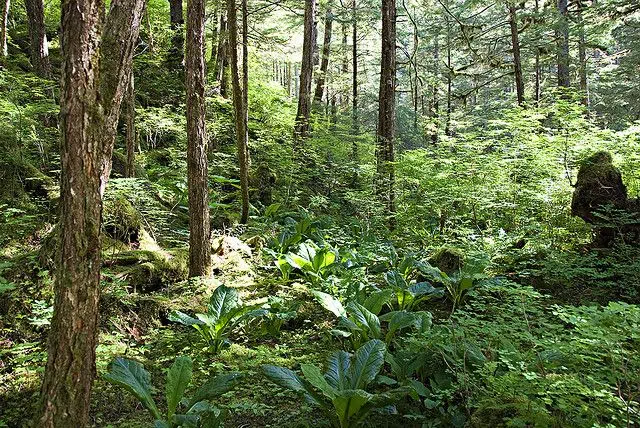
Deforestation – the permanent removal of trees to make room for something besides forest which includes clearing the land for agriculture or grazing, or using the timber for fuel, construction or mining is seriously depleting our trees and fast destroying the delicate plants, animals and water ecosystems.

From an economic point of view, if our forests are prudently managed, they can provide food, medicine and fuel for millions including much needed jobs for those employed to protect and re-grow them.

Forests are a very vital part of our existence as human beings as they are home to 80% of terrestrial biodiversity, containing a wide array of trees, plants, animals and microbes.

Forests provide more than a home for a diverse collection of living things; they are also an important resource for many around the world. In our country, we rely on trees for firewood, timber and charcoal.

All the fresh water that our cities, towns and villages need comes from forested watersheds, which means the loss of trees can affect water quality. The Guma Valley dam is an example of what deforestation has done to the city’s principal clean water source.

Deforestation affects the way water vapor is produced over the canopy, which causes reduced rainfall.

Trees are a part of our breathing system! They absorb carbon dioxide, mitigating greenhouse gas emissions produced by human activity.

As climate change continues, trees play an important role in carbon sequestration, or the capture and storage of excess carbon dioxide. Trees alone are estimated to provide about 23% of the climate mitigation that’s needed to offset climate change, according to the World Resources Institute, a nonprofit global research institute.

Deforestation not only removes vegetation that is important for removing carbon dioxide from the air, but the act of clearing the forests also produces greenhouse gas emissions.

The Food and Agriculture Organization of the United Nations says that deforestation is the second-leading cause of climate change. (The first is the burning of fossil fuels.) In fact, deforestation accounts for nearly 20% of greenhouse gas emissions.

Developing alternatives to deforestation can help decrease the need for tree clearing. For example, the desire to expand the amount of land used for agriculture is an attractive reason to deforest an area. But if people adopted sustainable farming practices or employed new farming technologies and crops, the need for more land might be diminished, according to the UN’s Sustainable Forest Management Toolbox.

Everyone can do their part to curb deforestation. Forests can also be restored, through replanting trees in cleared areas or simply allowing the forest ecosystem to regenerate over time. The goal of restoration is to return the forest to its original state, before it was cleared.

Thus, the sooner a cleared area is reforested, the quicker the ecosystem can start to repair itself. Afterward, wildlife will return, water systems will re-establish, carbon will be sequestered and soils will be replenished.