
Home Blog Page 1050

“Viral Hepatitis still Remains a Global Public Health Issue”   -Dr. Suliaman Lakkoh

Dr. Suliaman Lakkoh

By Ibrahim Sorie Koroma

As Sierra Leone joins the rest of the world to commemorate World Hepatitis Day on 28th July 2020, Infectious Diseases Specialist, Dr. Suliaman Lakkoh, who also doubles as coordinator for the Viral Hepatitis National Taskforce in the Ministry of Health and Sanitation, has said that Viral Hepatitis still remains a global public health issue.

He estimated that about 328 people around the world are currently living with the disease and that 1.5 million people are presently dying from the complications of viral hepatitis each year, including liver cancer.

Dr. Lakkoh was speaking at a news conference held at the Emergency Operation Center (EOC) on Wilkinson Road last week Friday.

Dilating on Sierra Leone’s context, the infectious diseases expert said that there is no available national comprehensive date on the prevalence of the disease in the country, but stated that data from some studies have shown a high prevalence among various population groups.

He referenced that for instance, the prevalence of hepatitis B is at 1.3% among children 10 years, 8.7% among health workers, 11.3 % among pregnant women, 15 .2% among blood donors and 21.7% among people living with HIV.

He reiterated that the prevalence of hepatitis C stands at 2% and 6% in male and female blood donors respectively and 4.1% amongst people living with HIV.

“Unfortunately, most people with chronic viral hepatitis are not aware of their status and do not receive/seek appropriate care for hepatitis which he noted can lead to complications and death if early actions are not taken,” Dr. Lakkoh maintained.

He continued that hepatitis is preventable if people are screened, tested and made aware of their status early and put to prompt treatment.

Dr. Lakkoh informed that the Ministry of Health and Sanitation has established the National Viral Hepatitis Taskforce to first of all provide leadership in the fight against the disease and address some of the issues around the prevention and treatment of the disease.

He also assured that the MoHS will continue to work with its partners to provide the required leadership on the prevention and control of the disease and continued that the Health Ministry in collaboration with the US Centers for Disease, Prevention and Control recently embarked on a survey in children and their mothers to be able to make informed decision/choices on the introduction of hepatitis B birth dose vaccine.

Dr. Lakkoh referenced that in last year’s World Hepatitis Day commemoration, they provided FREE screening on viral hepatitis for 957 people in which counseling and preventive messages were provided.

“We will also continue to provide safety  blood services, routine hepatitis B immunization for infants and other preventive  interventions like FREE condom distribution”. Dr. Lakkoh added.

He stressed that they see Viral Hepatitis as a serious public health issue and committed to the global and regional elimination goals of the disease.

He enlightened that hepatitis is an infection of the liver and is usually caused by the hepatitis virus of which there are three main types: A, B and C, adding that many adults who get the disease experience it for a short time and later get better.

He however cautioned that some people who have hepatitis B and C can develop a long-term infection known as *CHRONIC HEPATITIS* which can cause serious life threatening damage to the liver such as liver disease, liver failure and liver cancer.

“The disease is mostly spread by eating or drinking food or fluids that has been contaminated with infected human faeces and there is more risk associated to the lack of safe drinking water, poor sanitation and hygiene”… He continued… “Hepatitis B and C are most commonly passed on through contact with infected semen, and virginal fluids”.

He ended by listing the mode of transmission of the disease as follows: unprotected sex with an infected person, sharing of unsterilized needle, unsafe disposal of sharps, and tattoo with unsterilized instruments, sharing toothbrush or razor, from an infected mother to child, sacred oath through bleeding and during unsafe blood transfusion.


Frontliners at Lungi Airport Schooled by IOM  

By Foday Moriba Conteh

After being closed for four months, the country’s only international airport is now open again to foreign commercial flights. To open Freetown International Airport (FNA) safely, the International Organization for Migration (IOM) last month conducted a capacity assessment to identify areas that need urgent support before the resumption of scheduled operations.

IOM also undertook special training of Sierra Leonean “Frontliners,” the first officials to contact by arriving travelers.

“The successful reopening of the Freetown International Airport depends on the level of preparedness of airport frontliners who are responsible for ensuring adherence to all public health measures, as well as safety of travelers,” explained Kunikazo Akao, Project Manager at IOM Sierra Leone.

Like most West African countries, Sierra Leone on 22 March closed its borders—including its airspace—to international passenger traffic to limit the spread of COVID-19. That, however, negatively impacted the country’s economy.

Moreover, the growing number of Sierra Leoneans stranded abroad and wishing to come home added pressure to reopen as soon as safety allowed. That spurred IOM to complete its assessment of 450 FNA workers, including immigration officials, airport authorities and customs officers. Most were trained on Infection Prevention and Control (IPC) and the use of updated airport COVID-19 measures to improve entry and exit health screening processes.

“These refresher trainings have provided airport personnel the requisite knowledge to take precautionary measures to reduce the possibility of infection and have the confidence to manage a suspected case,” said Moses Tiffa Baio, Director General of the Sierra Leone Civil Aviation Authority (SLCAA).

A simulation exercise was carried out on Monday (20 July) to evaluate real-time preparedness and readiness of airport officials.

In addition to the training and simulation exercise, IOM also provided FNA with IPC materials and equipment including screening devices, handwashing stations, infrared thermometers, facemasks, and electronic sensor hand sanitizer dispensers. Additional equipment—such as wheelchairs for disabled passengers and rain canopies for arriving passengers—were provided as well

IOM has worked with the Sierra Leone Civil Aviation Authority (SLCAA), the Sierra Leone Airport Authority (SLAA), the Ministry of Health and Sanitation (MOHS), the National Coronavirus Emergency Response Centre (NACOVERC) and the World Health Organization (WHO) to ensure that all the necessary safety and public health measures are in place to detect potential cases of COVID-19 and prevent unwanted infections upon arrival and departure.

Since the confirmation of the first case of COVID-19 in Sierra Leone on 31 March, IOM has actively supported the Sierra Leonean Government through Points of Entry (POE) assessment and reinforcement including building the capacity of border officials, risk communication and community engagement, as well as the provision of thousands of personal protective equipment to COVID-19 frontliners and responders.

IOM’s support to Sierra Leone’s airport COVID-19 preparedness and the response was made possible with support from the Governments of Japan and Norway.

Lawmakers Ratify Agreements on Culture, Education & Cooperation

Parliament of Sierra Leone

By Foday Moriba Conteh

Parliament on Thursday 23rd July 2020 debated and ratified three agreements in light of culture, education and strengthening of diplomatic cooperation. Presenting the agreements for ratification, the Deputy Minister of Foreign Affairs and International Cooperation, Solomon Jamiru Esq, said they would foster growth by strengthening bilateral relations in the areas of culture, education and technical training for both countries.

The following agreements were ratified by Parliament: Agreement on Cultural and Artistic Cooperation Between the Government of the Republic of Sierra Leone and the Government of the State of Kuwait, Dated 17th November 2019.

Parliamentarians also ratified Second Agreement on Cooperation in the Field of Technical Education and Professional Training Between the Government of the Republic of Sierra Leone and the Government of the State of Kuwait, Dated 17th November 2019 and

The third was the Agreement on Establishing Joint Commission for Cooperation between the Government of the Republic of Sierra Leone and the Government of the State of Kuwait

The Opposition Whip, Hon. Hassan Sesay, who spoke on behalf of the Leader of the Opposition said the existing relationship between the two countries would now be cemented by these agreements in light of cultural exchange, education, professional training and strengthening diplomatic ties. He also extended invitation to the people of Kuwait to Sierra Leone to enhance mutual benefits.

Leader of Government Business, Hon. Mathew Nyuma said the agreements are non-controversial and they would certainly strengthen diplomatic ties for the mutual benefits of both countries. Speaking on the importance of education, which is paramount to the dispensation of the New Direction Government, he called on the Deputy Minister of Foreign Affairs to ensure on implementation, that the agreements should benefit the citizens of Sierra Leone.


Sexual Offences Model Court Launched by President Bio

President Julius Maada Bio

By Amin Kef Sesay

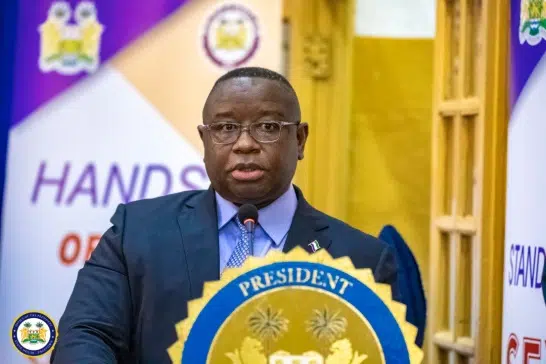
President Julius Maada Bio, on Friday 24th July 2020, launched the country’s first-ever Sexual Offences Model Court (SOMC) in Sierra Leone while saluting the great courage of survivors of Sexual and Gender-based Violence (SGBV).

“Be assured that there are Sierra Leoneans and friends of Sierra Leone who care and who will continue to stand with you steadfastly,” he said adding that he was publicly thanking The First Lady, Madam Fatima Maada Bio, for her tenacity in championing the ’Hands Off Our Girls’ campaign that also promotes the cause for women.

“’Hands Off Our Girls’ is not just a statement, it has become a rallying cry of resistance and a trenchant restatement that we will fight back until we rid this country of SGBV. Thank you Madam First Lady for emboldening young girls and women all over this nation that they can and must say ‘NO’ to predators and molesters.

“Thank you for reminding each one of us (parents, community members, traditional and religious leaders, civil servants, members of the security forces, students, professional organisations, civil society, ordinary citizens, and national leaders) that we can and we must play our part in urgently addressing this national emergency. Let us continue to explore new ways of collaborating very closely to change attitudes and end these crimes,” he said.

The President also acknowledged that economic disparities, cultural attitudes and some all-round obnoxious attitudes toward women and girls had contributed to the deepening of the said crisis in the country.

“But we are a good people. We are a nation of good people. We should be better. We must do more to rid this nation of this menace. As a Government, we have made an unambiguous statement that there is no place for impunity and every perpetrator will be held accountable within the full remit of all existing laws of our country,” he warned.

President Bio also thanked development partners for sharing his belief that the egregious crime of sexual violence must be tackled head-on, adding that he was particularly recognising the role of the UN Women and UN Fund for Population Activities, UNFPA, and for their vigorous and relentless support to the Government and the judiciary.

“Let me also thank my Lord, The Chief Justice and members of the Judiciary for their interminable support in fighting SGBV. Over the last two years, they have made a bold statement of their commitment to right this grave injustice by speedily augmenting every step of the fight against SGBV,” he said.

First Lady, Madam Fatima Maada Bio, said that since the launch of the HOOG Campaign they had succeeded in gradually shifting the culture of silence and indifference about rape, thereby increasing the number of reported cases. She noted that the rate of sexual incidences had also provided the platform for human rights and advocacy organisations and individuals to rally together to end all forms of violence against women and girls in the country.

“As part of Government’s commitments to ending all forms of violence against women and girls in Sierra Leone, we are here this morning to make another history as a country by officially launching the SOMC. Even as we gather here this morning, let us remind ourselves of our constitutional and moral responsibility of safeguarding the rights and future of women and girls,” she said.

Country Representative, UNFPA, Dr Kim Eva Dickson, applauded the Government for the concerted multi-sectoral efforts to prevent and eradicate the scourge of gender-based violence that was eating away the fabric of society. She also congratulated the Judiciary of Sierra Leone on the opening of SOMC, saying that the special measure associated with the specialised court would go a long way to building the confidence of survivors to bring their cases forward.

A representative from Rainbow Center, Dr Olabisi Claudius-Cole, thanked the President and the First Lady for putting the spotlight and raising awareness on the menace in the country. She added that the HOOG campaign had made a big impact and difference. She assured of their continued passion and commitment to providing competent, compassionate and confidential care to survivors of SGBV.

Excessive use of Force on Unarmed Citizens Must be Cause for Concern

By Amin Kef Sesay

The Sierra Leone People’s Party has claimed for years whilst in opposition that it was a victim of repressive laws and policing and now has a chance to effect change whilst in Government.

When he came to power on April 4, 2018, since coming to power in April 2018, President Bio made commitments to reform the security sector and to protect human rights in a country where impunity for police abuses is deeply entrenched.

Given the amount of deaths that have occurred since at the hands of the security forces, the Government of Sierra Leone must show renewed commitment to fulfil its promise to improve the human rights situation in the country by ending entrenched impunity for Police killings of protesters, Amnesty International noted in 2018.

President Bio after this latest unfortunate incident in Makeni must now send a strong signal that Police abuses will not be tolerated anymore by making a positive statement about strengthening human rights, as well as reform of the criminal justice system with a strong commitment to achieve accountability and redress for past abuses.

The authorities must ensure and promote the right of individuals to peacefully assemble without fear for their safety, Amnesty said, adding that the Government has a key opportunity to implement reforms that would help the Police manage demonstrations effectively and safely, restore the public’s trust in the security forces and live up to the Police’s own motto – A Force for Good.

Amnesty noted appallingly that for 10 years, the SLP have got away with murder as peaceful protesters and bystanders have lost their lives, or been seriously injured, with no one held to account.

Amnesty called on the Government to address entrenched impunity for Police abuses.

Amnesty in its report (2018) stated that over the past 10 years, Police have frequently used excessive force to disperse spontaneous protests, with at least nine protesters killed and more than 80 injured.

Amnesty International’s report also found that more than 80 protesters had their properties looted or were arbitrarily arrested.

No Police Officers were held criminally responsible for any case documented by Amnesty International, despite recommendations made by two Commissions of Inquiry and the Independent Police Complaints Board.

In most cases, Police Officers accused of wrongdoing were only transferred to a different department.

In one case, Amnesty International found that the Police Officer suspected of giving the command to shoot had been promoted.

In another case, a Police Officer suspected of being responsible avoided disciplinary action despite being recommended for dismissal in a 2009 Commission of Inquiry.

In March 2017, a young boy was shot dead and two students injured when Police opened fire on students protesting the closure of their University in the Southern Province of Bo.

In August 2016, two schoolboys were shot dead and four young men injured when Police opened fire on a protest against the removal of a planned Youth Village.

As such, like Amnesty International, the main opposition All People’s Congress party is calling on the Bio administration to take positive steps to prevent further loss of lives of Sierra Leoneans through excessive use of force by the security forces in putting down protests by unarmed citizens.

At the same time, the authorities must ensure that victims and their families enjoy the right to an effective remedy, including adequate compensation, and guarantee of non-repetition.

The authorities should set up a mechanism for compensating victims of Police abuses and address the chronic lack of funds, training and hierarchical accountability within the Police Force.

Amnesty also called for the Independent Police Complaints Board, set up in 2015 as an external body to oversee the Police, to obtain more resources and enforcement powers.

Director General of NATCOM Discloses Action Plan

By Amin Kef Sesay

The current Director General of the National Telecommunications Commission (NATCOM), Daniel Kaitibi has said that he is determined to achieve President Julius Maada Bio’s vision of a digitally inclusive nation.

NATCOM was established by an Act of Parliament to, among other things, regulate the telecommunications sector in this country including the issuance of licenses to telecommunications service providers. Without any iota of exaggeration, it is indeed a very important institution considering the fact that telecommunications play pivotal roles in the dissemination of information which has made it possible for the world to become a Global Village. Besides, through the issuance of frequencies, licenses and imposition of fines for various violations by institutions it regulates thereby generating steady revenue for Government.

It is without any gainsay to state that indeed the institution therefore needs individuals who are capable and very vast in the field so that NATCOM could efficiently deliver on its mandate .

It was against such a backdrop that His Excellency, President Julius Maada Bio, in his wisdom took the laudable decision to appoint the result-oriented Director General in the person of Daniel Kaitibi. From facts gathered so far, by this medium, it was never a mistake on the part of the President to appoint the indefatigable Director General of NATCOM because it is so apparent that within the shortest possible after he occupied that position he went to work by instituting overwhelming transformations that have catapulted the institution to an envious position today.

This Information Technology guru has taken compliance by telecoms service providers to a higher level, has raised high the bar in terms of monitoring of MMOs, Internet Service Providers to ensure that things are done exactly the way they should be done.

It must be underscored that regulatory institutions around the globe are known to  be very disciplined and not to be easily manipulated but unfortunately for this country such has been lacking in the past thereby making NATCOM as a regulatory institution to appear as a lame duck. However, things took a dramatic U-Turn ,when Daniel Kaitibi became the institution’s Director General as he wasted no time to instil discipline to the letter, ensuring that all those institutions that fall under the regulatory eye or framework of NATCOM play according to the rules as enshrined in the institution’s Act and his terms of reference as Director General.

His style of leadership is paying hugely in terms of enhanced telecommunications provided by Mobile Companies, improved internet connectivity by Service Providers, increased revenue to Government and even seen in employees’ dedicated commitment to assigned tasks all cascading to utmost customer satisfaction as well as contributing to economic growth.  Many have attested that indeed the NATCOM DG is translating President Bio’s vision of an improved telecommunications landscape in the country.

Indeed, it is evident that all the aforementioned achievements made so far by Daniel Kaitibi as Director General of NATCOM fall within the context of fulfilling certain objectives which an effective telecommunications regulator must strive to attain. These include but not limited to providing a fair market ecosystem for sector players, to satisfy consumers with improved and high-quality products and services, to maintain high levels of market penetration etc.

Indisputably, DG Kaitibi’s strides so far taken and the impact that they have created is a clear manifestation that he is on the right track and is positioning the institution to positively transform the entire telecommunications sector in the country.

In an exclusive interview with this medium, the forward looking and highly patriotic Director General, Daniel Kaitibi intimated that he is grateful to President Julius Maada Bio to give him the opportunity to use his expertise to sanitize the telecommunications landscape in the country. He said he is determined to ensure that the confidence reposed in him by the President to deliver will be demonstrated to the best of his ability and through effective team work.

The Director General, Daniel Kaitibi stated that as a matter of urgency these are some the plans that he intends to translate into reality:

  1. To effectively drive the process for public consumption of the six (6) draft Telecommunications Regulations 2020. These Regulations include:

Telecommunications Licensing Regulations 2020; Radio Frequency Spectrum Regulations 2020; Telecommunications Quality of Service Regulations 2020; Subscriber Identification and Registration Management Regulations 2020; Electronic Communications Equipment Type Approval Regulations 2020; and National Numbering Resources Regulations 2020.

  1. To successfully complete the age-old new NATCOM building, boost the workplace ambience and productivity, while totally eliminating a cavalier attitude.
  2. Seek to improve digital rural penetration by increasing network coverage.
  3. Migration of Free Roaming Services from the Abidjan protocol to the ECOWAS Regulation in line with the SMART AFRICA INITIATIVE for smart cities.
  4. Domestication of ECOWAS Regulation on Free Roaming services in Sierra Leone.
  5. Carry out a cost study for tariff regulations and pricing strategies.

The Director told that H.E. President Bio is desirous  of creating and leaving behind (after his 10- year mandate) a digitally inclusive  Sierra Leone.

It is no gain saying that the benefits of effective regulation have proven to result in greater socio- economic growth, increased investment, lower prices, better quality of service, higher penetration and more rapid technological innovation in the sector.

DG Kaitibi stated:” My team and I will continue to streamline, transform and realign processes and procedures, work to analyse and assess cumulative effects on outputs, improve knowledge management, regulatory processes and make NATCOM a better regulatory entity”.

Supplementary Budget for FY 2020 Sails through Parliament

Minister of Finance, Jacob Jusu Saffa

By Theresa Kef Sesay

A supplementary budget for FY 2020 was presented by the Minister of Finance, Jacob Jusu Saffa, to the tune of Le 1.7 Trillion with its equivalent of USD 170 Million, to Parliament on Friday 24th July 2020 where it was debated and approved.

The Finance Act provides for a supplementary revisions and provisions for the services of Sierra Leone for the year 2020.

It was learnt by this medium that the Budget is aimed at addressing the impacts of COVID-19 and accelerate economic recovery in the country.

In his presentation, the Minister said COVID-19 has affected most sectors including tourism, health, trade and other sectors providing services in the country. He thanked President Bio, donors and line Ministries for supporting measures geared towards mitigating the impacts of COVID-19 in Sierra Leone.

Leader of Government Business, Hon. Mathew Nyuma commended the Minister and his Team for putting the documents together and colleague MPs for their brilliant contributions to the debate. He assured all of Government deliverables in light of responsibility and accountability. He particularly called on the Committees on Finance and Transparency to strengthen oversight with a view to ensuring judicious use of funds meant for the development of the country.

Leader of the Opposition, Hon. Chernor Bah called on Government to announce the actual figures of tractors procured to support agriculture in the country; adding there are discrepancies in the current figures. He thanked the Government for prioritising local content policy by giving contracts to indigenous road construction companies; saying “it is a mark of continuity in governance”. Recalling, he said when the APC came to power in 2007, allocation to education was 4 percent, and on exiting power, APC left it at 17 percent allocation to education, adding huge infrastructural development undertaken by the immediate past Government. He called on the Minister to follow the paths of continuity and do timely disbursement of funds to MDAs to deliver on the development agenda of the country.

Chief Whip of Parliament, Hon. Dickson M. Rogers of SLPP drew the attention of the Minister of Finance to agricultural boom in Pujehun District and commended Government for transfer of cash to impoverished households through NACSA. In light of the development agenda of Government, he assured saying “between now to December, Sierra Leone will be a different place”.

Hon. Paramount Chief Matilda Y. Minah of Pujehun District said there is hike in the price of rice in the country and called on compatriots to invest in farming; adding Pujehun is viable for agriculture and fisheries. She drew the attention of the Minister of Finance to a terrible road network and the suffering of travellers including women in maternity in the riverine areas.

Hon. Ibrahim Tawa Conteh of SLPP thanked the Government of President Bio for meeting its obligations amidst COVID-19 such as payment of salaries, construction of roads, provision of jobs and other service deliveries. He lauded the Government for the introduction of a quick action economic recovery plans aimed at making businesses resilient to the impacts of COVID-19.

Hon. Paramount Chief, Bai Kurr Kanagbaro Sanka lll of Tonkolili District noted that COVID-19 has destroyed the economies of the world and thanked the Government for managing the economy of Sierra Leone. He urged compatriots to support the Government to succeed than to fail in its development agenda. Speaking on the importance of education, he appealed to the Minister to support the Teaching Service Commission to strengthen quality education in the country. He also called on the Minister to facilitate major road connectivity to Tonkolili District.

Leader of C4C, Hon. Saa Emerson Lamina described the supplementary budget as non-controversial and commended the Minister and President Bio for their interventions relating to enhanced measures to tackle the impacts of COVID-19 on the economy. He also thanked NRA for implementing strategies that are supporting the economy amid COVID-19 with regards to revenue generation. He also appealed to Government to address mining related issues through NMA for economic boom.

Other Members of Parliament made salient contributions.

Makeni Findings Presented to Pres. Bio

By Foday Moriba Conteh

On Friday 24 July 2020, a high-level delegation on a fact-finding mission following the recent fracas that engulfed the northern city of Makeni, met at State House to present their findings to His Excellency President Dr Julius Maada Bio.

Dr Juldeh Jalloh, the Vice President, recalled that after the violence, the President decided to establish the team to engage the relevant stakeholders in Makeni with three clear objectives – to express the President’s regret over the incident, which led to the loss of lives; to inform the people that the President would establish a special team to investigate the matter and to express his condolences to the bereaved families.

Head of the delegation, Ambassador Foday Yumkella, who doubles as the Minister of Political and Public Affairs, said that as per their mandate and scope they were able to do a wide-range of engagements with traditional and tribal leaders, political and civil society leaders and the security sector.

He described the engagements as fruitful and noted that the stakeholders were appreciative of the move by President Bio to send a representation. He also thanked his colleagues in the delegation for being instrumental to the success of the numerous engagements they had.

Member of Parliament for Constituency 30 in Bombali District, Alhaji Ibrahim Ben Kargbo, who was also a member of the delegation, said that the report was comprehensive and represented all that happened. He said they had a lot of cooperation from the various stakeholders, adding that there was a great need to bring Makeni back to normalcy.

President Bio, in his response, thanked members of the delegation for their thorough job and reiterated that the Government is genuinely concerned about the incident. He expressed his regret over the incident, saying that it was something that could have been avoided.

While assuring that the Government would set up an independent team of investigators to provide in-depth insight into the issues surrounding the incident, he also thanked the team for getting in touch with the people, expressing condolences on behalf of the Government and his personal behalf and also for giving him genuine feedback from the people.

$425,000 Provided by US to Combat Organized Crime

Amin Kef Sesay

According to a Release by United States Embassy in Freetown on the 23th July 2020, the U.S. Department of State’s Bureau of International Narcotics and Law Enforcement Affairs (INL) announced a $425,000 contribution to the United Nations Office on Drugs and Crime (UNODC) to support efforts to combat organized crime in Sierra Leone.

It continued that the United States values its relationship with Sierra Leone and enjoys a close partnership with UNODC furthering how the U.S. is providing such a contribution to UNODC to reinforce the effectiveness of the Sierra Leone Transnational Organized Crime Unit (TOCU) and to strengthen the Sierra Leone Peacekeeping and Law Enforcement Academy (SILEA).

This initiative, the Embassy disclosed, will promote intelligence-led policing and investigations, interdiction and seizures of illicit drugs, and the prosecution of transnational organized crime cases. It was learnt that the project will also create and institutionalize professional law enforcement curriculum at SILEA that integrates respect for human rights and the rule of law.

It revealed that the INL funded the project through appropriations made by Congress to the U.S. Department of State that support efforts in the fight against organized crime and drug trafficking worldwide.  Those funds, it was maintained, will help the Government of Sierra Leone in building up the capacity to investigate and prosecute transnational organized criminal groups.

Big Idea of the Week… Flying High While Keeping Risks Low

By Amin Kef Sesay

SLAJ and NACOVERC Big Idea of the week, starting from the 26th July to the 1st August 2020 is focusing on “Flying High While Keeping the Risks Low”. The coronavirus initially hit China in the Far East but it shortly spread to Europe and other parts of the world.

Obviously, from China, where it is said to have emanated, it is possible that it could have spread by travelers moving across borders. It is against that background that we saw the cancellation of flights in order to break the chain of transmission.

It could be recalled that the Freetown International Airport reopened on the 22 July 2020. Prior to the reopening the Government has taken many steps to prepare for travelers coming in and going out of Sierra Leone and help keep everyone safe when traveling.

As a safeguard measure, all travelers flying into and out of Sierra Leone must test negative for coronavirus within three days before travel.

Agreed upon was that people flying into Sierra Leone will be tested again after they land and two tests must be done by  the Government one which is a rapid test to get a result right away, and the other type of test is to confirm the first result but which takes more time.

Travelers who have a negative test result with the rapid test can continue on their way, but must take all actions to prevent the spread of coronavirus to others. These actions include wearing a cloth mask, keeping a safe distance of at least one meter from others, washing their hands with soap and water frequently, and calling 117 if they have fever, tiredness, and cough.

Travelers who test positive for coronavirus with the rapid test will be taken to an isolation center for follow up.

If they have fever, tiredness and cough travelers must call 117 right away and make sure to tell 117 if you or someone you know has traveled from another country in the last 14 days.

Already, the Government of Sierra Leone through the Ministry of Transport and Aviation in collaboration with the Ministry of Health and Sanitation, Sierra Leone Civil Aviation Authority, Sierra Leone Airports Authority and the National COVID-19 Emergency Response Centre (NACOVERC) put safety and public health guidelines which shall be strictly adhered to by all arriving and departing passengers at/from the Freetown International Airport.

All passengers shall go through a walk-through disinfectant channel/Infrared temperature scanner at the entrance of the arrival hall. Also, all passengers with machine-readable passports shall go through the Immigration E-gate system. Passengers with Emergency Travel Certificates or non-machine-readable passports shall go through the Immigration booth.

At the Baggage Reclaim section passengers shall maintain social distancing and observe all public health protocols, including proper use of face mask at all times.

Departing the country, all passengers are subjected to a mandatory Polymerase Chain Reaction (PCR) COVID-19 test with a negative result issued no longer than 72hrs before departure at the Freetown International Airport. Cost for this test will be borne by the passenger.

Passengers will use the Government of Sierra Leone Travel Portal to request their pre-departure test, to pay for the test, and for scheduling sample collection.

Also, passengers with negative PCR results will receive e-confirmation and certificates ahead of travel. Physical copies can be collected at the airport at a designated desk.

Passengers with positive PCR results will not be permitted to travel and must follow public health protocols for isolation and contact tracing. They will be re-tested after seven days.

Passengers who have entered Sierra Leone within five days shall be exempted from the mandatory additional test on departure.

All children under 2 years shall be exempted from PCR test requirements.

To ensure that individuals going and out of the country adhere to the safe guidelines, SLAJ and NACOVERC are working hand in glove to disseminate significant information far and wide in order to create the desired effect. From 26th July to the 1st August 2020 the focus will be “Flying High While Keeping the Risks Low”.