Home Blog Page 1205

Sierra Leone Tunde Macarthy Rehabilitates Kissy Road Cemetery Fence

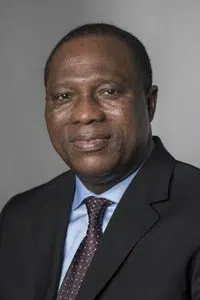
Dr. Tunde Macarthy

By Mohamed Fadlu Bah – 20 August 2019

On Wednesday 13 August 2019 the Proprietor, Managing Director of Tumac Group of Companies who also is known as a philanthropist, Dr. Mohamed Tunde Macarthy, facilitated the rehabilitation of the collapsed fence of the Kissy Road Cemetery.

Part of the Kissy Road Cemetery fence collapsed due to the heavy downpour on the night of the 23rd July, 2019 that led to homelessness and loss of properties of thousands of Sierra Leoneans and fences were washed away by the floods within that part of Freetown.

Dr. Tunde Macarthy was in the United States of America and upon him receiving information of the collapsed fence he hastily returned and started the rehabilitation of the said fence which has now been completed.

In an interview with Dr. Tunde Macarthy he disclosed that the rehabilitation is part of his company’s Corporate Social Responsibility and self -funding community project activities which he has always been performing and that the rehabilitation cost him 25 million Leones.

According to him the rehabilitation of the fence is just a continuation of the charity work he has been doing all over Freetown, adding that he has rehabilitated and done construction work on other cemeteries like the Kissy Mess Mess Cemetery, Palmer Street Cemetery, Aberdeen Cemetery etc. in order to respect the dead. He continued  by saying that he is also engaged in promoting youth activities; helping the poor and needy and other social activities, such as assisting schools and community-based organizations in Sierra Leone.

Dr. Tunde Macarthy who is the owner of Tumac Radio, Tumac Security Agency, Tumac Real Estate and Construction Company, Tumac Film Production, Tumac Water, Tumac Pharmaceuticals etc. said developing Sierra Leone is his dream and that he has always been offering such humanitarian gestures since he returned to Sierra Leone and that his contribution to national development is in line with building the social and economic infrastructure of the country.

Sierra Leone Hon. Tondoneh for SLPP Deputy Chairman

Philip Tetema Tondoneh

By Tamba Tengbe – 20 August 2019

When the bells ring for generation change in the leadership of the Sierra Leone People’s Party (SLPP) the name of a grassroots politician has been echoed loudly by majority of supporters across the country, Philip Tetema Tondoneh, as the fittest man to run for the Deputy Chairman of the ruling SLPP party for the 2020 convention.

The current Deputy Minister of Works and Public Assets is a generational asset to the party who has served the party in different capacities diligently without hiccups at the time the positions were unattractive. He started his political career as student leader at Milton Margai College of Education, Science and Technology by pioneering the reinstatement of political parties when the NPRC wanted to dismantle the functionality of the existing parties in the country. His astute leadership in the Eastern Region as then Acting Publicity Secretary of the party from 2015-2017 at the demise of late Honourable Musa Tamba Sam has urged many to support him for the Deputy Chairmanship position at a time the party needs pragmatic leaders to champion the political agenda of the party, particularly when he is seen as a passionate follower of the Bio ideology since 2005 when the President Bio declared his intention to run for presidency.

His declaration has not come as a surprise to many in the circle of party, being an interactive politician who always resonates with the grassroots supporters of the party. When he turned down the then APC offer, he suffered a serious setback where his house was burnt down on November 18, 2015 during a bye election in Kono District. He said his motive for coming into the race is to ensure he consolidates the party’s victory since he believes in the grassroots.

Tetema Tondoneh’s record and stances at the Sierra Leone  Parliament, when he was a Member of Parliament   reflect a “practical, common sense progressive” thinker who emphasizes increased support for capacity building for  parliamentary clerks through his experience as a former Policy and Programme Analyst at the Office of the Vice President between 2005 to 2007. He rose to the position of Parliamentary Technical Adhoc Committee Member at the Parliamentary Service Commission and made meaningful contributions to the Parliamentary Commission.

As a Member of Parliament, Tondoneh’s areas of special legislative interests were in support of economic growth, jobs creation, quality public education, health care. As an MP, he worked passionately for the finance and economic development, communications and information, housing and environment, transparency and accountability committees driving prompt development for the country.

As the current Eastern Region Chairman of SLPP a position he has held for seven years now, Hon. Tondoneh is a born leader, a very common but principled person who can annoy his detractors. He was the Deputy Eastern Region Chairman of SLPP though many political pundits believe he deserves a full cabinet position considering his structured and discipline attributes.

He was born in Jaiama Nimikoro Chiefdom, Kono District, from devoted and pious Christian parents. He started his academic career in Kono and later sat to GCE O’ Level exam and enrolled at the MMCET. He was a senior teacher at the Prince of Wales where he taught for 15 years and holds  a Bsc Honours Degree in Economics from Fourah Bay College (USL) and a Master’s degree in Agricultural Economics from Njala University.  He has been a prolific writer for the True Sierra Leone News Letter.

He is willing and ready to serve anybody that would emerge as the Chairman and Leader of the Party, as long as the individual believes in the Bio ideology.

He is married with 4 (four) children, one is now a medical doctor, Dr. Sahr Robert Tetema Tondoneh. His two daughters recently won an essay competition prize on Ebola survivors and have become the pride of the nation.


Ames Models Sierra Leone Brings Together Girls To Discuss Girls’ Issues 

By Joenal Sesay – 20 August 2019

Ames Models Sierra Leone Limited has ended its Every Girls Conference at the St. Anthony Parish Hall.

The conference which took place on August 17th, 2019 targeted girls within the ages of 15 to 25.

The conference has been described as first of its kind as Ames Model focuses on every woman.

Ames Models Public Relation Officer (PRO), Annipha M. C. Sawaneh pointed out that the conference is awareness-raising for girls and for them to be better informed about their mental and physical health.

She disclosed that topics such as women’s health, mental health, contraceptive, becoming keeper and beauty with purpose formed part of the event.

She added that their goal is to prepare girls for their transition and to encourage girls to stay with education.

Founder and Chief Executive Officer of Ames Models Sierra Leone Limited, Amy Bridget Sawaneh said Ames Model is an agency that is training and mentoring girls between the ages of 15 to 25 years that want to be a model.

“The main aim is to tell them that they can be models as well as others”

She said in Sierra Leone the modelling market is small and so models are not making money out of it but there are some girls that have the passion to do it but they need guardians to do that.

“I often tell them to be model but they should stay at school. They can be doctor, accountant what every they want to be as a way of empowering themselves”

She spoke about her desperation to become model during her childhood days and how girls have been missed used and abuse through modelling.

Amy Bridget Sawaneh who is a model and Accountant wants to give girls the platform to be a model through guardians and make something out of life rather than expos to unnecessary harassment.

She said Ames Models came into existence this year. She said she grew with a single parent and all what she learnt through life because her father can’t teach her all the women things and her grandmother was uneducated.

“I knew people are in that same situation like myself, they are growing up without knowing things they need to know. That is why I decided to host this event for girls to be better inform about their personal hygiene and mental health”

She went on to say she did not want to target a set of people but all set of girls.

Noting that girls don’t need to be the brightest to achieve their dreams but they need to move on and stay focus.

She said as female gender, they are all different but are going through the same thing but how they handle it will make them succeed.

She also encouraged other women that have the power to be a mentor to girls because they need it.

“I have started it and I am trying to get a larger group. You just need to give them word not money”

She emphasised that she want to ensure that girls have the confidence to do what they think is right.

According to Amy Bridget Sawaneh, most of the girls that dropped out of school are due to pregnancy, and when they are pregnant for them to go back to school is not easy, she said if they can prevent that to happen why they can’t do it.

The girls she added need to be informed and they needed to know the measure how to prevent pregnancy.

Amy Bridget Sawaneh was the only sponsor in this conference but she is open to anybody that wants to sponsor them as she aimed of taking the campaign across the country trice a year.

“I want to be open and give way to all the children with no decriminalisation. I want to focus on the obvious once. Let us change the world, one girl at a time”

Presentation was made by Sister Kadijatu Salaam of Well Woman Clinic, Aminata Foray-Musa Educator/ Child Right Activist Chosen Network, Marie Stopes Sierra Leone and other motivational speakers gave their experiences on they overcome to succeed in life.

Posts such as girl power, we are girls and we are strong, the power of being a girl, this girl can, my health, my wealth. Get screen for breast and cervical cancer we all can do it! and good deeds day were placed at the hall.

Participants expressed happiness about the conference and called for more of this to reach more girls especially the less privilege.

Fatmata Binta Bah of St. Joseph’s Covent SSS 2 described the event as educative. She promised to take the message back to her school and at home.

Cheryl Thomas at student at FBC Mass Communication Department described the initiative of Ames Models Sierra Leone Limited as a laudable one. She called on them to reach more girls as 70% of them lack such information. Breakfast, lunch plus entertainment formed part of the conference.

Stringent Need to Monitor Mining Industries in Africa

=COMMENTARY=

By Amin Kef Sesay – 20 August 2019

It is vital for policy-makers to monitor the effects of mining activities on development outcomes, an international financial institution advises.

Since they became independent, Africa’s mineral wealth instead of financing rapid socio-economic development for the benefit of its people has been a big curse.

A recent World Bank study notes that the mining sector contributes to serious economic inequality in large parts of the continent. Investigation in 38 African countries reveals that the mining sector is contributing to serious economic inequality in large parts of the continent, confirming the phenomenon of the “resource curse” but also showing that mineral endowment can be a “blessing” in a few well-governed states.

The research, whose findings were released on Monday, shows that “mining activities significantly increase spatial inequality in Africa”, which is consistent with the standard “resource curse” literature.

The “resource curse” refers to the observation that natural-resource-rich countries tend to grow less rapidly than natural-resource-poor countries, tending to have worse development outcomes.

Africa’s natural resources, particularly oil and diamonds, have been blamed for the many ills afflicting the continent, including poverty, corruption, dictatorship and war.

This is not surprising in a sector that is capital intensive and on a continent where the mining sector has attracted significant foreign direct investment in recent years, especially by the Chinese.

In a few exceptional cases, mineral resources have been a blessing. Botswana, Namibia and South Africa are among the rare examples of countries that have harnessed mineral wealth for the common good.

A new report by the German Institute of Global and Area Studies (GIGA) attempts to determine the social impacts of Chinese mining operations in Africa.

The study, which found both positives and negatives, once again highlights the need for African nation states to benefit more from their own natural resources. However, China has been earning a bad reputation for its operations in Africa’s extractive industries.

Some of the accusations include illegal mining in Ghana, corruption in Angola, Guinea and other countries, environmental degradation in Chad, and poor working conditions overall.

In general, what comes up in most mineral rich African countries is the problem of transparency and accountability.

Requirements needed to be met relate to corruption, transparency, and bribery, such as whether the mining title was acquired illegally or there was bribery involved.

Noticeably, there is currently no incentive mechanisms developed for either guideline. Without strong incentives, implementation of voluntary guidelines by companies tends to be poor.”

Finding mutual benefit

What more can be done by both Chinese and Western companies to increase benefits from mining for African nation states?

In the medium to longer term, single nation states should work to refine local content policies for exploration or production terms to require hiring of local companies for the procurement of goods and services.

This is a good way to encourage investment in capacity-building for knowledge transfer, technology transfer and local hiring.

Mixed ownership is also a concrete measure that could bring results.

It is known from studies that if an international company works with a local partner, the probability that there will be linkages to other economic sectors is much higher.

Local content policies and mixed ownership, however, are not fool-proof to corruption and bribery tactics and require good governance, regulation and transparency to work properly.

Above all, mining companies need to take it upon themselves to act responsibly.

Open on-going communication between communities and companies, matched with a commitment by companies to respond would reduce the risks they face, such as where complaints lead to local protests or reputational damage.

Good communication would also allow for companies to improve future operations in-line with community demands and international standards.

That is fundamental for communities and states to benefit from mining, as happens in Canada, USA and Australia.

Companies, Western, Chinese or otherwise, should put a higher emphasis on corporate social responsibility, transparency and accountability to win contracts, for reputational as well as longevity sakes.

As former Secretary-General of the United Nations, Kofi Annan, said in 2013: “Mutually beneficial agreements are the only ones that will stand the test of time. We all stand to win from an Africa that is truly prosperous, stable and fair.”

August 2 Flood: 985 Houses Damaged; 5,381 Homeless in Sierra Leone

By Amin Kef Sesay – 18th August 2019

Freetown, the capital city of Sierra Leone has been experiencing persistent torrential rains from late May 2019 to August 2019. The highest recorded incident was the August 2nd rainfall causing associated impacts, including flooding in low lying areas as well as new episodes of landslides on low scale in the eastern part of the city.

Giving an update on the August 2nd flooding in the country, the Office of National Security (ONS) has revealed that the incident left 985 households completely damaged and more than 5,381 people rendered homeless.

Assistant Director of Disaster Management, ONS, Sinneh Mansaray, told this medium that the flooding in Freetown alone left over 441 households completely damaged and hundreds made homeless. He added that the incident also affected other communities in the Western Rural District, where 221 households were completely damaged and 1, 429 rendered homeless.

“The number of households that were completely damaged in the West Rural included Tombo 135, Kissy 39, Kerry Town 17, Madina 16, John Obey 6, Macdonald 1 and Gbolaoh 7.

Mr. Mansaray said 213 households were completely damaged and 1,125 people affected in Daru, Jawie Chiefdom in Kailahun District, Solima had 97 and Malen chiefdoms in Pujehun District had 14 households destroyed and 804 and 40 people affectedly respectively.

Mr. Mansaray disclosed that several partners have demonstrated interest in providing food and non-food items to complement government efforts.

“However, we are seriously considering relocating these people with well-planned and coordinated effort,” Mr. Mansaray added.

Mrs. Philomena Isatu Turay of the same department said ONS and its partners have been engaging and training people across the country on disaster risk reduction. She noted that ONS has rolled out preparedness plans to engage stakeholders in disaster prone areas in the Western Area. She said they are also going to train trainers and supply them with cleaning tools to clean the drainages within their communities. She added: “We will continue to engage Sierra Leoneans on disaster preventions.”

Additionally, the main road to the city’s centre was rendered impassable due to the flood waters, heavily constraining vehicles and pedestrians having to find alternative routes. The city continues to experience more rainfall which may cause more flooding and spread to additional communities, which would further increase the number of affected people.

The floods and landslides were triggered by a heavy and continuous downpour that was experienced on 1st August 2019 from 10:00pm until the next morning on 2nd August 2019. The raging floods resulted in substantial destruction of houses, road networks and destroyed the livelihoods of approximately 896 households (5,381 people) according to the results of the rapid needs assessment (RNA) conducted by the Office of National Security (ONS) in collaboration with other humanitarian actors in disaster management.

The Office of National Security reported that the floods have already claimed a number of lives and more people, especially lactating mothers, pregnant women and children, are likely to face the risks of illness from water-borne diseases. Owing to stagnation of dirt and pool of ponds it is likely that malaria will be on the increase. This is a potential threat to people, especially those living in the affected communities.

The abundance of contaminated water with limited WASH facilities are a basis for majority people living in the affected communities to be exposed to diseases such as diarrhoea and cholera.

In addition, the flood has undermined the livelihood opportunities of people in the affected communities as it destroyed crops as well as submerged food stuff in some of the affected households, which consequently results in malnutrition, especially for children under five years of age. Based on this background, there is a need for a multi-stage response, linking relief and recovery interventions for the affected populations.

It is on account of these details that Sierra Leone Red Cross Society and its Movement partners including IFRC, BRC and FRC are exerting efforts to embark on life-saving activities (assistance programme). SLRCS will continue to monitor and assess the flood situation as it evolves, remaining agile for further action to save lives.


Hardship Encourages Sexual Abuse in Sierra Leone

=OPINION=

By Mohamed Fadlu Bah – 18th August 2019

Investigations mounted by this writer have revealed that most of the sexual violence perpetrated by unscrupulous men is as a result of the socio-economic situation of the victims. The economic dire strait in which the country finds itself has resulted in an increase in the poverty level of citizens and this has sent many females looking for help from all quarters and men have taken advantage of their situation to forcefully and sexually abuse them. The perpetrators have normally been the victim’s friend, class mates, neighbors, co-workers or relatives that they are very familiar with.

It has been discovered that as the number of women seeking help continues to increase, orchestrated by the economic situation in the country, sexual violence also increased as many people take advantage of the situation of these vulnerable girls and women. This situation is rife in rural settings, where the level of poverty is very high. Women living in disadvantaged communities are twice likely to be the victims of such abuse. Parents often send their girls to relatives, family friends or neighbors for help, in the hope that sympathy may be extended to them as the kids do the requesting. Unfortunately, the men see this as an opportunity to exploit the kids and this often results in sexual abuse of those kids.

Many advocates have continued to ring the bell as it is killing most of the girls in the nation, because they are economically bankrupt and unable to afford their day to day livelihood.

There is the need for us to lay the foundation to protect the women of this nation, if they can be given jobs they will be able to support their families and even the communities that they live in and contribute meaningfully to the development of the country.

Although the Family Support Unit of the Sierra Leone Police is not capacitated with all that they need to ensure successful investigations and prosecution of sexual violence, they have been seen as very active in their duty and it is hoped that the necessary forensic equipment is procured and the laboratory established to obtain conviction as it is the main and reliable evidence that can tie the suspect to the case and further ease the work of all parties in the investigation and prosecution of such matters.


At Heart of Sierra Leone FOREX Crisis, Lies Huge Food Imports

=COMMENTARY=

A Commentary By Amin Kef Sesay – 18th August 2019

Vice President Dr. Juldeh Jalloh has said Sierra Leone spends about USD400 million annually importing just the staple food rice, which can be abundantly grown here and exported to all the other West African countries that consume rice and are also importers.

Added to this are the figures for the import of eggs, beef, milk, onions, oil, etc., and you see how growing and eating our own foods sustainable in an environmentally friendly manner is the overall solution to solving all the SDGs – yes, all the SDGs.

Yes, feeding the nation in a changing environment will require major shifts in government policy to incentivize environmentally friendly agricultural solutions.

It will also require change on the demand side, with consumers needing to alter their eating habits to fall more in line with nutrition guidelines recommended by the World Health Organization.

For example, cassava, potato, yams, cocoa, bananas, plantains, etc, are foods that can be satisfactorily substituted for rice in our diet. No attention is been paid to growing these on large commercial scales.

At the 2019 Crawford Fund Annual Conference in Canberra, Australia this week, speakers were optimistic about the impact that changes in technology, science, and agricultural practices could have on sustainable food production. But the external factors of politics and consumerism were seen as the biggest risks.

“We need a green revolution again,” Charles Godfray, director of Oxford Martin School, told the audience. “And the revolution has to be not only on the supply side as the industrial revolution and the green revolution was, but also on the consumption and demand side.”

Studies on how to reduce the climate impact of food production have looked at reducing waste, increasing investment in technology, and changing diet.

With a dietary shift that is consistent with recommended nutrition guidelines within stable climate limits, Sierra Leone can go a long way in terms of dramatically increasing and diversifying food production that at the same time would have huge employment, incomes, health and economic benefits through reduced health care costs and a more productive workforce.

Incentivizing changing agricultural practices is the most important strategy needed going forward. Yet how many of our small scale hugely underfunded stepping-up on their agricultural investments, including production methods?

Uncertainty around environmental conditions and markets make our farmers afraid to take a risk on new crops. Also, without funds, they are unlikely to invest in new approaches that would improve yield and reduce environmental impact.

Through central government, local councils and INGO incentives, this could change.

For example, in Kenya, insurance for farmers that can be purchased using a mobile phone when buying seeds means they have a backup if crops fail.

In Ghana 300,000 farmers are paying for climate advice to improve their ability to prepare and respond to changing environmental conditions. This cannot happen in Sierra Leone without the right policies and institutions.

There is also the critical need to introduce incentivized sustainable modern farming cultural practices.

For example, in India, the green revolution was incentivized in part by charging nothing for electricity used to pump water onto crops. However, this led to overwatering and increasing emissions.

Using renewable energy to pump water as well as to support other functions could help, using a solar power model where farmers can produce energy and sell to their communities.

It’s not a matter of subsidies but a matter or re-orienting financial flows into this sector.

Thus, what is needed to revolutionize agriculture in Sierra Leone is the right business models, and the right kinds of loans that banks can provide to completely bypass the local Shylocks that are responsible for the continued poverty of our small scale farmers.

Along the above line of thinking, the next decade is going to need fundamental transformation of small-scale agriculture to meet the environmental and social issues that need to be addressed in making agriculture the center-piece of our development planning.

Accordingly, any incentives and policies need to target specific sub-groups of farmers — especially small-scale farmers — and not just treat them as one group because there are different scales, different sizes, men, women, and different geographic locations.

So the transformation must start with disaggregating who we are talking about when we use the term ‘small-scale farmers’ to understand what sort of incentives are going to drive who to change practices.

Sierra Leone FA Stands by Sellas Tetteh, Despite Gov’t’s Refusal to Accept His Appointment 

Sellas Tetteh

By Thaimu Thullah – 18th August 2019

The Sierra Leone Football Association (SLFA) has registered Coach Sellas Tetteh’s name with the Federation of International Football (FIFA) as their representative to vote for the World Best Football Player Award.

The decision to present Coach Tetteh’s name to FIFA is contrary to the Sierra Leonean government’s order to terminate the appointment of the former Ghana U-20 coach.

With his name presented to FIFA by the SLFA, the Ghanaian trainer is expected to join other coaches and captains of the various national teams to vote for the award as the FIFA Player of the Year.

According to reports, Tetteh beat off competition from other shortlisted coaches including Goran Stevanovic, Peter Butler and Tahseen Jabbary among others.

The 62-year-old will be in charge of both the Leone Stars’ 2021 Africa Cup of Nations (AFCON) qualifiers and the 2022 World Cup qualification campaign.

His first match in charge will be against Liberia in Monrovia in a 2022 World Cup preliminary round first leg qualifier on 4 March.

Coach Tetteh’s appointment comes exactly four years after he was first given the same job on temporary basis, where he won three matches with a draw and loss respectively.


Africa’s Biggest Music Start for ECOFEST 2019 in Sierra Leone

Diamond Platnumz

=ENTERTAINMENT=

By Samuel Serry – 18th August 2019

ECOFEST- arguably the most anticipated music festival in Sierra Leone, is set for November 30th this year.

Social and Mainstream media are abuzz with news of another stellar line up of local and international artists.  Perhaps, the biggest name so far is Tanzanian born Nasibu Abdul Juma, popularly known by his stage name ‘Diamond Platinumz’. His appearance has been confirmed by Sierra Leone’s KME CEO, Abu Bakar Turay (The Kabaka).

Born 2nd October 1989,  Diamond Platnumz, is a bongo flava recording artist and dancer from Tanzania. He has had several hit songs including “Number One” which he featured Nigerian artist Davido. Diamond had won numerous awards at Channel O and the HiPipo Music Awards.

He performed at the Big Brother Africa 7 eviction show in May 2012.

Diamond is considered influential among his fans, and is said to be the most loved and decorated East and Central African artist at the moment. He is believed to be the highest selling Tanzanian artist of ringtones by mobile phone companies in 2013, as well as being among the artists earning the highest income in the African Great Lakes region’s music industry.

Diamond also became the first African artist to accumulate as many as 2,190,778 subscribers on his YouTube channel.

“Sierra Leone Airport Authority Is Ready for any Emergency” – General Manager affirms

By John Marrah – 18th August 2019

General Manager of the Sierra Leone Airport Authority, Ebenezer Macauley, on 17th August 2019, organised an emergency exercise to prepare the Airport for any emergency that may occur at the air sector. He said that the full scale emergency practice was to set out strategies for any fire emergency.

“My team is well prepared and all fire respondents are now ready for any type of fire that may broke out at the airport sector, we have also managed to maintain and respect time in any fire emergency”, he ended.

The Head of Operations at Sierra Leone Airport Authority, Lawrence B. Conteh, stated that the simulated exercise was prescribed to foster operations at the airport within specific timing. It was a partial emergency exercise to be conducted after every 1 year. He stated that the objective of this exercise was just to test the functional capability of the Airport Authority, and they named it ‘Aircraft Emergency Exercise’.

He added that this emergency exercise was to assure Sierra Leoneans and manifest the Authority’s readiness should any emergency occur at the airport. He added that they have the right fire respondents and also the right equipment for any emergency henceforth.

Mr. Kugbe Tucker, Civil Aviation Director, added that the aviation security authority has an emergency plan that is fit for any emergency that may occur at the Airport at any time.

“We have partnered with several other service providers to participate in this exercise like the SLP, fire force, hospital etc. and their inputs are henceforth ready”, he said. He ended that there are specific roles to be played by all the partners involve and that they are prepared, should any emergency occur in the air sector.

Captain Hassan Sei Coomber, Commander of the Air Wing-RSLAF, confirmed that there is a National Civil Aviation Committee which is always ready to organize troops in case any emergency arises. He stated that their preparedness level is rated very high and travellers should be assured of proper security.