

Home Blog Page 1225

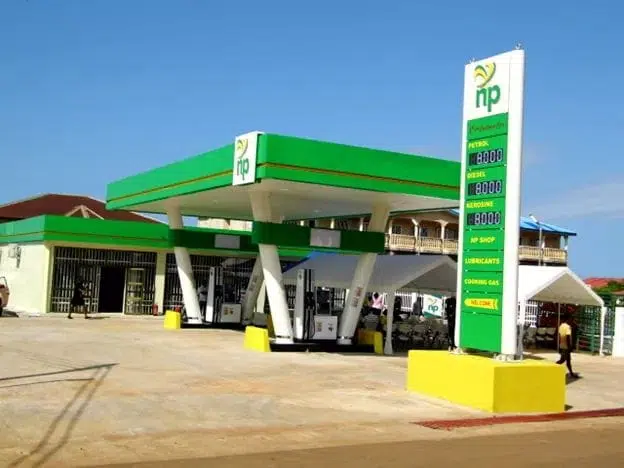
NP Sierra Leone Demonstrates its Posture as True Partner in Development

National Petroleum (NP) SL Limited

By Amin Kef Sesay

The National Petroleum Sierra Leone Limited, NP (SL-Ltd), keeps demonstrating in practical terms that it is a true partner in fostering the socio-economic development of Sierra Leone, thereby complementing the development interventions by Government to improve the well-being of citizens in this country.

This result-oriented and highly indigenous petroleum entity has proven, on several occasions that it is committed to give back to society despite the varying challenges it has been weathering over the years.

Its enviable contributions to ensure Sierra Leone regains its past glory again came to the limelight on the 26th September 2019 when the company commissioned a water facility it solely financed to be constructed at the National Fire Force Kissy Branch with the avowed intention to capacitate the Force to be better equipped to carry out its fire extinguishing operations within Greater Freetown.

This latest move on the part of the company was heartily lauded as a very goodwill gesture as the water facility encompasses 4 water storage tanks with a capacity of 10,000 litres each making it possible for a minimum of 4 fire engines to be on standby with 40,000 litres of water at any given point in time for prompt response to fire emergencies. The facility also has an electronic pumping machine and a brand new 9KVA generator for the supply of power to it.

As a matter of fact it was not the first time that NP-SL has come to the aid of the National Fire Force as it did the same, commissioning of a water facility handed to the Force on the 15th November 2019 at Tower Hill.

Understandably many heaped praises on NP-SL, including the Chief Fire Officer and his Deputy, Naizer Alie Ahmed Kamanda Bongay and Taluva respectively, as well as the Ministry of Internal Affairs which oversees the National Fire Force, for what they described as a timely gesture and service to the people of this country.

Indeed, there is currently a shining peacock feather on the cap of NP-SL for its drive to continue to be a partner in development ,one that it deserves for its strict adherence in effectively implementing the Local Content Policy as evident in the shareholders maintaining the company as a true indigenous entity not only in having Sierra Leoneans as owners but ensuring that its gives primary preference to have in its employ a maximum number of our nationals as against foreigners as long as they possess the requite academic qualifications and technical skills. What this really means, in real terms, is the company’s contributions to job creation and poverty alleviation.

Presently, many families are directly and indirectly at vantage positions to take care of basic responsibilities out of the remuneration they derive from what they earn from services rendered.

In this 21st century, human existence would have been seriously skewed or affected if man could not have had access to petroleum products and in this regard we are referring to petrol, diesel, kerosene, gas, lubricants among others.

We need them to power our vehicles, generators, machines, to power thermal plants and for domestic uses. For an indomitable company like NP-SL to always ensure, by putting sound modalities in place, that there are qualitative products on the market is indeed no mean feat. To import quantities of fuel that will be stored to last over a period of time indeed requires incisive management decisions and prudent financial discipline.

NP-SL has been on top of situation always making sure that shortage of these products must be averted. When cognizance is taken of the fact that fuel is a political commodity that can make and break any Government, depending on whether it is available at affordable prices or not then it falls into bracket.

The role of NP-SL in preventing political unrest cannot be overemphasized and commendably it has maintained a politically neutralist and non-aligned stance to such an extent that it could only be unreasonable for anyone to fathom that it has in anytime engaged in subversive activities in that direction.

In terms of treatment of its esteemed customers throughout the length and breadth of the country, then, NP-SL is unmatched. The name NP is synonymous with “1st for Customer Care”. To the Shareholders, Board of Directors and Management all their customers, big or small, are very important and they should be treated with the due respect they deserve.

They are very mindful that the very survival of the company hinges on good rapport with their customers which therefore behooves that the latter’s concerns, inputs; requests and complaints are seriously taken into consideration to make informed decisions which always culminate into a win-win situation and optimal satisfaction on both sides. This is a plus to the company for optimizing prime relationship with customers.

NP Smart Card and NP Gas products are the latest making the rounds and they are taking the nation by storm. Catching up with innovation the company is making use of modern technology by availing its customers a convenient means of purchasing petroleum products without any physical cash transaction.

By merely having an NP Smart Card, containing varying amounts of money, a particular customer can easily access the quantity of fuel he or she wants at various Filling Stations. It has been proven that for convenience and security sake it is a very modern way of transacting business preventing intermittent withdrawals of money from bank accounts for fuel purchasing purposes. NP Smart Card is now trending and highly appreciated by many.

When we talk of utilizing a device that is quick, clean and less hazardous for cooking purposes then NP Gas comes into play. They are in different cylinders, available at most of their Filling Stations across the country and going at affordable prices. Hence owners adhere to directives as to how to optimally utilize them they could last for quite a considerable period of time. Above all they are so designed in ways that makes them safe for use.

Without any gainsaying, NP-SL is undoubtedly one of the largest taxpayers to the Government of Sierra Leone. It contributes one of the largest to the Government’s revenue coffer (Consolidated Revenue Fund), monies, which in turn are used for the implementation of varying development programmes.

Without much ado, it can be safely concluded that NP-SL is indeed a true partner in enhancing the socio-economic development of the country.


Sierra Leone Commercial Bank Launches Western Union Service

By Amin Kef Sesay

On Friday 27th September 2019 the Sierra Leone Commercial Bank (SLCB) launched Western Union Money Transfer service at its main headquarters on Siaka Stevens Street in Freetown.

During a snap but well-attended press conference to advertise the launch, Managing Director of Sierra Leone Commercial Bank, Abdulai .F. Turay, pointed out that the primary function of Western Union is to remit monies to families as well as to other business entities here in Sierra Leone from any part of the world.

He added that remittances contribute largely to any country’s Gross Domestic Product (GDP), adding that as a banking institution they are exploring various avenues to provide efficient and timely services to its esteemed customers as well as potential customers.

“We always do things with style and our Public Relations (PR) department will ensure the service is rolled out in a fast manner making it convenient and reliable for all and sundry,” he said and underscored how beneficiaries can collect monies that are transferred to and from the different branches of the Bank, adding that they will ensure more collection or transaction outlets are opened at different locations.

On his part, Dr. Orlean Cole, who is the Project Manager at the Sierra Leone Commercial Bank highlighted that those who patronize with the bank to carry out this service will have no regrets as they will derive optimal satisfaction, saying it will be an easy way to receive cash overseas even if the recipients do not own bank accounts.
Western Union operates one of the world’s largest money transfer networks, with more than 500,000 agent locations around the world. For sending money abroad, or receiving money from outside the country, Western Union provides a variety of options to help individuals and businesses transfer money around the globe and right here in our own country.

The variety of options Western Union offers is unusual in today’s mostly online-based money transfer providers.

“With Western Union, your recipient can collect the cash you send by: Cash pickup – Cash transfers sent online, by phone or in person and these are all available for pickup within minutes at any  agent location worldwide,” the Managing Director said.

Undoubtedly, SLCB is rated as a very dependable banking institution that has various products and promotions that make banking very attractive, simple, profitable  and very convenient which is why its customer base keeps increasing.


3 Key Issues The UN 74th Session Discussed…

=COMMENTARY=

By Amin Kef Sesay

As it comes to an end, the U.N. 74th General Assembly Summit has been a very interesting one indeed. While there was some progress at this year’s UNGA, action on financing, climate change, and universal health coverage still fell short of what’s needed to place the Sustainable Development Goals within reach by 2030.

The week paired multiple urgent priorities with largely incremental action, and the result was a clearer picture of challenges, rather than solutions.

Speeches and more than 300 side events ushered in a groundswell of momentum to speed up responses to tackling climate change, UHC, the SDGs, and development financing. But the energy was not necessarily synonymous with optimism. Government, civil society observers, and multilateral leadership alike had a common refrain throughout the week: We’re falling short on the SDGs.

At the same time, some development leaders expressed hope about new ways of approaching development work, from using digital health tools to mainstreaming climate change. Partnerships that may have seemed unlikely even a few years ago are now becoming the norm. As Greta Thunberg said during her General Assembly address to world leaders, “We’ll be watching you”.

The High-level Dialogue on Financing Development brought about a familiar refrain about the lack of progress and the need to accelerate efforts to mobilize capital — from domestic resources to private investment.

“Financing is the test of our seriousness. Without resources we will simply not deliver for people or planet,” said U.N. Secretary-General António Guterres.

Three important achievements were made at this year’s UN summits:

  1. A high note. A key success was the high-level participation by government officials, with numerous heads of state and ministers weighing in on efforts to finance the SDGs.

“One of the challenges of financing for development and a lot of the work is that it hasn’t remained at the level of heads of state and major decision-makers,” said Eric LeCompte, Executive Director of the financial-reform focused alliance Jubilee USA.

  1. Illicit financial flows, taxes, and debt, oh my. These combination of issues ruled the day. The focus was not so much on new money but on tracking and harnessing the trillions of dollars already in the system that are being illegally transferred across borders, misreported, or simply not paid — depriving governments of key revenues needed to finance critical services and fuel economic growth. Ghana’s President Nana Akufo-Addo called for an improvement in poorly designed contracts and illicit financial flows that have “siphoned billions out of Africa every year”.
  2. Operationalizing the finance agenda. The U.N. and EU are partnering to help countries create integrated national financing frameworks, which aim to help countries lay out financial strategies, set priorities, manage risk and make the most of their financial resources in pursuit of the SDGs.

The “value of INFFs is in bringing together the different elements of the Addis Agenda and the country level,” said Neven Mimica, European Development Commissioner. UNDP Administrator Achim Steiner noted that such frameworks will help move financing away from abstract notions and instead focus on assessing what is preventing money from meeting development needs.


Sierra Leone President Talks on Development Financing in the Least Developed Countries

President Dr Julius Maada Bio

By Alim Jalloh

President Dr Julius Maada Bio on Thursday 26 September 2019 in New York city stated that to ensure sustainable financing and achievement of the Sustainable Development Goals, SDGs, we need to invest more in ensuring a conducive environment in the Least Developed Countries, LDCs.

The interactive dialogue – moving the money to fill the climate action and SDGs financing gap – moderated by Financial Times’ Gillian Tett, featured a small number of institutional investors having an engaging discussion on removing the obstacle to attract private capital with select Heads of States or Government.

The President also stated that to attract the trillions of dollars we need for our transformation, more needs to be done in the regulatory environment, improve macroeconomic fundamentals such as well-managed exchange rates, inflation and public debt so as to provide the right signals for mobilising private capital.

“While we in Sierra Leone are trying to move the money to fill the climate action and SDG imperatives, we are also issuing a clarion call to the global business community on the need for ensuring environmentally friendly and responsible business practices so as to protect our country and the broader planet in which we all live.

“With the right structural reforms and institutions, other investment bottlenecks such as lack of energy, water, ICT and transport infrastructure will become more of an investment opportunity than an impediment to attracting private capital. While we need to overcome credit and finance challenges encountered by these critical enterprises, more important is the need to overcome the digital and physical infrastructural impediments to our economies,” he said.

President Bio, who was one of only two presidents in Africa to take part in the dialogue, said his government had prioritised Information and Communication Technology, ICT, to drive a range of financial and other services in the West African nation. He recalled that very recently, his government launched a Blockchain National Digital Identity System, to enhance financial inclusion, including expanding access to needed capital in rural communities.

“Ladies and Gentlemen, with regard to responding to the falling official development assistance to our countries and other traditional sources of financing, we have recently completed a comprehensive Development Finance Assessment to identify multiple financing options for financing our National Development Plan with a current gap of US$ 1.5 billion for 2019-2023. And we are in the process of preparing a comprehensive Integrated National Financing Framework to pursue the multiple options we have identified,” he said.

He noted that while Official Development Aid remained important to LDCs, especially in curbing illicit financial flows, they were prioritising it towards supporting policies aimed at increasing government capacity to increasing domestic revenue mobilisation and strengthening their economic diversification efforts.

Other participants were Mathew Rycroft, Permanent Secretary at DfID, United Kingdom, Anne Finucane, Vice Chair and CEO of the Bank of America, Akinwumi Adesina, President of the African Development Bank and His Excellency Tharman Shanmugaratnam, Senior Minister of the Republic of Singapore and Chair of the G20 Eminent Persons Group on Global Financial Governance, who gave the keynote address.


As the Poro Secret Society is getting out of hands… Abdul Kargbo lost his life

The corpse of Abdul Kargbo taken for burial

By Karifa Kello Thoronka

The Kargbo family of Makarie Community in the Bombali District, Northern Sierra Leone have reportedly lost their son’s life during an initiation ceremony by the Poro Secret Society in Sierra Leone.

According to the Makarie tradition, every young man above eighteen years of age must compulsorily be a member of the male Poro Secret Society as a way of keeping sacrosanct the customs of the community and as the name implies to adhere to the oath of secrecy of the society.

When one of our reporters got in contact with a close family member of Abdul Kargbo he revealed to this medium that Abdul was forcefully taken into the Poro Bush where he was conscripted  to be initiated. He intimated that it all started when Abdul travelled from Freetown on holiday to the Makarie community and after few days he was severely beaten by a group of Poro members on the pretext that he has reached the ripe age for him to be initiated.

The family member continued to narrate that Abdul Kargbo had a scuffle with a young man who is also a member of the secret society and after few hours of fighting Abdul lost his life during the process of taking him through the final stages of the initiation ceremony.

It was also revealed to Calabash Newspaper that their beloved son, Abdul was buried without the participation of family members which did not went down well with the latter.

It could be recalled that in September, 2016, one Augustine Turay of the same village who is currently on the run  was also forcefully taken into the Poro society bush for the similar initiation ceremony in the same Makarie Community. Augustine Turay, who was a former employee of Africa Minerals Limited, narrowly escaped in the hands of the initiators of the traditional Secret Society and fled away from the completion of  the Poro initiation rites out of fear that he might be lose his life.

Madam Isatu Turay, who identified herself to this medium as the biological mother of the missing Augustine Turay explained her ordeal in the hands of the Poro men since the mysterious disappearance of her son [Augustine Turay].

She disclosed that she has been facing a lot of intimidation and harassment perpetrated by the Poro men. While explaining she burst into tears intimating that  with all her complaints made so far to protect her liberty in the community unfortunately no action was taken by local authorities in that community to remedy her plight.

On that note she decided, together with some of her relatives, to ceremoniously abandon Makarie community out of fear of future attacks, as the members of society are now furiously searching for her to produce her son, Augustine Turay.

Augustine was also accused of having an affair with one of the society member’s marital wife, Kadiatu, who incidentally carry the same name with the mother of Augustine Turay’s daughter.

There was a physical confrontation and in no time about a dozen member of the Poro secret society descended on Augustine Turay, overpowered him and dragged him to a thick forest reported to be the secret shrine of the Poro society where he was subjected to the initial stage of initiation. Augustine reported that the process was inhuman, barbaric, painful and unenduring. By stroke of luck, he managed to escape.

While explaining to the Press a friend of Augustine Turay noted that Augustine traversed dangerous terrain and finally arrived in the East End part of Freetown. Augustine sought refuge with family members at Grassfield. Few weeks later while he was in his hideout at 18 Davies Street in Freetown,  two young men materialized and attempted to grab him and in the process one of the men removed from his pocket a wrapped plastic that he quickly slacken and blown on his face a strange substance which immediately paralyzed him and he lost consciousness.

When he regained consciousness, he was feeling heat and pain all over his body and was rushed to a nearby hospital where he was hospitalized.

A senior member of the Makarie Poro Society, who disclosed to this medium, on condition of anonymity, said the Poro fugitive, Augustine Turay, fled completion of his initiation rites after a teenage boy who was taken through his final rites nearly died that same day in 2016 before completion of the ceremony.

Dilating on the penalty of betrayal, Pa Yamba Kargbo, a seventy-two years old man, who is the adviser to the Paramount Chief disclosed to this medium that those found guilty of such an “offence”(escaping from the Poro bush) are often killed through unconventional means that leave no room for police investigation.

Till press time Abdul’s Family are still in tears while Augustine Turay’ family are on self exile.


China, Africa pushing towards a stronger community with a Shared Future – Ambassador Hu Zhangliang

Chinese Ambassador Hu Zhangliang

By Amin Kef Sesay

In September 2018, His Excellency Chinese President Xi Jinping and 53 Heads of State and Government, Heads of Delegations from African countries and the Chairperson of the African Union Commission (AUC) gathered in China for the Beijing Summit of the Forum on China-Africa Cooperation (FOCAC). The theme of the forum was China and Africa: Toward an Even Stronger Community with a Shared Future through Win-Win Cooperation.

  1. What is an even stronger China-Africa community with a shared future?

An even stronger China-Africa community with a shared future features joint responsibility, win-win cooperation, happiness for all, common cultural prosperity, common security and harmonious co-existence. China and Africa working together will better uphold our common interests, promote common development, boost the strength of developing countries and make the world a more balanced one for everyone to live in. This will set a good example for the building of a community with a shared future for mankind.

  1. Can China and Africa really build an even stronger community with a shared future?

The answer is YES. China and Africa have always been a community with a shared future. In history, China and Africa shared similar sufferings and common struggle against colonialism and hegemonism. The two sides stood together for national liberation and political independence. Currently, both China and Africa are faced with the same tasks of development. The two sides embrace an open world economy and the multilateral trading system, cherish the same vision for a multi-polar world and greater democracy in international relations, and reject protectionism and unilateralism. At present, when the international landscape is undergoing profound changes, strengthening unity and cooperation to cope with the challenges of the times is a political consensus among China and African countries.

  1. How can Africa benefit from an even stronger China-Africa community with a shared future?

For decades, China has been helping Africa by providing aid to the African side in agriculture, health, education, infrastructure and other people’s livelihood-related areas. China has aided or financed the building of over 6,000 km of railways and over 10,000 km of roads, built more than 200 schools and nearly 100 hospitals, and trained more than 160,000 professional workers for Africa. China’s medical teams in African countries have treated 300 million patients. China has sent over 27,000 peace keepers under the UN framework to Africa for maintaining peace, stability and security.

These and many other kinds of cooperation based on equality and mutual benefit corresponds to Africa’s economic and social development needs. African countries also provided valuable support to China in trying times such as 2008 Wen Chuan earthquake etc.

As for Sierra Leone, over the 48 years since China and Sierra Leone established diplomatic relations, China has dispatched 21 batches of medical teams to Sierra Leone, offering treatment to over 800,000 patients, performing more than 200,000 operations. During Sierra Leone’s difficult time of civil war, China stood with Sierra Leone on the side of peace and justice. During the Ebola epidemic, China was the first country to dispatch medical staff and chartered flights along with materials, food and cash aid. The 426 Chinese medical staff dispatched at that time treated 884 Ebola cases and trained 6,000 local health workers.

The Youyi Building, the Siaka Stevens Stadium in Freetown, the Bo Stadium, the 3 hydropower stations in the provinces, the Youyi road, the Second Juba Bridge and the 3.2 km Ring Road in Freetown etc. were built or are under construction with Chinese government assistance. Up to now, over 800 Sierra Leonean students have benefited from Chinese government scholarships and over 4,600 Sierra Leoneans have benefited from various kinds of training programs in China. About 6900 tons of rice aid is in the process of being implemented.

Several other important projects such as Sierra Leone Foreign Service Academy, Wilberforce Barracks refurbishing, Optical Fiber Backbone Network PhaseⅡ and so on are in the pipeline. Sierra Leone has reciprocated China by lending a helpful hand whenever there is a call in the political and diplomatic field. All these exemplify that an even stronger China-Africa community with a shared future is of real contents and fruitful results.

  1. How will China and Africa build an even stronger community with a shared future?

While engaging with Africa, China will continue to follow the principle of sincerity, real results, amity and good faith as well as the principle of pursuing the greater good and shared interests, as requested by H.E. President Xi Jinping. China will work closely with African countries to implement the eight major initiatives as declared by H.E. President XI Jinping, which include industrial promotion, infrastructure connectivity, trade facilitation, green development, capacity building, health care, people-to-people exchange, and peace and security.

At the FOCAC Beijing Summit, President Xi announced that China will adhere to a “four-uphold” and “five-nos” approach in conducting cooperation with Africa. The “four-uphold” is (1) uphold sincerity, friendship and equality; (2) uphold common interests while putting friendship first; (3) uphold a people-oriented approach in pursuing practical cooperation with efficiency;(4) uphold openness and inclusiveness.

And the “five-nos” are: (1) no interference in African countries’ pursuit of development path that fits their national conditions; (2) no interference in African countries’ internal affairs; (3) no imposition of China’s will on African countries; (4) no attachment of political strings to assistance to Africa; (5) no seeking of selfish political gains in investment and financing cooperation with Africa.

China will continue to honour her words with concrete efforts. I believe that our African brothers and sisters will do the same. On the road to common development and prosperity, China and Africa will always march forward hand in hand through thick and thin.


IPAM Sierra Leone Vice Chancellor Lectures Makeni Residents

By Alhaji Dauda

The Deputy Vice-Chancellor and Head of Campus at the Institute of Public Administration and Management (IPAM), University of Sierra Leone, Professor Samuel E. B. Nonie, has intimated a cross section of residents in Makeni about the progress the institution has made so far and the packages they have in store for them in order to make education more accessible and by extension develop their business administration skills.

He said prior to this time, IPAM had presence in different locations in Freetown including the Prince of Wales, St. Edwards Secondary Schools as well as some other institutions in the capital city furthering how today they are based in just one location at the new IPAM building.

He touched on the rapid transformation that is currently ongoing citing the recent establishment of a well-equipped medical centre that is manned by one medical Doctor and five nurses. He said before this new development they were challenged with addressing minor ailments afflicting students but reiterated that such is now a thing of the past.

The Professor disclosed that the issue of recurrence of examination malpractices  has been well taken care of at  IPAM further emphasising  that IPAM  is  the first educational public institution in the country to establish, install  a modern and advanced technological system that has close circuit cameras positioned in examination halls in order to curtail the menace of examination malpractices.

The Vice Chancellor praised the result-oriented lecturers and other members of staff also underscoring how they are so dedicated to ensure quality assurance is not only achieved but as well guaranteed in the field of academia.

Professor Nonie further revealed to the people of Makeni that IPAM is well placed to increase the number of programmes geared towards meeting customers’ satisfaction. “We want to produce students that will add value to the development and growth of the country,” he expressed determination.

Professor Nonie also disclosed that the recent mass failure in public exams is a big concern to IPAM noting how the occurrence of a problem in one area or one sector of the country is considered to be a problem for all.

He said they are introducing a new programme for those that passed most of the subjects they sat to at the WASSCE level but failed in Maths and English. “This programme is taking education to the people as we are poised to take education to your door steps which will become a strong pillar in our administration,” he added.

“As parents we need to help our children to have quality education in order for them to meaningfully contribute to the nation and IPAM will continue in that direction,” Professor Nonie asserted, adding how the aforementioned programme will not be just like a syndicate but will instead focus on areas where they have noticed that students encountered difficulties. “We will help to prepare these pupils for the WASSCE exams,” he stated.

The programme, according to him, will focus on those that have attempted the WASSCE and not those that have not yet attempted the exam. “We will treat this programme just as how we treat other major programmes and we will bring teachers from Freetown to help experienced and dedicated lecturers,” he assured.

He continued by stating: “We want to have our own actual building in Makeni and for now we have gone a long way with the architectural planning and the development of our own IPAM structure. We are calling on all stakeholders for their collective support,” the Professor appealed.

The Section Chief of Masorie Town, Pa Alimamy Osman Ntham, thanked the Vice Chancellor for thinking and working towards the development of such a model in the Northern region. “We will always be grateful to IPAM,” he expressed gratitude.

A senior resident, Abdul Rahman Sesay, maintained that this new stride is the biggest intervention IPAM has ventured into with a view to assist parents in the educational development of their children at a time when they are very displeased with the recent public-school examination results.

Director of Strategic Planning and Quality Assurance, University of Sierra Leone, Mr. David Gbao, revealed  that it is not only in Sierra Leone but in Africa as a whole where most times quality services and products provide customer satisfaction which is why their office  is there to support what the Professor is doing to ensure quality assurance with regards high value academic content which he said the University is  delivering.

Margret Sheriff Bangura, Coordinator for IPAM in Makeni, assured the people of Makeni about their preparedness to deliver quality education during the next academic year.

Abigail Amanda Jusu, Administrative Assistant of Short Courses, on her part revealed that IPAM also caters for the working-class people offering them nice packages of tailored courses in order to empower them gain higher qualifications that will put them at vantage positions for promotions in their workplaces.

The Deputy VC was taken on a conducted tour to see the new facilities of IPAM in Makeni and later left for Kono where he had a similar engagement with key stakeholders.

Sierra Leone NCD Southern Region Concludes Roundtable Talks

By Jonathan Hindolo Kurabu

As part of planned events marking the celebrations of the International Day of Democracy across the country and the world at large, the Southern Regional Office of the National Commission for Democracy, NCD headed by the Regional Commissioner, Madam Mariam Samu has successfully concluded a democracy round table discussion in Bo.

The ceremony had in attendance stakeholders drawn from the Civil Society, Police, Kekeh Riders to name but a few.

Making a statement, the Southern Regional Commissioner, National Commission for Democracy, Madam Mariam Samu said the International Day for Democracy is a day set aside by the United Nations in 2007 to educate the public on the issue of democracy, to mobilize political will and resources to address the problems of democracy and to celebrate and reinforce achievements of humanity in this regard.

She disclosed that over the years, most states in the world are not paying attention to the state of Democracy, adding that the day serves as a wakeup call to nation States to critically look at their democracies in order to evaluate their successes and challenges.

Madam Mariam Samu averred that the democracy in Sierra Leone is still on its way to developing stressing that as a nation, they have fallen out of democracy for a long time tracing back the heydays of the one party system which overshadowed the tenets of democratic values.

In a national address, the Chairman, National Commission for Democracy, Dr. Abubakar H. Kargbo said the theme for this year’s day is participation adding that it affords them the opportunity to underscore that democracy is about people and that it is built on inclusion, equal treatment and participation and constitutes a fundamental building block for peace, sustainable development and Human Rights.

Dr. Abubakar H. Kargbo further said that civic space is shrinking worldwide at an alarming rate, civil society activists are finding it increasingly difficult to operate, Human Right Defenders and parliamentarians are under attack, women remain vastly underrepresented, journalists face interference and in some cases violence, hence the International Day for Democracy is an opportunity to urge all governments to respect their citizens’ rights to achieve substantive and meaningful participation in democracy.

Participants present had a lively interaction with the lead facilitator, Sheku Kamara alias BOGUS, a senior lecturer of the Political Science Department in Njala University who carefully narrated the present state of our democracy tracing the era of colonial rule to date.

In accordance with the Universal declaration of Human Rights, Article 21(3) the will of the people shall be the basis of authority of government.


Pres. Bio Pioneers Bigger Crop Yields in Sierra Leone

By Jonathan Hindolo Kurabu

Following the successful outcome of the DNA sequencing training on Njala Campus organized by the Ministry of Agriculture, Forestry and Food Security in partnership with the Sierra Leone Agricultural Research Institute, SLARi, Njala University among others to name but a few, organizers of the said training have lauded the President of the Republic of Sierra Leone, His Excellency Retired Brigadier Julius Maada Bio for his pioneering efforts in championing the issue of crop protection in the country.

One of the Organizers, who also doubles as a staff of the Sierra Leone Agricultural Research Institute, SLARi, Dr. Alusine Edward Samura underscored that the DNA Sequencing training is an initiative that was pioneered by President whom he said has manifested keen interest in crop protection, describing it as a novelty.

He said the initiative emanated from the fact that yields of crops especially cassava are declining and weeds, pest and diseases amount for about 50% of that loss. In order to raise the yield, he went on, there is need to raise the yield gap or to cover that huge gap, to mitigate on the pest, diseases or pathogens causing this problem stressing that there is need to also identify the correct causative agent that is disturbing their plants by getting the true type causative agent.

Dr. Samura affirmed that the DNA sequencing training is crucial for identification and diagnostic purposes which he said will help them to know the genome present in the ecosystem.

Being a researcher with over two decades experience, he buttressed that the DNA sequencer is the most précised level of diagnostic in the world and the precision he went on is quite high in terms of accuracy.

Head of Crop Protection, Ministry of Agriculture, Forestry, and Food Security, Raymonda Johnson said the technology is a portable tool which can be used for other purposes among which are; to detect the semen of alleged rapists, also knowing the biological parents of children, to know the DNA of animals in terms of cross breeding and can also be used for forensic purposes in criminal matters.

Vice Chancellor and Principal, Njala University, Professor Abdullah Mansaray said the technology will to colossal extent leverage and boost crop yields in the country and pledged his unflinching support towards the initiative.

Head of the International delegation from Oxford Nanopore Technologies from UK, Iain Macharen-Lee said the MinION MK1c is designed to enable rapid DNA sequencing in any environment with simple hardware and 4G connectivity.

Director General, Sierra Leone Research Institute, (SLARi), Dr. Mathew L.S. Gboku averred that the technology presents ground breaking opportunities for research with precision and accuracy.

Accordingly the MinION MKC1 has developed a method for passing DNA through a pore which protracts an electrical current and it can be interpreted as electrons of genetic code which can fetch the required answer in minutes. If it needs a lot of data, one that requires complex analysis, the system can be left running for couple of days. For forensic purposes, it requires a picture sample which can be simply prepared by isolating DNA from the sample, prepared and put on the DNA sequencer which can get the results within few minutes. Traditional DNA Sequencers cost hundreds of thousands of dollars in order to get it started.


NaCSA Sierra Leone Trains 34 Entrepreneurs

By John Fornah

In a bid to reduce youth unemployment in the country, the National Commission for Social Action (NaCSA) with support from GIZ under the Employment Promotional Programme (EPP III) organized a two-day capacity development training for thirty-four (34) beneficiaries of the Facility for Innovation (F4I) project from Kailahun, Kenema and Kono districts.

The primary goal of this project is to reduce the high rate of youth unemployment in the country. The programme is also designed to support employment opportunities for young people with innovative business ideas, with the view of improving on their skills, capabilities and businesses.

Beneficiaries from Kailahun and Kenema were trained in the Kenema District Council Hall in Kenema District whilst beneficiaries from Kono were trained in the Kono District Council Hall in Kono District.

Delivering the keynote address in the Kenema District Council Hall in Kenema District on Saturday, 21st September 2019 the chairperson described the participants as ‘unique’ and emphasised that they were selected based on their special and proven skills in their respective fields. He implored them to recognize their uniqueness and channel their energies towards establishing big businesses in the country.

Mr. Rashid Bah Senior Director of Programmes NaCSA, maintained that NaCSA and GIZ will continue to support them with a view that they would become outstanding suppliers in the future.

Also, delivering the keynote address in the Kono District Council Hall in Kono District, Dr. Susan Roberts, the Senior Director Quality Assurance and Programme Development NaCSA Dr. Susan Robert congratulated the beneficiaries for being selected among thousands.

She implored them to strive towards becoming employers rather than employees. She underscored that this project is in line with the President’s vision of improving on the Human Development Index in the country. She advised them to be diligent in their respective businesses and be very sensitive to the changing business environment.

In his address to the beneficiaries, the NaCSA Programme Manager for the GIZ funded Employment Promotional Programme (EPP III), Mr. Leonard Moseray registered his delight over the competence of the young people selected for the program. He admonished the beneficiaries to maintain the passion they have as a start-up capital for the beneficiaries have been provided by GIZ but managed by NaCSA.

The package he said includes procurement of the needed equipment and raw materials to actualise their dreams, as the objective of the project is to improve on the private sector youth employment with innovative ideas. He encouraged them to treat this opportunity with the utmost seriousness it deserves.

The program was climaxed with the presentation of the training manual on “Basic Business Management’.