Of great concern to the public with respect to the delivery of health care services to patients, is the state of the X-Ray machine at the country’s Teaching hospital, Connaught, in central Freetown. Patients who have been referred to the unit for X-Ray have been disappointed to learn that the machine is not in working order and should therefore go to private hospitals that have functional machines to do their x-rays and bring the results to the doctors for further examination and diagnosis.
During a visit to the hospital this week, this medium observed that a good number of patients were awaiting the technicians to do their x-rays. One patient said that after wasting time going from place to place as they were being referred by nurses, they were finally told that the machine was faulty and has been out of order for quite some while now. He further disclosed that they were told to go to a private clinic (any) to do the x-ray and bring the results for analysis and diagnosis.
At a private clinic along Bathurst Street in central Freetown, this medium again discovered that many patients do not have the money to pay for the x-ray. Lamentably, one woman who had come for x-ray at that clinic was told that the stipulated fee for the x-ray is Le150, 000. Not having that amount the woman pleaded with the officials there to accept what she had on her and for the sake of humanity, help her. This they stoutly refused to do and the poor woman walked away frustrated and dejected. Among the patients who were at the hospitals waiting for x-ray, concerns were being raised that a poor man waiting to be x-rayed will only die if he depends on the Connaught x-ray service. One concerned citizen, adding his voice to the discussion, wondered how many patients may have died for want of x-ray.
In another development, this medium learnt that the CD 4 Count Cartridge used in the laboratory to determine the quality of the blood cells in HIV patients is not available in the laboratory. According to medical technicians, this cartridge is used in the CD 4 Count machine to examine the quality and quantity of the red and white blood cell of the blood taken from the patient. This implies then that people, believed to have contracted diseases, are being treated on medication that may need to be changed to suit the quantity and quality of the Red and White blood cells in their blood. During our investigations, it was learnt that this situation has been in existence for quite some time now and no action has been taken to address it.
Dysfunctional X-Ray Machine Hinders Service Delivery

Effective Overhauling makes SLBL more Vibrant

The Sierra Leone Brewery Limited (SLBL) has successfully completed the overhauling process that it embarked on late last year in a venture that was geared towards bringing it to a state of the art status. The company’s machines were effectively overhauled and effective maintenance was done to its bottling plant.
SLBL employed the services of Krones, a German firm that specializes in the supply and modernization of plants, together with a large team of SLBL’s locally trained Sierra Leonean engineers, to undertake the process which has now been completed..
In a snap interview with Daaf van Tilburg, Managing Director of Sierra Leone Brewery Limited, he maintained,, “Maintenance and high standards are an important part of our company’s culture. The objective was to renew the packaging equipment based upon international best practice and manufacturing excellence principles. With this, the upgraded bottling line is now more efficient and capable of producing more of our products with the same high international standards in the upcoming years which our revered consumers will continue to be proud of.”
It will interest readers to note that prior to the overhauling and maintenance work SLBL has been on a large scale investment programmme which started since 2015 in order to expand capacity, maintain high quality and ensure environmental safety which saw the investments in brand new massive Fermentation Storage Tanks (FST), waste water treatment plant, mash filter equipment, CO2 and Cooling plants and the most recent canning line introduction which is the first in Sierra Leone.
According to Albert Ojo Collier the Corporate Relations Manager of the company, the brand new canning packaging line that was recently commissioned is in perfect working order and stocks from the canning line will fill any shortage that may arise. .
He further intimated that the overhaul has made it possible for their bottling plant to have the refreshed capacity and efficiency to produce high quality products for the upcoming years.
He assured that they will continue to distribute all of their award-winning quality products to satisfy current and future consumers’ demand in the country and contribute to Government’s efforts to support and boost local investments and manufacturing.
The Sierra Leone Brewery Limited is one of the oldest companies that have been operating in this country and it is still vibrant. Sierra Leone Brewery Limited planted its roots in the field of manufacturing alcoholic and non-alcoholic beverages to consumers over 57 years ago. The company has continuously expanded its product range through innovation to meet customer satisfaction at all levels. Their Mission is to establish not just a contractual relationship with stakeholders but to build relationships which are lasting and rewarding to the country and to contribute to the growth of the Gross Domestic Product GDP.
All their products are certified and following all the regulations as per approved local and international standards. SLBL manufactures Star Beer, Mutzig Premium Beer, Guinness Foreign Extra Stout, Salone beer, Trenk Energy Drink and Maltina Non-Alcoholic. They also market Heineken Beer, Strong Bow Cider, Fayrouz malt none alcoholic drink, Royal Club range of soft drinks and Climax Energy Drink.
Housemates Salone Captivate the Public
The House is everyday becoming lively and very interesting as the 22 Housemates are doing their utmost best to captivate the attention of the general populace who have the opportunity, via voting using the Africell Number 5500 to determine the ultimate winner of this premier competition organized by the African Young Voices (AYV) and Africell.
Sounding the views of majority of the citizenry as to what they make of the TV Reality show which is aired live on the AYV Television Channel 34, most of them agreed that they are really enjoying the competition, furthering that it is somehow exposing the country and bringing to the fore, natural talents of young people providing an empowerment platform.
What are sought are displaying strong language, nudity and humour in a convincing manner which will put the contestants at a vantage position to win the affection of viewers. So far this 1st Season of the 2019 Housemates Salone TV Reality Show is becoming very much interesting and enjoyable as the Housemates continue to interact. However, the manner in which these Housemates control their emotions under stressful conditions will be closely watched and assessed by a competent panel of Judges.
From what was learnt from the organizers 10 contestants will be up for eviction on the Prime Eviction Show this coming Sunday – Live on AYV TV at 8 PM.
From the way the 22 Housemates are conducting themselves in the House they are very mindful of what is up for grabs which is Le100, 000,000.
As the days are going by all of them are frantically doing their best to ensure that at the climax of the competition one of them will emerge the successful winner.
Due to the fact that the competition is mainly eliminative in nature, the participation of the public by voting for the Housemates of their choice, based on their convictions that they are the fittest, is of paramount importance. It is therefore incumbent to vote through the Africell Toll Number 5500.
Those people whom this medium contacted praised AYV and Africell for coming up with this fine initiative saying that it must be polished and brought to high international standards.
“I am really in love with the Housemates 2019 Reality TV contest and truly enjoying every bit of it. I want the organizers to make it an annual event,” Fatu Dumbuya, a Fourah Bay College year 2 student suggested.
John Koroma opined that the contest, aired live on AYV TV which has gone international will help to rebrand Sierra Leone as well as contribute in dispelling negative notions held about the country.
“Fake’ cough syrup not in Salone market”

Sierra Leone says it is investigating the possible presence of a fake brand of the cough syrup Menthodex in its market. This move was prompted by information circulating on social media about a sample of the syrup with a wrong production date of April 2019. Those who circulated it on social media claimed it’s in the Sierra Leonean market.
But the Pharmacy Board of Sierra Leone said that initial investigation so far indicated no such medicine is present in the market. James Kommeh, Acting Registrar at the Pharmacy Board of Sierra Leone,
which regulates pharmaceutical products in the country, said on Wednesday that the particular medicine circulated on social media was made for Nigeria and not Sierra Leone. He added that investigation was ongoing to verify further.
“We have alerted our inspectors at the provinces, those at the border posts and even in Freetown,” Mr Kommeh told the privately run broadcaster, Radio Democracy. “Anyone who has information about the presence of this medicine in Sierra Leone should inform the Board for appropriate action,” he added.
Menthodex is manufactured by Bells Sons & Co (Druggist) Limited in the United Kingdom. In Sierra Leone, a registered Indian company called Balani and Sons is the sole importing agent of the product.
The UK-based producer for the medicine, Mr Kommeh said, has admitted making a mistake in that particular batch.
The issue has raised concern elsewhere in West Africa. The Food and Drugs Authority (FDA) in Ghana is reported to have initiated an investigation into the issue, even though it said initial
investigation showed the wrong dated medicine is not in its market.
21 days of national prayer and fasting ends today
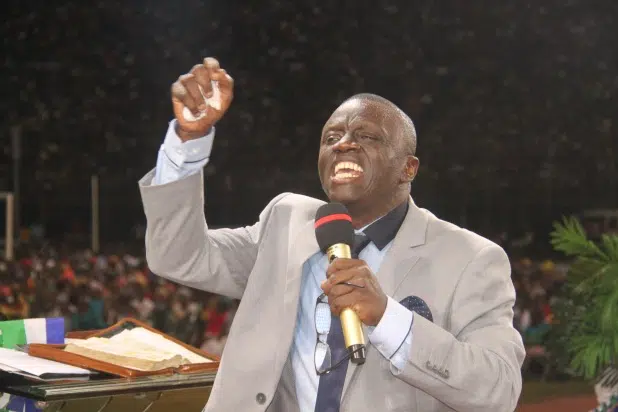
Twenty-one prophetic trumpet blasts at the Siaka Stevens stadium, on Syke Street, Brookfields, Freetown, will mark the end of the twenty-one days of national prayer and fasting, tonight, Friday, February 22nd 2019. This exercise was organised by the Body of Christ-SL, comprising over one-hundred and fifty churches from various denominations, in collaboration with the Revival Labour Prayer Group.
The essence of the prayer and fasting is to seek God for the ‘restoration of the nation’s glory, economic recovery, good governance and sustenance of the hard-earned peace, through repentance and pulling down of strongholds believed to be seated on the nation’s destiny’.
Being a national event over the years, the twenty one days of effective prayer and fasting yearly, commenced on February 1st and ends today, February 21st. Throughout the twenty one days, prayers were held three times daily on Redeemer Radio Network (RRN); in individual homes, and various churches across the country; ministered by the General Overseer of Faith Healing Bible Church-worldwide, Pastor Francis A.M Mambu-the architect behind the annual national event.
This year’s prayer and fasting brought together tens of thousands of citizens and noncitizens at the Siaka Stevens stadium, as part of the Worship Night, which starts at 8pm on Friday to dawn, an event that envelopes each year’s session; coinciding with a political turmoil that is coupled with three commissions of inquiries set up by the Sierra Leone People’s Party-led government, to investigate allegations of corruption on members of the former ruling All Peoples Congress Party, who have threatened to boycott the inquiries, describing them as kangaroo courts, for what the opposition party refers to as “inconsistent rules of evidence”.
Pastor Francis A.M Mambu says the Lord has ministered to him that strange minerals will soon be discovered in some parts of the country known for poverty, “and I am pretty sure that Sierra Leone will soon regain its glory, as many people would be coming to admire how we came about doing it as a nation”, he prophesied.
Ernest Bai Koroma has no business with NP
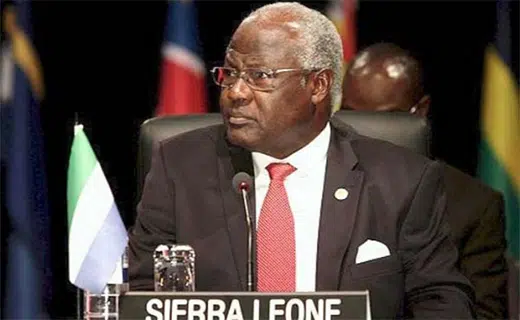
Contrary to insinuations and postings on Social Media that the former President, Ernest Bai Koroma has shares in the National Petroleum Company (NP), an investigation conducted by this writer renders all the allegations false and far from the truth. It was discovered that the former President does not have and never had any stake in the company.
In a bid to get to the truth of the matter, this writer engaged various stakeholders, staff and retired staff of the National Petroleum Company, who were privy to the negotiations prior to the privatization of the company in 1996. It was disclosed that prior to the privatization of the company, the petroleum companies were importing crude oil, which was being processed at the refinery and sold to consumers. This in effect meant that they had to source funds (Foreign Exchange) to import crude oil. However as the rate of the dollar rose and its apparent unavailability, queues were being seen at various petrol stations across the country as the companies lacked the necessary foreign exchange to import the oil.
It was also disclosed that during that period (from the 80s to the 90s) the companies stopped importing crude oil into Sierra Leone. They then folded up selling their shares to others who showed interest in the business. Shell was bought over by Safecon, Mobil bought over by Exxon and later Total, whilst British Petroleum sold its shares to the Government and other shareholders. 60% of British Petroleum shares was sold to the Government, whilst 40% was sold to the late Jamil Sahid Mohamed and Tony Yazbeck; the owners of Precious Minerals Marketing Company (PMMC).
The World Bank got interested in Sierra Leone and looked into the petroleum product and advised for the setting up of a Petroleum Unit. It also advised the Government to privatize the company.
Staff wrote to the Ministry of Trade on their position on privatization. Their request was rejected and they were told to form a company. In a meeting held with PERDIC (the body empowered to deal with privatization and now called NCP) headed by Alfred Kandeh, members of staff of the company were briefed on the process of privatization and the opportunity they have to become shareholders of the new company. Workers were told they could use their severance packages (End of Service Benefits) from BP and buy the 55% of the shares of the Government and the balance 5% will be given to all workers working at the time. 35 of the 150 workers then opted to use their severance package to buy the 55% whilst the rest enjoyed the remaining 5%. The Leone Oil company was then born.
Leone Oil and other interested multi-national companies then placed their bids for the importation of refined fuel. In keeping with the local content policy guaranteed in the constitution, the local company, Leone Oil, won the bid, which was supervised by Arthur De Little, a management consulting firm appointed by the World Bank.
According to investigations, 4 companies bidded for the contract and prominent among them were Elf and Leone Oil. Having won the contract, the company was struggling to get foreign exchange to import refined fuel. They then contacted Addax an international supplier, which had the resources and the exposure in respect of forming a joint venture, which was called Petro-Leone. This became a storage company in which Leone Oil had unfettered access, whether foreign exchange is available or not. This arrangement saw the disappearance of queues on the country’s streets.
According to information got during investigation, Addax had an exposure of $60 million, the sort of exposure which no international company will accept (without any advance payment), or any bank in the country can do. It was further revealed that the jetty built in the 1970s and used by tankers supplying crude oil had been neglected after the refinery began to face challenges. In its dilapidated state it could only handle ten thousand metric ton tankers. Because of the bad state of the jetty many ship owners were reluctant to send their ships to off-load refined fuel and this difficulty was addressed in a negotiation with Petro Jetty (a 100% Addax owned company) and the government (Trade Ministry and State House) to build a state-of-the-art jetty that will accommodate 30 thousand metric ton tankers with the understanding that after recovering its investment, it will hand over the jetty to the Government. This agreement was ratified by Parliament and is with the Ministry of Finance.
All stakeholders and workers who bought the shares from the Government confirmed that the former President Ernest Bai Koroma never had a share in NP and that it is an indigenously owned company which is comprised of former workers of BP, who had used their end of service benefits to buy the shares sold to the Government by BP when the World Bank advised the Government to privatize the company.
Postulations that NP has a monopoly over the petroleum market are misleading as there are 4 Marketing Companies registered with the Petroleum Agency, marketing petroleum products in the country namely: NP SL LTD., Total SL LTD., Leonco SL LTD. Petro-Leone is a storage company developed by both Addax and Leone Oil so that petroleum products will always be available in the country and avert shortage. Experts further stated that if such a venture is frustrated the country will return to the former state of shortage of fuel and long queues will once more surface across the country.
Revealed… Lebanese Ambassador Abuses Diplomatic Status, Breaches SL Labour, Human Rights Laws
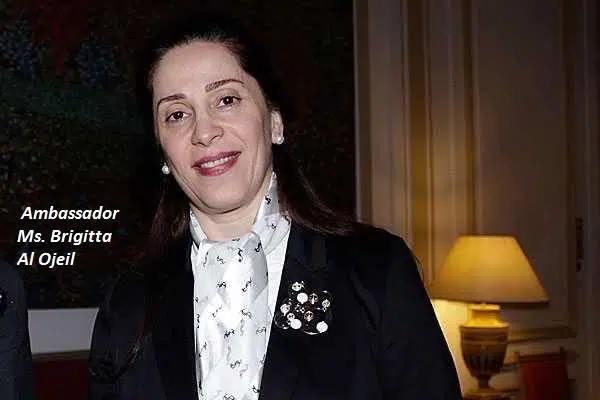

The Lebanese Ambassador to Sierra Leone, Ambassador Brigitta Al Ojeil has been accused of flagrantly violating the labour and human rights laws of Sierra Leone. She is also being accused of abusing her diplomatic status, albeit she is a foreign diplomat representing the Government and People of Lebanon in Sierra Leone.
Long before her assignment to Sierra Leone, the Embassy had retained the services of Sierra Leonean workers to serve in various domestic capacities. The workers include Lansana Sesay and Anthony Kamara. They have both served the Embassy for over twenty years in different capacities.
The Calabash is reliably informed that these workers, Anthony Kamara and Lansana Sesay, have loyally served the Embassy all this while without any issues. They have received their salaries and other emoluments due them in the past on time. But this has changed when the current Ambassador assumed office.
“She would only pay us on the first week of the other month. Then on the 31st January, 2019 we were expecting to get our salaries for the month of January but we were not paid. We waited patiently until the 7th of February when we approached the Ambassador to ask for our January salary,” the workers disclosed.
They disclosed that the Ambassador took offence to this and responded very rudely, using invectives on them, to the extent that she used threatening remarks on their persons.
“She later ordered an OSD Personnel deployed at the Embassy to get us out of the Embassy,” they furthered.
It was reported that, after having failed to get the OSD’s cooperation to chase the workers, the Ambassador called on the Local Unit Commander of the Lumley Police Division, who came at once with a truck load of police officers and arrested the two workers on allegations of threatening to kill the Ambassador.
This, according to the workers, was never substantiated to the Police by any of the workers at the Embassy, as they were around when the incidence took place.
These poor Sierra Leonean workers, who were only asking for their one month salary and other benefits due them, were unlawfully detained by their own local Police Force for 24 hours at the Lumley Police station.
They were later transferred to the Criminal Investigations Department, where they also spent another twenty four hours and later released on bail upon representation by their solicitor, Mrs. Basita Michael.
Sources at the CID have told this medium that the Ambassador has failed to produce witnesses to corroborate her false claim against the workers; and she also vehemently refused to sign her own statement to the Police.
The workers are now on bail after being unlawfully detained for 48 hours. In fact, they are still to receive their entitlements from the Lebanese Ambassador.
The failure of the Lebanese Ambassador to honor the Embassy’s contractual commitment to the two Sierra Leonean workers constitutes a breach of the labour laws of Sierra Leone. This is even more grave and serious when it is being perpetrated by a foreign Embassy in Sierra Leone.
Does someone have to tell the Sierra Leone Police that it was their duty to protect the poor Sierra Leonean workers, who have a genuine case of not being paid for their services by the Embassy of Lebanon? This could not have precluded them from stopping the investigation into the allegation of threatening to kill the Lebanese Ambassador to Sierra Leone.
This medium will keep an eye on the matter at the Criminal Investigations Department. However, at the same time, we can have a swift action from the relevant authorities to ensure that these Sierra Leonean workers are promptly paid what is due them in their country of birth.
We are privy to a letter dated 14th February in which solicitors for the workers, Michael and Michael, have written to the Director General, Ministry of Foreign Affairs and International Cooperation, cataloguing a number of human rights abuses and labour breaches already suffered by their clients at the hands of the Lebanese Ambassador. The legal representatives are requesting for what is contractually due their clients for the past two decades.
The solicitors for the Embassy workers have urged the Director General’s office at the Ministry of Foreign Affairs to take appropriate steps to investigate, what they have referred to as, the Ambassador’s abusive conduct and misuse of her diplomatic status. They encouraged the Director General to use his good office to ensure that the Embassy pays all entitlements due the workers.
“We also request that appropriate sanctions are imposed upon the Ambassador for not behaving according to the conduct befitting her office,” the solicitors concluded.
It is our hope that the Foreign Affairs Ministry will quickly nip the issue in the bud and promptly ensure that the workers are paid in full.
Mohamed Jalloh Narrowly Escapes Death


Barely days after the first round of elections on the 7th March 2018, which saw the two main political parties in the country, the All People’s Congress (APC) and the Sierra Leone People’s Party(SLPP) emerging as the two parties with the highest number of votes, yet lacking the threshold of 55% to clinch State Governance, some SLPP supporters went on the rampage on 15th March 2018, armed with knives and sticks attacking and mercilessly beating a well-known APC youth , Mohamed Jalloh, at his residence, rendering him unconscious.
According to family sources, Mohamed Jalloh had on several occasions complained of harassment from supporters of the SLPP whom he met at an entertainment centre. They had earlier threatened to kill him and only made real their threat after the first round of the election. The family members maintained that Mohamed Jalloh was visibly disturbed prior to the attack of 15th March 2018, as he was threatened most of the time along the street.
According to family members, on 14th February at a pub in Waterloo, whilst in the company of some of his friends and supporters of the then ruling party (the APC), Mohamed Jalloh was suddenly confronted by some youths of the SLPP party, who accused him of supporting a party that has ruined the country’s economy. They then identified themselves as SLPP and wore green T-shirts with the party’s logo printed on it. An argument ensued between them and these youths then threatened to deal with him. His colleagues then advised him to leave, which they did. They further explained that since that day, which was barely few weeks to the First round of the election slated for 7th March 2018, things changed for him. They vowed that anytime he steps out of his home, he will encounter this group of youths and they continually threatened to beat him up.
They went on to explain that on the night of 15th March 2018, after the announcement of the First Round elections results, in which both the APC and SLPP parties emerged as favorites for the second round election slated to take place in the next 2 weeks, this group of youths attacked their home. At about 3.00am in the morning, whilst sleeping at home they were all rudely awaken by heavy banging on the front door of the house and the SLPP youths broke open the door and forced their way into the house, wielding sticks, knives and cutlasses. They then pounced on him with sticks and knives and in the struggle that ensued he lost consciousness.
This writer managed to speak to Mohamed Jalloh whilst he was in the hospital. Reeling with pain, he managed to explain that he was attacked by some SLPP Youths who had been threatening him and lost consciousness during the attack. He further explained that when he woke up, he found himself in the hospital and realized that he had sustained several injuries. He then displayed his injuries, which included a knife cut on his elbow, a swollen right foot believed to be hit by a strong object, a swollen shoulder, which he remembered was when he was hit by a big stick by one of his assailants, a broken right arm and bruises all over his body.
Family members contacted later, when news of his escape from death reached this writer, said that after being discharged from the hospital, Mohamed went home and on the 3rd April 2018, the night before the announcement of the results of the second round, the same group of supporters threatened to deal with him after the announcement of the results. They stressed that they will teach him a lesson he will never forget in his life. This threat to his life and memories of the earlier attack, which left him hospitalized, they maintained, was the main reason for his disappearance. They disclosed that Mohamed told them of his decision to leave the house before the youths get there, as they were barely counting the minutes to the announcement. Whilst they were having this discussion, they heard the voices of a crowd of youths approaching their house, raining insult against their family. Upon this development, Mohamed hurriedly left the house through the back door, few minutes before they bulldozed their way into the house. Since he left that night, his whereabouts has not been known and attempts were made by the former assailants to get him in the nearby houses and bush, but to no avail and they swore to track him down. The family members maintained that their properties were vandalized and no action has been taken by the Police to give them justice.
Up to the time of going to Press, the family intimated that no contact has been established between them and Mohamed Jalloh.
Bread Bakers Down tools in Freetown
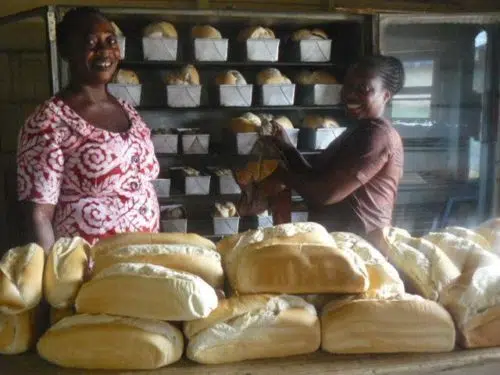
Sierra Leoneans were taken aback, hugely surprised when the realization dawn that bread was not available on the market for sale. Hundreds of thousands of households were without bread across Freetown, as bakeries complain of sudden increase in the cost of flour.
Most Sierra Leoneans spend more of their meagre household income on bread and rice than any other food items, which is why the shortage of bread in the shops affected millions of people.
The crisis, which the Bakers’ Association is reported to have been caused by an unprecedented increase in the price of a bag of flour should have been foreseen by the Ministry of Trade, whose remit also covers the monitoring of consumer prices.
What is the cause of the sudden increase in cost of flour in Sierra Leone, when there has been no sudden hike in global price of wheat? Who are the importers of flour?
Is the Minister of Trade in constant liaison with the various wholesale and retail associations responsible for rice and flour supply to gather weekly if not daily market intelligence to avoid national crisis?
The availability and affordability of rice and bread in Sierra Leone is of national security, and this must be taken very seriously by Government.
It is quite shocking and beggars belief that bakeries should run short of flour so suddenly, without someone in Government not knowing this was going to happen.
If the Ministry responsible is not up to the job of monitoring market trends of basic food items in the country and plan quickly to avert national crisis, then President Bio must urgently establish a Market Intelligence Unit at State House that will carry out this task and report directly to the President or Vice President for any necessary action.
Granted that the Government has only been in power for just under twelve months, but it’s important that rice, bread and butter issues are given the utmost priority, to ensure that an already poverty-stricken population do not continue to suffer unnecessarily.
There is little doubt the NEW Direction is the RIGHT DIRECTION, after ten miserable years of poor governance and mismanagement of the country by the previous Government. But eleven months in power is too short a time for Ministers to begin to take their eyes off the ball. There is no place for slothfulness in governance.
Rice, bread and butter issues are matters of national security. If those charged by the president to help manage the economy are not pulling their weight, then soon there could be call for cabinet reshuffle – real and meaningful cabinet reshuffle to weed out slothful Ministers.
The proposed Market and Economic Intelligence Unit’s sole responsibility must be to monitor, assess and evaluate daily changes in market demand and supply – especially monitor stocks of traders and prices of basic consumer items, and plan quickly to avert national crises.
Let common sense prevail.
Youths Call On SLPP Govt. To Pay Attention
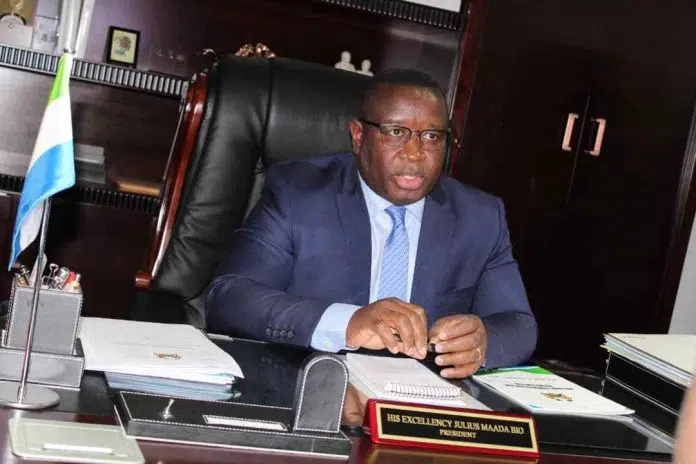
It is getting to one year since the Sierra Leone People’s Party won a momentous Presidential election that brought it to power in April.
At the time, expectations were very high among a population burdened by poverty, unemployment and inflation that the Promised Land of milk and honey would be reached sooner than later.
Whilst the nation generally welcomes the Government’s determination to fight corruption, the majority who continue to live on less than the proverbial two dollars a day have slowly lost hope that the Promised Land would be reached sooner than later.
The greatest headache the poor who make more than 70% of both the urban and rural population face is ever escalating price of basic essential commodities in the market; more especially the cost of food. Can’t the Government see that the same Lebanese and Indian Mafia clan that has held the nation to high prices since the liberalization of the Salone market in the 1970s still continue to hold the poor to ransom by buying cheap from overseas and at high discounts and fixing prices to rob the poor? Lately they have been joined by the Nigerians.
These days, the harsh reality is that many poor families can no longer afford to put a square meal on the table. It is a shame and disgrace to see many urban families in the poor parts of the city living on low calorie “cookery” simply because they cannot afford Le10, 000, Le15, 000 or Le20, 000 to go to market every day.
As such, the expectation of the ordinary man and woman was that the New Direction Government should have placed greater premium on solving the bread and butter crisis sooner than later.
The importers and traders have pinpointed the problem and informed the Ministry of Finance accordingly: that as long as port charges remain high, they cannot help the Government to bring relief to the poor by way of reduced prices.
The reality should not be lost on the Government. Many businesses are folding up simply because there are no buyers – no buyers because the greater part of the population have very little disposable income.
Take for example the price of flour. Bakers complain that the price of a bag of flour has gone up above Le300, 000. This caused bakers to protest by not baking bread.
The fundamental dynamics of the economy has to be revisited; in the sense that if this Government depends too much on taxation ad forgets that it has a fundamental obligation to feed its people cheaply; it has a big problem coming that it will be able to handle.
Another issue facing the poor is that of transportation; especially the cost of transporting goods to and from the provinces. Transport cost affects every other price in the market. Instead of a bridge, maybe the Government should have thought first of a railway that links the capital city with the provinces; with a view specifically to drastically reducing the cost of moving goods and passengers which will definitely have a big impact on the economy and its growth and development.
Another issue that vexes the youths is that every day they are graduating from schools, colleges and universities without the economy expanding significantly to incorporate them into the workforce.
The private sector alone can provide new jobs; yet to say the truth, what are the incentives that are there for inspiring the private sector; in particular the availability of cheap capital that will enable them to invest in the lucrative but untapped sectors of the economy?
Everybody who does business with the existing banks complain that interest rates in this country are too high for anybody to borrow money to go into large scale farming and industrial activities.
The only way the Government can help the private sector to become an active partner in creating new jobs is for the Government to borrow from the international finance markets and set up specialized trade, commerce, agriculture and industrial banks with very low interest rates and long term repayment schedules with reasonable grace periods for the new businesses that will be established to start making profit.
Meanwhile, let the SLPP Government not be fooled: Like former President Koroma’s Government, if it fails to deal adequately with the pressing existential issues that affect the livelihood and wellbeing of the majority that continue to live on less than two dollars a day, the youths will rebel against them in the ballot box, come 2023; regardless of whatever impressive gains the Government makes on all other development fronts the reality remains that a hungry man, woman or child is an angry person – always.
Lonta.