Home Blog Page 408

Hon. Alhaji Musa Tarawally Remains an Influential Political Figure

Hon. Alhaji Musa Tarawally

By Amin Kef (Ranger)

There is no way that the political history of Sierra Leone could be written without mentioning the name of a prominent political figure in the person of Hon. Alhaji Musa Tarawally. Judging from his long dominant roles played in the political transition of the country, it can be safely concluded that he is divinely cut or destined to continue to be a dominant and key political figure within the political landscape of this country.

From his pivotal role in shaping Presidential transitions to his strategic manoeuvring within political parties, Musa Tarawally’s journey through the corridors of power reads like a political thriller, with twists and turns, that have left an indelible mark on the narrative of the country’s politics.

Noteworthy is that his rise to political prominence began during the post-NPRC era, when he emerged as a key figure in the transfer of power to the democratically elected late SLPP President, Tejan Kabbah. His influence only grew from there, as he navigated through various roles within the SLPP hierarchy, including serving in President Kabbah’s Strategic Planning Committee and holding positions such as Moyamba District Young Generation Leader, Parliamentarian and SLPP District Chairman.

One of Alhaji Musa Tarawally’s most notable feats was his instrumental role in securing over 70% of the votes for President Kabbah’s second term elections in 2002. Working alongside a cadre of young and dynamic SLPP members, he proved himself as a master strategist, adept at mobilizing support and rallying the party faithful behind its leaders.

It is noteworthy that his political acumen further became instrumental during the transition from President Kabbah to the next generation of SLPP leadership. Recognizing that the party needed a fresh face to lead it into the future, Hon. Alhaji Musa Tarawally threw his weight behind Brigadier Julius Maada Bio, championing his candidacy and effectively sidelining other contenders, including the late Solomon Berewa.

Despite facing opposition from within his own party, his foresight proved him right when Bio emerged victorious in the subsequent elections. This victory not only solidified Musa Tarawally’s standing within the SLPP but also earned him the respect and admiration of his peers, including former political adversaries.

His influence extended beyond party lines, as evidenced by his appointment as Resident Minister by the erstwhile Ernest Bai Koroma Government in 2007. In this role, he demonstrated his ability to build bridges across political divides, forging alliances with opposition strongholds and addressing the concerns of SLPP supporters, including former Kamajors.

His tenure as Minister of Internal Affairs further cemented his reputation as a pragmatist and problem solver. Implementing initiatives such as providing rice rations to Police Officers he  played a crucial role in stabilizing the security sector and ensuring peaceful elections, which contributed to President Ernest Bai Koroma’s re-election in 2012.

However, his relationship with President Koroma eventually soured over disagreements regarding the 2018 elections and term limits. Despite being removed from his Ministerial position, Musa Tarawally remained undeterred, ultimately leaving the APC and launching his own presidential bid under the ticket of the CDP.

While his presidential aspirations were not realized his influence remained undiminished and threw his support behind President Bio during the runoff elections, playing a pivotal role in securing victory for the SLPP.

As Sierra Leone looks towards its political future, all eyes are now on Hon. Alhaji Musa Tarawally. With his wealth of experience, strategic prowess, and extensive network of allies, he remains a formidable force in Sierra Leonean politics, capable of shaping the country’s destiny and, perhaps, even ascending its highest office.

Finance Act 2024 Aims at Boosting Revenue Mobilization

The 2024 Finance Act is not just a document crafted to raise revenue for Government but intended to protect the health of Sierra Leoneans and seeks to also save the environment from further depletion. It is an Act that seeks to recover the losses that the Government and people of Sierra Leone have incurred over the years from the hands of a few business people, generate enough money for the provision of other services most especially the Feed Salone agenda, and cater for the health and environment of the country.

Some S ections of the 2024 Finance Act were deliberately created to salvage the country from further revenue loss by the Government, which has a broad agenda as encapsulated in the Big 5 game changers. While it may seem to be imposing taxes on commodities that had not been taxed over the years, it is in reality just restoring taxes and duties that were suspended or exempted over the years due to some external factors.

For example, in the Amendment to the Customs Tariff 1978, the Act basically restores the 10% duty on rice that had been in existence before, but was suspended in 2008 during the global crisis of that year. The intention of Government at the time of suspending the duty on rice was to ease the burden of importation by the rice importers with a view to making it available and affordable to the public. Since 2008 to 2023 Government had been losing huge revenue from the duty on rice, and a few rice importers have been benefiting from the magnanimity of Government but they keep increasing the price of rice. So whilst Government is losing revenue with the aim of keeping prices low and affordable, the importers have been hiking prices on the ordinary citizens. With an elaborate Feed Salone project now on the horizon, government has deemed it fit to restore duty on rice to its original 10% but in two phases. A 5% duty restoration has already been effected since January this year and another 5$ will come into effect in January 2025 – making it 10%.

The same scenario is true for cement and iron rod. During the Covid-19 which was almost immediately followed by the Russia-Ukraine crisis, which led to a disruption in the supply chain of these commodities, Government lifted the import duty on them of 10% for cement and 20% for iron rod. The rationale was to minimize the effect of the global supply chain disruption on the local market. Now that there is stability in the supply chain it is imperative that the duties be restored so that Government can generate funds to service other needs like infrastructure.

In the case of cooking gas, whilst the 5% import duty was removed so that it can be available and affordable and people would be encouraged to use clean energy to cook and not to indulge in firewood and charcoal which are hazardous to the environment, it had a reverse impact. The price of cooking gas keeps soaring, even though Government is not deriving revenue from it. Due to the said factor and in order to raise revenue to service afforestation programs, Government has restored the 5% duty on cooking gas.

In it’s entirety, the 2024 Finance Act is a friendly document for Sierra Leone. It is one that Sierra Leoneans should embrace as it seeks to raise much needed revenue for the provision of some services for the people.

“Where is the Alternate Road to the Wellington-Masiaka Road?” – Citizens Demand, Crying Down New Tollgate Rates

By Amin Kef (Ranger)

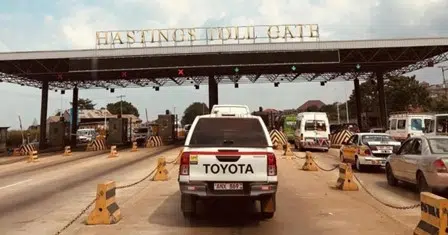
One of the issues that are heatedly discussed and debated in many quarters across the country today is the increase in the Wellington-Masiaka toll gate fees or rates as was recently disclosed by the Minister of Works and Public Assets, Dr. Denis Sandy. According to him, the new rates, as outlined below, will come into effect on March 1st, 2024.

  1. Kekeh: Increased by 200% from Le1 to Le3
    2. Taxi: Increased by 150% from Le2 to Le5
    3. Mini vans and Jeep: Increased by 150% from Le4 to Le10
    4. Light Vans/Poda Poda: Increased by 122% from Le18 to Le40
    5. Heavy Duty Vehicles: Increased by 282.5% from Le183 to Le700
    6. Fuel Tankers: Increased by 150% from Le100 to Le250.

Whatever justification that the Minister of Works and Public Assets had given and will continue to give for the increase, one thing that has undoubtedly become realistically certain is that a greater percentage of the citizenry is totally and vehemently against what they consider and have termed “a diabolically insensitive” decision by the SLPP led Government, led by President Julius Maada Bio, to inflict more suffering on the impoverished masses. Some have gone to the extent of describing it as even a gross insult to the conscience and integrity of Sierra Leoneans. They lamented that amidst the gruelling economic hardship that many are presently going through, with skyrocketing prices hitting hard especially with regards basic foodstuffs, the Government, through the Works Minister, did not either think twice or even hesitate to come up with the increase in the Tollgate rates.

According to expressed views monitored so far, it is obvious that the increase will have concomitant effects on transportation fares as well as on the prices of food items. In simple economics terms many concerned citizens lamentably intimated this medium that the new toll fees paid will obviously be factored in transportation fares charged for persons and goods. They further posited that transport fares charged by commercial drivers will definitely be increased and farmers will have to pay more to transport their goods to the market. The biggest fear is that with the Month of Ramadan fast approaching, starting next month March, prices of food items or ingredients are going to increase exponentially.

From what was gathered so far the signing of the Wellington-Masiaka toll gate agreement was contingent on the provision of an alternative route or road. This alternative route was already in existence and the expectation was for the Government of Sierra Leone, through the Sierra Leone Roads Authority (SLRA), to have facilitated the rapid upgrading of that road that goes as far as Masiaka.

The reason why it is important to mention this is because it should not be compulsory or mandatory, on the part of citizens, to use the Wellington-Masiaka toll gate road as they must have the free option of using any one of them. It must be noted that such is best practice in even advanced nations. However, from what was learnt progress on the upgrading work of  the alternate route or road (Old Road), by SLRA, was deliberately slowed down as a calculated ploy to force all vehicles to use the Wellington –Masiaka Toll Gate Road, an act which in its entirety has been described as very unfair and insincere to the people of Sierra Leone.

It could be recalled that from the 18th August, 2017 when payment commenced for the use of the Tool Gate Road, with three toll stations at Hastings, Songo and Masiaka, the implementation was in fact not fair as the road was not even well constructed which according to the agreement was to be a four-lane dual carriageway but that has not been even delivered or actualized.

Some have even questioned  CRSG’s proper rolling out of  its Corporate Social Responsibility  saying the company has not done much in that direction. Others say what the company claims to have done so far is very insignificant  to development compared to the  colossal revenue collected over the years, on a daily basis.

It must be noted that on November 23, 2023, the National Consortium on Public Accountability in a Press Statement urged for the immediate review of the toll gate contract agreement between the Government of Sierra Leone and the China Railway Seventh Group (CRSG).
The consortium expressed dismay that the agreement places a disproportionate share of risks on the Sierra Leonean Government and citizens rather than being equitably shared.

It also emphasized the need for transparency, stability and clarity as well as criticizing the extension of the contractual period from 25 to 27 years, deeming it not in the best interest of the citizens.

Furthermore, the Consortium labelled the awarding of a no-bid contract to the Chinese State-owned construction firm, CRSG, for a substantial capital investment as inconsistent with the country’s procurement policies. They noted that the project wasn’t funded through a China Exim Bank preferential loan or other policy banks of China.

Additionally, they highlighted the absence of the actual investment returns within the loan period pointing out inconsistencies in the agreement’s financial analysis.

It ended up recommending for either rescinding or renegotiating the agreement, the disclosure of generated revenues, providing alternative roads to the toll gate, and transparently explaining the agreement to the public to avert chaos. So far no actions were taken by the Government.

The new tool gate rates are not welcomed, facing widespread criticism as they are considered to seriously worsen the already dire economic straits or challenges that many Sierra Leoneans are currently grappling with. They are collectively seen as an additional burden and seemingly no amount of justification will easily change that perspective.

It is believed that a tolling regime, given that the overall agreement is not exploitative, is good and is not averse to it. However, failure so far in providing an alternative road is deemed to be very unfair to Sierra Leoneans coupled with the lack of transparency in terms of revenue generated over the years and what to show with regards Corporate Social Responsibility. With an estimated 4,000 vehicles going through the three stations on a daily basis much in terms of revenue must really be accruing.

In the estimation of this news medium, this new or ugly development will not sit well for the SLPP Government from all the hue and cry that we have so far heard, especially among the grassroots. If it is not reviewed and allowed to take effect it will obviously, seriously and negatively dent the political image of the ruling SLPP Government.

Alhaji Musa Tarawally’s Leadership Qualities is Spot On

By Amin Kef (Ranger)

It is now crystal clear that the Sierra Leone People’s Party (SLPP) will definitely have to find a suitable candidate to succeed its current Leader, President Julius Maada Bio prior to the 2028 electioneering year. This is indeed not a mean feat as it will require the party to go into drawing board, examine and re-examine the personalities that would have demonstrated keen interest in contesting for such a covetous position.

For the SLPP to continue to be a formidable force to reckon with and remain politically appealing in order to win the support of the vast majority of the citizenry, an individual with the requisite leadership qualities must be chosen to market the party far and wide.

Indisputably, for the SLPP to build a solid political capital certain social engineering must be thoroughly done and for that to materialize there should be a strong leader at the helm of the affairs of that party.

Providing the right leadership will definitely lead to successful outcomes which leads to the question of what is this leadership that much premium should be placed on.

According to a renowned Management Consultant, Dr. Peter Grucker, leadership is not a mere title but an ability to inspire followership. Looked at against the backdrop of having someone with the right calibre  who passionately keen on  providing solid as well as productive leadership for the party, the emergence of a well known political figure in the person of, Hon. Alhaji Musa Tarawalie, within the rank and file of the SLPP, with an Agenda and Vision for the party vis-a-vis 2028 known as Agenda MT 2028, resonates well with many who see him as the suitable personality that has the leadership knack and charisma to galvanize a large followership for the party and strategically position it for the future against any form of opposition.  Many have expressed the view that he has the political clout.

Some may be tempted to ask: Why Musa Tarawally? To fairly respond to that question many factors come into play or must be taken into consideration.  Alhaji Musa Tarawally hails from Moyamba district, Southern Sierra Leone from parents who were always poised to succeed in whatever they fervently believed in, they were God fearing in their relationships as well as operationalizing various investment establishments they had across the country.

Hon. Alhaji Musa Tarawally was well nurtured to grow up in believing that it is only through hard that success could be achieved and to be always pious according to the tenets of their religious faith.  Indeed, over the years through sheer hard work, amidst various challenges, he has succeeded in etching an impeccable record as an accomplished businessman with an investment portfolio of over fifty million dollars with businesses in several countries, successes that are only driven by innate leadership qualities.

From what has been recently learnt so far from a cross section of Sierra Leoneans who are well acquainted with Alhaji Musa Tarawally, throughout his political life or strides he demonstrated in various ways that he is an inspiring  born leader. Most mentioned how as a politician he succeeded in positively impacting the lives of thousands of young men/women as well as the elderly not only in making them to believe in themselves but to support noble causes. His well known humanitarian gestures touched many in dire circumstances when they needed someone to lean on most.

Judging from Alhaji Musa Tarawally’s proven leadership acumen, when Agenda/Vision MT 2028 was recently announced and launched, it not only became topical but also gained a huge following and support base among SLPP supporters including the vast majority of the grassroots nationwide as well as the elites. From what was heard from a sizable number of supporters at this material point in time Sierra Leone  and the party needs someone with the leadership qualities that Hon. Tarawally possesses ; a leader with a clear vision, innovation, inspiration and entrepreneurial abilities.

According to them, Super, as Hon. Alhaji Musa Tarawally is fondly called, is that type of  leader-personality  with a proven record of self discipline, capable of providing coordinated strategic direction and has a natural ability of  demonstrating a perfect blend of love and magnanimity for people from all walks of life, qualities that they unanimously acknowledged  a perfect leader of modern day politics must possess.

In a candid expressed view of a Harvard trained Political Scientist, in the past Sierra Leoneans woefully failed to identify leaders that have built economic capitals for themselves through self discipline, strategic interventions and good management style. He argued that such could be the underling reason for State entrenched corruption to thrive  in various governance  structures not only in this country but in other parts  because those at the helm of leadership positions were engrossed in  trying to amass ill-gotten wealth with the passion economically secure themselves for life after their tenures, with little efforts made to genuinely wage war against the cankerworm of corruption.

Substantiating his assertion he made references to the late President Siaka Stevens, who  was only identified as a trade unionist with no self acquired financial resources that would have allowed him to spare State resources to build a prosperous political State,  the late Sir Milton Margai of blessed memory, who was a medical doctor living frugally  with no proven success of financial independence,  the late President Joseph Saidu Momoh said to have attained promotions in the military but with no financial discipline or success and the former President Ernest Koroma, who was only an insurance broker-partner cum owner of  an insurance company and nothing else.

The Political Scientist strongly contended that with Hon. Alhaji Musa Tarawally on the other hand, it is a different ballgame as he is not only aspiring for the biggest political office but doing so after he had successfully built himself a multinational financial base, with assets across the globe combined with political experiences, dynamism through occupying strategic positions  in State Governance all putting him at a strategic vantage position  of  bringing people together as well as driving and strengthening investor or donor confidence.

He also mentioned that one of his greatest assets is his proven humanitarianism and compassion for party members spanning over 30 years stressing how those are building blocks for anyone to achieve successes in politics. Referring to him as the man of the moment, he averred that as far as he stands as a politician cum business man he is battle tested with him coming out alive with all his men on his side. He mentioned a significant point when he said Hon. Alhaji Musa Tarawally knows the main opposition APC Party very well and has the precise formula to keep them in a healthy democratic opposition.

Some may be pondering, what is this Vision/Agenda MT 2028 that Hon. Alhaji Musa Tarawally is keen on using as a formula or strategy to galvanize SLPP supporters and position the party for success come 2028? From  what this medium so far understood , Agenda MT 2028 is geared to renew hope among SLPP supporters or members right across the country, its implementation will is to ensure that all the structures within the party should be committed in propagating the ideals of the party, work towards operationalizing  activities that will keep the party energized and prepare it for 2028.

Besides, Agenda MT 2028 is geared towards facilitating opportunities for grassroots party members backed by organized activities to strengthen the party in order for it to become united, peaceful and cohesive, even in diversity

Agenda MT 2028 hopes to drive the strong belief in President Bio’s agenda and instill that it is only through collective action that success could be achieved. It also aims at restoring hope in embittered or disillusioned party members/supporters to continue supporting the SLPP and the Presidency of HE Bio.

The Agenda will underscore that party supporters who are currently employed in various political offices should doggedly focus on delivering His Excellency’s big 5 Agenda, rather than engaging in undercover networking for leadership positions in the party.

ACC Exonerates Deputy Director of Budget And 4 Others

The Deputy Director of the Budget Bureau at the Ministry of Finance , Jacob Tenga Sessie alongside  four others, Jacob T. Sessie, John Ellie, Philip Yomba, Starlyn Kemoh and Joseph Johnson have  been exonerated by the Anti-Corruption Commission following allegations of  their involvement in fraud at the Ministry. All of them have been vindicated from the shadow that had cast doubt on their reputations.

On the other hand, the ACC said it uncovered that only two individuals, Ibrahim Musa Bangura from the Ministry of Finance and Emmanuel Smart from the Sierra Leone Roads Authority, were involved in the fraudulent activities. It further revealed how both culprits repaid the full amount to the Anti-Corruption Commission and received a three-year ban from holding public office.

Those exonerated were initially accused of being part of orchestrating a scheme to divert 6.5 billion old Leones ($270,000) to a fictitious account in Kabala Community Bank. Also established was that the alleged payment was purportedly for work on the Kenema-Pendembu Road construction.

According to the ACC, in a commendable display of transparency and commitment to upholding ethical standards, the Minister of Finance and the Financial Secretary demonstrated their unwavering dedication to accountability. It pointed out that their decision to refer the allegations to the Anti-Corruption Commission reflects their commitment to ensuring a fair and thorough investigation, showcasing a high level of moral integrity.

The anti-graft institution’s acknowledgment and appreciation for the Ministry of Finance’s cooperation, it stated, underscore the collaborative efforts to unearth the truth and uphold justice. It continued that such a principled approach not only strengthens public trust in the leadership but also sets a commendable precedent for ethical governance in Sierra Leone.

Although the Anti-Corruption Commission claims that it diligently pursued the case and the truth emerged with the exoneration of Jacob and his colleagues seen as not just a personal victory but also marking a transformative moment for the Ministry of Finance and the nation as a whole, there is a school of thought that holds the view that the incident should serve as a reminder that allegations should be thoroughly investigated before reputations are tarnished.

As the situation now stands, the professionals at the Ministry of Finance can now reclaim their dedicated and honourable positions to contribute positively to the betterment of the country.

NP (SL): A Trailblazer in Sierra Leone’s Business Landscape

By Amin Kef (Ranger)

NP (SL) Ltd is emerging as a beacon of hope for aspiring entrepreneurs, showcasing the power of determination and strategic investment in the country’s business landscape. This distinguished petroleum importing and marketing company, founded by 35 Sierra Leonean nationals who wisely invested their end-of-service benefits, stands as a testament to the potential for indigenous businesses to thrive and make a positive impact.

Today, NP-SL is not just a petroleum marketing company; it is one of the foremost indigenous companies in Sierra Leone and beyond. Renowned for its unwavering commitment to quality service delivery, the company continues to set new standards, even in challenging circumstances. From its humble beginnings as a venture pioneered by the foresight and determination of its founders, NP (SL) Ltd has blossomed into an industry leader.

At the core of NP’s success lies its relentless dedication to customer satisfaction. The company’s ethos of “1st for customer care” permeates every aspect of its operations. From transparent fuel dispensing machines to the innovative NP Smart Card for cashless transactions, NP-SL Ltd consistently seeks ways to enhance the customer experience.

Furthermore, NP-SL Ltd remains committed to the principles of the Local Content Policy, prioritizing the employment of Sierra Leonean nationals and sourcing materials locally. This not only fosters economic empowerment but also contributes to poverty reduction and skills development in the country.

Beyond its core business of petroleum marketing, NP-SL Ltd actively engages in Corporate Social Responsibility initiatives, supporting various community development projects and complementing Government efforts to improve living standards across Sierra Leone.

The recent inauguration of a new NP-SL Filling Station in Bunumbu Town, Peje West Chiefdom, underscores the company’s dedication to expanding its operations and serving local communities. Ambassador Kobi Walker, CEO of NP Sierra Leone Limited, reaffirmed the company’s commitment to addressing fuel scarcity in the region and fostering economic growth.

Innovations like the NP Gas cooking device and the NP Smart Card have further solidified NP-SL Ltd’s position as a trendsetter in the industry. Customers have expressed satisfaction with the efficiency and eco-friendliness of NP Gas, while the NP Smart Card has streamlined fuel purchases, eliminating the need for cash payments.

As NP (SL) Ltd continues to grow and innovate, it remains a shining example of indigenous entrepreneurship and a driving force for progress in Sierra Leone and beyond. With its unwavering focus on customer care, adherence to local content policies, and commitment to community development, NP-SL Ltd is poised to continue blazing a trail in the petroleum marketing industry for years to come.

Your National ID Card Is Your Legal Identity; Go for it!

By Amin Kef (Ranger)

In Sierra Leone, the National Identity Card isn’t just a piece of plastic; it’s a cornerstone of legal identity. Serving citizens and non-citizens alike, this card, embedded with biometric data, offers benefits far beyond mere identification.

One crucial advantage of the National ID Card lies in its role in identity verification. Holders can effortlessly confirm their identity, gaining access to various Government social services. Moreover, integration with the financial sector enables remote Know-Your-Customer (KYC) checks, simplifying verification processes and reducing associated costs.

The electronic KYC feature not only enhances financial inclusion by facilitating efficient customer authentication but also plays a pivotal role in Sierra Leone’s economic and social development.

A recent development underscores the card’s importance: The National Identification Number (NIN) is now mandatory for State land transactions with the Ministry of Lands and Housing as well as for accessing other essential services within certain Ministries, Departments and Agencies.

For residents aged 12 and above, acquiring the National ID Card is a straightforward process; simply visit the nearest National Civil Registration Authority (NCRA) centres where the Securitized Biometric Identity Cards are issued. Non-citizens must also apply for the Non-National ID Card for resident and work permits.

Obtaining the National Biometric ID Card isn’t just a recommendation but a civic responsibility crucial for personal security and simplified transactions. The NCRA has been emphasizing widespread adoption to bolster national security measures.

It must be highlighted that featuring a unique NIN, the National ID Card serves as a vital legal identity document, with the 11-digit number linking individual records within the National Identity Database. The ID Card is mandated for use at checkpoints nationwide and are now required for pupils in public examination classes.

To facilitate accessibility, specific NCRA offices and designated centres have been set up across Sierra Leone where corporate services are also offered, tailored for various entities geared towards promoting efficiency.

The designated centres are:

  1. NCRA Headquarters: 2 Walpole Street, Freetown.
    2. NCRA Office: 23B Off Kingharman Road, Freetown.
    3. NCRA Office: Kennedy Street, Freetown.
    4. NCRA Branch Office: 230 Lumley Road, Freetown (By the Round- About).
    5. NCRA Office: Waterloo along the Freetown High Way (Opposite the Police Station).
    6. NCRA Offices: Regional Headquarter Towns of Bo, Kenema, Makeni, and Port Loko.

For comprehensive details on these services, interested parties can contact us via the following phone numbers: +232-33-433-333, +232-30-500-000, +232-60-000, +232-78-221-812, or through email at idverification@ncra.gov.

With the approaching deadline of March 31, 2024 for obtaining the ID Cards, both citizens and non-citizens are strongly encouraged to act swiftly. Law enforcement authorities have stressed the importance of meeting this deadline in order to avoid last-minute rushes.

NCRA DG to Address ID4Africa Conference in South Africa

The Director General of the National Civil Registration Authority (NCRA), Mohamed M. Massaquoi, has been invited to speak at the prestigious ID4Africa Conference in South Africa this year. He will join a select group of African leaders to discuss and report on the African Report on Digital Identity 2024.

His invitation is in recognition of Sierra Leone’s significant progress in making identity services accessible, available, and inclusive for all citizens and residents under the leadership of the Director General.

During his address the Director General is expected to offer insights into Sierra Leone’s journey towards establishing a robust and inclusive identity system in Africa, positioning the country on the global stage for Civil Registration Vital Statistics and Identity Management.

ID4Africa is a Pan-African Movement and global organization dedicated to assisting African nations in building the strategic capacity needed to develop robust and responsible identity ecosystems for development and humanitarian action.

Since assuming office as Director General of NCRA in 2018, Mohamed M. Massaquoi has been a consistent advocate for digital identity transformation in Sierra Leone. His efforts have earned him six consecutive terms as Ambassador for ID for Africa, showcasing Sierra Leone as a leading example on the continent for Civil Registration Vital Statistics and Identity Management.

Sierra Leone’s commitment to digital identity extends beyond his individual efforts. The country has actively participated in the ID4Africa Annual Conference, sharing its progress and insights with the global community. In 2023, Sierra Leone held a special event titled “I-On Sierra Leone,” highlighting collaborative efforts among various stakeholders to advance ID services.

What distinguishes Sierra Leone is its focus on inclusivity in Identity and Digital Services under the leadership of His Excellency Rtd Brigadier Julius Maada Bio, President of Sierra Leone. By ensuring civil registration and ID services are available to all citizens and residents, regardless of age or origin, the NCRA has empowered individuals and fostered participation in essential services. This inclusivity is reinforced by making the National Identification Number (NIN) mandatory for service access, as outlined in the NCR Act of 2016 and ratified by Parliament in 2022.

The NCRA Director General’s participation at the ID4Africa conference reflects Sierra Leone’s commitment to sharing knowledge and inspiring other nations to embark on their digital identity transformations.

In Sierra Leone, Civil Registration and ID Management are rights that must be upheld leaving no one behind. Citizens are reminded that the deadline to obtain their national ID card is March 31st, 2024 with cards available at their doorstep.

Vice President Champions African Development Initiatives at AU Summit

By Amin Kef (Ranger)

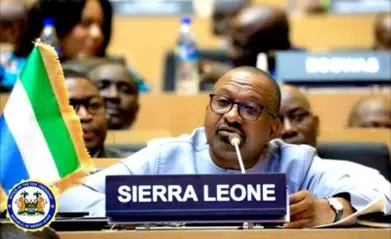
Vice President Dr. Mohammed Juldeh Jalloh took center stage at the 37th African Union (AU) Summit in Addis Ababa, Ethiopia, representing President Julius Maada Bio and showcasing Sierra Leone’s commitment to continental development agendas.

The summit, held on Friday, February 16, saw Vice President Jalloh participating in the African Union High-Level Round Table, where the focus was on, “Addressing Malnutrition: Catalyzing Africa’s Transformation Through Enhanced Multi-Sectoral Investments.” Drawing from Sierra Leone’s experiences, Vice President Jalloh shared innovative interventions to combat malnutrition and scale up nutrition efforts in the country. Notably, his initiatives to establish a dedicated budget line for nutrition and implement a Multi-Sectoral Information Strategy and Digital Dashboard garnered applause for their effectiveness in guiding policy decisions and actions. He emphasized the critical role of nutrition in enhancing maternal and infant health, underlining its significance in Sierra Leone’s success stories.

Additionally, Vice President Jalloh, on behalf of President Bio, presented two pivotal reports during the AU Assembly. The first report focused on the reform of the United Nations Security Council, reflecting Sierra Leone’s contributions under President Bio’s leadership to mobilize support for the Common African Position. The second report pertained to the African Peer Review Mechanism, showcasing efforts to encourage African states to accede to this mechanism. President Bio received accolades for his exceptional leadership in both endeavors, with the reports unanimously endorsed and adopted by the assembly.

Moreover, Vice President Jalloh engaged with the leadership of the African Development Bank (ADB), discussing President Bio’s flagship initiative, the Feed Salone Program. Highlighting the program’s significance, Vice President Jalloh detailed its objectives and the progress achieved under President Bio’s administration. The ADB leadership commended Sierra Leone for the laudable initiative, recognizing its potential to reduce rice imports, lower costs, and enhance food security for all citizens. They pledged support for the Feed Salone Program, acknowledging it as one of the continent’s best initiatives.

Reflecting on the AU’s founding principles, Vice President Jalloh reiterated Sierra Leone’s commitment to unity, solidarity, and cooperation among African nations. He expressed gratitude to the Sierra Leone delegation and the Ethiopian Government for their contributions and hospitality during the summit.

As the summit concluded, Vice President Jalloh departed Addis Ababa on February 19, 2024, after receiving a Presidential Salute at the Bole International Airport. He extended best wishes to Algeria, which assumes the Chair of the African Peer Review Forum for the 2024-2026 term, expressing hopes for a successful tenure under President Abdel Madjid Tebboune’s leadership. He commended the Sierra Leone delegation for their dedication and Ethiopia for hosting a fruitful summit.

ACP Mira Dumbuya Resigns Over Injustice Allegations

By Amin Kef (Ranger)

In a surprising turn of events, Assistant Commissioner of Police, Mira Yainkain Dumbuya (Nee Koroma), a decorated senior officer with 17 years and 8 months of service in the Sierra Leone Police, has tendered her resignation. The resignation, addressed to the Inspector General of Police at the Sierra Leone Police Headquarters in Freetown and dated February 5th, 2024, has sent shockwaves through the law enforcement community.

In her detailed letter, Dumbuya outlines a series of grievances and injustices that she claims have led to her decision to leave the force. Among the issues cited is what she described as, “unexplainable injustices” that have plagued her tenure causing her and her family immense discomfort.

Dumbuya expresses pride in her service to the Sierra Leone Police, highlighting numerous accomplishments during her time with the Force. She recounts initiatives she spearheaded, such as modernizing office equipment, organizing awards ceremonies to motivate personnel and securing donations and funds for various projects. Additionally, she emphasizes her advocacy for women in the force, including efforts to promote deserving female officers.

Despite her dedication and contributions, Dumbuya alleges that she faced obstacles and mistreatment, particularly since 2018. She claims to have been unfairly denied an extension of her service with the United Nations Police Division, despite fulfilling financial obligations imposed by the Sierra Leone Police. Furthermore, she alleges that her pleas for promotions for qualified female officers were ignored, and she faced threats and harassment regarding her Government-assigned quarter.

In light of these challenges and what she perceives as a lack of support from the leadership, Dumbuya has chosen to resign rather than endure further mistreatment. She expresses disappointment that her service and advocacy for gender equality seem to have been disregarded and concludes her letter with a sense of resignation, wishing the Sierra Leone Police well in their future endeavors.

The resignation of such a senior and respected officer has raised questions about the internal dynamics and treatment of personnel within the Sierra Leone Police. It remains to be seen how the force will address these allegations and whether they will have broader implications for the organization’s leadership and policies.

Copies of the resignation letter were also addressed to high-ranking officials, including the Vice President of Sierra Leone, the Minister of Internal Affairs, the Police Council, and the Director of Human Resource Management, indicating the gravity of the situation and the potential for further scrutiny of the circumstances leading to her  departure.