Home Blog Page 1034

Robin Faley Shakes APC …And preaches Politics of truth at AYV on Sunday

Hon. Robin Faley, who is popularly known as “Political Robinho”

By Amin Kef Sesay

Former National Publicity Secretary 2 of the All Peoples Congress, Hon. Robin Faley, who is popularly known as “Political Robinho” has called on the leadership and National Executive of the APC to heed to critical voices within the party that are calling for reforms because they are genuine and true stalwarts of the party.

Robin Faley told Sierra Leoneans through the AYV on Sunday Program that the recent concern raised by Dr. Sylvia Olayinka Blyden and others relating for changes of the Executive members of the APC Party  should be seen as a genuine concern that will move the party forward.

He expressed the view that the current administration should give way to new faces to take over the leadership of the party if they want the party to take power come 2023. This, he said, should be seen as genuine concern that will take the party to victory. Robin Faley reiterated that APC now needs radical reformation which will be of great importance to the entire membership.

“We need radical reforms within the party and this calls for respect and tolerance of genuine criticisms by certain members,’’ Hon. Faley stated.

Addressing the issue of the National Reformation Movement (NRM), Hon. Faley pointed out that the NRM is also fighting a genuine cause and that the party should embrace all critical voices and honest people who want nothing other than good and betterment for the party and the entire nation.

“Looking down low on critical voices is like destroying the chances of the party come 2023 when elections are to be conducted”, the astute political thinker stated.

The APC ,he underscored, is in dire need of national reforms, starting from ward level up to the national level saying that should be the dream of all APC members who want the betterment of the party.

Faley also humbly appealed to his former boss, Ernest Bai Koroma, someone that he served for nearly a decade with commitment, sincerity, loyalty and selflessly, to respectfully go now and retire from mainstream party politics in his best interest, the interest of his family, the APC and above all in the best interest of sustainable peace and stability in the country.

Faley, who is the newly crowned Julius Malema of Sierra Leone bravely called on EBK saying “COMMOT DAE, NOR MAKE TRANGA YASE”.
According to certain individuals who watched the program they told this medium that they are in sync with his assertion.

“Robin Faley is doing a good job. He deserves a platform. If it happens to be our forum as a spring board – so be it. Robin has won a place in our hearts. He’s not a two faced hypocrite. He’s opened up. Come out of the closet. He is uniquely positioned to be the running mate. He is making his bid now by throwing the dice. It’s up to the NRM to support him or not,” one of them opined.

“Robinho can hold his own against anyone else from his regional conclave who wants to pitch his/her popularity against such a fine political activist. His agility and ability are finely honed and attuned to both issues and people sensitivity. I’ll support Robin Faley any time of the day or nite. Let’s not ask for our own to go forge another platform for his bid.

Robinho’s agenda is altruistically for God and Country! A journey of a thousand miles – begin with the first step. Go Robinho you have my personal stamp of approval,” Mohamed Koroma a resident of Kailahun District registered his loyalty and support.

As Application Forms Going Like Hot Cakes… Huge Momentum Continues to Build Around Housemates Salone 

Housemates Salone Season 2

By Amin Kef Sesay

The momentum is building around Housemates Salone Season 2 as this medium reliably learnt that more and more people are getting interested to get into the House on the 14th October 2020 evident in the rush to procure application forms which is sold at One Hundred and Fifty Thousand Leones (Le150, 000).

August 31st, 2020 is the closing date for the submission of all filled application forms.  Application forms could be secured by simply going to #AfricellSL or #AYVMediaEmpire offices across the country.

They can also be secured via online at www.africell.sl or www.ayvnews.com from the comfort of wherever you are, in or out of Sierra Leone.

Payments for forms can be made through #AfriMoney on 088201020.

What was also learnt is that young Sierra Leoneans are very keen on bagging the mouth-watering prize of  Two Hundred and Fifty Million Leones (Le 250M) and go on a round trip to Dubai.

A ‘fast track’ for those in the diaspora, in terms of application, is available on line. Interested persons can apply on line through Africell and AYV websites; do their videos and send them to the judges on line. Interviews will be conducted online.

Also, for the benefit of those in the diaspora who may want to participate in the show they may contact the following: www.africell.sl or www.ayvnews.com.

One major requirement is for all applicants to do their two minutes videos and send them to the judges on line stating who they are and where they are coming from.

After the closing date what comes next is audition which will take place early September this year and will go on until the 21st September 2020. During the audition 40 finalists will be chosen who will then battle for the final 20 through another form of audition. The final 20 competent applicants, who successfully went through the audition, will enter the House on the 14th October 2020.

While in the House the more votes a particular Housemate pulls from viewers will determine how long he or she stays in the House. It will reach a stage when evictions will start until the ultimate winner emerges. The Africell number through which members of the public could vote for their favourite Housemates will be announced in due course.

 But one good thing is that for each day a Housemate resides in the House, he or she is entitled to One Hundred Thousand Leones (Le100, 000).

Various episodes of the Show will be broadcast live, on a 24 hours basis, on AYV Television Channel 34.

Viewers will begin to enjoy the juice and fun-all-the-way of the Reality TV Show, Housemates Salone Season2, when the audition commences as the applicants will want to prove their mettle, trying to outwit each other and attempting to express themselves convincingly in order to impress the panel of judges to score more points. It is during this moment that laughter could be provoked by some unconsciously murdering the Queen’s Language, by putting up various artistic performances attempting to mimic certain celebrities and the rest of it.

But it is when the 20 Housemates are interacting in the House that more fun will be enjoyed as there will be a lot of gossiping, fake news, playing of games, courting of friendship, praises and condemnation, artistic performances, performing assigned tasks as directed by Chief, the unseen guy with the baritone voice.

The main rationale behind the organization of Housemates Salone Season 2 , the Last Standing Couple with the theme “Quarantine Housemates” is to provide a platform for Youth Empowerment.

Characters will be moulded, new skills will be learnt, relevant information will be imbibed and the rest of it.

Moreover, the Housemates will benefit from widespread exposure as the Show will be watched near and far. Talents will be spotted and vistas of opportunities could be opened as some of the Housemates would be earmarked to become Brand Ambassadors, movie artists, models etc.

Some people may be having reservations as to whether it is apt to stage the show when we have the coronavirus in our midst. To allay such a fear, the organizers have put all the necessary modalities in place to ensure that all the Housemates that will be entering the House are coronavirus free, that precautionary measures are observed and the House is kept safe.

As the expectations are running high, the organizers are methodologically and meticulously putting finishing touches to once again avail viewers a lively, tantalizing and thought-provoking Reality TV Show that will leave in its wake a lot of gossips and tongues wagging with various analyses as to how it all went.

Political Detractors Wishing Unconstitutional Political Transition in Sierra Leone Off Target

Amin Kef Sesay

An Op-Ed By Amin Kef Sesay

To effect political change, military coup d’états are no longer fashionable in Africa as much premium is now placed on upholding democratic tenets, one of which is the holding  of periodic fair and free elections as dictated by national constitutions for any change of Government. Here in Sierra Leone it is after every five years.

The International Community, sub-regional and regional bodies like the United Nations, ECOWAS and the African Union are all frowning on regime change through coup d’états which is why those institutions always strongly condemn the illegal removal of any constitutionally elected Government followed by their imposition of various forms of stiff sanctions to force the coupists to immediately pave the way for a democratic transition of power to a civilian Government.

Against this seemingly blissful scenario that has permeated West African countries for a considerable period of time now, it is rather unfortunate that recently there was a coup d’état in the West African Republic of Mali when the military, led by Assimi Goita, toppled the Government headed by erstwhile President Ibrahim Boubacar Keita.

Although the International Community and sub-regional groups, one of which is the Economic Community Of West African States (ECOWAS), have condemned the coup, however, it was heartily welcomed by the majority of Malians who had earlier on called for the resignation of Keita for alleged corruption and the worsening security situation in some parts of the country where sympathizers of Al-Qaeda and ISIL (ISIS) have been causing a lot of havoc.

To a large extent, it can be safely said the Malian coup is a popular one with no bloodbath in its wake.

During the 1960s when coup d’états were the order of the day in West Africa it really appeared as if it was naturally contagious like a common cold. When one country sneezes, (has a coup), another catches cold (follow suit).

With all amount of certainty, it is this anachronistic mentality which seems to be running like a thread in various social media posts by some Sierra Leoneans, in and out of the country, portending that Sierra Leone is going to be next in terms of the military overthrowing the constitutionally elected Sierra Leone People’s Party (SLPP) led Government headed by President Julius Maada Bio.

Lamentably, these evil minded so called Sierra Leoneans are cowardly trying to incite the citizenry of this country, mainly the military, to forcefully overthrow the SLPP led Government in order to effect a change of Government. There are audio messages making the round on different social media platforms defaming the Government and disingenuously calling for some form of insurrection.

Although it may be said that these few evil-wishers could have a hidden political agenda, however, the leadership of the main opposition All Peoples Congress (APC) Party has categorically distanced itself from making any utterance, statement or move indicative of wishing for or plotting the illegal and forceful transition of Government.

It must be underscored at this juncture that the political and economic situations in Mali prior to the coup and those in Sierra Leone are comparatively not the same. The Malian Government, under President Keita, was one that had become so unpopular to such an extent that it was evident that the stability of the country was fragile and as President he was not firmly in charge of the country as the economy had really gone bananas, hardship galloped, corruption rampant with an ongoing Islamist insurgence in some part of the country that seriously undermined national cohesion.

With this abysmal status quo, it was just a matter of time for the military to easily topple the Government as it did. As a matter of fact those are some of the reasons that have been stated by the military junta as a justification to govern the country for three years before handing it over to a constitutionally elected Government.

From a thorough analysis of the current Sierra Leonean political dispensation as well as empirical evidences so far observed, comparatively, this country does not seem to have a paranoid and weak political administration, worsening economic situation that could trigger the military to leave their barracks in order to forcefully overthrow the sitting SLPP Government.

This assertion should not be mistaken as if the picture is been painted that this country is a Utopia. It is understandable that the main opposition APC party may have its political reservations or wounds that it maybe nursing. They may complain about political marginalization, deprivation from holding sensitive positions and all the rest of it.

Again, it is not insinuated that economically things are rosy as in reality the prices of basic commodities have skyrocketed and the cost of living is really high.

However, it could be a fallacy of hasty generalization to squarely blame the ruling Government for completely or unilaterally messing up the country’s economy as fingers could be pointed at certain quarters for the debilitating economy.

But unlike Mali, we have seen conscious demonstrations on the part of the country’s Anti – Corruption Commission (ACC) under the watch of Commissioner, Francis Ben Kaifala, in robustly combating corruption in high and low places with results that are very encouraging. The point that is been made here is that there is no evidential discernible widespread discontent that is triggered by the frustration of rampant corruption.

Taking the conversation to another level, as far as it is noticeable at this material time, the morale of the country’s security personnel, the Police and Military, is high probably based on the fact that they are getting the right treatments they deserve. By this it is meant their salaries and other benefits are paid on time, promotions are given were they are due, not predicated on ethnic lines, necessary logistics made available etc.

When all these are taken into consideration it can be stated that at this moment there is no sort of noticeable form of disillusionment among rank and file of the “Khaki Boys” that could warrant or be seen as a pointer to the staging of any form of overthrowing the elected or legally constituted ruling SLPP Government.

Indeed, one of the highest forms of treachery is for a citizen to advocate for the unconstitutional transfer of power through a military coup style as it is now seen to be done by some Sierra Leoneans who are painstakingly fanning such a flame through social media posts.

Democracy calls for a peaceful transition of power. It therefore behoves all and sundry to use democratic channels to vent out grievances and discontent. Anything short of that is tantamount to treason of which any perpetrator could face the full force of the law.

Sierra Leoneans have tasted the bitterness of over a decade senseless war that brought about wanton destruction of lives and property. We do not want to see a repetition of same.

The vast majority of Malians were eager for a regime change, although it cannot be vouchsafed whether they wanted such through the barrel of the gun were as in Sierra Leone there is no discernible longing on the part of the masses that they are yearning for a transition of political power through unconstitutional means.

It is high time for the detractors to desist from wishing doom for this country but rather admonished to constructively criticize the shortcomings and failings of the ruling Government in order for meaningful political, economic and social changes to take place that will positively impact the entire nation. There is no place for a military coup in Sierra Leone. Lonta!

Collaborative Efforts Must Be Enhanced to Reduce Fatal Road Accidents

By Amin Kef Sesay

Two Sundays ago, one of Sierra Leone’s most illustrious distinguished clergymen, Bishop Yambasu lost his life in a road accident along the Jui-Allen Town highway.

On Thursday evening, another gruesome accident involving two Mercedes Benz Sprinter poda-podas and a taxi that was crushed like a tin took place close to the Orugu Bridge coming from the Allen Town end.

Over the immediate past years, several gruesome accidents have taken place along that stretch of the highway, which raises the question: what must be done by road authorities as well as drivers to prevent more such occurrences?

An accident is an unplanned, unforeseen and unexpected event that has a negative impact on all activities of the individual(s) concerned. An accident can result in death, injury, health hazard, and loss of property, damage to the environment, loss of production, time and morale, and a negative impact on organizations, society, family or any other persons concerned.

Accidents are a great concern to the public in all 14 Districts of Sierra Leone. Transportation in Sierra Leone occur in three forms, land, marine, and air, all of which (save air) have recorded an alarming rate of accidents over the past few years. Traffic accidents result in life and financial loss to the society. In Sierra Leone, traffic fatalities are comparable to other leading causes of unnatural death. The need for the analysis of the spatial distribution of traffic accidents, as an aid to select the most appropriate type of accident reduction programme (e.g. site, route and area plans) and assessing the effectiveness of such plans after implementation, is very important.

There is no systemic method of recording accident disasters in Sierra Leone. However, accident (road, maritime, aviation) disasters have been sourced from the DesInventar – a global Disaster Information Management System database that systematically collects documents and analyses data about losses caused by disasters. Between 2006 and 2015, over 150 accidents were recorded, with over 40% of them occurring in Western Area Urban (Freetown) alone. A total of 418 traffic accident-related fatalities were recorded during that time, with a national fatality-to-event ratio of 2.4 (see table below). There’s anecdotal evidence that these figures can be construed as grossly underestimated given that not all accidents are reported and recorded in the country.

Other than that, if one were to make a deduction out of expert and technical analysis, many road accidents are caused by human factors and technical malfunctioning of the organs of the automobile. Therefore, it can be predictable and to a very large extent preventable.

In Sierra Leone, the engineering and infrastructure of roads including many more have added to the high rate of accidents on our roads.

In the first instance, absence of standards and regulations for vehicle importation into the country means undesired relics from Europe, Asia and America keep on flooding the country unabated.

Some cars plying the streets are simply road unworthy because they have worn out.

Apart from the hazardous fumes volleyed in the air, the vehicles pose a high fatal risk to pedestrians and co-vehicle users.

In Sierra Leone, road safety enforcement squarely falls within the domain of an older stakeholder, the Sierra Leone Police (SLP) and a relatively new one, Sierra Leone Road Safety Authority (SLRSA).

The traffic police are mandated to ensuring the protection of life and property on the roads whilst the role of the road safety corps/ traffic wardens is to identify road traffic misdemeanors.

The two institutions are doing almost the same job and hence cannot handle or manage the plethora of traffic offences on the roads.

Many vehicle owners and members of the general public have noted that the two institutions are a burden to the citizenry, especially motorists.

Extortion of monies and unnecessary court cases that are sometimes not necessary has been the order of the day.

Flash light reflectors that are absent in many vehicles have safety value because they alert an incoming traffic of a stationary car.

Vehicles using the same route can inadvertently crash into a static truck; the resulting episode would be a decapitated and dismembered scene of scattered human body parts.

Lack of institutional capabilities to access comprehensive data systems, has failed to inform proper policy planning aimed at drastically reducing road disasters.

According to Dr. Orwizz Koroma, the country`s only Pathologist at the Connaught Hospital Mortuary, “instead of decreasing, road accidents are becoming commonplace with over 200 deaths every year involving pedestrians, passengers and drivers.”

Lack of upgrading and expansi oning of the roads to accommodate escalating traffic as well as inadequate street lightening resulting in poor visibility have caused many road crashes.

There are also poor road signs. Even in places where they are visible, they are largely incomprehensible to many illiterate people who never attended a driving school, but only becoming drivers after graduating as an apprentice.

Despite its resource challenges, the SLRSA must be in a position to establish national driving schools where drivers can be trained on road safety etiquettes, certified and later released to ply vehicles on the roads.

Another notable cause of road accidents is the human factor such as fatigue, insomnia and divided attention, drink driving, over speeding, overloading and mobile usage.

Abdul Karim Dumbuya, Public Relations Officer of SLRSA said reckless driving on slippery roads are the major causes of accidents that occurred in the month of September 2019.

On the highways, drivers care less about speed limits; many violate the 60 miles per hour recommendation by running up to 120 miles per hour.

Many drivers lack personal responsibility as they hardly undertake routine vehicle safety checks before venturing out on the highways.

Regular car safety checks can help in detecting malfunctioning parts which can be replaced thereby forestalling potential accidents.

But Abdul Karim Dumbuya, PRO of SLRSA, has a different view, “if a malfunctioning vehicle part is replaced by a substandard one, the danger is still not eradicated”

Now that the man power of the Road Safety Corps have been bolstered by the recent graduation of about 149 officers, instead of concentrating these new officers at `money-spinning` junctions in Freetown, mobility logistics must be furnished to these corps to accelerate highway patrols in a bid to prevent potential accidents.

Corruption involving enforcement officials have led to the poor execution of road safety acts and regulations, ultimately undermining Government`s revenue generation and mobilization drive.

Whenever a breach or a road safety default is detected, the official is compromised by surreptitiously demanding for the offenders licenses.

The Authority has signed a Memorandum of Understanding with over 20 radio stations across the country and it has further increased its outreach activities to lorry parks, market places and educational institutions.

However, the scaling up of road safety education is yet to have a direct impact on the reduction of road accidents.

Apart from strengthening institutional capabilities, the success of the SLRSA is tied to the effective inter-agency collaboration with other like-minded institutions such as Sierra Leone Roads Authority (SLRA), Sierra Leone Road Transport Corporation (SLRTC), Local Governments and the Office of National Security.

Interest groups such as commercial bike riders, tricycle unions, the national drivers and general transport workers union, traders union and market women’s association must be incorporated in the fight.

Human Rights Commission Releases Report on Makeni Fracas

By Foday Moriba Conteh
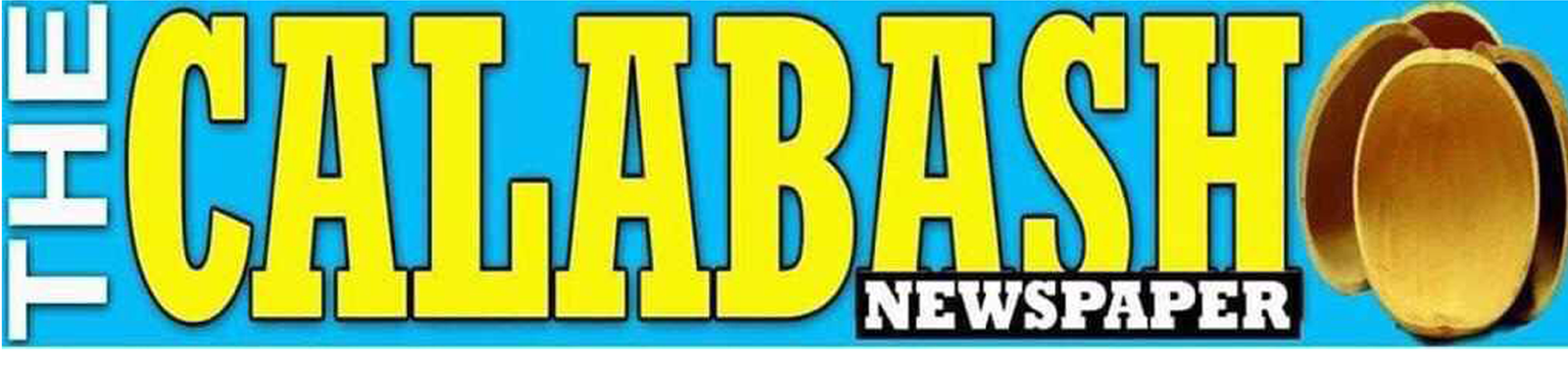
The Human Rights Commission of Sierra Leone (HRCSL) on 17th, 18th and 19th July 2020 conducted an observation and fact- finding mission in Makeni in relation to the riot which engulfed the town subsequently leading to fatalities.
According to the HRCSL, engagements with stakeholders revealed that on 30th May 2020, a stakeholders meeting was held in Makeni with representatives from the Ministry of Energy led by the Permanent Secretary and also some stakeholders in Makeni including Mayor Sunkarie Kamara. The purpose of the meeting was to discuss the relocation of the generator plant to Lungi International Airport which had electricity supply challenges. This was in preparation for the opening of the Airport as earlier announced by the President on 24th June 2020.
It stated that in in the meeting, there were discussions around signing of an MOU between Makeni stakeholders and the Ministry of Energy for the generator to be relocated and returned within a period of two months.
The Human Rights Commission furthered that unfortunately as stated by the Mayor, information to other stakeholders and community people was not provided as promised by the Mayor neither was a feedback provided to the Ministry of Energy as the Mayor fell ill a day after the meeting and did not recover until after six weeks. The Ministry also did not make a follow up with the Makeni team on the delayed feedback until almost a month after the meeting.
It said the planned relocation of the generator plant on 17th July subsequently led to confrontation between security forces and an uncountable number of youth who took to the streets of Makeni after the national curfew hours began at 11pm.
The Human Rights Commission engaged Inspector General of Police, Sovula, Mayor of Makeni, the Local Unit Commander (LUC), Medical Officials at the Medical Referral Hospital, the Deputy to the AIG Mr. Lansana Koroma (CSP), paid visits to families of the deceased. It also engaged the Security Guards at the Sierra Leone People’s Party Office (SLPP) and the Sierra Leone Commercial Bank (SLCB).
According to the findings and observations by the Human Rights Commission the stakeholders meeting on 30th May 2020 between the Makeni City Council and the Ministry of Energy was held in Makeni to discuss issues around the relocation of the 1.65 Megawatts Generator to Lungi International Airport in Port Loko District.
It found out that due to the Mayor’s impromptu illness, other stakeholders and the community people had no idea on action points taken as no key authority in the council engaged them.
Furthermore, a feedback as promised by the Mayor to the Ministry of Energy was not made. Additionally, officials of the Ministry of Energy in Freetown did not also make a follow up on the action point taken at the meeting of 30th May and as a result discussions on the relocation of the generator got stalled. Both institutions faulted in making a follow up.
The Commission said on the night of 17th July, HRCSL regional staff observed that some youth on motorbikes around Magburuka Road where the Commission’s office is located were heard sending messages to others in the following words‘Come Out and resist the transfer of the generator’.
It went on to reveal that  the Commission’s regional officers observed that youth groups grew in number and formed clusters around the Electricity Distribution and Supply Authority (EDSA) Office, Rogbaneh Police Station and in different parts of the town with sticks, machetes, and pelting stones at the police.
The Commission unearthed that rioters also went on the rampage and started destroying building i.e. the Sierra Leone Commercial Bank and the Sierra Leone People’s Party Office.
The Human Rights Commission discovered that the Sierra Leone Police were assisted by the Operational Security Division (OSD) and the standby Military Aid to Civil Power (MAC-P) in Makeni was invoked to restore law and order.
It stated that Law Enforcement Officials used teargas to disperse cluster of youth around the town and he 1.65 Megawatts generator was transferred from EDSA Makeni in the morning hours of 18th July to Lungi International Airport as the trailer had no access to the town and not on the night of 17th July when youth had anticipated its relocation.
That the early morning hours of 18th July was relatively peaceful and people were seen going about their normal businesses until late morning when security forces raided the big market and released teargas canisters at protesters.
It continued that  in the late morning hours of 18th Law Enforcement Officials at the market place, threw teargas amongst traders, other persons including children. This angered the youths who became very violent and the riot took a negative turn. In the end five people lost their lives and were each at a time taken to the Makeni hospital. Ten (10) sustained injuries out of which 4 were taken to the Emergency Hospital where it was confirmed that one died bringing the total number of deaths to 6 (Six).
It pointed out that an official curfew was imposed in the late afternoon by the Sierra Leone Police and other stake holders to restore law and order in the town.
That from the findings it was discovered that approval for the curfew came much later from the appropriate authorities than earlier announced by Law Enforcement Officials at the market place.
The Commission mentioned that road blocks continued to be mounted by the youth in all major road and tyres burnt, preventing people and vehicles from moving freely. Youth formed several clusters all over the town and were chased by the joint Law Enforcement Officials and the LUC confirmed that Fifty One (51) persons were arrested. Some had sticks, stones and machetes which they had used to confront the police.
It stated that although the Commission has not been able to establish which Law Enforcement Official did the killings considering it was a joint mission, the action by the joint forces during the confrontations violated the enjoyment of the right to life. The Commission in its entirety condemns the deaths that occurred during the riot and continues to reiterate that the right to life is a non derogable right and should be preserved at all times.
Registering that it was unnecessary to use force within a market community it said further to the confrontations between the Law Enforcement Officials (LEO) and youth on the night of 17th July, on the 18th July, some LEO went to the Rogbaneh Market area in the mid- morning of 18th July and discharged teargas canisters at unsuspecting traders, children and other persons who were busy settling down with business. They insisted that they should go home and immediately leave the market area.
“The unexpected use of teargas by LEO against harmless and peaceful citizens within the market community contravenes Principle 9 of the UN Basic Principles 1990 on the Use of Force by Law Enforcement Officials which stipulates that ‘Law enforcement officials shall not use firearms against persons except in self-defence or defence of others against the imminent threat of death or serious injury, or to prevent the perpetration of a particularly serious crime involving grave threat to life, or to arrest a person presenting such a danger and resisting their authority, or to prevent his or her escape,” it went on.
The HRCSL further notes that Article 2 of the Code of Conduct for LEO adopted by the General Assembly Resolution 34/169 (1979) stipulates that ‘in the performance of their duty, LEO shall respect and protect human dignity and maintain and uphold the human rights of all persons. Article 3 further notes that ‘LEO may use force only when strictly necessary and to the extent required for the performance of their duty’. HRCSL views the use of fire arms at the market place on innocent citizens as an extreme inappropriate measure and which poses a threat to the enjoyment of the right to life of the mentioned group of people.
With regards to Right to Freedom of Movement, the Human Rights Commission maintained that the confrontations led to the imposition of an indefinite curfew by the police in the early afternoon of Saturday 18th to 20th July. The curfew indefinite curfew led to a denial on the rights to freedom of movement of persons resident in the municipality. This restriction also affected the rights to as people cannot access the market.
The HRCSL observed that major roads were blocked by youth who subsequently burnt tyres by the road blocks. Although this action does not constitute a violation of the rights to freedom of movement by state actors, it however constitutes a human rights abuse as the action by youth restricted free movement of persons and vehicular flow of other citizens.
In its recommendations, the Human rights Commission said going forward, the Police should stop taking fire arms containing live rounds at scenes of protests/demonstrations except where it is extreme necessary; they should instead use rubber bullets and other lawful devices and means to dispersing protesters or quelling down protests.
It pointed out that the Government of Sierra Leone (GoSL) should make provision that will better equip the Police with riot safety gears and devices that will enable them to professionally respond to riots and protests without the loss of lives from both sides- the protesters and the police themselves.
The Commission added that the Law Enforcement Officials should speedily conclude investigations into the incident and identify those personnel who may have killed citizens, dismiss them from the force (s), prosecute them in a court of law or in the court martial as the case may be. Take appropriate actions.
That the Police should swiftly investigate and prosecute individuals who caused damage to property during the riot and other forms of violent conduct.
The Police should cease co-opting the military at every given opportunity during protests unless and until the circumstance truly demands military aid to civil power.
Youth should endeavour at all times to engage their representatives and other community leaders in a bid to channel their grievances rather than resort to lawlessness.
That the Central Government should support the Municipality to conduct an Institutional Capacity Audit in order to address the striking administrative challenges.
The Independent Police Partnership Board (IPCB) should timeously investigate the discharge of firearms which may have led to the death of civilians. GoSL should bear the medical cost for the injured victims.
That both central Government and the local Government should do more to open up the communication lines by frequently engaging each other so that issues could be easily addressed, and progress made.
Similarly, both Central Government and local councils should frequently engage their beneficiaries/residents informing them about how governance works and how they themselves as the beneficiaries should contribute to the process. The National Council for Civic Education and Development should take the lead in this.
That the Law Enforcement Officials should recruit citizens of good moral standing and temperament and engage the forces on standard human rights trainings especially in dealing with riots.

Don Bosco Fambul Unveils New Therapeutic Center

By Foday Moriba Conteh

Don Bosco Fambul is one of the country’s leading child-welfare organizations. It has been on the forefront of efforts to help save young women who have faced abuse and prostitution and to rehabilitate street children and reunite them with their families.

The organization is directed by Salesian Father Jorge Mario Crisafulli and has a staff of 120, including Salesian social workers go out to the streets, slums and marketplaces. They engage with vulnerable youth and encourage them to join Don Bosco Fambul’s successful program.

Don Bosco Fambul recently launched a therapeutic center with four large buildings, a clinic, accommodations for volunteers and social workers, a house for the Salesian community, and a chapel. Its inauguration was postponed due to the coronavirus, but the center remains a safe and virus-free place. Salesians have already welcomed many minors in need.

The first lady of Sierra Leone, Fatima Maada Bio, chose the new therapeutic center to sign the “Agreement against Domestic and Sexual Violence against Girls and Adults”—an agreement among Don Bosco Fambul and national agencies for the protection of children in the fight against violence and child abuse.

Police agencies, lawyers and child protection agencies are working collaboratively with Don Bosco Fambul in the fight to protect children. Don Bosco Fambul’s clinic will be able to issue forensic reports on abused minors arriving at the center. In turn, police will be able to conduct investigations early and arrest the perpetrators.

During the signing event, Fr. Crisafulli gave a tour of the new therapeutic center. Attendees were welcomed with songs and dances by the center’s youth. Minors saved from prostitution by Don Bosco Fambul’s program gave Bio earrings in the shape of a ring which she immediately put on. Bio encouraged youth to continue studying and to fight bravely for their rights.

Continuing her visit, she praised the work of Salesians and noted the structure is “undoubtedly the best place to have a therapeutic center.” She also had very strong words against abusers and batterers. Bio also recalled her visit to the United Nations in Geneva to hear the testimony of the girls and teenagers saved from prostitution.

Finally, Bio invited Fr. Crisafulli to be part of her team of collaborators to work for the rights of those who suffer violence, sexual exploitation and trafficking in human beings. He accepted the honor.

Salesian missionaries have been serving in Sierra Leone since 2001 when they began working to rehabilitate former child soldiers through Don Bosco Fambul. In the years since, Don Bosco Fambul, has been offering food, clothing, crisis intervention services, shelter, educational opportunities, long-term counseling and family reunification.

Young people, especially, face significant challenges in accessing education. With too few teachers and school buildings destroyed in the war, resources are thin. Persistently high illiteracy rates mean that an estimated 70 percent of Sierra Leone’s youth are unemployed or underemployed.

SLPP Revised Constitution Endorses President Bio as Party Leader

By Amin Kef Sesay

The ruling Sierra Leone People’s Party (SLPP) has finally got its revised Constitution which reflects its new party structure approved by the country’s Political Parties Registration Commission (PPRC). This came after almost a year of internal political machinations and intrigue.

According to the new Constitution, the role of Chairman is now separated from the Leader of the party.

These constitutional changes now mean that with immediate effect, President Julius Maada Bio becomes the Leader of the SLPP party and Vice President, Mohamed Juldeh Jalloh, is the Deputy Leader.

The new structure also removes the enormous power previously wielded by the party Chairman, Dr. Prince Harding. His role is now relegated simply and solely to the administrative functions of the party, paving the way for a much younger party Chairman to be elected at the party’s national convention possibly later this year.

Critics of the new constitutional structure within the SLPP party, say that this change will now give President Bio absolute power in selecting future presidential candidate of the party as well as the running mate for elections.

It will also give President Bio greater say in deciding who gets party symbol to contest parliamentary elections.

Given the massive power now vested on the shoulders of President Bio by the new Constitution, it is highly unlikely anyone within the party would contest against him for the Chairmanship in a long while.

Some critics are already accusing President Bio of setting himself up to become the lifetime Chairman of the ruling SLPP party, an accusation levied at the main opposition’s Chairman and former President of Sierra Leone, Dr. Ernest Bai Koroma, who is still hanging on to the chairmanship of the APC party.

On Tuesday August 18, 2020, the SLPP party’s Secretary General, Umaru Napoleon Koroma, dilating on the party’s new Constitution said:

“In keeping with the changing dynamics of the democratic landscape of the world in general and Sierra Leone in particular, the Sierra Leone People’s Party saw a compelling need to amend its 1995 constitution, without any breach of the 1991 Constitution of Sierra Leone.

“Consistent with the statutory provisions of the 1991 Sierra Leone constitution vis-a-vis Section 35 subsection 2, on the 8th of December 2018, the National Executive Council (NEC) of the party, mandated the National Executive to set up a committee that was specifically tasked with the responsibility of reviewing 1995 SLPP Constitution as amended.

“On the 29th June 2019 at the Wizard Hall in Bo city, a Constitutional Review Committee (CRC) was empanelled after approval by the NEC and mandated to draft a new constitution for the SLPP.

“After weeks of CRC meetings, consultations and brainstorming, on the 17th August 2019, the newly drafted constitution was presented to the NEC for onward presentation to all regional, district and branch members of the party for their input and recommendations.

“This wide ranging exercise was for a 90 day period in order to give all branches an opportunity of owning the process and being contributors to the new SLPP constitution.

“At the elapse of the 90 days consultation period, on the 28th November, NEC was convened with the purpose of setting a date for a National Party Conference at which meeting the new draft constitution was to be ratified and approved and subsequently forwarded to the Political Parties Registration Commission (PPRC). This is consistent with Section 24 subsections 1 and 2 of the Political Parties Act of 2002.

“On the 6th 7th and 8th December 2019, at the Catco International Hall in Freetown, the National Delegates of the party unanimously approved and ratified the new draft constitution and directed the National Executive to present it to the PPRC for it to be published in the National Gazette.

“In March 2020, the new draft constitution was presented to the PPRC for publication in the National Gazette as per law required, and on the 6th of March 2020 it was duly published by the PPRC with the general public invited to raise objections and concerns.

“Five objections were made by the public to the PPRC and they were communicated to the party for response. The party duly responded to the objections and submitted it to the PPRC.

“By a ruling dated 17th July 2020, the PPRC directed the party to amend some provisions of the draft constitution and submit the amended version to it for publication, and to make way for it to come into force after five working days. On the 7th August 2020, the final amended version of the SLPP constitution, as per the directives of the PPRC was presented for publication, and on the 11th August 2020, the final draft was published by the PPRC.

“Accordingly, on Wednesday 19th August 2020, the new constitution would officially come into force as the guiding document of the SLPP, after fulfilling all provisions of the 1991 Sierra Leone Constitution, the Political Parties Registration Act of 2002, and the SLPP 1995 Constitution as amended.

“The new constitution of the SLPP has duly approved His Excellency President Julius Maada Bio as the Leader of the party, and Vice President Dr. Mohamed Juldeh Jalloh as Deputy Leader.

“In keeping in line with democratic and statutory regulations, the SLPP has clearly raised the bar for democratic plurality and practice in the national body politic. As the oldest surviving ruling party in West Africa, this latest exercise has set the pace for a proper and effective democratic practice in the Republic of Sierra Leone.

Driver Sent to 15 Years Imprisonment for Sexual Penetration  

Appeal’s Court Judge, Justice Alhaji Momo-Jah Stevens

By Elkas Sannoh

On Wednesday, 19th August, 2020, Justice Alhaji Momo-Jah Stevens, Justice of the Court of Appeal, sentenced one Manso Kamara, a driver residing in Allen Town-Tarpo Corner for sexually abusing and penetrating a 16-year old pupil.

The convict was sentenced to 15 years imprisonment for sexual penetration contrary to Section 19 of the Sexual Offences Act of 2012, Act No. 12 of 2012 as repealed and replaced by Section 4 of the Sexual Offences (Amendment) Act, 2019, Act No. 8 of 2019.

According to the Particulars of Offence, Manso Kamara, on the 23rd day of March, 2020 engaged in an act of sexual penetration of a child in the East End of Freetown.

In her evidence, Agnes Kanu (not real name) admitted that she knows the convict, describing him as, “the driver of our former landlord.” She went further to state that the accused was asked to escort her to collect their remaining belongings to transfer to another house that they have already rented.

“I was in the same vehicle with him until we reached the house we were previously occupying,” she said, noting further that, “he followed me in the house and forcefully grabbed me from my back and penetrated his penis into my vagina.”

The medical report revealed that even though there were no physical injuries at the time of examination but there was copious yellowish vagina discharge.

Justice Stevens strongly warned perpetrators to desist from sexual abuse in order to make the society a better place for children.

Bank of Sierra Leone Warns the Public Against Illegal Foreign Exchange

By Amin Kef Sesay

In a statement released by the Bank of Sierra Leone on the 21st August, 2020 it was declared that the financial institution  is gravely concerned about reports of counterfeit dollar notes being circulated within Sierra Leone as recently reported by the Sierra Leone Police.

In that regard the Bank wishes to inform the public that given its statutory responsibility for maintaining financial system stability it is closely collaborating with the Police investigation of the matter in order to swiftly determine the source of counterfeit notes and promptly apprehend and punish those responsible for them.

The Bank is assuring the public that it spares no effort in ensuring that foreign currency purchased at foreign exchange entities it authorizes and licenses are genuine.

It continued that it is strongly advising the public to conduct their foreign exchange transactions in only such institutions.

The Bank of Sierra Leone furthered that it is also informing the public that, pursuant to Section 48 (4) of the Bank of Sierra Leone Act 2019,  the Board of Directors of the Bank, on 19th August 2020, approved maintaining the directives issued by the Bank on 20th August, 2019,  in force for an additional year.

It went on to state that it is strongly drawing the public’s attention to its directive entitled “Prohibition Of Foreign Currency Transactions By Unlicensed Operators” issued in March 2020 and the additional measures issued in April 2020 and to warn the public that buying and selling foreign exchange through individuals and/or institutions not licensed by the Bank of Sierra Leone remains illegal and that violators shall be punished, upon conviction, by three years imprisonment or a fine of One Hundred Million Leones or both.