Home Blog Page 539

Ministry of Education, SUG-FBC Award Tuition Grants to Deserving Female Students

By Foday Moriba Conteh

The Ministry of Education, Fourah Bay College Students’ Union Government, have, in an event on campus, awarded tuition grants to deserving female students from different departments of the college.

The partial tuition grants, which came through the support of the Jewel Starfish Foundation, a Liberian-based organization owned by the honorable Vice President of Liberia, were awarded to 25 students this year. This number includes those set of students that benefited from the maiden program in 2020.

The Deputy Registrar, in his statement, urged the beneficiaries of the grants to commit themselves to their academic work and to ensure that they make a difference on campus. He encouraged them to live up to the expectation of H.E. Chief Dr. Jewel Howard-Taylor by simply making sure that they become the change that the world and Sierra Leone specifically truly need.

“You have to count yourselves lucky to benefit from such a laudable gesture from that fine personality,” Bah commended the beneficiaries.

Madam Christiana Lanansa, the Minister of Education, Students’ Union Government, Fourah Bay College, recounted the path the Students’ Union Government trod on to land the Jewel Starfish Foundation in Sierra Leone, particularly Fourah Bay College. She expressed her deepest gratitude to H.E. Howard-Taylor for her seemingly unending zest to empower women in Africa through her organization which is anchored on the mission: “To equip the generation of female leaders with the skills and tools they need to become significant contributors to their communities and society.”

The Minister re-emphasized the need for the beneficiaries to maintain a cordial relationship with one another in order to foster the growth and development of the Foundation on campus. She called on them to join forces with H.E. Howard-Taylor to make the voices of women heard in an Africa that she described as a patriarchal society. She maintained that if their voices were to be heard, they must try to acquire the requisite education during which process they should imbibe the culture of speaking up against the ills of their societies.

In his short statement at the opening of the session, the President of the Students’ Union Government, Alfred Micah Sesay, reminded the students that the grant came as a result of the SUG’s commitment to making sure that deserving female students who are less privileged are accorded the opportunities to acquire their education. She emphasized the need for the students to make great use of the opportunity and encouraged them to take their academic work seriously.

“What you have received today is the wish of many other students on campus,” he stated, “so if you are awarded today, know that your space will be occupied by another student if you do not perform well in your exams.”
On receiving the package of NLe2, 500 each, the beneficiaries expressed their appreciation and assured Jewel Starfish Foundation together with the Students’ Union Government of their commitment to their academic pursuits and of their willingness to work towards the attainment of the Foundation’s mission.

Confucius Institute Concludes 22nd Edition of Chinese Bridge Chinese Proficiency Competition

By Foday Moriba Conteh

The Confucius Institute of the University of Sierra Leone, in collaboration with the Chinese Embassy in Sierra Leone, has on Friday 9th June 2023 held its 22nd Edition of the Chinese Bridge Chinese Proficiency Competition for Foreign College Students inclusive of those in Sierra Leone on the theme: “One World, One Family”. The event was held at the Bintumani Hotel on Aberdeen in Freetown.

10 University students from different colleges, who were contestants, gave full display of their talents in Chinese speaking in a Q&A session and a talent show which took the competition from one level to another until it reached the climax.

Haja Isatu Conteh, a student of the Institute of Public Administration and Management (IPAM), University of Sierra Leone, bagged the first prize and won a ticket to travel to China to participate in the World Final representing Sierra Leone.

In her statement, the Director at the Confucius Institute of the University of Sierra Leone, Prof. Jing Man said since 2012 Confucius Institute at USL has been focusing on international Chinese education, striving to build a platform for cultural exchange between China and Sierra Leone, promoting cultural exchanges and mutual learning between the two countries and providing opportunities for Sierra Leoneans to interact and experience Chinese culture.

The Professor informed that the Confucius Institute at USL always adheres to the principle of mutual language and Cultural exchanges, the integration of classroom teaching and extracurricular activities, the promotion of learning through competition and create brand cultural activities of the Institute at USL.

Prof. Jing Man stated that over the past year it has carried out more than 80 cultural exchange activities and there have been more than 1,300 Chinese language students and nearly 30 people have received various scholarships to study in China this year.

She maintained that a bridge is an important structure for connection and communication stressing that contextually the bridge is a bridge of the soul and can also communicate the relationship between people stressing how the Chinese bridge is a bridge of language saying different languages carry a common human vision and continued to express the view that a Chinese bridge is also a bridge of culture via which Chinese and Sierra Leoneans learn from each other and share with each other underscoring how the Chinese Bridge is even more than a bridge of friendship.

“Chinese Bridge is a large-scale Chinese competition worldwide. It is hoped that contestants while fully demonstrating their personal style, will drive the people of Sierra Leone and motivate their interest in learning Chinese, Chinese culture and promote cultural exchanges and strive to become the envoy of friendship between the two countries and the promoter of building a China-Africa community with a shared future that will create a better future for human society,” she expressed optimism.

Prof. Jing Man concluded by expressing appreciation to the four primary schools of the Small Small Chinese programme and the primary school of FBC for their support and participation. She further commended the University of Sierra Leone for its support over the years.

The Chinese Ambassador to Sierra Leone, Wang Qing, said in the past five months he has attended some meaningful events that depict Chinese civilization like the Chinese New Year Celebration Gala at Confucius Institute, International Chinese Language Day, International Tea Day further stating that it is heartening to see that many Sierra Leoneans, especially young students, are interested in China and the Chinese language.

He noted that now more and more Sierra Leoneans have better understanding of Chinese culture as portrayed through the Chinese Opera, Chinese Tea Arts, Chinese Martial Arts, traditional Chinese Musical Instruments and so on show the charm of the Chinese culture, the power of mutual appreciation of civilizations and the potentials of China-Sierra Leone relations.

Wang Qing said the competition is also a kind of bridge building, using the Chinese language as a medium to build a bridge between hearts and minds, adding that China and Sierra Leone have been good friends and partners, walking hand in hand over 52 years and in the new era, expressing hope that the two countries and peoples would continue to move forward together and embrace a better future.

“I would like to take this opportunity to say thank you to all the teachers, volunteers and people from all walks of life for your devotion to and support in teaching the Chinese language without which the “Chinese Bridge” could not have come so far. I do hope you will keep up the good work and go on to achieve even greater success!” he concluded.

Addressing the gathering on behalf of the Vice-Chancellor & Principal of the University of Sierra Leone, the Deputy Vice Chancellor of IPAM, Prof. Conteh Morgan, applauded the Confucius Institute for the laudable venture by offering opportunities to foreign college students as well as Sierra Leoneans to learn the Chinese Language and Culture.

She said studying Chinese is an added advantage for Job employment in Sierra Leone of which she encouraged students to make good use of the opportunity.

Prof. Conteh Morgan concluded by reaffirming the University of Sierra Leone’s continuous support to the Confucius Institute.

The Representative from the Ministry of Technical and Higher Education, Mrs. Kaiwa also used the opportunity to commend the Confucius Institute for hosting the Chinese Bridge Chinese Proficiency Competition.

She said Sierra Leoneans have been benefitting from China in the areas of offering Scholarships, donations to fund certain public interest projects by Government.

Haja Istau Conteh, a student of the Institute of Public Administration and Management (IPAM) University who took the first position commended the Institute for organizing the 22ndedition of the ‘Chinese Bridge’ Chinese Proficiency Competition for Foreign College Students which she said has enabled her to learn the Chinese language.

She expressed gratitude for winning a ticket to travel to China for the World Final on behalf of Sierra Leone of which she assured all that she is going to empower herself more in order to emerge as the winner of the international competition.

Haja Istau Conteh called on Sierra Leonean students to show interest in learning Chinese, adding that studying Chinese in this present world has so many advantages

Closing the event was the announcement of the names of the final 10 University student winners followed by the award of  prizes as well as the announcement of the final result for the 3rdEdition of the ‘Chinese Bridge’ Chinese Proficiency Competition for primary school pupils together with the award of prizes to those who did well.


NP-SL is Renowned for Marketing Quality Products & Enhancing Development

National Petroleum Sierra Leone Limited (NP-SL-Ltd)

By Amin Kef (Ranger)

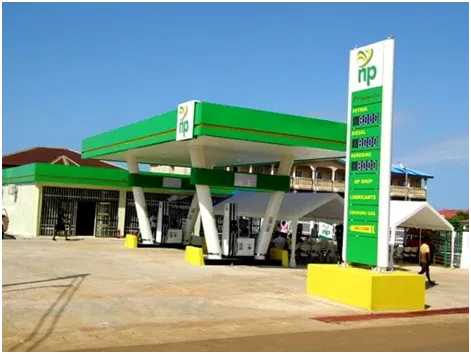
NP-SL is a renowned petroleum marketing company that always treats its esteemed numerous customers with professionalism and respect. Today, the company is a household name whose products and service delivery initiatives continue to positively impact lives in varying ways.

Well-meaning entrepreneurs continue to partner with NP-SL Ltd to open Filling Stations in different locations in-country even in hard to reach areas. Its Filling Stations are strategically located in order to avail the vast majority the opportunity to easily access them in order to conduct meaningful business transactions.

The caring nature of the company for its customers is vividly evident in the pieces of advice it continues to give out to its customers and even taxi, Kekeh and okada passengers wishing them safety whenever they are using the roads.

Against such a backdrop, it should not be any surprise that the company is the proud recipient of the accolade of 1st for Customer Care. This is no mean decoration but instead a true manifestation of the high level of appreciation that people continue to show for the qualitative products and services that the company markets to the general public.

Today, it is now non-existent for individuals to complain that when they are in the process of procuring petroleum products, pump attendants cheat them in terms of not getting their money’s worth.

The simple reason is because the Shareholders and Management of the company were indeed very business savvy to procure modern calibrated pumping machines which were installed at their various selling points and are very capable of churning out the exact quantity of what is demanded and the price to be paid.

During a random countrywide survey conducted over a period of time targeting a large percentage of customers of the National Petroleum-Sierra Leone Limited (NP-SL Ltd), with the avowed objective of sounding their views on the operations of the company in the country, the responses were positive.

When quizzed on how they view the way the company treats its numerous customers across the country, most of the respondents warmly reacted by stating that the Shareholders and Management of  the company are doing extremely well in the direction of effective service delivery and giving utmost satisfaction to customers.

Mohamed Bai Sesay, a renowned Social Commentator, maintained that when it comes to customer care, NP-SL Ltd is second to none within the business landscape of this country.

“From what I so far learnt in order to conduct sales in a very transparent manner and to give customers their money’s worth, the Shareholders of the company decided to procure and install modern calibrated pumping machines at their various Filling Stations that are capable to pump the exact quantity of fuel, at the same time display the price and quantity,” he pointed out, adding that to even think that the pump attendants are cheating customers could only be a mere figment of one’s imagination, as anything like that is farfetched.

A Development Specialist of long standing intimated that for the country’s economy to grow sustainably it is but important to deepen local content further arguing that it is only when we make meaningful use of both our human and natural resources that development could transpire.

“Instead of depending on the importation of certain consumable items and foreign expatriates, it is but very significant and cost effective to make use of what we have at hand to produce goods and services,” Abdulai Braima, an Economist averred, also stating that for NP-SL Ltd to make it a laid down policy and put into practice to offer employment exclusively to Sierra Leoneans is indeed laudable and no mean feat.

He further underscored that by offering jobs to Sierra Leoneans is a way of empowering the citizenry to take care of daily responsibilities and live improved standards of living.

“I really doff my hat to the Shareholders of the company for actualizing such a high sense of patriotism,” he expressed admiration.

A vast majority of those interviewed revealed that they are using NP Gas for cooking purpose, maintaining that it is very efficient and environmentally friendly. The NP Gas that they referred to is a cooking device which is manufactured in different cylinder sizes and sold at affordable prices at the company’s Filling Stations.

With regards the use of NP Smart Card, it is one that is now in vogue. Some personalities who are using it said they find it very useful and a convenient way of purchasing petroleum products. They added that they always ensure their NP Smart Cards are credited to be used to purchase fuel, be it petrol or diesel.

“Sometimes I don’t have to go through the hassle of going to the Bank on a busy Friday afternoon to withdraw cash just for the purpose of purchasing fuel that will last throughout the weekend. I do procure petrol by using my Smart Card and it is working perfectly well,” Musa Kalokoh, an Engineer told one of our reporters.

From all the positive responses, it is now clear why NP-SL Ltd is held in high esteem and continues to be endearing to many.

Bournemouth Academics Help Launch Sierra Leone’s First Media Manifesto

It is worthy to note that two Bournemouth University academics were very instrumental in making contributions to put a Manifesto that outlines the future of the media in Sierra Leone, an accomplishment that is unprecedented.

“The Media We Want: A Manifesto for an Empowered and Inclusive Media in Sierra Leone” was unveiled in Freetown by the Sierra Leone Association of Journalists in the presence of several dignitaries, including Minister of Information and Communication, Mohamed Rahman Swaray and the European Union Ambassador to Sierra Leone, Amb Manuel Muller.

Intended to be as a rallying call to bring the new Government, the news industry, Civil Society Organisations and the International Community together, the manifesto sets out eight priority areas for collaboration — among them, media freedom, safety and security of journalists, capacity building (including for disaster and risk reduction reporting), and gender equality.

Dr. Chindu Sreedharan, Associate Professor in Journalism at Bournemouth University and Professor Einar Thorsen, Executive Dean of the Faculty of Media and Communication, contributed to the manifesto.

“This is a major milestone in the journalistic history of Sierra Leone,” Dr Sreedharan said. “It underlines the foundational requirements of building a more vibrant and inclusive media, and is designed to help engender new initiatives, policies and legislative changes that will strengthen journalism in Sierra Leone.”

SLAJ President Ahmed Nasralla thanked Bournemouth University for its involvement in the development of the manifesto. “The manifesto consolidates the gains we have made in the last five years and will serve as the framework for all future interventions in the media sector in Sierra Leone,” the SLAJ President said. “We are grateful for the support from Dr Sreedharan and Prof Thorsen. I look forward to working with BU and other stakeholders in following up the implementation of this manifesto once a new Government in Sierra Leone is elected. Together, we can make significant changes in Sierra Leone’s media landscape.”

The manifesto is based on a national survey of journalists and multiple consultations with media stakeholders and affiliate bodies of SLAJ, and underwent a validation process before it was published on 5 June.

Funded by the European Union, it has been produced collaboratively with several institutions, including the Media Reform Coordinating Group, BBC Media Action, Independent Media Commission, the University of Sierra Leone, and the Right to Access Information Commission.

Dr Sreedharan, who has served as an advisor to SLAJ for the past three years, said BU provided research-informed contributions to the manifesto in several key areas, including measures on safety and security of journalists, gender empowerment and equality, and media professionalism and capacity building.

“Our advice was informed by previous research not just in Sierra Leone, but in other nations on the DAC list,” Dr Sreedharan said, “especially on the journalistic role in reducing violence against women, as well as the capacity building initiatives to mitigate the impact of disasters.”

See link: https://www.bournemouth.ac.uk/news/2023-06-08/bournemouth-university-academics-help-launch-sierra-leones-first-media-manifesto

Journalism and Elections: The Importance of Accurate Reporting

By Amin Kef (Ranger)

Elections are a cornerstone of democratic societies and journalism plays a vital role in ensuring that elections are free, fair and transparent. The role of the media in elections is to provide citizens with accurate, unbiased information about the candidates, their policies, and the electoral process itself. This essay will explore the importance of journalism in elections, the challenges faced by journalists covering elections and the ethical responsibilities of journalists in reporting on elections.

Journalism is essential in providing citizens with the information they need to make informed decisions about who to vote for. The media has a responsibility to report on the candidates and their policies in an accurate, objective and comprehensive manner. This includes covering all candidates fairly, providing analysis of their policies and positions, and fact-checking claims made by candidates. This reporting must be done without bias or partisanship, ensuring that citizens can make informed decisions based on the facts.

However, covering elections can be a challenging task for journalists. There are many obstacles that can hinder their ability to report accurately on the electoral process. One of the most significant challenges faced by journalists is the pressure to report quickly. In the age of social media, news spreads rapidly, and journalists are often expected to provide updates in real-time. This can lead to errors and inaccuracies in reporting, which can have significant consequences for the electoral process.

Another challenge faced by journalists is the risk of violence and intimidation. In some countries, journalists covering elections may face threats from political actors who seek to control the narrative and suppress free and fair reporting. This can make it difficult for journalists to report accurately on the electoral process, as they may fear for their safety.

Despite these challenges, journalists have an ethical responsibility to report accurately on elections. This requires them to maintain their independence and impartiality, avoiding any conflicts of interest that may compromise their reporting. Journalists must also be transparent about their sources and methods, ensuring that their reporting is based on facts and evidence rather than speculation or hearsay.

In addition to their ethical responsibilities, journalists also have a critical role to play in holding candidates and officials accountable for their actions. This includes investigating allegations of corruption, exposing electoral fraud, and reporting on any attempts to manipulate the electoral process. By doing so, journalists can help to ensure that elections are free, fair, and transparent, and that citizens are able to make informed decisions about who to vote for.

In conclusion, journalism plays an essential role in ensuring that elections are free, fair, and transparent. Despite the challenges faced by journalists in covering elections, they have an ethical responsibility to report accurately and impartially on the electoral process. By doing so, journalists can help to hold candidates and officials accountable, and ensure that citizens are able to make informed decisions about who to vote for. As such, the importance of accurate reporting in journalism cannot be overstated, and it is vital that we continue to support and defend a free and independent press.

ONS Chief of Staff  & Police IG Assure  of Enhanced  Security Before, During & After Elections

By Amin Kef (Ranger)

Ahead of the June 24 Multi-tier Elections, the Chief of Staff of the Office of National Security (ONS), Francis Langumba Keili, has affirmed that the ONS will demonstrate a strong presence in all regions in the country to deter wrongdoers nationwide.

The ONS Chief of Staff made that affirmation during an Election Preparedness National Stakeholders Conference that was held on the 8th June, 2023 at the New Brookfields Hotel in Freetown.

He pointed out in no uncertain terms that those who attempt to disrupt the electoral process will face severe consequences, one of which could be imprisonment at either Pademba Road or Mafanta prisons saying it loud and clear that the importance of security during this election cannot be compromised or negotiated.

“Starting today we shall be putting up a show of force. If you think you will disrupt the process you will face the consequences, you will either spend time at Pademba Road or Mafanta Prison. Security in this election is non-negotiable”.

On his part, the Inspector General of Police, William Fayia Sellu, gave assurance to Sierra Leoneans of tight and robust security throughout the country. He also assured of preparation and determination on the part of Police personnel to provide professional security during and after the elections.

The IG mentioned the presence of Police and Military personnel in strategic locations of the country, the mounting of a joint patrol in Freetown on a 24-hour basis as part of the Military Aid to Civil Power (MAC-P) to ensure free and safe movement of individuals.

He also made reference to the support provided by the Government in helping the Force acquire essential equipment which will place them at a vantage position to provide the needed professional policing at this crucial stage in the country’s history.

Commenting on a planned protest that is mooted in certain quarters, the IG categorically pointed out that legally whosoever  said wants to protest must seek clearance from the Police stressing how failure in doing so is a punishable offence.

He gave assurance of the Sierra Leone Police being in control of the security situation further revealing how some arrests have already been effected in relation to the unlawful planned protest.

IG Fayia Sellu appealed to all Sierra Leoneans to act within the ambit of the law, go about their normal activities saying the security forces are  always out there to safeguard life and property. He called on those with useful intelligence to relay relevant information on any security related issues to the Police.

ECSL Replaces West Region Final Voters List Issued to Political Parties

By Amin Kef (Ranger)

It could be recalled that the Electoral Commission for Sierra Leone (ECSL) on the 8th June, 2023 issued out the Final Voters List (FLV) to endorsed political parties that will be competing in the June 24 Polls.

However, the main opposition APC Party raised objection based on clarity and one of its Executive members, Dr Richard Konteh said on Twitter: “What ECSL gave to the Political Parties is not a Voters Register. Section 13 of the PEA of 2022 provides that a Voters Register should contain the names and particulars of persons entitled to vote and not just a simple name and a blurred picture that is at least six years old.”

He continued by stating that  ECSL is clearly in breach of Sections 13 and 18 of the PEA of 2022. It is also in the process of breaching Section 92(2) of the same Act by attempting to bypass the District level certification which is to take place in the office of the District Elections Manager.

The APC strongman further maintained that a credible Voters Register should also contain the Voter identification number, date and place of birth, sex, and signature or thumb print of the Voter adding that Section 18 of the PEA also stipulates that this whole process should have been completed six months to the elections.

On its part, ECSL on Friday, 9th June, 2023, replaced copies of  the Final Voters List (FVL), otherwise known as the Voter Register Data or Disaggregated Voters Register, that were previously issued out to  political parties APC that raised an objection .

However, the reason stated by ECSL for the replacement of copies of the Final Voters List was borne out of the realization that the photos of West Region were printed in black and white instead of in coloured like the other regions. However, ECSL assured that other details remain the same.

On the Twitter Page of ECSL, it was confirmed that the Commission has replaced copies of FVLs given to political parties because of the concerns they raised about the aspirants photos of West Region being in black and white instead of colored like the other regions.

Prior to the Commission doing so, it was circulated on Social Media and other platforms that the issue of the aspirants of the West Region not seen properly makes it hard to recognize them. Concerns were as well raised about how such will affect the choosing of candidates on Polling Day to which the ECSL claimed had been rectified.

Some have commended ECSL for the move to publish the coloured photos of the aspirants claiming that such will help to foster transparency, peace and tranquility during the elections of 2023.

Sierra Leone’s Triumph: President Bio’s Championing of UN Security Council Membership

By James Samba

Part 2

Introduction:

In a momentous achievement for Sierra Leone, the nation has been elected as a non-permanent member of the United Nations Security Council for the term 2024 to 2025. This significant accomplishment reflects both the country’s growing international stature and the leadership of President Julius Maada Bio, who has been at the forefront of promoting Sierra Leone’s candidacy and championing global peace and security. This article explores Sierra Leone’s journey to securing a seat on the Security Council, President Bio leading the efforts in advocating for this cause, and the potential impact of this position on the nation’s diplomatic influence and commitment to global stability.

Sierra Leone’s Rise on the Global Stage:

Sierra Leone’s election to the UN Security Council is a testament to the nation’s progress and renewed standing in the international community. After emerging from a devastating civil war in the early 2000s, Sierra Leone has made remarkable strides in peacebuilding, democratic governance, and socio-economic development. President Bio’s commitment to stability, good governance, and human rights has garnered admiration both domestically and internationally. The country’s election to the Security Council reflects the trust placed in Sierra Leone to contribute meaningfully to international peace and security.

Making the announcement with exuberance on National Television in Sierra Leone, His Excellency, President Julius Maada Bio noted that Sierra Leone’s election to the United Nations Security Council as a non-permanent member was centred on the principles of partnership, multilateralism, and a representative approach to ensuring lasting global peace and security. The President proudly stated the country’s overwhelming majority win in the United Nations General Assembly, as an endorsed candidate of the African Union, underscores the trust placed in Sierra Leone to advocate for the interests of Africa and contribute meaningfully to international affairs.

President Bio’s Advocacy:

President Bio played a pivotal role in championing Sierra Leone’s cause for a seat on the UN Security Council. His diplomatic skills, tethered leadership acumen, and commitment to global peace were instrumental in garnering support from member states. President Bio, through his Minister of Foreign Affairs and International Cooperation undertook extensive diplomatic engagements, showcasing Sierra Leone’s dedication to the principles enshrined in the UN Charter, including conflict prevention, peacekeeping, and disarmament. His persuasive advocacy and personal engagement with world leaders helped secure the necessary votes, amplifying Sierra Leone’s voice on the global stage.

Impact on Sierra Leone:

Sierra Leone’s membership in the Security Council presents a unique opportunity for the nation to contribute to international peace and security discussions. It provides a platform for President Bio and his administration to address critical global challenges, such as conflict resolution, counterterrorism efforts, and humanitarian crises. As a non-permanent member, Sierra Leone will have the ability to shape resolutions, engage in decision-making processes, and advocate for the interests of African nations and other developing countries. This newfound influence can enhance Sierra Leone’s diplomatic relations, attract investments, and advance its national development agenda.

Advancing African Perspectives:

President Bio’s presence on the Security Council also signifies an opportunity to amplify African perspectives and priorities. As the sole African representative elected for the 2024-2025 term, Sierra Leone can bring to the table the experiences and aspirations of the continent. President Bio’s leadership in addressing issues such as regional conflicts, peacebuilding, and sustainable development will undoubtedly resonate with other African nations. By championing the African agenda, Sierra Leone can contribute to the collective efforts of African countries in shaping global policies and decisions.

Conclusion:

In conclusion, Sierra Leone’s election as a non-permanent member of the United Nations Security Council is a testament to the nation’s growing stature on the global stage and President Bio’s exceptional leadership in promoting international peace and security.

As Sierra Leone prepares to embark on this new chapter, it is crucial for the citizens to recognize the significance of President Bio’s achievements and the positive impact his leadership has had on the country’s international standing. The success in securing the UN Security Council seat underscores President Bio’s dedication to advancing Sierra Leone’s interests and amplifying its voice in shaping global policies. As the nation looks ahead to the upcoming presidential elections, let us not forget the strides made under President Bio’s leadership and consider the potential for further progress and development with him at the helm. The election of President Bio for a second term will ensure continuity, stability, and continued success on the international stage for Sierra Leone.

James is currently pursuing his Masters in Environmental Change and International Development at the prestigious University of Sheffield in the United Kingdom. In addition to his academic pursuits, he served as a valuable Graduate Teaching Assistant within the esteemed Graduate Teaching Engagement Team for the Department of Geography at Sheffield. Prior to embarking on his academic journey, James held the position of Technical Assistant to Dr Francis Kai-Kai, the Minister of Planning and Economic Development.

GoSL, FAO & Vietnam Sign Tripartite Agreement to Develop Sierra Leone’s Rice Sector

A tripartite agreement was signed in Freetown on the 9th June, 2023 among Sierra Leone, the Food and Agriculture Organization (FAO) and Vietnam with the Minister of Finance Sheku Ahmed Fantamadi Bangura signing on behalf of the Government of Sierra Leone,  Saeed Abubakar Bancie, FAO Representative in Sierra Leone on  behalf of the organization and a representative of  the Vietnamese Government.

The tripartite agreement is based on a South-South and Triangular Cooperation (SSTC) aimed at developing the rice sector of the small West African country with an estimated budget of $5 million to be implemented through a Unilateral Trust Fund (UTF) from Sierra Leone.

The Agriculture Minister, Dr. Abu Bakarr Karim commended Vietnam for its commitment to providing technical assistance through FAO South-South Cooperation, emphasizing the invaluable role it will play in Sierra Leone’s agricultural landscape.

As pointed out, the new tripartite project will support diverse actors to increase productivity and production of rice through increased access to improved technologies and upscaling of best practices along the rice value chain.

It is expected that over the course of a four-year project, Vietnam will provide its expertise in rice-value-chain development to Sierra Leone.

Skilled experts and technicians specialized in rice production, irrigation, rice breeding, mechanization, and post-harvest management will be deployed to various national sites, including research stations. Additionally, capacity-building initiatives such as study tours, field training and training of trainers will be implemented to empower local stakeholders.

The new tripartite agreement is part of FAO’s strong commitment to broaden its partnership base with diverse groups of countries through South-South and Triangular Cooperation and the mobilization.  Countries in the Global South are increasingly recognizing SSTC as one of the most efficient delivery modalities addressing their needs.

Minister Abu Bakarr Karim commended Vietnam for its commitment to providing technical assistance through FAO South-South Cooperation, emphasizing the invaluable role it will play in Sierra Leone’s agricultural landscape.

Spearheading and mainstreaming South-South and Triangular Cooperation since 1996, FAO has been working at central and decentralized levels, to promote SSTC amongst its Member States as a means to reduce poverty and hunger, while promoting sustainable agrifood systems.

The SSTC Guidelines for Action, a key tool to scale up SSTC technical and financial partnerships in support of agrifood systems transformation, is one of the many ways in which FAO is spearheading and mainstreaming SSTC.

With regards to the development of the rice sector in African countries in particular, FAO has supported, through SSC, major rice-producing countries such as Nigeria, Senegal, Tanzania and Uganda to address the challenges facing their rice value chains.

Through country-level capacity-building, regional knowledge exchange events and study tours, FAO has extensively facilitated the sharing of good practices, lessons learned and the dissemination of analysis on rice value chains. In carrying out these functions, FAO has established strong partnerships with institutions such as the Africa Rice Centre (Africa Rice) and the International Rice Research Institute (IRRI), bringing their expertise to the benefit of target beneficiaries.

Land Reform Trainings to Benefit Paramount Chiefs in all Regions of the Country

By Amin Kef (Ranger)

The Sierra Leone Land Administration Project (SLLAP), the National Council of Paramount Chiefs and Civil Society Organisations have signed a partnership memorandum of understanding geared towards enhancing effective and efficient public engagement and education in the reformation process of the land sector in Sierra Leone,

On Monday, 5th June, 2023 Paramount Chiefs from the Eastern Region converged at the Kenema City Council to receive training on the new land management reforms in the country.

This medium reliably learnt that currently Regional Induction Trainings are being organized by the Sierra Leone Land Administration Project (SLLAP) ahead of the establishment and implementation of the Chiefdom and Village Area Land Committees to support the reform process.

While giving an overview of SLLAP, the Project Coordinator, Dr. Alphajor Cham, expressed appreciation to the Paramount Chiefs for their cooperation in the land management reform process, while commending the Hon. Minister of Lands, Dr. Turad Senesie, for providing sound, visionary and professional leadership.

He disclosed that the project aims to enhance and support effective and transparent land management system in the country, which includes legal and institutional reforms and support.

The Eastern Region Chairman of the National Council of Paramount Chiefs, PC David Keili-Coomber IV, who also doubles as the Chairman PC Select Committee on Land Reforms, praised the leadership role played by the Hon. Minister of Lands, which according to him, is responsible for the cooperation by the Paramount Chiefs.

He assured the nation that the current set of Paramount Chiefs will continue to support progressive reforms in the land sector.

Barrister Eleanor Thompson led the training and interactive sessions for the establishment of the chiefdom and village area land committees.

The Social and Gender Specialist, Madam Kadiatu Dumbuya, presented a paper on the grievance redress mechanism process, while the Monitoring and Evaluation Specialist, Saiku Bah, presented on the reporting framework of the chiefdom and village area land committees.

A radio discussion program hosting the Eastern Region Chairman of the Paramount Chiefs, the Project Coordinator Dr. Alphajor Cham and the Commissioner General of the National Land Commission, Sheik Siddy Sowa was hosted in the evening hours at Starline Radio in Kenema.

The induction training was chaired by the Community Engagement and Communication Specialist, Abdul Karim Kabia.

It must be noted that the Sierra Leone Land Administration Project (SLLAP) successfully conducted the maiden induction training for Paramount Chiefs (PC) in the Southern Region as part of the regional trainings for PCs in respect of the establishment of Chiefdom and Village Area Land Committees.

The training for the Southern Region Paramount Chiefs took place on Friday June 2 2023 at the Bo District Council Hall.

Paramount Chiefs in the Region used the opportunity to renew their commitment towards the land reform process, while they commended what they described as the unique and professional leadership style of the Hon. Minister of Lands, Housing and Country Planning, Dr. Turad Senesie.

According to them, the respect the Minister has accorded the PCs was responsible for the success in the process that led to the enactment of the National Land Commission Act and the Customary Land Rights Act.

The Project Coordinator, Dr. Alphajor Cham welcomed the participants and explained the rationale, status and components of the land reform project.

Barrister Eleanor Thompson led an interactive presentation on the two new land lands while at the same time explaining the rationale and legal provisions for the establishment of the chiefdom and village area land committees.

The SLLAP Social and Gender Specialist, Madam Kadiatu Dumbuya made a presentation on the Grievance Redress Mechanism (GRM) established to serve as a first step in arbitrating grievances emanating from project implementation.

The program was chaired and moderated by the Community Engagement and Communication Specialist, Abdul Karim Fonti Kabia.